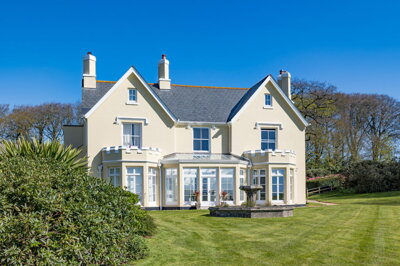
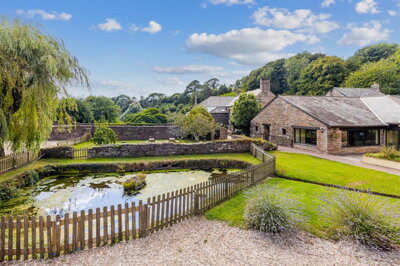
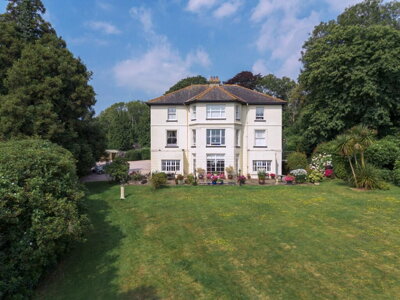
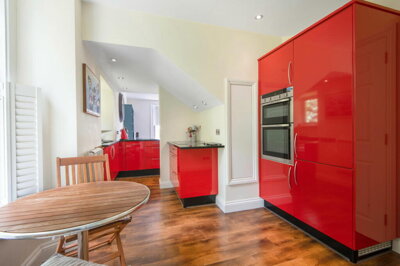
Browse 8 homes for sale in Slapton from local estate agents.
Studio apartments feature open-plan living spaces without separate bedrooms, incorporating sleeping, living, kitchen, and bathroom facilities. The Slapton studio market includes properties in modern apartment complexes, converted Victorian and Georgian buildings, and purpose-built developments.
Slapton gives buyers a broad mix of homes in a remarkable coastal setting, especially if character matters. Detached houses sit at the top of the market at around £1,000,000 on average, which reflects how few standalone homes come up here with sea views and private gardens in this protected landscape. Semi-detached homes usually change hands for £302,500 to £306,250, while terraced cottages and other period homes average about £325,000, putting them within reach for first-time buyers and families keen to get into this sought-after village. Flats are rare in Slapton, and the small amount of stock available averages around £172,500.
Recent pricing in Slapton has not moved in a straight line. home.co.uk data shows sold prices over the last year were similar to the previous year, but still roughly 16% below the 2021 peak of £636,917. In 2025 there have been 8 recorded sales, with a median price of £375,000, which may appeal to buyers taking a longer-term view. Looking back a little further, average prices reached £515,000 in 2023, up 1.5% from £507,500 in 2022, so despite short-term shifts the market has posted growth over recent years.
Most homes here are geared towards family living rather than smaller layouts. In Slapton, 32.9% of properties have four or more bedrooms, comfortably above the England and Wales average. Ownership levels are also high, with 55.2% of households owning outright and another 20.8% owning with mortgages or shared ownership. Smaller homes are less common, only 7.2% have one bedroom, while 18.5% have two bedrooms and 41.4% have three bedrooms.
Within the immediate Slapton postcode area, TQ7, new build supply is very thin, and there are no verified new-build developments in the village itself. Buyers wanting a newly built home are more likely to find options in nearby places such as Dartmouth, Chillington, and Stoke Fleming. In Slapton, though, brand new stock is scarce. That limited supply, together with tighter planning controls linked to the Conservation Area and AONB designation, helps preserve both the character of the village and the value of existing homes.

Life in Slapton has a pull that is easy to understand once you have spent time there. The village sits among rolling farmland, ancient woodland, and a striking stretch of coast, all within the South Devon Area of Outstanding Natural Beauty. Around 664 people live in the parish, and that smaller population gives the place a close community feel. Local events, the historic pub, and the Field Studies Council's Slapton Ley field centre all play their part in village life and environmental learning.
For many people, Slapton Ley is the standout feature. It is the largest natural freshwater lake in the South West of England, cut off from the sea by a shingle ridge that creates an unusual and valuable wildlife habitat. That ridge, shaped by sea-level rise and ongoing longshore drift over millennia, is a geological feature of national significance. Birdwatchers come throughout the year for overwintering waterfowl and breeding birds, and the margins of the ley support rare plants and insects. Just beyond it, Slapton Sands runs for over a mile along Start Bay, with safe swimming, beach fishing, and fine views towards the rocky outcrops of Strete Gate and the distant outline of Torbay.
The local economy shows how strongly rural coastal living now appeals to people who want more flexibility. Some 47.7% of the working population work mainly from home, and 52% are economically active. The Field Studies Council's Slapton Ley field centre supports jobs and education, while tourism and agriculture still underpin much of the local economy. Summer changes the pace of the village as holidaymakers arrive for the beaches, coastal paths, and scenery, bringing welcome spending but also heavier traffic on the A379 coast road.
Much of Slapton's community life gathers around the village hall, the historic pub, and the footpath network leading out into the surrounding landscape. Over the course of the year, residents come together for summer fetes and conservation volunteer days at Slapton Ley. The centre of the village, with its narrow lanes, thatched cottages, and historic leets, feels a world away from modern pressures. Even so, Slapton still has workable access to day-to-day services in nearby Kingsbridge and Totnes.
Families looking at Slapton have good schooling options within straightforward reach. The village is linked to local primary provision in nearby communities, with Stokenham Area Primary School around 3 miles away in Stokenham. It serves children from Reception to Year 6 across the southern part of the South Hams. Local families know it for its nurturing approach and its place in the community, and it also maintains strong SATs results. Like many rural Devon schools, the buildings reflect older origins while benefiting from more recent investment in facilities.
For secondary education, most families look towards Kingsbridge. Kingsbridge Community College provides comprehensive schooling from age 11 through to A-levels and is well regarded for academic performance as well as extracurricular opportunities in sport, the arts, and Duke of Edinburgh Award programmes. School transport links Slapton with these secondary schools, although it is sensible to check current bus routes and timings as part of any move. For many households, this means access to strong state secondary education without having to live in a larger town.
The Field Studies Council's Slapton Ley field centre gives the area an educational asset that very few villages can match. It runs residential and day courses for school groups, university students, and adult learners across subjects including marine biology, ecology, freshwater environments, and coastal geography. Children growing up in Slapton can learn about the landscape around them from expert tutors and researchers. Local families can also sign children up for weekend workshops, holiday programmes, and after-school clubs built around this exceptional outdoor classroom.
For older students, Slapton is not cut off from further study. Totnes and Exeter widen the picture, with access to sixth form colleges and university courses. Exeter University is approximately 35 miles away and can be reached by regular bus services or by the scenic route through the South Hams countryside, offering a full spread of undergraduate and postgraduate degrees. Plymouth University is another realistic option, especially for STEM subjects and marine sciences, which suits Slapton's coastal setting. School transport is still a practical point to weigh up, particularly for secondary school aged children travelling to Kingsbridge each day.

Getting around from Slapton is easier than its rural setting might suggest, although there are obvious seasonal pressures. The A379 coast road is the main route through the village, running along the historic shingle ridge between Slapton Ley and the sea. It links Slapton southwards to Dartmouth and northwards to Stoke Fleming, Strete, and beyond. The views are superb, but in summer traffic can slow things down considerably, and there have been past closures linked to coastal erosion or storm damage.
For residents who do not want to rely entirely on a car, bus links matter here. Stagecoach and other local operators run services connecting Slapton with Kingsbridge, Dartmouth, and Totnes. Kingsbridge is roughly 15-20 minutes away by car and is where most residents head for supermarkets, banks, doctors' surgeries, and other everyday services. There is a Co-op supermarket, a mix of independent shops, and a weekly market, while healthcare is covered by the doctors' surgery and pharmacy in Kingsbridge.
Rail access comes mainly via Totnes, approximately 20 miles away by road, though Exeter St Thomas and Exeter Central are also options further afield. From Totnes, direct trains to London Paddington usually take around three hours, which makes occasional commuting to the capital realistic. On foot or by bike, Slapton has another side altogether, the South West Coast Path passes through the village and quiet country lanes link it with nearby hamlets and the wider South Hams countryside. Parking is tighter because of the historic street pattern, but the village hall car park and the beach car parks do offer some space for residents and visitors.
Connectivity for broadband and mobile service is a mixed picture, which is typical of a rural coastal village. Some properties can access fibre broadband, while others still depend on slower connections. We always suggest checking actual broadband speeds for a specific address before committing, especially where working from home is non-negotiable. Mobile coverage also varies by network, and there are dead spots in parts of the village and on certain coastal paths, although ongoing investment is gradually improving rural coverage.

Before going ahead with a purchase, it is worth spending proper time in the parish at different points in the day and on different days of the week. Walk through the village centre, take in the lanes, and talk to residents if you can, it gives a much clearer sense of everyday life. Think about school access, commuting needs, and how living beside the coast may shape your routine. Summer in particular brings a sharp rise in traffic, and that changes both road journey times and parking in the village.
We recommend speaking to a mortgage broker or lender early and getting an Agreement in Principle in place before the search begins. With detached homes in Slapton averaging around £1,000,000, knowing your borrowing position from the outset can save a lot of wasted time. It also helps narrow the field to homes that genuinely fit your budget. Our mortgage partners can provide competitive quotes suited to your circumstances, including buyers dealing with rural and coastal property.
Start by looking through our listings for homes for sale in Slapton and use the filters to sort by price, property type, and bedroom count. Once a property stands out, we can help arrange viewings through our platform. A lot of Slapton homes are older period buildings, and they often reveal different things at different times of year, from heating performance to garden use and general condition. Near the coast, wet weather can also highlight features that simply do not show up on a dry day.
Slapton's older housing stock means a survey is rarely something to skip. With so many listed buildings and thatched cottages, we would usually advise booking a RICS Level 2 Survey before you move forward. That report can flag structural movement, damp, roof problems, and other defects often found in period homes. Where a property sits in the Conservation Area, or is itself listed, a RICS Level 3 Survey may be the better fit. We can put you in touch with local surveyors who know the construction methods commonly seen in South Devon period property.
After an offer is accepted, the next step is to instruct a conveyancing solicitor to deal with the legal work. They will carry out searches, review the contract paperwork, and liaise with your mortgage lender. In a place like Slapton, the coastal setting and the presence of Slapton Ley mean local searches will also pick up environmental agency data on flood risk and coastal erosion. Exchange and completion usually follow the normal timetable, although coastal homes can call for extra checks. Where a property is listed or lies in the Conservation Area, there will also be additional searches tied to planning conditions and heritage designations.
Buying in Slapton means looking closely at issues that are very specific to this coastal parish. The biggest environmental point is erosion along Slapton Sands, where the shingle ridge that protects Slapton Ley has been damaged before and needed rebuilding, most notably in 2000-2001 after severe storms caused major damage to the A379 road. Because that ridge was formed by sea-level rise and continuing longshore drift, it remains exposed to future storm damage and possible breaching. If that happened, the main coastal route would be cut and homes along the coast road would feel the impact. We usually suggest checking exact property positions with care and, where possible, favouring homes set back from the immediate coastal edge while still benefiting from sea views and beach access.
The Conservation Area has a real effect on what owners can and cannot do here. Most Slapton properties sit within it, with the designation first made on 14 September 1973 and later extended on 3 September 1992. That can mean controls over alterations, extensions, and even external paint colours. There are also many listed buildings in the village, among them the Grade I listed Church of St James from the late 13th or early 14th century, the Grade I listed Tower Inn and its West tower, surviving parts of the Collegiate Chantry of St Mary founded in 1372/1373, and Lower Coltscombe, which is Grade II. These protections cover details such as original thatched roofs, slate rubble walls, and traditional timber windows, and any works will need Listed Building Consent with suitable materials and methods.
Local building character comes straight from the underlying geology. Devonian slates and Permian breccia have influenced construction for generations, so homes are often built in slate rubble, stone, and thatch, materials that need specialist care when it is time for repair or maintenance. Many properties also have solid walls, lime mortars, and timber-framed elements, which behave very differently from modern construction. A surveyor looking at a Slapton period house will usually focus on how these traditional materials are coping with the coastal climate, including damp penetration through solid walls, the condition of original timber frames, and the state of old lime-based mortars and renders that need regular reapplication to keep performing properly.
Homes close to Slapton Ley need an extra layer of scrutiny. The ley is the largest natural freshwater lake in the South West, and in extreme weather there is potential flood risk if the shingle ridge is overtopped. Although the ley itself is freshwater, its closeness to the sea means storm damage could allow saltwater ingress into lower-lying areas. Environmental searches during conveyancing should give property-specific flood data for any address you are considering. Add in the exposed coastal position, the age of the housing stock, and the heritage controls, and it is clear that buying in Slapton takes more due diligence than in many places, but that extra care can help protect an investment in one of South Devon's most desirable villages.

Current values in Slapton sit at around £532,000 on average, according to home.co.uk listings data and homedata.co.uk data, although the range between property types is wide. Detached homes lead the market at an average of £1,000,000, while semi-detached houses generally sell for £302,500-£306,250. Terraced cottages come in at about £325,000, and flats, where available, average around £172,500. So far, 2025 has recorded 8 sales with a median price of £375,000. Longer term, the market has held up well, with average prices of £515,000 in 2023 marking a 1.5% rise on £507,500 in 2022.
For council tax, Slapton falls within South Hams District Council. The band attached to a property depends on its 1991 assessed value, and many of the village's period cottages and houses sit somewhere between Band C and Band F depending on size, layout, and character. Larger detached family homes with four or more bedrooms will often be in the higher bands. We can help buyers check the exact band during conveyancing, and it can also be confirmed through the Valuation Office Agency website.
Slapton itself does not have a primary school, but families are served by Stokenham Area Primary School in Stokenham, approximately 3 miles away. It is well regarded locally and draws pupils from across the southern South Hams. For secondary education, Kingsbridge Community College offers comprehensive provision from age 11 to A-levels, with good academic results and a broad extracurricular programme. Alongside that, the Field Studies Council at Slapton Ley gives children and adults access to environmental courses and activities throughout the year, with both residential and day options.
Public transport and road links give Slapton workable access to the surrounding area. Regular bus services, run by Stagecoach and local operators, connect the village with Kingsbridge, Dartmouth, and Totnes. Totnes is also the nearest railway station, around 20 miles away by road, and from there direct trains to London Paddington take about three hours. By road, the A379 is the main link in and out, tying Slapton to nearby villages and towns, though summer traffic to beaches and coastal attractions can add noticeable delays.
From an investment angle, Slapton has several strengths that tend to support long-term appeal. Its position in the South Devon Area of Outstanding Natural Beauty, the limited number of homes available, and persistent demand from buyers who want coastal village life all matter here. Prices are currently around 16% below the 2021 peak, which may present an opening for buyers thinking beyond the short term. Restrictive planning rules, a rising remote-working population, and the lasting draw of South Devon coastal villages all help underpin values. Buyers do, however, need to weigh coastal erosion risk and the extra responsibilities and costs that can come with listed homes or properties in the Conservation Area.
Stamp duty is a major part of the buying costs to plan for. From 1 April 2025, standard residential rates are 0% on the first £250,000, 5% on £250,001 to £925,000, 10% on £925,001 to £1.5 million, and 12% on anything above £1.5 million. First-time buyers get relief on the first £425,000, with 5% due on the portion from £425,001 to £625,000. With average Slapton prices around £532,000, that puts a typical bill at about £14,100 for standard buyers, or around £5,350 for qualifying first-time buyers.
Flood and coastal risk should be checked carefully in Slapton. The main concern is the sea-facing edge at Slapton Sands, where the shingle ridge has been damaged before and needed major rebuilding in 2000-2001. Because Slapton Ley sits just behind it as a large freshwater lake, extreme weather could lead to overtopping and affect low-lying ground. Properties right by the coast, or near the ley in lower positions, are likely to carry greater risk. We would expect a solicitor to commission an environmental search so the specific flood position of any property can be assessed before purchase.
We strongly advise a RICS Level 2 Survey, or Homebuyer Report, for any purchase in Slapton. There is a high share of older homes here, and traditional materials such as thatch, slate, and stone need experienced assessment. Typical issues include damp in solid walls, the condition of slate or thatched roofs, ageing electrics, and possible structural movement in timber-framed sections. The coastal setting can also bring corrosion and weather-related wear. If the property is listed or has substantial historic fabric, a RICS Level 3 Building Survey is often the better choice.
Competitive mortgage rates for Slapton buyers
From 4.5%
Expert property solicitors for Slapton purchases
From £499
Detailed homebuyer report for period properties
From £350
Comprehensive survey for older or listed properties
From £600
It pays to budget beyond the headline purchase price. Stamp Duty Land Tax, SDLT, applies to standard residential purchases above £250,000, so most Slapton buyers will have a bill to cover. On a property priced around £532,000, standard buyers would usually pay approximately £14,100 in SDLT, while qualifying first-time buyers could cut that to around £5,350. Once the price moves above £925,000, the higher 10% SDLT rate comes into play on that portion, so we always suggest calculating the full liability early.
Other purchase costs can add up quickly, especially on older or more complex homes. Solicitor conveyancing fees often range from £500 to £1,500, depending on the work involved, and local search fees are commonly about £250-£400. A RICS Level 2 Survey starts from around £350 depending on size, while larger houses or properties needing a Level 3 Survey can come in at £600 or more. Mortgage arrangement fees are often between 0% and 1.5% of the loan amount, and buyers should also allow for removals, possible surveyor's valuation charges, and a mortgage broker fee where one applies.
Historic homes often need a little more time and a little more money on the legal side. If a property in Slapton is listed or sits within the Conservation Area, there may be extra searches and compliance checks, which can push legal costs higher. A solicitor may need to obtain planning paperwork, look into any enforcement notices, and review conditions attached to earlier consents. Those added checks increase upfront costs, but they also give buyers valuable protection when taking on a heritage property.

Properties for Sale In London

Properties for Sale In Plymouth

Properties for Sale In Liverpool

Properties for Sale In Glasgow

Properties for Sale In Sheffield

Properties for Sale In Edinburgh

Properties for Sale In Coventry

Properties for Sale In Bradford

Properties for Sale In Manchester

Properties for Sale In Birmingham

Properties for Sale In Bristol

Properties for Sale In Oxford

Properties for Sale In Leicester

Properties for Sale In Newcastle

Properties for Sale In Leeds

Properties for Sale In Southampton

Properties for Sale In Cardiff

Properties for Sale In Nottingham

Properties for Sale In Norwich

Properties for Sale In Brighton

Properties for Sale In Derby

Properties for Sale In Portsmouth

Properties for Sale In Northampton

Properties for Sale In Milton Keynes

Properties for Sale In Bournemouth

Properties for Sale In Bolton

Properties for Sale In Swansea

Properties for Sale In Swindon

Properties for Sale In Peterborough

Properties for Sale In Wolverhampton

Enter your details to see if this property is within your budget.
Loans, cards, car finance
Estimated property budget
Borrowing + deposit
You could borrow between
Typical borrowing
Monthly repayment
Est. at 4.5%
Loan-to-value
This is an estimate only. Your actual budget may vary depending on interest rates, credit history, and personal circumstances. For an accurate affordability assessment, speak to one of our free mortgage advisors.
This calculator provides estimates for illustrative purposes only and does not constitute financial advice. Your home may be repossessed if you do not keep up repayments on your mortgage. Estimates based on 4.5% interest rate, repayment mortgage. Actual rates depend on your circumstances.
Homemove is a trading name of HM Haus Group Ltd (Company No. 13873779, registered in England & Wales). Homemove Mortgages Ltd (Company No. 15947693) is an Appointed Representative of TMG Direct Limited, trading as TMG Mortgage Network, which is authorised and regulated by the Financial Conduct Authority (FRN 786245). Homemove Mortgages Ltd is entered on the FCA Register as an Appointed Representative (FRN 1022429). You can check registrations at NewRegister or by calling 0800 111 6768.

We use cookies to show you personalised content and improve your experience of our website. Find out more in our Privacy policy and Cookie policy.