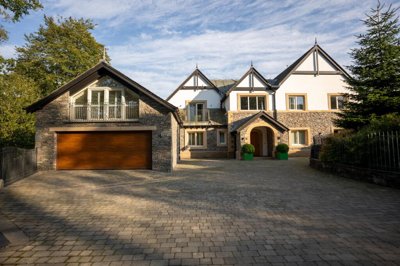
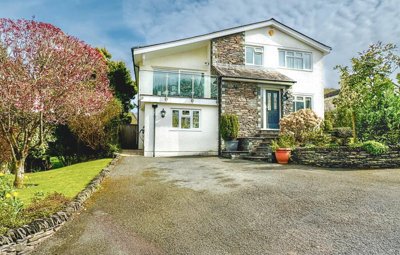
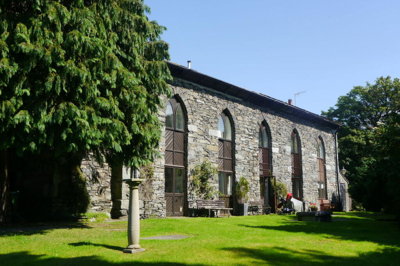
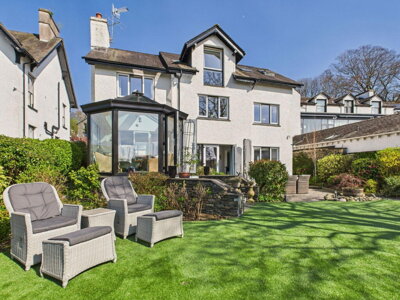
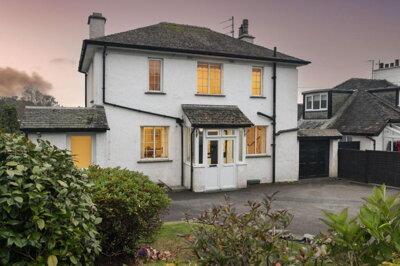
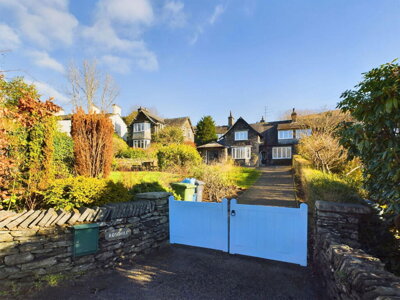
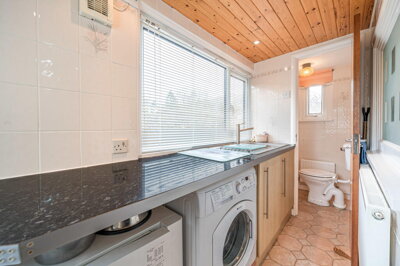
Browse 10 homes for sale in Skelwith, Westmorland and Furness from local estate agents.
The larger property sector typically features multiple bathrooms, substantial reception space, and private gardens or off-street parking. Four bedroom houses in Skelwith span detached, semi-detached, and occasionally terraced configurations, with styles ranging from period properties to modern executive homes.
£2.22M
2
0
85
Source: home.co.uk
Showing 2 results for 4 Bedroom Houses for sale in Skelwith, Westmorland and Furness. The median asking price is £2,222,500.
Source: home.co.uk
Detached
2 listings
Avg £2.22M
Source: home.co.uk
Source: home.co.uk
£975,000
Average Detached Price
£465,000
Average Semi-Detached Price
17
Listed Buildings
133
Parish Population
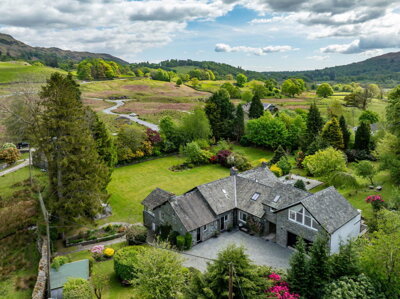
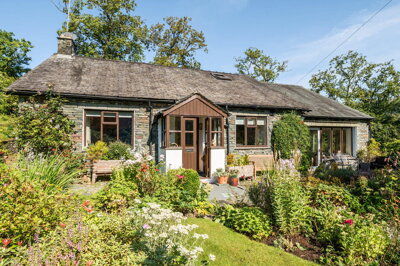
Skelwith's property market reflects the unusual pressures of life inside a National Park, where tight planning rules and very little land for development keep it firmly exclusive. Our listings range from characterful Lakeland cottages, often built from local stone, to substantial farmhouses that have sat in the landscape for centuries. Recent homedata.co.uk transaction data from Skelwith Fold and Skelwith Bridge shows the market is still moving, with a semi-detached property selling for £465,000 in October 2024 and a terraced home reaching £540,000 in January 2025. Detached homes at the top end have sold for between £975,000 and £658,080, which shows the sort of premium Skelwith's prized setting can command.
Housing here mirrors wider Cumbrian patterns, with more detached and semi-detached homes than the national picture and fewer purpose-built flats. Plenty of properties date from the 17th century onwards, and the traditional build is brownish-red sandstone under Westmorland Green slate roofs. With one Grade II* structure and sixteen Grade II listings across the parish, buyers should expect plenty of historical character, plus the occasional renovation headache. Investment appeal is helped by the Lake District's long-standing draw as both a visitor destination and a place to live, although second-home pressure still has a noticeable effect on homes available to permanent residents.
Skelwith's population has fallen from 185 in the 2001 Census to 133 in the 2021 Census, and the estimate for 2024 is 117. That drop sits within the broader rural depopulation seen in quieter parts of Cumbria, yet demand for homes stays strong because the area is so desirable. New building is limited within the National Park, and the Lake District National Park Authority's strict planning controls keep supply tight. For buyers, that usually means moving quickly when the right place appears, because scarcity and steady demand make the market competitive.
Our property listings cover Skelwith and the nearby Lake District villages, so we can show the full spread of homes currently available. From a traditional Lakeland cottage with original features to a converted barn with modern comforts, or a sizeable period farmhouse with land, the range is broad enough to suit different budgets and tastes in this remarkable part of Cumbria.

Daily life in Skelwith is shaped by the landscape around it. The hamlet takes its name from the Old Norse "Skelwith," meaning "the white stream," a nod to the limestone-rich waters running through the area. Skelwith Bridge crosses the River Brathay, acting as both a practical link and one of the most recognisable local landmarks, appearing in many photographs and paintings of the Lake District. Nearby, Skelwith Fold Caravan Park provides holiday accommodation and a modest retail offer, while the countryside beyond gives direct access to some of Cumbria's best walking, including routes towards Langstrath and Stickle Ghyll.
The parish lies inside the Lake District National Park, so every new scheme is subject to strict planning controls designed to protect the area's character. That limits housing supply, but it also helps Skelwith keep its unspoiled village feel and supports property values over time. Tourism drives much of the local economy, with visitors coming for scenery, outdoor pursuits and heritage. Ambleside and Grasmere supply the everyday essentials, while Carlisle, around 30 miles to the north, brings broader shopping, healthcare and transport links. Community life is small-scale and close-knit, by design, with residents sharing a strong wish to protect the parish's identity.
Tourism is central to the local economy, and the Lake District pulls in millions of visitors each year for its scenery, trails and cultural attractions. That steady flow of visitors feeds holiday-let demand, which makes Skelwith appealing to buyers looking at income as well as long-term growth. Even so, second-home pressure has reduced the stock available to permanent residents in parts of the Lake District, and anyone thinking about holiday letting needs to check the regulations and tax rules that have changed in recent years.
Built by a Leeds industrialist in the late 19th century, the Skelwith Fold Manor Estate is still one of the area's better-known landmarks, and its cottages echo the architectural traditions of Lakeland estate living. Skelwith Bridge is the parish's main focal point, with the historic bridge itself listed as a Grade II structure and central to the visual identity of this corner of the Lake District. From here, the countryside opens out into some of Cumbria's most celebrated walks, from easy riverside paths along the River Brathay to harder climbs towards the Langdale Pikes and Loughrigg.

Families looking at Skelwith will find schooling options within reach of the Lake District, although the rural setting means the schools sit in nearby towns rather than in the hamlet itself. Primary places are available in Ambleside and Hawkshead, both a short drive away and both serving families from the surrounding parishes. These village schools tend to keep class sizes traditional and community links strong, which fits the broader educational ethos of Cumbria's rural schools. Secondary places are usually sought in the Windermere area or through the grammar school system elsewhere in Westmorland and Furness, with school transport helping those who live in more remote spots.
The Lake District's cultural life also extends into education, and several independent schools operate across the wider area for families who want a different approach. Ambleside has a campus of the University of Cumbria, so higher education is available within the National Park itself. For families moving from towns or cities, rural schooling can bring real advantages, including smaller classes, more outdoor learning and a stronger sense of involvement from the local community. Parents should still check catchment areas and admissions with Westmorland and Furness Council, because oversubscription rules and catchment boundaries can affect places at popular schools.
Windermere School, in the nearby town of Windermere, gives secondary students both state-funded and independent options, which adds flexibility for families. It has a good academic reputation and a broad extra-curricular offer, with strong sports provision and arts facilities. Travel from Skelwith to Windermere is arranged through Westmorland and Furness Council's school transport service, although parents should check the current routes and timings, as these can change each year.
The Ambleside campus of the University of Cumbria offers degrees in geography, environmental studies and outdoor education, all subjects that fit the Lake District setting. It means students can continue into higher education without having to move to a bigger city, which helps make Skelwith an appealing base for academics and students drawn to the National Park.

Skelwith is well connected despite its rural setting. The A591 runs through Skelwith Bridge and gives direct routes north to Windermere and south to the A590 trunk road towards Barrow-in-Furness and the M6 motorway. It also links with the A592, heading north towards Penrith and the M6 corridor, which makes the Lake District relatively easy to reach for commuters working in Manchester or Liverpool. The nearest mainline railway stations are Windermere and Oxenholme, where direct services to Manchester Piccadilly, Birmingham New Street and London Euston provide regional and national links. For air travel, Manchester Airport is around 90 miles from Skelwith, with Liverpool John Lennon Airport offering another option for shorter journeys.
Stagecoach runs local bus services linking Skelwith with Ambleside, Windermere and Keswick, so it is possible to get around without a car for essentials and nearby visits. The 599 bus from Windermere to Bowness is especially handy for reaching the lake and the waterfront attractions. Cycling is popular too, both for commuting and for leisure, and the quiet lanes around Skelwith suit confident cyclists well. For people travelling daily to Carlisle or other regional centres, the drive takes about 45 minutes to an hour, while Manchester is usually around two hours in normal traffic. Oxenholme's West Coast Main Line is quicker for longer rail trips, with London taking roughly three hours.
The A593 passes through Skelwith Bridge and is the main route west towards the Duddon Valley and the south Cumbria coast. Heavy rain has caused emergency closures here before, often after flooding and damage to drainage culverts, which shows the sort of access problems that can arise in Lake District terrain. Residents need to keep that in mind when planning journeys and have an alternative route ready during bad weather. Many of the local roads are scenic but narrow and winding as well, so journeys often take longer than the map suggests, particularly when the tourist traffic builds.
Use online listings to get a feel for property types, prices and availability in Skelwith and the surrounding Lake District villages. With stock limited and demand strong, early research helps buyers narrow down the right property type and budget. Setting property alerts on the main portals means new matches can be picked up quickly when they come to market.
Speak to local estate agents who know the Skelwith market and arrange viewings of suitable homes. Seeing properties in person helps buyers judge the condition of traditional Lakeland homes, get a sense of the village atmosphere and check how close the amenities and transport links really are. It is worth taking notes during each viewing and photographing the rooms, so comparisons are easier later on.
Get a mortgage agreement in principle before putting forward an offer, because it strengthens your position with sellers. A specialist broker who knows the Lake District market can talk through the right lending options for the purchase. For properties above £600,000, it is sensible to work with a broker who has experience arranging finance for higher-value Lakeland homes.
Book an RICS Level 2 or Level 3 Survey before completion, especially for older stone-built homes with listed status. A proper survey will pick up structural issues, roof condition, damp and other defects that turn up often in traditional Lakeland properties. Because of Skelwith's geology and the age of much of the housing stock, reports often note penetrating damp, failing slate roofs and timber defects.
Choose a conveyancing specialist who knows Lake District National Park properties, because the legal side needs careful handling. They will carry out searches, review planning permissions and check that any conservation or listed building rules are being followed. Searches should cover drainage and water authority enquiries, local authority planning searches and environmental agency flood risk data for homes near Skelwith Bridge.
Once the surveys and legal checks come back satisfactorily, contracts can be exchanged and a completion date agreed with the seller. On completion day, the solicitor transfers the funds and the keys to the new Skelwith home are handed over. Building insurance should start from the date of contract exchange, because legal responsibility for the property moves at that point.
Buying in Skelwith calls for close attention to the traits of Lakeland homes and the limits that come with living inside a National Park. Most properties are built from traditional stone with slate roofs, materials that are durable but do need ongoing upkeep and the occasional specialist repair. Buyers should look carefully at the roof, checking for slipped or missing slates, failing ridge mortar and the state of lead flashings around chimneys and dormers. Because much of the housing stock is old, damp can also crop up, including penetrating damp through solid walls, rising damp in homes without modern damp-proof courses and condensation where ventilation is limited. A thorough survey should pick those issues up.
There are 17 listed buildings in the parish, so some homes may have listed status and the obligations that come with it for maintenance, alterations and repairs. Unauthorised work on a listed building is a criminal offence, so buyers need to understand the restrictions before they commit. Flood risk also deserves careful assessment, especially near Skelwith Bridge where the River Brathay flows. Heavy rain can bring surface water flooding, and damaged drainage culverts have previously led to emergency road closures on the A593. Homes in conservation areas or within the National Park may also face limits on extensions, outbuildings and external alterations, so these should be checked with Westmorland and Furness Council planning department before purchase.
The Lake District's geology, with its older hardened clay rocks, means shrink-swell subsidence risk is lower than in southern England. Even so, localised subsidence can still happen because of leaking drains, tree roots or historic ground disturbance. Quarrying and mineral extraction have a local history too, and the Skelwith Bridge slate works was noted as recently closed and derelict in 2013, which could matter for ground stability in some places. Drainage faults are another common concern, with hidden guttering behind parapet walls and faulty underground drains able to let water in and affect foundations and walls. Older properties often have original wiring and lead pipework as well, and those systems usually need updating to modern safety standards.
Traditional Lakeland homes in Skelwith, with their solid stone walls, intricate roof structures and heritage details, often benefit from the fuller inspection offered by a RICS Level 3 Building Survey. Our qualified surveyors know the construction methods used across Lake District properties and can spot defects that may not be obvious to less experienced buyers. For a modest cottage or a substantial listed farmhouse alike, the right survey gives essential guidance for the buying decision and for future maintenance planning.

Skelwith properties mostly use traditional Lakeland building methods that developed over centuries to cope with the local climate and the materials on hand. The brownish-red sandstone, often quarried locally, weathers well and gives villages across the Lake District their distinctive look. Westmorland Green slate has long been the roofing material of choice, with graduated slate courses helping water run off the steep pitches common on Lakeland roofs. Some homes also have roughcast render applied over solid stone walls for added weather protection.
Solid wall construction, which is common in older Lakeland properties, is very different from modern cavity wall building and changes the picture for insulation, damp resistance and maintenance. Homes built before building regulations were introduced usually have shallow foundations and may show signs of movement over time. Timber parts, including beams, floors and roof structures, need regular checking for rot or woodworm, especially where ventilation is poor or damp has got in. Knowing these features helps buyers understand both the appeal and the upkeep that come with traditional Lakeland ownership.
Budgeting properly for a Skelwith purchase matters, because the Lake District premium means most transactions will attract meaningful Stamp Duty Land Tax. On a typical semi-detached property at £465,000, there would be no SDLT on the first £250,000 and 5% on the remaining £215,000, which gives a total bill of £10,750. Properties at £690,000 or £975,000 would face much larger charges under the relevant higher bands. First-time buyers should look at their enhanced relief thresholds too, since the zero-rate band rises to £425,000 and the reduced rate band to £625,000, although nothing is due above that ceiling.
It is also wise to set aside money for the other costs of buying. RICS Level 2 Surveys in Cumbria start from around £395 for standard homes, but traditional stone houses in Skelwith, with their complicated roof structures and likely maintenance demands, may call for a RICS Level 3 Building Survey instead, particularly where specialist input is useful for listed properties. Conveyancing fees usually begin from £499 for standard cases, though complications such as listed building status, National Park planning requirements or leasehold elements can push the price up. Land Registry fees, mortgage arrangement fees and moving costs all sit on top of that, so buyers should keep enough in reserve beyond the deposit to cover the extras comfortably.
Council tax in Skelwith is set by Westmorland and Furness Council, with bands from A to H depending on property value and type. Smaller Lakeland cottages and terraced homes often fall into bands A through C, while larger detached houses and farmhouses may sit in higher bands. Annual council tax is part of the ongoing cost of ownership, alongside building insurance, maintenance reserves and utility bills, which can be higher in older, less energy-efficient homes.
There is no separately published overall average house price for Skelwith, but transaction data from Skelwith Bridge and Skelwith Fold gives a clear picture. Recent sales include a semi-detached property at £465,000 in October 2024, terraced homes from £540,000 to £690,000, and detached houses reaching £975,000. The Lake District premium means Skelwith prices usually sit above similar homes in nearby areas, with traditional stone cottages and character properties attracting strong premiums from buyers who want genuine Lakeland living. The highest recorded sale in recent years was a detached property at Skelwith Bridge selling for £975,000 in February 2024, which shows the upper end of the market for premium Lakeland homes.
Council tax bands in Skelwith are set by Westmorland and Furness Council, with bands running from A to H depending on property value and type. Smaller Lakeland cottages and terraced homes often fall into bands A through C, while larger detached houses and farmhouses may sit in the higher bands. Buyers should check the exact band with the local authority or the government council tax valuation website, because the band affects annual running costs. The band for any given property can also be checked through the Valuation Office Agency's council tax property search tool, which lists band information for all homes in England.
There are no schools within Skelwith itself, so primary education is provided in nearby Ambleside and Hawkshead. Secondary schooling is available in Windermere, including Windermere School, which offers both state and independent options. The University of Cumbria also has a campus in Ambleside for higher education. Parents should check admission arrangements and catchment areas with Westmorland and Furness Council, because places can be limited and transport may be needed for families living in more rural locations. Windermere School is well regarded and offers a broad curriculum, although demand for places can be high across the wider Lake District.
Skelwith is served by local bus routes to Ambleside, Windermere and Keswick, mainly run by Stagecoach. The nearest railway stations are Windermere, approximately 8 miles away, and Oxenholme, around 18 miles away, with Oxenholme offering direct services to Manchester, Birmingham and London. For everyday commuting, driving is still the most practical way to reach the bigger employment centres, with journeys of around two hours to Manchester and roughly 45 minutes to Carlisle. From Oxenholme, the West Coast Main Line gives quicker rail links to London, with Euston taking around three hours.
Property in Skelwith has strong investment fundamentals, thanks to the lasting appeal of Lake District living and the planning constraints that keep new supply down. Tourism supports healthy rental demand for holiday lets, and the rarity of homes for sale has helped prices hold up over time. Even so, second-home pressure does affect availability for permanent residents, and any holiday-letting plan needs to account for the rules and tax implications. As with any investment, capital growth depends on wider market conditions and how attractive each individual property is. Limited development potential within the National Park gives values a structural underpinning, because planning policy will always keep supply tight.
Stamp Duty Land Tax rates from April 2024 apply 0% duty on the first £250,000 of residential purchases, 5% on £250,001 to £925,000, 10% on £925,001 to £1.5 million, and 12% on anything above £1.5 million. First-time buyers get increased relief, paying 0% on the first £425,000 and 5% on £425,001 to £625,000. Because Skelwith homes sit at a premium, most purchases will fall into the standard SDLT bands. Your conveyancing solicitor will work out the exact amount based on the purchase price and the circumstances. For example, a £465,000 semi-detached property would attract SDLT of £10,750, while a £975,000 detached home would attract SDLT of £47,500.
Homes near Skelwith Bridge need careful flood-risk checks, because the River Brathay runs through the area and can flood during very severe weather. Surface water flooding is another issue in the Lake District, where heavy rainfall can overwhelm drainage systems and cause flooding away from the watercourse itself. The A593 has already seen emergency closures after flood damage following heavy rain, which shows how exposed the area can be to water-related problems. Buyers should look at the Environment Agency's flood risk maps and ask for a conveyancing search that deals specifically with flood risk for any property beside water or in a low-lying spot. Insurance costs also need to be built into the ongoing budget where any flood risk has been identified.
From 4.5%
We offer specialist mortgage advice for Lake District properties, including listed buildings and higher-value homes.
From £499
We work with conveyancing specialists who know National Park properties and listed building regulations.
From £395
We provide a standard survey for modern properties in good condition.
From £500
We recommend a detailed survey for traditional stone properties and listed buildings.
Properties for Sale In London

Properties for Sale In Plymouth

Properties for Sale In Liverpool

Properties for Sale In Glasgow

Properties for Sale In Sheffield

Properties for Sale In Edinburgh

Properties for Sale In Coventry

Properties for Sale In Bradford

Properties for Sale In Manchester

Properties for Sale In Birmingham

Properties for Sale In Bristol

Properties for Sale In Oxford

Properties for Sale In Leicester

Properties for Sale In Newcastle

Properties for Sale In Leeds

Properties for Sale In Southampton

Properties for Sale In Cardiff

Properties for Sale In Nottingham

Properties for Sale In Norwich

Properties for Sale In Brighton

Properties for Sale In Derby

Properties for Sale In Portsmouth

Properties for Sale In Northampton

Properties for Sale In Milton Keynes

Properties for Sale In Bournemouth

Properties for Sale In Bolton

Properties for Sale In Swansea

Properties for Sale In Swindon

Properties for Sale In Peterborough

Properties for Sale In Wolverhampton

Enter your details to see if this property is within your budget.
Loans, cards, car finance
Estimated property budget
Borrowing + deposit
You could borrow between
Typical borrowing
Monthly repayment
Est. at 4.5%
Loan-to-value
This is an estimate only. Your actual budget may vary depending on interest rates, credit history, and personal circumstances. For an accurate affordability assessment, speak to one of our free mortgage advisors.
This calculator provides estimates for illustrative purposes only and does not constitute financial advice. Your home may be repossessed if you do not keep up repayments on your mortgage. Estimates based on 4.5% interest rate, repayment mortgage. Actual rates depend on your circumstances.
Homemove is a trading name of HM Haus Group Ltd (Company No. 13873779, registered in England & Wales). Homemove Mortgages Ltd (Company No. 15947693) is an Appointed Representative of TMG Direct Limited, trading as TMG Mortgage Network, which is authorised and regulated by the Financial Conduct Authority (FRN 786245). Homemove Mortgages Ltd is entered on the FCA Register as an Appointed Representative (FRN 1022429). You can check registrations at NewRegister or by calling 0800 111 6768.

We use cookies to show you personalised content and improve your experience of our website. Find out more in our Privacy policy and Cookie policy.