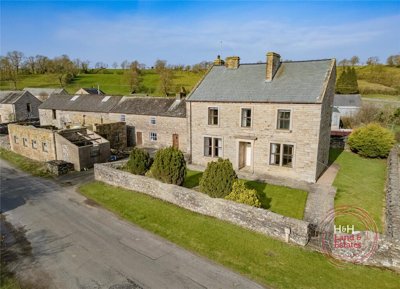
Browse 1 home for sale in Ormside, Westmorland and Furness from local estate agents.
The larger property sector typically features multiple bathrooms, substantial reception space, and private gardens or off-street parking. Four bedroom houses in Ormside span detached, semi-detached, and occasionally terraced configurations, with styles ranging from period properties to modern executive homes.
£0k
0
0
0
Source: home.co.uk
Showing 0 results for 4 Bedroom Houses for sale in Ormside, Westmorland and Furness.
Ormside’s property market follows the wider rural Cumbria pattern, where limited supply meets steady demand from people looking for countryside living. Our data shows that properties in Ormside have averaged £437,500 over the last twelve months, with individual detached homes selling for between £340,000 and £535,000 in recent months. That is a clear step down from the £670,000 peak reached in 2020, so the market has corrected and now offers a less daunting starting point for buyers who were priced out during the last boom. The Eden Valley market moves at a measured pace that suits the village’s quiet character, and home.co.uk records show approximately 20 property sales completed in the village over the past year.
Property transactions in Ormside tend to move at a measured pace that suits the village’s quiet character. home.co.uk records show approximately 20 property sales completed in the village over the past year, with notable transactions including detached properties in April and March 2025. The housing stock leans heavily towards older, traditional homes, with many properties dating back well over a century. New build development within Ormside itself remains extremely limited, as is common in small Cumbrian villages where planning rules often protect the historic shape of the settlement. With so little new supply, buyers prepared to take on renovation work may find real opportunities in homes that need modernisation but still have plenty of character.
Semi-detached and terraced homes in the village usually sit between £180,000 and £280,000, while detached houses with larger gardens and rural views regularly go beyond £500,000. Ormside’s place in the Eden Valley catchment means buyers from across the north of England and further afield continue to look here for countryside living. To read the market properly, we need to understand both the village itself and the wider Westmorland and Furness area, where similar historic villages are chasing the same pool of people who want traditional Cumbrian property.

Life in Ormside still follows the farming calendar and the gentle rhythm of rural Cumbrian living. The village takes its name from the Old Norse word for a ridge or watershed, a reminder that this area has been settled since medieval times and possibly earlier. The population has edged up steadily over the years, from 133 residents in 2001 to 167 at the 2011 Census, with estimates putting it at around 196 inhabitants by 2024. That slow growth speaks to Ormside’s appeal as a place where people put down roots and stay, rather than passing through for a short while.
Agriculture has long been the local mainstay, with sheep farming and mixed agriculture underpinning village life for centuries. In the nineteenth century, quarrying and lime-burning added another layer to the local economy, although both industries have been gone for a long time. Tourism now plays a bigger part, with the Wild Rose caravan park welcoming visitors exploring the Eden Valley and Ormside Mill Activity Centre offering outdoor pursuits for families and groups. St James’ Church sits at the centre of the village, a Grade I listed building dating to the twelfth century, while nearby Ormside Hall has its striking medieval pele tower, a fortified structure from the fourteenth or fifteenth century that points to a more unsettled time when border raids were a real concern.
The Eden Valley around Ormside gives walkers and cyclists plenty to work with, and the River Eden provides a scenic corridor for outdoor days out. The Lake District National Park is also close by, bringing world-class scenery and year-round recreation within easy reach. Local pubs and tearooms in nearby villages act as informal meeting places for community events and seasonal celebrations. That feeling of belonging stretches beyond Ormside itself and into the wider network of small communities across Westmorland and Furness.

Families thinking about a move to Ormside will find that education is centred on nearby villages and towns within a workable commute. For primary education, children from Ormside usually attend schools in the surrounding area, with the nearest primary schools in neighbouring villages serving the scattered rural communities of Westmorland and Furness. These smaller rural schools often offer close links between staff and pupils, smaller class sizes, and the kind of community atmosphere that many parents prefer to larger urban schools.
Secondary education for Ormside residents means travelling to larger places such as Penrith or Appleby-in-Westmorland, where secondary schools serve a broad catchment across the Eden Valley. Parents need to think about school transport and journey times before committing to a purchase in Ormside. For older children looking at further education, the colleges in Carlisle and Kendal provide a wider mix of A-level and vocational courses, reached via the A66 and M6 corridor. It is wise to check specific Ofsted ratings and admission criteria for schools across Westmorland and Furness before buying, given how rural catchment areas work in this part of Cumbria.
The village’s small population means school roll numbers can change quite sharply from one year to the next, so it is sensible to speak to individual schools directly about current capacity and admissions policies. Some families choose private schooling instead, with independent schools in Penrith serving the wider region. Ormside’s position near the Lake District boundary also leaves some families within reasonable distance of schools in places such as Keswick, although that would mean much longer daily journeys.

Ormside sits in the Eden Valley, and the A66 trunk road is the main route linking the village to the wider transport network. This road runs east-west across northern England, connecting Penrith to the east with the coastal towns of Cumbria to the west. For commuters, the nearest mainline railway station is in Penrith, with direct services to London Euston, Edinburgh, and major northern cities including Manchester and Leeds. The journey from Penrith to London takes approximately three hours, which keeps Ormside in play for people who work in the capital but want rural Cumbrian life.
Local bus services link Ormside with surrounding villages and market towns, although frequencies reflect the rural setting and are usually lower than in urban areas. The River Eden, while adding to the village’s scenery, also supports cycling and walking routes that residents and visitors use regularly. For air travel, Manchester Airport and Liverpool John Lennon Airport are within reasonable driving distance, while Newcastle Airport adds another option for longer-haul trips. Daily commuting to major employment centres is possible thanks to the M6 motorway’s proximity, but buyers should be honest about journey times and about whether that kind of lifestyle fits their plans.
The village’s place in the Eden Valley gives handy access to both the Pennines to the east and the Lake District to the west, making it a strong base for exploring the natural beauty of northern England. The market towns of Appleby-in-Westmorland and Kirkby Stephen are also within easy driving distance, adding extra shopping, dining, and services to the village offer.

We always suggest spending time in Ormside at different times of day and on different days of the week before viewing property in earnest. Call in at the local pub if there is one, walk the footpaths, and talk to residents to get a feel for whether the village suits the way you want to live. Check flood risk information because of the village’s position beside the River Eden, and take time to understand the planning constraints that apply to historic homes in the area.
Get a mortgage agreement in principle before you start viewing homes. It gives offers more weight and shows sellers that the buyer is serious. Speak to several lenders, or use a mortgage broker, to find the best rate for the circumstances. With many Ormside properties above £400,000, competitive mortgage terms matter when you are weighing up the overall cost of a purchase.
We recommend working with local estate agents who know the Ormside area properly. View more than one property so there is something to compare, especially when older traditional buildings may need a different eye from modern construction. Roof condition, damp, and outdated systems all deserve close attention in period homes across the village.
Because Ormside has so many historic properties, a thorough survey is essential. The national average cost for a Level 2 survey is approximately £455, with properties above £500,000 averaging £586. That spending can uncover defects that are easy to miss on a standard viewing, including structural issues linked to sandstone construction and problems with older roofing systems.
Once an offer is accepted, instruct a conveyancing solicitor to handle the legal transfer of ownership. The solicitor will carry out searches, check title deeds, and deal with the paperwork that often comes with older homes, including unusual easements or rights of way. The historic nature of many Ormside properties means title issues can crop up from time to time and may need specialist handling.
After satisfactory survey results and contract negotiations, contracts are exchanged and a deposit is paid. Completion usually follows within weeks, when the keys to a new home in Ormside are handed over. The village’s small market means transactions can sometimes move quickly once buyer and seller have agreed terms, although the historic housing stock may need extra time for proper due diligence.
Properties in Ormside need careful scrutiny because of the village’s age and heritage. The number of listed buildings, including St James’ Church and Ormside Hall, shows how much the area has relied on traditional building materials such as local sandstone. When viewing homes, we look closely at stone walls for cracking, mortar deterioration, or old repairs that may point to ongoing structural concerns. The age of the housing means electrical systems, plumbing, and heating may all need updating to meet modern standards.
Flood risk deserves particular attention in Ormside because the village sits beside the River Eden. Buyers should find out whether a property lies within identified flood risk zones and what flood history, if any, exists for that exact location. Homes in these areas should have suitable flood resilience measures in place. The village’s nineteenth-century association with quarrying and lime-burning also means ground conditions deserve checking, especially where industrial activity once took place. Conservation rules can affect what changes or extensions are possible in period homes, so buyers should speak to Westmorland and Furness planning authority before committing to renovation plans.
The sandstone heritage of Ormside means many homes were built using traditional methods that predate modern building regulations. Load-bearing solid walls, lime mortar pointing, and traditional roof coverings are all features buyers may come across. These methods can be very durable when maintained well, but they need a different set of checks from modern cavity wall construction. Our inspectors know traditional Cumbrian properties well and can spot issues that may not be obvious to buyers without specialist knowledge of historic building construction.

The average house price in Ormside over the last twelve months was £437,500 according to homedata.co.uk. That marks a noticeable correction from the 2020 peak of £670,000, giving buyers more accessible entry points into this historic Cumbrian village. Individual detached homes have sold for between £340,000 and £535,000 in recent months, and the market is moving at a measured pace that suits rural village life. Semi-detached and terraced properties usually sit between £180,000 and £280,000, which gives buyers a range of budget options.
Properties in Ormside fall under Westmorland and Furness Council, which sets council tax bands based on property valuation. Specific band details for individual homes can be checked on the Valuations Office Agency website or by speaking to the council directly. Rural properties in Cumbria often sit across a range of bands depending on size, condition, and historic valuation. Given the village’s historic housing stock, many homes will have been valued using criteria that suit traditional construction and period features.
Primary education for Ormside children is provided by schools in surrounding villages, serving the scattered rural communities of the Eden Valley. Secondary education is available in nearby towns such as Penrith and Appleby-in-Westmorland, with school transport linking these institutions to outlying villages. Parents should look into specific Ofsted ratings and admission criteria for schools across Westmorland and Furness, as catchment areas in this rural region can cover significant distances. The smaller scale of rural schools often means places can be limited, so early contact is important for families with school-age children.
Ormside is linked to surrounding areas by local bus services, although the timetable reflects the rural setting. The nearest mainline railway station is in Penrith, with direct services to London, Edinburgh, Manchester, and Leeds. The A66 trunk road provides road access to the regional network, and the M6 motorway is available for longer journeys. Daily commuting to major employment centres is possible, but journey times need careful thought. The nearest bus stop is in the village itself, with services running to Appleby-in-Westmorland and Penrith for onward travel.
Ormside appeals to buyers looking for countryside living in a historic Cumbrian village with strong community ties. The correction in average prices from the 2020 peak has opened up more accessible entry points, while the lack of new build development helps protect the character of the existing housing stock. Renovation projects may offer value to buyers willing to invest in improvements, although the age of the homes means maintenance costs should be built into any budget. The village’s heritage designation and planning constraints in Westmorland and Furness mean the supply of traditional homes is unlikely to rise much in future years.
Stamp Duty Land Tax rates for standard buyers start at 0% on properties up to £250,000, then move to 5% on the portion between £250,001 and £925,000. First-time buyers get relief on properties up to £425,000, paying 5% on the portion between £425,001 and £625,000. With the average Ormside price at £437,500, a standard buyer would pay approximately £9,375 in stamp duty, while first-time buyers would pay £625. Calculator tools are available to help buyers work out their total SDLT liability from their own circumstances and purchase price.
Ormside has a striking concentration of listed buildings that reflects its historic heritage. These include the Grade I listed Church of St James, dating to the twelfth century, Ormside Hall with its Grade II* listed medieval pele tower from the fourteenth or fifteenth century, and several farmhouses and barns throughout the village. Properties close to these historic buildings may face extra planning considerations, while any works to the listed structures themselves need consent from Westmorland and Furness planning authority. All of that helps give the village its distinct character, but it also means buyers should think hard about renovation plans before purchasing.
The main risks when buying in Ormside come down to the age and construction of the local housing stock. Flood risk from the River Eden affects properties in low-lying parts of the village, while the historic sandstone construction used in many homes calls for an understanding of traditional building methods and maintenance needs. Ground conditions in areas with historical quarrying and lime-burning activity may also need specialist investigation. Our surveyors are used to assessing these risks and can produce detailed reports that flag issues before a purchase goes ahead. It is sensible to budget for possible renovation costs when buying period property in the village.
From £455
A detailed inspection for traditional stone-built homes in Ormside
From £600
Suitable for older properties or homes showing visible defects
From £80
Energy Performance Certificate, needed for all property sales
From £200
Official valuation for Help to Buy and shared ownership schemes
Working out the full cost of buying in Ormside means looking well beyond the purchase price. Stamp Duty Land Tax is the biggest extra cost for most buyers. At current rates for the 2024-25 tax year, standard buyers purchasing a property at Ormside’s average price of £437,500 would pay SDLT at 0% on the first £250,000 plus 5% on the remaining £187,500, which comes to £9,375. First-time buyers purchasing properties up to £625,000 benefit from higher thresholds, cutting their SDLT liability to £625 on the same property.
Beyond stamp duty, buyers should budget for solicitor conveyancing fees, which usually start from around £499 for straightforward transactions but can rise where titles are complex or where historical issues crop up in older village homes. Survey costs also need to be included, with RICS Level 2 surveys averaging approximately £455 nationally and rising to around £586 for properties valued above £500,000. Given how many historic stone-built homes there are in Ormside, a proper survey is money well spent. Search fees, title registration fees, and mortgage arrangement fees add further costs, so buyers should aim to have at least 3-5% of the purchase price available beyond the mortgage deposit to cover these expenses comfortably.
The transaction timeline in Ormside usually runs to 8-12 weeks from offer acceptance to completion for standard purchases, although historic properties with complex titles may need extra time for proper due diligence. Build in the chance of delays when planning a move, especially where planned improvements will need planning consent or listed building consent. Our team can provide more detailed cost estimates based on the circumstances and the property under consideration.

Properties for Sale In London

Properties for Sale In Plymouth

Properties for Sale In Liverpool

Properties for Sale In Glasgow

Properties for Sale In Sheffield

Properties for Sale In Edinburgh

Properties for Sale In Coventry

Properties for Sale In Bradford

Properties for Sale In Manchester

Properties for Sale In Birmingham

Properties for Sale In Bristol

Properties for Sale In Oxford

Properties for Sale In Leicester

Properties for Sale In Newcastle

Properties for Sale In Leeds

Properties for Sale In Southampton

Properties for Sale In Cardiff

Properties for Sale In Nottingham

Properties for Sale In Norwich

Properties for Sale In Brighton

Properties for Sale In Derby

Properties for Sale In Portsmouth

Properties for Sale In Northampton

Properties for Sale In Milton Keynes

Properties for Sale In Bournemouth

Properties for Sale In Bolton

Properties for Sale In Swansea

Properties for Sale In Swindon

Properties for Sale In Peterborough

Properties for Sale In Wolverhampton

Enter your details to see if this property is within your budget.
Loans, cards, car finance
Estimated property budget
Borrowing + deposit
You could borrow between
Typical borrowing
Monthly repayment
Est. at 4.5%
Loan-to-value
This is an estimate only. Your actual budget may vary depending on interest rates, credit history, and personal circumstances. For an accurate affordability assessment, speak to one of our free mortgage advisors.
This calculator provides estimates for illustrative purposes only and does not constitute financial advice. Your home may be repossessed if you do not keep up repayments on your mortgage. Estimates based on 4.5% interest rate, repayment mortgage. Actual rates depend on your circumstances.
Homemove is a trading name of HM Haus Group Ltd (Company No. 13873779, registered in England & Wales). Homemove Mortgages Ltd (Company No. 15947693) is an Appointed Representative of TMG Direct Limited, trading as TMG Mortgage Network, which is authorised and regulated by the Financial Conduct Authority (FRN 786245). Homemove Mortgages Ltd is entered on the FCA Register as an Appointed Representative (FRN 1022429). You can check registrations at NewRegister or by calling 0800 111 6768.

We use cookies to show you personalised content and improve your experience of our website. Find out more in our Privacy policy and Cookie policy.