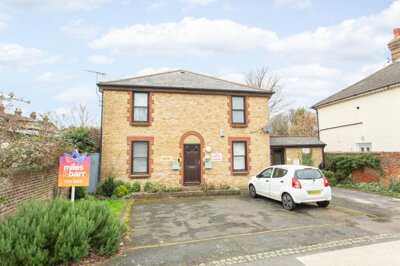
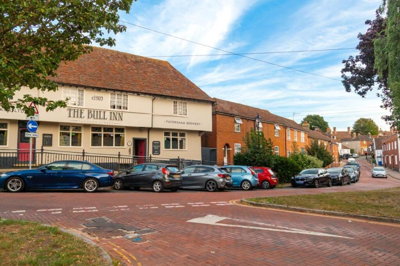
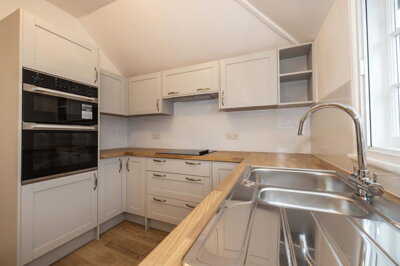
Browse 3 homes for sale in Oare from local estate agents.
One bed apartments provide a separate bedroom alongside distinct living space, bathroom, and kitchen areas. Properties in Oare are available in various building types including mansion blocks, contemporary developments, and house conversions.
homedata.co.uk records show that Oare has been a surprisingly active pocket of the Swale market, with prices rising 41% year on year in the latest figures. That pace is much stronger than the wider Swale district, where the average house price was broadly similar to the previous year, with a 0.9% change. The difference matters because it suggests Oare is being pulled by its village setting, its limited stock, and the appeal of homes close to the marshes and Faversham.
Detached homes are the top end of the local market at £725,000 on average, while semi-detached homes sit at £470,000 and terraced homes at £280,000. That spread gives buyers a useful choice, from period terraces to larger family houses, but it also shows how much Oare values its bigger plots and older character homes. We do not have a verified Oare flat average in the research, so buyers should treat any flat price benchmark as a wider Swale comparison rather than a village-specific figure. For anyone watching the market closely, the message is clear: homes here can sell strongly when presentation, setting, and outdoor space all line up.

Oare feels like a village that is defined by its landscape as much as by its houses. The Swale estuary, Oare Marshes Nature Reserve, and the open land around the village give it a calm, wide-open feel that is very different from town-centre living. That setting also shapes the housing stock, with older homes, former coastguard cottages, and Victorian-era properties adding a strong sense of place. One of the local appeals is that you can enjoy birdlife, walks, and big skies, then head into Faversham for everyday errands.
Research on the area points to a good mix of traditional building materials, including brick, timber framing, and Kentish ragstone in the wider Faversham area, which suits Oare’s historic character. Some homes date back to the 1870s and 1880s, so buyers often get period features such as exposed floorboards, solid walls, and older fireplaces. That older stock is attractive, but it can also bring maintenance costs that newer-build buyers may not expect. The village is best suited to people who want a quieter pace and are happy to live with the quirks that come with character property.
The landscape is beautiful, yet it also needs respect. Oare’s proximity to the marshes and the Swale estuary means flood risk and local drainage should sit high on your checklist, especially for low-lying plots. Kent geology can also include clay, so shrink-swell movement is worth considering on older homes with shallow foundations. When you combine scenery, history, and environmental factors, Oare becomes a place where lifestyle and due diligence need to go hand in hand.
Oare itself is a small village, so most families look beyond the parish boundary to schools in Faversham and the wider Swale area. That makes admissions research especially important, because catchments can change and popular schools fill quickly. The practical move is to check Kent County Council admissions guidance and the latest Ofsted information before you offer on a home. Buyers with children often want to know not just where a school is, but how easy it is to reach on a school run from an older village road network.
The village location means secondary and sixth-form options are part of the wider local picture rather than something on the doorstep. Families should also think about transport, after-school clubs, and how a school fits into commuting patterns, since daily life in Oare often centres on Faversham and nearby towns. A house that looks ideal on paper can feel very different if it adds a stressful drive at 8.30am, so a realistic test run is worth doing. For households planning a long stay, school searches should sit alongside mortgage checks and viewing lists from the very start.
Because the local housing mix includes older terraces, cottages, and larger detached homes, school priorities often differ from one buyer to the next. Some want a short walk or drive to primary education, while others focus on secondary routes and sixth-form continuity. That is why our advice is to weigh school convenience with the type of property you want and the area around it. In a village like Oare, the best family home is usually the one that works as well in daily life as it does on paper.

Oare is best understood as a village with good access to Faversham rather than as a standalone commuter hub. Most residents look to Faversham for rail connections, everyday shopping, and a wider choice of bus routes, while the road network links into the main Kent corridors. That setup suits buyers who want some separation from the town without losing access to it. If you commute regularly, it is sensible to test your route at the exact time you would travel, because rural journeys can feel very different at peak hours.
Road access is straightforward for much of the village-to-town journey, but the final approach can be narrow in places and older lanes are not always ideal for heavy traffic. Parking is usually less pressured than in a busy town centre, although period roads and tight plots can still make visitor parking awkward. Cycling can work well for nearby trips, especially when you are heading into Faversham for errands or the station, but weather and road surface quality matter. Buyers who split time between home working and office days often find that Oare works best when they plan transport realistically rather than assuming urban convenience.
Public transport is useful, but it is not the same as living next to a major station or frequent bus interchange. That means households that rely on trains, late evening returns, or school runs often put a premium on having a second car or flexible family routines. For buyers comparing villages in Swale, Oare stands out more for lifestyle than for fast city access. If your priority is peaceful living with practical links into Faversham, it offers a balanced compromise.
Before you book viewings, secure a mortgage agreement in principle so you know your budget and can act quickly when the right home appears.
Walk or drive the streets, check how close the home is to the marshes, and think about school routes, parking, and daily access into Faversham.
A terraced cottage, semi-detached home, and detached house in Oare can all behave differently on price, running costs, and maintenance needs.
Older properties in the village often benefit from a RICS Level 2 or Level 3 survey, especially where damp, roof wear, or flood exposure could matter.
Once you are serious, bring in a conveyancer to handle searches, contract checks, title questions, and any local issues linked to flooding or conservation.
Keep your chain, deposit, insurance, and moving dates aligned so you can exchange and complete without last-minute stress.
Flood risk should be near the top of every buyer’s list in Oare. The village sits close to the Swale estuary and Oare Marshes, so homes in low-lying spots deserve proper flood searches, insurance quotes, and a close look at drainage. Even if a house has never flooded, insurers and lenders will still want confidence about the local environment. A careful buyer will ask about past water ingress, nearby ditches, surface water run-off, and how the property behaves after heavy rain.
Older houses are another important factor. Period cottages and former coastal homes can be full of charm, yet they may also hide damp, timber decay, roof wear, and dated electrics. If the property is listed or sits within a conservation-sensitive setting, changes to windows, extensions, and external finishes may need extra permissions. That can be a plus for character, but it also means the legal and maintenance picture needs more attention than a newer suburban home would.
The final point is tenure and running costs. Oare has a small number of property types compared with larger towns, so flats are more likely to need careful checks on lease length, service charges, and ground rent, while houses should still be checked for rights of way and boundary clarity. Some buyers only look at the asking price, but in a village with older stock, that is only part of the story. The right question is how the home will work over the next five to ten years, not just on completion day.
homedata.co.uk records show an average house price of £486,250 in Oare over the last year. Detached homes averaged £725,000, semi-detached homes £470,000, and terraced homes £280,000, so the market has a wide range. The same research also shows prices were 41% up on the previous year, which is a strong local performance. That makes Oare one of the more active village markets in the Swale area.
Council tax bands for Oare are set by the local authority and depend on the exact property, not just the village name. Swale Borough Council applies the usual A to H band system, so two homes on the same road can still fall into different bands. Older cottages, larger detached homes, and converted properties can all sit in different brackets. Always check the specific address before you make an offer so you can factor the bill into your budget.
Oare is a small village, so families usually look to schools in Faversham and the wider Swale district rather than expecting a large choice within the parish itself. The best fit depends on age group, catchment, and travel route, so it is worth checking current admissions rules and Ofsted reports before you commit. Many buyers also test the school run from the property at the time they would actually travel. That gives a better feel for daily life than a postcode search alone.
Oare is reasonably connected for a village, but it is not a high-frequency transport hub. Most residents head into Faversham for rail links, more frequent buses, and a broader choice of services. If you commute by train, it is wise to check how you will get to the station and what late return options look like. Buyers who work odd hours or travel often may prefer a home with easy parking and a flexible route into town.
Oare can be attractive to investors who value limited supply, strong local character, and a setting close to Faversham and the marshes. homedata.co.uk records show a 41% annual rise in local house prices, which points to strong recent demand, although past growth is never a guarantee of future returns. The main watch-outs are flood risk, maintenance on older buildings, and the narrower tenant or buyer pool that comes with a small village. If you are buying for income or resale, quality of location and survey results matter more here than in a standard town estate.
For most buyers in 2024-25, stamp duty is 0% up to £250,000, then 5% from £250,000 to £925,000, 10% from £925,000 to £1.5 million, and 12% above that. On Oare’s average price of £486,250, a standard buyer would pay about £11,813 in stamp duty. First-time buyers get relief at 0% up to £425,000 and 5% from £425,000 to £625,000, so the bill on the same price would be about £3,063. If you are close to the threshold, that tax cost should be built into your offer early.
A survey is a smart move in Oare, especially for older cottages, listed buildings, and homes close to the marshes. A RICS Level 2 survey can suit many conventional properties, while a Level 3 survey is often better for older or more complex homes. The main issues to look for here are damp, roof condition, timber defects, and anything linked to local water exposure. A good survey can save you from expensive surprises after completion.
Semi-detached homes appear to make up a large share of recent sales, followed by detached homes and terraced properties. That fits the village feel, where family houses and character homes tend to be in demand. Detached homes command the highest average at £725,000, which shows that space and privacy carry a premium. If you are buying in Oare, it is worth deciding early whether you want a larger family house or a more affordable terrace with period appeal.
From 4.5%
Compare mortgage rates and get your agreement in principle before you start viewings
From £499
Expert solicitors to handle searches, contracts, and completion
From £650
Detailed survey for older, listed, or flood-sensitive homes in Oare
From £99
Check energy performance before you make an offer
Stamp duty is one of the easiest costs to underestimate, so it is worth pricing it in before you get attached to a home. In England, the current standard thresholds are 0% up to £250,000, 5% from £250,000 to £925,000, 10% from £925,000 to £1.5 million, and 12% above £1.5 million. That means a buyer in Oare paying the local average of £486,250 would face a meaningful tax bill as well as legal fees, survey costs, mortgage fees, and moving expenses. A good offer is one that still works after every cost is added up.
First-time buyers get relief up to £425,000, then pay 5% on the slice from £425,000 to £625,000, with no relief above that upper limit. On Oare’s average price point, that brings the tax bill down sharply compared with a standard purchase, but it does not remove the need for careful budgeting. If you are competing for a village home, make sure your lender, solicitor, and surveyor are lined up early so costs do not delay your move. That approach is especially useful in a market with limited stock and active demand.
Buyers should also remember that older village homes can carry running costs that are not obvious from the asking price. Heating, maintenance, insurance, and any flood-related protections can all affect the long-term cost of ownership. The best plan is to compare the purchase price with the full monthly commitment, not just the mortgage payment. When you do that, Oare becomes easier to judge fairly as both a lifestyle choice and a financial decision.
Properties for Sale In London

Properties for Sale In Plymouth

Properties for Sale In Liverpool

Properties for Sale In Glasgow

Properties for Sale In Sheffield

Properties for Sale In Edinburgh

Properties for Sale In Coventry

Properties for Sale In Bradford

Properties for Sale In Manchester

Properties for Sale In Birmingham

Properties for Sale In Bristol

Properties for Sale In Oxford

Properties for Sale In Leicester

Properties for Sale In Newcastle

Properties for Sale In Leeds

Properties for Sale In Southampton

Properties for Sale In Cardiff

Properties for Sale In Nottingham

Properties for Sale In Norwich

Properties for Sale In Brighton

Properties for Sale In Derby

Properties for Sale In Portsmouth

Properties for Sale In Northampton

Properties for Sale In Milton Keynes

Properties for Sale In Bournemouth

Properties for Sale In Bolton

Properties for Sale In Swansea

Properties for Sale In Swindon

Properties for Sale In Peterborough

Properties for Sale In Wolverhampton

Enter your details to see if this property is within your budget.
Loans, cards, car finance
Estimated property budget
Borrowing + deposit
You could borrow between
Typical borrowing
Monthly repayment
Est. at 4.5%
Loan-to-value
This is an estimate only. Your actual budget may vary depending on interest rates, credit history, and personal circumstances. For an accurate affordability assessment, speak to one of our free mortgage advisors.
This calculator provides estimates for illustrative purposes only and does not constitute financial advice. Your home may be repossessed if you do not keep up repayments on your mortgage. Estimates based on 4.5% interest rate, repayment mortgage. Actual rates depend on your circumstances.
Homemove is a trading name of HM Haus Group Ltd (Company No. 13873779, registered in England & Wales). Homemove Mortgages Ltd (Company No. 15947693) is an Appointed Representative of TMG Direct Limited, trading as TMG Mortgage Network, which is authorised and regulated by the Financial Conduct Authority (FRN 786245). Homemove Mortgages Ltd is entered on the FCA Register as an Appointed Representative (FRN 1022429). You can check registrations at NewRegister or by calling 0800 111 6768.

We use cookies to show you personalised content and improve your experience of our website. Find out more in our Privacy policy and Cookie policy.