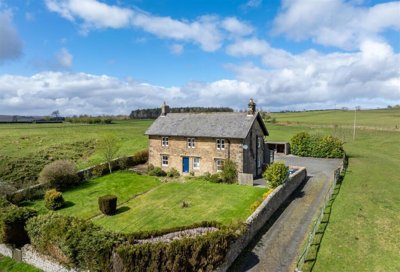
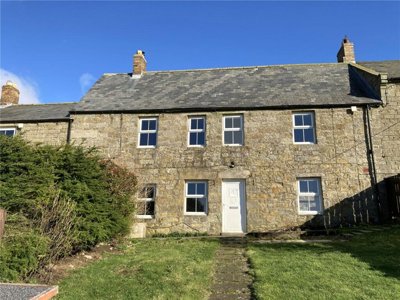
Browse 2 homes for sale in Nunnykirk, Northumberland from local estate agents.
Three bedroom properties represent a significant portion of the Nunnykirk housing market, offering space for families with multiple reception rooms and gardens in many cases. Browse detached, semi-detached, and terraced options ranging from period character homes to contemporary developments.
£495k
1
0
23
Source: home.co.uk
Showing 1 results for 3 Bedroom Houses for sale in Nunnykirk, Northumberland. The median asking price is £495,000.
Source: home.co.uk
Detached
1 listings
Avg £495,000
Source: home.co.uk
Source: home.co.uk
Nunnykirk's property market is a niche corner of the wider Northumberland rural housing scene. The village is tiny, with only around 53 residential properties according to Parish Council data, so sales are rare. The only specifically recorded sale in Nunnykirk in recent homedata.co.uk data was a detached property at Nunnykirk Gin Gang in Morpeth (NE61 4PB), which sold for £175,000 in May 2005. Because the transaction history is so thin, any current valuation has to lean on comparable sales across the wider NE61 postcode area, including Morpeth and the surrounding villages.
Detached homes dominate Nunnykirk, generally sitting in generous plots that reflect the parish's agricultural setting. The residential buildings in the NE61 4PG postcode sector, which covers parts of this area, point to a stock of houses rather than terraced or flatted development. Many of the properties are likely to have been built using traditional stone and brick work, with a lot of them dating from before 1900. As there has been very little new build activity in the village itself, homes coming up for sale will mostly be established places with the character that comes with age.
Scarcity drives the asking-price story in the immediate Nunnykirk area, and any listing tends to draw strong interest from people after rural Northumberland living. The broader NE61 postcode area, stretching from Morpeth into the surrounding countryside, gives useful comparables in the shape of farmhouses, period cottages and homes with land. As a broad guide, detached rural properties in this part of Northumberland with historic character and good-sized gardens usually sit between £250,000 and £500,000 depending on condition, size and plot extent, although some homes will sit outside that range. Local estate agents who follow the Nunnykirk market closely are the best source for current pricing on the village itself.

The setting is rural Northumberland through and through, and daily life in Nunnykirk follows that slower rhythm. The village sits close to the River Wansbeck, a familiar Northumberland waterway that winds through the landscape and gives the area its walks and wildlife habitat. Farmland and rolling fields surround the settlement, creating a wide, quiet backdrop where the night sky can stay dark enough for stars to stand out, something town and city residents rarely get to enjoy. Life moves at an even pace, with the Wingates Village Institute acting as a meeting point for local gatherings and social events.
Small though the community is, Nunnykirk has a strong local core, with the Parish Council looking after village facilities and speaking up for residents' interests. Amenities are limited on purpose, which helps keep the rural feel intact, while Morpeth is close enough to provide shopping, healthcare and leisure options without much trouble. The Nunnykirk Centre for Dyslexia, based within Nunnykirk Hall, adds something distinctive to village life, drawing students from across the region and feeding into the local community. That specialist provision brings in families who need educational support not readily available in larger towns, so the settlement has a more varied population than its size might suggest. Farming still shapes the wider economy, and while some residents work in agriculture, others travel to Morpeth or further afield.
The village sits in an excellent spot for Northumberland's wider countryside, with the Northumberland National Park reachable for weekend trips and the coast still within sensible driving distance for a day at the beach. Walks from Nunnykirk pass through pastoral land on public footpaths that cross farmland and link to nearby settlements. The River Wansbeck valley is especially attractive, and the river itself supports wildlife such as otters, kingfishers and dippers that people may spot along the bank. Cycling and walking suit the area well, but team sports facilities are thin on the ground, so residents usually head to Morpeth for swimming pools, gyms and sports clubs.

At the centre of local education is the Nunnykirk Centre for Dyslexia, a specialist school operating from the historic Nunnykirk Hall buildings. It offers focused support for pupils with dyslexia and related specific learning difficulties, creating a therapeutic and supportive environment that draws families from across Northumberland and beyond. Having that facility in the village itself means parents can access high-quality help without long daily journeys, which makes Nunnykirk especially appealing to families whose children need that sort of provision.
For mainstream primary and secondary schooling, families in Nunnykirk usually look to the surrounding area, with Morpeth offering a range of options including primary schools and the well-regarded King Edward VI School at secondary level. Anyone planning a move here should check catchment areas and admissions policies as they can shift over time. Because the village is rural, transport to school may need a bit of thought, especially for secondary-aged children travelling into Morpeth. For families who value educational choice as well as specialist provision, the Nunnykirk Centre for Dyslexia is a major local advantage.
Morpeth's schools are another reason the area appeals to families, with Morpeth First School among the primary options and middle and secondary education provided through schools in the town. King Edward VI School in Morpeth has earned a strong reputation for academic results and extracurricular life, and it often appears among the best performing secondary schools in the region. Travel for secondary pupils usually means a school bus or family lifts, and the drive from Nunnykirk to Morpeth schools generally takes between 15 and 25 minutes depending on traffic and the exact location of the school.

Roads carry most of the burden here, and Nunnykirk's rural setting means car ownership is the practical way to reach most amenities and jobs. The A192 gives local road links, taking drivers towards Morpeth, where the A1 trunk road runs through Northumberland. That position keeps Newcastle upon Tyne within reasonable commuting distance and leaves Edinburgh accessible via the A1 for longer journeys. The road network around the village can be pleasant to drive, though narrow lanes and single track sections do crop up in places.
Public transport is limited, which fits the village's small scale and countryside setting. Occasional bus services run to Morpeth, and the X18 route links Morpeth and Newcastle via surrounding villages including Stakeford and guide posts. For people working in Newcastle, that service can offer an alternative to driving on some journeys, though the timetable is limited and car ownership is still needed for most day-to-day life. Morpeth railway station on the East Coast Main Line gives access to Newcastle, Edinburgh, London and places further afield, with regular services run by CrossCountry and LNER. A drive to Morpeth followed by the train is a workable commuting pattern for Newcastle, while those working in the Morpeth area may find the car journey entirely manageable. Cycling can be enjoyable for leisure and shorter trips, although the inland Northumberland terrain does bring the usual rolling hills.

Spend time in Nunnykirk at different points in the day and week before buying, so you get a real feel for daily life. Pop into Morpeth for the local amenities, check broadband speeds and mobile coverage, and talk to people already living in the parish about what it is like. Rural living has seasonal swings, and practical matters such as winter road conditions matter too, so a proper look around can help make sure the village suits the way you want to live.
Get an Agreement in Principle from a mortgage broker or lender before you start viewing. It shows sellers and estate agents that your finances are in good order, and it gives you a clearer idea of your budget in the Nunnykirk market. Some of the village's older homes are of non-standard construction, so not every lender will offer the same products, which is where a broker with rural Northumberland experience can be useful.
Local estate agents should be your next call if you want to arrange viewings that match what you are looking for. Take a camera and notebook to each one, and it is often worth going back for a second visit before making an offer, perhaps at a different time of day. Supply in Nunnykirk is limited, so homes that come onto the market draw attention fast, and having your finances ready puts you in a stronger position when the right property appears.
Many Nunnykirk homes were built before 1900, so a thorough RICS Level 2 Survey is essential for spotting structural problems, damp and the kinds of defects that turn up in older rural houses. Our surveyors have wide experience with historic Northumberland properties and know the local building methods, including traditional stone and brick work with lime mortar. Budget from £400-1000 depending on the size and value of the property, because that outlay can save thousands by flagging issues before you buy.
Once an offer has been accepted, instruct a conveyancing solicitor to deal with the legal side. They will carry out searches, go through the contracts and keep in touch with your mortgage lender right through to completion. For Nunnykirk properties, those searches will include drainage and water authority checks, local authority enquiries and environmental searches that take account of the River Wansbeck and any historical mining activity in the wider area.
From there, your solicitor will organise contract signing and deposit payment before exchange, with completion usually 2-4 weeks later. On completion day, the keys to your new Nunnykirk home are handed over. We recommend arranging buildings insurance before completion, as many properties in the village are older and may come with higher insurance requirements.
Older homes in Nunnykirk need a close look because so much of the housing stock has age and character. Buildings constructed before 1900, as is common in the NE61 4PG postcode sector, often show the sort of issues buyers should check carefully. Damp is one, especially rising damp on ground floor walls and penetrating damp from weathered stone or brickwork. Roofs also need scrutiny, with slipped slates, decaying timber and troublesome leadwork all typical concerns in older rural property. Historic building materials, including stone erosion and lime mortar degradation, need maintenance methods that suit the original construction.
Being so close to the River Wansbeck brings flood risk considerations into the picture for prospective buyers. While detailed flood mapping for Nunnykirk is limited, it makes sense to understand the area's flood history and to check river flood zones with the Environment Agency before buying. There may also be listed buildings or conservation area considerations because of the historic importance of Nunnykirk Hall and St. Andrew's Church, which dates from the 13th century. That can affect permitted development rights and maintenance obligations, so buyers should find out whether any listed building consents apply. Older electrical and plumbing systems may need updating to current standards, and timber problems such as rot and woodworm should be inspected by a professional.
On viewings, look closely at the stonework and any sign of movement or cracking in the walls. Traditional Northumberland houses were built with local stone and lime mortar, which behaves differently from modern materials, so the maintenance history matters. Check whether newer cement pointing has been used on older stonework, because it can trap moisture and cause deterioration. From ground level, look along the roof slope for sagging or uneven lines, and inspect gutters and downpipes for wear. Original sash windows may need careful restoration rather than replacement if the aim is to keep the character and avoid condensation problems. We always recommend a thorough survey on any Nunnykirk purchase, given the prevalence of older construction methods and the need to identify any remedial work before completion.

Nunnykirk itself has no reliable average house price figure, mainly because the village is so small and the transaction history is very limited. The only documented sale in recent records was a detached property that sold for £175,000 in 2005, which tells us very little about present-day conditions. For current values, buyers should look at the wider NE61 postcode area around Morpeth, where there is much more sales data covering period homes, farmhouses and cottages in the broader rural area. As a guide, rural Northumberland properties with character and land often attract premiums over newer suburban homes, with asking prices in the surrounding area often ranging from £250,000 for smaller period cottages to £500,000 or more for substantial detached properties with land. Local estate agents can give the clearest steer on comparable homes across the wider Nunnykirk area.
For council tax purposes, Nunnykirk properties sit within Northumberland County Council administration. The banding depends on the property's assessed value, and most older rural homes in the village are likely to fall within Bands C through E based on typical valuations for traditional stone and brick houses in this part of Northumberland. The band is based on the property's assessed value at 1991, not its current market value, so a period farmhouse with plenty of character may sit in a higher band than a modernised cottage of similar market value. Buyers can check council tax bands through the Valuation Office Agency website using the property address, and current annual charges can be confirmed on Northumberland County Council's website or by contacting the council directly.
Nunnykirk Hall houses the Nunnykirk Centre for Dyslexia, a specialist school with exceptional provision for students with dyslexia and related specific learning difficulties. The historic building draws pupils from across Northumberland and beyond, and it is a significant local asset that gives the village a profile unlike other rural communities. Families looking for mainstream schooling usually turn to Morpeth, where primary schools serve the local catchment and King Edward VI School provides secondary education. Ofsted inspection reports are worth checking when researching individual schools, and parents should confirm current catchment boundaries because they can affect admissions eligibility. School transport for pupils going into Morpeth needs planning, and while school buses are available, they usually need advance arrangement.
Bus links in Nunnykirk are limited, which reflects the village's small size and rural setting. Occasional services run to Morpeth, and the X18 route connects the town with Newcastle via surrounding villages, although the frequency is low and the timetable may suit only certain times of day. Most residents therefore need a car for work, shopping and everyday errands. Morpeth railway station on the East Coast Main Line offers regional and national rail services, with CrossCountry and LNER running connections to Newcastle, Edinburgh and London. For longer-distance commuting, driving to Morpeth and taking the train is usually the most practical option, and train journeys to Newcastle take approximately 15-20 minutes. Driving all the way to Newcastle is also possible, typically taking 30-40 minutes depending on traffic, with straightforward access from Morpeth via the A1.
Viewed as an investment, Nunnykirk is as much about lifestyle as it is about numbers, given the village's small scale and low transaction volume. Its rural location, historic character and specialist dyslexia school create a distinctive market that appeals to particular buyer groups, including families looking for specialist education and people wanting to leave urban life behind. Rental demand in the village itself is likely to be very limited because the population is small and available homes are scarce, so buy-to-let is less straightforward here than in larger towns. Capital growth should be approached conservatively, although Northumberland homes with land and character have historically held their value well over longer periods. Nunnykirk Hall and St. Andrew's Church help preserve the area's character and appeal, but liquidity in such a small market is limited and homes may take longer to sell than they would in town.
SDLT rates for 2024-25 apply as follows: 0% on the first £250,000 of purchase price, 5% on the portion from £250,001 to £925,000, 10% on the portion from £925,001 to £1,500,000, and 12% on any amount above £1,500,000. First-time buyers get relief on the first £425,000 at 0%, with 5% charged between £425,001 and £625,000, and no relief above £625,000. Most residential properties in Nunnykirk are likely to fall below the £425,000 threshold, so first-time buyers may pay no SDLT at all, while standard buyers would generally only face the 0% rate on the first £250,000. Additional SDLT surcharges of 3% apply to second homes and investment properties, which can affect buyers purchasing a Nunnykirk property as an extra residence. We recommend using the HMRC SDLT calculator or speaking with a conveyancing solicitor to confirm the exact liability for your circumstances and purchase price.
From 4.5%
Expert mortgage advice for your Nunnykirk purchase
From £499
Solicitors for your Nunnykirk property purchase
From £400
Comprehensive survey for your Nunnykirk property
From £80
Energy performance certificate for Nunnykirk homes
A purchase budget for Nunnykirk needs more than the headline price. Stamp Duty Land Tax is usually the biggest government charge, with standard rates of 0% up to £250,000, 5% between £250,001 and £925,000, 10% up to £1.5 million and 12% above that threshold. Most residential homes in this rural Northumberland village are likely to attract either no SDLT or the entry level 5% rate, depending on the final purchase price. First-time buyers benefit from higher thresholds, with the first £425,000 taxed at zero percent, which can remove SDLT altogether for homes within that range.
Beyond solicitor fees, buyers also need to factor in other purchase costs. Conveyancing typically runs from £500 to £1,500 depending on complexity and whether the property is freehold or leasehold. Survey costs matter a great deal in Nunnykirk because older homes are common, with RICS Level 2 Homebuyer Reports starting from £400 for smaller properties and rising to £1,000 or more for larger historic homes needing detailed inspection. Local search fees, title registration fees and mortgage arrangement fees, if applicable, add further expense, and total ancillary costs usually come in at £2,000 to £5,000 depending on property value and circumstances. Buyers should also allow for removal costs, possible redecoration and renovation budgets, and ongoing charges such as buildings insurance, which may be higher for older homes with greater flood or structural risk profiles.
Keep a contingency in mind for any works the property may need. Older rural homes often need electrical systems updated to meet current regulations, and a full rewire can cost £3,000 to £8,000 depending on property size. Heating replacement, perhaps moving away from older storage heaters to a more efficient gas or oil system, can add £3,000 to £10,000 to the bill. Roof repairs and repointing stonework with the right lime mortar techniques are other possible costs. We recommend allowing at least 10-15% above the purchase price as a contingency for surprises a professional survey may turn up.

Properties for Sale In London

Properties for Sale In Plymouth

Properties for Sale In Liverpool

Properties for Sale In Glasgow

Properties for Sale In Sheffield

Properties for Sale In Edinburgh

Properties for Sale In Coventry

Properties for Sale In Bradford

Properties for Sale In Manchester

Properties for Sale In Birmingham

Properties for Sale In Bristol

Properties for Sale In Oxford

Properties for Sale In Leicester

Properties for Sale In Newcastle

Properties for Sale In Leeds

Properties for Sale In Southampton

Properties for Sale In Cardiff

Properties for Sale In Nottingham

Properties for Sale In Norwich

Properties for Sale In Brighton

Properties for Sale In Derby

Properties for Sale In Portsmouth

Properties for Sale In Northampton

Properties for Sale In Milton Keynes

Properties for Sale In Bournemouth

Properties for Sale In Bolton

Properties for Sale In Swansea

Properties for Sale In Swindon

Properties for Sale In Peterborough

Properties for Sale In Wolverhampton

Enter your details to see if this property is within your budget.
Loans, cards, car finance
Estimated property budget
Borrowing + deposit
You could borrow between
Typical borrowing
Monthly repayment
Est. at 4.5%
Loan-to-value
This is an estimate only. Your actual budget may vary depending on interest rates, credit history, and personal circumstances. For an accurate affordability assessment, speak to one of our free mortgage advisors.
This calculator provides estimates for illustrative purposes only and does not constitute financial advice. Your home may be repossessed if you do not keep up repayments on your mortgage. Estimates based on 4.5% interest rate, repayment mortgage. Actual rates depend on your circumstances.
Homemove is a trading name of HM Haus Group Ltd (Company No. 13873779, registered in England & Wales). Homemove Mortgages Ltd (Company No. 15947693) is an Appointed Representative of TMG Direct Limited, trading as TMG Mortgage Network, which is authorised and regulated by the Financial Conduct Authority (FRN 786245). Homemove Mortgages Ltd is entered on the FCA Register as an Appointed Representative (FRN 1022429). You can check registrations at NewRegister or by calling 0800 111 6768.

We use cookies to show you personalised content and improve your experience of our website. Find out more in our Privacy policy and Cookie policy.