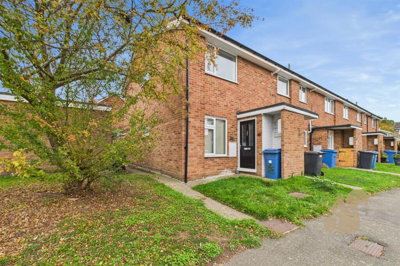
Browse 1 home for sale in Newton from local estate agents.
Studio apartments feature open-plan living spaces without separate bedrooms, incorporating sleeping, living, kitchen, and bathroom facilities. The Newton studio market includes properties in modern apartment complexes, converted Victorian and Georgian buildings, and purpose-built developments.
homedata.co.uk records put Babergh’s average house price at £332,000 in December 2025, a 1.8% rise on the previous year. The split by property type is telling, with semi-detached homes up 3.3% and flats down 1.5%. In Newton, where many buyers want space, gardens and scope to rework older village homes, that difference matters. Choice is also starting to widen through planned homes off Sudbury Road and Assington Road, alongside bungalow-led schemes in Newton Green.
The longer picture is less straightforward. In homedata.co.uk’s February 2026 snapshot, prices were down 2.4% year on year, or 6.1% after inflation. Babergh still logged 1,090 sales over the last 12 months, so the market is moving even if it is not moving evenly. Older CO10 sold-price data, covering a wider patch than Newton itself, put all properties at £292,441, with detached homes at £434,836, semi-detached at £274,596, terraced at £227,560 and flats at £154,128. For buyers, that range is a reminder that plot, condition and the amount of work needed can shift the final figure a long way.

In Newton, the setting is as much a part of the property story as the houses themselves. The parish has long been worked as arable farmland on clay soils, and that shows in the older housing stock, the traditional materials and the long-established plots. There are 37 listed buildings in Newton, made up of two Grade II* entries and 35 Grade II buildings. For a place this size, that says plenty. Across Babergh, there are 28 conservation areas and around 4,000 listed buildings, so heritage considerations are woven into day-to-day ownership.
Many buyers head for Newton Green and the wider village edge for exactly that reason, a quieter pace without cutting themselves off from the rest of Babergh. Most of the parish lies outside Flood Zones 2 and 3, but a small north-eastern section falls within Flood Zone 3, and there are isolated surface water pockets across the site. So although the village is appealing, it pays to check each property carefully before committing. Newton has a particular pull if what you want is Suffolk countryside rather than a commuter suburb.
One of the main practical issues here is clay ground. Shrink-swell movement can affect shallow foundations and older extensions, so a good survey can justify itself very quickly. Historic cracking, uneven floors and signs of previous movement all deserve close attention. In Newton, we would also look hard at drainage, roof lines and evidence that a house has been altered in stages over time. For village cottages and listed homes, a RICS Level 2 survey or a fuller Level 3 report is often money well spent.
Flood risk is still worth checking properly, even though most of the parish sits outside the higher-risk zones. That small Flood Zone 3 area to the north-east, along with localised surface water risk, means plot position, garden levels and nearby ditches can matter more than buyers first expect. There is also the heritage angle. With so many listed buildings in Newton, some homes come with tighter controls on windows, roofs, extensions and external finishes. Where a property sits within or near a heritage setting, we would always confirm the planning history and any consent conditions before moving ahead.

Because Newton is a small parish, most families look beyond the village boundary for schools. The real issue is rarely just the nearest option. It is whether that school works for your daily routine, your child’s year group and your address within the parish. For many buyers, the wider Babergh and Sudbury area provides the clearest range of choices, so it makes sense to check catchments early. Before you start planning school runs around a move, use the local authority admissions pages to confirm the latest catchment maps and available places.
For younger children, living in Newton often means combining village life with travel into nearby centres for school and clubs. That arrangement suits plenty of families, especially those who want a quieter base and are happy with a slightly wider radius for education. Older pupils tend to be considered across the wider district too, particularly for sixth form and further education, rather than within Newton alone. Best to match the house to the school run before getting too attached.
We often see buyers focus first on a property’s finish and how quickly they can move in, but schooling needs to sit alongside the mortgage and survey from day one. A house can look perfect on paper and still prove awkward if school transport, wraparound care or admissions deadlines do not fit family life. If you are weighing Newton against nearby villages, build a checklist around travel time, bus availability and the age groups you need covered. It usually leaves you with a far more workable shortlist.
Newton tends to suit buyers who are happy with a village-led routine and accept that the car is often the easiest everyday option. The lanes and rural roads add to the calm feel, but they also mean commuting is normally shaped around road links instead of a dense urban network. That is why off-street parking, a practical driveway layout and easy access to routes into nearby towns carry real weight here. If commuting is part of your week, try the route at peak times before deciding a property fits.
Small villages seldom offer the frequency you get in a larger town, so rail and bus access need a proper check. Most Newton buyers rely on the wider Sudbury area for onward links, and it helps to know exactly how far the nearest rail point is, plus what the first and last services look like. A house that feels convenient on a weekend viewing can feel very different on a wet weekday morning. Especially when the school run or office start is tight. We usually suggest testing the journey in real time before making an offer.
One practical advantage here is that parking is often easier than it is in busier market towns. Even so, it can still become an issue on narrower roads or in heritage clusters where plot layouts are older and less forgiving. Buyers who want a calmer commute and are comfortable with a more car-dependent routine often find Newton strikes a good balance between space and convenience. Anyone needing fast, frequent public transport should compare Newton carefully with nearby settlements before committing.
Start by comparing the different parts of Newton, from the village core to Newton Green and the stretches closer to Sudbury Road or Assington Road. It also helps to check where flood risk, listed building status and parking access might affect the type of home you want.
Before booking viewings, get a mortgage agreement in principle in place. In a small market like Newton, being ready to move can matter just as much as the level of your final offer when the right home comes up.
See the property in daylight first, then come back or pass through when the road, parking and surrounding lanes are busier. You will get a clearer sense of traffic, noise and how private the setting actually feels.
Surveys matter more in Newton than in plenty of other places, largely because of clay soils, older cottages and possible heritage features. A RICS Level 2 survey is a sensible starting point for most homes, while older or altered properties may justify a fuller report.
Ask your conveyancer to go through the planning history, flood information, title boundaries and any listed building or conservation restrictions. Where recent works have been carried out, check that the paperwork matches what is actually on site.
Once the finance, survey and legal work are in place, the next steps are exchange and then completion. It is also wise to keep a small budget back for moving costs, meter readings and any immediate repairs once you collect the keys.
There is no single published figure that captures every Newton property, so Babergh District gives the best market benchmark. homedata.co.uk records show a provisional average house price of £332,000 in December 2025, which was 1.8% higher year on year. By February 2026, a later snapshot showed prices down 2.4% over the year, pointing to a market that is mixed and selective rather than moving in one direction. Older CO10 sold-price data, covering a wider area than Newton, showed an average of £292,441, with detached homes well above flats and terraces.
Council tax for Newton is set through Babergh District Council, and the band is tied to the individual property rather than the village name alone. With cottages, bungalows, semi-detached homes and larger detached houses all found in the parish, a spread of bands is to be expected. The simplest way to confirm it is through the listing particulars or by asking the agent before you offer. When you are choosing between two similar homes, council tax can make a noticeable difference to monthly affordability.
The right school for a move to Newton will depend on your exact address, your child’s age and the current catchment rules. As the village is small, most families search across the wider Sudbury and Babergh area for primary, secondary, sixth form and further education options. Suffolk County Council admissions pages are the best first check for up-to-date catchments and places. If school access is a deciding factor, only shortlist homes after checking the route and the timings.
Newton is better described as a car-led village than a public-transport hub. Because of that, connections need checking carefully before you buy. Bus and rail options usually make more sense when viewed through the wider Sudbury area, rather than assuming frequent services within the parish itself. That puts extra weight on commute planning, school travel and evening journeys for buyers who depend on transport every day. If public transport matters, test the route and timetable before making an offer.
For the right buyer, Newton can work very well. Limited supply, village character and long-term appeal are all part of that. homedata.co.uk records show 1,090 sales across Babergh in the last 12 months, so turnover in the district is still active, and new homes are being planned in and around Newton. The watchpoints are clay soils, heritage rules and flood checks, all of which can affect resale value if missed. A sound survey, a sensible price and a clear view of local demand matter here.
For standard buyers in 2024-25, SDLT is charged at 0% up to £250,000 and 5% from £250,000 to £925,000. Using Babergh’s £332,000 benchmark for an average Newton-area purchase, that would produce a standard SDLT bill of £4,100. First-time buyers get 0% up to £425,000, so a £332,000 home would usually mean no SDLT under first-time buyer relief. Buy as an additional property, or at a price well above the average, and the calculation changes, so the final figure should be confirmed by your solicitor or mortgage adviser.
Newton is likely to appeal most to buyers who want village character rather than a large modern estate. Across the parish you can find older cottages, detached homes, semi-detached houses, bungalows and a small number of new-build options, including planned homes off Sudbury Road and Assington Road. Little Green Court in Newton Green adds more bungalow stock, with air source heat pumps and underfloor heating, which gives downsizers another angle to consider. It is worth looking across the whole parish, not just one road or one property type.
The SDLT rules for 2024-25 give Newton buyers a fairly clear starting point. Standard purchasers pay 0% on the first £250,000, then 5% on the slice from £250,000 to £925,000, which means a home close to Babergh’s £332,000 average would carry a £4,100 stamp duty bill. First-time buyers pay 0% up to £425,000, so many lower and mid-market Newton homes may sit fully within that relief threshold. Anyone buying a second home or an investment property will need to account for the surcharge, so we would ask an adviser to calculate it before exchange.
Stamp duty is only one part of the overall cost. Newton buyers should also allow for legal fees, survey fees, mortgage costs and moving expenses. A sensible purchase usually starts with a mortgage agreement in principle, moves on to a survey that suits the age and construction of the house, and ends with conveyancing checks on title, planning and restrictions. In a parish shaped by clay ground, flood considerations and a strong heritage presence, those checks do more than satisfy paperwork. They help protect the value of the home you choose. Early budgeting makes it much easier to move quickly when the right property comes along.
Properties for Sale In London

Properties for Sale In Plymouth

Properties for Sale In Liverpool

Properties for Sale In Glasgow

Properties for Sale In Sheffield

Properties for Sale In Edinburgh

Properties for Sale In Coventry

Properties for Sale In Bradford

Properties for Sale In Manchester

Properties for Sale In Birmingham

Properties for Sale In Bristol

Properties for Sale In Oxford

Properties for Sale In Leicester

Properties for Sale In Newcastle

Properties for Sale In Leeds

Properties for Sale In Southampton

Properties for Sale In Cardiff

Properties for Sale In Nottingham

Properties for Sale In Norwich

Properties for Sale In Brighton

Properties for Sale In Derby

Properties for Sale In Portsmouth

Properties for Sale In Northampton

Properties for Sale In Milton Keynes

Properties for Sale In Bournemouth

Properties for Sale In Bolton

Properties for Sale In Swansea

Properties for Sale In Swindon

Properties for Sale In Peterborough

Properties for Sale In Wolverhampton

Enter your details to see if this property is within your budget.
Loans, cards, car finance
Estimated property budget
Borrowing + deposit
You could borrow between
Typical borrowing
Monthly repayment
Est. at 4.5%
Loan-to-value
This is an estimate only. Your actual budget may vary depending on interest rates, credit history, and personal circumstances. For an accurate affordability assessment, speak to one of our free mortgage advisors.
This calculator provides estimates for illustrative purposes only and does not constitute financial advice. Your home may be repossessed if you do not keep up repayments on your mortgage. Estimates based on 4.5% interest rate, repayment mortgage. Actual rates depend on your circumstances.
Homemove is a trading name of HM Haus Group Ltd (Company No. 13873779, registered in England & Wales). Homemove Mortgages Ltd (Company No. 15947693) is an Appointed Representative of TMG Direct Limited, trading as TMG Mortgage Network, which is authorised and regulated by the Financial Conduct Authority (FRN 786245). Homemove Mortgages Ltd is entered on the FCA Register as an Appointed Representative (FRN 1022429). You can check registrations at NewRegister or by calling 0800 111 6768.

We use cookies to show you personalised content and improve your experience of our website. Find out more in our Privacy policy and Cookie policy.