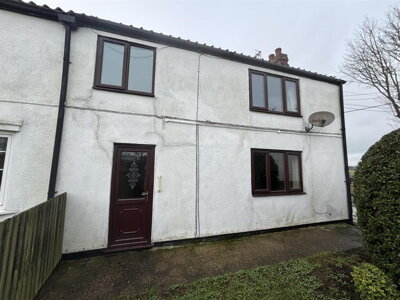
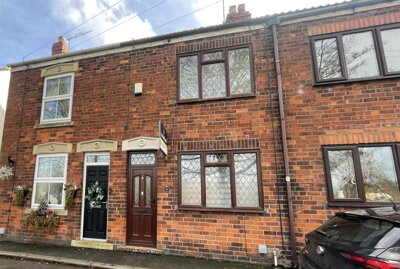
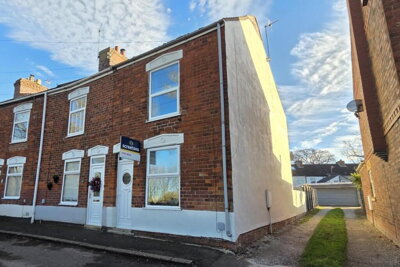
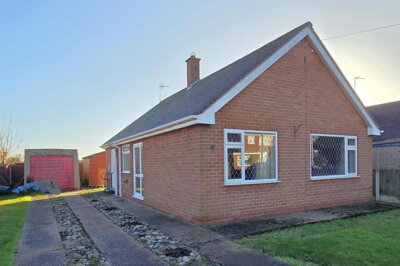
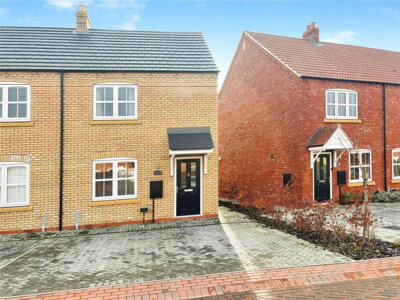
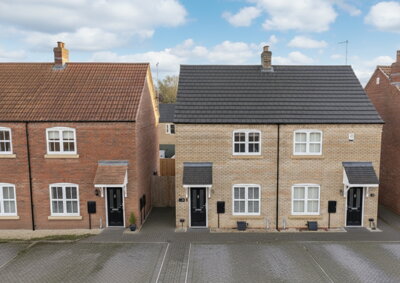
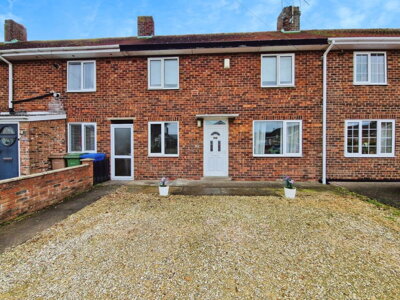
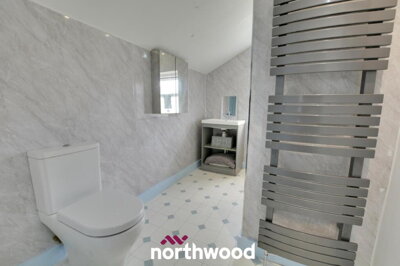
Browse 11 homes for sale in Newland from local estate agents.
The 2 bed house market features detached, semi-detached, and terraced properties with two separate bedrooms plus living spaces. Properties in Newland range from Victorian and Edwardian period homes to modern new builds, with pricing varying across different neighbourhoods.
Newland’s property market has held up well, even with wider economic pressure across the UK housing sector. homedata.co.uk records average sold prices in the village at £455,000 over the past twelve months, while the YO8 postcode area shows an overall average of £417,500. That puts Newland ahead of the North Yorkshire average of £272,000, which is what you would expect for a village with this sort of appeal. Values are 6.9% higher than a year ago, although they still sit 16% below the 2022 peak of £500,000.
The homes listed in Newland tend to be a fairly classic mix of detached, semi-detached and terraced houses, very much in keeping with the village’s character. Across wider North Yorkshire, benchmark prices stand at £435,000 for detached properties, £272,000 for semi-detached homes, £220,000 for terraced properties and £144,000 for flats and maisonettes. There are no active new-build schemes within Newland itself, though nearby developments in Osgodby and Brayton give buyers a newer-build option. Because supply is so limited in a village of this size, homes can attract attention quickly once they appear.
In November, the wider North Yorkshire market saw a sharp fall in activity, with month-on-month home sales down by 62% as interest rates rose and uncertainty lingered. Even so, the area has a track record of bouncing back after market setbacks. In Newland, the shortage of available homes means the ones that do come up often draw interest from more than one buyer, so competition can be brisk for those already armed with mortgage agreements and survey bookings. It pays to move decisively, but with realistic expectations about what there is to negotiate in a low-stock market.
Newland gives you the traditional English village feel, with a tight-knit community set in the lovely Vale of York. Its position near the River Aire brings pleasing riverside walks and countryside views that shape everyday life. Fewer than 300 residents live here, which helps the village keep that familiar, neighbourly atmosphere. The Selby area has also seen steady growth in property prices and rental values, which speaks to its appeal for people wanting a slower pace without cutting themselves off from practical access.
Head into the wider Selby district and you’ll find the essentials are well covered, from supermarkets and independent shops to healthcare facilities and restaurants. Selby Abbey remains the centrepiece of the market town, with a long-running weekly market and cultural events that give the town plenty of character. Residents often value the mix of rural calm and day-to-day convenience, especially since Leeds and York are both within easy reach for work, shopping or a night out. Across North Yorkshire, traditional brick and stone construction is common, giving many village homes a consistent look and plenty of period charm.
The geology of the Vale of York leaves its mark on the landscape, with glacial clays, sands and gravels shaping the ground beneath it all. That has fed into local building traditions too, so it is common to see brick and stone properties from different eras sitting side by side. In lower-lying spots, the River Aire flood plain can affect ground conditions, so buyers should check carefully before committing to a particular home. Much of village life is tied to the surrounding countryside, with footpaths and bridleways opening out onto rolling agricultural land that defines this part of North Yorkshire.

For families looking at Newland, the educational picture is workable, though it reflects the village’s rural setting. Primary schooling is available through nearby villages and Selby, where several schools serve the local community and are often spoken of positively by parents. The small-scale setting can mean manageable class sizes, which helps teachers give children more individual attention. It is still sensible to check catchment areas and school performance for each option, as admissions can be competitive in sought-after rural spots.
Secondary choices are based in Selby and the surrounding area, and some families travel further afield for particular subjects or specialist programmes. Selby College provides sixth form places, including A-levels and vocational qualifications for students moving on from secondary school. Good schools across North Yorkshire do add to the area’s appeal for families, but buyers should still look at the latest performance data and how enrolment works. School transport is usually by bus or family car, which is typical in rural communities like this one.
For parents weighing up options for children of different ages, it makes sense to look at primary and secondary provision together with future travel needs. Ofsted results and exam data are useful guides, but distance from a school can affect catchment boundaries and the chances of a place. Several primary schools in the surrounding villages serve local families, with reputations built up over many years. Because the village is compact, school runs are rarely especially long once places have been secured, though journey times should still be included in any relocation plans.
Newland’s position in the Vale of York gives it decent links to the north while preserving its rural setting. The village is close to the A19, which offers straightforward routes north to York and south towards Doncaster and Sheffield. The M62 is also within reach for commuters heading to Leeds or Manchester, and it usually takes around 45 minutes by car to get to Leeds city centre. Selby railway station connects with Leeds, York and London, and the direct journey to the capital is approximately two hours.
Bus services link Newland with the neighbouring villages and Selby town, although they are not as frequent as urban routes. For most residents with cars, private transport remains the most practical way to get to work or handle everyday errands. Cycling can work well here, but the country lanes are scenic rather than easy, especially for less experienced riders. Parking is generally adequate for a village of this size, though it is always sensible to check the parking situation at the specific property you are viewing.
People working in Leeds or York may find Newland a sensible compromise, with village living on one hand and city employment on the other. From Selby, train services provide a comfortable route for those who prefer public transport, with regular departures through the day into the main business districts. By road, the A19 and M62 open up access to jobs across West Yorkshire and further afield. Even weekends are convenient, with Leeds and York both offering strong retail and leisure choices, which is helpful for dual-income households spread across more than one centre.

It is worth spending time in Newland at different times of day and on different days of the week, just to get a proper feel for the place. A visit to local amenities in Selby, along with a few conversations with residents, can tell you more than any brochure ever will. Recent sold prices from Land Registry data are useful for judging the market and shaping an offer. During viewings, keep a close eye on condition, because older village homes can hide maintenance issues that are not obvious at first glance.
Before you start viewing, get a mortgage agreement in principle from a lender so your budget is clear and sellers can see you are serious. In a competitive market, this can strengthen your offer and help you move quickly when a desirable village home comes up. Having finance lined up before you bid matters even more in Newland, where limited supply means competition is a regular feature rather than an occasional one.
Look at more than one property in Newland so you can compare condition, character and value before making a decision. We strongly recommend a RICS Level 2 survey for any home you are seriously considering, as it can uncover damp, structural movement or roof problems that are easy to miss at viewings. Booking surveys early is sensible, because it helps us spot issues before too much time and money are committed to a property.
Once you have found the right home, make an offer that reflects both your research and what the survey has shown. In a village with so few homes available, negotiation should stay courteous, but you should still keep within your own budget. Your estate agent can talk through local market conditions and suggest sensible offer levels. If repairs are needed, survey findings may give you a valid reason to ask for a price reduction.
After your offer is accepted, instruct a conveyancing solicitor to deal with the legal transfer of ownership. They will carry out searches, manage the contract process and check that all the paperwork is in order so the sale can proceed properly. Those searches ought to cover local authority checks, environmental searches and water authority enquiries, all relevant to the property’s exact location.
The final stretch involves sorting the mortgage, carrying out final inspections and sending funds to your solicitor. On completion day, the keys to your new home in Newland are handed over, and life in this North Yorkshire village can begin. A final walkthrough shortly before completion is a good idea, as it gives you the chance to check the property is still in the expected condition.
Several local factors mean properties in Newland and the wider Vale of York deserve careful inspection. Because the River Aire is close by, some homes may be exposed to flood risk, especially those on lower ground or with river views. A proper survey can pick up signs of previous flooding or water damage, and buyers should also check the Environment Agency flood maps for the specific address. Any insurance implications for flood-prone properties need to be folded into your overall cost calculations.
The Vale of York’s clay soils can create shrink-swell movement, which may affect foundations over time. Brick and stone are the standard materials in the village, and although both are generally durable, older homes can show wear or movement that deserves attention. A RICS Level 2 survey gives a detailed picture of condition, including structural matters, roof issues, damp and outdated electrics that may not stand out during a viewing. For unusually built or particularly old properties, a more detailed RICS Level 3 building survey may be the better choice.
Buyers should check tenure carefully, because the wider market includes both freehold and leasehold homes. Any service charges or ground rent attached to a leasehold property need to be clear before you go ahead. Planning rules in this rural location can affect permitted development rights, and extensions or alterations will need proper thought in light of local policy. A chat with neighbours and the local authority can give useful context about the property and any planned developments or restrictions nearby.
Homes in Newland come from a range of periods, with many Victorian and Edwardian properties built when traditional methods were the norm. Nationally, almost one-third of homes built before 1919 are classed as non-decent, which shows the kind of maintenance demands older village houses can bring. Our inspectors regularly come across damp penetration, tired roof structures and ageing electrical systems in properties of this age. Budgeting for renovation is sensible, particularly where period features come with services or structural work that need updating.
Our inspectors have worked across the Vale of York for years, so we know the defect patterns that tend to show up in homes here. Village properties built in brick and stone are usually solid, but time can still bring problems that need a professional eye. Homes with solid walls rather than cavity insulation often show higher rates of damp penetration, especially where older breathable materials have been covered by unsuitable modern finishes. During every inspection we carry out in Newland, our surveyors focus closely on those construction-specific concerns.
Much of the Vale of York sits on clay geology, which brings the risk of shrink-swell movement in foundations, particularly after long dry spells or heavy rain. Homes built on or near the River Aire flood plain may also show traces of earlier flooding or ongoing moisture problems, especially at lower ground-floor level or in basements. Our team checks for subsidence, settlement cracking and water damage in every survey, so you get a proper view of the structure’s condition. Properties with mature trees nearby deserve extra scrutiny too, as roots can affect both the soil and the building over time.
Older village homes often have electrical systems that need updating to meet current safety standards, with original wiring still in place in properties that have not been renovated for decades. Heating systems based on old boiler technology can also be inefficient and expensive to run, which adds to the cost of ownership. Our inspectors look through all accessible parts of the property and record everything from cosmetic defects to serious structural issues that could affect your investment. We also set out clear recommendations for each problem we identify, so you can decide what to tackle first and plan your budget properly.
Roof condition deserves careful attention in traditional North Yorkshire homes, where ageing slates or clay tiles may have been patched or replaced with mixed materials over the years. Our team checks for slipped, cracked or missing coverings, looks at flashing and mortar, and reviews insulation and ventilation in the roof space. If the property has a converted loft or dormer extension, we examine the quality of the conversion and any signs of condensation. Knowing the roof’s condition helps buyers avoid repair bills that can soon run into several thousand pounds.
homedata.co.uk shows the average sold price in Newland, North Yorkshire at £455,000 over the past twelve months. For the YO8 postcode area, the overall average sits at £417,500, which includes Newland. Prices across the wider Selby area have risen by 6.9% over the past year, although they are still 16% below the 2022 peak of £500,000. The village’s rural setting and limited supply keep it above the North Yorkshire average of £272,000.
Newland falls under Selby District Council, and most homes in the area sit in council tax bands A through D. The exact band depends on the home’s assessed value, with smaller terraced properties usually in the lower bands and larger detached houses in the higher ones. Buyers can check the Valuation Office Agency website for the precise band of any property they are considering. Council tax generally runs from around £1,200 to £2,000 a year, depending on the band and the current rates set by Selby District Council.
Because Newland is such a small village, primary and secondary schools are found in nearby communities and in Selby. Several primary schools in the surrounding area serve local families, while secondary options in Selby include sixth form provision. Parents should look at Ofsted ratings, exam results and catchment boundaries for each school, as these can make a big difference to placement. School transport is usually available for eligible pupils in rural areas, with dedicated buses running to schools in the Selby area from outlying villages such as Newland.
Transport links in Newland are limited, which is exactly what you would expect in a rural village, though local buses do connect it to Selby and the surrounding villages. Selby railway station gives mainline access to Leeds, York and London, and the direct service to the capital takes approximately two hours. For day-to-day commuting, a car is close to essential, with the A19 and M62 giving access to major employment centres in Leeds, York and beyond. There is a bus stop within the village, with services to Selby roughly every two hours on weekdays, although weekend runs may be less frequent.
Newland has obvious appeal for investors thanks to its sought-after village setting and its proximity to stronger economic centres. Prices across the wider Selby area have remained resilient and have risen by 6.9% year-on-year, despite wider market strain. The shortage of homes in this small village, combined with steady demand from people looking for a rural lifestyle, points to continued strength. Rental demand in the wider Selby area has also grown, so both capital growth and rental income remain realistic prospects for investors.
From April 2024 onwards, stamp duty land tax rates apply 0% on the first £250,000 of residential purchases. Between £250,001 and £925,000, the rate is 5%, then 10% from £925,001 to £1.5 million, and 12% on anything above £1.5 million. First-time buyers get relief on the first £425,000, with 5% applying between £425,001 and £625,000. With an average Newland property price of £455,000, a typical buyer would pay around £10,250 in stamp duty, while first-time buyers would pay £1,500.
We strongly suggest a RICS Level 2 survey for any Newland property you are seriously thinking about buying. Since many village homes are built in traditional brick and stone and date from the Victorian and Edwardian periods, a professional assessment helps spot defects that may never show up at a viewing. Our inspectors look for damp, movement in the structure, roof condition and outdated electrical systems throughout the property. For older homes or those with unusual construction, a more detailed RICS Level 3 building survey may be the better fit when structural complexity or historic alterations need closer review.
Newland properties need flood risk checks because the River Aire runs through the nearby Vale of York landscape. Homes in lower-lying positions, or those with river views, may face higher flood risk, especially in heavy rain or long wet spells. We recommend looking at Environment Agency flood maps for the exact property and checking its flood history as part of your due diligence. Insurance in flood risk zones can cost more than average, so buyers should include that in their ongoing cost calculations. Our survey reports point out any visible evidence of earlier flooding or water damage that might indicate a wider issue.
Buying in Newland means looking beyond the purchase price, because there are several other costs to allow for. Stamp duty land tax applies to all transactions above £250,000 at 5% on the portion between £250,001 and £925,000. For the average Newland home, priced at £455,000, a standard buyer would pay about £10,250 in stamp duty. First-time buyers have higher thresholds, paying 0% on the first £425,000 and 5% on the slice between £425,001 and £625,000, which works out at around £1,500 on a typical village property.
There are other purchase costs too, including solicitor fees for conveyancing, which usually sit between £500 and £2,000 depending on the property and the work involved. A RICS Level 2 survey averages between £416 and £639 nationally, with York around £490, although homes above £500,000 may carry higher fees averaging £586. An Energy Performance Certificate is needed before marketing and costs from about £85. For a typical Newland purchase, survey and legal fees may come to between £1,200 and £2,500, while mortgage arrangement fees and valuation costs vary by lender. Putting money aside for these extras helps the move to this North Yorkshire village run more smoothly, without unpleasant financial surprises at the end.
When planning your budget for a Newland purchase, remember to include moving costs, any renovation or repair work highlighted in surveys, and the day-to-day household bills that may differ from what you pay now. Many homes in the village need a fair amount of upkeep and updating, especially older ones that may eventually need new heating systems, rewiring or structural repairs. A contingency fund of 10-15% of your purchase price, on top of the other costs, gives you a sensible cushion for the unexpected issues that often come with character properties in rural locations. Our survey team can help you judge which homes are genuinely good value once all costs and likely work are taken into account.
Properties for Sale In London

Properties for Sale In Plymouth

Properties for Sale In Liverpool

Properties for Sale In Glasgow

Properties for Sale In Sheffield

Properties for Sale In Edinburgh

Properties for Sale In Coventry

Properties for Sale In Bradford

Properties for Sale In Manchester

Properties for Sale In Birmingham

Properties for Sale In Bristol

Properties for Sale In Oxford

Properties for Sale In Leicester

Properties for Sale In Newcastle

Properties for Sale In Leeds

Properties for Sale In Southampton

Properties for Sale In Cardiff

Properties for Sale In Nottingham

Properties for Sale In Norwich

Properties for Sale In Brighton

Properties for Sale In Derby

Properties for Sale In Portsmouth

Properties for Sale In Northampton

Properties for Sale In Milton Keynes

Properties for Sale In Bournemouth

Properties for Sale In Bolton

Properties for Sale In Swansea

Properties for Sale In Swindon

Properties for Sale In Peterborough

Properties for Sale In Wolverhampton

Enter your details to see if this property is within your budget.
Loans, cards, car finance
Estimated property budget
Borrowing + deposit
You could borrow between
Typical borrowing
Monthly repayment
Est. at 4.5%
Loan-to-value
This is an estimate only. Your actual budget may vary depending on interest rates, credit history, and personal circumstances. For an accurate affordability assessment, speak to one of our free mortgage advisors.
This calculator provides estimates for illustrative purposes only and does not constitute financial advice. Your home may be repossessed if you do not keep up repayments on your mortgage. Estimates based on 4.5% interest rate, repayment mortgage. Actual rates depend on your circumstances.
Homemove is a trading name of HM Haus Group Ltd (Company No. 13873779, registered in England & Wales). Homemove Mortgages Ltd (Company No. 15947693) is an Appointed Representative of TMG Direct Limited, trading as TMG Mortgage Network, which is authorised and regulated by the Financial Conduct Authority (FRN 786245). Homemove Mortgages Ltd is entered on the FCA Register as an Appointed Representative (FRN 1022429). You can check registrations at NewRegister or by calling 0800 111 6768.

We use cookies to show you personalised content and improve your experience of our website. Find out more in our Privacy policy and Cookie policy.