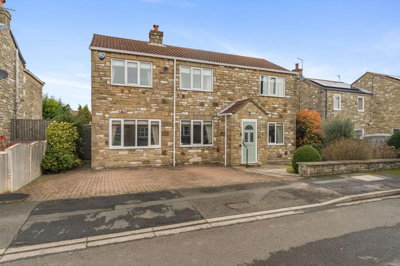
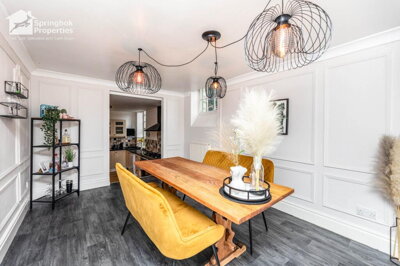
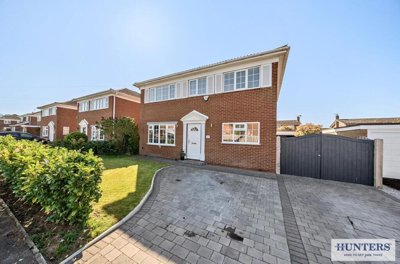
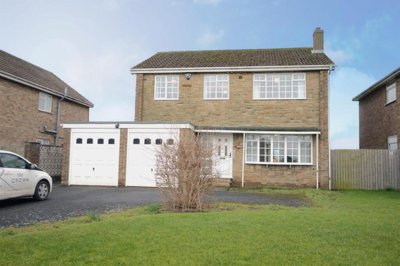
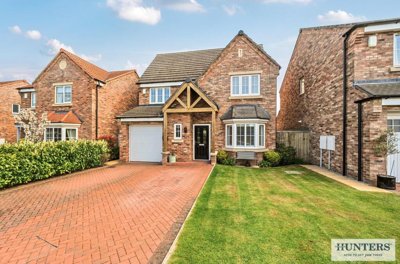
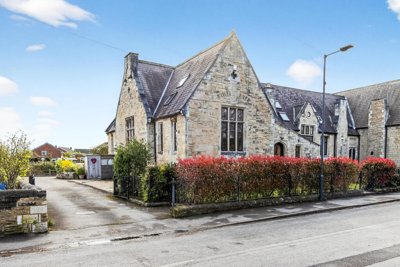
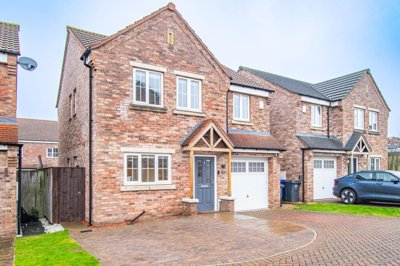
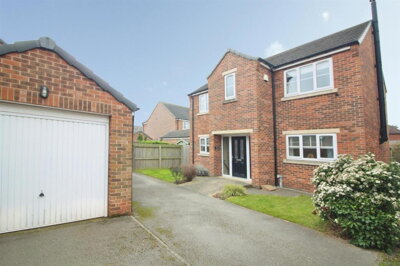
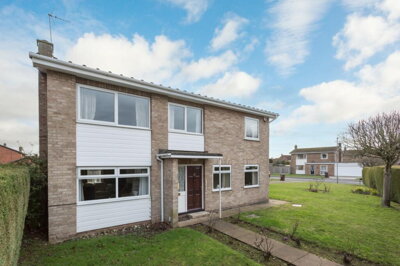
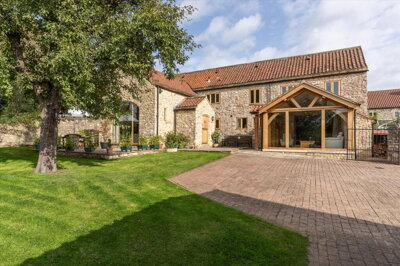
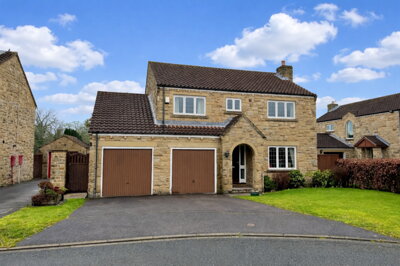
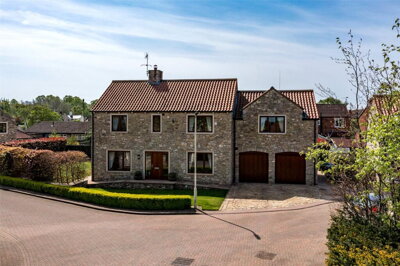
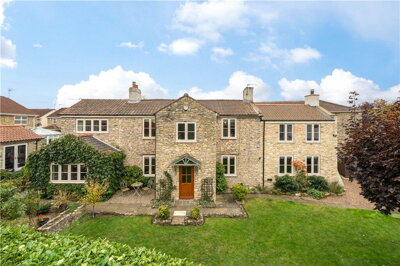
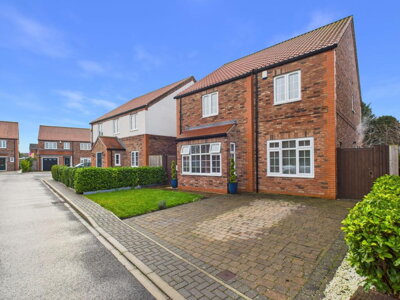
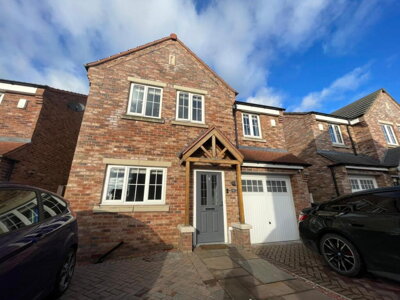
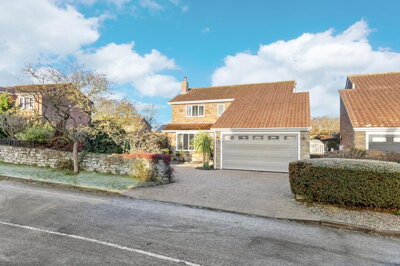
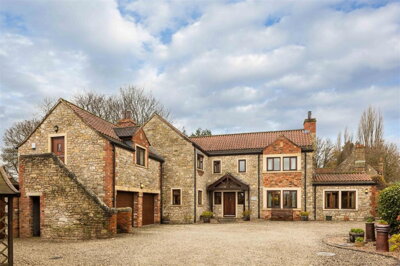
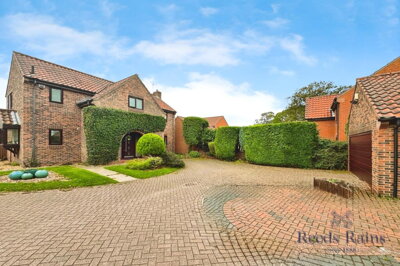
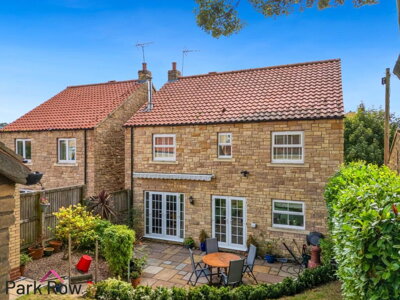
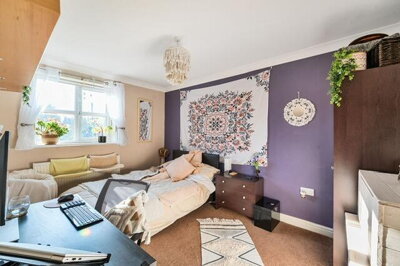
Browse 21 homes for sale in Monk Fryston from local estate agents.
The larger property sector typically features multiple bathrooms, substantial reception space, and private gardens or off-street parking. Four bedroom houses in Monk Fryston span detached, semi-detached, and occasionally terraced configurations, with styles ranging from period properties to modern executive homes.
Detached houses lead the local market, and that fits the way Monk Fryston has grown around its historic core and newer edges. homedata.co.uk data shows detached properties averaging £481,500, which is well above the village-wide average, while semi-detached homes offer a lower entry point at £334,875. Terraced homes average £385,000, so buyers who want a more manageable price than a large detached house still need to budget carefully. Flats are rare in this setting, and the average sold price of £162,500 reflects how few apartment-style homes change hands here.
Supply is tight, which is part of why pricing feels more sensitive than in a larger town. homedata.co.uk records show just 3 sales in the LS25 5DU postcode in the last twelve months, yet the wider village has logged 440 sales over the past 10 years, showing that buyers do still move when the right home appears. One reading puts the average price paid at £417,000 as of February 2026, down 6.8% over 12 months, while another shows sold prices up 47% year on year and 10% above the 2022 peak of £380,760. With such a small market, we always suggest comparing the latest asking prices with completed sales before making an offer.
New build activity has been modest, but the village has seen well-designed schemes that sit comfortably alongside older homes. Kingston Grange on Lumby Hill is a boutique development of five executive 4 and 5 bedroom detached homes by Orchard Homes, with plots including The Devonshire, The Clarendon and The Ravenswood. Abbeystone Gardens off Abbeystone Way brought nine family homes to the village, priced between £250,000 and £380,000 when launched, which gives a useful guide to how new-build values have been positioned locally. A few named developments elsewhere in the wider area are often linked to nearby postcodes, so we focus on schemes that are actually within Monk Fryston itself.

Monk Fryston has the feel of a settled North Yorkshire parish rather than a place that was built for passing trade. The 2021 census put the population at 1,035, up from 1,008 in 2011, and that scale helps explain why the village keeps a strong identity. Historic buildings give the centre real character, especially the Grade I Church of St Wilfrid, Monk Fryston Hall and Prebendal House, while the conservation area around St Wilfrid's has protected the village core since 1969. Magnesian limestone is the signature local material, and you can see that in both the old buildings and the way newer homes have been designed to sit alongside them.
Everyday life is practical as well as picturesque. The village has a post office, a convenience store and a pub, so day-to-day errands do not always need a trip into a larger settlement. Monk Fryston Hall also operates as a hotel and restaurant, which adds a bit of activity and gives the village a useful hospitality presence. For buyers who want a quieter base with local stone, open skies and a well-kept historic heart, this parish offers exactly that blend.
Geology matters here more than many buyers expect, because the local quarrying tradition helped shape the whole settlement. The village name is linked to "Monk's Free Stone", and stone from the centre once supplied Selby Abbey, which is a good reminder that this is a place built from its own landscape. Roofs are often stone slate or lead, and some newer homes use red brick, stone cills and terracotta pantiles to echo the older streetscape. That visual consistency is part of the appeal, especially for buyers who value a home that feels rooted in its surroundings.
Families looking in Monk Fryston usually start with the village primary school, Monk Fryston Church of England Primary School. That local option is one of the strongest reasons parents stay close to the village rather than moving deeper into the commuter belt, because a walkable or short-drive school run can make a big difference day to day. The research pack did not include current Ofsted grades, so buyers should check the latest inspection reports before making a purchase decision based on school performance. Catchment rules can also change, so it is sensible to confirm admissions criteria before you commit to a specific street or house type.
Older children tend to widen the search across the wider Selby and Leeds corridor, where secondary and sixth-form choices expand beyond the village itself. That means transport and school run logistics matter as much as academic reputation, especially for households balancing commuting with after-school clubs and exam timetables. In a small parish like this, the exact location of a house can affect both catchment priorities and the ease of getting children to activities. Buyers should ask the agent for recent admission patterns and check how far daily travel will be from the front door.
Education planning also matters for buyers who want to hold their home for the long term. A property with a sensible layout, a usable garden and enough parking can be just as attractive to families as a postcode with a named school nearby. Because Monk Fryston has relatively limited housing turnover, homes that suit family life tend to hold their appeal well. If school access is part of your search, we recommend lining up a mortgage agreement in principle before viewings so you can move quickly when the right house appears.

Road access is one of Monk Fryston's biggest strengths. The village lies about 2 miles east of the A1(M) junction 42 and roughly 5 miles north of the M62 junction 33 at Ferrybridge, with the A63 running through the village itself. That gives commuters a choice of routes towards Leeds, York and the wider West and North Yorkshire network. For many buyers, this is the sweet spot, because it keeps the village rural in feel without isolating it from major employment centres.
Public transport is more limited than the road network, so buyers should check bus times and travel options before relying on day-to-day commuting by public transport alone. The research pack did not identify a village rail station, which means many residents will plan around car use, lifts or connections from nearby towns. Parking is worth checking on every viewing, especially on older streets and in homes that attract visitors or work-from-home traffic. If you commute regularly, test the route at your usual departure time and see how the village handles school runs, market days and peak-hour traffic.
Leeds and York are both realistic working destinations from here, which helps explain why Monk Fryston appeals to buyers who want a quieter home life without giving up city access. The A63 corridor also connects the village neatly to surrounding settlements, so day-to-day errands can usually be handled without a long round trip. That said, buyers who depend on regular train services or late-night travel should check the full journey chain, not just the headline road mileage. A home can look perfect on paper, but the commute still has to work in real life.
Start by comparing homes near the conservation area with newer developments on the edge of the parish. Look closely at sold prices, because homedata.co.uk shows a wide gap between flats, semi-detached homes and larger detached properties.
Arrange a mortgage agreement in principle before you book viewings, especially in a small market where the best homes can move quickly. That also helps agents take your offer seriously when you find the right property.
Check parking, garden orientation, roof condition, stonework and access to the A63 or nearby routes. In Monk Fryston, the setting can be as important as the floor plan, because older homes often come with character features that need careful inspection.
A RICS Level 2 survey is a sensible choice for many homes here, and a Level 3 survey is often better for older or listed properties. The village has a strong stock of period buildings, so hidden damp, roof wear and historic alterations deserve a closer look.
Choose a conveyancer who will check title, searches and any conservation area or listed building implications. That step is particularly important if you are buying a home with stone elevations, older boundaries or unusual rights of way.
Once the legal work is ready and your lender is satisfied, you can move to exchange and then completion. Build in time for removals and final meter readings, because village properties can be harder to coordinate on tight schedules.
Flood risk is the first local issue many buyers ask about, and it deserves proper attention here. Most of Monk Fryston sits in Flood Zone 1, which is the low-risk category, but around 3% of the north-eastern tip of the development limits falls into Flood Zones 2 and 3a. There have also been sewer flooding incidents on Main Street, with three properties known to have flooded, so a survey and searches should check both surface water and drainage history. The River Aire flood warning area at Hillam, Monk Fryston and Gateforth also reminds buyers that even inland villages can have location-specific water issues.
Heritage rules are another thing to understand before you buy. Monk Fryston has 15 listed buildings, including one Grade I, two Grade II* and several Grade II entries, and the historic core around St Wilfrid's sits within a conservation area. If your chosen home is listed or close to the protected centre, alterations, windows, roofs and external materials may need extra care or consent. That can be a bonus if you love original character, but it also means repairs can cost more and take longer than on a standard modern house.
Older construction is common, so the usual period-property checks matter here. Magnesian limestone, stone slate roofs, lead detailing and traditional brickwork all need the right maintenance, and a RICS Level 3 survey may be the better option for a house with significant age or complexity. Flats and newer homes can bring different risks, including leasehold terms, ground rent and service charges, so buyers should read the lease carefully and ask for the management pack early. The best purchases in Monk Fryston are usually the ones where the character suits the upkeep budget as well as the lifestyle.

homedata.co.uk records show an average sold price of £419,656 over the last year. Detached properties averaged £481,500, semi-detached homes £334,875, terraced homes £385,000 and flats £162,500. Because the local market is small, the headline average can move around depending on which homes sell in a given period. A postcode-level reading for LS25 5DU also shows a current average value of £472,256, so it is worth comparing both sold prices and asking prices before you offer.
Monk Fryston sits within North Yorkshire Council, so council tax bands are set under that authority's rules rather than by the village itself. The exact band depends on the property, size, age and valuation history, not just on postcode. Period homes in the conservation area can sometimes sit in higher bands if they have more space or larger plots. Always ask the agent for the current band during viewings so you can budget accurately.
The village's own primary provision is Monk Fryston Church of England Primary School, which is the key local school for many families. The research pack did not include Ofsted grades, so I would check the latest inspection reports and admissions data before basing a move on school performance. Secondary choices are generally considered across the wider Selby and Leeds corridor, depending on transport and catchment. If schooling matters to you, confirm the current intake area before you make an offer.
Monk Fryston is better known for road access than for a dense public transport network. The A63 runs through the village, the A1(M) junction 42 is around 2 miles away and the M62 junction 33 at Ferrybridge is about 5 miles south, which makes driving the main commuting advantage. The research data did not identify a village rail station, so most buyers will want to check current bus routes and consider car use for everyday travel. If you rely on trains, test the full journey from the nearest practical station before deciding.
It can be, especially if you are looking for a village market with limited supply and strong commuter appeal. homedata.co.uk shows 440 sales over the last 10 years, but only 3 sales in LS25 5DU over the last 12 months, which suggests the best homes are not always available for long. The mix of heritage, road links and a small, stable parish can support long-term demand. Any investor should still check rental demand carefully, because the village is more owner-occupier led than a typical town market.
For most buyers, current stamp duty land tax is 0% up to £250,000, 5% from £250,000 to £925,000, 10% from £925,000 to £1.5 million and 12% above that. First-time buyers pay 0% up to £425,000 and 5% from £425,000 to £625,000, with no relief above £625,000. On a home priced at the local average of £419,656, a standard buyer would pay about £8,483, while a first-time buyer would usually pay nothing under the current relief. If you already own another home, the higher-rate surcharge may also apply, so it is worth getting a precise quote before you offer.
Yes, often they do. The village has many period homes, including buildings in the conservation area and listed properties with traditional stone or brick construction, so a RICS Level 3 survey can be the safer option. A Level 2 survey can still suit some modern or well-maintained homes, but it may not be enough for a house with structural alterations, a complex roof or evidence of damp. The more character a property has, the more valuable a detailed inspection becomes.
Most of the village sits in Flood Zone 1, which means low risk, but there are local exceptions. Around 3% of the north-eastern development limits fall into Flood Zones 2 and 3a, and there have been sewer flooding incidents on Main Street, including three properties known to have flooded. The River Aire flood warning area for Hillam, Monk Fryston and Gateforth also means buyers should review searches carefully. A survey, drainage check and local knowledge are all useful before you commit.
From 4.5%
Compare mortgage rates and find the best deal
From £499
Expert solicitors to handle your purchase
From £455
Homebuyer report for your new property
From £60
Check energy performance before you buy
Stamp duty is one of the biggest upfront costs after the deposit, and the bill depends on your purchase price and buyer status. Under the current rules, standard buyers pay 0% up to £250,000, 5% from £250,000 to £925,000, 10% from £925,000 to £1.5 million and 12% above that. First-time buyers pay 0% up to £425,000 and 5% from £425,000 to £625,000, with no relief above £625,000. On a Monk Fryston home priced at the local average of £419,656, a standard buyer would pay about £8,483 in stamp duty, while a first-time buyer would usually pay nothing.
The rest of your budget should cover legal fees, survey costs, mortgage arrangement charges and moving expenses. A RICS Level 2 survey averages around £455 in the UK, though older or more complex homes in Monk Fryston may justify a Level 3 survey instead. We also recommend securing a mortgage agreement in principle before viewings, because local demand can move quickly when a well-kept family home hits the market. Once your finances are lined up, you can focus on finding a house that fits the village and the commute as well as the price tag.
Properties for Sale In London

Properties for Sale In Plymouth

Properties for Sale In Liverpool

Properties for Sale In Glasgow

Properties for Sale In Sheffield

Properties for Sale In Edinburgh

Properties for Sale In Coventry

Properties for Sale In Bradford

Properties for Sale In Manchester

Properties for Sale In Birmingham

Properties for Sale In Bristol

Properties for Sale In Oxford

Properties for Sale In Leicester

Properties for Sale In Newcastle

Properties for Sale In Leeds

Properties for Sale In Southampton

Properties for Sale In Cardiff

Properties for Sale In Nottingham

Properties for Sale In Norwich

Properties for Sale In Brighton

Properties for Sale In Derby

Properties for Sale In Portsmouth

Properties for Sale In Northampton

Properties for Sale In Milton Keynes

Properties for Sale In Bournemouth

Properties for Sale In Bolton

Properties for Sale In Swansea

Properties for Sale In Swindon

Properties for Sale In Peterborough

Properties for Sale In Wolverhampton

Enter your details to see if this property is within your budget.
Loans, cards, car finance
Estimated property budget
Borrowing + deposit
You could borrow between
Typical borrowing
Monthly repayment
Est. at 4.5%
Loan-to-value
This is an estimate only. Your actual budget may vary depending on interest rates, credit history, and personal circumstances. For an accurate affordability assessment, speak to one of our free mortgage advisors.
This calculator provides estimates for illustrative purposes only and does not constitute financial advice. Your home may be repossessed if you do not keep up repayments on your mortgage. Estimates based on 4.5% interest rate, repayment mortgage. Actual rates depend on your circumstances.
Homemove is a trading name of HM Haus Group Ltd (Company No. 13873779, registered in England & Wales). Homemove Mortgages Ltd (Company No. 15947693) is an Appointed Representative of TMG Direct Limited, trading as TMG Mortgage Network, which is authorised and regulated by the Financial Conduct Authority (FRN 786245). Homemove Mortgages Ltd is entered on the FCA Register as an Appointed Representative (FRN 1022429). You can check registrations at NewRegister or by calling 0800 111 6768.

We use cookies to show you personalised content and improve your experience of our website. Find out more in our Privacy policy and Cookie policy.