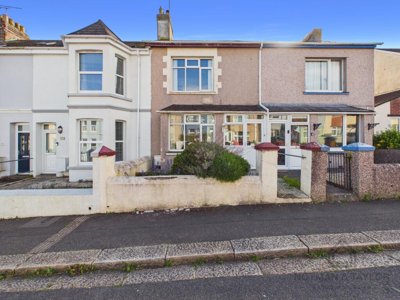
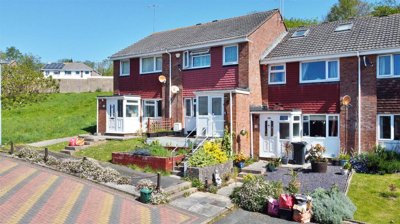
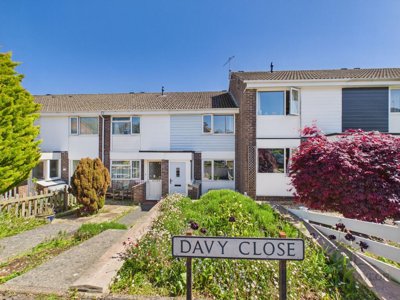
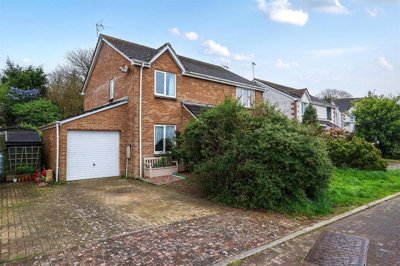
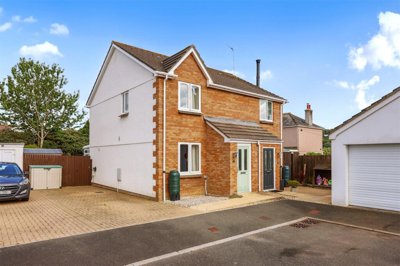
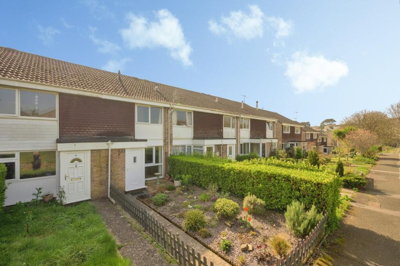
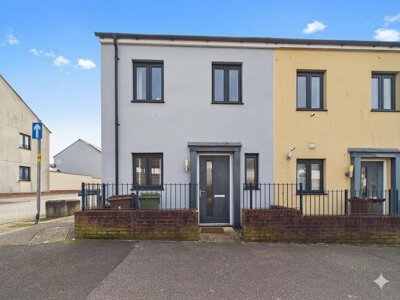
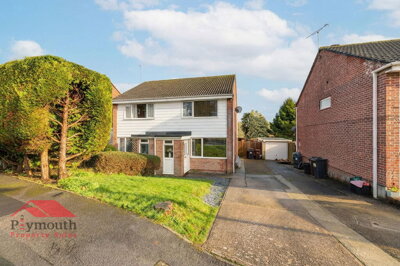
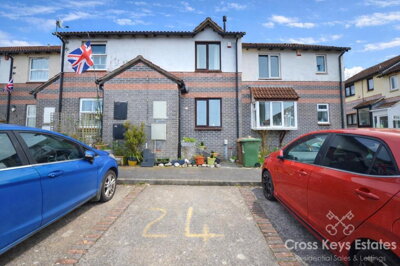
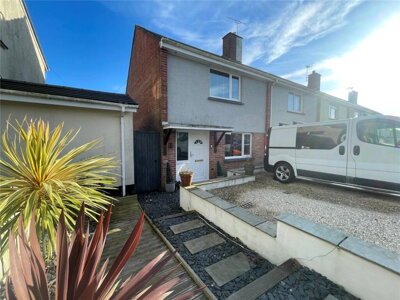
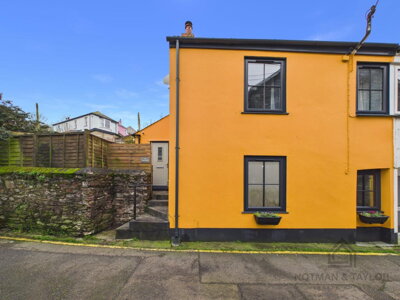
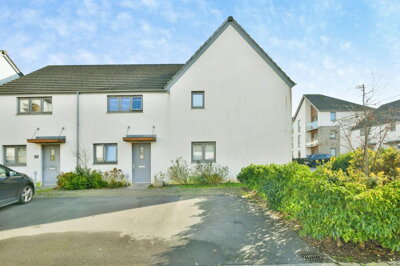
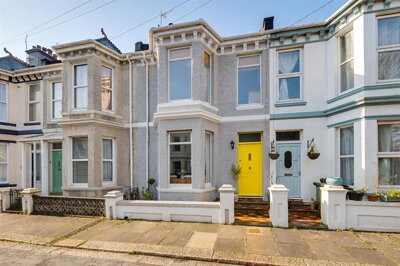
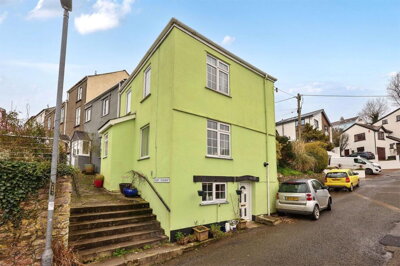
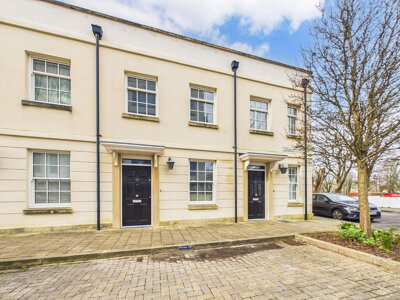
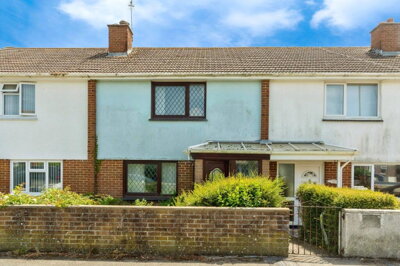
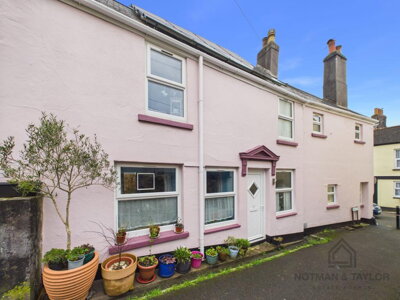
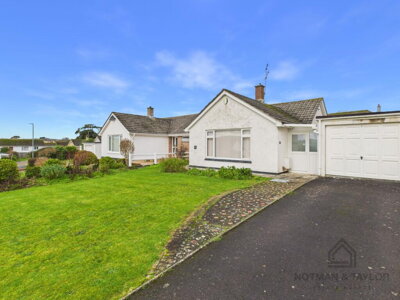
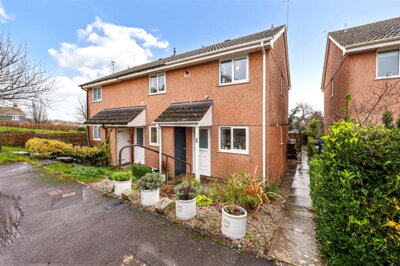
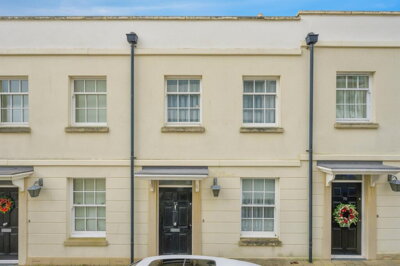
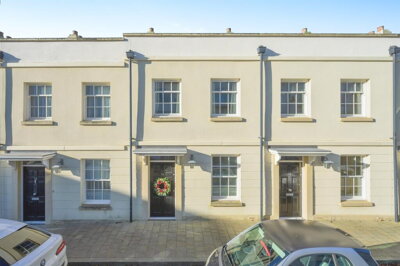
Browse 45 homes for sale in Maker-with-Rame from local estate agents.
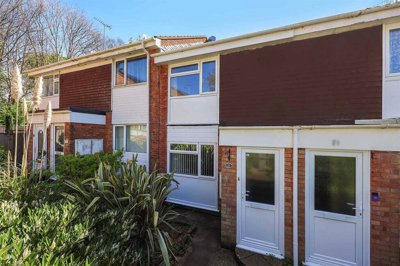
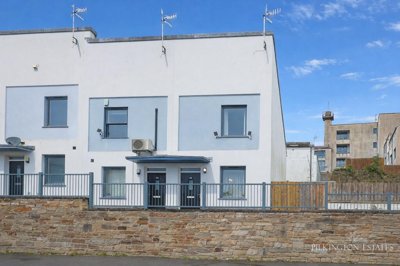
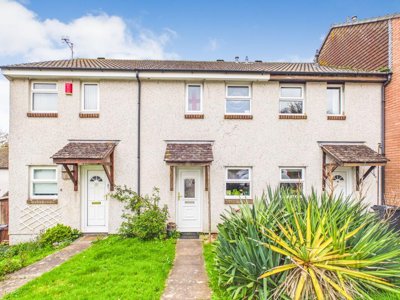
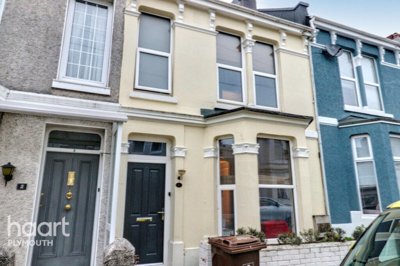
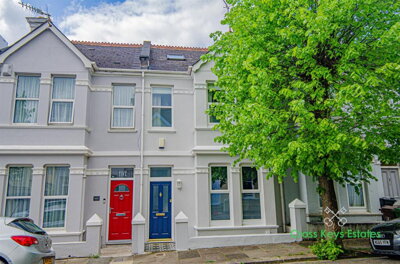
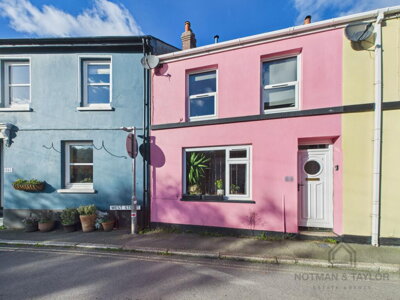
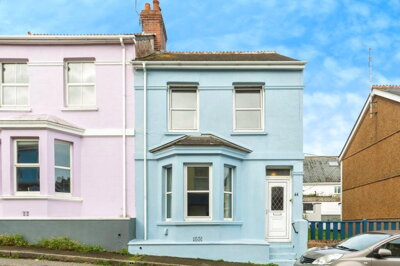
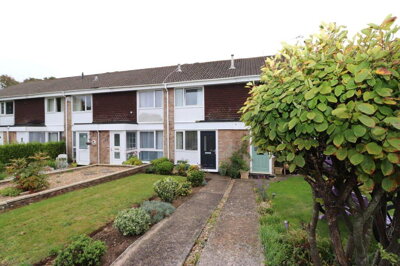
The 2 bed house market features detached, semi-detached, and terraced properties with two separate bedrooms plus living spaces. Properties in Maker With Rame range from Victorian and Edwardian period homes to modern new builds, with pricing varying across different neighbourhoods.
In Maker-with-Rame, prices have edged up by 1.76% over the past twelve months, a steady showing for a small coastal market. That modest rise speaks to the pull of the Rame Peninsula lifestyle and the protection that comes with its landscape status. Detached homes average around £598,500, while semi-detached properties come in at approximately £357,000, which keeps the area within reach for buyers after traditional Cornish architecture without the heavier premiums seen in more tourist-focused parts of the county. We track these local conditions every day so our team can give clear, current guidance when a property decision needs to be made.
A similar pattern holds across another slice of the Maker-with-Rame market, where values have risen by 1.76% in the last twelve months. It is not dramatic growth, but it is consistent, and that tends to reflect lasting demand for the Rame Peninsula's coastal setting and protected landscape. Average detached prices sit around £803,750, with end of terrace homes at approximately £545,000. For buyers drawn to period Cornish homes, that can still compare well with pricier, more visitor-led parts of Cornwall. Our local team keeps a close watch on the numbers day to day, so we can talk through the market with confidence.
Within PL10, new build supply in Maker-with-Rame is still very limited, which helps keep the village feel and historic character intact. Buyers looking wider across southeast Cornwall will find new homes from Barratt Homes at Tamar Meadows in Callington and from Linden Homes at The View in Saltash, although both schemes sit outside the parish boundary. In practice, the homes that best capture Maker-with-Rame are the pre-1919 cottages and farmhouses already here. Because local new build options are scarce, existing stock tends to hold its value well, supported by steady demand from buyers who want life on the peninsula.

Few parts of Cornwall feel as tucked away as the Rame Peninsula, and Maker-with-Rame benefits from that. The wider peninsula is designated an Area of Outstanding Natural Beauty, known for its dramatic coastline, rolling countryside and unspoiled villages. The parish itself sits at the southern tip, where the granite headland of Rame Head reaches out into Plymouth Sound and the English Channel beyond. Tourism feeds into the local economy, agriculture still matters, and some residents commute across the water to Plymouth's naval operations at HMNB Devonport for work. It is that mix of scenery and workable connections that gives the area its appeal.
The ground beneath the Rame Peninsula is mainly Devonian slate and sandstone, with granite intrusions visible in places. That geology shapes the scenery people come here for, rugged cliffs, tucked-away coves and pastoral farmland. It also shows up in the buildings, with many older homes built from local stone in random rubble or dressed stone, then finished with slate or clay tile roofs. Because so much of the housing is solid-wall and exposed to coastal weather, regular upkeep is part of ownership, especially where salt-laden winds speed up wear. Knowing the local geology helps us explain both the building methods and the maintenance issues that can follow from them.
What stands out in Maker-with-Rame is the sense of community. St Mary and St Julian in Maker remains a key landmark, and the Rame Head and Penlee Battery Conservation Area protects both the military history and the landscape around it. Day-to-day needs are covered by village pubs, primary school provision and the wider services in nearby Torpoint. Then there is the setting itself, with coastal walks, sailing, fishing and wide views across Plymouth Sound towards the historic naval port. For buyers who want an outdoor life within an AONB, this part of Cornwall is hard to match.
For families, schooling is one of the first practical questions, and Maker-with-Rame does have options within the parish and across the wider Rame Peninsula. Primary provision serves children from Reception to Year 6, while secondary choices are found in nearby Torpoint and Callington. Because the number of schools in the immediate parish is limited, catchment can have a real bearing on which homes make sense. We always recommend checking current catchment boundaries with Cornwall Council before moving ahead with a purchase. It also helps to contact schools early about admissions, especially for households moving in from outside the area.
Secondary education usually means looking beyond the parish. Torpoint is the nearest obvious option, reached via the ferry across the River Tamar, while Plymouth opens up a broader set of schools if families are happy with travel by boat or the longer drive around the estuary. Anyone prioritising strong academic outcomes should still go through school performance data and Ofsted inspection reports carefully, particularly in a rural location like this where travel can shape daily life. Plymouth also adds grammar schools and further education colleges into the mix for secondary and post-16 pupils. Plymouth Grammar School is one of the selective routes available to academically able students.
School transport matters here just as much as the choice of school itself. Parents looking at Maker-with-Rame should weigh up childcare, after-school activities and how the journey will work each day. On the peninsula, that can mean ferry crossings or longer road trips depending on the school selected. We usually suggest early registration for places, given the small property supply and the steady interest from families drawn by both the schooling options and the AONB setting. For many, the lifestyle gains of peninsula living outweigh the extra travel needed for secondary education.
Getting to and from Maker-with-Rame usually revolves around the Torpoint ferry, the main link across the River Tamar to Plymouth. It runs regularly and gives the most direct access to Plymouth's rail station, shops and employment base. Even so, commuters need to allow for crossing times and queues at busy periods, especially in the summer when visitor numbers rise across the peninsula. The ferry runs seven days a week, but we still advise checking current timings and frequency before relying on it for a regular commute.
By road, there is no shortcut around the geography. From Maker-with-Rame, residents travel across the peninsula and then either use the Torpoint ferry or continue by the longer route via the A38 and the Tamar Bridge at Plymouth. Anyone commuting into Plymouth or beyond should factor in that extra time compared with living on the Plymouth side of the estuary. For journeys within Cornwall, the A38 is the key route towards Liskeard, Bodmin and the north coast, and Truro is approximately 90 minutes away by car. In this part of the county, the A38 is still the main arterial road.
Public transport in Maker-with-Rame is fairly limited, so most residents depend on a car. Buses do link the peninsula with Torpoint and other nearby towns, but the service pattern may not work well for a daily Plymouth commute. Rail travel usually starts from Plymouth station, with direct trains to London Paddington, Bristol, Exeter and the wider national network. For air travel, Exeter and Newquay are the nearest airports, serving UK and European destinations. Cyclists get the benefit of striking routes, although gradients can be demanding, and the coast path gives excellent walking. In practice, a mix of car use and ferry travel tends to be the most workable arrangement.
Housing in Maker-with-Rame is rooted in the long-established building traditions of the Rame Peninsula. Over centuries, construction methods have adapted to the local geology and the exposed climate, and that history still defines much of the stock today. Local stone is the dominant material, often quarried on the peninsula itself, which is why so many homes sit so naturally in the surrounding landscape. Walls were commonly built in random rubble or dressed stone, with lime mortar used for the flexibility and breathability that cement-rich modern mortars do not offer. For buyers planning repairs or alterations, understanding those methods is essential from the start.
Older homes here are usually built with solid walls rather than modern cavity walls, and that changes how they perform. Solid-wall construction is typically less thermally efficient, though it can provide good thermal mass and help moderate internal temperatures. Many of these properties also have no damp-proof course, which can make rising damp more likely where ground levels have been raised over time. We advise arranging a detailed survey that looks closely at wall construction, insulation and any existing damp-proofing. That becomes even more important in low-lying coastal spots where moisture exposure is greater.
Roofs across Maker-with-Rame are most often finished in slate, either from local quarries or from Welsh slate quarries brought in during the Victorian period as transport improved. Together with traditional leadwork, those slate coverings give the peninsula much of its roofline character. There are practical checks to make, though. On older roofs, asbestos-containing materials can sometimes be present in underfelt or mortar, and that calls for specialist assessment and removal by licensed contractors where required. Lead flashings are long-lasting but not indefinite, and after many decades they may need replacement. We always want survey reports to cover roof condition, any asbestos-containing materials and the state of the existing leadwork.
Maker-with-Rame's coastal location also brings a set of environmental points that are worth checking carefully before purchase. Much of the Rame Peninsula sits on Devonian slate and sandstone, and those ground conditions usually mean low shrink-swell risk compared with heavy clay areas. As a result, major subsidence issues are relatively uncommon in the parish. That said, localised problems can still arise where there has been historic ground disturbance or poorly controlled drainage leading to saturation. A sound survey should look at the ground conditions and pick up any signs of previous movement or drainage defects that could affect the property.
For this parish, flood risk is the main environmental issue to pin down, especially for homes near the shoreline or in lower ground beside the River Tamar and Plymouth Sound. The Environment Agency map set is the starting point, showing tidal flooding, river flooding and surface water flooding. Where a property falls inside a risk zone, insurance premiums can be higher and extra resilience work may be sensible, including raised electrics, flood-resistant doors and pumped drainage systems. We strongly advise checking the maps and discussing the findings with our surveyors before moving ahead.
AONB status protects the Rame Peninsula's appeal, but it also comes with tighter planning control. In Maker-with-Rame, homes inside the Rame Head and Penlee Battery Conservation Area can face stricter limits on extensions and alterations, and listed buildings need consent for almost any external change. Those safeguards preserve the special character people are buying into, although they can restrict how far a property can be adapted for modern living. Anyone considering major works should speak to Cornwall Council's planning department before purchase so the likely permissions are clear. Limited development within the AONB is also part of what helps underpin local values.
We always suggest arranging a mortgage agreement in principle before starting the search in earnest. Lenders will look at income, credit history and existing commitments to decide how much can be borrowed. Having that agreed early shows sellers that we are dealing with a serious buyer who can move quickly when the right Maker-with-Rame property appears. Our mortgage partners can also help compare competitive rates for homes at this level of the market.
There is more variety in Maker-with-Rame than many buyers expect. Terraced homes average £471,875 and can offer good value for first-time buyers trying to get into a sought-after AONB setting. Flats average £300,000, giving a lower-cost way into peninsula life without taking on a larger family house. Much of the stock predates 1945, and traditional local stone, rendered walls and slate roofs are common throughout the parish. That older housing is a large part of the area's character, but it does make careful pre-purchase checks especially important.
It helps to see several homes before making a call on one. Across Maker-with-Rame and the wider Rame Peninsula, we recommend comparing properties carefully, looking at the condition of stone walls, older roofs and any signs of damp or weathering that often come with coastal exposure. Photographs and written notes make those comparisons much easier later. We also like viewings at different times of day and, where possible, in different weather, because some houses reveal far more then.
Before offering, we encourage buyers to study the local pricing properly using our listings and market data. In Maker-with-Rame, detached homes average £803,750, end of terrace properties around £545,000 and terraced homes approximately £471,875. Knowing where each property type tends to sit makes it easier to spot fair value when something comes onto the market. Supply on the peninsula is limited, and good homes can attract strong competition.
Legal work is another area where local knowledge helps. We recommend appointing a solicitor with experience of Cornwall transactions to deal with searches, planning checks and the transfer of ownership. A standard purchase often takes 8-12 weeks, though coastal homes can need extra investigation around flooding and environmental matters. Our conveyancing partners offer competitive fixed fees for purchases in this area, which can make budgeting simpler from the outset.
Once the surveys, searches and mortgage are all in order, the purchase moves to exchange and the deposit is paid. Completion follows soon after, and that is the point when the keys to the Maker-with-Rame home are handed over. From there, it is about getting settled into the parish. Our team can point buyers towards local removal firms and utility providers to keep the move as straightforward as possible.
Buying in Maker-with-Rame means paying attention to the coast as much as the house itself. Salt in the air and constant weather exposure can wear down render, joinery and roofing faster than inland buyers might expect. Traditional slate roofs are common and may eventually need replacement, so we like to see their condition checked both during viewings and in the survey. Period houses with timber windows and doors also need regular care to avoid rot, especially where original ironmongery has been swapped for modern fittings that do not always suit traditional construction.
A large share of the local stock predates 1945, so solid-wall construction without modern damp-proof courses is common. Rising damp can develop where outside ground levels have been built up over the years or where older damp-proofing has failed. We would expect a thorough survey to identify the wall type, note any damp penetration and set out suitable remedial work if needed. The encouraging part is that well-maintained solid-wall homes can stay in very good order, provided pointing, render and ventilation are looked after consistently.
Services are another point to budget for in older houses. Electrical systems and plumbing in period property often fall short of current standards, so upgrades may be needed either before moving in or soon after completion. Rewiring can be a major cost, but it is often necessary for both safety and insurance. Older pipework may also include galvanised steel or lead pipes, and those should usually be replaced. We want the survey report to comment on these services and flag any upgrades required, because they should be built into the overall purchase budget from the beginning.
Flooding deserves proper attention in this coastal parish. Homes near the shoreline, and others in lower-lying positions, may be exposed to coastal flooding during severe weather, while surface water flooding can happen after heavy rainfall when drainage systems are overwhelmed. The Environment Agency flood maps are an important check before committing to any purchase. If a property sits in a recognised risk area, insurance may cost more and added resilience measures may be needed.
Before exchange, we recommend booking a full survey. In Maker-with-Rame, where many homes are older, a Level 2 Survey can pick up damp, timber defects, roof issues and possible structural concerns. In Cornwall, survey fees typically run from £400 to £900 depending on size and value. Our survey partners know the local construction styles well and can give detailed feedback on traditional Cornish property.
The purchase price is only part of the budget in Maker-with-Rame. Stamp Duty Land Tax is usually the biggest extra cost. Under the current 2024-25 thresholds, standard buyers pay 0% on the first £250,000 and then 5% on the portion from £250,001 to £925,000. On a property at the current average price of £388,571, that would mean stamp duty of approximately £6,929. We advise using HMRC's online calculator, or asking a solicitor to confirm the exact figure for the individual purchase.
First-time buyers get more help under the current thresholds, which can make a noticeable difference. Relief covers the first £425,000, with 5% payable on the portion from £425,001 to £625,000. At the Maker-with-Rame average price of £388,571, a first-time buyer would therefore pay £0 in stamp duty. Once a purchase goes above £625,000, that relief no longer applies, so buyers at the upper end and investors need to budget on a different basis. Those savings at the entry level can be substantial.
There are several other costs to allow for besides stamp duty. Conveyancing can start from around £499, with further disbursements for local searches, registration fees and any mortgage arrangement fees set by the lender. A RICS Level 2 Survey in Cornwall usually costs between £400 and £900 depending on the size and value of the property, and larger detached homes tend to sit towards the top of that range. Buildings insurance should be in place from exchange, while removals vary with distance and volume. If the lender charges a valuation fee, that is often in the region of £150 to £500.
Maker-with-Rame falls within Cornwall Council's area for council tax, and each home is placed in a band according to valuation. Many of the parish's traditional stone cottages and period houses are likely to sit in bands A to D, while larger detached homes and more recently valued properties can fall higher. We always suggest checking the exact band with Cornwall Council or the Valuation Office Agency before setting an ongoing budget. Council tax is one of the core running costs alongside mortgage payments, insurance and maintenance.
For school-age households, Maker-with-Rame offers primary facilities within the parish, with secondary options in Torpoint and elsewhere across the Rame Peninsula area. Catchment should always be checked with Cornwall Council because it can directly affect which schools are available from a given address. If broader choice is needed, Plymouth brings in grammar schools, academies and further education colleges, reached either by the Torpoint ferry or the road route around the estuary. Before committing to a particular location, we advise reviewing both Ofsted reports and performance data.
Transport is one of the main lifestyle calculations here. Public transport from Maker-with-Rame is much more limited than in an urban area, so most residents rely on a car. The Torpoint ferry is the key connection into Plymouth, where the mainline station provides trains to London, Bristol, Exeter and other destinations. Bus links run within the peninsula, but the timetable may not suit regular commuters. Exeter and Newquay are the nearest airports, each around 60-90 minutes away by road. Most people find that combining car use with ferry travel is the most practical way to handle work and everyday journeys.
From an investment angle, Maker-with-Rame has several strengths. The Rame Peninsula's AONB designation, limited new supply and continued demand from buyers seeking coastal and rural settings all support the market. Price growth of 1.76% over the year points to steady movement rather than volatility, and the lack of major new development helps protect existing values. There is rental demand from professionals working in Plymouth and nearby areas, although the close-knit nature of the community and the modest local jobs base may keep rental yields lower than in larger towns. For investors willing to take on improvements, houses needing renovation may still present value-add potential.
As of early 2026, the average property price in Maker-with-Rame is £388,571. Over the previous twelve months, values have increased by 1.76%. Detached homes average £803,750, end of terrace properties around £545,000, terraced houses approximately £471,875 and flats £300,000. Those figures reflect the premium attached to the Rame Peninsula's AONB setting and coastal position, as well as the appeal of traditional Cornish architecture in a particularly picturesque part of Cornwall. Demand for the peninsula lifestyle remains evident in the steady rise.
Because Maker-with-Rame sits at the tip of the Rame Peninsula, coastal flood risk has to be considered carefully. Homes close to the shoreline and estuaries may be vulnerable in severe weather, and lower ground can also see surface water flooding during heavy rainfall. The Environment Agency provides the detailed mapping we recommend checking at the start of the process. If a home falls within a designated flood risk area, insurance can be more expensive and resilience measures should be reviewed during the survey. The local slate and sandstone geology generally helps with drainage, but tidal flooding risk still needs close attention.
Historic designation affects a number of properties in the parish. The Church of St Mary and St Julian in Maker is one of the best-known listed buildings, and the Rame Head and Penlee Battery Conservation Area places extra planning controls on homes within it. Buyers looking at listed buildings or conservation area property should expect tighter rules on alterations and should investigate thoroughly before taking on a renovation project. In many cases, a RICS Level 3 Building Survey is more suitable than a standard Level 2 Survey.
During viewings, we suggest looking especially hard at the traditional slate roofs seen across Maker-with-Rame, because repair or replacement can be costly. External render and exposed stonework deserve close attention too, particularly on south and west-facing elevations that catch the worst of the coastal weather. Inside, check ground-floor rooms and basements for signs of damp, and look at whether original timber windows have been maintained properly. Our survey partners know these local construction details well and can examine them in depth during the formal survey.
Stamp duty in Maker-with-Rame follows the standard 2024-25 structure: 0% on the first £250,000, 5% on £250,001 to £925,000, 10% on £925,001 to £1.5 million, and 12% above £1.5 million. First-time buyers get relief on the first £425,000, with 5% charged from £425,001 to £625,000. With the average property price at £388,571, a typical buyer would be looking at around £6,929 under the standard rules, while a first-time buyer would pay approximately £0. Our conveyancing partners can work out the exact figure for the individual circumstances.
Expert mortgage advice for Maker-with-Rame properties
From 4.5% APR
Specialist solicitors for Cornwall property transactions
From £499
Essential for older properties in the Rame Peninsula
From £400
Energy performance certificates for all properties
From £85
Properties for Sale In London

Properties for Sale In Plymouth

Properties for Sale In Liverpool

Properties for Sale In Glasgow

Properties for Sale In Sheffield

Properties for Sale In Edinburgh

Properties for Sale In Coventry

Properties for Sale In Bradford

Properties for Sale In Manchester

Properties for Sale In Birmingham

Properties for Sale In Bristol

Properties for Sale In Oxford

Properties for Sale In Leicester

Properties for Sale In Newcastle

Properties for Sale In Leeds

Properties for Sale In Southampton

Properties for Sale In Cardiff

Properties for Sale In Nottingham

Properties for Sale In Norwich

Properties for Sale In Brighton

Properties for Sale In Derby

Properties for Sale In Portsmouth

Properties for Sale In Northampton

Properties for Sale In Milton Keynes

Properties for Sale In Bournemouth

Properties for Sale In Bolton

Properties for Sale In Swansea

Properties for Sale In Swindon

Properties for Sale In Peterborough

Properties for Sale In Wolverhampton

Enter your details to see if this property is within your budget.
Loans, cards, car finance
Estimated property budget
Borrowing + deposit
You could borrow between
Typical borrowing
Monthly repayment
Est. at 4.5%
Loan-to-value
This is an estimate only. Your actual budget may vary depending on interest rates, credit history, and personal circumstances. For an accurate affordability assessment, speak to one of our free mortgage advisors.
This calculator provides estimates for illustrative purposes only and does not constitute financial advice. Your home may be repossessed if you do not keep up repayments on your mortgage. Estimates based on 4.5% interest rate, repayment mortgage. Actual rates depend on your circumstances.
Homemove is a trading name of HM Haus Group Ltd (Company No. 13873779, registered in England & Wales). Homemove Mortgages Ltd (Company No. 15947693) is an Appointed Representative of TMG Direct Limited, trading as TMG Mortgage Network, which is authorised and regulated by the Financial Conduct Authority (FRN 786245). Homemove Mortgages Ltd is entered on the FCA Register as an Appointed Representative (FRN 1022429). You can check registrations at NewRegister or by calling 0800 111 6768.

We use cookies to show you personalised content and improve your experience of our website. Find out more in our Privacy policy and Cookie policy.