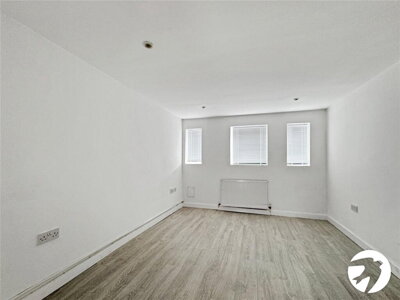
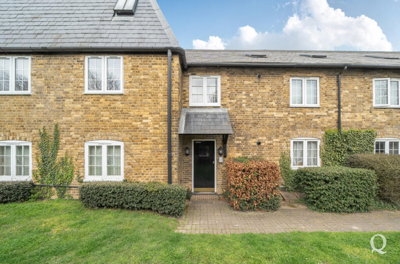
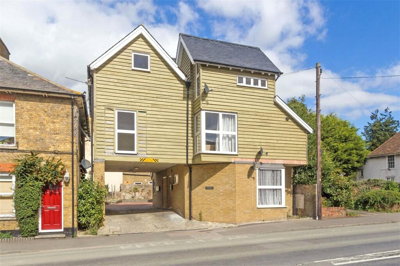
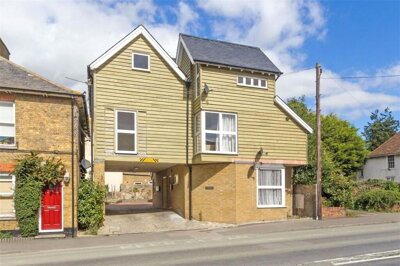
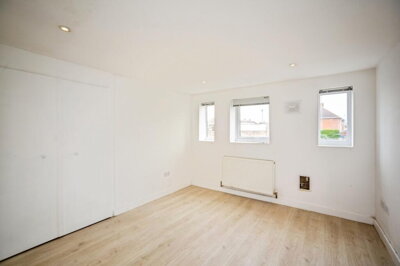
Browse 5 homes for sale in Lynsted with Kingsdown from local estate agents.
One bed apartments provide a separate bedroom alongside distinct living space, bathroom, and kitchen areas. Properties in Lynsted With Kingsdown are available in various building types including mansion blocks, contemporary developments, and house conversions.
Lynsted with Kingsdown sits in a strong rural Kent market, and detached homes lead it, averaging £600,000. These substantial houses usually come with generous plots, multiple reception rooms, and the Kentish architecture that gives the area its feel. The stock is a mix of period farmhouses, converted agricultural buildings, and newer schemes that sit quietly alongside the old streets rather than overpower them. homedata.co.uk shows 16 property sales completed in the parish over the past year, a healthy level of activity for a village of this size.
At £410,000 on average, semi-detached properties offer a sensible middle ground for families who need more space than a terrace but still have a budget to keep an eye on. Private gardens and off-street parking matter here, especially with rural transport links being thinner on the ground. Terraced homes average £350,000 and can be a more accessible way into village life, often bringing exposed beams, inglenook fireplaces, and traditional sash windows. Flats in the wider ME9 postcode area average around £180,000, although they are far less common in Lynsted itself, where houses dominate.
Much of the local housing stock is old, and a sizeable share predates 1919 because of the Conservation Area status, so buyers should expect the building methods common to period Kentish homes. Solid brick walls, timber framing, and pitched roofs finished in clay tiles or natural slate are all part of the picture. They add character, but they also shape how we assess condition and plan maintenance or renovation. Properties within the Conservation Area, including Lynsted Park and several historic farmhouses, bring specific obligations where any work could affect their historic character.
The market has held up well, with homedata.co.uk recording a 1.96% price increase over the past 12 months as demand continues for the blend of rural character and useful connectivity that Lynsted with Kingsdown offers. No active new-build developments were identified within the parish, although homes do occasionally come to market that have been sensitively modernised or extended without losing their period features. For investors, the limited supply, together with Conservation Area protection, points to long-term value retention, even if rental demand remains fairly modest, as is often the case in rural locations.

With 1,170 residents across 477 households, Lynsted with Kingsdown has the compact, close-knit feel of a classic English village. St Peter and St Paul Church sits at the centre of it all and has served the parish for centuries. Lynsted Conservation Area helps protect the historic setting, and the list of listed buildings, including Lynsted Park, old farmhouses, and traditional cottages, gives the village a real architectural depth. That conservation-minded approach keeps the period character intact, with Kentish ragstone, brick, and timber framing still prominent across many homes.
Footpaths and bridleways weave through the surrounding countryside, so residents can be out walking or cycling in minutes. Agriculture still shapes the parish, with working farms and orchards visible across the fields. Village pubs provide the social side of things, whether for a quiet drink or a community event. Sittingbourne and Faversham are both close enough for larger shops, healthcare, and entertainment, yet the village remains distinctly calm once you are back home.
Agriculture and commuter life both influence the local economy in Lynsted with Kingsdown, with residents working in local services, farming, and businesses in Sittingbourne, Faversham, and Canterbury. The commute is often manageable by car, usually 15 to 25 minutes to either Sittingbourne or Faversham. That helps the village keep a strong community feel, with events and activities centred on the church, the village hall, and the pubs that double as social hubs for people of all ages.
Children have plenty of space to be outdoors here, and the countryside gives families a natural setting for play and exploration. The North Downs and the Kent Downs are both within reach, bringing areas of outstanding natural beauty onto the doorstep. Farmers markets, vineyard visits, and coastal walks along the Kent coastline all make easy weekend outings, which is part of the appeal for families who want rural calm without giving up leisure options.

Education sits within a sensible radius of the village, with primary provision available in nearby communities across rural Swale. Schools in surrounding villages cater for children of primary age, and school bus travel is common in this part of Kent. That is normal in the countryside, though catchment areas and admission arrangements can vary quite a bit across the district, so we always check the details early.
Secondary options widen out into Sittingbourne and Faversham, both reachable from Lynsted with Kingsdown by bus or car. In Sittingbourne, The Fulston Manor School, a specialist Business and Enterprise College, and The Westlands School both serve the local area and have established reputations for academic results and extracurricular activity. Faversham brings Queen Elizabeth's Grammar School, with its long tradition of academic excellence, while families seeking grammar school places can also look across Kent under the county's selective admissions system.
Kent's grammar school system is selective, so families who are interested in that route need to get the Kent Test arrangements and registration deadlines in hand well before secondary school age. The test is usually taken in September of Year 6 and assesses verbal, non-verbal, and numerical reasoning. Places are allocated by rank order and distance from school. Preparation often starts in Year 5, and there are tutoring options in the surrounding towns for families who want extra support. Schools such as The Queen Elizabeth's Grammar School in Faversham and Invicta Grammar School in Maidstone remain popular with families in the Swale area.
Sixth form and further education options sit in Sittingbourne, Faversham, and Canterbury, giving students a wider choice of A-level and vocational courses. Westlands School in Sittingbourne has sixth form provision, while Faversham College offers further education for students aged 16 and above. Canterbury College, reached via the A2 and M2, broadens the picture again with a full spread of academic and vocational qualifications. School bus arrangements are usually the norm for secondary and further education, although parents should check current routes and timings, as these can change seasonally and may need advance registration.

Set between Sittingbourne and Faversham, the village benefits from rail access from both towns, each with stations that connect into London and the wider network. Faversham station has Southeastern services to London Victoria via Sittingbourne and the Thameslink route, with direct trains taking around 90 minutes into the capital. Sittingbourne station adds more options, including high-speed Southeastern services to St Pancras International, which can cut journey times sharply for anyone able to use those links.
Depending on the service chosen, London journey times from those nearby stations usually sit somewhere between 75 minutes and two hours, so Lynsted with Kingsdown works for commuters who want rural living without losing access to the capital. Canterbury is even closer, at around 25 to 30 minutes by car via the A2, or by local bus services that tie the village into the city. The M2 also gives straightforward access to the Medway towns and on towards London, with the nearest junction providing a useful route for drivers.
Transport here is rural rather than frequent, so car ownership is the practical choice for many residents. Bus services do run to surrounding villages and towns, but not nearly as often as in urban areas. The A2 trunk road is nearby, linking east to Canterbury and west to the M2, while Sittingbourne and Faversham are usually 15 to 25 minutes away by car. Cyclists will find some enjoyable routes, though the terrain can be hilly in places. Parking is mixed too, with older homes often short on off-street space and newer developments more likely to include designated bays.
For regular London travellers, season tickets from Faversham or Sittingbourne to London Victoria can save a meaningful amount compared with peak-day singles, and annual season tickets are usually the best value for daily commuting. Southeastern has invested in better services in recent years, and the modern trains offer more comfortable seating and passenger facilities. For those on hybrid working patterns, the location can be a good fit, office days in reach, home days in the countryside.

A sensible first step is to review our current listings on home.co.uk for Lynsted with Kingsdown and compare the price brackets across different property types. Because the village has a historic housing stock and Conservation Area status, older homes may bring extra costs for Listed Building Consent or specialist surveys. homedata.co.uk shows 16 property sales completed in the parish over the past year, with prices ranging from around £350,000 for terraced cottages to £600,000 for substantial detached homes.
Once a shortlist is in place, viewings are best booked through the agents advertising on home.co.uk. With rural properties, it helps to see them at different times of day, so we can judge light, noise levels, and the general feel of the neighbourhood. Time spent walking around the village and its surrounding lanes is rarely wasted. The condition of the building deserves close attention too, especially given how much of the local stock is older.
Before an offer goes in, we always recommend an agreement in principle, as it shows buyers are serious in a competitive rural market. Our mortgage partners can compare rates and point buyers towards suitable finance for a home in the £350,000 to £600,000 range that is typical here. Transport costs should also sit in the budget, because Lynsted with Kingsdown is rural and commuting needs are part of the picture.
A RICS Level 2 Survey is particularly sensible here, given the age of many homes and the sort of structural issues, damp, and timber defects that often appear in period properties. Clay soils in parts of the parish mean buyers should also watch for signs of subsidence or foundation movement, especially where mature trees stand close by. Expect a RICS Level 2 Survey to cost between £400 and £900 depending on property size and value, while a more comprehensive RICS Level 3 Survey is the better call for listed buildings.
Legal work matters just as much as the survey, so appointing a conveyancing solicitor early is a sensible move. The process covers local searches, title checks, and contract review, and our conveyancing partners handle rural property transactions in Kent with transparent pricing. Because the village has Conservation Area status and several listed buildings, the solicitor should check planning conditions, Tree Preservation Orders, and any historic consents that could affect the property.
Once the surveys, searches, and legal work all come back satisfactorily, contracts are exchanged and the deposit is paid. Completion then follows within days or weeks, after which the keys are handed over and the move into a new Lynsted with Kingsdown home begins. Rural moves need a little more planning than urban ones, so allow time for utilities, electoral roll changes, and removals, especially where services have longer lead times.
Clay and chalk both play a part in the local ground conditions, so the underlying geology needs proper thought before a purchase. In parts of the parish, typical of wider Swale and North Kent geology, clay soils can shrink and swell with moisture changes, while the North Downs chalk bedrock gives a stable base in many areas. That contrast can affect foundations over time. Cracks in walls, distorted door or window frames, or evidence of earlier structural work should all be investigated closely. A RICS Level 2 Survey will assess these risks and set out professional guidance on any remedial work needed.
Flood risk deserves its own check, because surface water flooding can affect low-lying areas and homes close to local watercourses. The village is not coastal, but agricultural land and drainage patterns can still lead to localised flooding during heavy rain. Environment Agency flood maps are a useful starting point, and it also helps to speak with current owners about any history of flooding. Lynsted Conservation Area brings further obligations, since any exterior work affecting listed buildings or the conservation area needs approval from Swale Borough Council planning department.
Older homes here can be charming, but they often need more work than modern houses. Solid walls, single-glazed windows, and older electrical and plumbing systems are all common, and they may need updating over time. The construction methods in the village, solid brickwork, timber frames, and pitched roofs with clay tiles or natural slate, all carry their own maintenance demands. When budgeting, buyers should allow for the cost of bringing services up to current standards and improving energy efficiency. Listed buildings are a particular case, as many examples in the parish need Listed Building Consent for works, including internal alterations, and any changes must respect the historic fabric.
Damp, rot, and roof wear are the issues we most often see in period properties across Lynsted with Kingsdown. Solid walls can suffer from damp, while timber members and floorboards may show rot or woodworm. Roofs can bring slipped tiles, deteriorated felt, and damaged ridge tiles, and older electrics may fall short of current safety standards. Plumbing may still run on galvanised steel or lead pipes that need replacing. Our inspectors regularly pick up these points during surveys, and a thorough RICS Level 2 Survey will flag anything that needs attention before purchase. Listed buildings can call for specialist heritage surveyors to review unusual construction features and advise on the right conservation work.
Parking can be the issue that surprises buyers last. In this rural village, older homes often have limited off-street parking, while newer developments are more likely to include designated spaces. Some access roads are narrow, and a few properties sit at the end of unmade tracks that need the right vehicle all year round. Checking parking and access early in the buying process helps avoid awkward surprises later, both for day-to-day living and for future value.

Recent sales put the average house price in Lynsted with Kingsdown at £468,750. Detached properties average £600,000, semi-detached homes £410,000, and terraced properties £350,000. homedata.co.uk shows the market has risen by 1.96% over the past 12 months, with 16 property sales recorded in the parish during that time. Prices vary according to size, condition, and whether the home is listed or inside the Conservation Area. Flats in the wider ME9 postcode area average around £180,000, though they are less common here because the village is mostly made up of houses.
Council tax for properties in Lynsted with Kingsdown falls under Swale Borough Council. Bands run from A to H, depending on assessed value, with most period cottages and smaller homes likely landing in bands A to D, while larger detached houses may sit higher up. We suggest checking individual properties on the Valuation Office Agency website before purchase to confirm the exact band. Council tax funds local services such as rubbish collection, road maintenance, and community facilities, all of which residents can use despite the village's small size.
Primary and secondary schooling both sit a short hop away, though transport is usually needed for daily routines. Nearby villages within the Swale district provide the closest primary schools, and Faversham and Sittingbourne add more options for families willing to organise travel. Secondary choices in those towns include Kent's grammar school system, with schools such as Queen Elizabeth's Grammar School in Faversham and The Fulston Manor School in Sittingbourne. Parents should check performance data on government websites and look carefully at catchment areas, because those boundaries can shape which schools a child is able to attend.
Public transport is thin on the ground, with buses linking the village to nearby towns and villages but at much lower frequencies than in urban areas. Faversham and Sittingbourne both have railway stations, giving access to London and the wider network. Faversham offers Southeastern services to London Victoria, while Sittingbourne adds routes including high-speed services to St Pancras International. Journey times to the capital usually range from 75 minutes to two hours, depending on the service. For most residents, car ownership is close to essential, especially for daily commuting or any travel that needs flexibility.
As an investment prospect, the village has a few clear selling points: rural Kent location, Conservation Area status, and a limited supply of homes. homedata.co.uk shows steady value growth, with a 1.96% increase over the past year, and the listed buildings and historic architecture help keep it desirable over time. The position between Sittingbourne and Faversham, together with rail links to London, adds commuter appeal. Rental demand is likely to remain moderate because local employment is limited, so the stronger fit is usually owner-occupiers or anyone looking for a long-term village home. Sensitively modernised properties that still keep their period features often achieve a premium.
Stamp Duty Land Tax starts at 0% on the first £250,000 of residential value, then rises to 5% on the portion between £250,001 and £925,000. For a typical Lynsted with Kingsdown home at the average price of £468,750, that means no stamp duty on the first £250,000 and 5% on the remaining £218,750, which comes to £10,937.50. First-time buyers purchasing homes up to £625,000 can claim relief, paying 0% on the first £425,000 and 5% on the amount between £425,001 and £625,000, which can cut the cost to £2,187.50 on a qualifying purchase at this price point. There is also a 3% surcharge on additional properties, plus special rules for non-UK residents.
Structural checks are vital in Lynsted with Kingsdown, where older construction often brings damp and timber defects. Clay soils mean subsidence assessment is especially important for homes with trees nearby, because tree roots can alter soil moisture and affect foundation stability. Our inspectors often find rising damp in solid walls, timber rot in floor joists and roof structures, and deterioration of traditional lime mortar pointing in brickwork. It is also important to check whether the property is listed or inside the Conservation Area, because that changes what alterations are allowed and can mean specialist contractors are needed. A comprehensive RICS Level 2 Survey is strongly recommended, with a more detailed RICS Level 3 Survey being the better option for listed buildings because of their unique construction and historical significance.
Surface water flooding is the main local risk to watch, particularly in low-lying areas or where drainage is limited. The village is not coastal, but nearby watercourses and agricultural land can still create localised flooding during heavy rain. The chalk bedrock of the North Downs drains well in some places, yet clay deposits can reduce permeability and push more water across the surface. Prospective buyers should review Environment Agency flood maps online, ask current owners about any history of flooding, and make sure suitable buildings insurance is available before completion. Higher-risk properties may attract higher premiums, so those costs should sit in the budget from the start.
Kentish materials define the look of many homes here, with ragstone, brick in various colours, and timber framing all appearing in older properties. The village's older houses usually have solid brick walls rather than modern cavity construction, together with lime mortar pointing that needs specific repair techniques to keep the structure breathable. Clay tiles or natural slate are standard roof coverings, and some homes have decorative tile hanging on upper floors. Render and weatherboarding also turn up on period properties, while newer developments tend to use cavity wall construction with brick or render finishes. Knowing these construction methods helps buyers understand both the upkeep and the likely quirks of each property type.
Buying here tends to follow the standard England and Wales timetable, usually taking between three and six months from offer acceptance to completion. If the market is busy, the initial offer stage can move quickly, sometimes settling within days for well-priced homes. Mortgage approval in principle often takes two to four weeks, and the full mortgage offer can take another two to three weeks once the property has been valued. Surveys, searches, and legal work generally run for six to eight weeks, though older homes with complex titles or listed building status can take longer. Chain-free purchases often move faster, while chains or complicated circumstances can stretch the timeline out.
Once the figures are set out, budgeting becomes much easier. On a typical Lynsted with Kingsdown property priced at £468,750, the Stamp Duty Land Tax bill for a standard buyer would be £10,937.50, based on 5% on the portion above £250,000. First-time buyers benefit from higher thresholds, paying 0% on the first £425,000 and 5% on the balance, which can bring the tax down to £2,187.50 for properties within the first-time buyer relief band. That can make village homes more accessible for people taking their first step onto the property ladder.
The headline price is only part of the bill. Conveyancing fees usually sit between £500 and £1,500, depending on complexity, and rural homes can sometimes trigger extra searches. In Lynsted with Kingsdown, those may include drainage and water authority searches, environmental searches to check for contamination risk, and planning searches that confirm the property's history. A RICS Level 2 Survey costs between £400 and £900 depending on size and value, with larger detached homes usually at the upper end. For a listed building, it is wise to allow an extra £200 to £400 for specialist surveys.
An Energy Performance Certificate starts from £80 and is a legal requirement before marketing, although sellers normally deal with that rather than buyers. Removals are another line in the budget, from around £500 for a small flat move to several thousand pounds for a full house move, especially where rural travel distances are involved. Repairs or renovations should sit separately from the move itself, because older homes often need more maintenance than newer ones. A sensible buffer of around 10% above your mortgage for incidental moving costs helps keep unexpected bills from causing trouble later.
Mortgage costs round off the upfront budget. Arrangement fees range from zero to around £2,000, depending on the lender and the product selected, and valuation fees may also apply. Survey fees are paid upfront regardless of whether the purchase completes, so if a transaction falls through that money is still at risk. Buildings insurance needs to be in place from exchange of contracts, and life insurance or income protection can provide valuable protection for those with large mortgages. Once the move is done, local authority taxes such as council tax, along with utility bills, should sit in the ongoing monthly budget.

Properties for Sale In London

Properties for Sale In Plymouth

Properties for Sale In Liverpool

Properties for Sale In Glasgow

Properties for Sale In Sheffield

Properties for Sale In Edinburgh

Properties for Sale In Coventry

Properties for Sale In Bradford

Properties for Sale In Manchester

Properties for Sale In Birmingham

Properties for Sale In Bristol

Properties for Sale In Oxford

Properties for Sale In Leicester

Properties for Sale In Newcastle

Properties for Sale In Leeds

Properties for Sale In Southampton

Properties for Sale In Cardiff

Properties for Sale In Nottingham

Properties for Sale In Norwich

Properties for Sale In Brighton

Properties for Sale In Derby

Properties for Sale In Portsmouth

Properties for Sale In Northampton

Properties for Sale In Milton Keynes

Properties for Sale In Bournemouth

Properties for Sale In Bolton

Properties for Sale In Swansea

Properties for Sale In Swindon

Properties for Sale In Peterborough

Properties for Sale In Wolverhampton

Enter your details to see if this property is within your budget.
Loans, cards, car finance
Estimated property budget
Borrowing + deposit
You could borrow between
Typical borrowing
Monthly repayment
Est. at 4.5%
Loan-to-value
This is an estimate only. Your actual budget may vary depending on interest rates, credit history, and personal circumstances. For an accurate affordability assessment, speak to one of our free mortgage advisors.
This calculator provides estimates for illustrative purposes only and does not constitute financial advice. Your home may be repossessed if you do not keep up repayments on your mortgage. Estimates based on 4.5% interest rate, repayment mortgage. Actual rates depend on your circumstances.
Homemove is a trading name of HM Haus Group Ltd (Company No. 13873779, registered in England & Wales). Homemove Mortgages Ltd (Company No. 15947693) is an Appointed Representative of TMG Direct Limited, trading as TMG Mortgage Network, which is authorised and regulated by the Financial Conduct Authority (FRN 786245). Homemove Mortgages Ltd is entered on the FCA Register as an Appointed Representative (FRN 1022429). You can check registrations at NewRegister or by calling 0800 111 6768.

We use cookies to show you personalised content and improve your experience of our website. Find out more in our Privacy policy and Cookie policy.