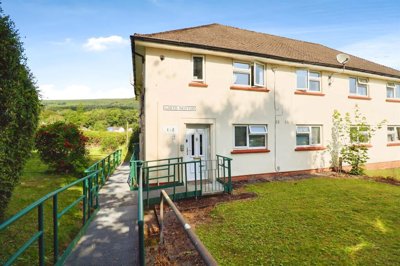
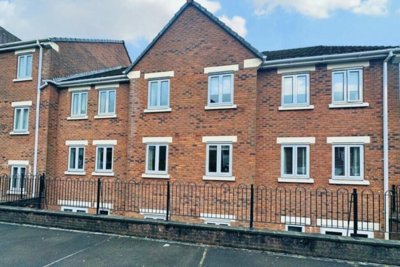
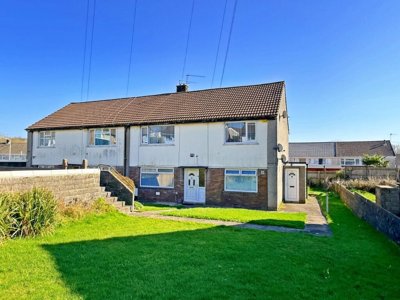
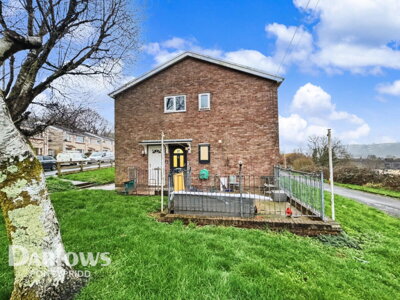
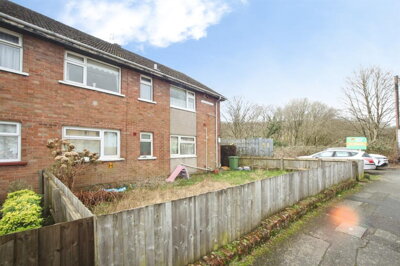
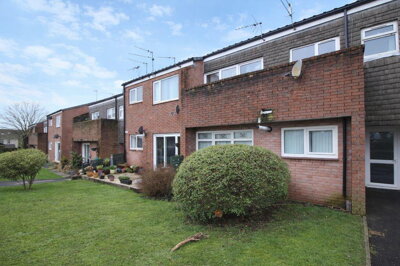
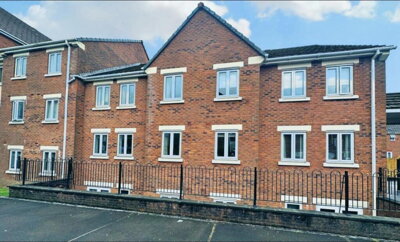
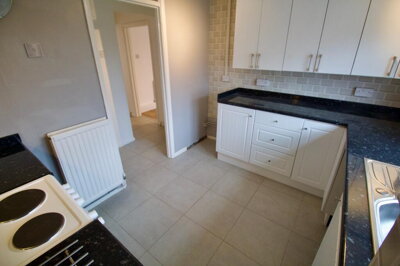
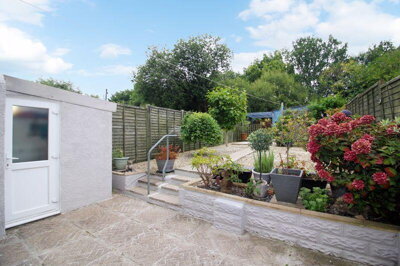
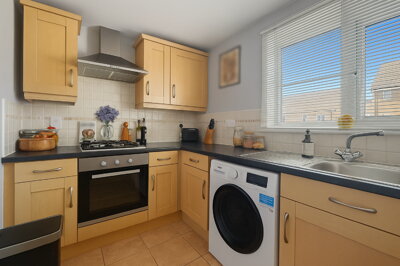
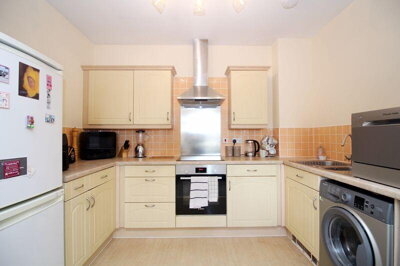
Browse 11 homes for sale in Llantwit Fardre from local estate agents.
The 2 bed flat sector typically includes two separate bedrooms, dedicated living areas, and bathroom facilities. Properties in Llantwit Fardre span purpose-built blocks, converted period houses, and modern apartment complexes on various floors.
Llantwit Fardre gives buyers plenty to work with across the full range of homes. Detached properties sit at the top end of the market, with average prices around £440,000, and they tend to offer the larger plots and gardens that growing families usually want. Generous driveways and garages are common too, which suits people working from home or anyone needing extra room for equipment and vehicles.
Nearly 40% of the local housing stock is made up of semi-detached homes, based on local census figures, and they typically sell for around £238,000. For the amount of space inside and out, that often looks like strong value. Many date from the inter-war and post-war years, so buyers often find solid construction and room sizes that feel bigger than a lot of newer homes. Their position near schools on Ewenny Road and close to the village centre keeps them in demand with families who want straightforward access to day-to-day amenities.
At around £199,000 on average, terraced homes in Llantwit Fardre are often the point where first-time buyers can get into the market. The stock is varied, so it is not unusual to see period details sitting alongside later updates. Around the High Street and the older village streets, many terraces date from the Victorian and Edwardian periods, with exposed stonework, original fireplaces and high ceilings that many new build homes do not match. Flats and apartments make up only 7% of available properties, but with prices starting from around £121,000, they give young professionals and investors a more affordable route in, especially with the University of South Wales campus nearby in Treforest.
Over the past year, the market has held fairly steady, with 104 property sales completing across the twelve-month period. That level of activity points to consistent demand from buyers who see better value here than in nearby Cardiff, where prices are markedly higher. New build choice in Llantwit Fardre itself is fairly limited at present, although surrounding communities offer broader options. Across the CF38 postcode area, prices have edged upwards over the longer term as more buyers have cottoned on to the village's appeal, which keeps it firmly on the radar for owner-occupiers and investors alike.

The local housing mix is 28.1% detached homes, 39.8% semi-detached properties, 25.1% terraced homes, and 7% flats or apartments.
Daily life in Llantwit Fardre is shaped by a strong local community and easy access to the basics. In the village centre, residents have local shops, convenience stores and traditional Welsh pubs within reach. The Kings Head, along with other familiar local spots, helps anchor community life, hosting everything from quiz nights to live music with local performers. Parks and green spaces add to that appeal, giving families, dog walkers and anyone who likes a decent footpath plenty of room to get outside.
You get a fairly balanced mix of people here, with families, working professionals and retirees all well represented in Llantwit Fardre. The University of South Wales campus at Treforest adds another layer, supporting the local economy and helping drive rental demand, especially during term time when students and university staff are a noticeable part of the wider population. Employment is spread across retail, healthcare, education and light industry, so many residents can work locally or nearby without a long journey. Talbot Green retail park, reached via the A473, adds more jobs and shopping into the picture.
Across the wider Rhondda Cynon Taf area, the geology is largely Carboniferous, with coal measures, sandstones and shales shaping both the landscape and the built environment around Llantwit Fardre. In the village itself, most homes are brick-built with rendered finishes and slate or tile roofs, which fits long-established Welsh building styles. Some of the older stock also uses local stone, and that gives parts of the streetscape a character that is closely tied to the materials previous generations had on hand.
Outside the village, the setting does a lot of the heavy lifting. The Glamorgan Heritage Coast is only a short drive away for coastal walks and days by the sea, while Llantwit Fardre's elevated position brings pleasant views towards the Vale of Glamorgan. At the same time, it stays more sheltered than some of the higher valley communities when the weather turns. That balance between countryside appeal and everyday practicality is a big reason buyers continue to look here.
Families moving to Llantwit Fardre have a range of education options to look at. Primary provision is well covered, with local schools serving children from nursery age to Year 6 and giving younger pupils a solid start in a supportive setting. Being close to other surrounding communities also widens the choice, so parents are not limited to a single option when weighing up what best suits their circumstances.
For secondary education, buyers will be looking across the wider Rhondda Cynon Taf area, where comprehensive schools serve the local catchments. It is sensible to check catchment boundaries and admissions policies carefully before committing to a particular property, as places are tied to residency and distance. Pontypridd adds more choice nearby, including secondary schools with strong academic performance and a broad extracurricular offer. There are also grammar schools in the region, although entry is selective and competition for places can be strong.
Higher education is close at hand thanks to the University of South Wales campus at Treforest. That matters not only for school-leavers, but for the area more broadly, because the university feeds into the local economy and community life through events, research activity, and the regular flow of students and staff. Across the wider region, further education colleges also provide vocational courses and apprenticeships, so residents in this part of South Wales can access study routes at different levels without travelling far.
Where schools are a major part of the decision, we would always suggest seeing them in person on open days and talking to current parents if possible. That can tell you far more about the character of a school than a brochure will. Performance information is also publicly available through government databases, which lets buyers check Ofsted ratings and exam results for schools across Rhondda Cynon Taf before settling on a move.

Commuters are well served here. The A473 and A470 give Llantwit Fardre direct road access to major employment centres across South Wales, and the A470 in particular links through to Cardiff city centre, making a village or suburban base realistic for people working in the capital. Pontypridd is only a short drive away, while Cardiff is usually reachable in around 30 to 40 minutes by car, traffic permitting.
Not everyone needs a car, and public transport does help keep Llantwit Fardre connected. Bus services run through the village and link residents with surrounding towns, which is especially useful for people without private transport. For rail journeys, the nearest stations at Treforest and Pontypridd provide regular services to Cardiff Central, making train commuting a practical option for many. From Pontypridd, typical journey times to Cardiff are around 25 to 35 minutes.
Cycling has become a more workable option in recent years as local paths and lanes have improved. The valleys terrain is never entirely effortless, so riders face a few climbs, but it also means there are routes for a range of abilities and different kinds of cycling. Anyone planning to commute by bike towards Cardiff will need to factor in a notable elevation gain, although electric bikes have made that far more manageable. For longer journeys, Cardiff Airport is the main international gateway, and the Severn Tunnel connects South Wales into London and the wider UK rail network.
Flood risk is not uniform across Llantwit Fardre. Some localised spots may be more vulnerable to surface water flooding, especially during periods of heavy rainfall. The River Taff and its tributaries are close by, and although the village generally sits on higher ground, lower-lying areas near watercourses can carry a greater fluvial flood risk. For any specific address, we recommend checking the Natural Resources Wales flood risk maps.
It is well worth spending time in Llantwit Fardre at different points in the day and across the week before buying. That gives you a clearer feel for noise, traffic, parking and the general pace of the neighbourhood. Walk the village centre, stop by the shops on Ewenny Road, have a proper look at the parks and green spaces, and check how easy it is to park near the homes you are considering. Small details matter.
Before starting a search, we would get clear on the budget. Speak to lenders or use online mortgage calculators so you know what you can realistically afford, and try to have an agreement in principle ready, as that can put you in a stronger position when offers go in. In Llantwit Fardre, prices typically run from around £121,000 for flats up to about £440,000 for detached homes, so understanding your borrowing power early can save time and narrow the field.
Once you know what you want, arrange viewings through the estate agents marketing homes in Llantwit Fardre. During each visit, make notes, take photographs and, where possible, go back for a second look at a different time of day. That often reveals more about the property and the setting around it. Given the age of much of the local stock, condition deserves close attention.
After an offer is accepted, we would normally advise instructing a qualified surveyor for a RICS Level 2 Survey (HomeBuyer Report). In Llantwit Fardre, where many homes are older and issues such as damp, roof deterioration or mining legacy concerns can arise, that report is a useful safeguard. Typical survey costs in the area fall between £400 and £700, depending on the size of the property.
You will also need a conveyancing solicitor to deal with the legal side of the purchase. They handle searches, review the contract paperwork and liaise with the seller's solicitors to move the transaction along. Because Llantwit Fardre sits in a former mining area, we would specifically ask for a mining report as part of the conveyancing process, so historical mine workings and possible subsidence risks are checked properly.
Once the searches are back in good order and the finance is in place, your solicitor will arrange contract signing and collect the deposit. On completion day, the balance is transferred and the keys are released. That is the point at which the move to your new home in Llantwit Fardre becomes real.
Llantwit Fardre's housing stock covers a broad spread of building periods, from older cottages in the original village core to development from the post-1980 years. During viewings, damp is one of the main things to watch for, especially in older homes with solid walls or poor ventilation. Staining, peeling wallpaper, musty smells and black marking around windows or external walls can all point to condensation or penetrating damp. In pre-1930s properties, where solid wall construction is common, cracked render or worn pointing can make the problem worse.
Roofs merit a careful look on any home, and even more so on older properties where the original covering may be near the end of its useful life. Missing, slipped or cracked slates and tiles can let water in quickly if left alone. It is also worth checking gutters and downpipes, because poor drainage can lead to wider structural problems over time. In parts of the region where clay-rich soils are present, foundations can also be vulnerable to shrink-swell movement, particularly when trees are planted too close to the house. Diagonal cracking running from the corners of doors and windows is one sign we would take seriously.
Mining history is part of the wider Rhondda Cynon Taf story, so it should not be ignored in Llantwit Fardre. The village may not have active mines, but past coal workings across the region can still affect ground stability in certain locations. That is why a mining report is such an important part of conveyancing here, checking historical mine workings, potential subsidence risk and any recorded mining incidents tied to the property. If a home is listed, there is another layer again, with specialist surveys often needed and planning restrictions likely to apply to changes and improvements.
Older properties also often come with services that need bringing up to current standards. We would look out for old consumer units using fuse wires rather than circuit breakers, fabric-covered cables instead of modern PVC wiring, and plumbing in galvanised steel pipes that can restrict flow and may contain lead. A thorough survey should pick up these issues and help you plan what upgrades may be needed after purchase.

You can often tell a lot about likely maintenance by understanding how a property was built. In Llantwit Fardre, older homes commonly have solid brick or stone walls, while newer houses are more likely to use cavity wall construction. Anything built before the 1930s is especially likely to have solid external walls, sometimes using locally sourced materials such as the sandstone seen in parts of the village. Those walls need a different approach to insulation and damp treatment than modern cavity walls do.
Most roofs across the local housing stock use traditional timber rafters and purlins, finished with either slate or clay tile depending on the age and style of the house. Plenty of period homes still have their original roof structure even where the outer covering has been renewed over time. During an inspection, it is sensible to check the condition of the sarking felt beneath the slates or tiles, because once that secondary layer starts to fail, severe weather can push water further into the structure.
Inside older houses, timber ground floors are often suspended above air bricks and rely on decent ventilation to avoid rot or woodworm. We would pay close attention to joists and floorboards at ground level, especially where there may have been plumbing leaks or rising damp. Some modern extensions and conversions instead use concrete floors, which can feel colder underfoot, but they are usually less vulnerable to damp problems than badly ventilated timber floors.
Construction type shapes the kind of issues you are likely to face and what maintenance may cost over time. A Victorian terrace will usually come with a different set of concerns from a 1970s semi-detached house, and a RICS Level 2 Survey should flag the main risks tied to each. For listed buildings, any repair or alteration also has to respect the original building methods, which often means using specialist contractors with historic conservation experience.
As of early 2026, the average house price in Llantwit Fardre is approximately £299,000. There is a clear spread by property type, with detached homes averaging around £440,000, semi-detached properties approximately £238,000, terraced homes £199,000, and flats starting from £121,000. Over the last twelve months, the market has remained relatively stable, with a 1.8% adjustment and 104 completed sales recorded in the same period.
For council tax, properties in Llantwit Fardre fall within Rhondda Cynon Taf Council. The banding runs from Band A to Band I, depending on the valuation, and most family homes locally tend to sit in Bands B to D. Band A carries the lowest charge, while Band D covers homes valued at approximately £100,000 to £150,000 at the time of valuation. Before committing to a purchase, we would always check the exact band, because council tax is a standing cost of ownership that needs to be factored in properly.
School choice is one of the practical draws for many buyers here. Local primary schools serve children from nursery age to Year 6, and there are further options in the surrounding communities, so families are not restricted to one immediate catchment. Across the wider Rhondda Cynon Taf area, secondary provision includes comprehensive schools tied to local catchments, as well as grammar schools in the region for academically able pupils. The University of South Wales campus at Treforest adds nearby higher education. If schools are high on the list, parents should look into individual Ofsted ratings and admissions policies before deciding on a property.
Getting around is relatively straightforward. Regular bus services connect Llantwit Fardre with nearby places including Pontypridd and Cardiff, and the train stations at Treforest and Pontypridd provide rail access to Cardiff Central at journey times that suit many commuters. Bus routes along the A473 and nearby roads also link into retail areas and employment centres. For drivers, the A473 and A470 give direct routes to major workplaces across the region, and Cardiff Airport can usually be reached in around 45 minutes.
From an investment point of view, Llantwit Fardre has a few clear advantages. The University of South Wales nearby helps support regular rental demand from students and university staff, particularly for smaller homes and flats at lower price points. The village also attracts commuters heading to Cardiff or Pontypridd who want better value than city centre pricing without an unworkable journey. With 104 sales completed over the last year, the market shows healthy liquidity for a village of this size. Demand also comes through from first-time buyers and families moving up from terraced homes.
For standard purchases, stamp duty rates in 2024-25 are 0% on the first £250,000, 5% on the portion from £250,001 to £925,000, 10% on £925,001 to £1.5 million, and 12% above £1.5 million. First-time buyers receive relief on the first £425,000, with 5% payable between £425,001 and £625,000, while properties above £625,000 do not qualify for that relief. With average prices in Llantwit Fardre at £299,000, most standard buyers would only pay stamp duty on the amount above £250,000, which comes to £2,450 at current rates.
Coal mining has left a long legacy across Rhondda Cynon Taf, and that includes property considerations in Llantwit Fardre. Even without active mining in the village itself, historic workings can still create issues such as subsidence, ground instability or, in some localised cases, mine gas emissions. A mining report is designed to check for historical mine workings, any recorded subsidence incidents, and outstanding mining permissions that could affect the site. Because local geology includes Carboniferous coal measures, this is one search we would not skip during conveyancing.
Llantwit Fardre includes a number of listed buildings, mainly Grade II, among them historic farmhouses, chapels and older homes that contribute to the village's architectural character. Listed status brings protection because of a building's historic importance, and alterations or improvements will usually need listed building consent from Rhondda Cynon Taf Council. Anyone thinking about buying one should allow for potentially higher maintenance costs and the possibility of specialist surveys before work can begin.
The asking price is only part of the total spend, and that matters just as much in Llantwit Fardre as anywhere else. Stamp duty land tax can be one of the larger extra costs, depending on both the purchase price and whether you qualify for any relief. On a typical purchase at the local average of £299,000, a standard buyer would pay 0% on the first £250,000 and 5% on the remaining £49,000, giving a bill of £2,450. For first-time buyers, there is no stamp duty on purchases up to £425,000, so most first-time buyers in Llantwit Fardre would have no stamp duty to pay.
Legal costs need their own line in the budget. Solicitor conveyancing fees generally range from £500 to £1,500, depending on how straightforward the matter is and whether the home is freehold or leasehold. On top of that, the searches your solicitor orders, including local authority, drainage and environmental checks, can add several hundred pounds more. In Llantwit Fardre, we would treat a mining search as especially important because of the wider Rhondda Cynon Taf coalfield history. It checks historical mining activity, recorded subsidence and possible ground instability that a standard inspection would not necessarily reveal.
Survey costs for a RICS Level 2 HomeBuyer Report typically sit between £400 and £700, with the final figure depending largely on the size of the property. Larger or older homes may justify stepping up to a Level 3 survey, which goes into more detail on construction and defects. Smaller flats and terraced houses usually sit at the lower end of the range, while bigger detached homes or buildings with more complex construction may need the more detailed option. In a place like Llantwit Fardre, where much of the housing stock is older, spending properly on the survey can save a lot later.
Then there are the moving-day costs that are easy to underestimate. Removal firms, boxes, packing materials and any temporary storage can all add up quickly. If a mortgage is involved, lender arrangement fees might be anything from zero to several thousand pounds, and some buyers prefer to add those to the loan rather than paying them upfront. Buildings insurance needs to be in place from completion, and it is wise to keep funds back for repairs or improvements highlighted in the survey. Good planning helps stop the move to Llantwit Fardre being knocked off course by last-minute expenses.
From £400
A detailed inspection of the property's condition, well suited to most homes in Llantwit Fardre's mixed housing stock.
From £600
A comprehensive building survey that is usually recommended for older properties, listed buildings, or homes of unusual construction.
From £25
Essential for properties in former coal mining areas such as Llantwit Fardre.
From £499
Solicitors handle the legal aspects of the property purchase.
Properties for Sale In London

Properties for Sale In Plymouth

Properties for Sale In Liverpool

Properties for Sale In Glasgow

Properties for Sale In Sheffield

Properties for Sale In Edinburgh

Properties for Sale In Coventry

Properties for Sale In Bradford

Properties for Sale In Manchester

Properties for Sale In Birmingham

Properties for Sale In Bristol

Properties for Sale In Oxford

Properties for Sale In Leicester

Properties for Sale In Newcastle

Properties for Sale In Leeds

Properties for Sale In Southampton

Properties for Sale In Cardiff

Properties for Sale In Nottingham

Properties for Sale In Norwich

Properties for Sale In Brighton

Properties for Sale In Derby

Properties for Sale In Portsmouth

Properties for Sale In Northampton

Properties for Sale In Milton Keynes

Properties for Sale In Bournemouth

Properties for Sale In Bolton

Properties for Sale In Swansea

Properties for Sale In Swindon

Properties for Sale In Peterborough

Properties for Sale In Wolverhampton

Enter your details to see if this property is within your budget.
Loans, cards, car finance
Estimated property budget
Borrowing + deposit
You could borrow between
Typical borrowing
Monthly repayment
Est. at 4.5%
Loan-to-value
This is an estimate only. Your actual budget may vary depending on interest rates, credit history, and personal circumstances. For an accurate affordability assessment, speak to one of our free mortgage advisors.
This calculator provides estimates for illustrative purposes only and does not constitute financial advice. Your home may be repossessed if you do not keep up repayments on your mortgage. Estimates based on 4.5% interest rate, repayment mortgage. Actual rates depend on your circumstances.
Homemove is a trading name of HM Haus Group Ltd (Company No. 13873779, registered in England & Wales). Homemove Mortgages Ltd (Company No. 15947693) is an Appointed Representative of TMG Direct Limited, trading as TMG Mortgage Network, which is authorised and regulated by the Financial Conduct Authority (FRN 786245). Homemove Mortgages Ltd is entered on the FCA Register as an Appointed Representative (FRN 1022429). You can check registrations at NewRegister or by calling 0800 111 6768.

We use cookies to show you personalised content and improve your experience of our website. Find out more in our Privacy policy and Cookie policy.