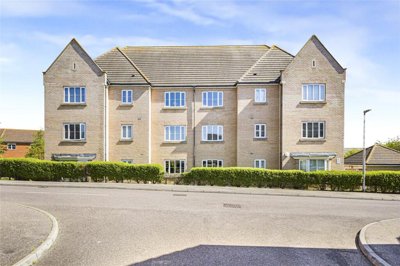
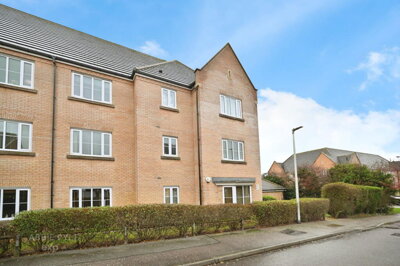
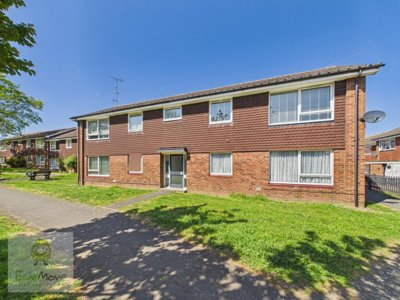
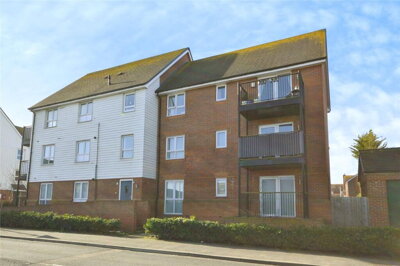
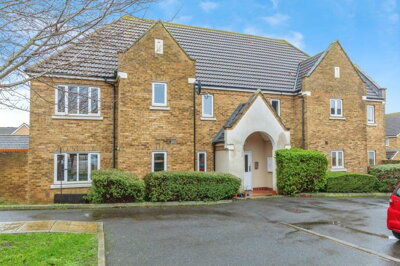
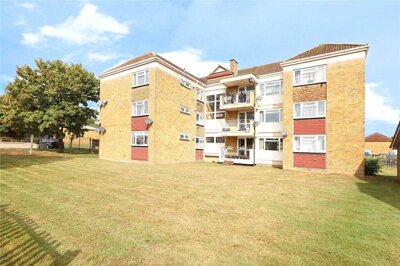
Browse 6 homes for sale in High Halstow from local estate agents.
Studio apartments feature open-plan living spaces without separate bedrooms, incorporating sleeping, living, kitchen, and bathroom facilities. The High Halstow studio market includes properties in modern apartment complexes, converted Victorian and Georgian buildings, and purpose-built developments.
High Halstow's housing market has cooled over the past year. Prices are down by approximately 8% year on year and remain around 13% below the 2022 peak of £477,517. Even with that correction, the village still attracts buyers looking for better value in the Medway area. Recent transaction figures from homedata.co.uk show 9 properties sold in the past 12 months, which points to steady, if fairly measured, activity. Detached homes achieve the strongest prices at an average of £598,600, with semi-detached properties at £386,759 and terraced homes at around £325,000.
On Wybournes Lane, Wybourne Orchard by Callisto Homes is one of the clearest examples of new housing coming into High Halstow. It is a boutique scheme with carefully planned 2, 3, and 4-bedroom homes, and it also includes the conversion of two former agricultural storage barns into family residences. The East Barn provides a mix of 2 and 4-bed homes, while the West Barn is arranged around 3-4 bedroom family properties. Schemes like this show how the village is adding new stock without losing sight of its historic character or rural setting.
More change is on the horizon. Redrow Homes has submitted planning applications for approximately 760 new homes to the east of the current village, on land between the main settlement and Fisher's Wood, across Christmas Lane and Britannia Road. In practical terms, that would effectively double the size of High Halstow. The plans include a new primary school, open spaces, green pathways, and a small retail offer. Walnut Tree Farm has already added 66 new homes locally, so buyers weighing the area for the long term should factor in both the pace of growth and the infrastructure that comes with it.

Set on the Hoo Peninsula, High Halstow occupies a very particular landscape of low-lying reclaimed marshland running out towards the North Kent Marshes. The village has expanded markedly since the post-war years, with housing gradually extending the built edge northwards and eastwards. Even so, it still feels like a village, especially around the older core focused on St Margaret's Church and The Street. With an estimated population of approximately 2,102 residents, it keeps the kind of scale where people often know their neighbours and local events still matter.
Daily life here is shaped as much by the surroundings as by the housing stock. High Halstow National Nature Reserve brings woodland walks and varied wildlife within easy reach, and beyond that are the broad views across marshes and estuaries. In the older parts of the village, traditional Kentish ragstone and red brick still define many buildings, including the Grade I listed Church of St Margaret from the 13th century. The Grade II listed Red Dog Public House remains a familiar local stop, while homes along Sharnal Street mark the village's early 20th-century growth, with construction dating between 1912 and 1935.
The listed heritage in High Halstow goes beyond the Church of St Margaret, with six further Grade II buildings in the village. Among them are Buck Hole Farmhouse, an early 18th-century red brick farmhouse with grey headers, Dux Court, Wybornes Farmhouse, Great Dalham on Cooling Road, and The Red Dog Public House, built in grey stone and red brick. That historic fabric gives the village much of its identity. It also means buyers looking at period homes need to be clear about the extra responsibilities and restrictions that can come with listed status. Buildings such as Great Dalham and Wybornes Farmhouse also speak directly to the area's agricultural past and to long-established Kentish building methods using local materials.

For families, schooling is one of the practical questions that sits alongside the village's growth. As High Halstow expands, education provision is part of the conversation, and the proposed Redrow Homes scheme would bring a new primary school if the 760-home development is approved. That would be a significant addition for households moving in over the next few years. At present, most primary school-aged children attend schools across the wider Hoo Peninsula, with a mix of community and faith-based options depending on what families want and what places are available.
Older children generally travel out of the village for school. Secondary provision for High Halstow residents is mainly found in Strood, Rochester, and other Medway towns, where several well-regarded secondary schools and grammar schools serve the peninsula. Sixth form options in Rochester and Chatham add a broad A-level choice for families planning beyond Year 11. Catchment areas matter here, and they can have a noticeable effect on demand and values in particular streets. Homes that fall within the catchment of popular schools often carry a premium, so we always suggest checking admission rules and performance data early.
Because High Halstow sits within reach of the Medway towns, families can usually access schools and colleges without especially long journeys, which makes the village workable at different stages of education. A proposed new railway station on the Hoo Peninsula could improve that further if it is approved and built, giving better regional access and possibly easing the current dependence on the car for school runs and after-school activities.

Private cars have long been central to getting around from High Halstow, and approximately 76% of residents commute to work by car. The main road link is the A228, which connects with the M2 motorway and gives access towards Rochester, Maidstone, and then the M25 London orbital road. For most people travelling into the Medway towns or farther afield, that road network makes the car the practical choice. There are local bus links into nearby towns as well, although services tend to be less frequent than in more built-up locations.
There is, however, a potentially important transport change in the pipeline. Plans for a new passenger railway station on the Hoo Peninsula would give High Halstow residents a much stronger public transport option, with the proposed station expected to serve the area south of High Halstow parish. Direct rail links to London and coastal destinations would alter the feel of the area considerably, and the station is also expected to support further housing while reducing car dependency for people working in the capital. Cycling is an option too, particularly for leisure, and the Kent countryside offers attractive routes, though longer commutes by bike need thought because of the rural roads around the village.
Within the village, parking is usually reasonable for a settlement of this scale. On-street spaces are common in residential stretches such as Sharnal Street. The local employment picture has shifted over time as well. High Halstow and the surrounding area were once tied more closely to power stations and petrochemical industries, but the economy has broadened, with financial and business services and software development now drawing workers into the region. Even so, many residents are employed in wholesale, retail trade, and repair industries, often commuting into larger Medway centres or beyond.

It helps to see High Halstow properly before committing. Spend time there on different days and at different times, try the route to work, use the local amenities, and speak to people who already live in the village. Check recent sold prices on homedata.co.uk so you can compare what similar homes have actually achieved. And in this location, with London Clay deposits part of the picture, ground conditions and any past subsidence history deserve close attention.
Before booking viewings in earnest, it is sensible to speak with a mortgage broker and secure an Agreement in Principle. Sellers take offers more seriously when they can see finance is in place, and it gives you a clearer budget from the start. Rates move, so comparing lenders is still important. Around the village average of £413,337, many buyers will find competitive products available, and first-time buyers may also want to check whether Help to Buy schemes are relevant for homes within the qualifying price threshold.
Start with the current High Halstow listings and arrange viewings through estate agents. As you go round, make notes on condition, look carefully for damp or movement in older homes, and ask direct questions about the age of boilers and electrical installations. Age matters here. Any property built before 1999 may contain asbestos in one form or another, so the construction date and details of any recent renovation work are worth pinning down while you are viewing.
Before you exchange, we would usually recommend booking a RICS Level 2 Survey so the property's condition is checked properly. In High Halstow, London Clay is an important local factor, and a survey can pick up subsidence risk or movement that may not be obvious during a viewing. Houses on Sharnal Street dating from between 1912 and 1935 can be more vulnerable where shallow foundations meet clay-related movement. Our surveyors regularly identify issues seen in Kentish homes, including damp in solid-walled buildings and timber defects in period properties.
Once your offer is accepted, choose a conveyancing solicitor to deal with the legal side of the purchase. They will handle the searches, review the contract papers, and liaise with the seller's solicitor right through to completion. For homes on reclaimed marshland in the northern parts of the parish, we would expect flood risk checks and relevant environmental searches to be looked at carefully, particularly in the low-lying ground close to the North Kent Marshes.
After the survey results are in and the legal work is clear, your solicitor can move matters on to exchange of contracts and agree a completion date. On the day of completion, the balance of funds is sent across and the keys are released. Straightforward enough. With new-build purchases at places such as Wybourne Orchard or the already completed Walnut Tree Farm development, the legal process will also cover snagging inspections and the warranty paperwork.
Ground conditions are a real part of the buying picture in High Halstow. The village sits over London Clay, and that shrink-swell geology can create subsidence risk, especially for older houses with shallower foundations. You can see the same clay context in the woodland of High Halstow National Nature Reserve, and it extends beneath residential parts of the parish as well. In the northern areas, the land changes again to low-lying reclaimed marshland, where flood exposure from rivers, coastal sources, and surface water needs to be judged carefully. A RICS Level 2 Survey is often the best starting point for identifying movement, damp, or related defects before you commit.
There are seven listed buildings in the village altogether, made up of the Grade I Church of St Margaret and six Grade II buildings including Buck Hole Farmhouse, Dux Court, Wybornes Farmhouse, Great Dalham, and The Red Dog Public House. Buying one of these homes brings extra character, but it also brings rules. Future alterations or renovation work may be restricted, and permitted development rights are not always available in the usual way. Period buildings can also need more specialist inspection because of their materials and methods of construction. By contrast, newer homes at Wybourne Orchard give buyers modern standards and warranty cover, while older stock tends to ask more in upkeep over time.
We frequently see a similar set of issues in older High Halstow properties, especially those built before modern regulations came in. Pre-1919 homes with solid walls often have limited or ineffective damp-proofing, which can lead to rising damp or penetrating damp showing on walls and skirting boards. Roofs on period houses commonly present slipped or cracked tiles, worn ridge mortar, and failing flashings, all of which can let water in. Earlier electrical installations may no longer meet current safety expectations and can require updating. Timber is another watchpoint, with wet rot and dry rot more likely where ventilation is poor or old damp problems have never been dealt with properly.

The average house price in High Halstow over the past year was £413,337, based on property transaction data. Detached homes averaged £598,600, semi-detached properties came in at £386,759, and terraced houses were around £325,000. Over the last year the market has fallen by 8%, and values now sit approximately 13% below the 2022 peak of £477,517, which may open up more accessible buying opportunities in this part of Kent. homedata.co.uk reports a slightly lower average of £379,000 as of early 2026, pointing to a market that may still be settling after the recent correction.
For council tax, High Halstow falls within Medway Council. Bands run from A to H, with the final band for any individual property based on its assessed value. Band D is fairly typical for a number of mid-range homes locally, although the exact position depends on size, condition, and valuation history. New homes at Wybourne Orchard and elsewhere can sometimes sit in lower bands at first before being reassessed. It is always worth checking the precise band for the property you are considering, because those annual costs should form part of the wider budget for owning a home in High Halstow.
Primary school provision for High Halstow families is drawn mainly from the wider Hoo Peninsula, where both community and faith-based schools are available, subject to places and admission rules. The proposed Redrow scheme would add a new primary school for the enlarged village, which could strengthen local provision over the coming years. Secondary pupils usually travel to Strood, Rochester, or Chatham, and families also have access to grammar schools across the Medway towns where children meet the entry criteria. In day-to-day terms, that means school transport or the car is often part of family life, especially for older children attending sixth form or travelling for specialist subjects and activities.
At present, public transport from High Halstow is modest rather than extensive. Local bus services connect the village with surrounding Medway towns, but they run less frequently than services in urban areas. Most residents therefore rely on the road network, particularly the A228 and the M2 motorway, which make car travel the simplest option. A new passenger railway station on the Hoo Peninsula could change that if it goes ahead, offering direct rail journeys to London and coastal destinations. The proposed station would serve the area south of High Halstow parish and might reduce the current 76% car commuting rate by giving people a practical alternative for reaching the capital and other major employment centres.
From an investor's point of view, High Halstow has a few obvious attractions. Its rural setting on the Hoo Peninsula, and its relative affordability compared with more urban parts of Kent, will appeal to some buyers. The planned Redrow Homes scheme for approximately 760 new homes to the east of the village, with a new primary school and community facilities, points to continuing infrastructure investment that could support values over time. Walnut Tree Farm has already delivered 66 homes, showing that the village can absorb managed growth. Still, the 8% annual price fall and the area's present dependence on the car both need weighing up. If the proposed railway station is approved and built, that improved connection to London could shift the picture again.
In England, Stamp Duty Land Tax for 2024-25 is charged at 0% on the first £250,000 of a residential purchase, 5% on the portion between £250,001 and £925,000, 10% from £925,001 to £1.5 million, and 12% above £1.5 million. First-time buyer relief is more generous, with 0% up to £425,000 and 5% between £425,001 and £625,000. Using the typical High Halstow figure of £413,337, a standard buyer would pay approximately £8,167, while a first-time buyer would pay £0 under the current thresholds. Anyone buying at Wybourne Orchard should still confirm which rates or exemptions apply to their own circumstances.
From £350
A detailed inspection of the property's condition, well suited to standard homes in High Halstow.
From £500
A more in-depth structural survey is usually the right choice for older or listed properties.
From £85
An energy performance certificate is required for every property sale.
From £499
Legal services for your property purchase in High Halstow
The purchase price is only part of the budget. Buyers in High Halstow should also allow for Stamp Duty Land Tax unless they qualify for first-time buyer relief, and recent threshold changes have softened that cost for some moderate-value purchases. On a home at the village average of £413,337, a standard buyer would be looking at around £8,167 in stamp duty. A first-time buyer paying up to £425,000 would currently pay £0, which brings many terraced and semi-detached homes in the village within relief.
Legal fees for conveyancing often start at about £499 for a simple transaction, although the figure can rise depending on whether the property is freehold or leasehold, new build or resale. A RICS Level 2 Survey generally starts from around £350, and in High Halstow it is particularly worthwhile because of both the age of parts of the housing stock and the local London Clay geology. Survey fees for larger detached houses, including family homes at Wybourne Orchard, may be higher simply because there is more to inspect. On top of that, buyers should budget for mortgage arrangement fees, search fees, land registry fees, and removals, all of which can add several thousand pounds to the overall moving cost.
Listed homes can bring extra expense from the outset. In High Halstow, the six Grade II listed buildings and the one Grade I listed building are subject to heritage controls, so specialist surveys may be needed and any future works could require listed building consent. Older houses may also need money set aside for bringing electrical systems and plumbing up to modern standards, particularly where they pre-date current safety expectations. In the northern parts of the parish, homes on reclaimed marshland can raise separate insurance questions, and flood risk assessments are another cost worth factoring into the conveyancing budget.

Properties for Sale In London

Properties for Sale In Plymouth

Properties for Sale In Liverpool

Properties for Sale In Glasgow

Properties for Sale In Sheffield

Properties for Sale In Edinburgh

Properties for Sale In Coventry

Properties for Sale In Bradford

Properties for Sale In Manchester

Properties for Sale In Birmingham

Properties for Sale In Bristol

Properties for Sale In Oxford

Properties for Sale In Leicester

Properties for Sale In Newcastle

Properties for Sale In Leeds

Properties for Sale In Southampton

Properties for Sale In Cardiff

Properties for Sale In Nottingham

Properties for Sale In Norwich

Properties for Sale In Brighton

Properties for Sale In Derby

Properties for Sale In Portsmouth

Properties for Sale In Northampton

Properties for Sale In Milton Keynes

Properties for Sale In Bournemouth

Properties for Sale In Bolton

Properties for Sale In Swansea

Properties for Sale In Swindon

Properties for Sale In Peterborough

Properties for Sale In Wolverhampton

Enter your details to see if this property is within your budget.
Loans, cards, car finance
Estimated property budget
Borrowing + deposit
You could borrow between
Typical borrowing
Monthly repayment
Est. at 4.5%
Loan-to-value
This is an estimate only. Your actual budget may vary depending on interest rates, credit history, and personal circumstances. For an accurate affordability assessment, speak to one of our free mortgage advisors.
This calculator provides estimates for illustrative purposes only and does not constitute financial advice. Your home may be repossessed if you do not keep up repayments on your mortgage. Estimates based on 4.5% interest rate, repayment mortgage. Actual rates depend on your circumstances.
Homemove is a trading name of HM Haus Group Ltd (Company No. 13873779, registered in England & Wales). Homemove Mortgages Ltd (Company No. 15947693) is an Appointed Representative of TMG Direct Limited, trading as TMG Mortgage Network, which is authorised and regulated by the Financial Conduct Authority (FRN 786245). Homemove Mortgages Ltd is entered on the FCA Register as an Appointed Representative (FRN 1022429). You can check registrations at NewRegister or by calling 0800 111 6768.

We use cookies to show you personalised content and improve your experience of our website. Find out more in our Privacy policy and Cookie policy.