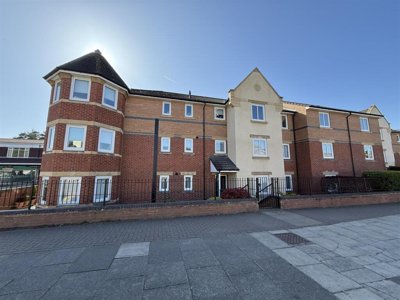
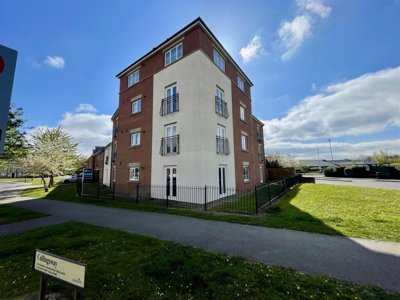
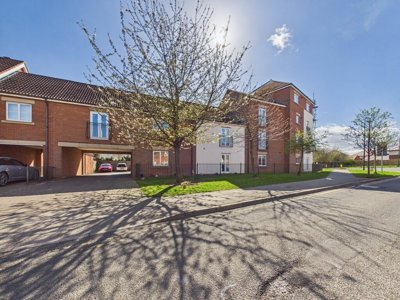
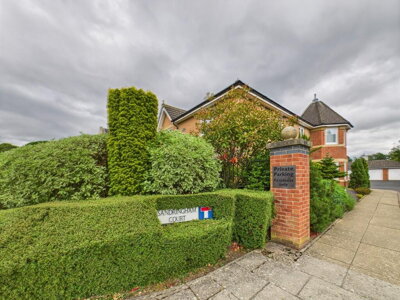
Browse 4 homes for sale in High Coniscliffe from local estate agents.
Studio apartments feature open-plan living spaces without separate bedrooms, incorporating sleeping, living, kitchen, and bathroom facilities. The High Coniscliffe studio market includes properties in modern apartment complexes, converted Victorian and Georgian buildings, and purpose-built developments.
High Coniscliffe’s property market mirrors its appeal as a desirable semi-rural village with a broad mix of homes. According to home.co.uk, the average property price is £337,500, while detached houses command an average of £420,000. Terraced homes usually sell for around £255,000, which gives buyers a more accessible route into this sought-after spot. The stock includes historic cottages, Victorian terraces along Coniscliffe Road dating from around 1800, and substantial detached family homes spread through the village’s nucleated layout around the green and church.
New build activity is still shaping the local market. Coniscliffe Park by Taylor Wimpey offers modern homes on Coniscliffe Road, DL2 2JX, just 2.6 miles from Darlington centre. The scheme includes two, three, and four-bedroom properties, priced from £153,995 for a two-bedroom semi-detached home up to £339,995 for a four-bedroom detached property. The Brambleford three-bedroom semi-detached starts from £181,996, while the four-bedroom Colford and Plumdale detached homes are available from £339,995. A proposed development by Esh Homes, working with Darlington Borough Council, could add another 70-90 homes to the area, including three, four, and five-bedroom properties, although that is still at planning stage.
Homes here span several centuries of building styles, from 16th-century manor houses to contemporary new builds. In the nearby area, older properties, including some historic cottages, are often built from river stone with lime render, which reflects the traditional methods used before brick became widespread. Many 19th-century houses have the brickwork and slate roofs seen across County Durham. By contrast, developments such as Coniscliffe Park use modern materials, usually brick and blockwork built to current energy efficiency standards. Buyers really do need to understand the different maintenance demands and possible issues that come with each era of construction.

High Coniscliffe has deep historical roots, reaching back to Anglo-Saxon times, and the earliest parts of St Edwin's Church include Norman architecture from the 12th century. The village still keeps its traditional character as a doubly nucleated settlement, with houses mainly along the north side of the A67 and a separate village green and church area on the south side. That gives the village distinct pockets, each with its own feel. The green acts as a natural meeting point for community life, while the winding lanes and stone-walled gardens give the area the kind of English village look that draws buyers looking for a rural way of living.
With only 276 residents, the village has an intimate feel, and neighbours tend to know one another while local events bring people together through the year. High Coniscliffe sits in the Tees Valley region, so residents can reach Darlington’s wider economic opportunities without losing the village atmosphere. Darlington itself offers extensive shopping, including the Cornmill Shopping Centre, as well as cultural venues, restaurants, and healthcare services. For leisure, the River Tees gives walkers and wildlife watchers plenty to enjoy, and the surrounding countryside provides bridleways and public footpaths across the Tees Valley landscape.
Darlington’s growing role as an economic hub in Tees Valley feeds directly into the local economy. Major employers in the wider area include EE, Santander, Virgin Media, and the recently established Darlington Economic Campus, all within the professional business services sector. The healthcare and life sciences field employs over 53,500 people across more than 1,507 establishments, and advanced manufacturing and engineering firms are active across the region. Retail work is also available, with the Cornmill Shopping Centre hosting Primark and Amazon operations, so local residents have a wide spread of employment options.

Families with children at different stages will find education provision near High Coniscliffe fairly well covered. The village itself has an educational link stretching back to 1830, when a school building was constructed in High Coniscliffe, and that building now serves as the church hall. For primary age children, the surrounding area offers several strong schools and sensible choices for families moving into the village. Hummersknott Academy, close by on Coniscliffe Road, serves secondary-age pupils and forms part of the local education picture that makes High Coniscliffe appealing to families.
The wider Darlington area has a number of well-regarded secondary schools with solid academic records. Because Darlington is nearby, parents can look at a choice of schools within a reasonable travelling distance, including grammar schools for academically gifted pupils and comprehensive schools with broad curricula. For sixth form and further education, Darlington College offers a wide range of vocational and academic courses, and the University of Durham and other regional universities are within reach for older students. That spread of education options helps make High Coniscliffe a practical rural choice for families who do not want to compromise on schooling.
Darlington College is the main further education provider for the area, with vocational courses and apprenticeships across a broad range of subjects. For higher education, the University of Durham is around 20 miles away, while Teesside University and other regional institutions give undergraduates accessible alternatives. The National Horizons Centre at Teesside University supports the growing bioscience and healthcare sector with research facilities and degree programmes. Families should check current Ofsted ratings and catchment area boundaries before making decisions, as both can change and affect school placement.

From High Coniscliffe, transport links centre on the A67, which runs through the village and gives direct access to Darlington town centre, about four miles to the east. The same road links to the A1(M) at nearby junctions, opening up routes towards Newcastle upon Tyne in the north and Leeds and York in the south. Durham Tees Valley Airport is also within easy driving distance and offers domestic flights plus connections to European destinations. That location within Tees Valley suits commuters who travel across the region for work.
Darlington railway station gives the village strong rail connections. Sitting on the East Coast Main Line, it has regular services to London King's Cross in around two and a half hours, and Newcastle is roughly forty minutes away. There are also links to Edinburgh, Manchester, and Birmingham, which makes High Coniscliffe a practical base for people working in larger employment centres. Local buses connect the village with Darlington and neighbouring villages, so there are public transport choices for anyone who would rather not drive. Cyclists have plenty of countryside routes to tackle, although the A67 can be busy at peak times.
Durham Tees Valley Airport is about 15 miles from High Coniscliffe and gives travellers access to flights within the UK and to some European destinations. It serves both business travellers and holidaymakers, with car hire facilities and public transport links available. For wider international travel, Newcastle International Airport and Leeds Bradford Airport offer larger route networks and can be reached via the A1(M) and A66 respectively. Taken together, road, rail, and air links put High Coniscliffe in a strong position for domestic and international travel.

We always suggest starting with a proper look around High Coniscliffe. Visit at different times of day, check the local amenities, and use our platform to research property prices so you can see what your budget reaches in this Tees Valley village. Our inspectors regularly survey properties across High Coniscliffe, so we can advise on which parts offer the strongest value and which locations may hide problems.
Before any viewings, sort a mortgage agreement in principle with a lender. It strengthens an offer and shows sellers that the buyer is serious and financially ready. In the current market, having finance lined up can be the difference between securing a property and missing out to another buyer.
Once the shortlist is in place, arrange viewings for homes that fit the brief. Our platform connects buyers with local estate agents handling properties in High Coniscliffe, and we recommend seeing several before making a decision. During each viewing, check the condition carefully, looking for signs of damp, structural movement, or maintenance issues that may need a closer inspection.
As soon as an offer is accepted, we advise instructing a RICS Level 2 survey. High Coniscliffe has a mix of historic homes and newer properties, so this sort of survey can pick up structural issues, damp problems, or roof defects that may not be obvious during a viewing. Our team carries out these surveys across the Darlington area from approximately £375, with the price varying according to property size and value.
The next step is to appoint a solicitor for the legal side of the purchase. They will carry out searches, review the contracts, and deal with the seller’s representatives throughout the transaction. Because High Coniscliffe is close to the River Tees, flood risk assessments and drainage records should be checked specifically as part of the local search process.
Once the survey and legal checks are satisfactory, the solicitor will handle exchange of contracts and agree a completion date. On completion day, the remaining funds are transferred and the keys to the new High Coniscliffe home are released. We recommend a final walkthrough shortly before completion, so the property’s condition can be checked against expectations.
Buyers looking at High Coniscliffe should keep a few area-specific points in mind. The village sits on the north bank of the River Tees, so properties in lower-lying areas near the river may be exposed to flood risk during heavy rainfall or high water levels. The Environment Agency classifies Flood Zones 2 and 3 as areas prone to river flooding, so the specific risk for any property should be checked carefully. A Flood Risk Assessment may be needed for larger developments, and buyers should look at whether proper drainage systems are in place.
The geology is another key factor for anyone buying here. High Coniscliffe sits on Carboniferous rocks, specifically the Raisby Formation with its buff calcitic dolostone and clay bands. The superficial geology around the village includes clay-rich deposits from the Wear Till and Horden Till Formations, and those can be prone to shrink-swell behaviour in dry or wet periods. In practice, that means homes near large trees or built on clay soils may move a little over time. A detailed survey will pick up any structural movement, cracks, or signs of subsidence that need to be considered.
Our inspectors often come across damp issues in older homes across the Tees Valley, and High Coniscliffe is no different. Properties built with river stone and lime render, which are common in the area’s older buildings, can show rising damp or penetrating damp if breathable construction has been sealed or insulated in the wrong way. Modern repair work aimed at better energy efficiency can also cut down natural ventilation in older properties, which then leads to condensation and damp-related problems. Roof condition is checked closely too, because slate and tile deterioration is common in properties from the 19th and early 20th centuries.
There are numerous listed buildings in High Coniscliffe, including Thornton Hall, a Grade I listed 16th-century manor house, and St Edwin's Church, a Grade II* listed building with 12th-century origins. Along Coniscliffe Road, properties including numbers 41-61 are listed Victorian terraces dating from around 1800. Other listed features include the garden walls and gate piers linked to various farmhouses and halls around the village. Anyone buying a listed property needs to understand that listed building consent may be needed for alterations, and maintenance standards are different from standard homes. For historic buildings, a specialist RICS Level 3 Building Survey is often more suitable than a standard Level 2 report.
Electrical safety is another issue we frequently pick up in older High Coniscliffe properties. Many historic buildings still have installations that fall short of current safety standards and need updating before occupation. Timber problems, including woodworm and dry rot, can also affect roof structures, floor joists, and other wooden elements, especially where ventilation has been restricted. We recommend a close inspection of all accessible timber, along with confirmation of any previous treatment. Drainage and plumbing in older homes may also show age-related wear and should be tested during the survey process.

Recent data puts the average sold price in High Coniscliffe at £307,500 based on homedata.co.uk figures, while home.co.uk reports an overall average of £337,500 over the past year. Detached properties average around £420,000, and terraced homes generally sell for about £255,000. House prices have risen by 5.5% over the last twelve months, which points to a market that is still moving upwards in this Tees Valley village. New build homes at Coniscliffe Park start from £153,995 for a two-bedroom home, with four-bedroom detached homes reaching £339,995.
For council tax, properties in High Coniscliffe fall under Darlington Borough Council. The band depends on valuation, and the usual range runs from A through to H. Newer schemes such as Coniscliffe Park may sit in mid-range bands, while historic stone cottages and larger detached homes often land in higher bands because of their character and market value. Buyers should ask the seller or agent for the exact council tax band before they complete, as it is part of the ongoing cost of owning the home.
High Coniscliffe gives access to several quality schools and colleges. The village has an educational history too, with the former school building constructed in 1830 now used as the church hall. Hummersknott Academy provides secondary education and sits near the village on Coniscliffe Road. Primary schools in the surrounding area serve younger children, with a number of good options within easy driving distance, including schools in Darlington and neighbouring villages. The wider Darlington area also offers grammar schools and further education at Darlington College. Families should check current Ofsted ratings and catchment boundaries, as these can affect placement eligibility.
Regular bus services link High Coniscliffe to Darlington town centre, about four miles away, where Darlington railway station offers main line rail services. Trains from Darlington reach London King's Cross in around two and a half hours and Newcastle in approximately forty minutes, so commuting is realistic for many workers. The A67 runs through the village and gives road connections, while the A1(M) can be reached for car journeys north and south. Durham Tees Valley Airport is around 15 miles away for air travel. For everyday travel, local bus routes are the most practical public transport option within the village and to nearby towns.
High Coniscliffe has several features that make it appealing for property investment. House prices have climbed by 5.5% over the past year, which points to capital growth in this Tees Valley village. Darlington’s expanding economy, including the new Treasury campus bringing 1,000 government jobs to the town, helps support long-term housing demand in the surrounding area. The proposed Esh Homes development of 70-90 new homes suggests further investment in local infrastructure. The village’s character, setting, and strong transport links all appeal to buyers looking for rural living with good access to major employment centres, so demand should remain firm.
For 2024-25, stamp duty land tax is 0% on the first £250,000 of property value, 5% on £250,001 to £925,000, 10% on £925,001 to £1.5 million, and 12% above £1.5 million. First-time buyers pay 0% on the first £425,000, then 5% between £425,000 and £625,000, with no relief above £625,000. On an average High Coniscliffe property priced at £307,500, a standard buyer would pay no stamp duty on the first £250,000 and 5% on the remaining £57,500, which comes to £2,875. First-time buyers pay nothing on homes up to £425,000.
Lower-lying areas near the River Tees may face flood risk during heavy rainfall or high water levels. The Environment Agency classifies Flood Zones 2 and 3 as areas vulnerable to river flooding, and buyers should use the GOV.UK flood checking service to confirm the specific flood risk for any property they are considering. Surface water flooding is also an issue across the wider Darlington area, especially during intense rainfall. A Flood Risk Assessment may be needed for larger developments even outside designated flood zones if surface water drainage is a problem. Homes with decent drainage and proper flood resilience may carry less risk, and that needs to be checked during the survey.
High Coniscliffe has a number of listed buildings, including Thornton Hall, a Grade I listed 16th-century manor house, and St Edwin's Church, a Grade II* listed building with Norman origins. Properties along Coniscliffe Road, including numbers 41-61, are listed Victorian terraces dating from around 1800. For these homes, a standard RICS Level 2 survey is often not enough, so we recommend a RICS Level 3 Building Survey instead. That wider assessment looks at the special needs of historic buildings, including traditional construction methods, suitable maintenance techniques, and limits on alterations. Listed building consent from Darlington Borough Council may be needed for any changes, and buyers should build that into their renovation plans and budgets.
From 4.5% APR
Compare mortgage deals from leading lenders
From £499
Expert legal services for your property purchase
From £375
Thorough inspection of your new home
From £85
Energy performance certificate for your property
It helps to understand the full costs of buying in High Coniscliffe before putting in an offer. Alongside the property price, the main cost is stamp duty land tax, which follows the standard UK rates for 2024-25. Homes at the village average of £307,500 attract SDLT of £2,875 for standard buyers, worked out as 0% on the first £250,000 and 5% on the remaining £57,500. First-time buyers purchasing properties up to £425,000 pay no SDLT, which makes High Coniscliffe a useful option for people entering the market for the first time.
Other buying costs include solicitor fees for conveyancing, which usually start from around £499 for a standard transaction. A RICS Level 2 survey starts from £375 in the Darlington area, with the final price changing according to property size, value, and complexity. For older High Coniscliffe properties, especially those with historic details or possible structural concerns, a more detailed survey may be the better choice. The survey fee is a sensible spend given the village’s mix of historic buildings dating from the 16th to 19th centuries and newer homes on clay-rich ground that may be prone to movement. National average costs for RICS Level 2 surveys sit between £416 and £639, with properties above £500,000 averaging around £586.
Mortgage arrangement fees, which can be free or rise to around £2,000 depending on the lender and product chosen, also need to be included in the budget. Surveyors usually advise setting aside an extra 1-2% of the property price for fees and buying costs. On a home at the village average of £307,500, buyers should allow roughly £4,000 to £6,000 in total additional costs covering the survey, legal fees, and mortgage arrangement. Getting quotes from several solicitors and surveyors helps keep pricing competitive for these important services. For listed buildings, there may be further costs for specialist surveys and any heritage assessments that are required.

Properties for Sale In London

Properties for Sale In Plymouth

Properties for Sale In Liverpool

Properties for Sale In Glasgow

Properties for Sale In Sheffield

Properties for Sale In Edinburgh

Properties for Sale In Coventry

Properties for Sale In Bradford

Properties for Sale In Manchester

Properties for Sale In Birmingham

Properties for Sale In Bristol

Properties for Sale In Oxford

Properties for Sale In Leicester

Properties for Sale In Newcastle

Properties for Sale In Leeds

Properties for Sale In Southampton

Properties for Sale In Cardiff

Properties for Sale In Nottingham

Properties for Sale In Norwich

Properties for Sale In Brighton

Properties for Sale In Derby

Properties for Sale In Portsmouth

Properties for Sale In Northampton

Properties for Sale In Milton Keynes

Properties for Sale In Bournemouth

Properties for Sale In Bolton

Properties for Sale In Swansea

Properties for Sale In Swindon

Properties for Sale In Peterborough

Properties for Sale In Wolverhampton

Enter your details to see if this property is within your budget.
Loans, cards, car finance
Estimated property budget
Borrowing + deposit
You could borrow between
Typical borrowing
Monthly repayment
Est. at 4.5%
Loan-to-value
This is an estimate only. Your actual budget may vary depending on interest rates, credit history, and personal circumstances. For an accurate affordability assessment, speak to one of our free mortgage advisors.
This calculator provides estimates for illustrative purposes only and does not constitute financial advice. Your home may be repossessed if you do not keep up repayments on your mortgage. Estimates based on 4.5% interest rate, repayment mortgage. Actual rates depend on your circumstances.
Homemove is a trading name of HM Haus Group Ltd (Company No. 13873779, registered in England & Wales). Homemove Mortgages Ltd (Company No. 15947693) is an Appointed Representative of TMG Direct Limited, trading as TMG Mortgage Network, which is authorised and regulated by the Financial Conduct Authority (FRN 786245). Homemove Mortgages Ltd is entered on the FCA Register as an Appointed Representative (FRN 1022429). You can check registrations at NewRegister or by calling 0800 111 6768.

We use cookies to show you personalised content and improve your experience of our website. Find out more in our Privacy policy and Cookie policy.