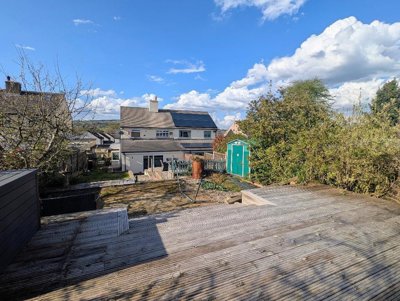
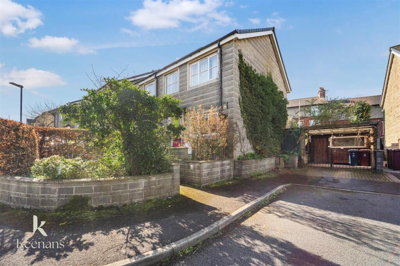
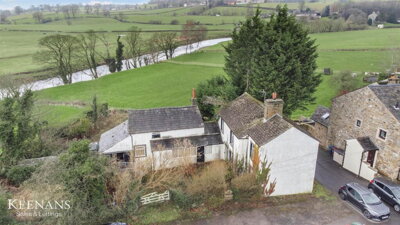
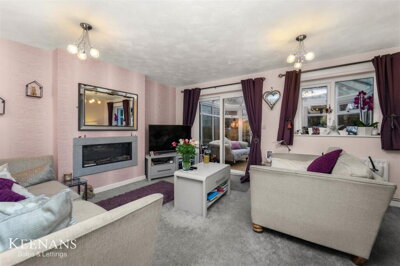
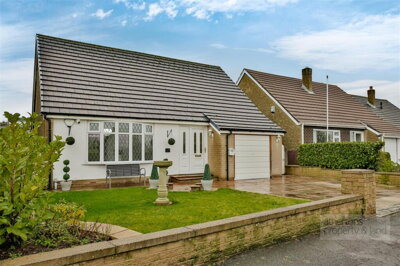
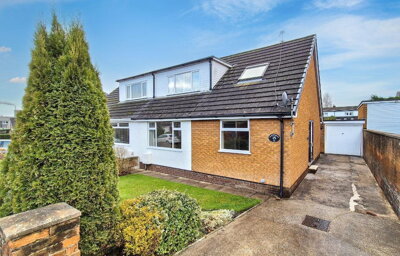
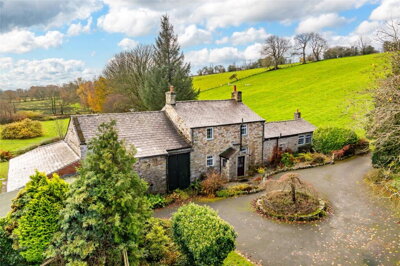
Browse 8 homes for sale in Grindleton, Ribble Valley from local estate agents.
Three bedroom properties represent a significant portion of the Grindleton housing market, offering space for families with multiple reception rooms and gardens in many cases. Browse detached, semi-detached, and terraced options ranging from period character homes to contemporary developments.
£0k
0
0
0
Source: home.co.uk
Showing 0 results for 3 Bedroom Houses for sale in Grindleton, Ribble Valley.
Grindleton’s property market has held up strongly over recent months, with home.co.uk putting average prices at £403,838 and recording a 17% rise on the previous year. Terraced homes make up most sales in the village, but there is also a healthy spread of detached and semi-detached properties for families and buyers who want more room. That mix means there is usually something for different budgets and different needs within the village boundaries.
Detached houses in Grindleton sit at the top end of the market, averaging about £825,000, which reflects the appeal of larger rural homes with generous gardens and countryside views. Semi-detached properties come in at around £491,000, giving buyers a middle option between the village’s more modest terraced cottages and its bigger detached homes. Terraced properties, the mainstay of the housing stock, average approximately £284,740, so they still provide a more accessible route into this sought-after part of the Ribble Valley. Recent listings also included a new build five-bedroom house of around 3,068 square feet arranged over three storeys, a sign that development interest has not disappeared.
For anyone thinking about self-build, there are building plots available across the wider Ribble Valley, including sites with full planning permission for substantial detached homes. Grindleton itself has only limited development opportunities, but nearby areas still offer options for people who want to create their own rural home. Ribble Valley Borough Council, the local planning authority, sets out detailed planning guidance that would-be self-builders should read before they take the next step.
Being inside a Conservation Area adds another layer to the market here. Homes often carry a premium because of their historic character, traditional architecture, and the reassurance that the setting is protected from unsympathetic development. That tends to appeal to buyers who care about architectural heritage and like the feel of an established village with some permanence to it.

Grindleton really does sum up rural Lancashire living, sitting among the rolling hills and farmland of the Ribble Valley. It is understood to have a modest population, with the close community centred on stone buildings, country lanes, and the quiet surroundings that draw people away from urban life. The Conservation Area helps the village keep its old charm, with buildings that reflect local traditions built up over generations.
Day to day, residents benefit from being close to Clitheroe, which is only a short drive away and brings supermarkets, healthcare facilities, and a wider choice of services. The Ribble Valley as a whole is well regarded for quality of life, with scenic walking routes, traditional pubs, local restaurants, and year-round cultural attractions. Visitors come from across the North West for the Forest of Bowland, watersports on the River Ribble, or simply to enjoy the Lancashire countryside. Village life is active too, with local events and gatherings that help newcomers settle in quickly.
On the edge of the Forest of Bowland, an Area of Outstanding Natural Beauty, the village gives residents immediate access to some of northern England’s best landscapes. Walking and cycling routes spread out in every direction, taking in ancient woodland, flower-rich meadows, and old farmsteads that have shaped this countryside for centuries. The River Ribble, one of England’s most important rivers for wildlife, runs through the valley and gives space for fishing, paddle sports, and riverside walks.
The Ribble Valley economy leans on agriculture, tourism, and small businesses, with many people commuting to nearby towns or running home-based businesses from rural properties. In parts of the village, fast broadband has made remote working far more practical, so residents can enjoy countryside life while staying connected to Manchester, Preston, and other major regional cities.

Families looking at Grindleton will find a range of education options across primary and secondary levels. The village is within reach of several primary schools serving surrounding villages and hamlets, which means younger children do not usually face long journeys to school. Those smaller rural schools often have strong community links and give pupils more individual attention, very much in keeping with the scale of village education.
For secondary education, nearby Clitheroe offers well-regarded schools and colleges that serve students from across the wider area. Parents should check catchment areas and admissions criteria carefully, as both can vary and affect which schools are available. Lancashire also has grammar schools, so selective education is an option for families whose children meet the entry requirements. Older students can reach higher education facilities in Preston and Lancaster without too much trouble, both of which are within reasonable commuting distance.
The quality of local schools matters to families moving into rural areas, and the Ribble Valley generally does well on that front. Primary schools in the surrounding villages usually have small catchments, which means teachers know each child well and parents often build close relationships with staff. Secondary schools in Clitheroe offer a broader range of subjects and extracurricular activities, and some specialise in areas such as arts, sciences, or sports.

Grindleton combines the calm of rural living with useful access to road and rail links. The village sits near the A59, a key route through the Ribble Valley that connects the area to Preston, Liverpool, and the motorway network beyond. Driving to nearby towns and cities is therefore fairly straightforward, and the route is scenic as well. Under normal traffic conditions, the drive to Preston takes approximately 40 minutes, while Manchester is reachable in around an hour.
Rail travel is available from nearby Clitheroe and from larger regional stations with connections across the North West and further afield. Grindleton does not have its own railway station, but those nearby links still make rail commuting realistic for people working in Manchester, Leeds, or Liverpool. Local bus services run throughout the Ribble Valley, linking villages to market towns and giving a car-free option for daily journeys and days out. For more active travel, the area has strong walking and cycling routes, using both the flat valley floor and the steeper hills around it.
The A59 is still the main road artery through the Ribble Valley, running through Chatburn and Worston on its way between Preston and Skipton. It can get busy in peak tourist periods, especially when visitors head for the Forest of Bowland, so summer weekends and school holidays may bring extra travel time. For air travel, Manchester Airport offers worldwide connections and is about 90 minutes by car from Grindleton.

It is worth spending time in Grindleton and the wider Ribble Valley before committing to a purchase, so you can get a proper feel for the market, the community, and practical issues such as school catchments and transport. Try to visit at different times of day and on different days if you can, since that gives a better sense of village life and of any noise from nearby farms or roads.
Before you start viewing, get a mortgage agreement in principle from a lender so you know your budget and can show sellers that you are serious when you make an offer. Having that ready can speed things up once you find the right property, and it helps estate agents treat your offer with more weight in a competitive market.
Use estate agents in the Ribble Valley to line up viewings for homes that match your requirements, and take the time to judge the condition and character of each one. During a viewing, check the build quality, look for signs of damp or structural movement, and ask about the property’s maintenance history.
After an offer has been accepted, book a Level 2 Survey (Homebuyer Report) to assess the property’s condition, which is especially useful given the age of many homes in this Conservation Area village. The survey can reveal defects that are not obvious on a standard viewing, giving you room to negotiate repairs or a price change before completion.
Appoint a solicitor to deal with the legal side of the purchase, including searches, contracts, and registration of title. They will also check planning restrictions linked to Conservation Area status and explain any effects on future alterations or extensions to the property.
Once everything is ready, sign the contracts, pay your deposit, and complete on your new Grindleton home. Buildings insurance should be in place from exchange, and removal firms plus utility transfers need to be lined up for moving day.
Buying in Grindleton means paying close attention to the details that matter in rural villages and historic properties across the Ribble Valley. Because the village sits in a Conservation Area, homes may face planning restrictions on alterations, extensions, and changes to the exterior. Buyers ought to get to grips with those rules and think about how any planned work could be affected. Many local homes are also built using traditional methods and materials, so surveys and renovations can call for specialist knowledge.
As many Grindleton properties are likely to be over 50 years old, buyers should look closely at the roof, signs of damp, the state of electrical wiring, and the overall structural integrity of any home they are considering. The local stone construction is part of the area’s charm, but it can also need the right maintenance and expertise. Flood risk reports should be obtained through the Environment Agency, even if no specific flood risk areas were picked up in initial research, because they matter for insurance and mortgage requirements. Ground conditions in parts of Lancashire can vary, so a full survey is a sensible way to spot any issues before completion.
Homes in the Conservation Area may also be subject to Article 4 Directions, which remove certain permitted development rights and mean planning permission is needed for changes that would otherwise be allowed elsewhere. That can affect plans for double glazing, solar panels, or external alterations. A proper review of the planning history and any title conditions will help you see what might be possible after purchase.
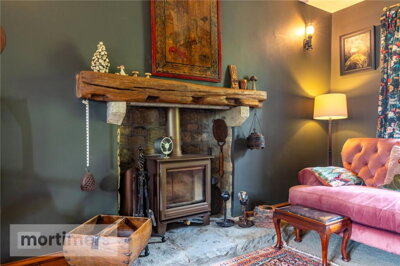
With stone-built properties, it is wise to check the mortar between the stones for signs of deterioration, often called mortar erosion, because that can let in water and speed up weathering of the stone itself. Any repointing should use suitable lime-based mortars rather than cement, since cement can trap moisture and cause spalling in the softer local sandstone. The property’s age will also tell you whether it has historic features such as original fireplaces, exposed beams, or flagstone floors, which add character but may need specialist care and conservation experience.
homedata.co.uk puts the average sold price in Grindleton over the past twelve months at approximately £464,000, while home.co.uk reports an overall average of £403,838. Prices have moved up sharply, with increases of 37.7% on homedata.co.uk and 17% on home.co.uk compared with the previous year. Detached properties average around £825,000, semi-detached homes about £491,000, and terraced properties £284,740. Those differences partly come down to methodology and to the small number of transactions in this rural village, where one high-value sale can move the average quite a bit.
Properties in Grindleton fall within Ribble Valley Borough Council. Council tax bands vary from property to property, depending on the valuation band set by the Valuation Office Agency. Buyers should check individual details through the Ribble Valley Council website or with their solicitor during conveyancing so they understand the ongoing costs of ownership. In the area, council tax bands usually range from Band B to Band G, with the premium detached homes often landing in the higher bands because of their size and market value.
Local primary schools in the surrounding villages and hamlets serve Grindleton, while secondary education is available at well-regarded schools in nearby Clitheroe. Several primary schools are within a short drive, including those in Chatburn and Whalley, and recent inspections have given them good Ofsted ratings. Families can also look at comprehensive and selective grammar school options in Lancashire, with Lancashire County Council website tools available to research catchment areas and admissions criteria. School transport matters too, since some secondary schools may involve longer journeys from Grindleton.
Grindleton is a rural village with limited direct public transport, although local bus services do connect it to surrounding towns including Clitheroe. The nearest railway stations are in the wider area, giving access to Manchester, Leeds, and Lancaster through the national rail network. Most residents depend on cars for everyday commuting, with the A59 providing solid road links to Preston, Liverpool, and the motorway network. A trip to Manchester takes about one hour by car, while Preston is around 40 minutes away in normal traffic.
Grindleton’s property market has performed strongly, with prices up 37.7% over the past twelve months, which points to healthy demand in this attractive rural spot. The Ribble Valley remains popular with people who want countryside living but still need access to major cities, and that supports values over the long term. The Conservation Area helps preserve the village’s character, so its appeal to buyers seeking period homes and rural charm is likely to hold. Homes within it may be of interest to buyers drawn to historic architecture and character properties, though investors should note the planning restrictions that can limit development or alteration. As always, rental demand, service charges, and maintenance costs all deserve a close look when weighing up an investment.
Stamp Duty Land Tax rates for standard purchases from April 2024 are 0% on the first £250,000 of property value, 5% on £250,001 to £925,000, 10% on £925,001 to £1.5 million, and 12% on anything above £1.5 million. First-time buyers get relief on the first £425,000 at 0%, with 5% applying from £425,001 to £625,000. Since average prices in Grindleton are above £400,000, most buyers will need to budget for SDLT beyond the nil-rate threshold, and a typical stamp duty bill on an average-priced village property would be approximately £7,750.
Working out the full cost of buying in Grindleton matters if you want to budget properly and avoid unwelcome surprises during the transaction. On top of the purchase price, buyers need to plan for Stamp Duty Land Tax, which applies to all purchases above £250,000 at a rate of 5% on the portion between £250,001 and £925,000. With average prices in Grindleton above £400,000, most buyers will still be looking at several thousand pounds in SDLT. First-time buyers may benefit from higher thresholds under current relief provisions, which can reduce the bill quite a bit.
Conveyancing fees for solicitors usually begin at around £499 for standard transactions, although the cost can rise for leasehold properties, complex titles, or work involving planning conditions. A RICS Level 2 Survey (Homebuyer Report) is strongly recommended for properties in Grindleton, especially because of the age of the housing stock and the Conservation Area restrictions. Survey fees typically start from £350, depending on the size and value of the property. You should also budget for removal costs, mortgage arrangement fees, survey and valuation fees, and possibly buildings insurance from exchange. Owning a home in the Ribble Valley also means annual council tax payments to Ribble Valley Borough Council, plus potential upkeep for larger rural gardens and older elements such as stone walls and traditional roofing materials.
Buildings insurance is a must from the point of contract exchange, and premiums for rural properties can vary a good deal depending on construction type, age, and value. Stone-built homes may attract different rates from modern construction, and insurers should be told about any flood risk, security features, and non-standard details such as thatched roofs. The cost of looking after traditional stone walls, timber windows, and heritage features should also be part of ongoing ownership costs, since these jobs often need specialist craftspeople rather than standard builders.

Properties for Sale In London

Properties for Sale In Plymouth

Properties for Sale In Liverpool

Properties for Sale In Glasgow

Properties for Sale In Sheffield

Properties for Sale In Edinburgh

Properties for Sale In Coventry

Properties for Sale In Bradford

Properties for Sale In Manchester

Properties for Sale In Birmingham

Properties for Sale In Bristol

Properties for Sale In Oxford

Properties for Sale In Leicester

Properties for Sale In Newcastle

Properties for Sale In Leeds

Properties for Sale In Southampton

Properties for Sale In Cardiff

Properties for Sale In Nottingham

Properties for Sale In Norwich

Properties for Sale In Brighton

Properties for Sale In Derby

Properties for Sale In Portsmouth

Properties for Sale In Northampton

Properties for Sale In Milton Keynes

Properties for Sale In Bournemouth

Properties for Sale In Bolton

Properties for Sale In Swansea

Properties for Sale In Swindon

Properties for Sale In Peterborough

Properties for Sale In Wolverhampton

Enter your details to see if this property is within your budget.
Loans, cards, car finance
Estimated property budget
Borrowing + deposit
You could borrow between
Typical borrowing
Monthly repayment
Est. at 4.5%
Loan-to-value
This is an estimate only. Your actual budget may vary depending on interest rates, credit history, and personal circumstances. For an accurate affordability assessment, speak to one of our free mortgage advisors.
This calculator provides estimates for illustrative purposes only and does not constitute financial advice. Your home may be repossessed if you do not keep up repayments on your mortgage. Estimates based on 4.5% interest rate, repayment mortgage. Actual rates depend on your circumstances.
Homemove is a trading name of HM Haus Group Ltd (Company No. 13873779, registered in England & Wales). Homemove Mortgages Ltd (Company No. 15947693) is an Appointed Representative of TMG Direct Limited, trading as TMG Mortgage Network, which is authorised and regulated by the Financial Conduct Authority (FRN 786245). Homemove Mortgages Ltd is entered on the FCA Register as an Appointed Representative (FRN 1022429). You can check registrations at NewRegister or by calling 0800 111 6768.

We use cookies to show you personalised content and improve your experience of our website. Find out more in our Privacy policy and Cookie policy.