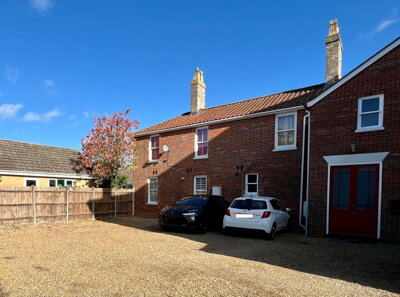
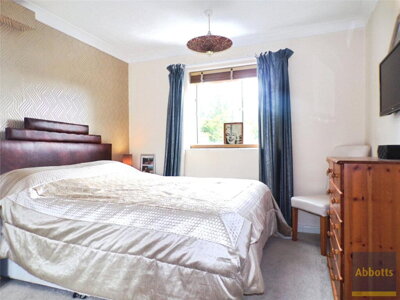
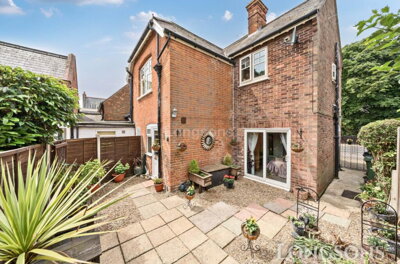
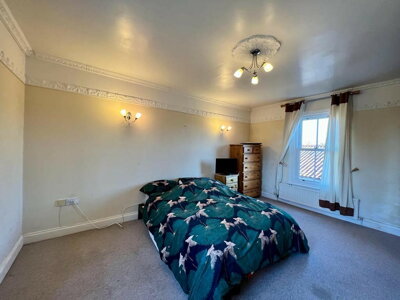
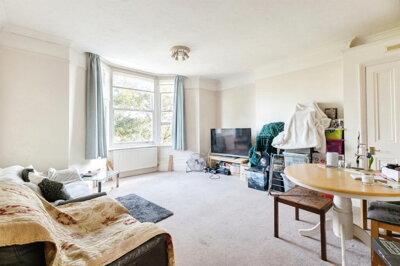
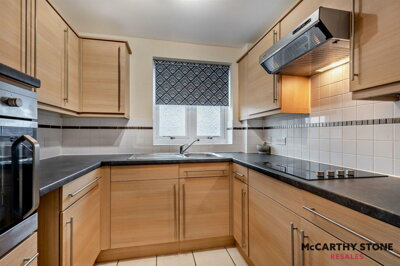
Browse 14 homes for sale in Great Ellingham from local estate agents.
Studio apartments feature open-plan living spaces without separate bedrooms, incorporating sleeping, living, kitchen, and bathroom facilities. The Great Ellingham studio market includes properties in modern apartment complexes, converted Victorian and Georgian buildings, and purpose-built developments.
Great Ellingham’s property market has held up well, and the numbers show clear upward movement in recent years. Detached homes sit at the top of the ladder, averaging £565,000 according to home.co.uk listings data, and the detached sector posted a 11.7% median price rise in 2025 compared with 2024. Semi-detached houses average about £287,143, but this is the fastest-moving part of the market, with growth of 27.7% year-on-year. Terraced homes, at £230,000 on average, remain the most accessible way into the village market and rose by 7.6% over the same period. Looking back, homedata.co.uk shows 729 total sales in the area since 2018, including 115 detached transactions, which underlines how strongly larger family homes appeal here.
That said, homedata.co.uk also records an overall monthly price drop of 10.6% over the past 12 months using Land Registry sales data, so the market has clearly cooled after the sharp gains of earlier years. Even so, the wider picture still points upwards, with prices sitting 9% above the 2023 peak of £430,041. For buyers, that opens the door to more sensible entry points without losing the pull of a village that has long been in demand and short on stock. Because Great Ellingham sees only a small number of sales each year, one transaction can shift the average quite noticeably, so doing the homework before an offer matters.
Fresh homes are arriving through new build schemes too. The Bowsfield development includes 2, 3, 4, and 5-bedroom homes from £325,000, with detached properties priced between £475,000 and £895,000 and semi-detached homes from £325,000. Old Bell Meadow still has a remaining 4-bedroom property at £496,244, while Ellingham Green by Flagship Homes offers nearly 100 properties, including houses and bungalows with 1 to 4 bedrooms. Between the older stock and these newer schemes, buyers on very different budgets can still find something that fits.

To understand Great Ellingham properly, it helps to look at how the buildings are made. The village has an unusually broad mix of styles, with structures ranging from the 14th century to modern new-build schemes. Flint is a defining feature, and the Church of St James, a Grade I listed building dating mainly from the early 14th century, is a striking example. With its flint walls and ashlar dressings, it dominates the skyline and is widely regarded as one of the finest pieces of medieval ecclesiastical architecture in the Breckland area.
Timber frames and thatch are another familiar sight in Great Ellingham. Poplar Farmhouse, a Grade II listed late 17th-century building, shows that traditional approach clearly, with roughcast lath and plaster over a brick and flint plinth, finished with a distinctive thatched roof. Ye Olde Thatche Shoppe, which survives from the 15th century, adds to that sense of continuity. These homes need careful upkeep and tradespeople who know period properties well, so buyers should factor that into their budgets. By contrast, the Great Ellingham Baptist Church, established in 1820, is brick-built and its Doric columns give it a Georgian feel.
Great Ellingham has a notable number of listed buildings, and that protected status shapes what owners can do. Properties such as 1-5 Church Street, 9, 11 and 13 Church Street, Manor Farmhouse on Stalland Common, and The Old Queens Head are all Grade II listed, which means alterations and extensions are tightly controlled. Those rules help preserve the village’s character, but most works beyond routine maintenance will need Listed Building Consent. For anyone thinking about buying a listed home, our team can talk through the implications for renovation plans and the maintenance that comes with them.
As a Norfolk village, Great Ellingham has the sort of feel that blends farming roots with modern village life. Its population of 1,267 marks steady growth from the 1,132 residents recorded in the 2011 census, which points to rising appeal in this rural spot. It remains a dispersed agricultural community, yet it also has the commuting links many buyers now want. Local amenities include a well-stocked shop, The Crown Public House for food and drinks, and the village cricket club, while Rookery Farm farm shop nearby offers local produce and agricultural goods.
The village has changed a great deal since the Domesday Book of 1086, when just 47 households were recorded, but it still keeps its scattered Breckland settlement pattern. Fast broadband now supports remote working, so residents can have countryside surroundings without losing professional connectivity. The village hall also plays its part, hosting events throughout the year and giving the community a regular meeting point. It is a simple thing, but it matters.
Great Ellingham’s historic buildings give it much of its character. The Church of St James, a Grade I listed building dating mainly from the early 14th century, stands out with its flint construction and ashlar dressings. Several 15th-century buildings survive too, including Mill Farmhouse, Tannery Farm, and Ye Olde Thatche Shoppe. Poplar Farmhouse, a late 17th-century timber-framed property with thatched roofing, shows the traditional methods used here, while the Great Ellingham Baptist Church, established in 1820, brings brick and Doric columns into the picture. Those buildings cannot really be replaced by anything modern.

Families looking at Great Ellingham should find schooling within a sensible reach. Primary options in the surrounding villages serve the local area, and several are rated good or outstanding by Ofsted. Attleborough Infant School and Attleborough Junior School are the main nearby primary choices, with further options in Caston, Rocklands, and St. Peter and St. Paul in Attleborough. The village sits within the Attleborough catchment for secondary education. Parents should still check the latest catchment boundaries and admissions rules with Norfolk County Council, as these can change.
For older pupils, Attleborough Academy offers secondary education and sixth form provision for Great Ellingham and the wider area. It has built a strong reputation for academic results and extracurricular activities. Families who want faith-based schooling also have choices such as St. Mary’s Catholic Primary School in Attleborough and St. Peter’s C of E Primary Academy. Those options may suit families with particular values or teaching preferences.
Sixth form and further education are available not far away in Attleborough and Norwich, both easy enough to reach by road from Great Ellingham. Attleborough College offers A-level subjects and vocational courses, while Norwich provides the University of East Anglia, Norwich University of the Arts, and City College Norwich, giving a broad spread of higher education options. That mix works well for families at different stages, from primary-age children through to post-16 study.

Road connections are one of Great Ellingham’s practical strengths. The village is well placed for commuting, with the A11 giving direct access to Norwich and Thetford, while the A47 opens routes towards King’s Lynn and the wider Norfolk network. The A11 also links into the M11 and A14, which extends travel into Cambridge and the midlands beyond. Stansted Airport is reachable in about 90 minutes by car, so overseas travel is not a major undertaking.
Attleborough railway station is around 5 miles from the village and gives access to direct trains to Norwich, Cambridge, and London Liverpool Street. Great Northern and Greater Anglia services run from there, and the trip to London Liverpool Street takes about 90 minutes. That makes commuting to major employment centres realistic for some buyers, while still keeping a rural base. Norwich station adds further links across East Anglia and beyond, including routes to London and Birmingham.
For everyday journeys, bus services connect Great Ellingham with nearby villages and market towns, which is useful for people without a car. Cycling is possible on the road network, although, as with many rural Norfolk places, dedicated cycle lanes are limited. Norwich lies around 20 miles away and can be reached in about 40 minutes by car, giving access to shopping, culture, and jobs. Cambridge is about one hour away, which opens the door to the city’s technology sector and wider knowledge-economy roles.

It pays to look at both current listings and recent sold prices before settling on a budget in Great Ellingham. Detached homes average £565,000 and terraced homes sit around £230,000, so getting your price range pinned down early keeps the search focused. homedata.co.uk records average sold prices of £404,998 over the past year, while homedata.co.uk also shows a median of £350,000, which is a useful reminder that different datasets can tell slightly different stories.
Speak to lenders, or use Homemove’s mortgage comparison tools, and get an agreement in principle before you start viewing. Sellers tend to take buyers more seriously when the finance is already lined up, and that can help in negotiations. With average prices around £404,998, most purchasers will need substantial borrowing, so having that paperwork ready is especially helpful.
It is sensible to view a few homes in different price bands so you can compare layout, condition, and character. Older period houses and newer builds can feel very different, and it is worth seeing both before deciding what suits your lifestyle. Our inspectors often find that period properties in Great Ellingham need a different kind of scrutiny from modern homes, so seeing each type in person can be revealing.
After your offer is accepted, book a Level 2 Home Survey so the condition of the property is properly checked. Great Ellingham has a substantial older stock, including 15th-century and 17th-century buildings, so this kind of survey helps identify structural problems, damp, or maintenance issues before you go any further. For homes above £500,000, survey costs are usually around £586, with slightly lower figures for properties under £500,000.
You will also need a solicitor to manage the legal transfer, including local searches, contracts, and registration. Those searches can reveal planning restrictions, flood risk areas, and other local issues that matter in Great Ellingham and across Breckland. Because the village has a history of flooding from burst water mains, our advice is to make sure flood risk assessments and insurance implications are checked carefully.
Once the legal work is in order and the mortgage offer is confirmed, contracts are exchanged and the deposit is paid. Completion usually follows within weeks, and that is when the keys are handed over and the new Great Ellingham home becomes yours. Our team can point you towards local conveyancing solicitors who know the area well.
Flood risk deserves real attention here. In September 2025, a burst water main caused major flooding across Great Ellingham, Attleborough, and Watton, with at least three homes severely flooded and hundreds of properties left with reduced water pressure. Anglian Water handles the local water infrastructure. Anyone thinking of buying should ask about the property’s flood history, look at flood risk assessments, and think through the effect on buildings insurance premiums. Surface water flood risk maps also highlight areas that may be more exposed in extreme weather, especially in the lower-lying parts of the village.
The village’s stock of listed buildings is a big part of its appeal, but it also brings added caution for buyers. Grade II properties, and anything above that, are subject to strict planning controls that affect changes, extensions, and even some maintenance work. If you are looking at a listed home, plan for higher upkeep costs and the need for specialist contractors. Traditional construction methods such as timber framing, thatched roofing, and flint work need experienced tradespeople, and the timetable for repairs can be longer than on a standard house. A thorough survey is well worth arranging first.
Older homes in Great Ellingham often include details that need expert attention. Thatched roofs are lovely to look at, but they usually need rethatching every 20-40 years depending on the materials and weather exposure. Timber-framed buildings can show movement or woodworm, both of which a qualified surveyor can assess. Flint walls are extremely durable, although repairs call for specialist methods rather than ordinary brickwork. Our RICS Level 2 surveys look closely at these features and set out clear recommendations where remedial work is needed.

Great Ellingham’s average property price is £404,998 according to home.co.uk listings data, and home.co.uk puts the figure at £476,000 as of early 2026, so the last 12 months have seen a noticeable rise. homedata.co.uk records an average sold price of £404,998 over the past year, while homedata.co.uk shows a median price of £350,000. Detached properties average £565,000, semi-detached homes sit around £287,143, and terraced homes are roughly £230,000. Historically, the market has grown strongly, with overall prices up 12% year-on-year, although recent monthly data points to some correction, with a 10.6% decrease over the past 12 months according to homedata.co.uk.
For council tax, properties in Great Ellingham fall under Breckland Council. Bands run from A through to H, and the band is based on the property’s valuation as at April 1991. The exact band can be checked through the Valuation Office Agency website or with your solicitor during conveyancing. Band D is often the middle point for many English homes, though rural villages like this often include properties across the full range depending on size and type. With so many larger period homes and farmhouses, higher bands are fairly common.
Great Ellingham sits in a village primary setting, with schooling nearby in surrounding villages and the Attleborough area, including Attleborough Infant School and Attleborough Junior School. For secondary education, the village is in the catchment for Attleborough Academy, which takes pupils from Year 7 through to sixth form. Parents should check the latest admissions policies with Norfolk County Council, because catchment boundaries can shift depending on applications and capacity. Caston Primary Academy and Rocklands Primary School are among the nearby primaries that have achieved good or outstanding Ofsted ratings.
Public transport is available too, with bus services linking Great Ellingham to nearby villages and towns for everyday travel. Attleborough railway station, around 5 miles away, provides direct services to Norwich, Cambridge, and London Liverpool Street via Greater Anglia and Great Northern, with the trip to London taking about 90 minutes. The village’s position close to the A11 gives strong road access to Norwich, Thetford, and the wider eastern region. Most daily commuters still use private cars, although the rail link does make occasional trips to Norwich possible for people working in the city.
There are a few clear reasons Great Ellingham appeals to investors. Population growth has been steady, moving from 1,132 in 2011 to 1,267 in 2021, which suggests continuing housing demand. Price growth has also been strong, with detached homes rising 11.7% in 2025 and semi-detached homes climbing 27.7%. New schemes such as Bowsfield and Ellingham Green are adding fresh stock to the market. Add in the rural Norfolk setting, good A11 links, and prices that remain more affordable than larger regional centres, and the outlook for capital growth and rental demand looks reasonable, although the village’s small size does limit rental market depth.
Stamp Duty Land Tax applies to every purchase in England, Great Ellingham included. The standard rates are 0% on the first £250,000, 5% on £250,001 to £925,000, 10% on £925,001 to £1.5 million, and 12% above £1.5 million. First-time buyers get relief on the first £425,000, then pay 5% between £425,001 and £625,000, with no relief above £625,000. On a typical Great Ellingham detached home at £565,000, a first-time buyer would pay about £7,000 in stamp duty, while a subsequent buyer would pay about £15,750. Your solicitor will work out the exact figure from your circumstances and the purchase price.
Because Great Ellingham has so many older homes, including plenty from the 15th century and 17th century, a RICS survey is especially useful. Our inspectors often come across damp, timber decay, roof concerns, and structural movement in period properties, and those issues are not always obvious at first viewing. With thatched roofs needing specialist care and flint or timber-framed construction calling for experienced contractors, knowing the true condition before you buy helps with budgeting. Survey fees range from around £376 for homes under £200,000 to about £586 for properties above £500,000.
Budgeting for a purchase in Great Ellingham means looking beyond the asking price. Buyers need to allow for Stamp Duty Land Tax, solicitor fees, survey costs, and moving expenses. On a terraced property at around £230,000, a first-time buyer would pay no stamp duty, while a subsequent buyer would pay approximately £0 on the first £250,000. On a detached home at £565,000, first-time buyers pay roughly £7,000 and other buyers around £15,750, assuming the property sits within the standard SDLT thresholds.
RICS Level 2 survey fees for properties in the £200,000 to £500,000 range usually begin at around £376 for homes under £200,000 and rise to about £586 for properties above £500,000. With Great Ellingham’s stock including many older houses from the 15th century onwards, a proper survey is particularly important if you want to spot issues with traditional construction, thatched roofs, or timber-framed structures. Conveyancing costs generally start from £499 for standard transactions, though listed buildings or unusual titles can add work and cost. Buildings insurance should be in place from exchange, and flood risk cover is worth checking carefully after the village’s recent flooding incident.
There are other costs to keep in view as well, including mortgage arrangement fees, which vary by lender but usually sit between £0 and £1,500, and valuation fees if the lender asks for one. Local search fees from Breckland Council usually come to around £250-£300, with bankruptcy searches and Land Registry fees adding a further modest amount. Moving costs depend on distance and how much you need to move, but hiring a van and doing it yourself generally costs a few hundred pounds, while professional removals can run into several thousand.
From £376
Professional survey for checking condition before you buy
From £600
Structural survey for older homes and more complex properties
From £85
Energy performance certificate required for all sales
From £499
Expert legal services for your property purchase
From 4.5%
Compare mortgage deals from leading lenders
Properties for Sale In London

Properties for Sale In Plymouth

Properties for Sale In Liverpool

Properties for Sale In Glasgow

Properties for Sale In Sheffield

Properties for Sale In Edinburgh

Properties for Sale In Coventry

Properties for Sale In Bradford

Properties for Sale In Manchester

Properties for Sale In Birmingham

Properties for Sale In Bristol

Properties for Sale In Oxford

Properties for Sale In Leicester

Properties for Sale In Newcastle

Properties for Sale In Leeds

Properties for Sale In Southampton

Properties for Sale In Cardiff

Properties for Sale In Nottingham

Properties for Sale In Norwich

Properties for Sale In Brighton

Properties for Sale In Derby

Properties for Sale In Portsmouth

Properties for Sale In Northampton

Properties for Sale In Milton Keynes

Properties for Sale In Bournemouth

Properties for Sale In Bolton

Properties for Sale In Swansea

Properties for Sale In Swindon

Properties for Sale In Peterborough

Properties for Sale In Wolverhampton

Enter your details to see if this property is within your budget.
Loans, cards, car finance
Estimated property budget
Borrowing + deposit
You could borrow between
Typical borrowing
Monthly repayment
Est. at 4.5%
Loan-to-value
This is an estimate only. Your actual budget may vary depending on interest rates, credit history, and personal circumstances. For an accurate affordability assessment, speak to one of our free mortgage advisors.
This calculator provides estimates for illustrative purposes only and does not constitute financial advice. Your home may be repossessed if you do not keep up repayments on your mortgage. Estimates based on 4.5% interest rate, repayment mortgage. Actual rates depend on your circumstances.
Homemove is a trading name of HM Haus Group Ltd (Company No. 13873779, registered in England & Wales). Homemove Mortgages Ltd (Company No. 15947693) is an Appointed Representative of TMG Direct Limited, trading as TMG Mortgage Network, which is authorised and regulated by the Financial Conduct Authority (FRN 786245). Homemove Mortgages Ltd is entered on the FCA Register as an Appointed Representative (FRN 1022429). You can check registrations at NewRegister or by calling 0800 111 6768.

We use cookies to show you personalised content and improve your experience of our website. Find out more in our Privacy policy and Cookie policy.