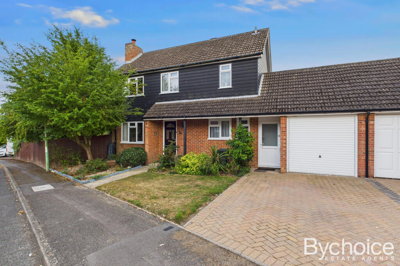
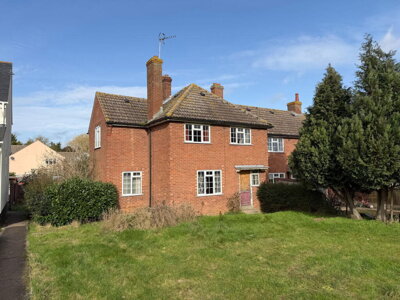
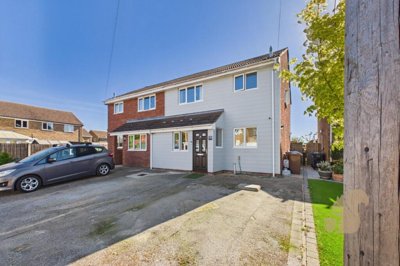
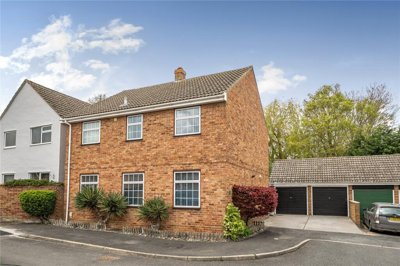
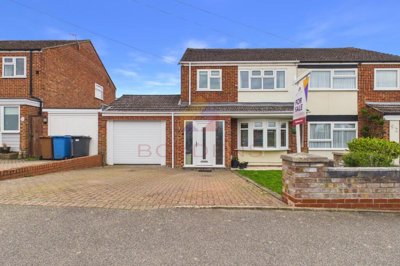
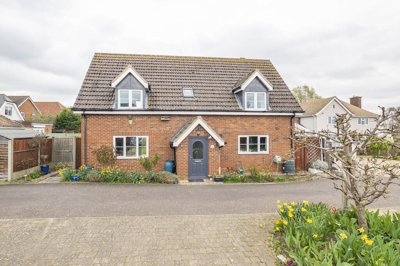
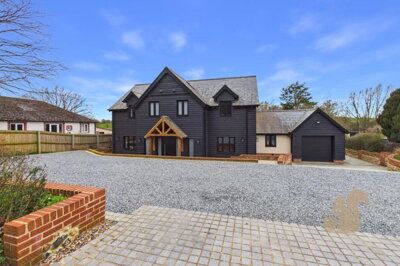
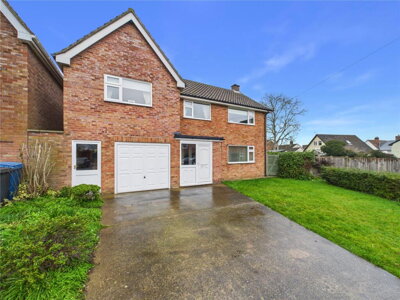
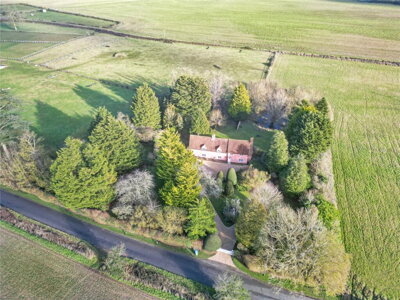
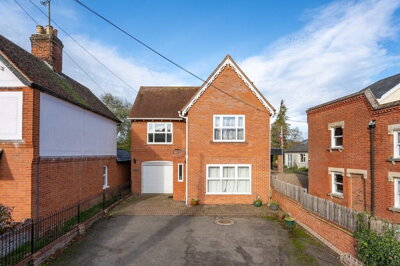
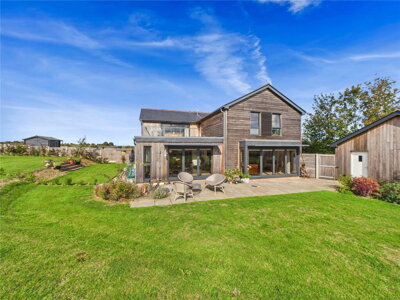
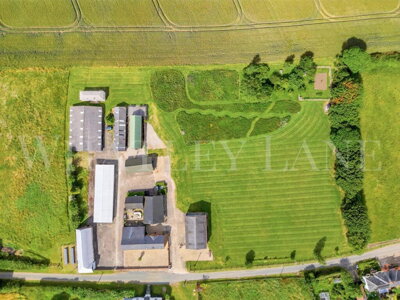
Browse 13 homes for sale in Glemsford, Babergh from local estate agents.
The larger property sector typically features multiple bathrooms, substantial reception space, and private gardens or off-street parking. Four bedroom houses in Glemsford span detached, semi-detached, and occasionally terraced configurations, with styles ranging from period properties to modern executive homes.
£448k
4
0
188
Source: home.co.uk
Showing 4 results for 4 Bedroom Houses for sale in Glemsford, Babergh. The median asking price is £447,500.
Source: home.co.uk
Detached
3 listings
Avg £515,000
Semi-Detached
1 listings
Avg £350,000
Source: home.co.uk
Source: home.co.uk
£309,642
Average Price
+1.5%
Annual Growth
~20
Properties Available
20 (12 months)
Recent Sales
In Glemsford, the market covers a broad spread of budgets and house types. Detached homes sit at the top end, averaging £512,500, and they tend to suit families after more room and privacy. Semi-detached properties come in at around £290,455 and offer strong value, forming a big part of the village stock at approximately 32.8% of all homes, according to 2021 Census data.
For buyers trying to get a foothold locally, terraced homes average £237,857 and can be a more reachable way into this well-liked part of Suffolk. Flats are far less common, making up only 7.6% of the housing stock, with an average price of £105,000, so they do not appear often but can appeal to first-time buyers and investors. There has also been some modest new-build activity, including Taylor Wimpey's Glemsford Rise on Hunts Hill, CO10 7PZ, where new 2, 3, and 4 bedroom homes start from £299,995.
Only 20 property sales completed in the past twelve months, which tells us Glemsford is a small, tight market where well-priced homes can shift quickly. The 1.5% annual rise in prices points to steady demand from buyers drawn to village life. That kind of stability may make now a sensible moment to buy, before values push on again.
The balance of housing in Glemsford says a lot about the village itself. Detached homes account for 35.1% of stock, semi-detached for 32.8%, terraced for 24.5%, and flats for just 7.6%. In practice, that means family-sized detached homes are relatively limited, while terraced starter homes and potential buy-to-let options are usually easier to find.

Glemsford has 3,130 residents living across 1,320 households, based on the 2021 Census, and it still feels like the sort of village where people know each other. The centre sits around The Street and Church Street, with a traditional convenience store, a pub known for local ales, and historic St Mary's Church reflecting the village's medieval roots. Conservation Area status covers the historic core, helping new building sit more comfortably with Glemsford's Suffolk character.
Work patterns here have shifted over time. Glemsford grew from agricultural and light industrial roots, and while some local businesses still provide jobs and services, many residents now travel to larger centres such as Sudbury, Bury St Edmunds, and Colchester. That setup suits people who want access to wider job markets but still prefer coming home to the quieter pace of the countryside.
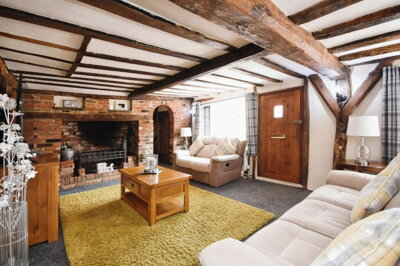
The age of Glemsford's housing is part of its appeal. Around 25-30% of homes were built before 1919, giving the village a strong architectural tradition of Suffolk cottages, often with timber framing and original brickwork in local red or white Suffolk brick. Another 30-35% date from the post-war years through to 1980, so buyers can weigh up period character against more practical later layouts. Some will want a renovation project, others something ready to move into.
Day-to-day amenities in Glemsford cover the basics, including a convenience store, a traditional pub serving food, and a village hall that hosts clubs and regular events. For a wider choice, many residents head to Sudbury and Haverhill for supermarkets, banks, and high street shops, while Bury St Edmunds offers broader retail and leisure options within easy reach by car. The surrounding countryside is a draw in its own right, with footpaths running across farmland and woodland for walking and cycling.

For primary-age children, Glemsford Community Primary School is the main local option, taking pupils from Reception to Year 6. It is closely tied to village life and gives children a solid start before secondary school. After that, most pupils travel into nearby towns, including Sudbury, where schools offer a range of academic and vocational routes.
Families thinking about a move here should look closely at current catchment areas and admissions rules, because they can change from year to year and do not always line up neatly across authorities. Some households also consider private schools in the surrounding towns, with several established independent options within a workable commute. Being in Suffolk, Glemsford also puts grammar school choices on some families' radar, especially those in nearby Bury St Edmunds and Colchester with strong academic reputations.
Driving distance opens up plenty of further education choices, with colleges and sixth forms in Sudbury, Bury St Edmunds, and Colchester offering a wide spread of A-level and vocational courses. Where schooling is a major factor in the move, we always suggest checking the exact property location against the schools serving it before committing, because catchment lines can make a real difference.
Journeys from Glemsford to secondary schools are usually manageable. In most cases, the drive is around 15-25 minutes depending on the school, and Suffolk County Council provides school transport for pupils who live beyond the statutory walking distance. Several Sudbury-area schools include Glemsford within their catchment zones.

Transport is one of Glemsford's practical strengths. The village is about 7 miles from Sudbury, where the nearest station runs to London Liverpool Street via the Gainsborough Line, with total journey times of around 2 hours. For a quicker mainline option, Marks Tey is approximately 15 miles away and offers services to London Liverpool Street as well as links to Cambridge, which can work well for people who are mostly based at home and only travel into the office occasionally.
By road, Glemsford is fairly straightforward to get in and out of. The A1124 gives direct access to Sudbury and then on to the A14 for routes towards Cambridge, Ipswich, and the wider motorway network. The village is roughly 20 miles from the A14, which helps keep longer car journeys workable, and local bus services also link Glemsford with nearby villages and towns for those who do not want to drive every day.
Cyclists get some lovely Suffolk routes here, through rolling farmland and woodland, although the hills mean a reasonable level of fitness helps. Even so, while most residents would see a car as practically essential, the village itself is easy to get around on foot, and bigger towns are near enough for regular shopping and leisure without feeling too far off. Parking is usually much simpler than in larger towns, which makes those weekend trips far less of a chore.
Journey times vary depending on where work takes us. Bury St Edmunds is around 20 miles away, usually 35-45 minutes by car, Cambridge is about 35 miles at roughly 50-60 minutes, and Colchester is approximately 22 miles at 35-45 minutes. For London commuters, driving to Marks Tey generally takes about 25 minutes, and the faster service to Liverpool Street brings the total trip to around 1 hour 15 minutes.

Because over 70% of Glemsford properties are more than 50 years old, we see real value in arranging a RICS Level 2 Survey before purchase. Our surveyors regularly pick up issues in older village homes that are easy to miss during a viewing, including hidden damp, timber defects, and structural movement. Left unchecked, those problems can run into thousands.
Ground conditions matter here. Glemsford sits on boulder clay deposits, and that geology can create shrink-swell movement affecting foundations, especially in periods of extreme weather. Homes close to large trees, or properties built with the shallower foundations often seen in the 1945-1980 period, may show signs of movement, so we look closely at that in our inspections and set out any recommended remediation in clear terms.
Homes inside the Conservation Area, especially those dating from before 1919 and built with traditional Suffolk brick and timber framing, need a careful eye. Our team surveys historic properties across Suffolk and knows the kinds of defects that come with older construction in places like Glemsford. We would expect a thorough report to cover roof condition, wall stability, and the soundness of any exposed timber framing.
In Glemsford, a RICS Level 2 Survey will usually cost between £400 and £700, depending on size and complexity. Compared with the cost of uncovering a serious defect after completion, that is a relatively modest outlay. We see it as one of the essential buying costs, alongside stamp duty, legal fees, and the move itself.

Before arranging viewings, it makes sense to have a mortgage agreement in principle in place. Sellers take buyers more seriously when funding is already lined up, and that matters in a village market where homes can go under offer quickly. It also gives us a firm budget to work within, which cuts down on wasted viewings.
It pays to get to know the Glemsford market properly before making an offer. We would review recent sales evidence, track local price movement, and get a feel for the different parts of the village. It is also wise to factor in things like flood risk around the River Glem, homes inside the Conservation Area, and how close each property sits to everyday amenities.
Seeing more than one property helps put the market into perspective and shows what a given budget actually buys in Glemsford. Condition matters here, because plenty of homes are over 50 years old and may have damp, timber defects, or outdated systems. We would always make notes and take photographs so comparisons are easier later on.
Once the right property turns up, our advice is to commission a RICS Level 2 Survey before going much further. With over 70% of Glemsford properties now past 50 years old, and shrink-swell clay soils part of the picture, a professional inspection is vital for spotting structural concerns, especially subsidence or damp that could be expensive to put right.
On the legal side, it is worth choosing a conveyancing solicitor with experience of Suffolk transactions. They will deal with the searches, contracts, and transfer of funds, but in Glemsford we would also want them alert to Conservation Area restrictions and any flood risk issues that could affect the property.
After the searches come back satisfactorily and financing is fully in place, contracts are exchanged and the deposit is paid. Completion usually follows within 2-4 weeks, at which point the keys are released. We would leave enough time for removal arrangements and the usual address changes, because that final stretch can move quickly.
Buying in Glemsford brings a few local points that do not always crop up in town purchases. Homes within the designated Conservation Area around The Street and Church Street are subject to planning restrictions that can affect permitted development rights. For anyone hoping to extend or alter a period house, we would always suggest checking plans with Babergh District Council planning department before committing, as those limits can affect both future use and value.
Flood risk is one issue we would not brush past in Glemsford. The River Glem runs through the village, so properties close to its banks can face fluvial flood risk, and some lower-lying spots are also vulnerable to surface water flooding during heavy rainfall. A Flood Risk search through the solicitor is sensible, and for homes in affected areas a more specific flood risk assessment may be worthwhile. Higher parts of the village, away from watercourses, generally present less risk.
The local boulder clay is another factor buyers need to understand, because it can affect foundation performance. Houses near large trees, or properties built with shallow foundations, may show movement or subsidence over time, especially in extreme weather. A good RICS Level 2 Survey should identify any existing structural movement, explain the likely foundation type, and note any remediation already carried out. At a typical local cost of £400 to £700 for a Level 2 survey, that is money well spent before exchange.
Much of Glemsford's appeal comes from traditional materials such as Suffolk brick, render, and timber framing, but those details do need upkeep. On older homes, we would inspect clay tiles and slate roofs carefully, look for damp in solid-walled construction, and check that exposed timber framing is free from rot and woodworm. Most village properties are freehold, though flats still need the usual checks on lease length, service charges, and ground rent before purchase.

As of February 2026, the average property price in Glemsford is £340,509, following a 1.5% increase over the last twelve months. Detached homes average £512,500, semi-detached properties around £290,455, terraced homes approximately £237,857, and flats £105,000. Taylor Wimpey's Glemsford Rise adds a modern option, with new 3-bedroom homes from £299,995. Put together, those figures reflect Glemsford's appeal as an accessible Suffolk village within reach of larger employment centres.
For council tax purposes, Glemsford sits within Babergh District Council, with payments going to Suffolk County Council. Bands run from A to H, and many traditional village homes fall between B and E depending on size and value. The exact band can be checked through the Valuation Office Agency website, and the solicitor will confirm it during conveyancing. In Suffolk, the annual bill combines both district and county charges into one payment.
Primary provision in the village comes from Glemsford Community Primary School, which takes children from Reception to Year 6. Secondary pupils usually travel to Sudbury and other nearby towns, where there are several schools with different educational styles. Suffolk also has established grammar school options in Bury St Edmunds and Colchester, where competition for places can be strong, so it is sensible to confirm current catchment rules with Suffolk County Council admissions before buying.
Public transport is limited, which is typical for a village of this size. Local buses connect Glemsford with Sudbury and neighbouring villages, while Sudbury station, about 7 miles away, provides rail services to London Liverpool Street. Marks Tey, around 15 miles from the village, offers faster London trains on the main line. Most residents still rely on a car for daily life, although the village itself is walkable, and those commuting regularly to Cambridge or London often drive to Marks Tey or Colchester stations, usually in around 25-35 minutes respectively.
From an investment point of view, Glemsford has a few things in its favour. Prices have been steady, with 1.5% annual growth, and the village remains more affordable than places such as Bury St Edmunds or Colchester. Limited new development, a strong local community, and easy access to employment centres all help support demand. Homes in the Conservation Area, or properties with real period character, often hold value well, although buyers do need to account for age-related maintenance. Rental demand is steady too, driven mainly by local workers and families who are not yet buying, and the small rental stock keeps landlord competition fairly low.
Stamp Duty Land Tax is payable on Glemsford purchases using the standard England rates. From April 2025, the thresholds are 0% on the first £250,000, 5% on £250,001 to £925,000, 10% on £925,001 to £1.5 million, and 12% on anything above £1.5 million. First-time buyers have relief up to £625,000, paying 0% on the first £425,000 and 5% on £425,001 to £625,000. On that basis, a £340,509 purchase would attract no stamp duty for most buyers, while a £450,000 purchase would mean approximately £10,000 in SDLT at current rates.
Older housing stock brings familiar defects, and with over 70% of Glemsford homes now beyond 50 years old, we come across them regularly. Rising or penetrating damp in solid-walled houses, timber problems such as rot or woodworm, and roof issues including slipped tiles or defective flashing are all common. The village's boulder clay geology can also contribute to subsidence or foundation movement, particularly where trees are close by. A local RICS Level 2 Survey usually costs £400-£700 and gives a detailed picture before commitment, including checks for outdated electrics, older plumbing, and poor insulation in homes built before modern energy efficiency standards.
Some parts of Glemsford carry more flood exposure than others. Properties near the River Glem can face fluvial flood risk, especially in lower-lying spots close to the channel, and heavy rain can also bring surface water flooding in certain areas. We always recommend a Flood Risk search through the solicitor, and we would usually favour homes on higher ground away from watercourses where possible. Within the Glemsford Conservation Area on The Street and Church Street, levels vary, so each address needs to be looked at on its own merits. Insurance can also cost more where flood risk is higher.
The purchase price is only part of the budget. Extra costs need to be planned for if a Glemsford transaction is going to run smoothly, and Stamp Duty Land Tax is often the largest of them under the tiered system from April 2025. On the current average village price of £340,509, most buyers would pay 0% on the first £250,000 and 5% on the balance, giving total SDLT of approximately £4,525. First-time buyers spending under £625,000 may be able to reduce that bill or remove it entirely through relief.
Survey fees in Glemsford are usually pretty clear-cut. A RICS Level 2 Survey tends to cost between £400 and £700, depending on size, age, and complexity, and with over 70% of local homes now more than 50 years old, that can be money very well spent. It is particularly useful for spotting damp, timber defects, and possible movement linked to clay soils. Where a property is historic, unusually built, or lies within the Conservation Area, we may suggest stepping up to a RICS Level 3 Survey for a fuller analysis.
Legal costs for a Glemsford purchase generally start from £499 for straightforward conveyancing, although leasehold transactions, Conservation Area issues, or flood risk concerns can push the figure higher. As part of the process, the solicitor will order drainage and water searches, local authority searches with Babergh District Council, and environmental searches to flag flood risk or ground stability issues connected to the property's exact position in the village.
There are other moving costs to allow for as well. Removal charges, mortgage arrangement fees, which vary by lender, and extra survey costs for properties needing specialist assessment can all add up. Buildings insurance has to be in place from exchange of contracts, and we would also keep funds aside for decorating and any urgent repairs revealed by the survey. A buffer of 10-15% of the overall budget is a sensible way to cover those costs beyond the purchase price.
Properties for Sale In London

Properties for Sale In Plymouth

Properties for Sale In Liverpool

Properties for Sale In Glasgow

Properties for Sale In Sheffield

Properties for Sale In Edinburgh

Properties for Sale In Coventry

Properties for Sale In Bradford

Properties for Sale In Manchester

Properties for Sale In Birmingham

Properties for Sale In Bristol

Properties for Sale In Oxford

Properties for Sale In Leicester

Properties for Sale In Newcastle

Properties for Sale In Leeds

Properties for Sale In Southampton

Properties for Sale In Cardiff

Properties for Sale In Nottingham

Properties for Sale In Norwich

Properties for Sale In Brighton

Properties for Sale In Derby

Properties for Sale In Portsmouth

Properties for Sale In Northampton

Properties for Sale In Milton Keynes

Properties for Sale In Bournemouth

Properties for Sale In Bolton

Properties for Sale In Swansea

Properties for Sale In Swindon

Properties for Sale In Peterborough

Properties for Sale In Wolverhampton

Enter your details to see if this property is within your budget.
Loans, cards, car finance
Estimated property budget
Borrowing + deposit
You could borrow between
Typical borrowing
Monthly repayment
Est. at 4.5%
Loan-to-value
This is an estimate only. Your actual budget may vary depending on interest rates, credit history, and personal circumstances. For an accurate affordability assessment, speak to one of our free mortgage advisors.
This calculator provides estimates for illustrative purposes only and does not constitute financial advice. Your home may be repossessed if you do not keep up repayments on your mortgage. Estimates based on 4.5% interest rate, repayment mortgage. Actual rates depend on your circumstances.
Homemove is a trading name of HM Haus Group Ltd (Company No. 13873779, registered in England & Wales). Homemove Mortgages Ltd (Company No. 15947693) is an Appointed Representative of TMG Direct Limited, trading as TMG Mortgage Network, which is authorised and regulated by the Financial Conduct Authority (FRN 786245). Homemove Mortgages Ltd is entered on the FCA Register as an Appointed Representative (FRN 1022429). You can check registrations at NewRegister or by calling 0800 111 6768.

We use cookies to show you personalised content and improve your experience of our website. Find out more in our Privacy policy and Cookie policy.