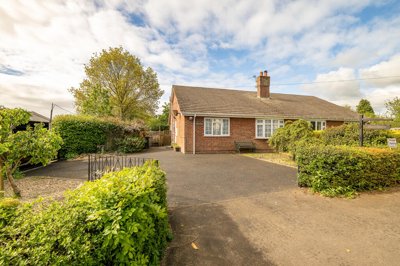
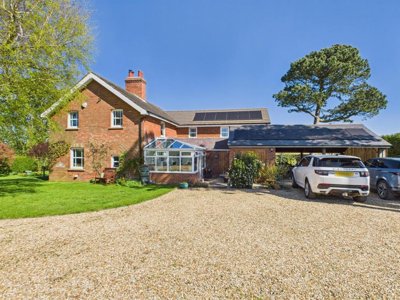
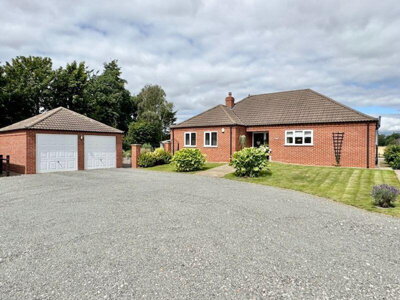
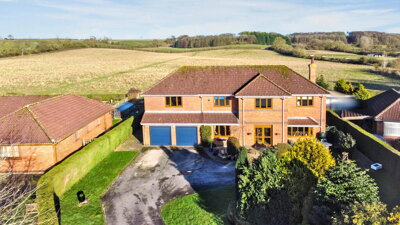
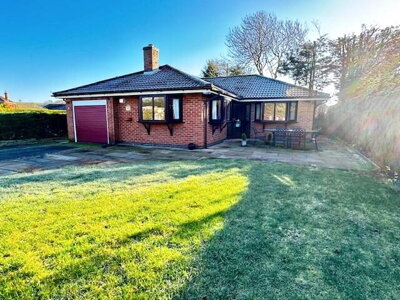
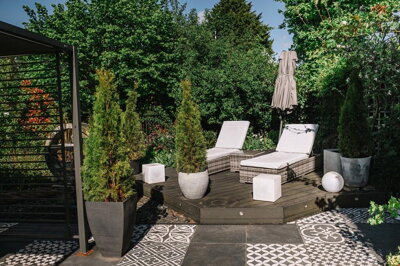
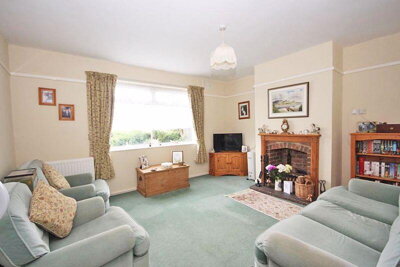
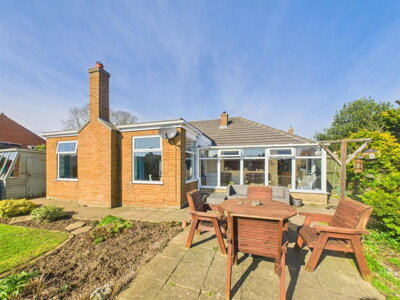
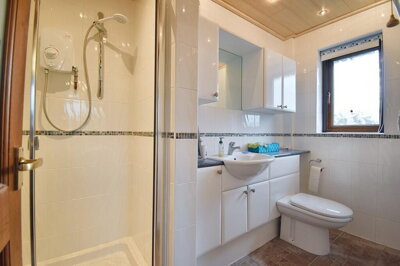
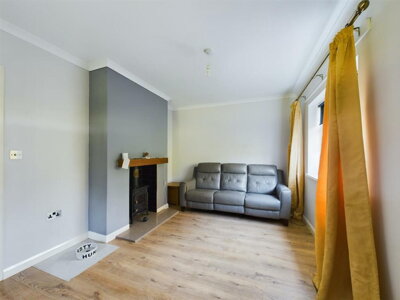
Browse 10 homes for sale in Gayton le Wold from local estate agents.
The Gayton Le Wold property market offers detached, semi-detached, and terraced houses spanning various price ranges and neighbourhoods. Each listing includes detailed property information, photographs, and direct contact with the marketing agent.
Gayton le Wold’s housing market has much the same feel as the village, traditional, calm, and more concerned with quality than volume. Historical data from homedata.co.uk puts the median sale price for detached homes here at £575,000, and the mix of available listings and completed sales points in the same direction, larger standalone houses dominate, not terraces or apartment-style homes. Stock is thin in a village of this size, so homes do not come up often, which makes the occasional chance to buy here more significant for anyone ready to move. It is not a market that races along, either. In Gayton le Wold, patience and local knowledge tend to matter, and plenty of sales are agreed between people with existing ties to the village or the surrounding area.
Across the wider East Lindsey district, values have edged up rather than surged, with annual growth of around 0.9% in the year to December 2025. Average prices sit at £292,000 for detached homes, £188,000 for semi-detached houses, £148,000 for terraced property, and £91,000 for flats and maisonettes where they exist. In rural places such as Gayton le Wold, flats and maisonettes are uncommon anyway. For buyers after a sizeable detached house in a village setting, Gayton le Wold can look like good value against comparable homes in better-connected parts of the country, especially once the surrounding countryside and the settled community life found in this part of Lincolnshire are taken into account.
The fact that Gayton le Wold sits in the Lincolnshire Wolds Area of Outstanding Natural Beauty does a great deal for its appeal. Buyers come from across the region for access to public footpaths, bridleways, and scenic routes spread across the limestone uplands, and the views over rolling farmland and that distinctive undulating landscape are a real part of the draw. Artists and writers have taken inspiration from this countryside for centuries. That mix of natural beauty, quiet surroundings, and close community ties has helped values hold their ground, even when the wider market has been less certain.

There is a recognisable English village quality to Gayton le Wold, and it is exactly the sort of place that pulls buyers away from towns and cities towards rural Lincolnshire. Its name comes from the Old English "Gāfa's town" and "Wold", a nod to its raised position on the limestone uplands of the Lincolnshire Wolds, an Area of Outstanding Natural Beauty covering the countryside around it. The village itself is made up of red-brick and stone cottages, farmhouses, and later family homes, grouped around the old parish church and the village green in a pattern that has grown gradually over centuries rather than being laid out to plan. You can see several building periods in one small place, from medieval survivals to Georgian farmhouse architecture and Victorian terrace rows that define the older stretches of the settlement.
Gayton le Wold’s population follows a familiar pattern for the more prosperous villages of the Lincolnshire Wolds. Farming families with long roots in the area live alongside professionals commuting to nearby towns and retirees who have chosen the village for its peace and cleaner air. Agriculture still shapes the local economy, with the surrounding land producing cereals, oilseed rape, and livestock, just as it has for generations. Village facilities may include a historic pub known for real ales and home-cooked food, a village hall used for events and clubs, and easy access to footpaths across the rolling Wold landscape. Louth, about eight miles away, supplies the broader mix of shops, places to eat, and leisure options, while Skegness is close enough for a family day out by car.
Life outside working hours is fairly simple here, and that is much of the point. In Gayton le Wold, evenings and weekends tend to revolve around the pub, the village hall, and walks linking the village with neighbouring settlements. Through the year, harvest festivals, summer fetes, and Christmas gatherings keep people in touch and reinforce the sort of social fabric that makes village living rewarding. Families with children often value the sense of safety, the chance to play outdoors, and the fact that people still keep an eye out for each other, something that is harder to find in many urban areas.

Anyone moving a family to Gayton le Wold will usually be looking at schools within a sensible driving radius, which is typical for rural Lincolnshire. Younger children are commonly served by smaller primary schools in nearby villages, places with a community feel where classes are often smaller than in town and staff get to know each child well. From there, pupils may move on through schools in larger villages or market towns, often with established links into secondary provision across the Lincolnshire Wolds. Catchment boundaries and admissions rules matter here, so we always suggest checking the exact home address against the relevant policy before making plans around a move to or around Gayton le Wold.
For secondary education, Gayton le Wold residents generally look towards grammar and comprehensive schools in Louth, Horncastle, and other parts of East Lindsey. King Edward VI Grammar School in Louth remains one of the best-known options for academically selective pupils in the area, while other schools in nearby towns cover a broad spread of GCSE and A-level subjects. Some families will compare recent inspection reports and exam results closely, although smaller rural schools can offer a supportive setting that does not always show up fully in headline figures. Day-to-day practicalities matter as well, and secondary pupils often rely on school buses running set routes, something many households simply build into daily life as part of living in the countryside.
There are also independent options across the region, including preparatory schools for primary-age children and boarding provision at secondary level in Lincolnshire and neighbouring counties. For families happy to travel further, that adds another layer of choice alongside the state sector. One practical point is easy to overlook, rural provision is limited, so it makes sense to register early for school transport and to keep an eye on nursery waiting lists if a place at a popular setting within reach of Gayton le Wold matters.

Transport from Gayton le Wold is shaped by the fact that it is a rural village rather than a transport hub. It sits away from the main trunk roads and railway lines, but still has workable road links to larger centres. Most residents depend on a private car, using country lanes through neighbouring villages to reach the A16 and A158 trunk roads. By road, Louth is about twenty minutes away, Lincoln city centre around forty-five minutes, and Grimsby approximately thirty-five minutes. Head south on the A16 and there is a straightforward route towards Spalding and Peterborough, which opens up the wider motorway network for those travelling further for work. For buyers thinking of using Gayton le Wold as a base, those road connections make a real difference to daily convenience and to the practical question of holding a job in a bigger town or city.
Public transport is much thinner on the ground. Services for villages such as Gayton le Wold usually mean local buses into market towns and service centres, and the timetable is more suited to occasional trips than a Monday-to-Friday commute. In some cases, buses through villages like Gayton le Wold run two or three times weekly rather than every day, which can be handy for shopping or visiting but not much use for regular work travel. For rail, the nearest stations are at Grimsby, Cleethorpes, or Lincoln, with onward access to places including Sheffield, Nottingham, and London by direct service or connection. In practice, most residents accept a car-dependent routine in return for village quiet and immediate access to some of the county’s best countryside.
Commuting to Lincoln or Grimsby from Gayton le Wold is possible, provided expectations are realistic. The drive is manageable, but village life here does ask for some flexibility and a willingness to live with the limitations that come with a rural setting. Many people decide the trade-off is worth it, especially now that home working has made the Lincolnshire Wolds a practical option for households that once needed to be much closer to an office. We always think it helps to match a search area to actual travel needs first, then weigh up the lifestyle side.

It pays to spend proper time in Gayton le Wold before committing. Try the village at different times of day and on different days of the week, look at the local amenities, walk the footpaths, and chat to residents to get a feel for how the place works. We would also compare Gayton le Wold price evidence with the wider East Lindsey market so there is a clear idea of what a given budget is likely to buy.
Before the search gets serious, we recommend speaking with lenders or brokers and securing an agreement in principle. That gives a clearer picture of mortgage finance and shows sellers that a buyer is in a position to proceed. In a village where detached homes often sit above the district average on price, knowing the borrowing limit from the outset can save a lot of wasted viewings.
Because Gayton le Wold is small and turnover is limited, some of the best-fitting homes may never appear in public advertising at all. A direct approach to estate agents in Louth and the nearby market towns can be worthwhile, as those are the firms most likely to cover this village and hear about off-market instructions. We would be clear about the exact requirements and then stay patient. In a place like this, the right house can take time to surface.
Once a suitable property does come up, the next step is to view it carefully and judge its condition, character, and fit for day-to-day living. Age and construction matter a great deal in Gayton le Wold, because older houses may bring maintenance needs or renovation costs that are not obvious at first glance. We would look closely at that before going too far. Booking a RICS Level 2 Survey ahead of commitment can also be sensible, since it may pick up defects that a standard viewing will not reveal.
After finding a property that fits the brief, the usual course is to make a formal offer through the selling agent and wait for it to be accepted before moving on. At that point, we would instruct a conveyancing solicitor to deal with searches, contracts, and registration of title. A rural purchase can call for extra checks on matters such as flood risk, drainage, and planning history, so it is wise to leave enough time for that work to be done properly.
Buying in Gayton le Wold means paying attention to details that do not always loom so large in urban transactions, starting with the buildings themselves. The village’s housing stock covers several architectural eras, from possible medieval cruck-framed buildings to Victorian terraces, inter-war suburban houses, and later additions. In this part of Lincolnshire, traditional construction often means solid brick or stone walls, lime-based mortars, and timber-framed elements, all of which behave differently from modern cavity-wall builds. That matters, because some signs of age, minor cracking or uneven floors, for example, may be part of an older building’s character rather than evidence of serious movement. Damp penetration or timber decay is another matter, and needs careful attention.
The setting brings its own checks as well. In Gayton le Wold, any property on lower ground or close to a watercourse deserves a close look at flood resilience and drainage, and the clay soils found across parts of Lincolnshire can also be relevant because shrink-swell movement may affect foundations, especially in drought conditions or where trees draw moisture from the ground. We would always treat a professional survey from a qualified RICS surveyor as an important safeguard. It can flag everything from roof defects and electrical concerns to more substantial structural issues that could alter value or lead to expensive repairs.
Some homes in Gayton le Wold may be listed, or sit within potential conservation areas, and that can bring extra obligations for owners. Alterations may be restricted, and maintenance often needs to be carried out using appropriate traditional materials rather than modern substitutes. Anyone considering an older house should allow for the cost of looking after historic fabric, including timber repairs, rethatching where relevant, and repointing with lime mortar instead of cement. Non-standard construction needs extra caution too. Thatched roofs and cob walls often call for specialist surveys beyond the standard level, and mortgage lenders may impose their own conditions on those property types.
With a large share of Gayton le Wold homes likely to be over fifty years old, a professional survey is not an optional extra in any meaningful sense. Older rural properties commonly show issues such as rising damp, penetrating damp in solid walls, woodworm, wet rot in timber, worn roof coverings, chimney stack defects, and ageing electrical or plumbing systems. We would usually suggest budgeting for a RICS Level 2 or Level 3 survey before exchange, both to support any price negotiation if major defects appear and to plan remedial works after completion.

Detailed recent figures for Gayton le Wold itself are limited, but the historic picture is still useful. Available sales evidence shows a median sale price of £575,000 for detached property in the village. Across the wider East Lindsey district, where Gayton le Wold sits, the average property price was £219,000 in December 2025, with detached homes averaging £292,000. The village market leans towards larger detached houses and period cottages rather than terraces or flats, so prices are naturally shaped by that stock profile rather than mirroring the district average. To judge present conditions for a particular property type or spot within the village, we would speak with local estate agents on the ground.
Gayton le Wold properties fall within the council tax area of East Lindsey District Council. Charges are set by valuation band, from A up to H, and the band attached to a given property is based on its assessed value in April 1991. Band A carries the lowest charge, while Band H is the highest. In practice, larger detached period houses and substantial cottages in the village will often sit in the upper bands, with smaller cottages more likely to land somewhere in the middle. Buyers can confirm the band for a specific address through the Valuation Office Agency website, and we would always include that ongoing cost alongside mortgage payments, insurance, and maintenance when working out affordability.
For families, school research usually starts with the primary options in neighbouring villages, where smaller, community-based settings tend to serve the immediate rural area. At secondary level, nearby market towns provide the main choices, including King Edward VI Grammar School in Louth for academically selective pupils and other comprehensive schools with solid GCSE and A-level provision. Catchment arrangements across the Lincolnshire Wolds can be awkward, and children from outlying villages may travel quite a distance to their allocated school. Recent inspection outcomes and exam results can be helpful for comparison, but the smaller scale and supportive atmosphere of rural schools often count for just as much in day-to-day life.
There is no getting around the fact that public transport in Gayton le Wold is limited. That is standard for many Lincolnshire villages. Local buses link the village with nearby market towns, but reduced frequencies usually make them a poor fit for daily commuting. Stagecoach routes between Louth and Horncastle may run through or close to Gayton le Wold, which gives some occasional access to the wider network, though most residents would not depend on that for regular travel. Instead, private cars tend to do the heavy lifting, with country lanes feeding into the A16 and A158 trunk roads. For rail journeys, Grimsby and Lincoln are the usual stations for joining the national network.
From an investment point of view, Gayton le Wold behaves differently from a town or city market. Supply is tight, and demand from buyers looking for a rural way of life can help support values over the medium term, especially for smart detached homes with decent gardens and views over the Lincolnshire Wolds. In the wider East Lindsey market, annual growth was 0.9% in December 2025, while semi-detached homes did better at 2.4%, which points to a stable market rather than a sharply rising one. Rental demand in a small village is usually thinner than in larger settlements, so any buy-to-let case needs to be tested carefully against management costs and likely yield. In reality, Gayton le Wold tends to make more sense as a long-term capital appreciation play for owner-occupiers than as an income-led rental investment.
Stamp Duty Land Tax on residential purchases in England works on a tiered basis tied to the purchase price. For standard buyers, no SDLT is payable up to £250,000. The slice from £250,001 to £925,000 is charged at 5%, the portion from £925,001 to £1.5 million at 10%, and anything above £1.5 million at 12%. With the median detached price in Gayton le Wold at £575,000, a typical SDLT bill would be £16,250, based on 5% of the £325,000 above the £250,000 threshold. First-time buyers get relief on the first £425,000, with 5% payable on the part between £425,001 and £625,000, although that relief falls away for purchases above £625,000.
The advertised price is only part of the financial picture in Gayton le Wold, so a proper budget needs to stretch further than the agreed figure on the memorandum of sale. For most buyers, Stamp Duty Land Tax is the largest extra cost, applying to residential purchases in England above £250,000 at standard rates. Because sale prices in Gayton le Wold commonly sit well above that level, SDLT should be built into the sums from the start. At £575,000, for instance, the charge comes to £16,250, worked out as 5% on the portion between £250,001 and £575,000. Buyers qualifying for first-time buyer relief on purchases up to £625,000 may pay noticeably less.
Stamp duty is not the only additional expense. Buying in Gayton le Wold also brings survey costs, legal fees, search fees, and mortgage-related charges, which together can add several thousand pounds. A RICS Level 2 HomeBuyer Report will often cost between £400 and £900, depending on the size and value of the property, and larger or more unusual homes may cost more. In a village with plenty of older housing, a structural survey can be particularly worthwhile because it may uncover defects that a routine viewing misses. Conveyancing, including solicitor’s fees, local searches, and registration fees, often lands somewhere between £500 and £2,000 or above, and the rural setting can mean added searches for flood risk, drainage, and rights of way. On top of that come mortgage arrangement fees, valuation fees, and buildings insurance.
Searches in the Lincolnshire Wolds area often go beyond the bare minimum. Standard drainage and water checks are usually joined by environmental searches covering possible contamination or flood risk, plus planning history searches to show earlier permissions or enforcement action linked to the property. Depending on location, more specialist work may also be needed, including British Geological Survey records where there is concern about ground instability, or Chas search certificates for homes with oil-fired heating systems near agricultural land. The right package depends on the property. We would expect surveyors and conveyancers handling a Gayton le Wold purchase to advise on what is essential in that particular part of the village and surrounding countryside.

From 4.5% APR
We can help compare mortgage deals from leading lenders for a Gayton le Wold home purchase.
From £499
We work with expert conveyancing solicitors to handle a Gayton le Wold property purchase.
From £400
We can arrange a professional RICS HomeBuyer Report for a Gayton le Wold property.
From £80
We can organise an Energy Performance Certificate for a Gayton le Wold property.
Properties for Sale In London

Properties for Sale In Plymouth

Properties for Sale In Liverpool

Properties for Sale In Glasgow

Properties for Sale In Sheffield

Properties for Sale In Edinburgh

Properties for Sale In Coventry

Properties for Sale In Bradford

Properties for Sale In Manchester

Properties for Sale In Birmingham

Properties for Sale In Bristol

Properties for Sale In Oxford

Properties for Sale In Leicester

Properties for Sale In Newcastle

Properties for Sale In Leeds

Properties for Sale In Southampton

Properties for Sale In Cardiff

Properties for Sale In Nottingham

Properties for Sale In Norwich

Properties for Sale In Brighton

Properties for Sale In Derby

Properties for Sale In Portsmouth

Properties for Sale In Northampton

Properties for Sale In Milton Keynes

Properties for Sale In Bournemouth

Properties for Sale In Bolton

Properties for Sale In Swansea

Properties for Sale In Swindon

Properties for Sale In Peterborough

Properties for Sale In Wolverhampton

Enter your details to see if this property is within your budget.
Loans, cards, car finance
Estimated property budget
Borrowing + deposit
You could borrow between
Typical borrowing
Monthly repayment
Est. at 4.5%
Loan-to-value
This is an estimate only. Your actual budget may vary depending on interest rates, credit history, and personal circumstances. For an accurate affordability assessment, speak to one of our free mortgage advisors.
This calculator provides estimates for illustrative purposes only and does not constitute financial advice. Your home may be repossessed if you do not keep up repayments on your mortgage. Estimates based on 4.5% interest rate, repayment mortgage. Actual rates depend on your circumstances.
Homemove is a trading name of HM Haus Group Ltd (Company No. 13873779, registered in England & Wales). Homemove Mortgages Ltd (Company No. 15947693) is an Appointed Representative of TMG Direct Limited, trading as TMG Mortgage Network, which is authorised and regulated by the Financial Conduct Authority (FRN 786245). Homemove Mortgages Ltd is entered on the FCA Register as an Appointed Representative (FRN 1022429). You can check registrations at NewRegister or by calling 0800 111 6768.

We use cookies to show you personalised content and improve your experience of our website. Find out more in our Privacy policy and Cookie policy.