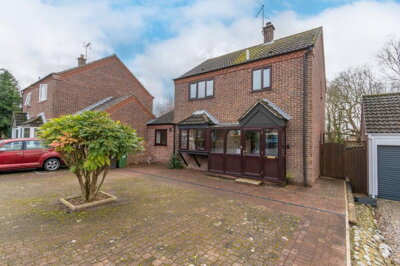
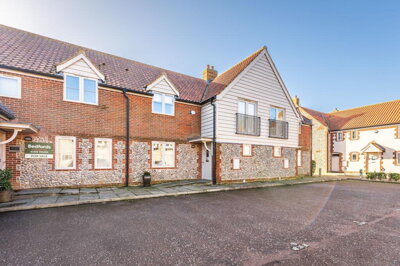
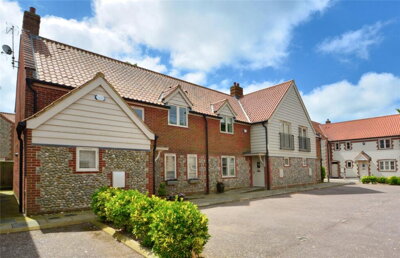
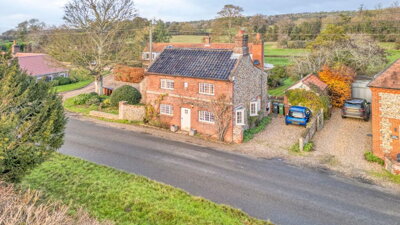
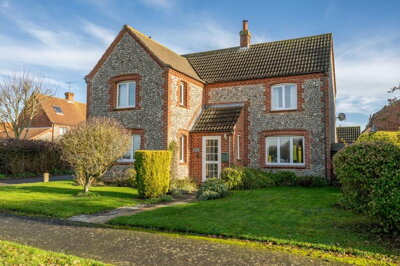
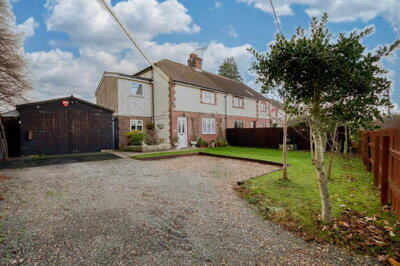
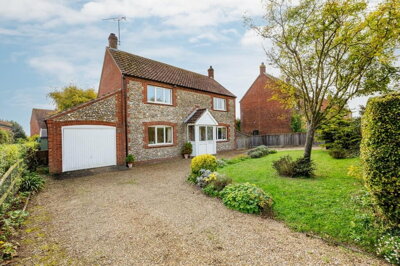
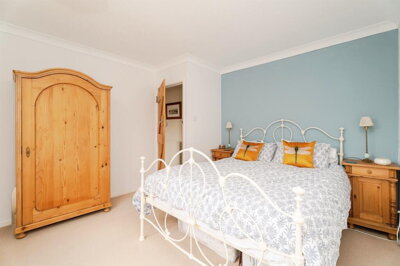
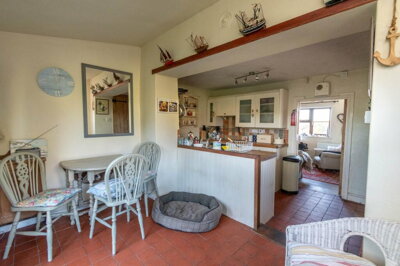
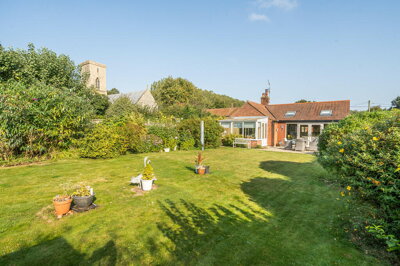
Browse 17 homes for sale in Field Dalling from local estate agents.
Three bedroom properties represent a significant portion of the Field Dalling housing market, offering space for families with multiple reception rooms and gardens in many cases. Browse detached, semi-detached, and terraced options ranging from period character homes to contemporary developments.
Field Dalling’s property market has a lot going for it, with traditional Norfolk homes set in genuinely striking rural scenery. Our current listings include detached properties averaging £425,000 and semi-detached homes at approximately £330,000, so there is choice across a range of budgets for discerning buyers. Over the past 12 months, prices have risen by 1.2%, which points to sustained investor confidence in this part of North Norfolk. Buyers are drawn here for full-time living and for holiday let potential too, and the village’s countryside feel is lifted further by its closeness to the coast.
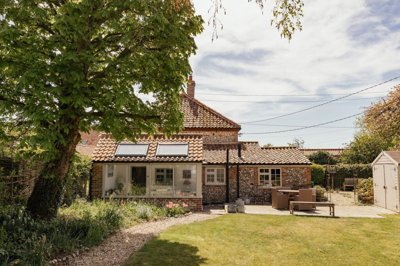
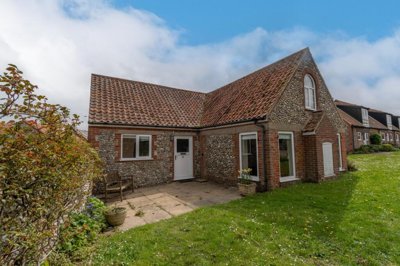
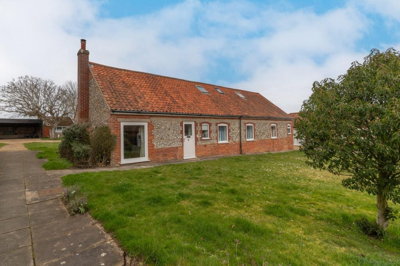
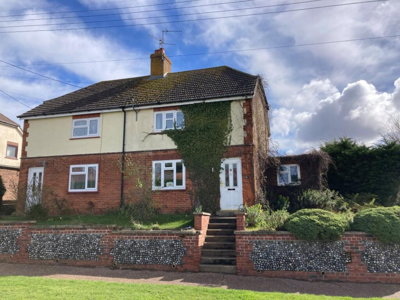
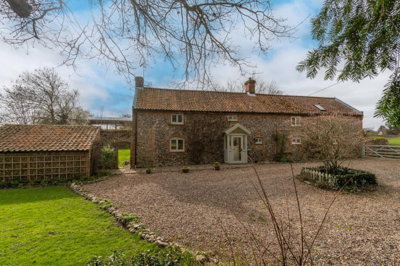
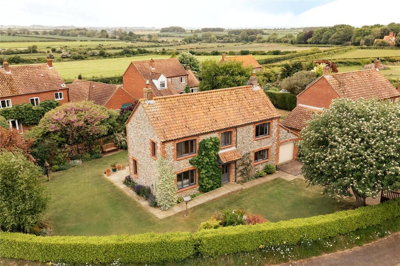
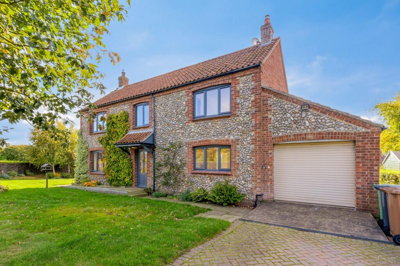
Much of Field Dalling’s housing stock reflects its rural past, and a sizeable share dates from before 1919 with the sort of traditional construction and period detail people look for. Brick, flint, and render appear again and again, forming the familiar North Norfolk vernacular. The surrounding geology, chalk overlain by glacial tills and boulder clay, has shaped how homes were built for generations, with local builders making use of flint gathered from agricultural fields. Older properties do mean ongoing maintenance, of course, but they also bring real character and, increasingly, plot sizes that are hard to find in the market.
Our listings span different eras, so buyers can find something that suits their tastes and practical needs. In the village, housing ranges from modest Victorian agricultural workers’ cottages to larger detached homes from the mid-twentieth century. There are no active new-build developments within the parish boundaries, which means homes coming to market are usually pre-owned, and a RICS Level 2 Survey can be particularly useful for spotting maintenance issues before purchase.

Life in Field Dalling has a quiet appeal that many buyers find hard to beat. The village has 288 residents across 120 households according to the 2021 Census, so it remains small and close-knit while still offering the essentials needed for day-to-day living. Community life is visible in village events, local fetes, and seasonal celebrations held through the year. Outside the village, the countryside opens up quickly, with footpaths across farmland linking to nearby villages including Saxlingham Thorpe and Bodham, and plenty of space for walking and cycling.
Agriculture sits at the centre of the local economy, though tourism is taking a bigger share because of the village’s position near the North Norfolk coast Area of Outstanding Natural Beauty. Architectural interest is added by several listed buildings, among them the historic Church of St George, which gives the village a strong sense of continuity. Everyday shopping and services are close enough for normal use, with local shops, pubs, and amenities in nearby villages and towns, while Holt offers a broader mix of independent shops, galleries, and restaurants within a short drive.
Many residents split their working lives between home and the wider region, or commute to Holt, Fakenham, and Norwich using the road network. The A148 Cromer Road offers a direct route to Norwich, so the city remains reachable for those who need regular access while still preferring countryside living. Field Dalling and the North Norfolk coast are also attractive to second-home owners and retirees, which creates a healthy mix of permanent residents and part-time visitors throughout the year.

For families, the village is well placed for a range of educational options within a reasonable distance. Primary schooling is provided in surrounding villages, and many schools across North Norfolk have positive Ofsted ratings for teaching quality and pupil welfare. The nearest primary schools include those in Blakeney, serving families in the coastal part of the catchment, and Holt, where the area’s most comprehensive primary provision can be found. It is a rural setting, but one that many parents prefer to larger urban environments.
Children also benefit from the countryside around them, which gives scope for outdoor learning and practical exploration alongside classroom teaching. Schools in North Norfolk tend to have strong community involvement and relatively small class sizes compared with urban schools, so teachers can often give more individual attention. For secondary education, Alderman Peel High School in Wells-next-the-Sea and Fakenham Academy are both well regarded, and both serve students from Field Dalling and the surrounding villages with dedicated school transport from the village.
There are alternative routes too. Across Norfolk, independent schools can be found at primary and secondary level, while sixth form provision sits in nearby market towns. Norfolk’s grammar school system also offers extra opportunities for academically gifted students in selected locations through the eleven-plus examination process. Parents moving to Field Dalling should check catchments and admissions carefully, as they do vary, and early applications are often sensible given the transport realities of rural living.

Getting around from Field Dalling is straightforward enough, even though the village keeps its peaceful feel. The A148 Cromer Road and A1053 connect it to surrounding towns and villages, and Norwich can be reached via a scenic route through the Norfolk countryside in approximately 45 minutes under normal traffic conditions. It also works well for shorter trips, with Holt under 15 minutes away and Cromer reachable in approximately 25 minutes by car.
The rail options are in Cromer and Sheringham, where stations connect onward to Norwich and the wider national network via Norwich station. From Norwich station, direct services to London Liverpool Street take approximately 90 minutes, which makes both business travel and day trips to the capital quite workable. Sheringham station gives access to the Bittern Line, the scenic coastal railway serving local communities along the North Norfolk coast. For those commuting into Norwich every day, the journey is manageable, although vehicle ownership is usually needed because rural bus provision is limited.
Bus services do run across North Norfolk, linking Field Dalling with nearby villages and towns including Holt and Cromer, though the frequency is what you would expect in a rural area, with limited evening and weekend services. Cycling is popular, helped by quiet lanes that make for pleasant commutes and leisure rides along the North Norfolk coast path and through the AONB landscape. The village’s position between the coast and inland towns also gives residents flexibility for shopping, entertainment, and cultural outings, not least in Holt, whose Georgian streets are full of independent shops and galleries.

Begin with our listings for Field Dalling and get a feel for the current price points before you do anything else. Detached homes average £425,000 and semi-detached properties around £330,000, so it makes sense to set a budget that reflects the premium attached to this desirable North Norfolk spot. It also helps to look at the local housing stock carefully, especially the period features and traditional construction methods that shape so much of the village. Think about proximity to the centre, garden orientation, and any flood risk assessments for properties in low-lying areas.
Before you book viewings, secure a mortgage agreement in principle from a lender so you know your borrowing capacity. That step puts you in a stronger position when making offers and shows sellers that you are a serious, qualified buyer. Our partner mortgage brokers can help compare rates and identify the most suitable mortgage product for your circumstances, whether you are a first-time buyer or moving from an existing property. In rural Field Dalling, some lenders may ask for detailed property surveys before approval, so a flexible timeline is sensible.
Once you have a shortlist, arrange viewings through Homemove so you can see the homes in person and judge their condition and potential. Pay close attention to the materials used locally, especially brick, flint, and render finishes, and think about how maintenance may affect long-term ownership costs. Check the roof, look for damp in solid-walled properties, and inspect the age and condition of windows and insulation. Where original features remain, electrical and plumbing systems may need updating to meet current standards.
Before you complete, we strongly recommend a RICS Level 2 Survey to assess the property’s condition. In Field Dalling, older buildings are common, and surveys often pick up damp, timber defects, or roof issues that are not obvious during a viewing. Survey costs in the area typically range from £400 to £900 depending on property size and complexity. Because boulder clay is so common in the local geology, a proper foundation assessment matters especially for older homes or those with mature trees nearby.
Choose a solicitor with rural property experience to handle the legal side of the purchase. They will carry out searches, review contracts, and work with the seller’s representatives to keep the transaction moving. They should also advise on planning restrictions affecting the property, which is especially important for listed buildings in Field Dalling where Listed Building Consent may be needed for alterations. Searches ought to cover drainage and water authority checks, local authority planning records, and environmental agency flood risk data.
Once the legal checks are complete and the finance is in place, your solicitor will arrange contract signing and deposit payment. When the agreed completion date arrives, the keys to your new Field Dalling home are handed over and settling in can begin. Buildings insurance should be active from the date of completion, and utility providers need to be notified of your move. It can also help to register with local healthcare services and join community groups so you settle into village life quickly.
Buying in Field Dalling means keeping an eye on several local factors that can shape the ownership experience. The geology matters, because the underlying chalk overlain by glacial tills and boulder clay means some properties can be vulnerable to shrink-swell movement in foundations. That is especially relevant for older homes or those with large trees nearby. A thorough survey can pick up existing foundation concerns, which may then have insurance implications. Our inspectors regularly assess North Norfolk properties and understand the specific challenges created by these clay soils.
Surface water flooding is a known issue in some parts of Field Dalling, particularly in low-lying locations and near watercourses. Buyers should review flood risk assessments and think about whether a property needs specific insurance arrangements. Field Dalling itself is not exposed to direct coastal flooding, but its closeness to the North Norfolk coast means wider regional flood management considerations can sometimes affect insurance and resilience planning. Homes near streams or drainage channels should be checked carefully for any historical flooding incidents.
Listed buildings are part of the picture here, including several Grade II listed residential properties and the Church of St George, so planning controls around the village can be stricter than in non-historic places. Any work to listed buildings, from alterations and extensions to substantial maintenance, requires Listed Building Consent and must use suitable traditional materials and methods. Our team has helped buyers understand the implications of purchasing period homes in villages like Field Dalling, including the extra responsibilities that come with listed status. Flint construction is common locally, and repairs often need specialist contractors because of the skill involved in working with this traditional material.
During surveys, the most common defects we see in Field Dalling include rising damp in solid-walled buildings built before modern damp-proofing standards, timber defects such as woodworm or wet rot in structural elements, and roof deterioration like slipped tiles, failing leadwork, or perished mortar in chimneys. Flint-built homes can also suffer mortar decay or spalling over time, so repointing with appropriate lime-based mortars is often needed to keep the walls breathable. Older houses frequently have electrical wiring and plumbing that no longer meet current standards, so budgeting for upgrades should be part of the plan. A RICS Level 2 Survey before purchase is strongly recommended so any defects are identified early.

As of February 2026, the average property price in Field Dalling is £415,000. Detached properties usually command around £425,000, while semi-detached homes average approximately £330,000. Values have risen by 1.2% over the past 12 months, which reflects steady demand for homes in this desirable North Norfolk location. That premium is tied to the rural setting, the closeness to the coast, and the limited supply of homes in this picturesque parish, where no new-build developments are currently under construction.
For council tax, Field Dalling falls within North Norfolk District Council, and the band is set according to the valuation of each individual property. In the village, residential properties generally range from Band C to Band F, reflecting the mix of compact cottages and larger rural homes found here. Band C properties typically have a valuation of £40,000 to £52,000, while Band F covers homes valued between £88,001 and £120,000. Before committing, buyers should check the exact council tax band of any property they are considering, as it forms part of the ongoing cost of ownership along with utilities and maintenance.
There is no primary school within Field Dalling itself, so families make use of schools in nearby villages and in Holt. Across North Norfolk, schools have received positive recognition for educational quality, and primary schools in Blakeney and Holt offer solid foundations for young learners within a reasonable travelling distance. For secondary education, Alderman Peel High School in Wells-next-the-Sea and Fakenham Academy serve the local catchment, with dedicated school transport available from the village. Parents should still check catchment areas and admission criteria carefully, as these can affect school placement for families moving here.
Transport options from Field Dalling reflect its rural setting, with bus services linking the village to nearby towns and villages on the sort of timetable common in the countryside. Cromer and Sheringham are the nearest railway stations, giving access to Norwich and the wider national rail network, including direct services to London Liverpool Street from Norwich station. Most residents still depend on private vehicles for daily commuting, with the A148 providing routes to Norwich in approximately 45 minutes and the North Norfolk coast reachable in under 20 minutes. Cycling is widely enjoyed too, with quiet lanes in the AONB giving scenic routes for commuting and leisure.
Field Dalling has a strong case as a property investment, helped by annual price growth of 1.2% and a limited amount of stock in this sought-after village. Its position close to the North Norfolk coast Area of Outstanding Natural Beauty keeps demand healthy among buyers looking for rural retreats, retirement homes, and holiday let investments. Agriculture and tourism provide underlying economic stability, while North Norfolk’s reputation continues to draw buyers from across the UK who want quality country living within a reasonable distance of amenities and transport links. In the future, that premium rural status should help properties appeal to a broad pool of buyers if you decide to sell.
Stamp duty land tax on a purchase in Field Dalling depends on both your buyer status and the price. On standard residential purchases, nothing is due on the first £250,000, then 5% applies to the portion between £250,001 and £925,000. First-time buyers receive relief on the first £425,000, with 5% charged between £425,001 and £625,000. At the village average price of £415,000, a first-time buyer would pay no stamp duty, while a subsequent buyer would pay £8,250 on the £165,000 portion above the threshold. A conveyancing solicitor can confirm the exact liability for your situation, including whether you already own any additional properties.
Older construction methods are common in Field Dalling, and that brings particular maintenance issues because the housing stock is so rooted in traditional materials and age. Damp in solid-walled properties built before modern damp-proofing standards is one of the more frequent problems, alongside timber defects such as woodworm or wet rot in structural elements, and roof deterioration including slipped tiles or failing leadwork. Flint-built homes, which are a hallmark of North Norfolk architecture, may suffer mortar decay or spalling over time and need specialist repair with suitable lime-based mortars so the walls remain breathable. Boulder clay beneath the village can also contribute to foundation movement in older houses, especially where large trees are nearby, which is why a proper survey matters before purchase.
We strongly recommend a RICS Level 2 Survey before buying any property in Field Dalling, particularly because so many homes are old and built in different styles from modern houses. A high proportion of the local housing stock was built before 1919, often with solid walls, traditional materials, and construction methods that differ markedly from current standards. A detailed survey will examine the roof, walls, foundations, and timber elements, and it can pick up defects that may not show during a normal viewing. For particularly old, complex, or listed properties, a RICS Level 3 Building Survey may be the better option because it gives the fuller assessment needed for informed decision-making.
Budgeting properly for a Field Dalling purchase means looking beyond the asking price. Buyers need to factor in stamp duty land tax, legal fees, survey costs, and other charges, which together can add several thousand pounds to the overall spend. On a typical Field Dalling home priced at the village average of £415,000, a standard buyer would pay SDLT of £8,250, while first-time buyers may avoid that charge entirely because of the price threshold. An extra 3% SDLT applies to second homes or buy-to-let purchases, which can push the cost up sharply for investors.
Survey fees in North Norfolk usually sit between £400 and £900 for a RICS Level 2 HomeBuyer Report, depending on the size, value, and complexity of the property. Older homes with non-standard construction, or those built using flint and brick, may need a more detailed inspection, so costs can move towards the higher end of that range. For especially complex or historic properties, a RICS Level 3 Building Survey may be advised, and fees typically run from £600 to over £1,500 depending on property size. Our recommended surveyors know the North Norfolk area well and are familiar with the construction methods used locally.
Conveyancing fees usually begin at around £499 for straightforward transactions, although they rise for leasehold homes, complex titles, or purchases involving listed buildings where extra searches and specialist advice may be needed. With listed buildings in Field Dalling, your solicitor will need to explain compliance requirements and may have to obtain further documentation about historic alterations. You should also allow for mortgage arrangement fees, search fees from North Norfolk District Council and Norfolk County Council, land registry fees, and possibly mortgage broker charges if you choose an independent advisor. Buildings insurance must be in force from completion, and removals costs vary quite a bit depending on the amount of belongings and the distance travelled. Our recommended mortgage and conveyancing partners can give detailed quotes for your specific purchase, so you know exactly what to budget for your Field Dalling property acquisition.

Properties for Sale In London

Properties for Sale In Plymouth

Properties for Sale In Liverpool

Properties for Sale In Glasgow

Properties for Sale In Sheffield

Properties for Sale In Edinburgh

Properties for Sale In Coventry

Properties for Sale In Bradford

Properties for Sale In Manchester

Properties for Sale In Birmingham

Properties for Sale In Bristol

Properties for Sale In Oxford

Properties for Sale In Leicester

Properties for Sale In Newcastle

Properties for Sale In Leeds

Properties for Sale In Southampton

Properties for Sale In Cardiff

Properties for Sale In Nottingham

Properties for Sale In Norwich

Properties for Sale In Brighton

Properties for Sale In Derby

Properties for Sale In Portsmouth

Properties for Sale In Northampton

Properties for Sale In Milton Keynes

Properties for Sale In Bournemouth

Properties for Sale In Bolton

Properties for Sale In Swansea

Properties for Sale In Swindon

Properties for Sale In Peterborough

Properties for Sale In Wolverhampton

Enter your details to see if this property is within your budget.
Loans, cards, car finance
Estimated property budget
Borrowing + deposit
You could borrow between
Typical borrowing
Monthly repayment
Est. at 4.5%
Loan-to-value
This is an estimate only. Your actual budget may vary depending on interest rates, credit history, and personal circumstances. For an accurate affordability assessment, speak to one of our free mortgage advisors.
This calculator provides estimates for illustrative purposes only and does not constitute financial advice. Your home may be repossessed if you do not keep up repayments on your mortgage. Estimates based on 4.5% interest rate, repayment mortgage. Actual rates depend on your circumstances.
Homemove is a trading name of HM Haus Group Ltd (Company No. 13873779, registered in England & Wales). Homemove Mortgages Ltd (Company No. 15947693) is an Appointed Representative of TMG Direct Limited, trading as TMG Mortgage Network, which is authorised and regulated by the Financial Conduct Authority (FRN 786245). Homemove Mortgages Ltd is entered on the FCA Register as an Appointed Representative (FRN 1022429). You can check registrations at NewRegister or by calling 0800 111 6768.

We use cookies to show you personalised content and improve your experience of our website. Find out more in our Privacy policy and Cookie policy.