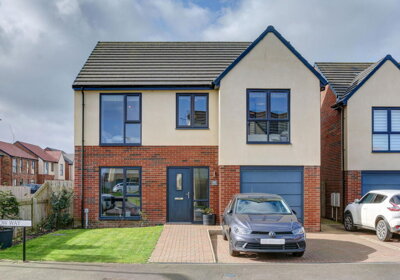
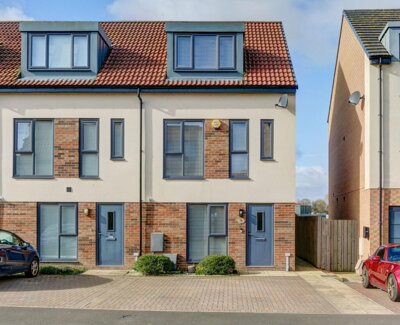
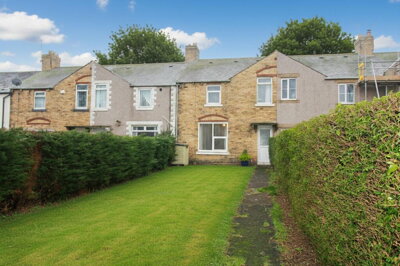
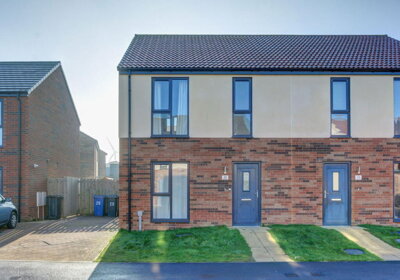
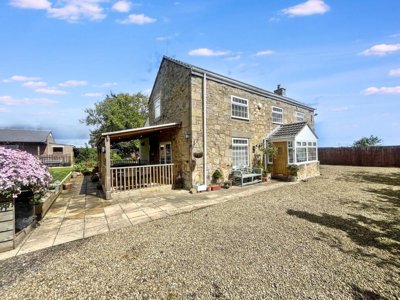
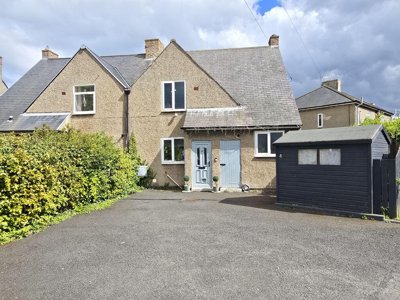
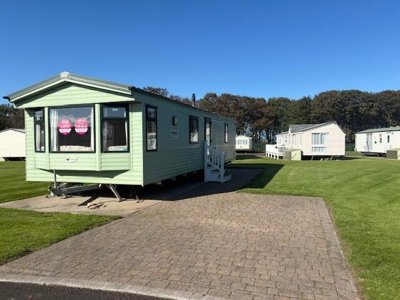
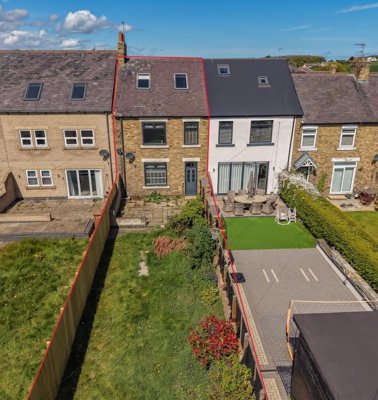
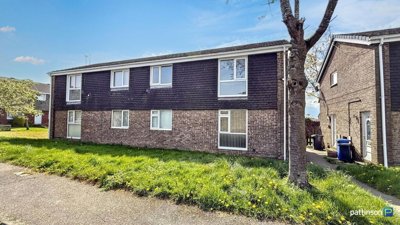
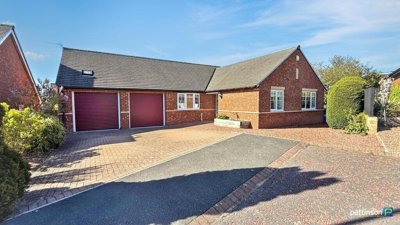
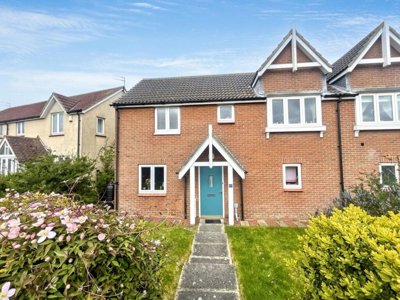
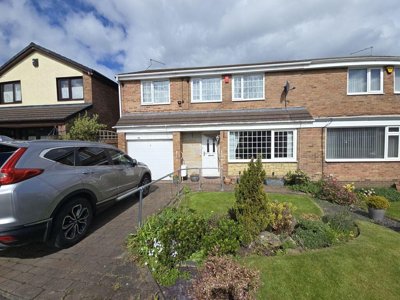
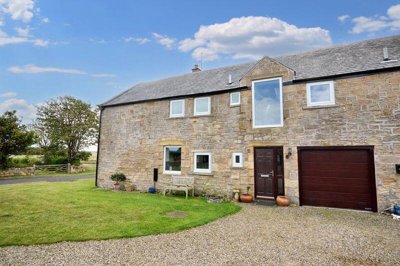
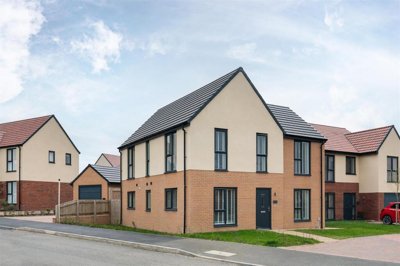
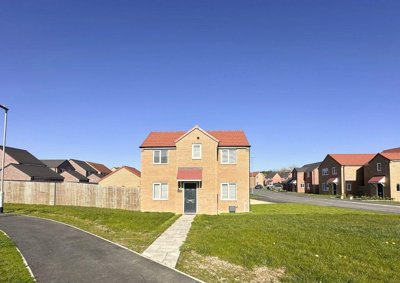
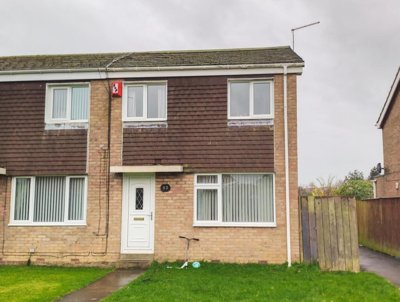
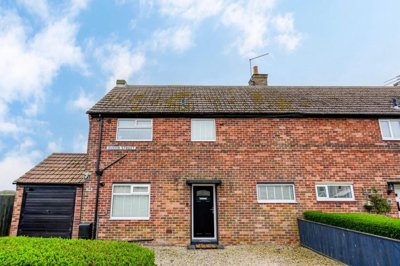
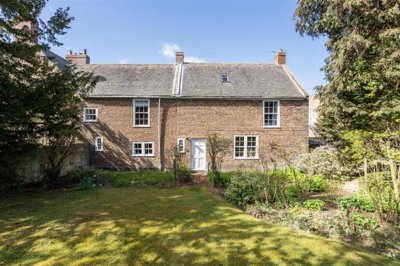
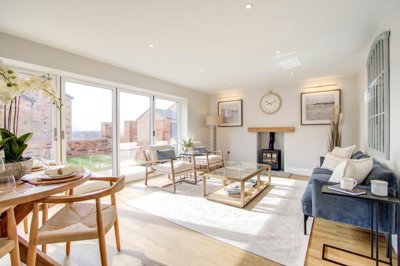
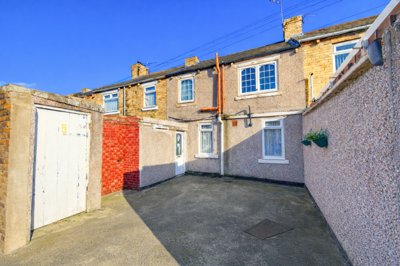
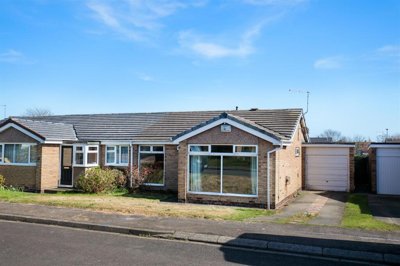
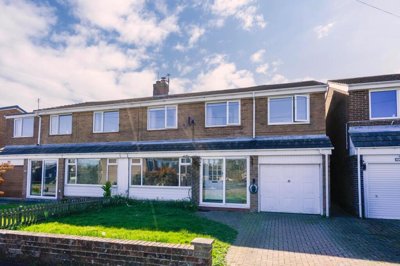
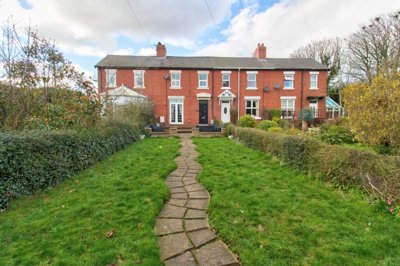
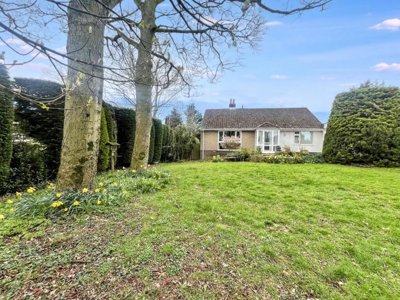
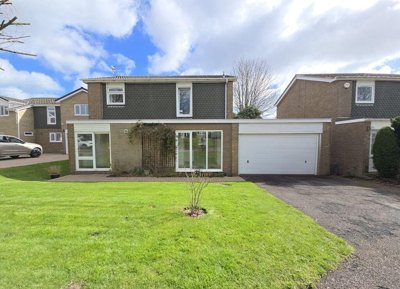
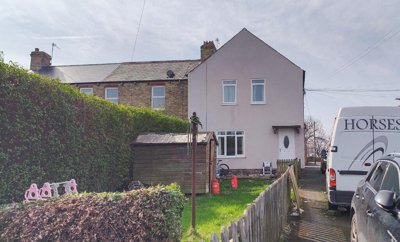
Browse 105 homes for sale in Ellington and Linton from local estate agents.
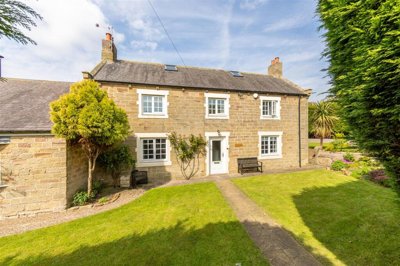
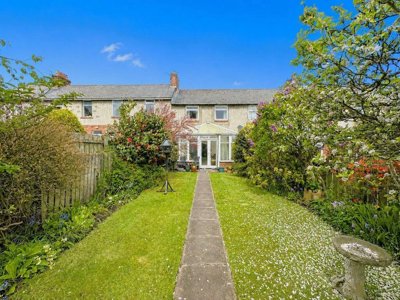
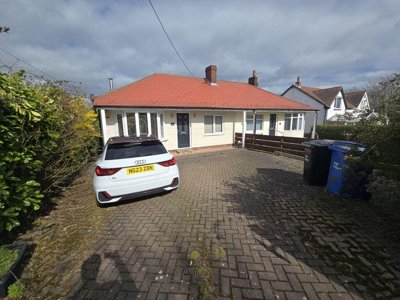
The property market in Ellington and Linton mirrors the wider rural Northumberland picture, where family homes have kept a steady following despite national swings. Detached homes sit at the top of the ladder, with recent sales averaging £372,300 depending on specification and location. Semi-detached houses offer strong value for families at £198,750 on average, while terraced homes remain the most accessible route in, around £160,983.
Linton has the lower average sold price over the past year at £190,688, while Ellington has sat between £213,854 and £226,409 depending on the reporting period. That gap comes down to stock, with Ellington offering a wider spread of larger executive homes. The market has eased a little, down approximately 9.6% over the past twelve months, though the longer run has been fairly steady, with only minor movement against previous years.
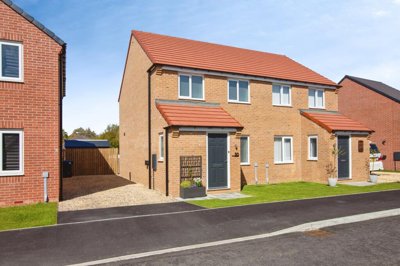
In Ellington village, Saxon Vale is the main new-build pocket, with homes along Holly Way, Primrose Way, and Ivy Close bringing a mix of contemporary semi-detached and detached designs. Recent sales there have ranged from £145,000 to £215,000, and the appeal is obvious, modern finishes, energy-efficient specifications, and far less maintenance than many older rural homes. For buyers who want something ready to live in, it broadens the choice considerably.

Life here moves to a rural Northumberland rhythm. Ellington and Linton are the kind of places where neighbours know one another by name, and the parish stretches across farmland, quiet lanes, and open countryside. Pubs serve hearty Northumbrian food, village shops cover the basics, and community events keep the social side of village life ticking over.
Outside the villages, the countryside opens up properly. Footpaths cut across farmland and woodland, so dog walks, jogging routes, and Sunday rambles are easy to come by. Warkworth and Amble bring the coast into reach, with sandy beaches and Heritage Coast cliff walks, while the Cheviot Hills to the north raise the stakes for serious hikers. A few miles south, Morpeth adds museums, independent shops, restaurants, and market days with local produce and artisan goods.
Families and retirees tend to warm to the setting quickly, because it balances quiet countryside living with the day-to-day services people still need. Churches, village halls, and recreational facilities sit alongside active residents associations and a busy calendar of village events. Add in the unspoiled landscape and the easy run to larger towns, and it is not hard to see why Ellington and Linton keep drawing interest.
The parish still follows the agricultural calendar in a way many places no longer do, with farms shaping both the view and the seasonal gatherings. It gives daily life a slower pace, and residents who have moved from busier areas often talk about the work-life balance they find here.

Education is not far away for families looking at Ellington and Linton. Primary places are available in local village schools across the surrounding area, with Morpeth adding further choice. Northumberland also has a network of rural primary schools, so it is sensible to check catchment areas before a move, especially where a preferred school is part of the plan.
For secondary education, Morpeth offers several options, and parents can compare Ofsted reports and performance data before making a decision. King Edward VI School in Morpeth is the selective choice that draws pupils from across a wider area and regularly posts strong exam results. Sixth form study is available in town as well, while Northumberland College covers vocational courses, apprenticeships, and more traditional academic routes.
School transport in rural places such as Ellington and Linton is less straightforward, and the arrangements depend on the exact address and the school chosen. Many families build commute times into their search from the outset, weighing up village life against the daily school run. A visit to the schools, plus a chat with parents already using them, often tells a better story than the statistics alone. From properties in Ellington or Linton to Morpeth schools, the drive usually takes 15 to 25 minutes.
There are also independent schools across the wider Northumberland area for parents who want alternatives to the state system. From rural postcodes, transport planning matters, so families often weigh those extra journeys alongside location and budget when they are narrowing down where to buy.

Road links do most of the heavy lifting here. The A1068 and A197 connect Ellington and Linton with Morpeth, Alnwick, and the coastal settlements along the Northumberland coast, while the nearby A1 opens up travel to Newcastle upon Tyne in the south and Edinburgh in the north. Public transport is more limited than in town, which is why car ownership is part of everyday life for most residents.
Morpeth station gives the parish its rail link, with direct services to Newcastle upon Tyne and typical journey times of 25-30 minutes into the city centre. From Newcastle, the national network opens out, including east coast mainline services to London and Edinburgh. Parking at the station helps people combine driving and rail travel, which suits many who work in Newcastle but want a quieter home base in rural Northumberland.
Bus services do run between Ellington, Linton, Morpeth, and nearby villages, though they are aimed more at essential trips than peak-hour commuting. The Saxon Vale development in Ellington has local routes as well, so residents without a car can still get into Morpeth for shopping or appointments. Cycling has its place too, especially for shorter journeys on quieter country lanes. People arriving from larger cities may need time to adjust to the reduced public transport network, although the road links soften the blow.
Most commuting from Ellington and Linton is done by car, either to Morpeth station or straight to jobs in Morpeth, Newcastle, or other regional centres. The A1 gives plenty of flexibility for anyone working in several parts of the North East, and Newcastle city centre is usually reachable within approximately 45 minutes off-peak.

Our current listings for Ellington and Linton show the full spread of detached, semi-detached, and terraced homes, so it is easy to compare what fits your budget. Saxon Vale is worth a look alongside the older stone-built stock, especially with price trends showing an approximately 9.6% reduction over the past year. We update our listings from local estate agents as new homes come to market.
Before a viewing, we always suggest speaking to lenders or mortgage brokers for an agreement in principle. Having finance in place gives offers more weight and shows sellers that the money is there. It also helps buyers cut the search down to homes that sit inside a realistic budget.
A few viewings go a long way in places like these. Comparing homes across the parish, walking the streets, and checking local amenities gives a clearer feel for the area than a photo gallery ever will. We also like buyers to visit at different times of day, because a village can feel quite different in the morning, at school run time, and later in the evening.
Before exchange, our surveyors would always recommend a professional inspection so the true condition of the property is clear. In rural Northumberland, older homes can hide expensive issues, and a survey gives both protection and room to negotiate. We carry out RICS Level 2 surveys in Ellington and Linton through qualified surveyors who know the local construction types well.
For the legal side, our conveyancing team works with solicitors who have rural property experience, covering local searches, contract review, and title registration. Local knowledge matters in Northumberland, because it helps keep the process moving and cuts the risk of awkward surprises.
Once searches come back clean and the finance is confirmed, contracts are exchanged and the deposit is paid. Completion usually follows within weeks, at which point the keys are handed over and ownership moves across in Ellington and Linton. Our solicitor coordinates the final steps and lets the relevant parties know the transaction has completed.
Ellington and Linton include everything from traditional stone cottages to twentieth-century family houses and newer homes from Saxon Vale. With the older stock, roofs deserve close attention, because Northumbrian weather can ask a lot of them. Stone buildings also need specialist care, from damp penetration and repointing to the wider cost of keeping the fabric weatherproof.
Drainage is another point worth checking in a rural parish. Some homes rely on private septic systems rather than mains sewerage, while properties at Saxon Vale usually connect to modern drainage. Parking spaces vary widely, so urban buyers should confirm what is actually there before they commit. Gardens are often generous, which is great for families, but the upkeep runs all year.
Energy efficiency is mixed across the local stock. Older stone homes may need insulation or heating upgrades to meet current standards, so EPC ratings deserve a proper look, especially where solid walls are involved. Newer Saxon Vale properties tend to perform better thermally and keep running costs down, although they do not have quite the same period character. Buyers usually know which side of that trade-off matters most to them.
Broadband speeds and mobile signal are worth checking at the exact address, because rural connectivity can change sharply from one part of the parish to another. For remote workers and families alike, that matters day to day. Homes on main roads may fare better than those tucked down smaller lanes, though it is not a hard-and-fast rule.

Average house prices in Ellington and Linton vary by property type and by data source. Recent periods have put overall sold prices between £190,000 and £213,000, with Linton at £190,688 and Ellington between £213,854 and £226,409. Detached homes sit above the rest, typically at £274,000 to £317,000 depending on specification and exact location, and the average reaches £372,300. Semi-detached houses tend to sell for £186,000 to £223,000, with an average of £198,750, while terraced homes come in more affordably at £160,983. Sold prices are down approximately 9.6% over the past twelve months, which has opened the door a little wider for buyers.
These homes sit within Northumberland County Council jurisdiction, and council tax bands vary with value and property type. Most residential addresses here fall into bands A through D, which are among the lower rates in England. A typical three-bedroom semi-detached home would usually land in band B or C, while larger detached houses may reach band D or E. Buyers should check the exact band for any property, because it sits alongside mortgage payments, insurance, and maintenance as part of the ongoing cost of ownership.
Primary schools serving Ellington and Linton are found in the surrounding villages, and it pays to check catchment areas and admissions rules against the exact address. Travel to schools in the parish or in Morpeth is generally under 20 minutes by car. King Edward VI School in Morpeth remains a notable selective secondary option, drawing pupils from a wide part of Northumberland and posting strong examination results. Visiting schools directly, and reading current Ofsted reports, gives a more rounded picture than statistics alone.
Public transport here is limited compared with town life, so bus services to Morpeth and nearby villages are mainly set up for essential journeys rather than daily commuting. The Saxon Vale development in Ellington is served by bus routes that reach Morpeth for shopping and appointments. Rail travel comes via Morpeth station, where direct trains to Newcastle upon Tyne take about 25-30 minutes and parking is available for drivers. For most residents, car ownership is part of the routine, and regular commuters usually drive either to the station or straight to work.
Ellington and Linton have held on to stable property values, and the rural Northumberland lifestyle still pulls in buyers who want village living. An approximate 9.6% price adjustment may create openings for investors and home buyers who move at the right point in the market. Rental demand comes from professionals working in Morpeth and the surrounding area, especially where family-sized homes sit near good schools. The long view is supported by Northumbrian village appeal, limited new-build supply in the parish, and the steady pull of rural relocation from urban centres. Saxon Vale homes may be especially attractive to investors looking for modern rental stock.
Stamp Duty Land Tax applies in England, with standard rates beginning at 0% on the first £250,000 of property value. On a semi-detached home in Ellington and Linton priced around £198,750, there would be no stamp duty within that first £250,000 threshold. The portion between £250,001 and £925,000 is taxed at 5%, and higher-value homes are charged at progressively higher rates. First-time buyers of residential property get enhanced SDLT relief, with 0% on the first £425,000 of purchase price. Our solicitor can calculate the exact liability from the price and the buyer's circumstances.
Saxon Vale in Ellington village is the main new-build development locally, with homes on Holly Way, Primrose Way, and Ivy Close carrying postcodes NE61 5DG, NE61 5BR, and NE61 5DH. The semi-detached and detached houses there have sold for between £145,000 and £215,000 in recent transactions, and they bring together modern construction, better insulation standards, and energy-efficient systems. For buyers wanting lower maintenance and lower running costs than many older parish homes, new build stock in a rural setting like Ellington has real appeal.
From £350
A detailed inspection of the property condition, suited to standard properties in Ellington and Linton.
From £450
A fuller survey for older or more complex properties, recommended for stone-built homes and period stock.
From £60
An Energy Performance Certificate is required for all property sales.
From £499
Our legal services for property purchases in Ellington and Linton.
Budgeting properly for a purchase in Ellington and Linton means looking beyond the asking price. Stamp Duty Land Tax is one of the bigger upfront costs, with standard rates of 0% on the first £250,000 and 5% on the portion between £250,001 and £925,000. A terraced home priced around £160,983 would not attract stamp duty under the current thresholds. Above £925,000, the rate rises further, to 10% between £925,001 and £1.5 million and 12% on anything above £1.5 million.
First-time buyers of residential property get enhanced SDLT relief, with 0% on the first £425,000 of purchase price. Between £425,001 and £625,000, the rate is 5%, and there is no relief on homes above £625,000. The relief applies to the full purchase price, not just the slice above each threshold, so long as the buyer meets the eligibility rules, including being a first-time buyer and planning to live in the property as a main home. Many first-time buyers in Ellington and Linton, especially those buying terraced or semi-detached homes below £425,000, will pay no stamp duty at all.
Beyond stamp duty, buyers should also budget for solicitor fees, usually £500 to £2,000 depending on complexity and property value, plus disbursements for local searches, title registration, and bankruptcy checks. Survey costs vary by property type and survey level, with RICS Level 2 surveys starting from approximately £350 for standard homes and higher fees for larger properties. Mortgage arrangement fees, valuation fees, and insurance add to the total, so getting a clear picture of the full cost before moving ahead supports sound financial planning and a smoother route to your new Ellington and Linton home.

Properties for Sale In London

Properties for Sale In Plymouth

Properties for Sale In Liverpool

Properties for Sale In Glasgow

Properties for Sale In Sheffield

Properties for Sale In Edinburgh

Properties for Sale In Coventry

Properties for Sale In Bradford

Properties for Sale In Manchester

Properties for Sale In Birmingham

Properties for Sale In Bristol

Properties for Sale In Oxford

Properties for Sale In Leicester

Properties for Sale In Newcastle

Properties for Sale In Leeds

Properties for Sale In Southampton

Properties for Sale In Cardiff

Properties for Sale In Nottingham

Properties for Sale In Norwich

Properties for Sale In Brighton

Properties for Sale In Derby

Properties for Sale In Portsmouth

Properties for Sale In Northampton

Properties for Sale In Milton Keynes

Properties for Sale In Bournemouth

Properties for Sale In Bolton

Properties for Sale In Swansea

Properties for Sale In Swindon

Properties for Sale In Peterborough

Properties for Sale In Wolverhampton

Enter your details to see if this property is within your budget.
Loans, cards, car finance
Estimated property budget
Borrowing + deposit
You could borrow between
Typical borrowing
Monthly repayment
Est. at 4.5%
Loan-to-value
This is an estimate only. Your actual budget may vary depending on interest rates, credit history, and personal circumstances. For an accurate affordability assessment, speak to one of our free mortgage advisors.
This calculator provides estimates for illustrative purposes only and does not constitute financial advice. Your home may be repossessed if you do not keep up repayments on your mortgage. Estimates based on 4.5% interest rate, repayment mortgage. Actual rates depend on your circumstances.
Homemove is a trading name of HM Haus Group Ltd (Company No. 13873779, registered in England & Wales). Homemove Mortgages Ltd (Company No. 15947693) is an Appointed Representative of TMG Direct Limited, trading as TMG Mortgage Network, which is authorised and regulated by the Financial Conduct Authority (FRN 786245). Homemove Mortgages Ltd is entered on the FCA Register as an Appointed Representative (FRN 1022429). You can check registrations at NewRegister or by calling 0800 111 6768.

We use cookies to show you personalised content and improve your experience of our website. Find out more in our Privacy policy and Cookie policy.