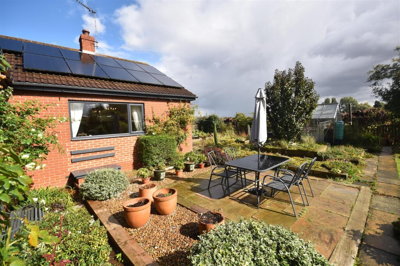
Browse 1 home for sale in Eastoft, North Lincolnshire from local estate agents.
The larger property sector typically features multiple bathrooms, substantial reception space, and private gardens or off-street parking. Four bedroom houses in Eastoft span detached, semi-detached, and occasionally terraced configurations, with styles ranging from period properties to modern executive homes.
£595k
1
0
14
Source: home.co.uk
Showing 1 results for 4 Bedroom Houses for sale in Eastoft, North Lincolnshire. The median asking price is £595,000.
Source: home.co.uk
Detached
1 listings
Avg £595,000
Source: home.co.uk
Source: home.co.uk
In Eastoft, the priciest homes are detached houses, with an average value of £258,000, which fits the village’s rural make-up. Census data shows these larger family properties account for around 49.3% of the local housing stock, so they are the main type of home here. Semi-detached houses, averaging £165,000, tend to suit families who want something easier to manage without giving up village living. Terraced homes come in at about £140,000, giving buyers a more affordable way into this sought-after part of North Lincolnshire.
Across the last 12 months, prices in the main property categories have edged up by 1.6%, pointing to steady, sustainable movement rather than a sudden spike. We see that as a sign of ongoing confidence in Eastoft, helped by the setting, the strong sense of community, and practical links to employment centres. Stock is usually thin on the ground, so genuine opportunities do not come up often. No active new-build developments were identified within the DN17 postcode area specifically serving Eastoft, which means buyers are mainly choosing from an existing stock of predominantly older homes.
Homes in Eastoft come from several building periods. Along the village lanes you will find pre-1919 farmhouses and cottages, while other parts of the settlement include post-war housing from the mid-20th century expansion of village communities. Traditional brick construction is common, often the red brick associated with North Lincolnshire, and roofs are typically timber-framed and finished in slate or clay tiles. We always suggest checking how the age and materials of a property may affect upkeep, especially where older houses may need more maintenance or upgrades to systems that no longer meet current standards.

Only around 456 residents live in Eastoft, spread across 189 households, and that helps give the village its close-knit feel. The historic Church of St Bartholomew, a Grade II listed building, sits at the centre of that identity and remains a focal point for events and gatherings. Farming still matters locally because of the predominantly agricultural economy, but plenty of residents travel out each day to larger towns such as Scunthorpe, Goole, and Doncaster for work in manufacturing, logistics, and service industries.
All around Eastoft, the Humberhead Levels stretch out in flat, fertile farmland, broken up by drainage channels and dykes that have been managed for centuries to keep agriculture going. That low-lying landscape gives the area much of its character, wide skies, long views, and a scene that shifts sharply with the seasons. Birdwatchers and naturalists are drawn here for the wetland habitats along the River Trent corridor, and the wider Humber Estuary region is also within easy reach for a day out.
There is not a huge range of amenities within Eastoft itself, which is what you would expect from a village of this size. For broader shopping, healthcare, and leisure facilities, most people head to Scunthorpe or Goole, both a short drive away. The village hall plays a big part in local life and hosts community activities through the year, including agricultural shows, quiz nights, and seasonal events. For day-to-day essentials, Crowle is the nearest practical stop for shops and services, while Epworth offers more choice for residents in this rural part of North Lincolnshire.

For families moving into Eastoft, schooling usually means looking slightly beyond the village itself. Primary provision is available in nearby villages and market towns, and many of these schools also act as community hubs for rural households. The closest primary schools are in Crowle and Westwoodside, serving communities across the Isle of Axholme, while Epworth and Haxey give families extra options, including faith-based and community education.
At secondary level, families generally look towards Scunthorpe and the wider North Lincolnshire area. Some schools there have built strong reputations for academic results and extracurricular opportunities. The RMS (Rising Sun) school in Scunthorpe serves pupils from the local area, and other secondary schools in the town provide a choice of GCSE and A-level courses. Selective Academy schools elsewhere in the region also draw pupils from across North Lincolnshire, although places are awarded through academic selection.
Because Eastoft is a small village, nearby primary schools can have limited capacity, so it makes sense to check catchment areas and admissions arrangements early, well before committing to a purchase. Older children have access to sixth form provision and further education colleges in Scunthorpe, where there is a broad mix of A-level and vocational routes. North Lindsey College, at its Scunthorpe campus, offers vocational training in subjects including construction, engineering, and health and social care.

One of Eastoft’s practical strengths is its position within North Lincolnshire. From here, drivers can reach major routes including the M18 and A1 trunk roads, linking the area with Sheffield, Leeds, and the wider motorway network. That appeals to commuters working in South Yorkshire or along the Humber ports corridor who would rather come home to a quieter rural setting. Journeys by car to Doncaster, Scunthorpe, and Hull are all realistic, and most trips usually fall within 30 to 60 minutes depending on traffic and destination.
Nearby Crowle gives the area a useful road link via the A161, which connects to the M18 at junction 2 for commuters heading towards Doncaster and Sheffield. Drivers also have the A18 and A15 as alternatives for Scunthorpe and the rest of Lincolnshire. Anyone travelling to Hull will usually go by the A63, passing through the Yorkshire Wolds before dropping into the city, with the trip taking about 50 minutes in normal traffic.
Public transport is fairly limited here, which is typical for a rural village. The Stagecoach X1 links parts of the Isle of Axholme with Scunthorpe and Doncaster, although services are less frequent outside peak times. For rail travel, most people use stations at Goole or Doncaster, where connections open up the East Coast Main Line to London, Edinburgh, and other major cities. Doncaster Station has direct trains to London King's Cross in around 90 minutes, so occasional trips to the capital are very manageable. In practice, many Eastoft residents depend on private cars for everyday commuting, though within the village itself short trips on foot or by bike are perfectly workable, especially for people working locally or from home.

We always suggest spending time in Eastoft at different points in the day and on different days of the week before making a decision. That gives you a better feel for the community, the level of traffic, and how the local amenities actually work in practice. If you have children, visit nearby schools, and if you can, chat to residents as well. The noticeboards at the village hall are often useful, with details about local events and issues that tell you far more about day-to-day life than a listing ever will.
Before you start viewing seriously, we recommend getting a mortgage agreement in principle from your lender. It puts you in a stronger position when you make an offer and shows sellers that your finances are realistic. As most Eastoft properties sit below the £250,000 stamp duty threshold, many buyers can focus their full budget on the purchase itself rather than setting aside money for SDLT.
Once you know what you are looking for, arrange viewings through local estate agents and keep a clear note of what you see at each property. Ask about the age of the house, how long previous owners stayed, and any recent renovation or maintenance work. In Eastoft, where many homes are older, we would also ask directly about the condition of the roof, any past damp or flooding, and the last time key systems such as wiring and plumbing were updated.
Because many Eastoft properties are older and the local geology can bring its own issues, we strongly advise booking a RICS Level 2 Survey before you go further. It can pick up structural defects, damp, and other problems that a standard viewing may miss. Our surveyors regularly inspect homes across North Lincolnshire and know the building methods and recurring faults found here, including shrink-swell clay movement affecting foundations and drainage issues associated with low-lying ground.
After an offer is accepted, the next step is to instruct a solicitor to deal with the legal side of the purchase. They will carry out searches, check the contract papers, and liaise with the seller’s side through to completion. In Eastoft, we would expect them to review flood risk assessments and environmental searches carefully, particularly for properties on the Humberhead Levels.
Your solicitor will then arrange for contracts to be signed and for the deposit to be paid. On completion day, the balance is transferred and the keys to your new Eastoft home are released. We would always line up buildings insurance well before that date, especially in an area with flood risk where specialist cover may sometimes be needed.
Anyone thinking of buying in Eastoft should look closely at a few location-specific issues, and flood risk is high on that list. Its position on the Humberhead Levels means homes near watercourses or in other low-lying spots may be exposed to fluvial flooding during heavy rainfall or tidal surges affecting the Humber Estuary. We recommend checking both the property’s own history and the wider flood data before you commit, then building any insurance implications into your budget from the outset. The Environment Agency has detailed flood maps showing which parts of the village and surrounding farmland sit within flood zones.
The geology under Eastoft is another point worth examining. The village stands on superficial alluvium deposits made up of clay, silt, sand, and gravel, with solid mudstone and sandstone bedrock beneath. Because these alluvial deposits are clay-rich, the ground has a moderate to high shrink-swell potential, which can affect foundations during spells of very wet and very dry weather when moisture levels shift sharply. Houses with trees or substantial vegetation close by can be more vulnerable, as roots may draw moisture from the clay soil during dry periods and contribute to movement.
Traditional construction dominates in Eastoft, with most homes built in brick, often red brick, and topped with timber-framed pitched roofs finished in slate or clay tiles. Some of the older houses have solid walls rather than the cavity walls more commonly seen from the early 20th century onwards, and that matters for both heat retention and insulation upgrades. A large share of the village housing stock predates the 1980s, so wiring and plumbing may no longer be up to current expectations. Signs of ageing electrics can include round pin sockets, fabric-covered cables, and fuse boxes mounted on wooden backing boards.
Eastoft’s historic character shows up in its listed buildings, among them the Church of St Bartholomew and a number of older farmhouses and cottages. If a property is Grade II listed, alterations, extensions, and some repairs may need Listed Building Consent from North Lincolnshire Council before work can start. We always advise buyers to understand those restrictions early if they are considering a listed home, and to budget for the extra approvals and cost that can come with them. Insurance premiums can also be higher on listed properties, and certain jobs may need specialist contractors to meet heritage requirements.
During viewings, keep a close eye out for damp, as it is a regular issue in a low-lying part of the Humberhead Levels. Staining, peeling wallpaper, and musty smells can all point to penetrating damp or condensation. Outside, check that the ground falls away from the walls so rainwater is directed clear of the structure, and look over the roof for slipped or missing tiles, sagging ridge lines, and failing mortar pointing. Where a property has a larger garden, we would also inspect how close any trees are to the house because roots can affect foundations in shrink-swell clay conditions.

Recent home.co.uk listings data puts the average house price in Eastoft at £206,783. Broken down by type, detached homes average about £258,000, semi-detached properties about £165,000, and terraced houses around £140,000. Over the last 12 months, prices across the main categories have risen by 1.6%, which suggests a steady local market rather than erratic price movement. There are no active new-build developments identified in the immediate area, so buyers are choosing from existing stock, largely made up of established homes from period farmhouses through to mid-20th century family properties.
Eastoft comes under North Lincolnshire Council for council tax purposes. Bands run from Band A to Band H and are based on property value. In practice, many homes in the village are likely to sit within Bands A to C because of their size and rural setting, though the exact band for any property should be checked either with the local authority or on the listing details. You can also confirm the council tax band for a specific address through the Valuation Office Agency website.
Primary school provision for Eastoft is mainly found in surrounding villages such as Crowle, Westwoodside, and Epworth, and North Lincolnshire Council’s school admissions team can provide the detailed catchment information. For secondary education, families often travel into Scunthorpe, where schools including The Academy at Lynham and Outwood Academy Foxhills offer established academic programmes. Some households make that journey each day to reach preferred schools or specialist subjects. Faith-based primary options include St Mary's Primary Academy in Crowle and St Fisher Catholic Primary in Wharmby See.
As a small rural village, Eastoft has limited public transport. Bus routes, including the Stagecoach X1, connect the village with Scunthorpe and Doncaster, but outside peak periods the service is modest, typically every one to two hours on weekdays. Rail users usually head for Goole or Doncaster, where there is access to regional and national services, including direct trains from Doncaster to London, Leeds, Edinburgh, and other major destinations. Most residents therefore rely on private cars for commuting and everyday travel, and in reality car ownership is important if you want full flexibility in village life.
From an investment point of view, Eastoft has a few clear attractions. Purchase prices remain relatively affordable compared with larger towns, annual growth has been running at 1.6%, and there is rental demand from commuters wanting a rural home within reach of employment centres across South Yorkshire and the Humber region. The village’s small population and limited stock also suggest supply is unlikely to run ahead of demand, which may help support values over time. That said, we would still price in flood risk carefully, including the possibility of specialist insurance costs, before assessing likely returns.
In England, stamp duty starts at 0% on the first £250,000 of a purchase price, then moves to 5% on the portion from £250,001 to £925,000, 10% up to £1.5 million, and 12% above that. First-time buyers get relief on purchases up to £625,000, with 0% on the first £425,000 and 5% on the balance above that point. Since the average Eastoft property is about £206,783, most purchases here fall below the threshold for paying any stamp duty at all, which can make the village especially appealing to first-time buyers trying to stretch their budget without extra SDLT.
Flood risk is one of the main issues buyers need to examine in Eastoft. The village sits in a low-lying part of the Humberhead Levels, close to the River Trent and its network of drainage channels, so checking a property’s flood history and arranging suitable insurance well before completion is important, particularly where insurers may ask about resilience measures. The clay-rich ground can also raise the risk of subsidence or heave, especially where trees are close to the house or foundations are inadequate, so a thorough survey should review both the foundation condition and any evidence of earlier movement. Many homes were built before modern regulations, which means electrics and plumbing may need updating, and damp can leave timber elements vulnerable to rot or woodworm. For all of those reasons, we see a detailed survey as particularly worthwhile before you complete on a purchase here.
There are several listed buildings in Eastoft, including the Grade II listed Church of St Bartholomew and a scattering of historic farmhouses and cottages across the village. These properties are protected under the Planning Act, and any work affecting their character or structure needs Listed Building Consent from North Lincolnshire Council. That protection helps preserve the historic feel of the village, but buyers should also allow for the fact that repairs and renovations can cost more, as specialist materials and contractors may be needed to meet heritage standards.
Finance your Eastoft home purchase with competitive mortgage rates
From 4.5% APR
Expert legal services to handle your property purchase
From £499
Recommended survey for properties in Eastoft given local geology and property age
From £450
Energy performance certificate for your new home
From £85
For most Eastoft buyers, stamp duty land tax is not likely to be a major cost. With the average house price at £206,783, most purchases sit wholly inside the 0% band, so there is no SDLT to pay on the acquisition. Compared with buying in pricier parts of the country, that can free up a meaningful amount of money and is one reason the village can suit first-time buyers or anyone working with a more modest budget. We often find that buyers would rather put that saving towards renovation works or furnishing the new home.
First-time buyers in Eastoft can still use SDLT relief on purchases up to £625,000, paying 0% on the first £425,000 and 5% on the portion from £425,001 to £625,000. The relief applies only to people who have never owned residential property anywhere in the world, and on higher-value homes it can make a real difference to the final bill. Once a property is priced above £625,000, though, that relief disappears entirely and the standard SDLT rates apply instead. If the price is above £425,000, we would always calculate carefully whether the 5% payable on the amount over that threshold fits comfortably within the wider budget.
Beyond stamp duty, there are several other costs to budget for. Solicitor fees for conveyancing are typically around £500 to £1,500, while a RICS Level 2 Survey often costs about £450 to £700, and removal charges vary depending on distance and the volume of belongings. Buildings insurance should be arranged before completion, and contents cover can usually be set up at the same time. In Eastoft, where flood risk is a real factor, specialist insurance may be needed, so we recommend getting quotes early in the buying process. Mortgage arrangement fees, valuation fees, and title registration costs should also be included in your figures so completion day does not bring any surprises. Your conveyancing solicitor can break the full costs down in detail for your particular transaction.

Properties for Sale In London

Properties for Sale In Plymouth

Properties for Sale In Liverpool

Properties for Sale In Glasgow

Properties for Sale In Sheffield

Properties for Sale In Edinburgh

Properties for Sale In Coventry

Properties for Sale In Bradford

Properties for Sale In Manchester

Properties for Sale In Birmingham

Properties for Sale In Bristol

Properties for Sale In Oxford

Properties for Sale In Leicester

Properties for Sale In Newcastle

Properties for Sale In Leeds

Properties for Sale In Southampton

Properties for Sale In Cardiff

Properties for Sale In Nottingham

Properties for Sale In Norwich

Properties for Sale In Brighton

Properties for Sale In Derby

Properties for Sale In Portsmouth

Properties for Sale In Northampton

Properties for Sale In Milton Keynes

Properties for Sale In Bournemouth

Properties for Sale In Bolton

Properties for Sale In Swansea

Properties for Sale In Swindon

Properties for Sale In Peterborough

Properties for Sale In Wolverhampton

Enter your details to see if this property is within your budget.
Loans, cards, car finance
Estimated property budget
Borrowing + deposit
You could borrow between
Typical borrowing
Monthly repayment
Est. at 4.5%
Loan-to-value
This is an estimate only. Your actual budget may vary depending on interest rates, credit history, and personal circumstances. For an accurate affordability assessment, speak to one of our free mortgage advisors.
This calculator provides estimates for illustrative purposes only and does not constitute financial advice. Your home may be repossessed if you do not keep up repayments on your mortgage. Estimates based on 4.5% interest rate, repayment mortgage. Actual rates depend on your circumstances.
Homemove is a trading name of HM Haus Group Ltd (Company No. 13873779, registered in England & Wales). Homemove Mortgages Ltd (Company No. 15947693) is an Appointed Representative of TMG Direct Limited, trading as TMG Mortgage Network, which is authorised and regulated by the Financial Conduct Authority (FRN 786245). Homemove Mortgages Ltd is entered on the FCA Register as an Appointed Representative (FRN 1022429). You can check registrations at NewRegister or by calling 0800 111 6768.

We use cookies to show you personalised content and improve your experience of our website. Find out more in our Privacy policy and Cookie policy.