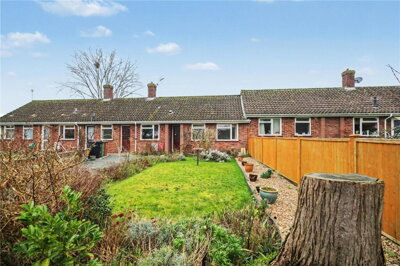
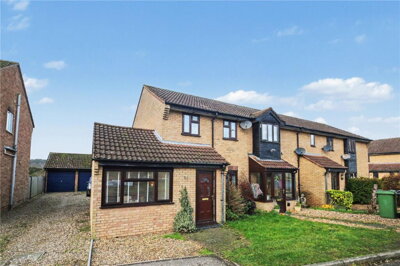
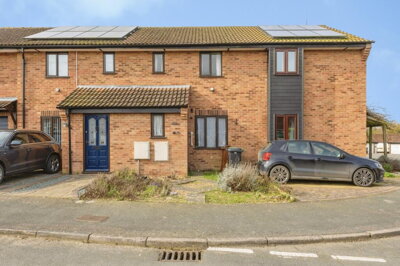
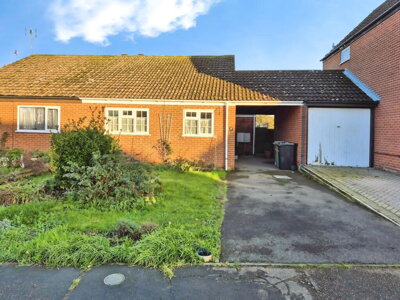
Browse 4 homes for sale in East Carleton from local estate agents.
The 2 bed house market features detached, semi-detached, and terraced properties with two separate bedrooms plus living spaces. Properties in East Carleton range from Victorian and Edwardian period homes to modern new builds, with pricing varying across different neighbourhoods.
The local market is built around individual houses rather than large estates. homedata.co.uk records show detached properties averaged £731,500 and semis £349,000, while there were no terraced or flat sales recorded in 2025. That pattern fits a parish where the buyer pool usually wants space, parking and gardens. We have not found active named new-build schemes in East Carleton, so most searchers will be comparing established homes instead.
Prices have moved around over the last year, with sold values up 15% on the previous year but still 3% below the 2022 peak of £558,000 according to homedata.co.uk. Limited transaction numbers can make the market feel jumpy, because one larger detached sale can lift the average quite quickly. For that reason, buyers should look at recent sold examples by property type rather than relying on the overall average alone. A mortgage agreement in principle also helps you move fast when the right village home appears.

East Carleton is a small parish with a population of 341, so the atmosphere is quietly rural rather than suburban. That scale matters because it shapes everything from the pace of daily life to how often homes come up for sale. Older buildings bring a lot of the charm, including the Grade II listed Walnut Tree Cottage on Rectory Road and St Mary's Church, which is also listed. Traditional Norfolk materials such as flint, timber, red brick, chalk and carstone give the area a distinctly local look.
Buyers who like character properties will notice that East Carleton mixes centuries-old fabric with some later homes, including 1970s-built properties and newer houses dating to 2016. That variety gives first-time movers a choice between a lower-maintenance modern house and a period home with more personality. The village setting also means many people value garden space, privacy and a calmer road environment more than sheer postcode convenience. If you want a home that feels tucked away but still part of South Norfolk, this parish is worth a closer look.
No school-specific performance data was included in the research pack for East Carleton, so the right choice depends on the exact address and the catchment attached to it. Families should check current admissions maps, Ofsted reports and transport options before they offer. In a small parish, even nearby homes can fall into different catchments, especially where school places are tight. Speak to the agent and the county admissions team early if schooling is a top priority.
Buyers with children should also think beyond the primary school years, because sixth form and further education choices may shape the weekly routine more than the postcode itself. The village position makes it sensible to compare school-run times, parking at the gate and whether after-school clubs are practical. If you are moving from a town, the quieter rural setting may mean a longer drive but a calmer home base. Our advice is to shortlist the home first, then verify the schooling picture against the exact address.

East Carleton is a village location, so most households will rely on a car for day-to-day travel. That makes driveway space, turning room and easy access to main roads especially valuable when you compare homes. Public transport can still matter, but service levels should be checked for the exact address because rural routes change more than city services do. Buyers who commute should also test journeys at peak times, not just on a quiet weekday morning.
Rail commuters usually look to larger centres such as Norwich for onward services, so the practical question is how easily you can reach them from the parish. Parking is part of the transport picture too, because a narrow lane or limited on-street space can affect everyday life just as much as a train timetable. Cyclists may find local lanes pleasant, though lighting and shoulder width need a close look before you commit to regular riding. If commuting is non-negotiable, build the travel test into your viewing day rather than leaving it until after an offer.
Secure a mortgage agreement in principle before you view, then set a budget that includes survey, legal fees and SDLT.
Decide whether you want a period cottage, a semi or a detached house, then check parking, garden size and access.
Return at a different time of day so you can judge traffic, noise and how the house feels in ordinary use.
A RICS Level 2 survey suits most conventional homes, while older or listed buildings may need a Level 3 inspection.
Ask them to review title, searches, restrictive covenants and any listed-building or boundary issues.
Once everyone is ready, exchange contracts, transfer funds and collect the keys on completion day.
Older East Carleton homes deserve a careful survey because listed cottages, traditional materials and mixed-age stock can hide issues that are not obvious on a first visit. Damp, roof condition, outdated electrics and signs of historic movement are the main things buyers should have checked. The research pack did not identify a specific parish flood problem, but a conveyancer should still run the usual searches. If you are looking at a character property, ask whether the walls are flint, timber-framed or later brick, because that affects repair costs and the survey level you choose.
Ground conditions in parts of south-east England can create shrink-swell movement where clay-rich soils are present, so structural comments from the surveyor are worth reading carefully. Leasehold is less likely in a village like this, but any flat or converted property should still be checked for service charges, ground rent and maintenance plans. Listed homes need special care as well, because work on windows, roof coverings or internal features may need consent. Buyers who want a low-maintenance purchase usually prefer a newer detached house, while buyers who love character often accept a little more upkeep.

homedata.co.uk records show an average sold price of £540,250 over the last year. Detached homes averaged £731,500 and semi-detached homes averaged £349,000, which shows how much the property type changes the price picture. The market is small, with 4 sales recorded in 2025, so one larger house can influence the average quite quickly. Prices were 15% higher than the previous year, although they were still 3% below the 2022 peak of £558,000.
Council tax bands vary from property to property in East Carleton and are set within South Norfolk Council's banding system. A period cottage, a 1970s house and a newer detached home can sit in different bands even if they are on the same lane. The listing or the seller's solicitor should confirm the exact band before you commit. If budget matters, include council tax in your affordability check alongside the mortgage and utilities.
No school-specific performance data was included in the research pack for East Carleton, so the best choice depends on the exact address and catchment. Families should check current admissions maps, Ofsted reports and transport options before they offer. In a small parish, even nearby homes can fall into different catchments, especially where school places are tight. Speak to the agent and the county admissions team early if schooling is a top priority.
Public transport is more of a planning exercise than a given in a village like East Carleton. Most buyers will want to test the car journey to Norwich or another main hub, then check local bus services for the exact road they are buying on. Parking at the property matters too because a rural commute is easier when you can leave and return without fuss. If you will rely on buses, look at weekday frequencies and the last return service before making an offer.
East Carleton can appeal to long-term investors who want a small, supply-constrained market with village character. homedata.co.uk shows only 4 sales in 2025, which suggests limited turnover and a market driven more by owner-occupiers than fast flips. That can support values over time, but it can also make resale slower if you need to exit quickly. Detached homes averaged £731,500, so investors should be realistic about holding costs and demand at the upper end.
On a standard main-home purchase of £540,250, stamp duty would usually be £14,512.50 under the 2024-25 thresholds. First-time buyers would pay £5,762.50 on the same price if the purchase qualifies for relief. The current bands are 0% up to £250,000, 5% from £250,000 to £925,000, 10% from £925,000 to £1.5 million and 12% above that. If you are buying a second home or an additional property, the bill is higher because the surcharge changes the total.
Recent sales suggest detached and semi-detached homes are the main housing types in East Carleton, with no terraced or flat sales recorded in 2025. That does not mean smaller homes never come up, but it does show how limited the stock can be in a parish of this size. Buyers who want period character can look for older cottages and listed buildings, while those who prefer easier maintenance may focus on later detached houses. The best approach is to decide on the style first, then move quickly when the right one appears.
Buying costs can matter as much as the headline asking price in East Carleton. On a £540,250 home, a standard buyer would usually pay £14,512.50 in stamp duty, while a first-time buyer would pay £5,762.50 if the purchase qualifies for relief. The current thresholds are 0% up to £250,000, 5% from £250,000 to £925,000, 10% from £925,000 to £1.5 million and 12% above that. First-time buyer relief applies at 0% up to £425,000 and 5% between £425,000 and £625,000, with no relief above £625,000.
You should also budget for solicitor fees, searches, survey costs, mortgage arrangement fees and, if relevant, removals. A mortgage agreement in principle helps here too because it shows sellers you are ready to proceed and gives you a clearer ceiling before you start offering. Buyers of older or listed East Carleton homes may want a more detailed survey, which can save money later by flagging repair issues early. Once you have the full cost picture, the village market becomes much easier to judge against your monthly budget.
Properties for Sale In London

Properties for Sale In Plymouth

Properties for Sale In Liverpool

Properties for Sale In Glasgow

Properties for Sale In Sheffield

Properties for Sale In Edinburgh

Properties for Sale In Coventry

Properties for Sale In Bradford

Properties for Sale In Manchester

Properties for Sale In Birmingham

Properties for Sale In Bristol

Properties for Sale In Oxford

Properties for Sale In Leicester

Properties for Sale In Newcastle

Properties for Sale In Leeds

Properties for Sale In Southampton

Properties for Sale In Cardiff

Properties for Sale In Nottingham

Properties for Sale In Norwich

Properties for Sale In Brighton

Properties for Sale In Derby

Properties for Sale In Portsmouth

Properties for Sale In Northampton

Properties for Sale In Milton Keynes

Properties for Sale In Bournemouth

Properties for Sale In Bolton

Properties for Sale In Swansea

Properties for Sale In Swindon

Properties for Sale In Peterborough

Properties for Sale In Wolverhampton

Enter your details to see if this property is within your budget.
Loans, cards, car finance
Estimated property budget
Borrowing + deposit
You could borrow between
Typical borrowing
Monthly repayment
Est. at 4.5%
Loan-to-value
This is an estimate only. Your actual budget may vary depending on interest rates, credit history, and personal circumstances. For an accurate affordability assessment, speak to one of our free mortgage advisors.
This calculator provides estimates for illustrative purposes only and does not constitute financial advice. Your home may be repossessed if you do not keep up repayments on your mortgage. Estimates based on 4.5% interest rate, repayment mortgage. Actual rates depend on your circumstances.
Homemove is a trading name of HM Haus Group Ltd (Company No. 13873779, registered in England & Wales). Homemove Mortgages Ltd (Company No. 15947693) is an Appointed Representative of TMG Direct Limited, trading as TMG Mortgage Network, which is authorised and regulated by the Financial Conduct Authority (FRN 786245). Homemove Mortgages Ltd is entered on the FCA Register as an Appointed Representative (FRN 1022429). You can check registrations at NewRegister or by calling 0800 111 6768.

We use cookies to show you personalised content and improve your experience of our website. Find out more in our Privacy policy and Cookie policy.