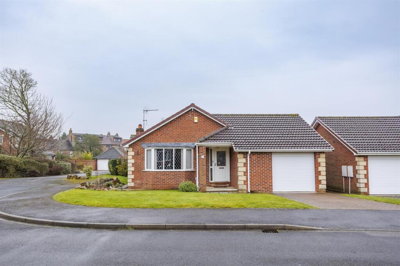
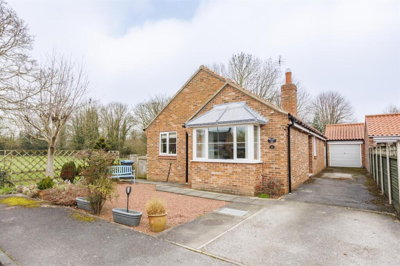
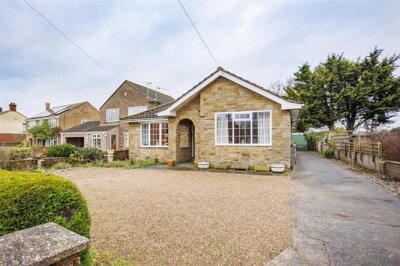
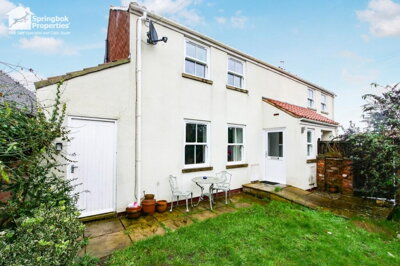
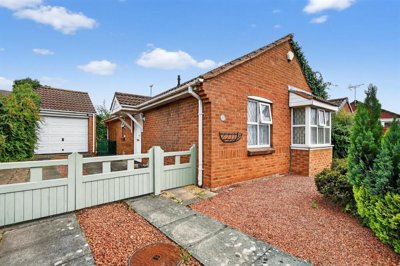
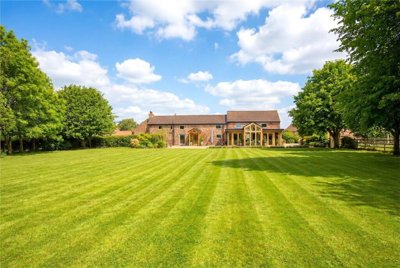
Browse 95 homes for sale in Easingwold, North Yorkshire from local estate agents.
The Easingwold property market offers detached, semi-detached, and terraced houses spanning various price ranges and neighbourhoods. Each listing includes detailed property information, photographs, and direct contact with the marketing agent.
£458k
32
4
95
Source: home.co.uk
Showing 32 results for Houses for sale in Easingwold, North Yorkshire. 4 new listings added this week. The median asking price is £457,500.
Source: home.co.uk
Detached
17 listings
Avg £720,000
Semi-Detached
11 listings
Avg £377,273
Terraced
4 listings
Avg £313,750
Source: home.co.uk
Source: home.co.uk
£352,567
Average Property Price
+4.2%
12-Month Price Change
59
Properties Sold (12 months)
51
Listed Buildings
Easingwold's property market has held up well, with house prices rising by approximately 4.2% over the last 12 months according to home.co.uk data, and some sources putting historic sold-price growth at up to 5%. The average property price sits at £387,046, with homedata.co.uk reporting £387,046 and home.co.uk showing £387,046 for recent transactions. There were 59 residential property sales recorded in Easingwold over the past year, so activity has been quieter than in the previous year when transaction volumes were higher. Even so, demand remains steady, helped by strong transport links and the lasting appeal of rural living within commuting distance of York.
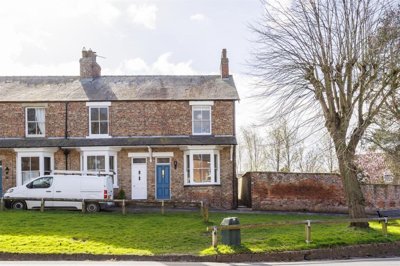
Property types in Easingwold cover a wide spread, and detached homes sit at the top end of the market at around £649,615, reflecting the space and privacy they offer. Semi-detached properties average approximately £298,274, which is why they remain popular with families looking for more affordable accommodation without giving up proximity to good schools. Terraced homes in the town centre, many dating from the 18th and 19th centuries, average £323,571 and bring character as well as convenience. Flats and converted commercial properties also have a notable presence, ranking 4th in accommodation types within Hambleton according to AreaInsights data.
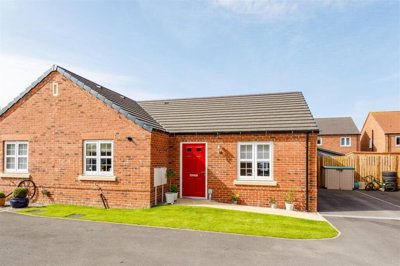
Two new-build schemes are currently bringing fresh stock to the market. Fountains Walk by Taylor Wimpey offers 2 to 5-bedroom homes, with prices from £221,509 for a 2-bedroom semi-detached up to £355,300 for a 3-bedroom detached property. Hambleton Chase by Tilia Homes on Stillington Road includes 2, 3 and 4-bedroom homes, together with bungalows that many buyers will find appealing. For something with more character, Hollins Grove Farm has six dwellings created from converted agricultural barns after planning permission was granted in May 2020. The appeal is obvious, modern construction and warranties, though buyers still need to look closely at service charges and any estate management fees.
The proposed Alne Road development by Karbon Homes and Oaktree Living will deliver 100% affordable housing, with 1-bed, 2-bed, 3-bed and 4-bed properties and priority for people connected to Easingwold Civil Parish. Over on York Road, Jomast Developments has outline planning permission for 45 senior living apartments, 51 senior living bungalows, a 60-bed care home, and 70 dwellings, with reserved matters for housing expected in 2026. Together, these schemes point to further growth in the area, and that kind of change can feed through into values in nearby neighbourhoods.
Easingwold is both a civil parish and a market town, and its population has risen sharply over recent decades, moving from 4,233 in the 2001 Census to an estimated 5,899 by 2024. That is a 15% increase over the ten years to 2021 alone. The Easingwold Ward covers a slightly larger area and has a population of 6,791 according to AreaInsights data. The numbers reflect a town that is increasingly attractive to families and retirees alike, thanks to its community feel, local amenities, and historic architecture. Households have grown by 18% over the decade to 2021, while the average household size of 2.1 people points to a mix of couples, individuals and family homes.
Retail is the backbone of the local economy, serving residents and the surrounding villages that look to Easingwold as a practical local centre. Independent shops, pubs and cafes all have a place here, and the well-known Easingwold Market still pulls in visitors from across the region. Another important employer is the Cabinet Office's Emergency Planning College at The Hawolkills, which brings professionals into the area and supports the housing market. There is also a strong building tradition nearby, with York Handmade Brick Company supplying the pale red-brown and pale brown bricks that appear in so many historic buildings. That craftsmanship gives the town its unmistakable Yorkshire feel.
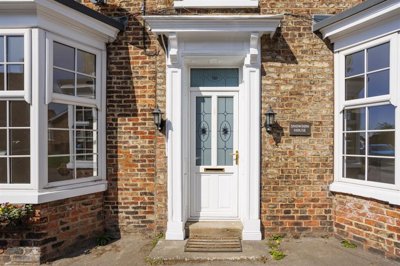
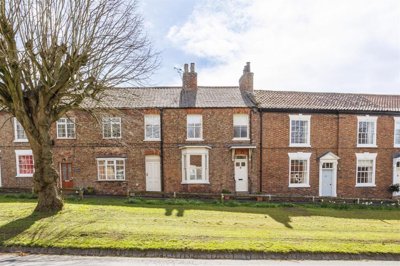
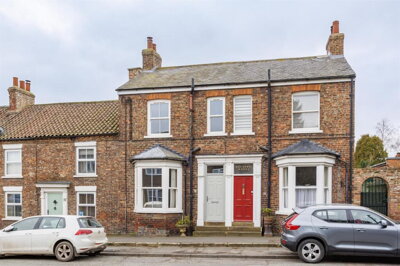
Walk around the centre and the materials are hard to miss, pale red-brown brick, pale brown brick, stone, and rendered facades, with Welsh slate or pantile roofs on top. The market place, Long Street, Church Hill, and Uppleby stand out for their concentration of historic buildings, and together they give the centre a very clear identity. There are 51 listed buildings in Easingwold, including one Grade II* listed building, with the rest at Grade II. Houses, cottages, churches, shops, public houses, a market cross, even a former workhouse and a telephone kiosk, all appear on the list.

Families are well served on the education front, with several primary schools supporting the town and nearby villages. Smaller class sizes are one of the practical advantages, especially when compared with larger urban areas, and that stability has gone hand in hand with population growth. Parents often mention education as a major reason for moving here, alongside the safer environment for children. The Easingwold Ward data, with its average household size of 2.1 people, suggests a mixed community of families, couples and single residents, all drawing on the local school network.
For secondary education, families often look to schools in nearby towns, and the reliable bus services make those journeys workable. York is also close enough to open up sixth form centres and colleges with a wide range of A-level programmes, including grammar schools for those who want selective education. Competition for grammar school places is fierce, and the entrance examination has to be passed, so it pays to look at options early in the property search. The Emergency Planning College at The Hawkhills also underlines the area's role in adult training and professional development.
Before buying in Easingwold, parents should check current school catchments and admission policies directly with North Yorkshire Council, because these can change and may have a real effect on values in specific streets or developments. It also makes sense to read recent Ofsted reports for schools in the area you are targeting, since school performance can shape how desirable a neighbourhood feels. Homes in strong catchments often hold their value better and can be easier to sell later, so this deserves as much attention as the property itself.
Road access is one of Easingwold's strongest points. The A19 runs close to the town and links straight south to York and north towards Teesside. For commuters, that means a straightforward drive, with York city centre usually reachable in approximately 25-30 minutes outside peak traffic. The A19 also connects with the A64, opening routes towards Leeds and the wider motorway network, which gives residents plenty of flexibility. Those heading to Teesside get access to jobs without taking on the housing costs that come with living closer to the bigger cities.
Bus services link Easingwold with York and the surrounding villages, which matters for anyone without a car or anyone choosing to travel more sustainably. Parking within the town itself is generally adequate too, and that is especially useful in the historic centre where space can be tight. For rail, York station is the nearest main hub, with direct trains to London, Edinburgh, Leeds, Newcastle, and many other destinations on the national network. London Kings Cross is reachable from York in under two hours, which keeps Easingwold in play for regular capital travel.
That combination of road and rail links has helped drive population growth, because residents can enjoy rural living without giving up career prospects. Paul Brown, a leading Yorkshire developer who lives in Easingwold, has spoken of a golden period for the housing market over the next two years, pointing to sustained downward trends in interest rates and planning reforms. It is an upbeat view, but it matches the practical reality here. The transport links make the town appealing to commuters who want more space and better value than York can usually offer.
Look across the town and the contrasts are clear, from the historic centre with its listed buildings to newer schemes such as Fountains Walk and Hambleton Chase. If commuting is part of the plan, the A19 and school access both deserve a close look. Recent sold prices on home.co.uk and homedata.co.uk are useful for understanding local values. Easingwold offers everything from period homes that go back to the 12th century to modern new-builds, so it pays to understand what each area and property type actually brings.
Before booking viewings, get a mortgage agreement in principle from a lender. It sets your budget and shows sellers that you are serious. With average prices around £387,046 in Easingwold, most buyers will need a mortgage, and having finance lined up strengthens your position in what can still be a competitive market. The range is wide too, from terraced cottages around £323,571 to detached family homes at £649,615, so knowing your borrowing capacity early helps focus the search.
A good viewing list should cover a range of styles and price points. Easingwold has characterful terraced cottages, modern detached family homes, and plenty in between. We would always spend time on condition, especially in older buildings where maintenance needs can be hidden at first glance, and note any features that may call for specialist surveys. With so many listed buildings and properties in the Conservation Area, buyers also need to think about the extra responsibilities that come with heritage homes, including restrictions on alterations and the need for Listed Building Consent.
With 51 listed buildings in Easingwold, and plenty of older homes besides, a Level 2 Survey is strongly recommended before purchase. This home buyer report can pick up damp, roof problems, structural movement, and outdated electrics that may not show during a viewing. Many of these properties use traditional construction, including solid walls and natural materials such as lime mortar, so a qualified surveyor can check whether those features have been maintained properly. Survey costs usually fall between £380-£629, depending on property value and size.
A conveyancing solicitor will deal with the legal side of the move. They will carry out searches with North Yorkshire Council, check planning restrictions and listed building consents, and manage the transfer of funds. Because Easingwold has historic properties and Conservation Area status, those searches should also look for any Article 4 directions or local heritage restrictions. New-builds bring their own points to review, including service charges, leasehold terms, and any Section 106 agreements.
Once the searches are clear and the mortgage offer is in place, the solicitor will move to exchange contracts and agree a completion date. On completion day, the remaining funds are transferred and the keys to your new Easingwold home are released. With the town growing and schemes such as Fountains Walk and Hambleton Chase adding to the stock, buying here means joining a lively community with strong links to York and beyond.
Buying in Easingwold means keeping several local factors in mind, because they can affect both the purchase and the long-term value. Many homes sit within the Conservation Area or are listed, and that brings extra rules and responsibilities. Any alteration to a listed property, from extensions to window replacement or changes to the exterior, will need Listed Building Consent from North Yorkshire Council. Long Street, the parish church, Church Hill, Uppleby, and the market place all fall within the Conservation Area, so properties there deserve close scrutiny and a careful budget for any works.
Flood risk is another point buyers should check. Easingwold saw surface water flooding in July 2021, which affected several homes, and although the town is not coastal or at significant river flood risk, surface water can still build up in the wrong conditions. Clay soils are part of the local geology, and they can shrink and swell, putting stress on foundations over time. Trees close to a house can make that worse by drawing moisture from the ground, which raises the risk of subsidence in vulnerable properties. A thorough RICS Level 2 Survey will pick up signs of structural movement, subsidence, or drainage problems.
The building materials used around Easingwold tell their own story, with pale red-brown brick, pale brown brick and stone all common, and roofs finished in Welsh slate or pantile. Many older homes were built with solid walls before modern damp-proof courses became standard, which means rising damp and penetrating damp through ageing brickwork are real possibilities. Outdated electrics are also common in historic properties, and some still have original wiring that falls short of current safety standards. During viewings, roof condition, chimney stacks and flashings all deserve attention, as those are regular trouble spots in buildings of this age.
For buyers looking at new-builds, Hambleton Chase on Stillington Road and Fountains Walk offer modern construction with warranties, but the fine print still matters. Service charges, estate management fees, and the long-term commitments attached to new homes all need to be understood. The proposed Alne Road development will add affordable housing, while the York Road scheme, with its 70 dwellings, 45 senior living apartments, and care home, points to further growth that may influence surrounding values. Hollins Grove Farm sits somewhere between old and new, with barn conversions that combine character and modern amenities. Whatever the property type, an independent survey before purchase is still a sensible move.
Knowing the local construction methods helps buyers read what they are seeing. Easingwold's older buildings are mainly solid wall construction, the norm before cavity wall insulation became common after 1919. Those walls, often made from pale red-brown brick, stone, or a mix of both, behave differently from modern cavity walls and need breathable materials such as lime mortar rather than cement. If impervious products are used on solid wall homes, moisture can get trapped and lead to serious damage over time.
Roofs in Easingwold are usually finished with Welsh slate or traditional clay pantiles, while some older buildings, especially churches, have lead roofs. These materials can last for years if they are looked after, but repairs and replacement are rarely cheap. Missing or broken tiles, sagging rooflines, and tired ridge mortar are all issues that show up often in older homes and should be checked at viewings. Many period properties also have chimneys, so the stack, flashings and any leadwork need a close look too, as those are common sources of water ingress.
The York Handmade Brick Company, based near Easingwold, has supplied bricks for many restoration and renovation projects locally, and that has helped keep traditional building methods in use. Properties built with those local bricks and older techniques can last well, provided they are maintained properly. The risk comes when older buildings are altered using unsuitable modern materials, which can create long-term damage. A RICS Level 2 Survey will show whether traditional elements have been cared for correctly and highlight where remedial work with suitable materials may be needed.

According to home.co.uk listings data over the last year, the average house price in Easingwold is approximately £387,046, with homedata.co.uk reporting £387,046 and home.co.uk indicating £387,046. Prices have climbed by around 4-5% over the past 12 months. Detached homes command roughly £649,615, semi-detached properties sit around £298,274, and terraced homes average £323,571. There have been 59 residential sales in the past year, fewer than in previous years, but demand remains steady thanks to the town's position between York and Teesside and the continuing draw of rural living with good transport links.
For council tax, Easingwold properties fall under North Yorkshire Council. Bands vary with size and value, so smaller terraced cottages often sit in bands A-D, while larger detached family homes may fall into bands E or F. Specific bands can be checked on the North Yorkshire Council website or on property listing sites where council tax details are shown. When you are budgeting, remember that council tax is paid annually and sits alongside mortgage repayments as an ongoing cost. Buyers moving in, including first-time buyers, should also allow for set-up costs such as council tax registration.
Several primary schools serve Easingwold families, and the town is also within a reasonable distance of secondary schools in nearby areas. The best fit will depend on your children's ages, learning style, and individual needs, so visiting schools and reading recent Ofsted reports is time well spent. Parents should confirm catchment areas with North Yorkshire Council, since these can shape which schools are available and may also influence values in certain streets or developments. For secondary education, grammar school places in York are available to those who meet the selection criteria, with entry depending on the entrance examination.
Bus services connect Easingwold with York and the surrounding villages, giving residents without cars a practical public transport option. York station is the nearest rail hub, with strong national links including direct trains to London Kings Cross in under two hours and regular services to Leeds, Newcastle, Edinburgh, and Birmingham. By road, the A19 gets you into York in approximately 25-30 minutes, and carries traffic north towards Teesside as well. That mix of road and rail access makes the town workable for commuters who want access to major employment centres while keeping the benefits of rural living.
Population growth in Easingwold has been steady, with a 15% rise over the decade to 2021 and household numbers up by 18%, both signs of sustained housing demand. The town's closeness to York, the A19, and major employers such as the Emergency Planning College at The Hawkhills all support the market. Prices have risen by approximately 4-5% over the past year, which suggests healthy capital growth. New schemes like Fountains Walk and Hambleton Chase are adding modern housing, while proposed developments such as the York Road scheme point to further growth. Buyers still need to think about their own plans and the wider market before committing.
Stamp Duty Land Tax, or SDLT, starts at 0% on the first £250,000 for standard buyers, then moves to 5% on the portion from £250,001 to £925,000. At Easingwold's average price of £387,046, a first-time buyer pays no SDLT on the first £425,000, so most purchases at this level attract zero stamp duty. Above that, 10% applies from £925,000 to £1.5 million, and 12% applies above £1.5 million. Second home buyers and buy-to-let investors pay a 3% supplement on all bands. Always check the current thresholds with HMRC or your solicitor, as policy can change.
Easingwold's blend of historic and newer housing means a familiar set of defects shows up time and again. Dampness is common, whether it is penetrating damp through ageing brickwork, rising damp in solid-walled homes, or condensation caused by poor ventilation. Roof faults such as missing tiles, tired ridge mortar, and failing chimney flashings are also regular. Structural movement can arise from subsidence or ground settlement, particularly because the local clay soils are prone to shrink-swell. Timber issues, including wet and dry rot and woodworm, tend to appear where ventilation is poor. Many older homes still have original wiring or lead pipework that no longer meets modern standards, so upgrades or full rewiring may be needed. A thorough RICS Level 2 Survey will flag these problems before you commit.
Buying in Easingwold means looking beyond the headline price. SDLT is part of the picture, and for most buyers at the average price of £387,046, first-time buyer relief means nothing is payable on the first £425,000. That removes stamp duty costs for most first-time buyers in the town. Standard buyers pay 0% on the first £250,000, so on a £387,046 purchase the tax applies only to £137,046 at 5%, which comes to £6,852.30. Your solicitor will work out the figure and send the SDLT to HMRC as part of the conveyancing process.
There are other buying costs too, and they can add up quickly. Solicitor conveyancing fees usually start from £499 for standard transactions, though leasehold properties, new builds with complex terms, or cases needing extra investigations can cost more. Because Easingwold has so many listed buildings and Conservation Area properties, searches may need to look specifically at heritage restrictions, Article 4 directions, and local planning policies that affect the home. A RICS Level 2 Survey is typically £380-£629 depending on property value and size, while a Level 3 Survey for historic or listed buildings may cost from £600. That sort of spending matters here, given the age of many homes and the chance of damp, roof deterioration, or structural movement in older stock.
You should also budget for mortgage arrangement fees, broker fees if you use a mortgage broker, and valuation fees charged by your lender, as well as removals and any immediate repair or renovation work after you move in. For new-build homes at Fountains Walk or Hambleton Chase, service charges, estate management fees, and the developer's warranty terms also need attention. Easingwold offers everything from period cottages that may need modernisation to modern family homes in very good condition, so setting the budget around the specific property type is the best way to avoid surprises after completion.
Properties for Sale In London

Properties for Sale In Plymouth

Properties for Sale In Liverpool

Properties for Sale In Glasgow

Properties for Sale In Sheffield

Properties for Sale In Edinburgh

Properties for Sale In Coventry

Properties for Sale In Bradford

Properties for Sale In Manchester

Properties for Sale In Birmingham

Properties for Sale In Bristol

Properties for Sale In Oxford

Properties for Sale In Leicester

Properties for Sale In Newcastle

Properties for Sale In Leeds

Properties for Sale In Southampton

Properties for Sale In Cardiff

Properties for Sale In Nottingham

Properties for Sale In Norwich

Properties for Sale In Brighton

Properties for Sale In Derby

Properties for Sale In Portsmouth

Properties for Sale In Northampton

Properties for Sale In Milton Keynes

Properties for Sale In Bournemouth

Properties for Sale In Bolton

Properties for Sale In Swansea

Properties for Sale In Swindon

Properties for Sale In Peterborough

Properties for Sale In Wolverhampton

Enter your details to see if this property is within your budget.
Loans, cards, car finance
Estimated property budget
Borrowing + deposit
You could borrow between
Typical borrowing
Monthly repayment
Est. at 4.5%
Loan-to-value
This is an estimate only. Your actual budget may vary depending on interest rates, credit history, and personal circumstances. For an accurate affordability assessment, speak to one of our free mortgage advisors.
This calculator provides estimates for illustrative purposes only and does not constitute financial advice. Your home may be repossessed if you do not keep up repayments on your mortgage. Estimates based on 4.5% interest rate, repayment mortgage. Actual rates depend on your circumstances.
Homemove is a trading name of HM Haus Group Ltd (Company No. 13873779, registered in England & Wales). Homemove Mortgages Ltd (Company No. 15947693) is an Appointed Representative of TMG Direct Limited, trading as TMG Mortgage Network, which is authorised and regulated by the Financial Conduct Authority (FRN 786245). Homemove Mortgages Ltd is entered on the FCA Register as an Appointed Representative (FRN 1022429). You can check registrations at NewRegister or by calling 0800 111 6768.

We use cookies to show you personalised content and improve your experience of our website. Find out more in our Privacy policy and Cookie policy.