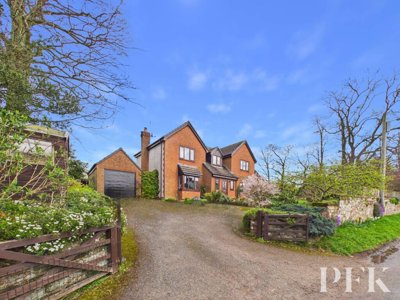
Browse 1 home for sale in Dufton, Westmorland and Furness from local estate agents.
The larger property sector typically features multiple bathrooms, substantial reception space, and private gardens or off-street parking. Four bedroom houses in Dufton span detached, semi-detached, and occasionally terraced configurations, with styles ranging from period properties to modern executive homes.
£625k
1
0
45
Source: home.co.uk
Showing 1 results for 4 Bedroom Houses for sale in Dufton, Westmorland and Furness. The median asking price is £625,000.
Source: home.co.uk
Detached
1 listings
Avg £625,000
Source: home.co.uk
Source: home.co.uk
Dufton’s property market has been surprisingly resilient in recent years, with prices moving up sharply even against a mixed national backdrop. In the CA16 6DB postcode area, values have climbed by 7% over the past year, 26.5% across five years, and 44.8% over the past decade. That kind of performance puts Dufton among Cumbria’s stronger rural markets, and it continues to draw buyers who see the appeal of established village life with a track record of long-term growth.
Terraced homes are the most frequently sold properties locally, making up around 40% of transactions, while detached and semi-detached houses also have a solid presence. Sold prices in Dufton over the last year were 75% higher than the previous year and 36% above the 2021 peak of £340,400, which tells its own story about demand in this desirable village. Over the past 30 years, the CA16 6DB postcode area has seen 58 property sales, and the most recent one, in February 2024, reached £260,000 for a home in the area.
Step back and the pattern is clear, Dufton’s market still reflects the Eden Valley’s traditional character. Stone-fronted terraced cottages tend to fetch strong prices because there simply are not many of them. Detached family homes usually attract a premium too, thanks to tight supply, while semi-detached properties can give buyers a more manageable way into the local market. Homes built in the classic Cumbrian style, with local stone and slate roofs, are especially popular because they offer the sort of character newer developments cannot easily copy.

Dufton itself is a proper Cumbrian village, quiet, settled and very much the kind of place people mean when they talk about rural living. It sits within the Westmorland and Furness local authority area, so residents benefit from the arrangements of this newer council while the village keeps its small, close-knit feel. Around 78% of homes are owner-occupied, which helps give the area a stable atmosphere and makes it easier for newcomers to feel part of the community.
Architecture here tells the same story as the landscape, with local stone walls and slate roofs sitting naturally against the Eden Valley surroundings. The Pennine Way lies close by, so walking and hiking are part of everyday life rather than a special outing. For shops and services, residents usually head to Appleby-in-Westmorland, where there is a weekly market as well as a GP surgery, pharmacy and primary school. The village itself has a strong communal feel, helped by local events and gatherings that welcome people from all backgrounds.
The setting is one of Dufton’s biggest draws. To the east are the Pennines, to the west the Lake District fells, and in between sits a landscape that feels open and dramatic. That position brings typical Cumbrian weather, but also the big skies and changing seasons that define this part of northern England. Appleby-in-Westmorland is close enough to use for day-to-day needs, yet Dufton still feels tucked away. For people who like being outside, the Pennine Way is nearby, and the surrounding farmland and fells are crossed by footpaths and bridleways.

Families thinking about a move will find schooling options within easy reach, mainly in Appleby-in-Westmorland. The village is in the Westmorland and Furness local authority catchment area, so children usually go to primary school in Appleby first, then on to secondary education. Appleby Grammar School is the main secondary choice for the area, taking pupils from Dufton and neighbouring Eden Valley villages.
Appleby Primary School is the local primary option, based in the county town and serving children from Reception through to Year 6. Families from Dufton and nearby rural communities use the school, and the smaller intake helps keep class sizes manageable. Some parents also look at independent schools further afield in Cumbria, including Penrith and Carlisle, although the daily journeys are longer. Sixth form provision comes through the local secondary school and further education colleges in larger nearby towns, so older students have a clear route onwards.
That proximity to schools makes family life practical in a rural setting. Appleby Primary School gives younger children access to a well-established school with good facilities, while still allowing them to come home to village life after lessons. Appleby Grammar School is the natural choice for most Dufton families, with school transport usually linking the village to the town. For parents with children approaching GCSE years, the smaller rural cohorts can be a real advantage, because teachers often have more time to give individual support during exam preparation.

Getting around from Dufton is mainly a road-based affair. The village is close to the A66 trans-Pennine route, which runs directly to Penrith in the north and Barnard Castle to the east. From there, the wider network opens up through the M6 at Penrith, around 20 miles north of the village, so longer trips are fairly straightforward for anyone used to rural travel. Most people commuting to major employment centres will need a car, though the journey can still work for those splitting time between home and office.
There are public transport links too, although they are limited in the way you would expect for a village of this size. Bus services connect Dufton with Appleby-in-Westmorland, and from there the Settle Carlisle Railway provides rail connections to Carlisle, Leeds and beyond. Appleby railway station sits on the Settle Carlisle line and offers regular services to regional and national destinations. For flights, Newcastle International and Manchester Airport are the nearest major airports, both roughly two hours by car. In the village itself, a car is still the main requirement for everyday life.
The A66 is the real lifeline here, giving Dufton residents a practical route to jobs in Penrith, Carlisle and elsewhere across the north of England. Anyone travelling further afield for work often finds the drive to the M6 corridor manageable, especially compared with urban congestion. Appleby railway station, about 5 miles from Dufton, offers another option for commuters who prefer rail, with the Settle Carlisle line providing scenic journeys into major cities. Summer traffic and bank holiday weekends do bring heavier volumes along the A66, so regular travellers tend to plan around those periods.

Before arranging viewings, it makes sense to get to grips with local values in Dufton and the wider CA16 postcode area. The current average sold price is £462,500, although the exact figure for any home will depend on type, condition and where it sits in the village. Recent sales are worth studying, because they show what similar properties have actually achieved and help set a realistic budget. The gap between traditional stone homes and newer buildings is especially noticeable, as the character properties here often command a premium.
A mortgage agreement in principle is worth sorting out before you start viewing in earnest. It gives you a clearer picture of how much you can borrow and shows sellers that you are serious. We work with mortgage brokers who know the Cumbria market and can talk through suitable products for rural properties. In places like Dufton, some lenders have specific concerns around flood risk and access, so having that advice early can save time later.
Once you are ready to look in person, contact local estate agents active in Dufton and Appleby-in-Westmorland. Try to view at different times of day if you can, and take note of the village’s seasonal feel, especially if rural Cumbrian life is new to you. Ask about construction materials, service charges and any planning restrictions that affect the property. For older stone houses, it is also sensible to look for signs of past maintenance and ask what renovation work has been carried out.
For any home you are serious about, a RICS Level 2 Homebuyer Report is a sensible next step. That is especially true in Dufton, where many properties are older traditional buildings and common issues can include damp, roof problems or outdated electrics. A survey can give useful room for negotiation if faults are found, and it also helps with budgeting for future repairs. Our surveyors know traditional Cumbrian homes and understand the usual concerns with stone-built properties in the Eden Valley.
Once an offer is accepted, a conveyancing solicitor with Cumbrian experience should take over the legal side. They will handle searches, review the contract and work with the mortgage lender so the transaction moves along properly. Local knowledge matters here, because properties in Westmorland and Furness can involve rural drainage arrangements and rights of way that need to be checked carefully.
When the searches come back clean and the mortgage offer is in place, contracts are exchanged with the seller and the deposit is paid. Completion usually follows within weeks, then the keys are handed over and you can move into your new Dufton home. After that, registering with local services and saying hello to neighbours is a good way to settle in. Joining community groups and turning up at village events helps make those first connections quickly.
Anyone buying in Dufton should pay close attention to the construction and condition of the traditional stone homes that dominate the village. Local stone walls and slate roofs are part of the area’s character, but they come with maintenance needs that need to be understood from the start. On viewings, look for damp or structural movement, inspect roof tiles for damage or moss build-up, and ask about older features such as open fireplaces and chimneys, which may need specialist care.
Rural living brings a few extra checks as well. In and around Dufton, drainage, heating systems and broadband connectivity can differ quite a lot from one property to the next when compared with town or city homes. Ask about the water supply and drainage set-up, the age and type of heating system, and the broadband speeds available at the address. You should also check whether conservation considerations apply because of the property’s traditional character, as planning restrictions may affect changes or extensions later on.
Traditional Cumbrian stone houses in Dufton are often built with solid walls rather than cavity walls, which has a direct effect on insulation and heating efficiency. When we view older properties, we always ask about upgrades to insulation, double glazing and heating, because those changes can make a real difference to comfort and running costs. Homes with original stonework may also need ongoing repointing, and that can be a major expense on larger properties. Our team can talk you through the signs to look for in Eden Valley homes and help separate cosmetic issues from structural ones.
It is also sensible to check broadband speeds and mobile coverage at the exact property, because they can vary even within a small village like Dufton. Some homes can access superfast broadband through the local network, while others may be limited to slower lines or satellite connections. If working from home matters, or if family members depend on reliable internet, that needs a proper check at the viewing stage. The same goes for weather exposure, as some parts of the village face the Pennine conditions more directly in winter than others.
Budgeting properly makes the buying process far less stressful. In Dufton, the purchase price is only part of the picture, because Stamp Duty Land Tax, solicitor fees, survey costs and moving expenses all add up. On a typical home priced around the £462,500 average, a standard rate buyer would pay about £10,625 in stamp duty after the nil-rate threshold of £250,000. First-time buyers with qualifying purchases may benefit from reduced liability under current relief rules, which can save several thousand pounds.
There are other costs to factor in too. Conveyancing fees often sit between £500 and £1,500 depending on the transaction, a RICS Level 2 survey usually comes in around £350 to £600 for standard properties, and an EPC assessment may cost £60 to £120. Mortgage arrangement fees vary by lender, but £500 to £2,000 is a common range, and valuation fees may also be needed. Moving costs depend on distance and the amount being moved, though they often run from £500 to several thousand pounds for larger households. Our Homemove concierge can introduce competitive quotes for these services, which makes keeping control of the budget much easier.
At the current Dufton average price of £462,500, total buying costs beyond the deposit and mortgage can usually land somewhere between £3,000 and £5,000, depending on the circumstances. That covers stamp duty for standard rate buyers at £10,625, conveyancing fees usually between £800 and £1,200, survey costs around £450 to £550, plus smaller items such as local authority searches, land registry fees and bank transfer charges. Getting quotes early and budgeting cautiously helps the purchase move forward without cash flow shocks at awkward moments.
According to home.co.uk listings data, the average sold house price in Dufton over the past year is about £462,500, while another source puts it at £500,000. In the CA16 6DB postcode area, prices have risen 7% in the past year, 26.5% over five years and 44.8% over the past decade. Terraced housing is the most common type sold locally, accounting for around 40% of transactions, with detached and semi-detached homes following behind. A recent sale in February 2024 fetched £260,000, although that figure relates specifically to CA16 6DB rather than every transaction in Dufton.
Dufton comes under Westmorland and Furness local authority, so council tax bands are set from property valuations assessed by the Valuation Office Agency. The band for any home depends on its individual assessment, though traditional stone cottages in the village are often found in bands C through E, while larger detached homes may fall higher. You can check the exact council tax band through the Westmorland and Furness council website by using the property address or council tax reference number. Across rural Cumbria, properties commonly sit in bands C through to F and above for larger detached houses, with the current rates shown on the council website.
Education links are straightforward enough for families based in Dufton. Appleby Grammar School covers secondary provision for the village and nearby Eden Valley communities, with pupils usually travelling the 5 miles to Appleby-in-Westmorland each school day. Primary-aged children attend Appleby Primary School in the nearby market town, where class sizes tend to be small enough for individual attention. Both schools serve Dufton and the wider rural area, with transport arrangements linking the village to each. For families looking at other routes, independent schools in Penrith and Carlisle are also an option, though the daily journey is longer.
Bus services from Dufton connect to Appleby-in-Westmorland, where Appleby railway station on the Settle Carlisle Railway provides rail links about 5 miles from the village. From there, regular services run to Carlisle, Leeds and other destinations along one of England’s most scenic railway lines. For most daily journeys, though, the A66 remains the main route, and Penrith is around 20 miles north, giving access to the M6 for travel further afield. Because the village is so rural and amenities are spread across the Eden Valley and beyond, a car is considered essential for most residents.
On the investment side, Dufton has a strong case history behind it. Values in the CA16 6DB postcode area have risen 75% year-on-year and 44.8% over the past decade. The village also benefits from its place in the sought-after Eden Valley, its close community feel, and 78% owner-occupancy, which points to stable long-term residents rather than a transient market. Add in the limited number of homes available in a small village and steady demand from people wanting a rural Cumbrian lifestyle, and it is easy to see why values have held up. Past performance is no guarantee of future returns, of course, but Dufton’s mix of charm and price growth still attracts both lifestyle buyers and investors looking for long-term capital appreciation.
Stamp duty rules for England apply to purchases in Dufton, with the standard residential threshold set at £250,000, below which no duty is payable. On a property priced around the Dufton average of £462,500, a standard rate buyer would pay tax on the £212,500 above the nil-rate threshold, which works out at roughly £10,625 in stamp duty. Homes priced between £250,000 and £925,000 attract 5% on the amount above £250,000, then 10% on the portion up to £1.5 million after that. First-time buyers get relief on the first £425,000 of a purchase, and 5% applies between £425,000 and £625,000, though most Dufton homes are above that level. Current thresholds should always be checked with a solicitor, as government budgets can change the rates.
Viewing a home in Dufton means looking closely at the stonework and slate roofing that define most of the village’s properties. Check solid walls for damp, inspect the roof for damage or moss and vegetation, and ask about the age and condition of the heating system, especially where older oil or coal systems may still be in place. Broadband speed and mobile signal are also worth testing, since both can vary widely across rural villages and make a big difference to daily life for people working from home. It is also sensible to find out whether the property is listed or subject to planning restrictions, and to confirm access arrangements plus any shared responsibility for private roads or lanes.
From 4.5%
Finding the right mortgage for your Dufton purchase
From £499
Legal services for your property purchase
From £350
Professional survey for your new home
From £60
Energy performance certificate
Properties for Sale In London

Properties for Sale In Plymouth

Properties for Sale In Liverpool

Properties for Sale In Glasgow

Properties for Sale In Sheffield

Properties for Sale In Edinburgh

Properties for Sale In Coventry

Properties for Sale In Bradford

Properties for Sale In Manchester

Properties for Sale In Birmingham

Properties for Sale In Bristol

Properties for Sale In Oxford

Properties for Sale In Leicester

Properties for Sale In Newcastle

Properties for Sale In Leeds

Properties for Sale In Southampton

Properties for Sale In Cardiff

Properties for Sale In Nottingham

Properties for Sale In Norwich

Properties for Sale In Brighton

Properties for Sale In Derby

Properties for Sale In Portsmouth

Properties for Sale In Northampton

Properties for Sale In Milton Keynes

Properties for Sale In Bournemouth

Properties for Sale In Bolton

Properties for Sale In Swansea

Properties for Sale In Swindon

Properties for Sale In Peterborough

Properties for Sale In Wolverhampton

Enter your details to see if this property is within your budget.
Loans, cards, car finance
Estimated property budget
Borrowing + deposit
You could borrow between
Typical borrowing
Monthly repayment
Est. at 4.5%
Loan-to-value
This is an estimate only. Your actual budget may vary depending on interest rates, credit history, and personal circumstances. For an accurate affordability assessment, speak to one of our free mortgage advisors.
This calculator provides estimates for illustrative purposes only and does not constitute financial advice. Your home may be repossessed if you do not keep up repayments on your mortgage. Estimates based on 4.5% interest rate, repayment mortgage. Actual rates depend on your circumstances.
Homemove is a trading name of HM Haus Group Ltd (Company No. 13873779, registered in England & Wales). Homemove Mortgages Ltd (Company No. 15947693) is an Appointed Representative of TMG Direct Limited, trading as TMG Mortgage Network, which is authorised and regulated by the Financial Conduct Authority (FRN 786245). Homemove Mortgages Ltd is entered on the FCA Register as an Appointed Representative (FRN 1022429). You can check registrations at NewRegister or by calling 0800 111 6768.

We use cookies to show you personalised content and improve your experience of our website. Find out more in our Privacy policy and Cookie policy.