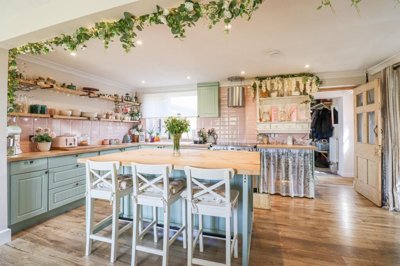
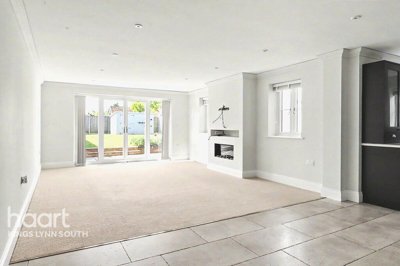
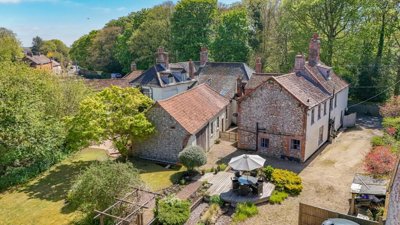
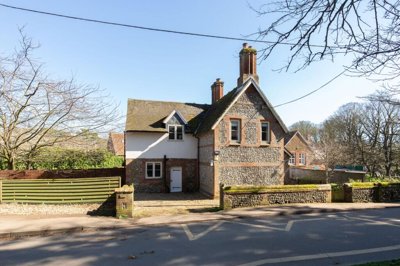
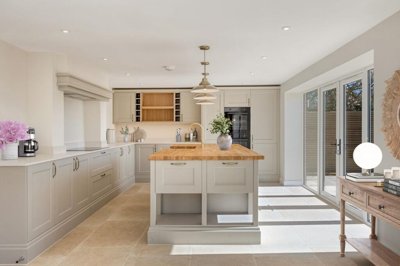
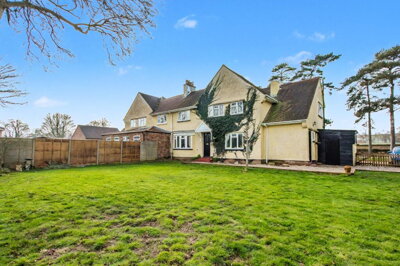
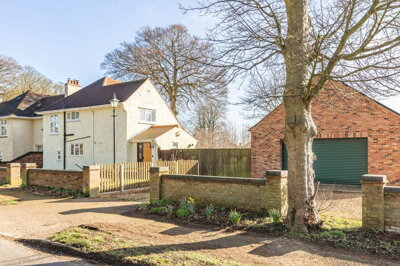
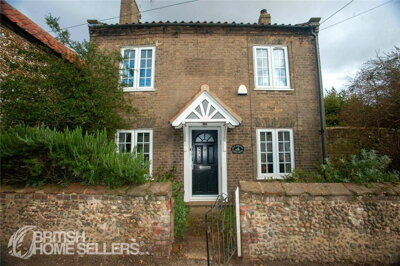
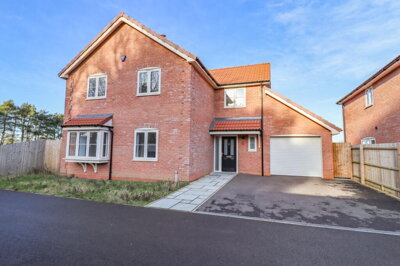
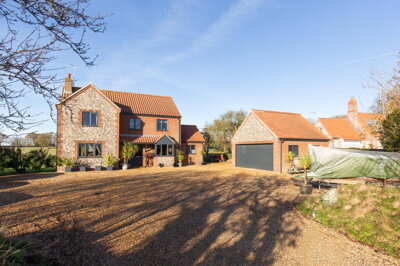
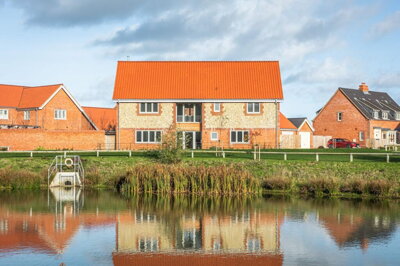
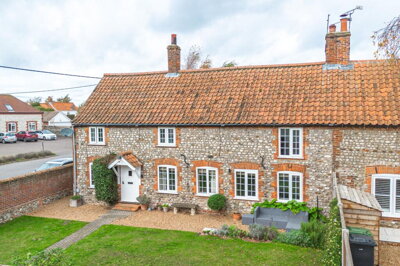
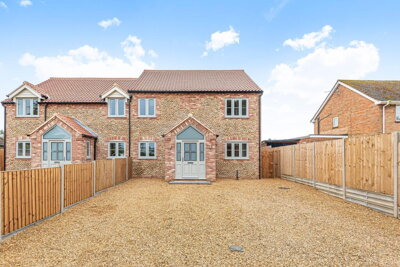
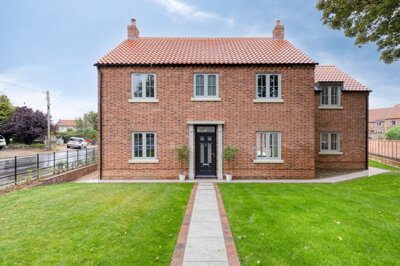
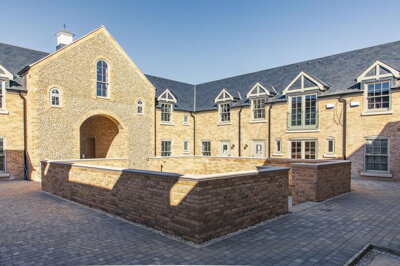
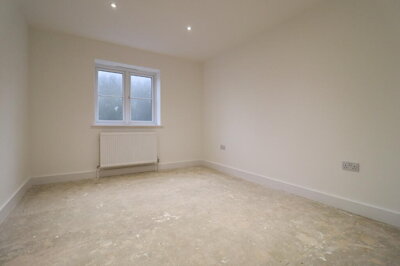
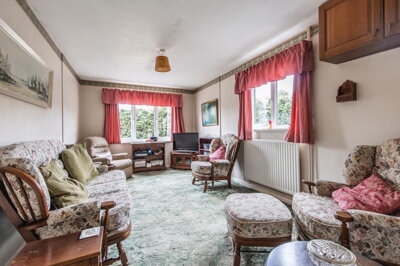
Browse 17 homes for sale in Docking, King's Lynn and West Norfolk from local estate agents.
The larger property sector typically features multiple bathrooms, substantial reception space, and private gardens or off-street parking. Four bedroom houses in Docking span detached, semi-detached, and occasionally terraced configurations, with styles ranging from period properties to modern executive homes.
£650k
13
1
123
Source: home.co.uk
Showing 13 results for 4 Bedroom Houses for sale in Docking, King's Lynn and West Norfolk. 1 new listing added this week. The median asking price is £650,000.
Source: home.co.uk
Detached
9 listings
Avg £683,888
Semi-Detached
4 listings
Avg £524,988
Source: home.co.uk
Source: home.co.uk
Docking’s housing market has stayed notably steady, with average house prices up by 0.6% over the past twelve months. That kind of movement says a lot about North Norfolk village life and the small number of good homes coming to market. There are currently 33 properties for sale, so buyers do have room to compare before they commit. Detached homes sit at the top of the local price range, averaging £431,250, and they suit families wanting space and privacy. In many cases, those bigger houses come with generous plots and gardens, which is part of the appeal here.
Semi-detached properties in Docking average £290,000, which makes them a sensible middle ground for buyers who want more room than a terrace without paying detached-house money. Terraced homes average £250,000 and can work well for first-time buyers or investors who want to tap into rural Norfolk rental demand. Flats are the cheapest option at around £180,000, although they make up a smaller slice of the stock. We would also point out that the village spans a mix of eras, from Victorian and Edwardian cottages in the conservation area to newer schemes on the edge of the settlement.
Abel Homes’ The Pastures on Fakenham Road (PE31 8LX) brings a more contemporary choice, with 2, 3, and 4 bedroom homes priced from £290,000 to £475,000. For buyers who want something ready to move into, that gives a useful alternative to the older cottages and farmhouses that shape much of Docking’s character. Investors may also see potential here, because rental stock is limited and visitor numbers to the North Norfolk coast stay healthy throughout the year.

This is a very Norfolk sort of village, with a close-knit community that newcomers usually notice quickly. Agriculture, tourism, and the everyday services people rely on all play a part in the local economy, so there is a balanced feel to village life. Farming still matters a great deal in the surrounding countryside, where the fertile land supports crops and livestock that have long underpinned the area. Several pubs, shops, and accommodation providers mean day-to-day needs can usually be met without a long trip to a larger town.
Docking’s population looks much like that of many affluent rural villages in England, with families, retirees, and working professionals all part of the mix. A lot of people settle here because of the atmosphere, and village events and gatherings help to give the place a real sense of belonging. It also draws holiday-home owners and people looking for a second base, thanks to the North Norfolk coastline and the Area of Outstanding Natural Beauty only a short drive away. That seasonal traffic keeps local businesses busy and adds to the village’s economic life across the year.
Across the parish, the land rises and falls gently, with chalk geology typical of North Norfolk creating free-draining soils and the rolling contours seen from higher ground. On top of that chalk sit glacial deposits of boulder clay, sands, and gravels, which help explain the agricultural strength of the area. The inland position means there is no direct coastal flood threat, but some parts of the parish can still see surface water flooding in heavy rain because of the local topography and drainage patterns. The village is around 40-50 metres above sea level, which gives it a useful lift compared with lower-lying parts of Norfolk.

For families, Docking offers a practical range of schooling within a reasonable drive. The village and nearby settlements have several primary schools serving the local community, and many have performed well in Ofsted inspections. In Docking itself, the nearest primary catchment usually includes schools in surrounding villages, so children may travel only a short distance each day. We would advise parents to check individual performance data and catchment boundaries carefully, because those details can make a real difference and should be confirmed before a purchase is completed.
Secondary schooling across King’s Lynn and West Norfolk includes both comprehensive and grammar options, so students with different strengths have different routes open to them. King Edward VII School in King’s Lynn and St Peter’s School in Fakenham are both within reach via the A148, which links Docking into the wider area. If education is high on your list, we recommend checking current Ofsted ratings for nearby schools before an offer goes in. The school map matters not just for family life, but for the long-term value of the property too.
Further education is available in both King’s Lynn and Fakenham, and both can be reached by car or public transport. The College of West Anglia in King’s Lynn offers a broad mix of academic and vocational courses, while Fakenham Sixth Form provides post-16 provision for local students. School quality in the catchment can affect demand and values, so it is worth understanding the wider educational picture before buying in Docking.

Road travel is the main way in and out of Docking. The village links through roads that connect to the A148 and then on to the A17, opening up routes to King’s Lynn and beyond to the motorway network. The A148 passes through nearby Fakenham and links Docking to the coast road network and the A47, which gives access to Norwich. For longer journeys, the M11 is reachable via Cambridge, and the A14 provides a route towards the Midlands. In practice, most residents see car ownership as essential, although parking in the village is usually adequate for that to work.
King’s Lynn railway station gives the area rail connections to Cambridge, London King’s Cross, and Birmingham, so some commuters can keep a city job while living in the village. Fast services from King’s Lynn to London King’s Cross take around 1 hour 50 minutes, which keeps the capital within reach for people working hybrid patterns. The station is about 20 miles from Docking, so a daily London commute would need careful thought about time and cost. Even so, plenty of residents travel two or three days per week and keep the rest of their time rooted in village life.
Bus services do run locally, linking Docking with nearby towns and villages, although the timetable is naturally thinner than you would find in a town. In peak periods, the coast bus service runs to places such as Wells-next-the-Sea and Sheringham. For people with cars, the North Norfolk coast is usually 20-30 minutes away, with Holkham, Wells-next-the-Sea, and Blakeney among the most popular day trips. Cycling is also common in the flatter parts of North Norfolk, where quiet lanes make for scenic riding and practical commuting alike.

It helps to spend time in Docking and the surrounding villages before making any decisions, so you can judge the property market, the community feel, and how close everything sits to schools, shops, and transport. Go at different times of day and on different days of the week if you can. Walk the conservation area around High Street and St Mary’s Church to get a sense of the village’s history, then drive to King’s Lynn and out to the coast to see how the connections actually work.
Before you start booking viewings, get a mortgage agreement in principle from a lender. It strengthens your hand when you make an offer and shows sellers that you are serious and financially ready. With Docking prices stretching from flats at around £180,000 to detached homes above £430,000, knowing your borrowing limit early makes the search much more focused.
We would suggest speaking to estate agents with Docking listings and arranging viewings of homes that match your brief. Take notes as you go and ask about the age of the property, the construction materials used, and any recent work or repairs. In older homes especially, keep an eye on maintenance issues around windows, doors, and roof structures, because those are often the first places where neglect shows.
Anything over 50 years old, which accounts for a large share of Docking’s housing stock, really ought to have a RICS Level 2 Survey. The local geology and the prevalence of clay soils mean a professional survey can pick up issues such as subsidence risk, damp, or structural concerns. In Docking, survey fees normally sit between £450 and £800 depending on the size of the property. That outlay can save thousands later and gives you something concrete to work with if defects turn up.
Once the survey is done and you are happy with the result, make your offer through the estate agent. If it is accepted, instruct a conveyancing solicitor to deal with the legal work, searches, and contract exchange. Our partners at Homemove Conveyancing offer rates from £499, and they know King’s Lynn and West Norfolk transactions well.
Your solicitor then works with the seller’s legal team to exchange contracts and agree a completion date. During that process, searches will be ordered, including local authority searches with King’s Lynn and West Norfolk Borough Council, drainage and water searches, and environmental searches covering ground conditions and flood risk. On completion day, the balance is transferred and you collect the keys to your new Docking home.
There are a few local issues in Docking that buyers should look at closely before committing. The conservation area, centred on High Street and St Mary’s Church, means many period properties are subject to planning restrictions that affect alterations and extensions. If you want to make changes to a property in that area, speak to King’s Lynn and West Norfolk planning department first so you know what permissions may be needed. Listed buildings, including the Grade I St Mary’s Church and a number of Grade II cottages and farmhouses, also need listed building consent for many kinds of work, which can make renovation more complicated and more expensive.
The geology deserves attention too. Homes built on the boulder clay deposits above the chalk can suffer from shrink-swell movement as the clay expands and contracts with changes in moisture. That can affect foundations, especially in older buildings with the shallower construction methods that were common when many Docking houses went up. Trees planted too close to a building can make things worse by drawing moisture out of the soil and causing it to shrink, which may lead to movement in the foundations. A thorough RICS Level 2 Survey will look at foundation condition and check for signs of subsidence or heave, the terms used for downward and upward ground movement respectively.
Many of Docking’s older properties are built in traditional flint and brick with lime mortar, and that calls for specialist care when repairs are needed. Unlike modern cement mortars, lime mortar lets a building breathe and move a little, so it copes better with natural settlement. Putting in the wrong modern materials on a historic house can cause serious damage, so buyers should allow for specialist restoration if they are looking at something older. It is also worth remembering that many older homes have not been updated to today’s electrical standards, and some wiring may date from the 1960s or earlier. The Consumer Unit (fusebox) position and what you can see of the wiring can give clues, although a qualified electrician should check the whole installation before purchase.

Recent market data puts the average house price in Docking at £349,700 over the last twelve months. Detached properties average £431,250, semi-detached homes £290,000, terraced houses £250,000, and flats about £180,000. Over the same twelve months, prices have risen by 0.6%, which points to a stable market with modest growth. There were 33 property sales in the past year, enough to support those averages while still reflecting the limited supply you tend to see in smaller North Norfolk villages.
Docking properties fall under King’s Lynn and West Norfolk Borough Council. Council tax bands run from A to H, depending on value, and the Valuation Office Agency sets the banding. Most village homes, especially older terraced and semi-detached ones, sit in bands A through D, while the larger detached houses may reach band E or F. The specific band for any property can be checked on the Gov.uk website or by contacting the council directly. Band A charges in this area are among the lowest in England, which keeps Docking relatively attractive for budget-conscious buyers.
Primary schools are within easy reach of Docking, and many of the nearby schools have good Ofsted ratings. The schools serving the catchment are usually in neighbouring villages, and the nearest is often within 5 miles. For secondary education, King’s Lynn and Fakenham both offer options via the A148, including King Edward VII School and St Peter’s School. We advise checking Ofsted for the latest inspection results and confirming which schools sit inside your catchment, because that can make a significant difference for children and should be verified before you buy.
Local bus routes are the main public transport link for Docking, connecting the village with nearby towns and villages, though services are lighter than those in urban areas. In the summer, the Stagecoach coastliner service runs to Sheringham and Wells-next-the-Sea. King’s Lynn railway station, around 20 miles away, provides mainline services to Cambridge and London King’s Cross, with the journey to the capital taking around 1 hour 50 minutes. Most residents still rely on a car for full flexibility, although access by road is straightforward via the A148 and local roads leading to the A17 and the wider motorway network.
For investors, Docking has a few clear attractions. Its closeness to the North Norfolk coast keeps holidaymakers coming through the year, which supports demand for short-term rentals and holiday cottage conversions, especially for character homes in the conservation area. The village’s peaceful setting and strong community feel also appeal to people after a rural lifestyle, which helps underpin long-term capital growth. Prices have risen steadily and the number of homes for sale stays low, so demand should remain. Even so, investors need to factor in holiday-let effects on rental yield, the upkeep older properties may need, and the reality that a small population limits the pool of permanent tenants.
Stamp Duty Land Tax for standard buyers starts at 0% on the first £250,000 of a purchase, then moves to 5% on the slice from £250,001 to £925,000. For a typical Docking home at £349,700, that works out at roughly £4,985 in stamp duty. First-time buyers get relief on the first £425,000, with 5% applied between £425,001 and £625,000, so most first-time buyers at the village average would pay no stamp duty at all. Anything over £625,000 is outside first-time buyer relief, so those buying at the upper end of the market should keep that in mind.
Docking is inland, so properties here are not directly exposed to North Sea coastal flooding, which is a concern for some Norfolk villages nearer the shore. Even so, Environment Agency flood maps show some surface water risk in parts of the parish, especially when heavy rain overwhelms local drainage. The chalk base usually drains well, but where boulder clay sits above the chalk the drainage can be weaker. If you are looking at a lower-lying property near watercourses or drainage channels, check the specific flood risk assessment and allow for insurance costs in your budget.
From 4.5%
A good mortgage can make all the difference to a Docking purchase. We compare rates and help arrange finance advice for buyers moving into the village.
From £499
Our partners deal with the legal side of a Docking purchase from searches right through to completion.
From £450
A survey is essential for many of Docking’s older homes, because it can uncover defects that are common in the local stock.
From £85
Most property sales need one, and our assessors provide Energy Performance Certificates for Docking homes.
Working out the true cost of buying in Docking means looking beyond the purchase price. Stamp Duty Land Tax (SDLT) uses a tiered system, with the first £250,000 attracting zero rate for standard buyers. On a typical Docking home priced at £349,700, you would pay 5% on the amount between £250,001 and £349,700, which comes to around £4,985 in SDLT. First-time buyers purchasing under £625,000 get higher thresholds, so they pay nothing on the first £425,000 and 5% on the balance up to £625,000. At the village average price, that relief means a first-time buyer would pay no stamp duty at all.
It is also wise to budget for solicitor conveyancing fees, which usually start from £499 for standard transactions but can rise for leasehold homes or properties with complex titles. Docking has a good number of older houses and listed buildings, so some sales may involve more detailed legal work, especially where boundary issues or unusual easements come into play. A RICS Level 2 Survey in Docking typically costs £450 to £800 depending on property size and value, with detached homes tending towards the higher end. Mortgage arrangement fees of 0-1% of the loan amount are common too, although some lenders do offer fee-free products that suit buyers who prefer a simpler cost structure.
There are several other costs to include in the budget, among them mortgage valuation fees, usually £150-£500 depending on property value, Land Registry fees for registering ownership, currently around £150-£500 depending on price, and solicitor search fees of roughly £250-£400 for local authority, drainage, and environmental searches with King’s Lynn and West Norfolk. Removal charges can vary a lot with distance and volume, but for a local Norfolk move they are often £500 to £3,000. Buildings insurance should be in place from exchange of contracts, and we suggest keeping back a further 2-3% of the purchase price to cover these extra costs and any surprises that crop up during the transaction.

Properties for Sale In London

Properties for Sale In Plymouth

Properties for Sale In Liverpool

Properties for Sale In Glasgow

Properties for Sale In Sheffield

Properties for Sale In Edinburgh

Properties for Sale In Coventry

Properties for Sale In Bradford

Properties for Sale In Manchester

Properties for Sale In Birmingham

Properties for Sale In Bristol

Properties for Sale In Oxford

Properties for Sale In Leicester

Properties for Sale In Newcastle

Properties for Sale In Leeds

Properties for Sale In Southampton

Properties for Sale In Cardiff

Properties for Sale In Nottingham

Properties for Sale In Norwich

Properties for Sale In Brighton

Properties for Sale In Derby

Properties for Sale In Portsmouth

Properties for Sale In Northampton

Properties for Sale In Milton Keynes

Properties for Sale In Bournemouth

Properties for Sale In Bolton

Properties for Sale In Swansea

Properties for Sale In Swindon

Properties for Sale In Peterborough

Properties for Sale In Wolverhampton

Enter your details to see if this property is within your budget.
Loans, cards, car finance
Estimated property budget
Borrowing + deposit
You could borrow between
Typical borrowing
Monthly repayment
Est. at 4.5%
Loan-to-value
This is an estimate only. Your actual budget may vary depending on interest rates, credit history, and personal circumstances. For an accurate affordability assessment, speak to one of our free mortgage advisors.
This calculator provides estimates for illustrative purposes only and does not constitute financial advice. Your home may be repossessed if you do not keep up repayments on your mortgage. Estimates based on 4.5% interest rate, repayment mortgage. Actual rates depend on your circumstances.
Homemove is a trading name of HM Haus Group Ltd (Company No. 13873779, registered in England & Wales). Homemove Mortgages Ltd (Company No. 15947693) is an Appointed Representative of TMG Direct Limited, trading as TMG Mortgage Network, which is authorised and regulated by the Financial Conduct Authority (FRN 786245). Homemove Mortgages Ltd is entered on the FCA Register as an Appointed Representative (FRN 1022429). You can check registrations at NewRegister or by calling 0800 111 6768.

We use cookies to show you personalised content and improve your experience of our website. Find out more in our Privacy policy and Cookie policy.