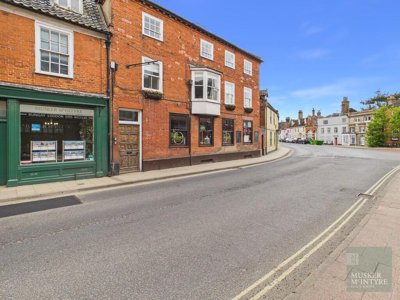
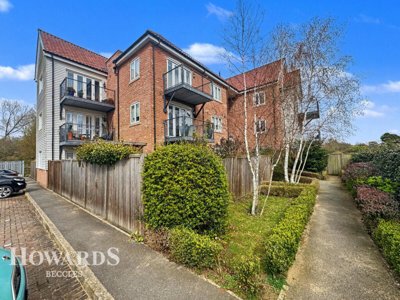
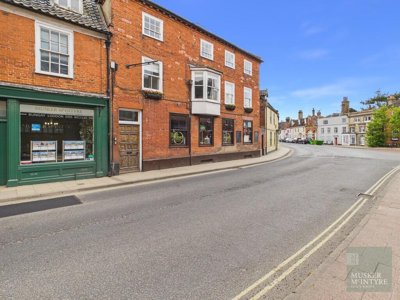
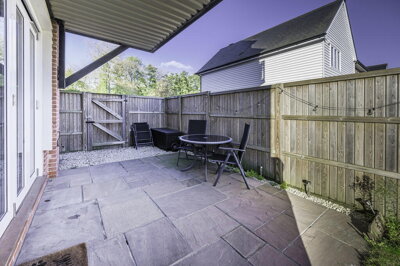
Browse 4 homes for sale in Ditchingham, South Norfolk from local estate agents.
One bed apartments provide a separate bedroom alongside distinct living space, bathroom, and kitchen areas. Properties in Ditchingham are available in various building types including mansion blocks, contemporary developments, and house conversions.
£150k
1
0
136
Source: home.co.uk
Showing 1 results for 1 Bedroom Flats for sale in Ditchingham, South Norfolk. The median asking price is £150,000.
Source: home.co.uk
Flat
1 listings
Avg £150,000
Source: home.co.uk
Source: home.co.uk
In Ditchingham, buyers looking at rural Norfolk will see a market with some scope on price. Detached homes average £322,100, while semi-detached properties average £345,000, which points to continued demand for larger homes in the village. Terraced properties make up a notable share of local stock and average £212,750, giving people buying their first home, or moving from a larger place, another way into Ditchingham.
Sales have kept moving, with deals recorded on Loddon Road, Waterside Drive, Thwaite Road, Fen Lane and Rutter Close. In February 2025, a 2-bedroom flat on Waterside Drive sold for £195,000. That sale underlines ongoing interest locally. Against the backdrop of the 2023 peak, prices have stayed fairly stable compared with the previous year, and homes in the conservation areas, especially the Grade II listed Tayler and Green houses, often sell at a premium because of their design and historic weight.
New homes are adding another strand to the Ditchingham market. Lower Wells Close, designed by Norfolk architects Parsons and Whittley, was one of the first Passivhaus projects in the county and won a South Norfolk Design Award in 2012. Separately, the proposed Beauly Homes scheme on Loddon Road, made up of 27 houses and bungalows with nine affordable units, is moving through the South Norfolk District Council Local Plan process. The site is on agricultural land at the junction of Loddon Road and Tunneys Road, with a low-density layout, three areas of public open space and improved pedestrian access.

Ditchingham carries its past openly, and that shapes daily life now. The parish population rose from 1,059 in 1961 to 1,614 by 2001. Today, the village includes commuters travelling to nearby towns and cities, alongside retired residents who have chosen Ditchingham for a quieter setting. One detail really sets it apart, the village stands on a man-made causeway across the River Waveney flood plain.
Ditchingham's architectural standing is unusually strong for a village of this size. The Ditchingham Conservation Area includes the much-admired mid-20th century housing by Herbert Tayler and David Green, notably Windmill Green (1946-49), Agnes Green Crescent (1951) and Scudamore Place (1958 and 1964). These Grade II listed homes are early examples of post-war rural social housing, using vernacular forms in a modern way and with economical materials. Lower Wells Close picks up that thread, with weatherboard design and Passivhaus certification.
The building fabric here says a lot about how Ditchingham developed. Roofs are often finished in clay pantiles, in blue/black glazed and red, while the brickwork shifts from painted bricks on older Windmill Lane houses to the buff gault bricks seen at Scudamore Place. Ditchingham Hall adds another layer, a Grade I listed Classical country house built around 1710, later extended in 1910, with parkland registered Grade II on English Heritage's Register of Parks and Gardens. Beyond that, Hedenham and the wider Norfolk landscape bring more historic context, including flint-stone churches.
For day-to-day errands, most people look to Bungay just over the River Waveney and across the historic bridge. There is a Tesco Express, shops around the Market Place, a library, pubs, restaurants and a medical centre with pharmacy. Regular markets and local events give the town a bit of pull for nearby villages as well. Norwich tends to cover the bigger shop or a day out.

Schooling for Ditchingham households is mainly drawn from the surrounding area rather than the village itself. The wider South Norfolk area covers early years through to further education, and Ditchingham's position between Bungay and Norwich gives access to secondary schools and sixth form colleges used by local families. That matters if you are planning around several stages of schooling, not just the next one.
Nearby primary options include St. Edmund's Catholic Primary School in Bungay, which serves Catholic families across the area, alongside village primaries in surrounding communities. For secondary education, Bungay High School is the main local option and includes a sixth form with A-levels and vocational courses. The school has improved in recent years and takes pupils from across Bungay and the Waveney Valley area. Depending on catchment boundaries, some South Norfolk families may instead look towards Norwich or other market towns.
In Norfolk, grammar school entry is shaped by the 11-plus examination. Among the Norwich options are Thorpe St Andrew School and Sewell Park Academy for academically able students. We always suggest checking Ofsted data and looking closely at catchment boundaries before you commit to a purchase, because schools can differ a lot in size, specialism and results. Ditchingham's mix of commuters and retired residents also feeds into a school community with varied family backgrounds and strong parental involvement.
There are other routes too. Across Norfolk, families can look at faith schools, independent schools and further education colleges in nearby towns. St. Felix School in Haverhill is one independent option for those prepared to travel, while the University of East Anglia in Norwich keeps higher education within commuting distance. Norwich also has college provision for post-16 students taking vocational courses or A-levels instead of a traditional sixth form.

Ditchingham is rural, but getting around is fairly workable. Bungay is close by and has regular bus services to Norwich and other Broads market towns. The X2, run by First Group, links Norwich and Great Yarmouth, passes through Bungay and gives onward access for Ditchingham. A trip into Norwich city centre is usually around 40 minutes, with buses leaving from Prince of Wales Road bus station near the railway station.
Rail travel means heading to Norwich. From there, direct trains reach London Liverpool Street in about one hour 50 minutes to two hours, and there are also connections to Cambridge, Birmingham and Liverpool. That makes Norwich an important hub for people in Ditchingham who travel further afield. Some use the London route for work, and the journey time is short enough to make day commuting realistic. Booking ahead often helps on cost.
For flights, Norwich Airport covers routes across the UK and Europe, and Amsterdam Schiphol can be reached with a single connection. Around Ditchingham itself, the country lanes suit cycling, and the generally flat Norfolk ground helps if you are not a regular rider. There is also a National Cycle Network route through nearby areas, which is useful for leisure trips and practical journeys.
By road, the A143 gives access towards Great Yarmouth and the Norfolk coast, while the A146 connects Ditchingham with Beccles and Lowestoft. Because the village sits on the River Waveney flood plain, some routes can be disrupted in periods of high water, so it is sensible to learn the alternatives. Parking is usually one of the easier parts of living here, as many properties have off-street space.

We always suggest spending proper time in Ditchingham before you buy. Go more than once, try different times of day, talk to local residents and get a feel for shops, buses and the way the village works. Flood risk deserves close attention. That is especially true around Ditchingham Dam, and near Pirnhow Street where the former Maltings site sits within Flood Zone 3.
Before you start viewings in earnest, it helps to have a mortgage agreement in principle from a lender. Sellers and estate agents tend to take offers more seriously when your finances are already outlined. We can also put you in touch with partner lenders who offer competitive rates and guidance based on your circumstances. On higher-value Ditchingham homes, including detached properties averaging £322,100, the mortgage terms matter a great deal.
Local knowledge counts in a village market like Ditchingham. We recommend speaking with estate agents who know the area well, then viewing several properties so you can compare condition, price and fit. Make notes. Take photos as well. In the conservation areas especially, pay attention to construction materials and watch for damp or structural movement in older buildings.
Once you have settled on a Ditchingham property, put your offer through the estate agent in formal terms. Be ready for some movement on price or conditions. If the home sits in a conservation area, or carries listed status, keep any future alterations in mind before you agree a figure. The Tayler and Green houses are Grade II listed, and most changes to them need Listed Building Consent.
On most purchases here, especially anything over 50 years old such as the Tayler and Green houses or other homes in the conservation areas, we strongly advise a RICS Level 2 Survey. It can pick up structural defects, damp, roofing issues and old electrics that are easy to miss during a viewing. In Ditchingham, where clay pantiles and timber construction are both fairly common, that extra detail can save trouble later.
Once your offer is accepted, appoint a conveyancing solicitor to deal with the legal side. They will handle searches, review contracts and liaise with your mortgage lender. In Ditchingham, the solicitor should also check flood risk, look into planning controls affecting the conservation areas and confirm that any listed building consents for earlier works are in place. On completion day, they transfer the funds and the keys are released.
There are a few Ditchingham-specific issues worth weighing carefully before you buy. Flood risk is near the top of the list, because Ditchingham Dam lies on the River Waveney flood plain, and parts of the village, including the former Maltings site on Pirnhow Street, are in Flood Zone 3. Homes in those areas may bring higher insurance premiums and a need for flood resilience features. We suggest asking the Environment Agency for flood information and checking what protective measures have already been fitted.
If you are looking within the Ditchingham Conservation Area, the Ditchingham Dam Conservation Area or the expanded Hedenham and Ditchingham Hall Conservation Area, do not assume outside changes will be straightforward. External alterations can need planning permission so the character of these protected areas is kept intact. The Tayler and Green houses are also Grade II listed, which means most modifications require Listed Building Consent. That protection is important, but it can narrow renovation choices compared with homes elsewhere in the village.
Construction details change a lot from one part of Ditchingham to another. Clay pantiles are common on roofs, although some properties now have concrete tiles instead, and those materials do not necessarily age in the same way. Original timber or steel windows have often been replaced with uPVC, sometimes in designs that sit awkwardly with the house. While viewing, look carefully at the standard of those changes and allow for replacement costs if needed. On older homes, watch for traditional construction such as clay lump or timber frame under render, which may need a specialist eye.
Because much of the housing stock is older, upgrades are often part of the picture in Ditchingham. Electrical installations, central heating and insulation can all need attention. Homes dating from the Tayler and Green period in the 1940s and 1950s may still retain original wiring or heating systems, which can mean a sizeable spend to bring them up to current expectations. A RICS Level 2 Survey is useful here, as it can flag issues with electrics, plumbing and structure that may not show during a normal viewing.

For everyday village life, Ditchingham has a few key places that matter. The village hall hosts community activities, events and local groups, so it acts as a practical focal point. St. Michael's Church also remains part of the rhythm of the parish, with services and gatherings through the year. The building itself is part of what gives Ditchingham its identity.
For a fuller range of shops and services, most residents head into Bungay. There is a Tesco Express on St. Johns Road, shops along the Market Place, a pharmacy, a post office, pubs and restaurants. Market days in Bungay are useful for local produce and artisan goods, and the library runs digital services as well as community programmes. GP appointments are handled at the medical centre on St. Johns Road, while the nearest hospital is in Norwich.
The countryside around Ditchingham makes outdoor time easy to build into the week. Public footpaths cross farmland and link up with neighbouring villages, and the flat ground suits both walking and cycling. The Broads National Park is also close enough for boating, wildlife watching or a riverside walk. In the wider area, local pubs give you somewhere to stop for a meal, and some have rooms for visitors.
Digital connections in Ditchingham have improved a fair bit. Most homes can now get superfast broadband, although some of the more rural properties on the edges of the village still see slower speeds. Mobile coverage is usually solid too, with all major networks offering 4G, though lower-lying spots near the river can vary. If you are weighing up a particular address, we recommend checking the actual broadband speed there, especially if home working or streaming is part of daily life.

The average Ditchingham property price over the last year was £263,083. That is close to the previous year, but 12% below the 2023 peak of £299,102. Broken down by type, detached homes average £322,100, semi-detached homes £345,000 and terraced properties £212,750. For buyers who were squeezed out at the height of the market, that shift may reopen some options. A useful comparison point is the 2-bedroom flat on Waterside Drive, sold in February 2025 for £195,000.
For council tax, Ditchingham comes under South Norfolk District Council. Bands run from A to H, depending on the assessed value of the property. In broad terms, terraced houses and smaller homes are often in bands A to C, while larger detached houses and higher-value properties may sit in bands D through F. We advise checking the exact band against the address on the Valuation Office Agency website.
Education for Ditchingham residents is mostly centred on nearby schools rather than a village school. Primary provision comes from surrounding villages, and Bungay High School is the main secondary option in Bungay. Being near Norwich widens the picture, with more school choices there, including grammar schools for children who pass the 11-plus examination. Before buying, it is sensible to review Ofsted data and check catchment boundaries, as school size and specialisms do vary.
Public transport in Ditchingham itself is limited, so planning ahead matters. From Bungay, the X2 bus runs to Norwich in around 40 minutes, and Norwich station is the nearest major rail link, with direct trains to London Liverpool Street in approximately two hours. For people driving into Norwich for work, the A146 usually means around 30-40 minutes depending on traffic. If you rely on public transport, you may still need a car or a bike for local trips within Ditchingham.
Ditchingham has a few points that may interest investors looking closely at village markets. Its architectural profile is unusual, from the Grade II listed post-war housing to the Grade I listed Ditchingham Hall, and that helps preserve a strong local identity. The proposed Beauly Homes development of 27 properties on Loddon Road also shows that fresh building activity is continuing. Rental demand may come from people working in Norwich or Bungay who want a village base, although the rental market here is likely to stay smaller than in a town or city.
For 2024-25, stamp duty is charged at 0% on the first £250,000, then 5% on £250,001 to £925,000, 10% on £925,001 to £1.5 million and 12% on anything above £1.5 million. Relief applies for people buying their first home, with 0% on the first £425,000 and 5% between £425,001 and £625,000. On a typical Ditchingham purchase at the average price of £263,083, a standard buyer pays nothing on the first £250,000 and 5% on the remaining £13,083.
Flood exposure is one of the clearest practical issues in parts of Ditchingham. The Ditchingham Dam area sits on a man-made causeway across the River Waveney flood plain, and the former Maltings site on Pirnhow Street is within Flood Zone 3, which is the highest risk category. That can mean higher insurance premiums and a stronger need for flood resilience measures. Before exchange, we recommend asking the Environment Agency for a flood risk assessment and then weighing the likely effect on insurance costs and resale.
Restrictions on a property in Ditchingham can be substantial, depending on exactly where it sits and whether it is listed. Homes inside the three conservation areas are subject to planning controls over external changes. The Grade II listed Tayler and Green houses at Windmill Green, Agnes Green Crescent and Scudamore Place need Listed Building Consent for most modifications. Any work that changes the appearance or character of these protected areas may also require planning permission. That protection is valuable, though it does reduce the scope for refurbishment compared with homes outside those areas.
Broadband in Ditchingham is generally decent, with most properties able to get superfast service, but speeds do vary by location and cabinet. Homes on the village edges can still be slower. Mobile coverage is usually good too, with all major networks providing 4G in the village centre and around it. Before you commit to a purchase, we suggest checking the exact broadband result for the address through Ofcom's broadband checker, especially if you work from home or need high bandwidth.
Getting the full buying budget right matters as much as agreeing the purchase price. SDLT on a Ditchingham property for the 2024-25 tax year is charged at 0% on the first £250,000, 5% on the slice from £250,001 to £925,000, 10% from £925,001 to £1.5 million and 12% above £1.5 million. On the average village price of £263,083, a standard buyer would pay stamp duty only on £13,083 at 5%, which comes to £654.
There is extra relief for people buying their first home. They pay 0% on the first £425,000 and 5% on the portion from £425,001 to £625,000, provided the purchase price does not exceed £625,000. Because the average Ditchingham price is £263,083, a qualifying buyer at that level would pay no stamp duty at all.
There are other costs to allow for beyond stamp duty. Conveyancing fees with a solicitor typically start from £499 for a standard transaction, mortgage lenders may charge valuation fees, and a RICS Level 2 Survey starts from £350, which we strongly recommend in Ditchingham because much of the housing stock is older and the village includes listed buildings and conservation areas. If the property is a flat or leasehold, check the service charge and ground rent carefully. Buildings insurance, removals and renovation work on older homes should also be in the sums.
Anyone buying one of the proposed Beauly Homes properties on Loddon Road should also budget for costs that can come with a new build purchase. These may include reservation fees, new build incentive fees and Help to Buy arrangements if applicable. The legal work can be more involved as well, sometimes covering leasehold terms and estate management arrangements. We recommend using a solicitor with new build experience and pricing the transaction on that basis from the start.
From 4.5%
We can help finance your Ditchingham home with competitive mortgage rates.
From £499
Expert legal services for your property purchase
From £350
Detailed property survey recommended for Ditchingham homes
From £75
Energy performance certificate for your new home
Properties for Sale In London

Properties for Sale In Plymouth

Properties for Sale In Liverpool

Properties for Sale In Glasgow

Properties for Sale In Sheffield

Properties for Sale In Edinburgh

Properties for Sale In Coventry

Properties for Sale In Bradford

Properties for Sale In Manchester

Properties for Sale In Birmingham

Properties for Sale In Bristol

Properties for Sale In Oxford

Properties for Sale In Leicester

Properties for Sale In Newcastle

Properties for Sale In Leeds

Properties for Sale In Southampton

Properties for Sale In Cardiff

Properties for Sale In Nottingham

Properties for Sale In Norwich

Properties for Sale In Brighton

Properties for Sale In Derby

Properties for Sale In Portsmouth

Properties for Sale In Northampton

Properties for Sale In Milton Keynes

Properties for Sale In Bournemouth

Properties for Sale In Bolton

Properties for Sale In Swansea

Properties for Sale In Swindon

Properties for Sale In Peterborough

Properties for Sale In Wolverhampton

Enter your details to see if this property is within your budget.
Loans, cards, car finance
Estimated property budget
Borrowing + deposit
You could borrow between
Typical borrowing
Monthly repayment
Est. at 4.5%
Loan-to-value
This is an estimate only. Your actual budget may vary depending on interest rates, credit history, and personal circumstances. For an accurate affordability assessment, speak to one of our free mortgage advisors.
This calculator provides estimates for illustrative purposes only and does not constitute financial advice. Your home may be repossessed if you do not keep up repayments on your mortgage. Estimates based on 4.5% interest rate, repayment mortgage. Actual rates depend on your circumstances.
Homemove is a trading name of HM Haus Group Ltd (Company No. 13873779, registered in England & Wales). Homemove Mortgages Ltd (Company No. 15947693) is an Appointed Representative of TMG Direct Limited, trading as TMG Mortgage Network, which is authorised and regulated by the Financial Conduct Authority (FRN 786245). Homemove Mortgages Ltd is entered on the FCA Register as an Appointed Representative (FRN 1022429). You can check registrations at NewRegister or by calling 0800 111 6768.

We use cookies to show you personalised content and improve your experience of our website. Find out more in our Privacy policy and Cookie policy.