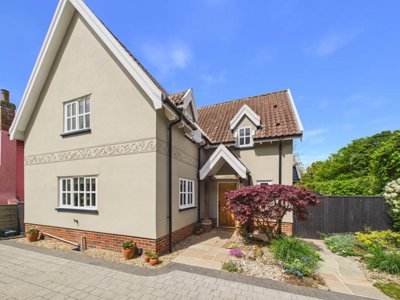
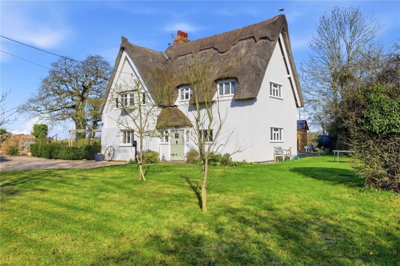
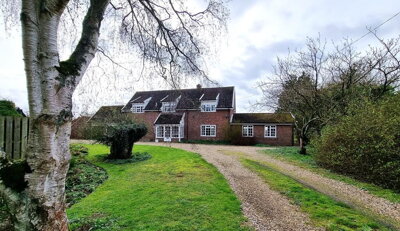
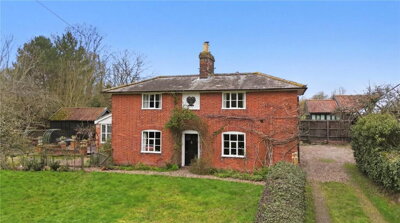
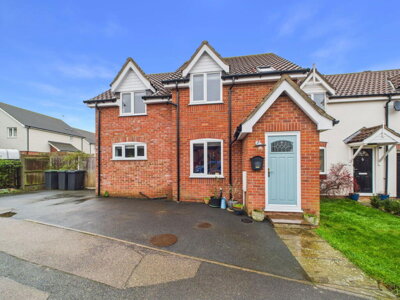
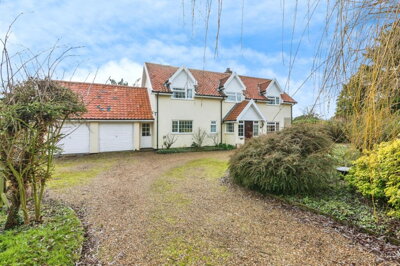
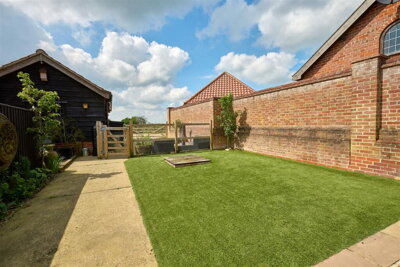
Browse 8 homes for sale in Cratfield, East Suffolk from local estate agents.
The larger property sector typically features multiple bathrooms, substantial reception space, and private gardens or off-street parking. Four bedroom houses in Cratfield span detached, semi-detached, and occasionally terraced configurations, with styles ranging from period properties to modern executive homes.
£695k
2
0
59
Source: home.co.uk
Showing 2 results for 4 Bedroom Houses for sale in Cratfield, East Suffolk. The median asking price is £695,000.
Source: home.co.uk
Detached
2 listings
Avg £695,000
Source: home.co.uk
Source: home.co.uk
Cratfield’s property market has seen noticeable price adjustments over the past year, which has opened up opportunities for buyers in this sought-after rural spot. Recent data puts the village average at around £485,833, with detached homes at roughly £571,250 and semi-detached houses from £280,000. In the IP19 0 postcode sector, which covers Cratfield and nearby villages, prices have fallen by 10.2% over the last twelve months, while houses alone have dropped by 13.6%. Taken together, those figures point to a market that has eased after the 2022 peak of £598,750, giving buyers a chance to step in where the area may once have felt out of reach.
Activity in and around Cratfield has stayed fairly steady, with about 26-27 transactions recorded over the past twelve months across the wider IP19 0 sector. Homes on The Street, Cratfield IP19 have achieved average prices of about £485,833, and properties near Bell Green have traded at a similar level. The village is largely made up of traditional detached and semi-detached houses, many of them dating from the 19th century or earlier, built in the familiar Suffolk vernacular style. There are no active new build schemes in Cratfield itself, so buyers wanting modern specifications will need to look to neighbouring places or settle for the character of period stock.
Cratfield’s housing stock reflects a long agricultural past, and the buildings are usually put together using traditional rural Suffolk methods. Exposed timber frames, clay plain tiles, and red brick or flint are all part of the picture, drawn from the materials East Anglia has relied on for centuries. Many homes also show the distinctive Suffolk white brick, while others make use of local flint collected from the fields, especially in older boundary walls and outbuildings. Anyone buying here should bear in mind that these materials need a different approach to maintenance than modern construction, and specialist contractors with period-property experience are sensible for any refurbishment work.

Cratfield is Suffolk village life at its most recognisable, with a quiet pace and some of East Anglia’s best countryside on the doorstep. It sits within the civil parish of Cratfield, in East Suffolk district, and has the sort of close-knit feel where people know their neighbours. The medieval church of St. Mary gives the village a clear focal point, and its architecture speaks to a history that goes back to the Saxon period. A traditional public house adds to daily life, acting as a social anchor for villagers and visitors, with home-cooked food and local ales served in a friendly setting. It is more than somewhere for a drink, too, because village events and get-togethers are held there throughout the year, keeping local ties strong.
Around Cratfield, the land rolls gently through arable fields, with hedgerows and small woods that support plenty of wildlife. Public footpaths and bridleways thread through the area, so walking, cycling and horse riding come naturally here. The village also gives reasonably easy access to the Suffolk Heritage Coast, with Southwold and Aldeburgh both within a sensible drive. Halesworth and other nearby market towns provide extra shops, restaurants and services, while the Broads National Park lies to the north for more days out. Agriculture has long underpinned the local economy, although more residents now work remotely or commute to Norwich, Ipswich and London using the rail links at Diss or Halesworth.
Practical daily life is still manageable here, despite the rural setting, because Cratfield sits in the Waveney Valley with useful amenities within reach. Halesworth is only a short drive away and offers a supermarket, independent shops, a medical centre and a secondary school. It also hosts a weekly market and a range of cultural events during the year, so it acts as the commercial centre for the surrounding villages. Bungay and Beccles are easy enough for bigger shops or specialist needs, while Norwich is about 45 minutes by car and brings a broader mix of retail, entertainment and healthcare. That balance of countryside calm and accessible town services is one reason Cratfield appeals to families and to people who want a slower pace without feeling cut off.

Roads do most of the heavy lifting here. Cratfield is about 3 miles from the A144, the route between Bungay and Halesworth, while the A145 gives onward access to Beccles and the Broads area. The A12 trunk road is a short drive south and connects the village to Ipswich and London via the M25. For a rural address, that is a decent link into the wider network, so car travel remains the most practical choice for most day-to-day needs. Local bus services do run between Cratfield and the surrounding villages and towns, but they are limited, which makes car ownership close to essential for anyone commuting or needing regular access to services.
Rail travel is available from Halesworth and Diss, both of which have regular services to Norwich, Cambridge and London Liverpool Street. East Anglia’s rail network has improved significantly in recent years, and journeys to London average around 90 minutes from Diss. Norwich adds more national rail links, along with an international airport serving European destinations. For people working in Ipswich, the drive is about 40 minutes in normal traffic, and Cambridge is roughly an hour away. Put together, those road and rail options make Cratfield workable for commuters who still want the quieter rhythm of village life.
Most people commuting from Cratfield drive to their nearest station, and both Halesworth and Diss have parking. Halesworth is closer, so it tends to suit people travelling to Norwich or the coast, while Diss offers a wider spread of services, including direct trains to London Liverpool Street. Season ticket prices vary depending on destination, so regular commuters should build that into their budget. Some residents also work part or full-time from home, helped by the peaceful setting and broadband improvements in recent years, although buyers should still check the specific speeds available at the property they have in mind.

The village’s housing is mostly traditional, with Georgian, Victorian and earlier buildings reflecting its long life as a settled farming community. If a thatched roof is part of the purchase, it deserves close attention, because it needs specialist upkeep and usually costs more to insure than a standard slate or tile roof. Many houses still have exposed timber beams, inglenook fireplaces and original floorboards, all of which add character but also call for proper care. On older homes, rewiring may be needed, so buyers should ask for recent electrical certification or allow for the cost of updating it. Single-glazed windows are also common, and energy-efficiency improvements are worth considering for anyone wanting more modern comfort.
Because Cratfield is rural, buyers should check broadband availability and speeds carefully, as these can vary a lot from one part of the village to another depending on cabinet proximity. Mobile signal can also be patchy on some networks, so anyone planning to work from home should carry out proper checks before committing. Private drainage is common in villages without mains sewerage, so septic tanks and cess pits need regular emptying and sensible maintenance. Flood risk in Cratfield itself appears low on the available mapping, though the wider East Suffolk coastal area should still be borne in mind when looking at nearby lower-lying places. Insurance costs can vary sharply from one property to the next, so getting buildings insurance quotes before exchange is a wise step.
In parts of Suffolk, the local geology includes clay deposits, and those can bring shrink-swell issues for foundations, especially in drought conditions or where large trees stand close to a building. Our inspectors look closely for any sign of movement or subsidence in period houses, checking for cracks in walls, doors that stick and floors that are uneven, all of which can point to foundation problems. Since most Cratfield properties predate modern building regulations, buyers should also look into whether any alterations or extensions have the right planning consent and building regulation approval. East Suffolk Council can provide records for previous works, and any additions without paperwork may need regularisation, which could fall to the buyer after purchase.

It helps to spend time in Cratfield at different times of day and on different days of the week, so we can get a real feel for the place and see whether it suits our way of living. Stop at the local pub, walk the footpaths and speak to residents, because that often tells us more than a brochure ever will. Check how close the nearest schools, shops and transport links are to the home you are considering. We can also set up instant alerts through Homemove for new listings that match your criteria, so nothing suitable slips past.
Start with a mortgage broker, talk through borrowing power and get an agreement in principle before viewings begin. For standard purchases, Stamp Duty Land Tax now starts at 0% on the first £250,000 of property value, then rises to 5% between £250,001 and £925,000. First-time buyers get a stronger level of relief up to £425,000, which means most Cratfield homes sit in zero-SDLT territory for first-time purchasers. Having finance ready shows sellers that you are serious, and that can strengthen an offer on a sought-after village property.
We use Homemove to browse all available Cratfield properties and to receive alerts when fresh listings meet our criteria. Our platform pulls together homes from multiple estate agents, so we get a wider view of the market without checking a stack of separate sites. Viewings should be arranged quickly, because desirable village homes can attract more than one interested buyer, and the limited stock in Cratfield means competition for the best places can still be strong despite the wider price correction.
Once the right property has been found, we would arrange a detailed survey to check its condition. A RICS Level 2 HomeBuyer Report suits traditional period houses in Cratfield particularly well, because it flags defects such as subsidence risk, damp penetration and roof condition, all of which are common in older buildings. Given the age and traditional construction of most village homes, that extra spend is well worth it if we want to avoid surprises after completion. Our inspectors know the issues that affect Suffolk period properties and can give a detailed assessment based on local building methods.
An experienced conveyancing solicitor should then be appointed to handle the legal transfer of ownership, preferably someone used to rural property. They will carry out local authority searches for East Suffolk Council, check the planning history and make sure drainage and access rights are properly documented. Exchange and completion usually take 4-6 weeks once terms are agreed, though rural homes with complicated titles or private drainage can take longer because the due diligence is more involved.
Average house prices in Cratfield currently sit at about £485,833, although the exact figure changes depending on the data source used. Detached homes usually fetch more, at around £571,250, while semi-detached properties can be found from £280,000. The market has cooled over the past year, with the IP19 0 postcode sector recording a fall of about 10.2% over twelve months. Homes on The Street and near Bell Green have recently sold at around £485,833. The village’s peak came in 2022, when average prices reached about £599,000, so today’s conditions give buyers a more approachable way into this attractive rural location.
For council tax, Cratfield falls within East Suffolk Council’s area. In rural Suffolk villages, bands usually run from Band A for lower-value homes up to Band H for the most valuable, with Band D often seen on average-sized period houses of traditional construction. The exact band depends on the property’s assessed value as of April 1991, and larger detached homes with multiple bedrooms in Cratfield often sit in Bands E or F. Buyers can confirm the band for any listing through the Valuation Office Agency website or via their solicitor during conveyancing.
There is no primary school inside Cratfield itself, so local primary education comes from schools in nearby communities such as Halesworth and the surrounding villages. Options in the wider area include St. Edmund’s Catholic Primary School and Holy Trinity Primary School in Bungay, both serving families across a broader catchment. For secondary education, pupils usually travel to schools in Bungay, Halesworth or Beccles, with several offering sixth-form provision for older students. Parents should check current catchment boundaries with East Suffolk Council, as these are reviewed from time to time, and school transport arrangements should be confirmed before a purchase is made.
Public transport from Cratfield is limited because the village is so rural, and bus services are the main public link to nearby villages and towns. In comparison with urban routes, services are infrequent, often running at just one or two buses per day on certain services, so most residents rely on a car. The nearest stations are Halesworth and Diss, both of which have regular trains to Norwich and London Liverpool Street, with the journey to the capital taking about 90 minutes from Diss. This is a place that suits people with private transport, and anyone thinking of moving here should weigh up the practical reality of limited public transport before going ahead.
Cratfield has some potential as an investment spot, although buyers need sensible expectations about rental yields and capital growth in a small rural village with limited local employment. The Suffolk countryside still draws people looking for a quieter lifestyle, and demand from downsizers and remote workers has helped support values in recent years, even with the 2024-25 price correction. Rental demand in the village itself is likely to remain modest because local employment is limited, though homes with views over the Waveney Valley or exceptional character may command stronger rents from people who value rural living. Renovation projects may appeal to buyers wanting to add value, but they should budget carefully for the extra cost and complexity of period-property work in conservation areas where that applies.
For a property bought at the current average price of around £450,000 in Cratfield, Stamp Duty Land Tax for a standard buyer would be worked out like this, nothing on the first £250,000, then 5% on the amount between £250,001 and £450,000, which comes to about £10,000 in SDLT for a home at the upper end of the average range. First-time buyers buying properties up to £425,000 pay no duty on the first £425,000, which can save around £8,350 compared with standard rates for most Cratfield homes. Properties above £625,000 do not qualify for first-time buyer relief, and extra costs such as solicitor fees, survey costs and moving expenses should be budgeted for separately alongside the purchase price.
From £350
A detailed inspection of the property condition, ideal for period properties. Identifies defects common in traditional Suffolk homes.
From £499
Professional legal services for your property purchase in Cratfield.
From 4.5%
Competitive mortgage rates for buying in rural Suffolk.
Buying in Cratfield brings several costs beyond the purchase price, and knowing them early helps us avoid financial surprises during the transaction. Stamp Duty Land Tax is usually the biggest extra cost, and for a typical property at current average prices of £485,833, a standard buyer would pay about £11,792 under the current 2024-25 thresholds. First-time buyers purchasing homes up to £425,000 would pay no SDLT at all, which is a substantial saving that could go towards furniture or renovation work in a new village home. Properties priced between £425,001 and £625,000 attract 5% SDLT on the amount above £425,000, with relief tapering as purchases move up the market.
Conveyancing fees for rural homes in East Suffolk usually start from around £499 for straightforward transaction work, rising to £1,500 or more for leasehold properties or those with complex title issues involving right of way or shared drainage arrangements that are common in villages. A RICS Level 2 HomeBuyer Report, which we strongly recommend given the age of Cratfield properties, costs from about £350 depending on property type.
Removal charges can vary a lot depending on distance and the amount of furniture being moved, while buildings insurance should be in place before completion, typically £200-400 a year for a standard village home. Setting aside a contingency fund of 5-10% of the purchase price for anything unexpected that comes out of a survey is sensible for any buyer here, especially as many homes have been lived in by elderly owners who may have deferred maintenance. Energy performance certificates are needed before sale, and properties in Cratfield often sit in lower bands because of their age and traditional construction, so buyers should expect an EPC assessment to form part of the process. Keep these costs in mind alongside estate agent fees if a current property is being sold at the same time, and remember that the overall cost of moving usually adds 2-3% to the purchase price once everything is counted.

Properties for Sale In London

Properties for Sale In Plymouth

Properties for Sale In Liverpool

Properties for Sale In Glasgow

Properties for Sale In Sheffield

Properties for Sale In Edinburgh

Properties for Sale In Coventry

Properties for Sale In Bradford

Properties for Sale In Manchester

Properties for Sale In Birmingham

Properties for Sale In Bristol

Properties for Sale In Oxford

Properties for Sale In Leicester

Properties for Sale In Newcastle

Properties for Sale In Leeds

Properties for Sale In Southampton

Properties for Sale In Cardiff

Properties for Sale In Nottingham

Properties for Sale In Norwich

Properties for Sale In Brighton

Properties for Sale In Derby

Properties for Sale In Portsmouth

Properties for Sale In Northampton

Properties for Sale In Milton Keynes

Properties for Sale In Bournemouth

Properties for Sale In Bolton

Properties for Sale In Swansea

Properties for Sale In Swindon

Properties for Sale In Peterborough

Properties for Sale In Wolverhampton

Enter your details to see if this property is within your budget.
Loans, cards, car finance
Estimated property budget
Borrowing + deposit
You could borrow between
Typical borrowing
Monthly repayment
Est. at 4.5%
Loan-to-value
This is an estimate only. Your actual budget may vary depending on interest rates, credit history, and personal circumstances. For an accurate affordability assessment, speak to one of our free mortgage advisors.
This calculator provides estimates for illustrative purposes only and does not constitute financial advice. Your home may be repossessed if you do not keep up repayments on your mortgage. Estimates based on 4.5% interest rate, repayment mortgage. Actual rates depend on your circumstances.
Homemove is a trading name of HM Haus Group Ltd (Company No. 13873779, registered in England & Wales). Homemove Mortgages Ltd (Company No. 15947693) is an Appointed Representative of TMG Direct Limited, trading as TMG Mortgage Network, which is authorised and regulated by the Financial Conduct Authority (FRN 786245). Homemove Mortgages Ltd is entered on the FCA Register as an Appointed Representative (FRN 1022429). You can check registrations at NewRegister or by calling 0800 111 6768.

We use cookies to show you personalised content and improve your experience of our website. Find out more in our Privacy policy and Cookie policy.