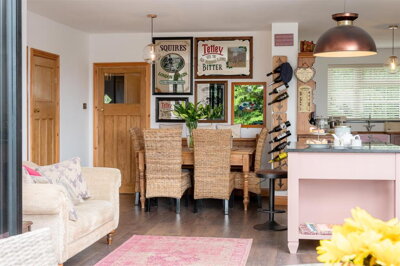
Browse 1 home for sale in Colton from local estate agents.
The 2 bed house market features detached, semi-detached, and terraced properties with two separate bedrooms plus living spaces. Properties in Colton range from Victorian and Edwardian period homes to modern new builds, with pricing varying across different neighbourhoods.
Colton’s market is best understood as a low-volume, high-variation local market rather than a steady urban one. homedata.co.uk records show a 15.2% fall in the broader COLTON data set over the past 12 months, but the sample is small enough that one or two sales can change the picture quickly. The same data also points to a wide spread by property type, with detached homes showing a median of £1,277,500 from two sales in 2025, semis at £273,500 from four sales, terraces at £345,000 from one sale and flats at £175,000 from one sale in 2022. For buyers, that means the value of a house depends heavily on plot size, condition, access and whether it has already been upgraded.
Supply is limited enough that buyers usually benefit from acting early when a suitable home appears. There are no verified active new-build developments within the Colton village boundary in the research we reviewed, so most buyers are looking at established stock rather than off-plan schemes. That makes surveys and careful comparison even more important, especially for older homes where recent work, insulation and drainage improvements can make a real difference. The wider LS24 market saw 308 sales in the last 24 months, which suggests healthy activity around the village even when Colton itself has only a handful of listings.

Colton sits in the Vale of York, so the landscape is flatter and more open than the dales or moorland that many people picture when they think of North Yorkshire. That setting suits buyers who want rural surroundings without feeling cut off, because the village is close enough to the wider Tadcaster and York area for shopping, schooling and work. In practical terms, life here is quieter, with countryside walks, farmland views and a strong sense of place doing most of the heavy lifting. The village scale also means you get a more settled community feel, which is exactly what many buyers want from a home in this part of the county.
Geology matters here as much as postcode charm, because Colton sits on Vale of York ground where clay can influence drainage and movement. That does not mean every home has problems, but it does mean a close look at cracking, extensions, gutters and surface water routes is wise before you commit. The regional housing stock often uses brick and stone, and older properties can have plenty of character, but they also reward a slower, more careful inspection. For buyers who value outdoor space, a rural outlook and a calmer pace, Colton offers a very different proposition from suburban York or larger market towns.
The supplied research did not identify a verified village-level school list for Colton, which is common for a small parish like this. Families usually widen their search to the nearby Tadcaster and York areas, where the choice of primary, secondary and sixth-form provision is broader. That makes catchment checks especially important, because the right house can be useful on paper but awkward for admissions if the boundary line falls the wrong way. If school access matters to you, ask for the exact postcode and check it against the relevant admissions map before you make an offer.
North Yorkshire is a large county, so education choices are spread across a wide rural area rather than concentrated in one compact suburb. Buyers often think about travel time as much as school reputation, particularly when school buses, after-school clubs and childcare handovers need to fit around work. Because Colton is small, the best school strategy is usually to match the home to the catchment first and then compare the commute, rather than the other way round. That approach helps keep the buying process realistic and avoids disappointment later if the address does not secure the place you expected.

Colton is best described as a car-friendly village with road access that links residents into the surrounding Tadcaster and York corridor. Most day-to-day travel will involve driving to nearby services, though that is part of the appeal for buyers who want a quieter base away from busier streets and parking pressure. For rail travel, York is the main station to aim for, giving access to frequent services towards Leeds and London after a drive or bus connection. Commuters who split time between home and office usually find the village workable if they are comfortable planning around those extra steps.
Road connections are one of Colton’s strengths, because the wider area links into the A64 corridor and then onto larger routes for Leeds, Selby and the A1(M). That makes the village practical for people who work across West and North Yorkshire, even if it is not a place where you can rely on a dense public transport timetable. Cycling can be appealing on the quieter rural lanes, but the route choice and lighting are not the same as in a city, so regular cyclists should check the exact road home before committing. Parking is usually easier than in urban areas, which is a genuine advantage if you own more than one car or need space for visitors.
Start by checking whether the home sits inside Colton itself or in the wider LS24 area, because the local market is small and figures can shift quickly between nearby pockets. Use our live search to compare asking prices, then arrange a mortgage agreement in principle before you begin serious viewings.
Well-presented homes in a small village can attract attention quickly, especially if they have parking, a good garden or a layout that suits modern family life. Ask about heating, drainage, broadband and access at the viewing, since those practical details matter as much as the décor.
A survey is especially useful here because older village homes can hide roof wear, damp, timber issues or movement linked to clay ground conditions. If the property is older, altered or unusually built, a fuller inspection may be the safer route.
Once you are happy with the property, tell your conveyancer straight away so searches, enquiries and contract checks can begin without delay. Rural purchases can involve extra questions about access, boundaries, drainage and any shared maintenance arrangements, so an early legal start helps.
After your mortgage, survey and legal checks are in place, you can agree dates and work towards exchange. Keep your removals, insurance and utility changes organised early so completion day feels calm rather than rushed.
After you move, keep an eye on local listings so you understand how Colton compares with nearby homes over time. That helps if you plan to improve, remortgage or sell later, because the village market is driven by limited supply and clear differences in quality.
Colton buyers should pay close attention to ground conditions, especially if the home is older or has been extended. Clay soils in the Vale of York can put pressure on drainage and foundations, so small cracks are worth checking properly rather than dismissing them as cosmetic. The research did not identify a specific flood zone for the village boundary, so every plot needs its own review instead of a one-size-fits-all assumption. If you are looking at a home with a long driveway, a converted outbuilding or a recent extension, ask for planning paperwork and building regulation sign-off as part of your checks.
Rural homes can also bring questions that are less common in town centres, such as shared access, maintenance of private drives and responsibility for hedges, ditches or drains. Freehold versus leasehold matters too, especially on conversions and flats, because service charges and ground rent can affect the true cost of ownership. Where a property sits in or near a conservation setting, or if it has listed elements, you should expect stricter repair rules and possibly a more detailed survey. A RICS Level 2 survey is a smart starting point for many Colton homes, while a larger or heavily altered property may justify a fuller building survey.
The local market does not show a verified concentration of new-build stock, so many buyers are looking at established homes rather than modern estates. That makes quality of maintenance especially important, because a well-cared-for cottage or detached house can save a great deal in future repair work. Look closely at roof coverings, windows, pointing, insulation and evidence of past damp treatment, since these are the details that affect comfort and costs after completion. If a home has already been modernised, ask what was done and when, because good records often tell you more than a quick cosmetic refresh.
homedata.co.uk records show a median sold price of £174,500 for the broader Colton data set, but the local sample is very small. A March 2025 sale at Colton Lodge reached £2,150,000, which shows how easily a premium property can distort the average in a village market. If you are comparing homes, it is better to look at the exact style, plot and condition than to rely on one headline figure. That is especially true in Colton, where a handful of transactions can move the numbers sharply.
Council tax bands vary by individual property, and the supplied research did not include a complete Colton band schedule. The right band depends on the home’s size, age and assessed value, so you should always check the listing or ask the agent before you offer. North Yorkshire Council is the local authority to contact if you want to confirm the band for a specific address. That extra check is worth doing before you finalise your budget.
The research did not identify a verified village-level school list for Colton, which is normal for a small rural parish. Most families look to nearby Tadcaster and York for primary, secondary and sixth-form options, then check the admissions maps before they commit to a property. Because catchment areas matter so much, the best school for one address may not be the best for another street a few minutes away. If education is a priority, start with the postcode and work backwards from there.
Colton is more car-led than rail-led, so most buyers use the road network for everyday travel. York is the main rail hub to use for longer journeys, with frequent services that connect to Leeds and London. Buses and local roads help with access to nearby towns, but services are not as dense as in a city suburb. If you rely on public transport, make sure the commute still works at the times you need it.
Colton can appeal to investors who understand small rural markets, because supply is limited and well-kept homes can stand out quickly. homedata.co.uk records also show 308 sales in the wider LS24 area over the last 24 months, which suggests that the surrounding market is active even if the village itself has fewer listings. The trade-off is that prices can be influenced by a tiny number of premium sales, so yield and resale strategy matter more than a quick headline comparison. For investment, focus on lettability, condition and long-term buyer demand rather than chasing the biggest house.
For a main home in 2024-25, stamp duty is 0% up to £250,000, 5% from £250,000 to £925,000, 10% from £925,000 to £1.5 million, and 12% above £1.5 million. First-time buyers pay 0% up to £425,000 and 5% from £425,000 to £625,000, with no relief above £625,000. On the £174,500 median sold price recorded by homedata.co.uk, a standard buyer would pay no stamp duty. On a £2,150,000 purchase, the tax bill would be much higher, so it is wise to budget early.
A survey is a sensible choice for most Colton purchases, especially where the home is older, extended or set on clay ground. A RICS Level 2 survey can flag movement, damp, roof wear and other issues that matter in a rural village market. If the house is listed, heavily altered or unusually complex, a fuller building survey may be a better fit. The small cost of a good inspection is often far less than the price of a missed defect.
The research did not verify any active new-build schemes within the Colton village boundary. That means most buyers are looking at existing homes, conversions and occasional one-off properties rather than estate-style new stock. Nearby settlements such as Copmanthorpe and Bilbrough have had more visible new-build activity, but those are outside the village itself. If a new home matters to you, widen the search area and compare the commute as well as the finish.
Stamp duty is one of the biggest upfront costs for buyers, so it pays to understand the thresholds before you make an offer. For 2024-25, the main residence rates are 0% up to £250,000, 5% from £250,000 to £925,000, 10% from £925,000 to £1.5 million and 12% above £1.5 million. First-time buyers get 0% up to £425,000 and 5% from £425,000 to £625,000, with no relief above £625,000. Because the median sold price recorded for the broader Colton data set is £174,500, many standard buyers in this area may pay no stamp duty at all.
Higher-value properties change the picture quickly, which is why the £2,150,000 sale at Colton Lodge is so useful as a reminder of how tax costs scale. At that level, the standard stamp duty bill for a main home would be £169,250 before you factor in legal fees, survey costs, mortgage charges and moving expenses. Buyers looking at premium homes should speak to their solicitor and mortgage adviser early, because the overall budget can shift very quickly once tax is added in. Our search pages help you compare the property first, then plan the numbers with a clear view of the true purchase cost.
Properties for Sale In London

Properties for Sale In Plymouth

Properties for Sale In Liverpool

Properties for Sale In Glasgow

Properties for Sale In Sheffield

Properties for Sale In Edinburgh

Properties for Sale In Coventry

Properties for Sale In Bradford

Properties for Sale In Manchester

Properties for Sale In Birmingham

Properties for Sale In Bristol

Properties for Sale In Oxford

Properties for Sale In Leicester

Properties for Sale In Newcastle

Properties for Sale In Leeds

Properties for Sale In Southampton

Properties for Sale In Cardiff

Properties for Sale In Nottingham

Properties for Sale In Norwich

Properties for Sale In Brighton

Properties for Sale In Derby

Properties for Sale In Portsmouth

Properties for Sale In Northampton

Properties for Sale In Milton Keynes

Properties for Sale In Bournemouth

Properties for Sale In Bolton

Properties for Sale In Swansea

Properties for Sale In Swindon

Properties for Sale In Peterborough

Properties for Sale In Wolverhampton

Enter your details to see if this property is within your budget.
Loans, cards, car finance
Estimated property budget
Borrowing + deposit
You could borrow between
Typical borrowing
Monthly repayment
Est. at 4.5%
Loan-to-value
This is an estimate only. Your actual budget may vary depending on interest rates, credit history, and personal circumstances. For an accurate affordability assessment, speak to one of our free mortgage advisors.
This calculator provides estimates for illustrative purposes only and does not constitute financial advice. Your home may be repossessed if you do not keep up repayments on your mortgage. Estimates based on 4.5% interest rate, repayment mortgage. Actual rates depend on your circumstances.
Homemove is a trading name of HM Haus Group Ltd (Company No. 13873779, registered in England & Wales). Homemove Mortgages Ltd (Company No. 15947693) is an Appointed Representative of TMG Direct Limited, trading as TMG Mortgage Network, which is authorised and regulated by the Financial Conduct Authority (FRN 786245). Homemove Mortgages Ltd is entered on the FCA Register as an Appointed Representative (FRN 1022429). You can check registrations at NewRegister or by calling 0800 111 6768.

We use cookies to show you personalised content and improve your experience of our website. Find out more in our Privacy policy and Cookie policy.