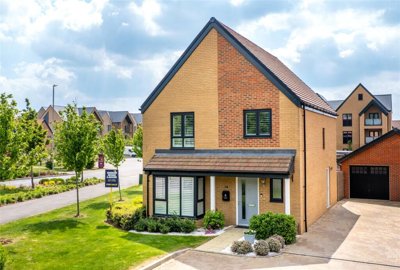
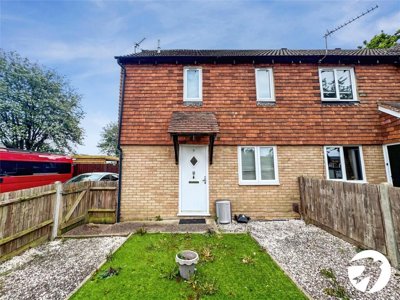
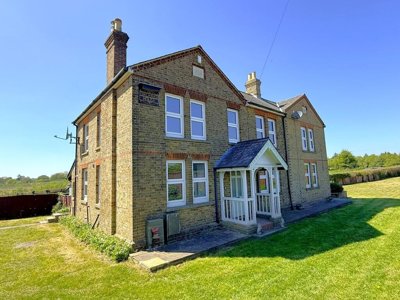
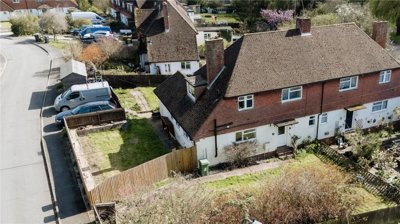
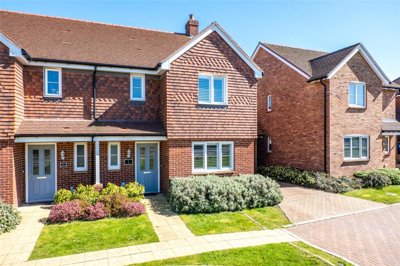
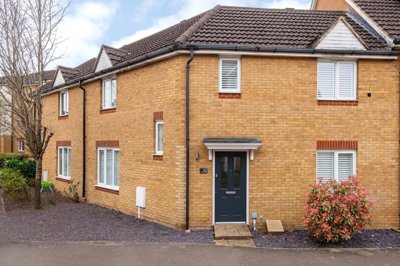
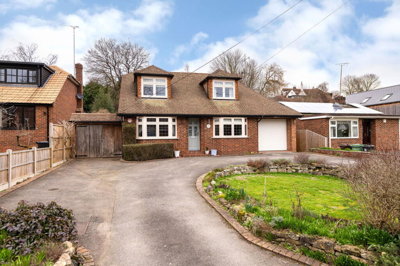
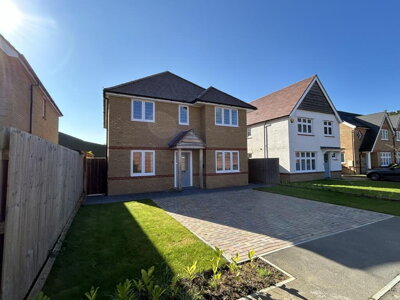
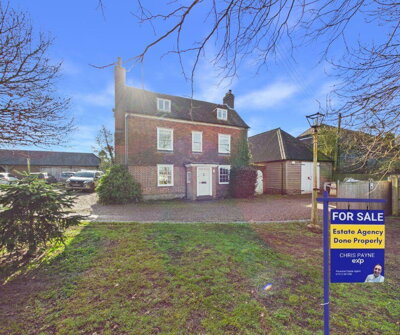
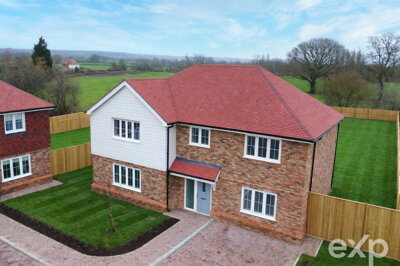
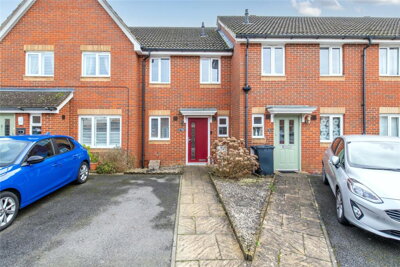
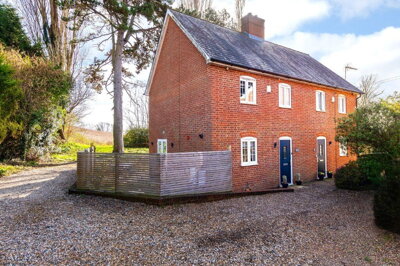
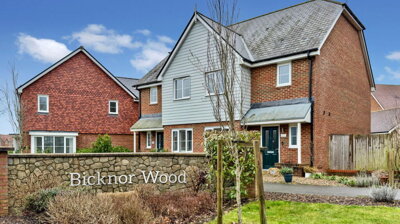
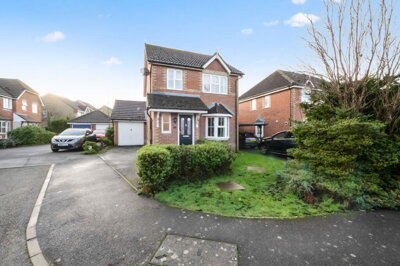
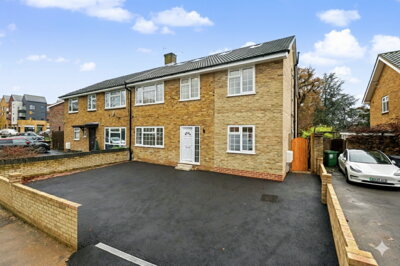
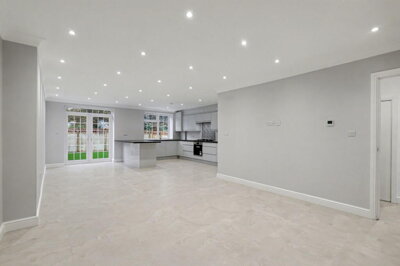
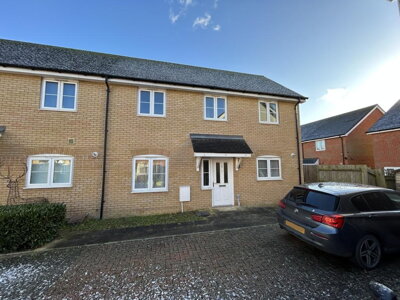
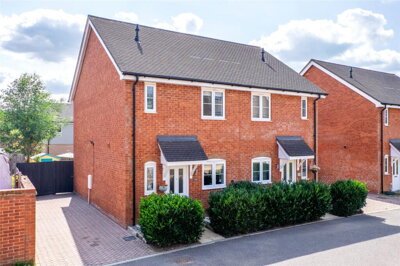
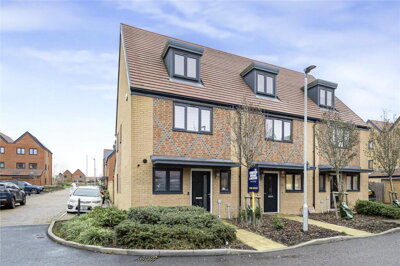
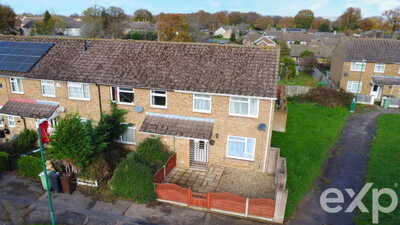
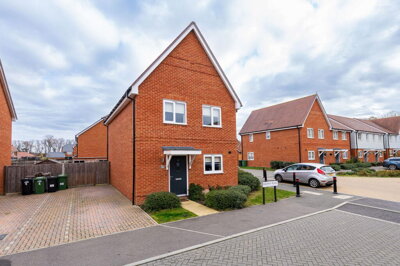
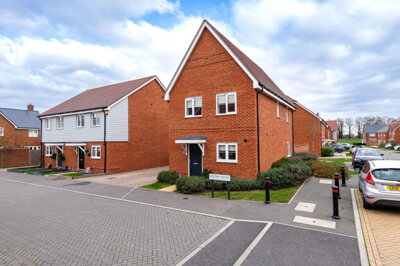
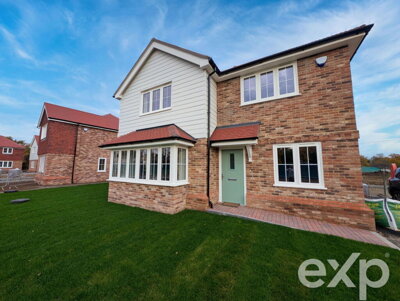
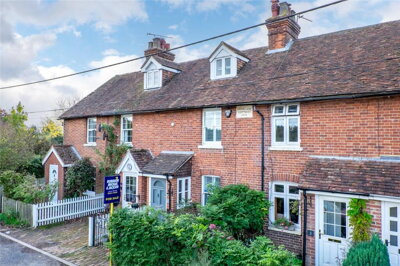
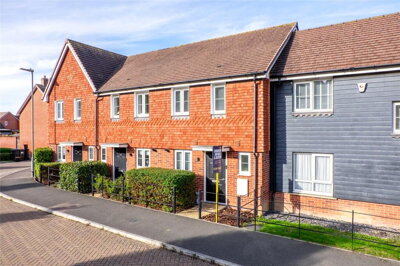
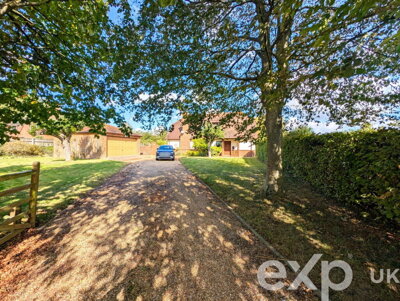
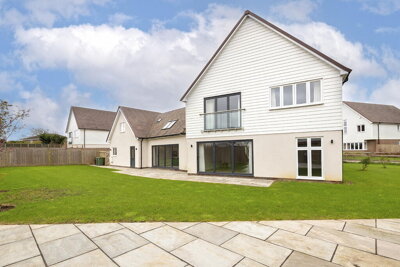
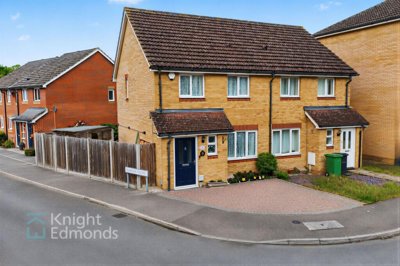
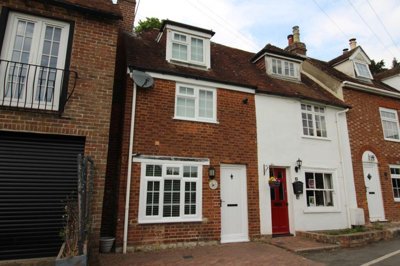
Browse 209 homes for sale in Chart Sutton from local estate agents.
Chart Sutton’s property market has been quietly strengthening, with overall house prices up 1% against the previous 12-month period. Values have also moved beyond the 2019 peak of £564,062, and now sit 3% above that mark. For buyers looking at larger family houses, detached homes achieve premium prices and currently average £705,714, a figure that reflects the appeal of generous gardens and period detail in the village. Semi-detached homes come in lower, at around £473,333 on average, giving young families and first-time buyers a more accessible way into this sought-after setting.
Certain parts of Chart Sutton have pulled ahead of the wider market. Lested Lane, for example, has recorded a striking 48% rise on its 2018 peak of £600,000 over the past year, which says a lot about demand for the right address. Heritage matters here too, and homes built in Kentish Ragstone, or those that still keep their original period features, often attract a premium from buyers who value that older workmanship. According to home.co.uk, there are around 14 active listings in the area, so buyers usually have some choice, but strong stock does not tend to linger. We use our local knowledge to spot where genuine value still exists in this established village market.
One reason Chart Sutton stays popular is its closeness to Maidstone, where buyers can reach a fuller range of jobs, shopping and healthcare while still living in a village setting. Family interest is often strongest around the village hall on Chart Hill Road and along Warmlake Road, thanks to their central position and easy link to local facilities. At the same time, the village's Neighbourhood Plan Steering Group is working to identify sites for approximately 35 new homes, something that could gradually alter stock levels over the next few years.

Set in countryside shaped by centuries of farming, including the long-established growing of hops and soft fruits, Chart Sutton still feels like a classic English village. At its centre are a traditional pub, a village hall in use since 1929, and straightforward access to walks through some of Kent’s most attractive landscape. The population density, 104.0 residents per square kilometre, helps explain the sense of space, with homes sitting on good-sized plots and green land wrapping around the built-up core. Life moves more slowly here, and that is part of the point.
Kentish Ragstone has done a lot to define the look of Chart Sutton. This hard grey limestone was quarried locally and used for generations in churches, farmhouses and estate buildings, and it still gives the village much of its identity. Houses with exposed ragstone walls, or original ragstone boundary walls, remain especially desirable because they tie directly back to the area’s farming past. There are 39 listed buildings in the village, including two of Grade II star status, so even an ordinary walk down the lane can turn up real architectural interest. Village life stays active as well, with the hall and the pub acting as regular social anchors for residents.
Beyond the houses, the countryside is a real draw. Footpaths run across farmland and woodland that has changed very little over the years, and our inspectors often note that homes on Back Lane and Norton Road enjoy particularly appealing rural outlooks without losing easy access to the village centre. The Greensand Ridge nearby adds more walking and cycling routes, which is one reason Chart Sutton appeals to buyers who want peace at home but plenty to do outdoors.

Older homes in Chart Sutton come with local quirks, and our surveyors know what to look for. Kentish Ragstone is common here, so wall condition needs close attention because this grey limestone can weather and erode over time, especially where lime mortar pointing has broken down. We also check carefully for earlier repairs carried out with hard modern cement mortars. In traditional ragstone walls those materials can trap moisture, and over years of exposure to Kent’s changing weather that can lead to concealed damage and weakened structure.
Ground conditions are another major point in Chart Sutton. The clay soils found across Kent bring notable shrink-swell subsidence risk, so when we survey here we look closely at foundations, drains and nearby vegetation. The South East of England is regarded as most at risk from this kind of movement, as clay contracts in dry spells and expands again in wet conditions, placing pressure on foundations and other structural parts. Homes with mature trees or large shrubs close to the building can be more exposed, because root-related moisture changes may intensify movement that later shows up as wall cracks, uneven floors, or doors and windows that begin to stick.
Timber defects are another regular issue in Chart Sutton surveys. Much of the housing stock is older and built with traditional methods, so our inspectors frequently find signs of dry rot and wet rot in structural timbers, especially where later renovation works have reduced ventilation in the name of energy efficiency without properly considering how older buildings need to breathe. Woodworm is also commonly found in floor joists, roof timbers and other structural elements. A minor infestation can be straightforward to treat, but widespread damage may mean substantial repair costs, and that can change the overall picture when buying or maintaining a period home in the village.
Families looking at Chart Sutton have a range of schooling options within reach, with primary schools in neighbouring villages serving the local catchments. Because the village sits within the Borough of Maidstone, buyers can also look across the wider spread of primary and secondary schools in the county town, including several with good or outstanding Ofsted ratings. It is sensible to check catchment boundaries and admissions rules carefully before committing to a property, since places are usually allocated by proximity and oversubscription criteria can differ a great deal from one school to another. We can help with current school performance information and admissions points that affect different parts of the village.
Secondary choices broaden once you look towards Maidstone. Grammar schools and comprehensive schools offer different routes for students, and the Kent grammar system means academically able pupils may gain places at selective schools through the eleven-plus examination. Comprehensive schools, meanwhile, provide broader curricula across academic, creative and practical subjects. Families considering independent education will also find several private schools in Kent with strong reputations, though that brings extra cost and transport planning. For older students, sixth form provision in Maidstone covers both A-level programmes and vocational qualifications, so continuing education locally is usually straightforward.
The village hall on Chart Hill Road is sometimes used for community educational events and activities, which fits well with Chart Sutton’s longstanding emphasis on community life and learning. Homes on Lested Lane and Warmlake Road are often favoured by families who want rural village surroundings without losing access to schools in Maidstone. Residents also tend to value the fact that the trip to Maidstone secondary schools is manageable by car, with school transport available for households that do not want to drive every day.

Chart Sutton manages a useful balance between rural character and practical access. The M20 is within a short drive, opening routes to the Channel ports, the M25 orbital motorway, and the Channel Tunnel terminal at Folkestone. Maidstone town centre lies roughly 5 miles away, concentrating a broad mix of shops, healthcare and employment. Buyers commuting towards London often find the drive to stations serving London Victoria or London Bridge workable, although those travelling daily may still prefer homes with easier access to direct rail services.
There is no railway station in Chart Sutton itself, so residents rely on stations in Maidstone and nearby towns for London services and wider connections across the network. Even so, the drive to those stations is usually under 15 minutes, and many village residents see that as a fair trade for avoiding the pressure and congestion of urban living. Buses do link the village with Maidstone, but they are geared more towards local use than commuter travel, which makes car ownership close to essential for most households. For leisure, the surrounding Kent countryside is excellent for cycling, with quiet lanes and signed routes across gently rolling ground.
For London workers who want village life, the nearby rail options can provide a balance that suits many households. Homes on Plough Wents Road and Green Lane are well placed for the M20 if car travel is a big part of the week, while still sitting within easy cycling reach of local amenities. Chart Sutton’s position also puts the Kent coast, Areas of Outstanding Natural Beauty and major cities within sensible driving distance. That reach matters.

Before going ahead with a purchase, we suggest spending proper time in Chart Sutton on different days and at different times. Walk around the village centre, check how close a possible home is to the amenities you would actually use, and pay attention to the feel of the place. With so many listed buildings across the village, it is also wise to look into any planning restrictions that could affect how you want to use or alter a property. We can talk you through the planning points that often come up in different parts of Chart Sutton.
Getting an agreement in principle from a mortgage broker or lender before you start viewings is a sensible first step. Sellers see it as proof that you are serious and financially ready to proceed, which matters in a market where detached homes average £705,714. It also stops you spending time on houses that sit outside your borrowing range. If you are ready to offer, having the paperwork already in place can put you ahead of buyers who have not arranged their finances. Our recommended mortgage brokers know the Kent market well and can advise on products that fit different circumstances.
It is worth seeing several homes in Chart Sutton before deciding, even if stock is limited. The village offers a mix, from Kentish Ragstone cottages to more modern family houses, and each one needs judging on its own merits. We usually suggest viewing at least three or four properties so you have a proper basis for comparison. For homes that move onto your shortlist, a RICS Level 2 survey is often a sensible step, particularly in a village with older housing and a good number of listed buildings that may call for closer specialist review. Our survey team knows the defect patterns we regularly encounter in Chart Sutton and can produce detailed reports to support a well-grounded decision.
Once you have found the right place, the next move is to put your offer through the estate agent handling the sale, backed up by your mortgage agreement in principle and any other paperwork that strengthens your position. Stock in the village is relatively tight, so competition is not unusual. It helps to think about what else you can offer beyond price, such as a quick closing date or flexibility within the chain. We can advise on market conditions in Chart Sutton and on offer levels using recent village sales evidence.
After your offer is accepted, appoint a conveyancing solicitor to deal with the legal side, including local searches, title checks and the contract pack. In a village with as many listed buildings as Chart Sutton, we would want that solicitor to examine historic consents and any restrictions attached to the property very carefully. Our recommended conveyancers are used to handling period homes across Kent and understand the extra issues that can arise with listed building purchases. As a guide, allow around £499 to £1,500 for conveyancing fees, with more complicated listed properties often sitting towards the higher end.
Once the searches are back and both sides have agreed terms, your solicitor will exchange contracts and fix the completion date. On completion day, the balance of funds is sent over and the keys are released for your new Chart Sutton home. We always suggest putting buildings insurance in place from exchange of contracts, so the property is protected during that final stretch. If you need them, we can point you towards surveyors, solicitors and other professionals who know the Chart Sutton market well and can help the transaction run as it should.
Listed buildings are one of the first things buyers need to think about in Chart Sutton. The village has a notably high number of them, and if you are buying a Grade II or Grade II star property, most alterations, extensions and even some repairs will require listed building consent. That can add both cost and time to future work. Planning policy is also worth watching, as the village's Neighbourhood Plan Steering Group is seeking sites for approximately 35 new homes. Our inspectors deal regularly with historic buildings across Kent and can flag issues that are easy to miss if you have not owned an older property before.
Kent’s geology brings another set of questions. The South East of England is recognised as being at high risk from shrink-swell subsidence, with clay ground contracting in dry weather and expanding in wet conditions, and that matters in a village like Chart Sutton where older homes dominate. A thorough survey should review foundations, drains and any nearby trees or planting that could worsen moisture-related movement. Our surveyors pay close attention to historic movement, crack patterns and drainage condition when inspecting homes on the clay soils beneath the village. For flood risk at a particular address, the right route is to check with the Environment Agency, because detailed local mapping has to be considered against the exact property location.
During viewings, look hard at the condition of any Kentish Ragstone walls. They can suffer from weathering and erosion, especially where mortar pointing has failed or where earlier repairs used unsuitable modern materials. Traditional ragstone should normally be repaired with lime mortar rather than cement, and where the wrong material has been used, hidden damage can build up and become expensive to put right. The age of many village homes also means the electrical and plumbing systems deserve careful checking, as older installations may need full replacement to satisfy current safety standards. With so many properties here being more than 50 years old, a RICS Level 3 survey can often be the better choice over a standard Level 2, particularly for older and more complex buildings with traditional construction.

Recent sales data puts the current average house price in Chart Sutton at £645,000. Detached homes sit at the top of the market, averaging £705,714, while semi-detached properties come in at roughly £473,333. Across the village, prices are 1% higher than a year ago and now stand 3% above the 2019 peak of £564,062, which points to a market that has remained healthy. Lested Lane has been especially strong, with values running 48% above their 2018 peak over the past year, a reminder that some pockets of the village can outperform the broader average by a clear margin.
For council tax, Chart Sutton falls within Maidstone Borough Council. Bands run from A to H, and the exact band depends on the assessed value of the property. In practice, many of the larger detached period houses in the village are likely to sit in the higher bands, while smaller cottages may fall into bands C or D. Before you commit, it is worth checking the precise band with the estate agent or by using the government council tax lookup tool, because council tax is one of the regular ownership costs that should sit in the budget from the outset.
Schooling remains a major consideration for buyers with children. Chart Sutton has access to primary schools in nearby villages and across the wider Maidstone area, and it falls within the Kent local education authority, where the selective grammar school system still operates. Catchment areas need careful research because admissions depend heavily on distance and oversubscription rules can shift from one academic year to the next. Several primary and secondary schools in Maidstone hold good or outstanding Ofsted ratings. Families with children nearing secondary transfer should also bear in mind that grammar entry depends on the eleven-plus examination taken in Year 6.
Transport in Chart Sutton is workable, but it is centred around the car. Local bus routes connect the village with Maidstone town centre, though services are less frequent than in urban areas, and there is no railway station in the village itself. The nearest stations are about 15 minutes away by car in surrounding towns, giving access to London and the wider network for longer-distance travel. The M20 is also easy enough to reach, which is useful for journeys towards London and the Channel ports. Day to day, most residents regard car ownership as essential, even though the village centre is compact enough for local errands on foot.
From an investment angle, Chart Sutton has several things in its favour. Historical price growth has been solid, the supply of available homes is limited, and period properties in attractive villages tend to attract a premium. The 39 listed buildings in the village restrict the supply of certain house types, while the proposed delivery of approximately 35 new homes through the Neighbourhood Plan process may increase stock gradually over time. Our research suggests that homes with Kentish Ragstone construction and original period detail continue to draw consistent buyer interest. Even so, anyone weighing potential returns should also account for the upkeep of older and listed buildings, where repair and renovation costs can rise well above those for modern homes.
From April 2025 onwards, stamp duty land tax is charged at 0% on the first £250,000 of the purchase price, 5% on the portion from £250,001 to £925,000, 10% on the portion from £925,001 to £1,500,000, and 12% on anything above £1,500,000. First-time buyers get relief on the first £425,000, with 5% payable between £425,001 and £625,000. On a typical Chart Sutton purchase at the current average price of £645,000, that means a first-time buyer would pay £11,000, while a home mover would pay £19,750. Those figures assume the property is your main residence and that you do not own any other property anywhere in the world, so it is still wise to take professional financial advice on your exact liability.
From £375
A visual inspection suited to conventional properties in reasonable condition, covering the main defects. We generally recommend it for most Chart Sutton homes built after 1950.
From £600
For older homes, unusual construction, or listed buildings, this is the more detailed option. It is a comprehensive inspection where careful assessment of defects and repair choices is important.
From £499
Our recommended conveyancers know Chart Sutton well, including the listed building issues that can arise and the local search requirements that need to be covered.
From 4.5%
Whole-of-market brokers can search out the strongest rates for Chart Sutton purchases, and they also have access to specialist lenders for period properties.
Buying in Chart Sutton means looking beyond the asking price, because stamp duty land tax can become a sizeable part of the overall cost. On a detached family house at the current average of £705,714, a home mover who does not qualify for first-time buyer relief would pay SDLT of £22,786 on the amount above £250,000. A first-time buyer gets a higher nil-rate band of £425,000, which cuts the SDLT bill on a comparable purchase to £14,071. Those numbers show why proper financial advice matters before you commit, particularly if you want a realistic picture of every upfront cost.
There are other purchase costs to plan for as well. Solicitor conveyancing fees usually fall between £499 and £1,500, depending on complexity and on whether the property is freehold or leasehold, and listed homes often need more detailed checking of old consents and restrictions. Local searches, including drainage and water, environmental checks and local authority searches, commonly add £250 to £500, with extra charges possible where management company enquiries or community charge searches are needed. Survey costs also vary by age and type, with a RICS Level 2 survey starting at around £375 for a straightforward property, while a RICS Level 3 survey for a larger older Chart Sutton house may reach £600 to £1,000 or more because period construction here can be much more involved.
Removal charges, lender valuation fees where required, and a sensible allowance for extra survey-related costs should all go into the moving budget, along with buildings insurance from exchange of contracts. In Chart Sutton, houses of significant age or non-standard construction can also trigger extra inspections requested by the lender, which adds to the total. Some buyers will also want to consider life insurance or critical illness cover when taking on a substantial mortgage in the village, particularly for family security. Speaking to a whole-of-market mortgage broker before the property search starts can help set out the full financial commitment and narrow down the products that suit your circumstances best.

Properties for Sale In London

Properties for Sale In Plymouth

Properties for Sale In Liverpool

Properties for Sale In Glasgow

Properties for Sale In Sheffield

Properties for Sale In Edinburgh

Properties for Sale In Coventry

Properties for Sale In Bradford

Properties for Sale In Manchester

Properties for Sale In Birmingham

Properties for Sale In Bristol

Properties for Sale In Oxford

Properties for Sale In Leicester

Properties for Sale In Newcastle

Properties for Sale In Leeds

Properties for Sale In Southampton

Properties for Sale In Cardiff

Properties for Sale In Nottingham

Properties for Sale In Norwich

Properties for Sale In Brighton

Properties for Sale In Derby

Properties for Sale In Portsmouth

Properties for Sale In Northampton

Properties for Sale In Milton Keynes

Properties for Sale In Bournemouth

Properties for Sale In Bolton

Properties for Sale In Swansea

Properties for Sale In Swindon

Properties for Sale In Peterborough

Properties for Sale In Wolverhampton

Enter your details to see if this property is within your budget.
Loans, cards, car finance
Estimated property budget
Borrowing + deposit
You could borrow between
Typical borrowing
Monthly repayment
Est. at 4.5%
Loan-to-value
This is an estimate only. Your actual budget may vary depending on interest rates, credit history, and personal circumstances. For an accurate affordability assessment, speak to one of our free mortgage advisors.
This calculator provides estimates for illustrative purposes only and does not constitute financial advice. Your home may be repossessed if you do not keep up repayments on your mortgage. Estimates based on 4.5% interest rate, repayment mortgage. Actual rates depend on your circumstances.
Homemove is a trading name of HM Haus Group Ltd (Company No. 13873779, registered in England & Wales). Homemove Mortgages Ltd (Company No. 15947693) is an Appointed Representative of TMG Direct Limited, trading as TMG Mortgage Network, which is authorised and regulated by the Financial Conduct Authority (FRN 786245). Homemove Mortgages Ltd is entered on the FCA Register as an Appointed Representative (FRN 1022429). You can check registrations at NewRegister or by calling 0800 111 6768.

We use cookies to show you personalised content and improve your experience of our website. Find out more in our Privacy policy and Cookie policy.