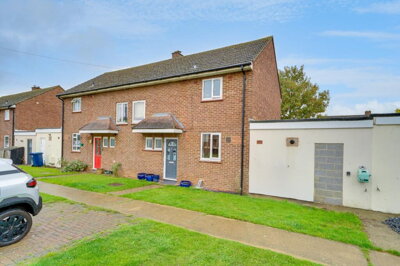
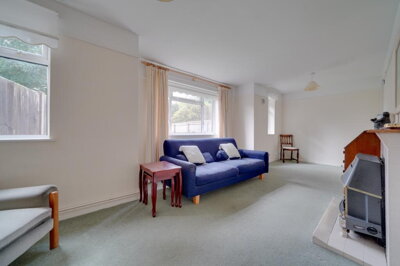
Browse 5 homes for sale in Broughton from local estate agents.
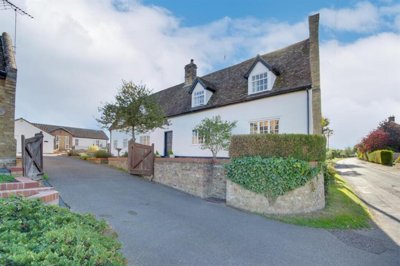
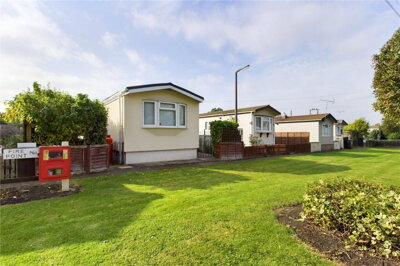
The 2 bed house market features detached, semi-detached, and terraced properties with two separate bedrooms plus living spaces. Properties in Broughton range from Victorian and Edwardian period homes to modern new builds, with pricing varying across different neighbourhoods.
Broughton’s housing market mirrors the village itself, small in scale, sought after, and weighted towards bigger homes. Census data for Broughton and Old Dalby Parish shows 45% of dwellings are detached, comfortably above the district, regional, and national averages of approximately 32%, 26%, and 23%. Semi-detached homes make up 39% of the stock, with terraced properties and flats accounting for the remaining 15%. In practice, that points to a market centred on family housing with decent outside space, one reason Broughton appeals to buyers who want room to grow.
Across Huntingdonshire, detached homes average around £488,000, semi-detached properties about £306,000, and terraced houses approximately £243,000. Flats and maisonettes come in at roughly £151,000 across the district. In Broughton, the Conservation Area setting and the village’s historic feel often push values above comparable homes nearby. Supply is tight, demand is steady, and well-kept houses can draw strong interest very quickly.
There is very little new build supply in Broughton itself. One small proposal for 5 homes on Causeway Road has been put forward, but it sits within the Conservation Area and close to listed buildings, so any scheme there would face close planning scrutiny. Broughton Parish Council has also opposed larger proposals in nearby locations including Hungary Hall Farm and Sapley Park Garden Village, which reflects a clear preference to keep the village at its current character and scale. With so little in the pipeline, existing homes are likely to remain well supported in value for the foreseeable future.

Source: Land Registry, home.co.uk, homedata.co.uk (December 2025)
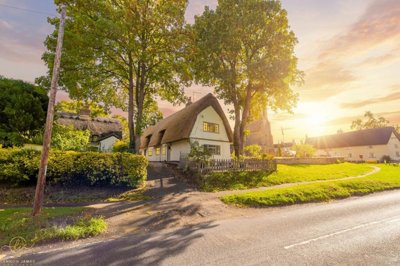
Life here has the feel of a traditional Cambridgeshire village, with historic buildings, a close community, and countryside on the doorstep. Broughton takes its name from its position by the Brook, and the Bury Brook is still a defining feature of the village, even if it brings periodic flooding with it. At the centre you will find the village green and the Lock-Up, one of only four remaining in Cambridgeshire, built around 1840. A walk through the village also takes in the Grade II* All Saints Church, whose origins go back to the 12th century, with rebuilding in the 13th and 14th centuries.
The village economy grew from agriculture and rural trades, and older records show Broughton once had active brewing, baking, butchery, blacksmithing, carpentry, currying, and milling. That practical, local streak has not disappeared. The Crown Inn public house, for example, was bought by a village consortium in 2000 so it could remain part of local life. It says a lot about Broughton that residents have stepped in to protect amenities and keep the social side of the village going.
In the wider Huntingdonshire area, 80% of the working-age population is economically active. Broughton benefits from being close enough to larger employment centres for residents to maintain professional careers while living in a village setting. Day-to-day life is helped by easy access to nearby market towns for shopping, healthcare, and leisure, while the A141 links into Huntingdon and the wider Fenland road network. Cambridge and Peterborough are both within reach for work as well.

Schooling takes a little planning because Broughton is small, but families have a fair choice within a sensible drive. Primary places are usually found in nearby villages and market towns rather than in the village itself. Spaldwick Primary School sits approximately 4 miles away and serves several surrounding villages, and Buckden and Kimbolton are also within easy driving distance. For many families, the appeal lies in those smaller village schools, with their modest class sizes and stronger local links.
For secondary education, most families look to the larger settlements nearby. Hinchingbrooke School in Huntingdon is a well-used option, with a broad curriculum and plenty of extracurricular activities. Catchment rules and admissions criteria matter here, so we always suggest checking them early in the process rather than later. Cambridgeshire generally maintains high standards, and the county’s selective system can also open up grammar school options in neighbouring areas for some pupils.
Early years childcare is available in Broughton and nearby villages, although rural provision can be limited. Many households balance village living with a short school run, trading a bit more travel for the benefits of a quieter setting. Sixth form and further education are available in nearby towns, while Cambridge and Peterborough offer wider higher education options within commuting distance. The flat Cambridgeshire landscape helps too, and older children often cycle to local schools when the weather plays along.

Despite its rural position, Broughton is not hard to reach. The village is close to the A141, giving residents straightforward road links to Huntingdon and the broader Fenland network. That makes commuting to Cambridge or Peterborough realistic for plenty of buyers who want countryside living without cutting themselves off. By car, Huntingdon is usually around 15-20 minutes away, and Cambridge is commonly reached in about 35-40 minutes, traffic permitting.
Most rail journeys start from a neighbouring market town rather than from Broughton itself. Huntingdon station is the main draw, with East Coast Main Line services to London and the North, and direct trains to London King's Cross taking approximately 1 hour 40 minutes. Peterborough adds another layer of choice, with services to Leeds, Newcastle, and Birmingham. Anyone commuting towards Cambridge will usually rely on the A14 and A10, though peak-time traffic is worth building into the timetable.
Bus links do serve Broughton and connect it with nearby villages and market towns, but frequencies are lighter than you would expect in an urban area. Some residents mix public transport with cycling for local trips, helped by the generally flat Cambridgeshire countryside. In reality, most households find a car more or less essential, even if the short run to everyday facilities keeps driving distances fairly manageable. Being near the A141 also helps, with the A14 giving wider access across Cambridgeshire.

Before we start viewing properties, it makes sense to line up an agreement in principle with a mortgage broker. That gives sellers confidence that finance is in place and can strengthen your position if a house attracts competing offers. Mortgage rates do move around, so comparing lenders is still worthwhile. A Decision in Principle is especially useful in a village market like Broughton, where the better homes do not always stay available for long.
It is worth spending proper time in Broughton before committing to a purchase. We would suggest driving around Causeway Road, Bridge Road, and Bull Lane to get a feel for the different positions and to see which spots have been affected by flooding in the past. Local conversations can be just as useful, particularly on the subject of the Bury Brook, drainage, and day-to-day amenities. Knowing where water tends to collect, and which homes already have flood resilience measures, can make a real difference to the choice you make.
We can help you browse all available properties in Broughton and the surrounding Huntingdonshire area through Homemove. Once viewings are booked, look carefully at the condition of older buildings, including damp, the state of the roof, and any signs of movement that could point to foundation problems. In a village with Conservation Area controls, it is also sensible to check whether alterations have been carried out with the right permissions. That can matter a lot later on.
For any property you are seriously considering, we would usually advise a RICS Level 2 Survey (Homebuyer Report). Much of Broughton’s housing dates from the 16th and 17th centuries, and that survey can highlight issues such as damp, subsidence, roof defects, and old electrics. If the property is listed or there are visible structural concerns, a RICS Level 3 Survey may be the better fit. Our surveyors are used to period buildings and report in detail on the condition of each part of the property.
Once an offer is accepted, we recommend instructing a conveyancing solicitor to deal with the legal side. The usual searches, local authority, drainage, and environmental, are particularly important here because they can reveal flood risk and the planning restrictions that apply in the Conservation Area. Given Broughton’s flooding history, we would also want the solicitor to look closely at any flood risk assessments and at the insurance arrangements attached to the property. Those details matter.
After the searches are back and the mortgage offer is confirmed, the transaction moves to exchange of contracts and payment of the deposit. Completion often follows within weeks, and that is when the keys are released and the move can happen. We would strongly suggest arranging buildings insurance well before completion, especially for homes in flood-risk areas where insurers sometimes ask for extra information before quoting.
Flood risk is one of the main practical issues buyers need to consider in Broughton. The Bury Brook and surface water have both caused problems, and properties on Causeway Road, Bridge Road, Bull Lane, and Illings Lane have been affected, with 16 properties suffering internal flooding in December 2020 alone. If you are viewing in those locations, ask directly about past incidents and any resilience works already carried out. Insurance can cost more in higher-risk areas, so that should sit in the budget from the start. The Bury Brook is only 15 metres above sea level, which leaves the village exposed when heavy rain arrives.
Most of the village centre sits within the Conservation Area, so extensions, alterations, and new outbuildings are likely to receive closer attention from Huntingdonshire District Council. Anyone buying with renovation plans should speak to the planning department before going too far. There are also 27 listed buildings in Broughton, which means stricter controls on external changes to historic properties. That can protect the village’s character, but it also adds another layer of process, because Listed Building Consent is required for works to listed buildings.
Older buildings are a big part of Broughton’s appeal, but they do come with specific maintenance demands. Cottages dating from the late 16th and 17th centuries often use timber frame, thatch, and traditional brick, and they were usually built with simple forms and local materials tied to the village’s agricultural past. Farmhouses tend to be larger, though many also date from the 17th century. Brick or weatherboarded outbuildings with slate or pantiled roofs are common too, and those can need regular upkeep. We would always want a careful survey here, not least because older homes may still have dated electrics, older heating systems, and lower insulation levels than modern buyers expect.

Broughton has a well-documented flooding history linked to the Bury Brook and surface runoff. In December 2020, 16 properties were flooded internally. Looking ahead, climate change projections indicate peak river flows could rise by up to 39% and peak rainfall events by up to 40% by the 2070s. For that reason, we strongly recommend a full flood risk assessment before buying any property in the village.
Buying in Broughton involves more than the agreed purchase price, and Stamp Duty Land Tax is usually the largest extra cost. From April 2024, the nil-rate threshold for standard residential purchases is £250,000, so anything below that attracts no stamp duty. On the portion between £250,001 and £925,000, the rate is 5%. Above £925,001, it rises to 10% up to £1.5 million, with 12% charged on any amount over that level. Those thresholds apply across England and Northern Ireland.
There is extra help for first-time buyers. The nil-rate threshold rises to £425,000, and 5% applies between £425,001 and £625,000. Once the price goes above £625,000, that relief falls away and standard rates apply instead. Because many Broughton homes are detached and priced above £400,000, some buyers will receive partial first-time buyer relief rather than full relief. Our mortgage partners can run the exact figures against the property price you are considering.
Other costs need to be allowed for as well. A RICS Level 2 Survey starts from around £350 for properties up to £500,000, and with Broughton’s older housing stock we would usually advise budgeting properly for survey work. Conveyancing fees generally start from £499 on a standard purchase, although listed buildings or planning complications can push that higher. Search fees, Land Registry fees, and mortgage arrangement fees also need to be included. A good conveyancing solicitor should set out the full cost picture before matters progress too far.

There is no separate published average specifically for Broughton village, so buyers often use Huntingdonshire figures as a guide. At district level, detached homes average around £488,000, semi-detached properties approximately £306,000, and terraced homes about £243,000. Given Broughton’s Conservation Area setting and its high proportion of detached housing, prices in the village are likely to sit at or above those district averages for comparable types. Limited stock helps with that, as does the fact that buyers looking for this kind of village setting are often prepared to pay a premium for the right house.
Broughton does not have its own primary or secondary school, so families usually look to surrounding villages and market towns. Several schools rated Good and Outstanding can be reached within a reasonable drive. Spaldwick Primary School is approximately 4 miles away and serves a number of nearby villages, while Buckden and Kimbolton are also popular for primary education. Hinchingbrooke School in Huntingdon is one of the better-known secondary options. Catchments and admissions can affect the outcome, so it is worth checking those details carefully, especially as some families also consider schools in Cambridge or Peterborough for particular academic programmes.
Public transport is available, but it is not one of Broughton’s strongest points. Bus services link the village to nearby communities and market towns, though evening and weekend frequencies can be thin. For rail travel, most people head to Huntingdon, where East Coast Main Line services run to London and direct trains to London King's Cross take approximately 1 hour 40 minutes. Day-to-day, private cars do most of the heavy lifting for commuting and essential trips. The saving grace is the easy access to the A141, which keeps regional travel fairly straightforward.
Broughton’s market draws strength from a simple mix, attractive village surroundings, a short supply of available homes, and steady demand from buyers who want rural Cambridgeshire living. The Conservation Area designation, along with local resistance to large development schemes, helps preserve the character that underpins values. Between 1995 and 2015, 492 residential property sales were recorded in Broughton and Old Dalby Parish, showing a consistent level of market activity. Buyers and investors do still need to weigh the drawbacks, particularly flood risk in some locations, planning restrictions, and the village’s small scale, which narrows rental demand to people actively seeking village life. Homes in flood-risk areas may also face higher insurance costs and can be less liquid when it is time to sell.
For council tax, properties in Broughton fall within Huntingdonshire District Council, with charges also reflecting Cambridgeshire County Council and local policing contributions. The band for any given property depends on its assessed value, so we would always check the exact band before moving ahead. That matters in a village with such a mixed housing stock, from 16th and 17th century cottages through to more modern homes. Smaller historic cottages may sit in bands A-C, while larger detached houses can fall into bands E or F. Current bands can be checked through the Valuation Office Agency website.
From April 2024, standard Stamp Duty Land Tax is charged at 0% on the first £250,000, 5% on the portion from £250,001 to £925,000, 10% on the portion from £925,001 to £1.5 million, and 12% on any amount above £1.5 million. First-time buyers claiming relief pay 0% on the first £425,000 and 5% on the portion up to £625,000. As many Broughton properties sit below the £625,000 mark, that relief can be relevant to a good number of purchases. On a £450,000 purchase, for instance, a first-time buyer would pay 0% on the first £425,000 and 5% on the remaining £25,000, which comes to £1,250.
The main flood threat in Broughton comes from the Bury Brook and from surface water. Causeway Road, Bridge Road, Bull Lane, and Illings Lane have all seen flooding in the past, and 16 properties suffered internal flooding in December 2020 alone. The Bury Brook stands only 15 metres above sea level, so keeping the area dry depends on significant pumping. Because of that risk, the Environment Agency and Cambridgeshire County Council back Broughton’s Flood Action Group. Projections suggest peak river flows could increase by up to 39% and peak rainfall events by up to 40% by the 2070s, so the problem may become more severe over time. We would want buyers to obtain flood information from the Environment Agency and to budget for any resilience measures a property may need.
From 4.5% APR
Compare mortgage deals from leading lenders
From £499
Expert conveyancing solicitors for your purchase
From £350
Detailed inspection of your new Broughton home
From £600
Comprehensive structural survey for older properties
Properties for Sale In London

Properties for Sale In Plymouth

Properties for Sale In Liverpool

Properties for Sale In Glasgow

Properties for Sale In Sheffield

Properties for Sale In Edinburgh

Properties for Sale In Coventry

Properties for Sale In Bradford

Properties for Sale In Manchester

Properties for Sale In Birmingham

Properties for Sale In Bristol

Properties for Sale In Oxford

Properties for Sale In Leicester

Properties for Sale In Newcastle

Properties for Sale In Leeds

Properties for Sale In Southampton

Properties for Sale In Cardiff

Properties for Sale In Nottingham

Properties for Sale In Norwich

Properties for Sale In Brighton

Properties for Sale In Derby

Properties for Sale In Portsmouth

Properties for Sale In Northampton

Properties for Sale In Milton Keynes

Properties for Sale In Bournemouth

Properties for Sale In Bolton

Properties for Sale In Swansea

Properties for Sale In Swindon

Properties for Sale In Peterborough

Properties for Sale In Wolverhampton

Enter your details to see if this property is within your budget.
Loans, cards, car finance
Estimated property budget
Borrowing + deposit
You could borrow between
Typical borrowing
Monthly repayment
Est. at 4.5%
Loan-to-value
This is an estimate only. Your actual budget may vary depending on interest rates, credit history, and personal circumstances. For an accurate affordability assessment, speak to one of our free mortgage advisors.
This calculator provides estimates for illustrative purposes only and does not constitute financial advice. Your home may be repossessed if you do not keep up repayments on your mortgage. Estimates based on 4.5% interest rate, repayment mortgage. Actual rates depend on your circumstances.
Homemove is a trading name of HM Haus Group Ltd (Company No. 13873779, registered in England & Wales). Homemove Mortgages Ltd (Company No. 15947693) is an Appointed Representative of TMG Direct Limited, trading as TMG Mortgage Network, which is authorised and regulated by the Financial Conduct Authority (FRN 786245). Homemove Mortgages Ltd is entered on the FCA Register as an Appointed Representative (FRN 1022429). You can check registrations at NewRegister or by calling 0800 111 6768.

We use cookies to show you personalised content and improve your experience of our website. Find out more in our Privacy policy and Cookie policy.