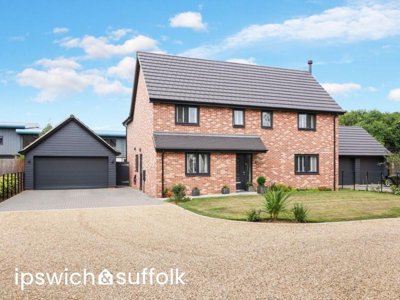
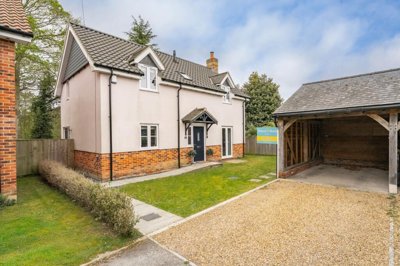
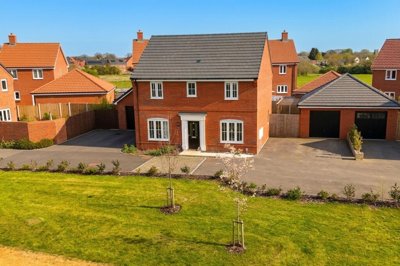
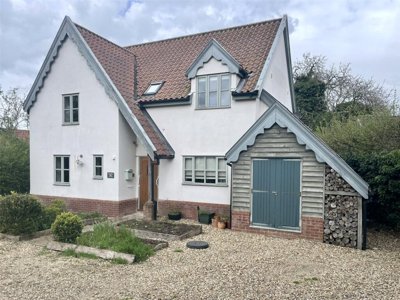
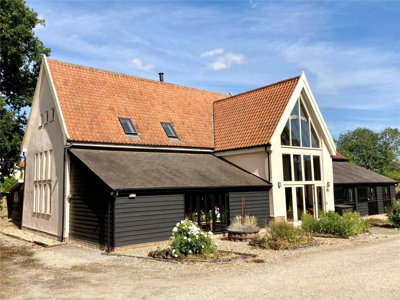
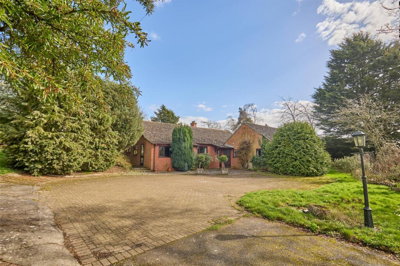
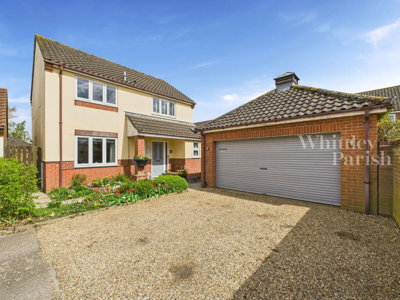
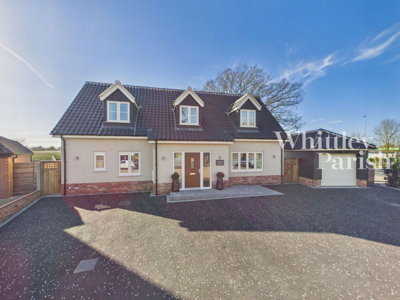
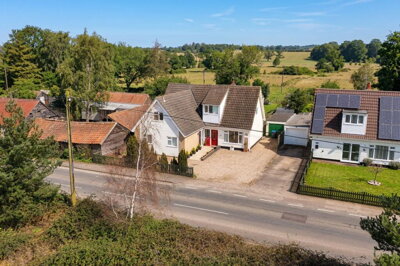
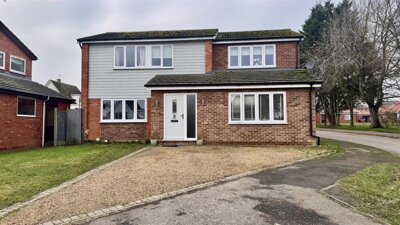
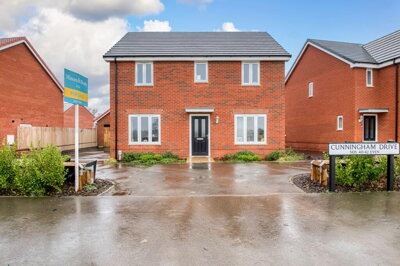
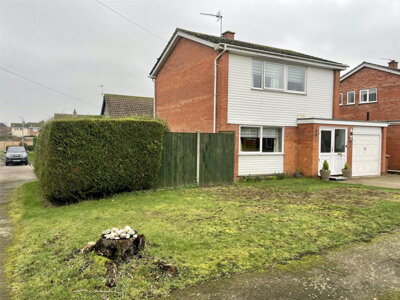
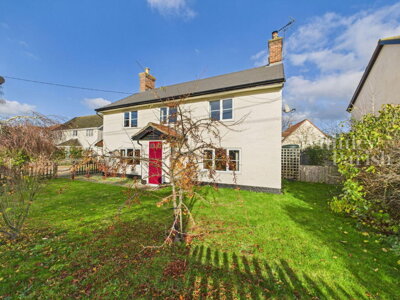
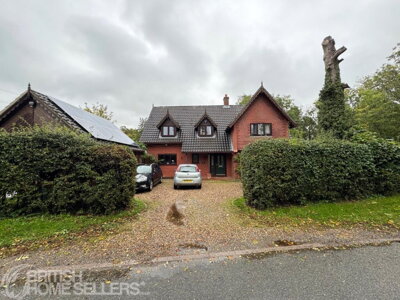
Browse 17 homes for sale in Brome and Oakley from local estate agents.
The larger property sector typically features multiple bathrooms, substantial reception space, and private gardens or off-street parking. Four bedroom houses in Brome And Oakley span detached, semi-detached, and occasionally terraced configurations, with styles ranging from period properties to modern executive homes.
Brome and Oakley’s market has the steady feel you would expect in rural Mid Suffolk, with a blend of older homes and newer ones appealing to different kinds of buyers. Average values sit around £405,000, and home.co.uk has recorded a fairly consistent level of activity over the past year. On The Street, the main route through the village, prices tend to edge higher, averaging £435,000, which points to solid demand for the most central spots. homedata.co.uk backs that up with a similar parish-wide average of £415,000, suggesting a settled, mature market rather than one swinging sharply up or down.
Some parts of Suffolk have had notable new build growth, but Brome and Oakley has largely kept its village feel. Most of the housing stock is established rather than recently constructed. We do see individual homes marketed as new or newly completed, though these are usually single properties coming up for sale, not larger schemes. That lack of new build supply means buyers wanting modern layouts or specifications may need to cast the net wider, or focus on homes that previous owners have already refurbished. For many people, that is part of the draw, space, character and a properly rural setting without feeling cut off from everyday conveniences.
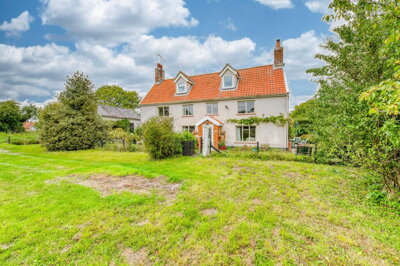
In Brome and Oakley, the housing stock is mainly detached and semi-detached homes built in traditional Suffolk styles, with brick, render and timber framing all appearing depending on the age of the property. There is a strong showing of 18th and 19th century homes across the village, many with exposed beams, inglenook fireplaces and flagstone floors. They have real appeal. But our surveyors regularly find that older building methods, however attractive, need a careful look to pick up maintenance concerns that can build over decades of occupation.

Life here moves at a rural Suffolk pace, and that is much of the point. Brome and Oakley takes its name from the two settlements of Brome and Oakley, which together make up a small but close community in Mid Suffolk district. Around them, you get rolling farmland, hedgerows and the familiar Suffolk landscape that has altered very little over generations. That agricultural backdrop brings easy access to walking routes, wildlife habitats and the sort of quiet that can be hard to find elsewhere.
Positioned between larger settlements, the village gives residents a sensible balance, quiet home life with services not too far away. In nearby Eye there are convenience shops, pubs and community facilities, while Diss adds supermarkets, independent retailers and healthcare provision. The local calendar usually includes village events, farmers markets and community gatherings that say a lot about the social side of rural Suffolk. Families who move to Brome and Oakley often tell us the same things mattered most, a safer-feeling setting, room for children to be outdoors, and a genuine sense of belonging.
From the village, footpaths lead out through farmland towards neighbouring places including Redlingfield and Aspall. The River Dove runs through the wider Mid Suffolk area and opens up riverside walking opportunities, although it sits some distance from the village centre itself. For longer days out, the Suffolk Coast and Heaths Area of Outstanding Natural Beauty is within reasonable driving distance, with its designated trails and coastal scenery. We help buyers pin down exactly how far these places are from different parts of the parish, so the setting works for the way they actually live.

Families looking at Brome and Oakley have a decent spread of schooling options within manageable travelling distance. Primary education is provided through nearby villages and towns, and many of these schools are smaller, community-based settings taking children from reception to Year 6. They often benefit from close links with parents and governors, which can make for supportive learning environments, something OFSTED inspections across the region regularly highlight. Catchment areas and admissions do vary, though, so we always suggest checking how the exact location of a home within the parish may affect the schools available.
For primary schooling, Eye is the nearest obvious option, lying approximately three miles from the village centre, alongside other schools in surrounding villages serving the rural catchment. These schools often have smaller classes than urban equivalents, which can give teachers more scope to focus on individual pupils. OFSTED reports across the Mid Suffolk area frequently mention a strong community feel, good teaching standards and adequate facilities for sport and outdoor learning. We always recommend seeing likely schools in person during the application process to judge whether the setting suits your childrens needs.
Secondary choices for local families include schools in Eye, Diss and other nearby market towns, each with its own mix of curricula, extracurricular activities and specialisms. Teaching standards are generally good, and students commonly move on to further education or employment after their GCSEs. Sixth form options are also available in nearby towns, which means many students can continue studying locally rather than heading to a larger city. That helps make Brome and Oakley attractive for families who want rural living without giving up access to schooling at every stage. Admission policies are worth checking early, especially as rural catchment arrangements can be complicated and oversubscribed places do happen.

Getting around from Brome and Oakley is fairly straightforward by road. The village is close to the A140, a key route through Mid Suffolk linking Ipswich and Norwich. For many residents, that is the main road used for work, shopping and leisure trips into larger centres, with Ipswich usually around 40 minutes away in normal traffic. The A14 is also accessible from here, opening routes towards Cambridge, Felixstowe port and the wider motorway network.
Diss is the nearest rail hub, with direct services to Norwich, Cambridge and London Liverpool Street, so the village can work well for commuters heading into the capital or other major employment centres. The journey from Diss to London is approximately 90 minutes, which keeps Brome and Oakley within realistic reach for people splitting the week between home and office. Bus links do connect the village with surrounding places, but they are less frequent than in urban areas, so most residents find a car all but essential. Cycling is mainly on country lanes and rural roads, popular for leisure riding, though limited designated cycle paths mean riders need to take care.
For anyone commuting by car, Norwich is approximately 45 minutes away via the A140, while Cambridge is around an hour and 20 minutes using the A14. Diss station gives another option for longer trips, letting residents combine rail for distance travel with the car for everyday local journeys. We have spoken with plenty of buyers weighing up exactly that balance, and we can help with a realistic view of journey times and transport choices during the search.

One practical starting point is to look through current Brome and Oakley listings on Homemove and measure them against the local average of around £405,000. That gives a clearer sense of what a given budget might secure in the village. We set out the key details, descriptions, photographs and estate agent contact information, so it is easier to decide which homes are genuinely worth pursuing.
Once you have a shortlist, contact local estate agents and line up viewings that fit your requirements. We always suggest seeing properties at different times of day, so you can get a feel for the neighbourhood, traffic levels and the general mood of the area. It is also worth visiting on both weekdays and weekends, because village life can feel quite different across the week, and seasonal changes in traffic or activity are easier to spot that way.
Before making an offer, speak with mortgage brokers and get an agreement in principle in place. In a rural market that can still be competitive, that helps show you are a serious buyer. Sellers tend to respond better when financing is already organised and the purchase looks capable of moving forward without unnecessary delay.
Where a property is over 50 years old, and many local homes are, we usually recommend booking a Level 2 Survey before going further. It can identify structural concerns, damp and other defects early on. Our surveyors working in Brome and Oakley know the local construction patterns well, which means they can often pick up issues that a more generic inspection might overlook.
It also helps to appoint a solicitor who knows rural property transactions in Mid Suffolk. The legal work, searches and contracts can involve points not always seen in town purchases, including rights of way, agricultural drainage and unusual easements. Experience counts here, particularly when a property has land or a more complicated title.
After enquiries are answered and the surveys are done, the next step is to exchange contracts and agree a completion date that gives enough time to prepare the move properly. We usually suggest speaking to utility providers and removal firms well ahead of time, because rural locations can sometimes involve longer lead times for service connections.
Buying in rural Suffolk calls for a slightly different checklist from an urban purchase. Homes in Brome and Oakley often come with land, outbuildings or larger gardens than their town equivalents, so ongoing upkeep and the related costs need proper thought. Many properties are older and built with traditional methods, sometimes including timber frames, thatched roofs on some homes, or original period details that need specialist assessment. In that context, a thorough RICS Level 2 Survey is particularly useful, especially for spotting damp, timber concerns or structural alterations carried out by previous owners.
Our surveyors in Brome and Oakley regularly come across the kinds of issues you would expect in older rural Suffolk housing, damp penetration in period walls, timber decay in traditionally framed properties, and roof coverings nearing the end of their life after decades in the weather. Electrical installations can also be dated, especially where a home has not been rewired within the past 30 years. We strongly advise allowing for possible remedial works in the budget, because the appeal of period character often brings maintenance demands that are less common in more modern town housing.
Flood risk and drainage are worth looking into carefully in rural spots like this. Surface water run-off from agricultural land and nearby watercourses can affect certain parts of the parish, depending on position. Mid Suffolk planning restrictions may also apply where a property sits in a conservation area or has listed status, which can limit permitted development rights and mean formal approvals are needed for alterations. Day-to-day practicalities matter as well, broadband speed, mobile reception and whether services such as gas central heating are actually available, as not every older home has them. Those details can make a real difference once the purchase is complete.
Across Mid Suffolk, the geology is largely made up of glacial deposits, including sands, gravels and clays, and that can influence foundation conditions in some homes. We have not identified any specific ground instability concerns in Brome and Oakley, but we still advise buyers to arrange suitable investigations where ground conditions are uncertain. Larger plots can bring another layer of responsibility too, from boundary management and tree work to drainage system maintenance, all quite different from a standard residential setup.

Recent home.co.uk listings data puts the average house price in Brome, Suffolk, at approximately £405,000, with homedata.co.uk giving a similar figure of £415,000. Along The Street, the main village thoroughfare, values tend to come in around £435,000, reflecting the premium attached to central positions. Taken together, that places Brome and Oakley firmly within the established rural Suffolk market, with values looking relatively steady compared with some neighbouring locations that have seen more volatility. Detached homes with land or notable period features usually sit towards the upper end of the range, while smaller cottages and terraced properties can still be found at more approachable price points.
Brome and Oakley comes under Mid Suffolk District Council for council tax. Bands differ by property and valuation, but in practice most residential homes in the village tend to sit between bands B and E. The average band across the parish generally falls around the middle of that spread, which fits the local mix of sizes and values. We always suggest checking the exact band for any property under consideration, because it forms part of the ongoing ownership cost alongside mortgage payments, utility bills and maintenance. Current Mid Suffolk council tax rates for band D homes can be found on the district council website.
For families thinking hard about schooling, there are several primary schools in nearby villages serving the Brome and Oakley area, and a number of them have good or outstanding OFSTED ratings. It is sensible to check the latest performance information and admissions rules, as catchment boundaries can affect who gets a place. Secondary options include schools in Eye and Diss, offering a range of GCSE subjects and sixth form provision. The nearest secondary schools are approximately 5-8 miles from the village, so daily transport needs planning. We usually recommend term-time visits, as they give a better sense of facilities, routines and curriculum provision.
Public transport is more limited here than in a town or city. Buses mainly provide local links to nearby villages and towns, rather than a high-frequency service. For rail travel, residents usually use Diss, where there are regular trains to Norwich, Cambridge and London Liverpool Street, with London taking approximately 90 minutes. Most people rely on a private car for day-to-day travel, with the A140 and A14 doing much of the heavy lifting for road access to larger centres. Diss station is approximately 15-20 minutes drive from the village, which is worth factoring in if regular rail commuting is part of the plan. We always encourage buyers to be realistic about transport before committing to a purchase in this kind of rural setting.
There is some investment appeal in Brome and Oakley, largely because it sits within a desirable part of the rural Suffolk market while still benefiting from rail access to major employment centres. Values have been fairly steady, with average prices holding around the £405,000 mark, which points to resilience rather than the sharper swings seen in some commuter belt markets. Homes with land, outbuildings or strong character features often attract the most interest. That said, anyone buying as an investor should weigh rental demand, likely void periods and the maintenance burden that rural properties can bring. In this area, moderate capital growth expectations are probably more realistic than aggressive ones.
Stamp Duty Land Tax in Brome and Oakley follows the usual UK thresholds. On purchases at £250,000 or below, no SDLT is payable. Between £250,001 and £925,000, the rate is 5% on the portion above £250,000. First-time buyers purchasing up to £625,000 can claim relief, with 0% SDLT on the first £425,000 and 5% on the balance. On a typical village purchase at the local average of £405,000, a standard buyer would pay £7,750, while a qualifying first-time buyer would pay £0. Anyone buying an additional property, or spending over £1.5 million, faces higher rates, including the 3% surcharge.
During viewings in Brome and Oakley, it pays to look closely at period details, roof coverings and any signs of damp or timber decay, as these are common trouble spots in older rural homes. We also suggest checking the age and state of electrical and plumbing systems, since houses left untouched for decades can need substantial work. Drainage is another point to review, especially where gardens are large or the property sits in a lower part of the parish. Before moving ahead with an offer, we recommend a RICS Level 2 Survey, because our surveyors know the local build types and the issues that tend to come with them.
From £350
An inspection we often suggest for older properties in Brome and Oakley, particularly where traditional construction methods need an expert eye
From £500
A fuller survey suited to properties with complex defects or major renovation plans
From £80
An energy performance certificate is required for all property sales in England
From £499
Solicitors with experience of rural property transactions across Mid Suffolk
From 4.5%
Mortgage advice from specialists who understand the Suffolk property market
Getting clear on the full cost of buying in Brome and Oakley makes budgeting easier and cuts down the chance of unpleasant surprises later in the transaction. Stamp Duty Land Tax is one of the biggest upfront costs, with the standard residential rates applying in England. For a home bought at the local average of £405,000, a buyer purchasing it as a main residence would pay £7,750 in SDLT, based on 5% of £155,000, the portion above the £250,000 threshold. First-time buyers may be able to claim relief on purchases up to £625,000, which can reduce the SDLT bill significantly where the price falls within that limit.
There are other costs to allow for as well. Solicitor conveyancing fees usually range from £800 to £1,500 depending on how complex the purchase is, and there may be mortgage arrangement fees where relevant. Survey costs are another line in the budget, with a RICS Level 2 Survey typically coming in at approximately £350 to £600 depending on property size. Search fees, land registry charges and telegraphic transfer costs add smaller sums to the legal bill. In this area, local searches with Mid Suffolk District Council and Suffolk County Council generally cost around £250 to £350, and drainage and water searches add further modest amounts. Mortgage valuation fees depend on the lender, though some products include them free.
Then come the moving-day costs, removal fees depending on how much you own and how far you are travelling, plus buildings insurance, which needs to be in place from completion. Homes with land or outbuildings can cost more to insure than standard residential property. As a rule, we suggest setting aside an additional 3-5% of the purchase price to cover the wider costs of moving to Brome and Oakley, although the final figure will vary with the property price, mortgage type and your own circumstances. Our team can talk through the likely costs in more detail while you are searching.

Properties for Sale In London

Properties for Sale In Plymouth

Properties for Sale In Liverpool

Properties for Sale In Glasgow

Properties for Sale In Sheffield

Properties for Sale In Edinburgh

Properties for Sale In Coventry

Properties for Sale In Bradford

Properties for Sale In Manchester

Properties for Sale In Birmingham

Properties for Sale In Bristol

Properties for Sale In Oxford

Properties for Sale In Leicester

Properties for Sale In Newcastle

Properties for Sale In Leeds

Properties for Sale In Southampton

Properties for Sale In Cardiff

Properties for Sale In Nottingham

Properties for Sale In Norwich

Properties for Sale In Brighton

Properties for Sale In Derby

Properties for Sale In Portsmouth

Properties for Sale In Northampton

Properties for Sale In Milton Keynes

Properties for Sale In Bournemouth

Properties for Sale In Bolton

Properties for Sale In Swansea

Properties for Sale In Swindon

Properties for Sale In Peterborough

Properties for Sale In Wolverhampton

Enter your details to see if this property is within your budget.
Loans, cards, car finance
Estimated property budget
Borrowing + deposit
You could borrow between
Typical borrowing
Monthly repayment
Est. at 4.5%
Loan-to-value
This is an estimate only. Your actual budget may vary depending on interest rates, credit history, and personal circumstances. For an accurate affordability assessment, speak to one of our free mortgage advisors.
This calculator provides estimates for illustrative purposes only and does not constitute financial advice. Your home may be repossessed if you do not keep up repayments on your mortgage. Estimates based on 4.5% interest rate, repayment mortgage. Actual rates depend on your circumstances.
Homemove is a trading name of HM Haus Group Ltd (Company No. 13873779, registered in England & Wales). Homemove Mortgages Ltd (Company No. 15947693) is an Appointed Representative of TMG Direct Limited, trading as TMG Mortgage Network, which is authorised and regulated by the Financial Conduct Authority (FRN 786245). Homemove Mortgages Ltd is entered on the FCA Register as an Appointed Representative (FRN 1022429). You can check registrations at NewRegister or by calling 0800 111 6768.

We use cookies to show you personalised content and improve your experience of our website. Find out more in our Privacy policy and Cookie policy.