Browse 4 homes for sale in Broadwoodwidger, Torridge from local estate agents.
The 2 bed house market features detached, semi-detached, and terraced properties with two separate bedrooms plus living spaces. Properties in Broadwoodwidger range from Victorian and Edwardian period homes to modern new builds, with pricing varying across different neighbourhoods.
£335k
2
0
38
Source: home.co.uk
Showing 2 results for 2 Bedroom Houses for sale in Broadwoodwidger, Torridge. The median asking price is £335,000.
Source: home.co.uk
Detached
2 listings
Avg £335,000
Source: home.co.uk
Source: home.co.uk
Broadwoodwidger’s housing market has much the same feel as the parish itself, rural, selective and not especially fast-moving. Over the past twelve months, the average sold house price has been £505,000, a level that fits the wider appeal of village life in Devon. Just two sales completed in that period, which points to limited turnover rather than a lack of interest. Since May 2025, average prices have slipped by 3.1%, suggesting a spell of consolidation after earlier growth and, for some buyers, a possible opening.
A different snapshot from the same Broadwoodwidger market puts the average price over the past twelve months at £396,579. Even at that level, homes here still sit in the premium bracket associated with rural Devon living. Only two sales have completed locally during the period, so this remains a quiet market with low supply and steady buyer demand. The 3.1% fall in average prices since May 2025 may point to the market settling, which could help new buyers gain a foothold.
In Broadwoodwidger, waiting for the right house is often part of the process. Annual transaction numbers are low, and suitable properties do not usually linger on the main portals because the available stock is small and interest in rural Devon stays fairly consistent. We track listings from estate agents covering the area, so buyers can keep up with fresh instructions as soon as they appear in this sought-after parish.
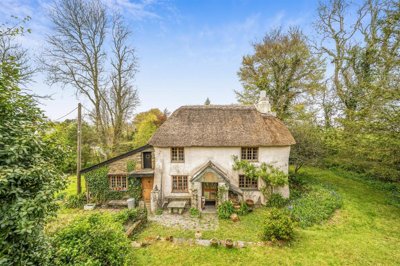
Listed buildings tell a large part of Broadwoodwidger’s story. Across the parish you will find Grade II and Grade II* buildings, including Buddle, a Grade II listed house built in colourwashed rendered cob and stone rubble with its original thatched roof, a clear example of older local construction. Close by are Upcott, which is Grade II*, and Norton Barton Manor, which is Grade II, both tied to the manorial history of the parish. Even the shippon with hayloft abutting 20 metres west of Buddle is listed, a reminder of the agricultural buildings that underpinned the local farming economy.
We have surveyed plenty of homes in Devon parishes like this, so we know how listed status can shape both upkeep and future plans. Town Farmhouse, Nethercott Farmhouse and the Old Granary barn conversion are all listed, which means alterations are restricted and significant works need consent. If you are buying a listed property in Broadwoodwidger, we would strongly advise a detailed survey to check the state of original fabric and to spot any earlier works that may have been carried out without the right approval.

Life here is tied closely to the surrounding landscape. Broadwoodwidger stands on a hillside above the River Wolf, with rolling farmland, hedgerows and woodland giving the parish its setting. It is reportedly the second largest parish in Devon, covering a broad rural area with many hamlets spread through working agricultural land. The 2021 Census records 26 usual residents in the PL16 0JR postcode area, which gives a sense of just how small-scale the community is. That farming past still shows in the pattern of settlement and in the older farmsteads, many now turned into private homes.
Traditional buildings and a long-standing rural economy give Broadwoodwidger its particular character. Older records show that the village once had a pub, post office, blacksmith, tailor's shop and carpenter's shop, though most of those businesses have disappeared over time. Property values across Devon and Cornwall have been pushed by the spread of second homes, and Broadwoodwidger has not escaped that pressure. Day-to-day amenities are mainly found in Launceston and Okehampton, both reached via the A30. Then there is Roadford Reservoir, close enough to add watersports and outdoor recreation to the mix.
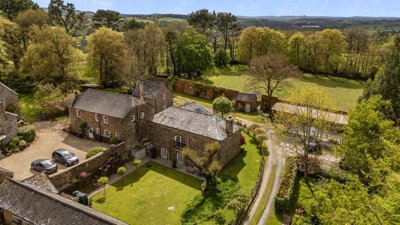
Beyond the main village, the parish includes a series of hamlets with their own established feel. In places such as Broadbury and Witherdon, homes often follow the classic Devon farmstead pattern, with farmhouses, barns and outbuildings grouped around old yards. Around Witherdon Wood, poor drainage has been noted, which ties in with the heavy clay soils found in parts of the parish and the risk of waterlogging during heavy rainfall. It is one of those practical points buyers should weigh carefully when looking across the wider parish.
Anyone moving here with children should expect schooling to be centred outside the village. Broadwoodwidger itself does not provide primary or secondary facilities, so families generally look to surrounding rural schools first and then on to Launceston or Okehampton for secondary education. Because the area sits within Torridge District, catchment areas and admissions are overseen by Devon County Council. We always suggest checking current performance data and Ofsted ratings on the official Ofsted website, as inspection outcomes change and can affect both reputation and place availability.
For buyers who place schooling high on the list, the local geography matters. Secondary schools in Launceston are approximately eight miles west of Broadwoodwidger, while Okehampton sits 13 miles to the east. Between them, those towns provide the main secondary options, and grammar school availability depends on Devon's selective education policies. School transport for rural pupils is usually handled through Devon County Council's service, but families should verify the current position while house hunting. For post-16 study, sixth form and further education choices broaden out again through colleges in Exeter and Plymouth.
School travel is part of the routine here, not an afterthought. From Broadwoodwidger, the run to Launceston or Okehampton usually means the A30 or smaller rural lanes, so families need to price in both time and cost. A 15-20 minutes journey each way in the morning and afternoon is typical. Households without access to a private vehicle will have to work around Devon County Council school transport timetables, and for secondary pupils that becomes especially important. Before buying in a particular hamlet, we would want to confirm the relevant bus route and its timing.

Roads, rather than rail, shape Broadwoodwidger’s transport picture. The A30 trunk road passes north of the village and acts as the main route for travel across the region, linking Cornwall with Exeter and the wider motorway network. That gives the parish workable access to larger employment centres despite its rural setting. Launceston, approximately eight miles west, functions as a local service hub and a base for bus links into surrounding parts of Devon and Cornwall. Okehampton, 13 miles east, provides another access point for transport and services, particularly for the eastern side of the parish.
Commuting from Broadwoodwidger takes some forethought. Anyone travelling regularly to Exeter, Plymouth or Truro will be dealing with a rural starting point and no direct rail station in the parish itself. For longer rail journeys, residents typically head towards larger stations such as Exeter St Davids, where there are connections to London Paddington and other major destinations. Most everyday travel is therefore car-based, and easy access to the A30 matters. Bus services do exist, but as in much of rural Devon the timetables are limited. The setting is peaceful, but it does come with greater reliance on the car.
For local residents, the A30 is the key link out, though it does not always run at the same pace year-round. During the summer holiday season, traffic can rise sharply as visitor numbers across Devon increase. Under clear conditions, driving times to centres such as Exeter and Plymouth are often around 45 minutes to an hour. Head west towards Truro or other Cornish destinations and the route is fairly direct via the A30, but parking in Cornwall’s towns can be tight in peak periods.
Buying in Broadwoodwidger means paying attention to the realities of older rural housing. In the PL16 0JR postcode, the great majority of homes were built before 1900, so buyers should expect traditional construction such as cob walls, stone rubble and sometimes thatched roofs. Those materials behave differently from modern brick, and they need different maintenance. We would regard a proper survey as essential before purchase. There is also the added layer of Grade II and Grade II* listed buildings in the parish, which brings legal restrictions on alteration and renovation.
Our surveyors know the defects that tend to turn up in Devon buildings of this kind. Cob, stone rubble and thatch all have strengths, but they also have predictable weaknesses. Cob walls, for instance, offer very good thermal mass yet can erode near ground level, especially where drainage is poor. We regularly tell buyers to look closely at the base of cob walls and at how well ground levels and drainage work around the outside of the property. As for thatched roofs, including examples such as Buddle, they need specialist assessment, so part of proper due diligence is bringing in a thatching specialist.
Flooding is not something to leave until late in the purchase. The River Wolf runs through the village, and places such as Witherdon Wood are known for poor drainage and waterlogged ground during heavy rainfall. We would expect buyers to ask directly about past flooding and to review the property’s flood record as part of due diligence. Where there are shared facilities, service charges and maintenance arrangements also need to be clear before exchange. One property may have very different access roads, broadband and amenity links from the next, so those practical differences matter in Broadwoodwidger.
Barn conversions and former granaries can be attractive here, but they are rarely straightforward. In Broadwoodwidger, agricultural conversions often keep features from their working past, large open spans, original ventilation details and exposed timber frames among them, and those need careful inspection. We usually recommend a RICS Level 3 survey for listed buildings or more complex conversions, because a standard Level 2 may not pick up the full picture. On a complicated rural property, the extra cost of a Level 3 is often well spent for the deeper view it gives on structure and renovation potential.

A sensible first step is to study what is actually coming up for sale in Broadwoodwidger and the neighbouring villages. Stock can range from traditional cottages to converted barns, but with only a small number of sales completing each year, buyers may need patience. We suggest using our platform to compare local prices and to look at the factors that can shift value in rural Devon, including nearness to the A30, the amount of land and the condition of older period buildings.
Before booking viewings in earnest, it helps to have a mortgage agreement in principle in place. Sellers and estate agents usually take that as evidence that your finances are ready, which can strengthen your hand once you decide to offer. In a rural market such as Broadwoodwidger, where Devon homes often carry a premium, a broker with experience of countryside lending can be useful in finding the right mortgage terms.
Once you start viewing, look beyond the setting and focus hard on the building itself. Most Broadwoodwidger homes date from before 1900, and many include cob, stone rubble or thatched roofing. We would use the viewing to gauge the condition of those materials and to watch for damp, movement or maintenance issues that may need work later. Older houses can be rewarding, but they do ask more questions.
Detached houses make up much of the local stock, and they also command the highest average price at £695,000. Semi-detached homes average £450,000, while terraced properties have averaged £280,000. There is no separate average figure for flats in Broadwoodwidger, and the PL16 0JR postcode area is recorded as 100% residential properties with no obvious apartment developments. New build supply is also notably absent, so buyers are mostly choosing from existing period homes, many built before 1900, with features such as cob walls, stone rubble and thatched roofs.
Once an offer is accepted, the legal work moves centre stage. We would then instruct a conveyancing solicitor to deal with the title, local authority searches and the transfer itself. In a rural parish with listed buildings, those searches often need to go further, covering matters such as flood risk, planning history and environmental issues that could affect the property.
After the surveys and searches are in order, the transaction moves to exchange of contracts and payment of the deposit. Completion usually follows within weeks, and that is the point at which the keys are handed over for your Broadwoodwidger home. It is also worth keeping Stamp Duty costs in your budget, based on the purchase price and your buyer status.
Before completion, we would arrange a RICS Level 2 survey so the property’s condition is checked in proper detail. In Broadwoodwidger, where much of the housing is older, that inspection should cover likely issues such as damp, the roof and structural concerns. If the property is Grade II listed or built with non-standard construction, a RICS Level 3 survey may be the better route. Nationally, the average survey cost is around £455, rising to an average of £586 for properties above £500,000.
Council tax here falls under Torridge District Council. The exact band depends on the individual property and the valuation assigned by the Valuation Office Agency. As a broad guide, older rural Devon homes, from cottages to farmhouses, commonly sit somewhere between bands A and F, though the precise band is tied to the property’s assessed value. Buyers should check the specific entry for any house they are considering, either through the Torridge District Council website or the Valuation Office Agency's online service.
There is no school within Broadwoodwidger parish itself, so most families look outward from the start. Primary provision comes from nearby villages and from Launceston, approximately eight miles west. For secondary education, the usual options are in Launceston and in Okehampton, 13 miles east. We would always check the latest school performance information and Ofsted ratings on the Ofsted website because both outcomes and place availability can shift. Admissions and transport are managed by Devon County Council.
Public transport is limited here, exactly as you would expect in a rural parish. The A30 trunk road, to the north of the village, is the principal route for reaching Launceston and Okehampton. Bus services do connect surrounding villages with those towns, but the timetables are sparse in the way that is typical across rural Devon. For rail, the nearest practical stations are in Exeter, Plymouth or Truro, all of which require a road journey from Broadwoodwidger. In day-to-day terms, most residents depend on the car.
Broadwoodwidger tends to attract buyers who want countryside life in a relatively unspoilt part of Devon, and that underpins demand over the longer term. Values are supported by the premium attached to Devon village property and by the small number of homes coming to market. Even so, this is not a highly liquid market. Second homes across the wider region can influence pricing, annual transaction numbers are low, and listed buildings, while full of character, also bring restrictions on change. We would view a purchase here as a lifestyle decision first, with possible capital appreciation alongside it, bearing in mind that rural Devon usually moves more slowly than urban markets.
The latest local figures put the average sold house price in Broadwoodwidger at £396,579 over the past twelve months. Broken down by type, detached homes average £695,000, semi-detached homes £450,000 and terraced properties £280,000. Only two sales completed during the year, so the sample is small and prices can swing according to size, condition, land and listed status. Since May 2025, the average has fallen by 3.1%, which may indicate a softer patch in the market and some room for buyers to negotiate.
Traditional construction is a major feature of Broadwoodwidger property. Across rural Devon, cob walls, stone rubble and thatched roofing were standard methods, and the same pattern shows here. Excavations at the "lost" village of Hennard Mill uncovered cottages with cobbled floors and cob walls, which helps illustrate the local building tradition. Buddle, for example, combines colourwashed rendered cob and stone rubble with a thatched roof, while converted buildings such as The Old Granary are generally stone-built. These materials can perform very well thermally, but they need maintenance that differs from modern brick, so we would always want a thorough survey before purchase.
The setting is attractive, but water management needs attention. Broadwoodwidger stands on a hillside with the River Wolf at its base, and that makes flood risk a relevant point for anyone buying in the parish. Around Witherdon Wood and Broadbury, poor drainage and heavy clay soils can lead to waterlogged ground in periods of heavy rainfall. Roadford Reservoir to the north-east offers some flood mitigation, yet buyers should still ask about any previous flooding at the specific property. Checking the flood history, and understanding any on-site drainage systems or flood defences, forms an important part of due diligence in rural Devon.
From 4.5%
Expert mortgage advice for Broadwoodwidger properties
From £499
Specialist legal support for rural Devon property
From £455
Professional property survey for Broadwoodwidger homes
From £60
Energy performance certificate for your new home
For 2024-25, Stamp Duty Land Tax is charged at 0% on the first £250,000 of residential property, 5% on £250,001 to £925,000, 10% on £925,001 to £1.5 million, and 12% on anything above £1.5 million. First-time buyers get relief on the first £425,000, then pay 5% on £425,001 to £625,000, with no relief available above £625,000. Using the Broadwoodwidger average price of £396,579, the SDLT bill for a standard buyer would be £7,331. A first-time buyer, on current thresholds, would pay £0.
Working out the true cost of buying in Broadwoodwidger means adding SDLT to legal fees, survey fees and moving costs, not just looking at the agreed price. On the local average value of £396,579, a standard buyer would pay £7,331 in SDLT under the current 2024-25 rates. First-time buyers are in a better position, with £0 due at that same price because the relief threshold reaches £425,000 and the 5% rate only applies between £425,001 and £625,000. Those numbers can make a real difference to the overall budget for homes in this bracket.
Properties for Sale In London

Properties for Sale In Plymouth

Properties for Sale In Liverpool

Properties for Sale In Glasgow

Properties for Sale In Sheffield

Properties for Sale In Edinburgh

Properties for Sale In Coventry

Properties for Sale In Bradford

Properties for Sale In Manchester

Properties for Sale In Birmingham

Properties for Sale In Bristol

Properties for Sale In Oxford

Properties for Sale In Leicester

Properties for Sale In Newcastle

Properties for Sale In Leeds

Properties for Sale In Southampton

Properties for Sale In Cardiff

Properties for Sale In Nottingham

Properties for Sale In Norwich

Properties for Sale In Brighton

Properties for Sale In Derby

Properties for Sale In Portsmouth

Properties for Sale In Northampton

Properties for Sale In Milton Keynes

Properties for Sale In Bournemouth

Properties for Sale In Bolton

Properties for Sale In Swansea

Properties for Sale In Swindon

Properties for Sale In Peterborough

Properties for Sale In Wolverhampton

Enter your details to see if this property is within your budget.
Loans, cards, car finance
Estimated property budget
Borrowing + deposit
You could borrow between
Typical borrowing
Monthly repayment
Est. at 4.5%
Loan-to-value
This is an estimate only. Your actual budget may vary depending on interest rates, credit history, and personal circumstances. For an accurate affordability assessment, speak to one of our free mortgage advisors.
This calculator provides estimates for illustrative purposes only and does not constitute financial advice. Your home may be repossessed if you do not keep up repayments on your mortgage. Estimates based on 4.5% interest rate, repayment mortgage. Actual rates depend on your circumstances.
Homemove is a trading name of HM Haus Group Ltd (Company No. 13873779, registered in England & Wales). Homemove Mortgages Ltd (Company No. 15947693) is an Appointed Representative of TMG Direct Limited, trading as TMG Mortgage Network, which is authorised and regulated by the Financial Conduct Authority (FRN 786245). Homemove Mortgages Ltd is entered on the FCA Register as an Appointed Representative (FRN 1022429). You can check registrations at NewRegister or by calling 0800 111 6768.

We use cookies to show you personalised content and improve your experience of our website. Find out more in our Privacy policy and Cookie policy.