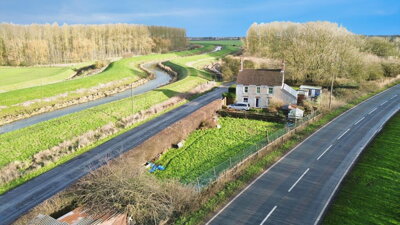
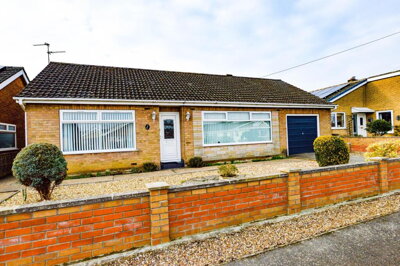
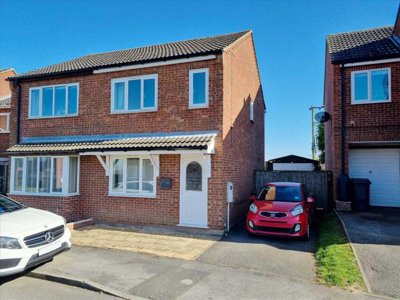
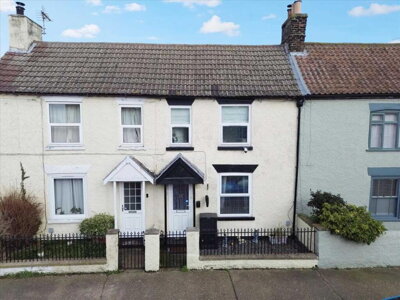
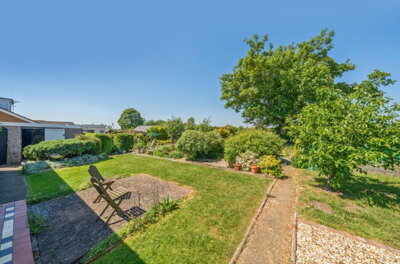
Browse 8 homes for sale in Billinghay, North Kesteven from local estate agents.
The 2 bed house market features detached, semi-detached, and terraced properties with two separate bedrooms plus living spaces. Properties in Billinghay range from Victorian and Edwardian period homes to modern new builds, with pricing varying across different neighbourhoods.
£172k
2
0
161
Source: home.co.uk
Showing 2 results for 2 Bedroom Houses for sale in Billinghay, North Kesteven. The median asking price is £172,000.
Source: home.co.uk
Semi-Detached
1 listings
Avg £180,000
Terraced
1 listings
Avg £164,000
Source: home.co.uk
Source: home.co.uk
£215,833
Average Property Price
30
Properties Sold (12 months)
£289,333
Detached Average
£192,500
Semi-Detached Average
Billinghay’s property market mirrors rural Lincolnshire, with homes across a spread of budgets and lifestyles. Detached houses sit at the top end, averaging around £299,990, while semi-detached properties come in at approximately £183,119. Terraced homes offer the lowest entry point, at around £147,000, which makes them a sensible choice for first-time buyers and anyone after a smaller footprint. Over the past 12 months the market has been fairly steady, with prices easing by 1.0%, so it feels more balanced than the sharper swings seen in bigger towns and cities.
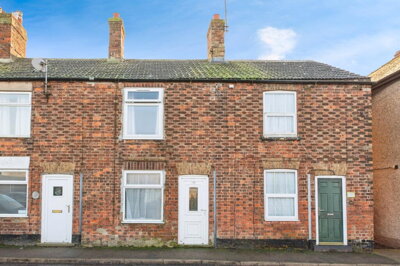
Housing in Billinghay follows the familiar North Kesteven pattern, with detached homes making up a notable share of what is available. Buyers continue to be drawn by the extra space and the rural setting, and families in particular value the community feel and local schooling. New build activity within the village itself is still limited, so much of the stock is established housing that reflects Lincolnshire’s architectural history. That means red brick, tile roofs and character properties are common, often with modern interiors tucked behind older façades. With only a small amount of new supply, existing homes remain in demand, especially those that blend period looks with practical layouts.
Looking at recent sales, detached homes accounted for 12 of the 30 transactions over the last year, and semi-detached properties matched that with another 12 sales. Terraced homes made up the remaining 6, while flats recorded no transactions at all in the area. It is the sort of split you would expect in a village that is mainly family-led, where bigger homes are still the ones most buyers chase. For people at different budget levels, the spread of property types does at least leave room to find something workable within the community.

Daily life in Billinghay revolves around a strong village spirit and the straightforward amenities that keep things ticking over. There is a Co-op for the weekly shop, and beyond the village the surrounding countryside offers plenty of scope for walking, cycling and taking in the Lincolnshire landscape. High Street and Church Street form the historic core, with homes that go back centuries and many lying within the designated Conservation Area that protects the settlement’s character. St Michael and All Angels Church anchors the village, and its Grade II Listed status underlines how deep the history runs here.
Agriculture is woven into Billinghay’s local economy, which is no surprise given the productive farmland around it. Plenty of residents work close to home, with jobs in local businesses, the primary school, healthcare and retail. Even so, the village’s position gives residents solid commuting choices, too. Sleaford, Lincoln and Boston are all regular destinations for work, shopping and evenings out, so people can enjoy village life through the week and still reach urban amenities when they need them. With a population of 2,059, the place feels connected but not crowded, and local events still manage to pull people together across the year.
The Billinghay Skirth adds to the village’s rural feel and also serves as a reminder of Lincolnshire’s long relationship with water management. Walks through the village and out into the countryside are helped by the flat terrain that is so typical of the Fens, and that same landscape makes cycling and walking easy for all ages. Access to the wider Lincolnshire Wolds AONB, via the A15 corridor, gives residents even more room to explore the area’s scenery. A trip to Skegness on the coast or an inland day out in Lincoln is simple enough for a weekend.

Families in Billinghay are well served at primary level, with the village school acting as a real focal point for the community. Billinghay Primary School teaches children from Reception through to Year 6 and serves the village itself, along with surrounding hamlets in the PE22 postcode area. For secondary education, most families look to nearby towns, and Sleaford offers several choices, including St George's Academy, which has a strong regional reputation for both academic and vocational routes. The school buildings in the village often reflect the traditional style seen throughout the Conservation Area, which adds to the sense of continuity. Parents should check catchment areas and admission policies carefully, as these can make a real difference to which homes work best.
Further education is close enough to be practical, with Sleaford offering colleges and training providers and Lincoln giving access to wider options, including the University of Lincoln. The educational offer in the area has a clear practical bent, shaped by Lincolnshire’s agricultural and engineering base. Because Sleaford sits on the A15, it is easy enough to reach from Billinghay for daily travel, so students can take a broad range of academic and vocational courses without heading off to a bigger city. For families, the overall picture is supportive and community-minded, with smaller class sizes and the kind of parental involvement often seen in village schools.
Older children can also reach a wider spread of schools in the nearby towns, including grammar schools and specialist institutions, without too much of a daily haul. Families looking at private education will find options in Lincoln and Grantham, where several independent schools serve the region and some offer transport from outlying villages. Journeys are usually in the 30-45 minutes by car range, so they are workable for secondary-age pupils who can handle a longer commute.

Billinghay’s transport links combine a quiet rural setting with workable access to major roads and rail. The village is within a reasonable distance of the A15 and A16, which gives direct routes north to Lincoln and east to Sleaford. For commuters heading to larger cities, the road network links through to the A1 motorway further east, opening up travel towards Peterborough and London. That position gives residents a choice, they can work locally, head into nearby towns, or travel further afield and still return to village peace each evening.
Bus services connect Billinghay with nearby villages and towns, although the timetable means people with regular commuting needs often depend on a car. For those without one, the routes still provide an essential link, especially into Sleaford where further onward connections are available. Rail access comes via Sleaford and Lincoln, while Grantham gives direct services to London King's Cross. Grantham station sits on the East Coast Main Line and gets you to London in approximately one hour, which keeps it realistic for regular trips to the capital.
Cycling is increasingly practical here, with quiet lanes used by both leisure riders and commuters. The flat land of the Lincolnshire Fens makes short trips by bike a sensible option, especially to places such as Ruskington or Sleaford. For flights, East Midlands Airport and Robin Hood Doncaster Sheffield Airport both sit within reasonable driving distance, which makes overseas travel fairly straightforward for Billinghay residents. East Midlands Airport, reached via the A46 and M1 motorway, offers a wide spread of European destinations and charter flights, while Robin Hood Doncaster Sheffield adds further choice, including some international routes.

Before you start viewing in Billinghay, it pays to get a proper feel for the market. Current listings show the range clearly, from terraced cottages around £147,000 to detached family homes approaching £299,990. Having a mortgage agreement in principle ready before viewings can put you in a stronger position when offers are being considered. It is also sensible to use our platform to compare homes across the different estate agents active in the PE22 postcode area.
Viewings are where the details start to matter. In Billinghay, we would look closely at proximity to the River Witham and any flood risk areas, the condition of older homes in the Conservation Area, and how close a property sits to Listed Buildings. It is also worth visiting at different times of day, so traffic, noise and the day-to-day atmosphere are easier to judge. Along High Street and Church Street, the Conservation Area designation means some homes come with planning considerations that are worth checking before you go any further.
Once your offer has been accepted, a RICS Level 2 Survey is the sensible next step. In Billinghay, we would pay particular attention to damp in older properties, roof condition, and the shrink-swell clay risks that can affect foundations. For a standard semi-detached property, a thorough survey usually costs £450-700. With so many older homes in the village, that spend can be worthwhile, because some defects are easy to miss at first glance.
The legal side should be handled by a conveyancing solicitor. They will carry out searches relevant to Lincolnshire, including local authority searches with North Kesteven District Council, drainage and water searches, and environmental searches that may flag flooding risk or ground conditions around Billinghay. They will also check for planning permissions or listed building consents that could affect the property.
After the searches come back satisfactorily and your mortgage is in place, contracts are exchanged and the deposit is paid. Completion usually follows within weeks, and then the keys to your new Billinghay home are handed over. Stamp duty needs to be budgeted for according to the purchase price and your buyer status, alongside survey fees, solicitor fees and moving costs.
Buying in Billinghay calls for a close look at a few local issues. The alluvium clay deposits in the geology can lead to shrink-swell movement, which may affect foundations, particularly where drainage is poor or there are large trees nearby. A full structural survey by a qualified RICS surveyor is important for any home, and especially for older properties or plots with mature planting. Flood risk from the River Witham or associated watercourses may also mean higher insurance costs and extra resilience measures.
Parts of High Street, Church Street and the historic village centre sit within a Conservation Area, and that brings extra planning rules into play. External alterations are more tightly controlled, so extensions, dormer windows or major changes to a façade will need consent from North Kesteven District Council. Anyone thinking about a property here should speak to the planning department before committing if they plan significant changes. Those extra steps can affect both the timing and the cost of a renovation.
Listed Buildings, including St Michael and All Angels Church and The Old Rectory, bring another layer of complexity, because many alterations will need listed building consent. It is important to understand those restrictions before buying, so any plans you have remain workable and legally sound. On Grade II Listed Buildings, even small jobs such as changing windows or doors may need consent, and materials often have to match the original specification. For anyone considering one of these homes, specialist advice from conservation architects or surveyors with historic-property experience is well worth having.
Knowing how Billinghay homes are built helps buyers get a feel for upkeep and the character of each property type. Traditional brick construction is common, and red brick is especially visible on Victorian and Edwardian homes. Houses built after the early 20th century often have cavity walls, while older ones may use solid brick or stone walls and lime mortar rather than modern cement-based products.
Roofs across Billinghay are mostly tiled, using clay or concrete tiles. Their age varies a lot, and some homes still have original clay tiles that have lasted remarkably well over many decades. Older roofs, though, can show slipped tiles, tired pointing or felting that has broken down over time. A quick look from ground level can give a rough sense of condition, especially if there are gaps or heavy moss growth, but a proper survey will tell the fuller story.
Many homes in Billinghay, especially along High Street and Church Street, date from before 1919 and use construction methods typical of that period. Solid walls are common, often with thick sections that give the buildings good thermal mass. Traditional lime mortar allows those walls to breathe and helps moisture move through the structure properly. Modern cement repairs or unsuitable insulation can upset that balance, which is when damp can start to appear in houses that would otherwise perform well with the right kind of upkeep.
Based on recent market data for the PE22 postcode area, the average house price in Billinghay is approximately £260,685. Detached homes average around £299,990, while semi-detached properties usually sell for approximately £183,119. Terraced houses are still the more accessible option at around £147,000. The market has been fairly steady over the past 12 months, with a 1.0% price adjustment, which points to balanced conditions between buyers and sellers in this rural Lincolnshire village. There were 30 completed transactions in the area, and detached and semi-detached properties each accounted for 12 sales.
Council tax in Billinghay falls under North Kesteven District Council. Most homes sit within bands A through D, which fits the property values seen in the village. Band A homes usually attract the lowest charges, while band D properties carry moderate amounts that reflect the mix of rural values and urban-style services. Exact bandings depend on the assessed value of each property, and they can be checked through the North Kesteven District Council website or with your solicitor during conveyancing. The council also runs support schemes for eligible residents, including those on low incomes or certain benefits.
Billinghay Primary School serves the village directly and teaches children up to Year 6, with families from across the PE22 postcode area using it. For secondary education, most families turn to schools in nearby Sleaford, including St George's Academy, which has a strong regional reputation for academic achievement and extracurricular activities. Which school works best will depend on your postcode and the admissions rules in place, so it is worth checking catchment areas and admission arrangements carefully before you settle on a property. Private education choices are also available in Lincoln and Grantham, where several independent schools serve the area and provide transport from outlying villages.
Public transport in Billinghay is built around bus links to nearby towns and villages, though the service pattern means private transport still matters for everyday commuting. Those bus routes are useful for residents without cars, especially because they connect into Sleaford where further onward travel becomes available. The nearest rail stations are in Sleaford and Lincoln, while Grantham on the East Coast Main Line gives direct services to London and journey times of approximately one hour. The village is also close to the A15 and A16, so driving to Lincoln, Sleaford and the wider road network, including the A1 motorway, is fairly straightforward.
For property investors, Billinghay has a few clear attractions, not least the more accessible entry prices compared with larger towns and the steady demand from people looking for a rural village lifestyle. The village still has the essentials, including a convenience store, primary school and community facilities, which helps support long-term appeal across different stages of life. Character homes in the Conservation Area, along with Listed Buildings, may be of interest to buyers who want history as well as housing, though they do come with planning constraints that need specialist knowledge. On the other hand, flood risk in some spots and limited public transport are both factors to weigh up when judging rental demand and likely tenants. Even so, the ongoing interest from families and commuters points to a stable market for both letting and resale.
In England, Stamp Duty Land Tax is charged on the purchase price using thresholds that apply nationally. There is no duty on the first £250,000 of the price, so a typical semi-detached property in Billinghay at the £183,119 average would usually attract no stamp duty at all. Above that, duty is charged at 5% from £250,001 to £925,000, 10% from £925,001 to £1.5 million, and 12% above £1.5 million for higher-value homes. First-time buyers may qualify for relief on the first £425,000 of a property worth up to £625,000, which can reduce costs substantially for those who meet the rules. Your solicitor will work out the exact figure from your circumstances and the purchase price at completion.
There are several local factors in Billinghay that buyers should check carefully before moving ahead. Clay soils in the superficial alluvium deposits can lead to shrink-swell movement in foundations, especially where drainage is poor or large trees are nearby, because the clay can contract or expand. Some parts of the village also sit within flood risk zones because of the River Witham and watercourses such as the Billinghay Skirth, and that can affect insurance and values in certain locations. Older houses may include solid walls and lime mortar, which need a different kind of maintenance knowledge from modern methods. A RICS Level 2 Survey will pick up issues already present, or likely to arise, and give guidance on what needs attention.
From 3.5%
Specialist mortgage advice for Billinghay properties
From £499
Solicitor services for your property purchase
From £450
Professional survey for your new home
From £80
Energy performance certificate
It helps to understand the full cost of buying in Billinghay so the figures do not come as a surprise mid-transaction. The purchase price is the main expense, but stamp duty, solicitor fees, survey costs and moving expenses can all add up. For a typical semi-detached home at around the £183,119 average, the stamp duty position depends on your buyer status. Standard buyers would pay no stamp duty on the first £250,000, so that price point would usually mean no liability at all. First-time buyers buying up to £425,000 may also benefit from relief on the first £425,000, which makes homes at this level more manageable still.
Conveyancing fees for homes in Lincolnshire generally range from £499 for straightforward transactions to higher figures where the purchase is more complex, such as Listed Buildings or Conservation Area properties. Your solicitor will arrange the key searches, including local authority searches with North Kesteven District Council, drainage and water searches, and environmental searches that may identify flooding risk or ground conditions around Billinghay. Those searches matter because they can reveal issues that affect your decision or give you room to negotiate with the seller before completion. In Billinghay, environmental checks are especially useful for flood risk from the River Witham and its tributaries, as well as ground stability linked to the clay geology.
A RICS Level 2 Survey for a standard three-bedroom property in Billinghay usually comes in at between £450 and £700, depending on the size of the home and its features. Larger detached properties, or homes with more complex characteristics, may cost more, and fees can rise to £900 or more for extensive properties. You should also allow for mortgage arrangement fees, which can be anywhere from nothing to 1% of the loan amount depending on the lender, as well as removal costs and any immediate repairs or improvements planned after moving in. For Listed Buildings or homes needing specialist conservation work, extra money may be needed for listed building consent applications and for suitable materials and contractors.

Properties for Sale In London

Properties for Sale In Plymouth

Properties for Sale In Liverpool

Properties for Sale In Glasgow

Properties for Sale In Sheffield

Properties for Sale In Edinburgh

Properties for Sale In Coventry

Properties for Sale In Bradford

Properties for Sale In Manchester

Properties for Sale In Birmingham

Properties for Sale In Bristol

Properties for Sale In Oxford

Properties for Sale In Leicester

Properties for Sale In Newcastle

Properties for Sale In Leeds

Properties for Sale In Southampton

Properties for Sale In Cardiff

Properties for Sale In Nottingham

Properties for Sale In Norwich

Properties for Sale In Brighton

Properties for Sale In Derby

Properties for Sale In Portsmouth

Properties for Sale In Northampton

Properties for Sale In Milton Keynes

Properties for Sale In Bournemouth

Properties for Sale In Bolton

Properties for Sale In Swansea

Properties for Sale In Swindon

Properties for Sale In Peterborough

Properties for Sale In Wolverhampton

Enter your details to see if this property is within your budget.
Loans, cards, car finance
Estimated property budget
Borrowing + deposit
You could borrow between
Typical borrowing
Monthly repayment
Est. at 4.5%
Loan-to-value
This is an estimate only. Your actual budget may vary depending on interest rates, credit history, and personal circumstances. For an accurate affordability assessment, speak to one of our free mortgage advisors.
This calculator provides estimates for illustrative purposes only and does not constitute financial advice. Your home may be repossessed if you do not keep up repayments on your mortgage. Estimates based on 4.5% interest rate, repayment mortgage. Actual rates depend on your circumstances.
Homemove is a trading name of HM Haus Group Ltd (Company No. 13873779, registered in England & Wales). Homemove Mortgages Ltd (Company No. 15947693) is an Appointed Representative of TMG Direct Limited, trading as TMG Mortgage Network, which is authorised and regulated by the Financial Conduct Authority (FRN 786245). Homemove Mortgages Ltd is entered on the FCA Register as an Appointed Representative (FRN 1022429). You can check registrations at NewRegister or by calling 0800 111 6768.

We use cookies to show you personalised content and improve your experience of our website. Find out more in our Privacy policy and Cookie policy.