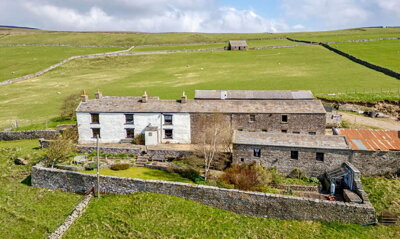
Browse 1 home for sale in Arkengarthdale, North Yorkshire from local estate agents.
The larger property sector typically features multiple bathrooms, substantial reception space, and private gardens or off-street parking. Four bedroom houses in Arkengarthdale span detached, semi-detached, and occasionally terraced configurations, with styles ranging from period properties to modern executive homes.
£575k
1
0
362
Source: home.co.uk
Showing 1 results for 4 Bedroom Houses for sale in Arkengarthdale, North Yorkshire. The median asking price is £575,000.
Source: home.co.uk
Detached
1 listings
Avg £575,000
Source: home.co.uk
Source: home.co.uk
Arkengarthdale’s property market mirrors the dale’s standing as a premium rural spot within the Yorkshire Dales National Park. Our data puts the overall average house price at approximately £479,000, with detached homes averaging £697,500. Semi-detached properties sit at around £311,000, while terraced houses usually sell for about £210,000. Prices have climbed by 12% over the past year, yet they are still 17% below the 2022 peak of £575,000, so buyers who sat out the last high may find a window here.
Stone-built cottages, farmhouses and converted agricultural buildings dominate Arkengarthdale, a pattern that reflects centuries of local building tradition. In DL11 6RH, most homes are period properties from 1800 to 1911, put together with locally quarried stone and stone slate roofs. New build supply is very thin on the ground, with recent work leaning towards community-led affordable housing, such as the Upper Dales Community Land Trust scheme in Langthwaite, rather than larger commercial schemes. That shortage means character buyers are looking at a well-established market of older homes, many listed or within the Swaledale and Arkengarthdale Conservation Area.
Lead mining shaped the dale for over a thousand years, until extraction ceased in 1911, and the legacy is still visible in spoil heaps and hushes across the landscape. That history feeds directly into the housing stock, with many properties originally built for mining communities and now prized as family homes. Our inspectors often come across homes where mining-era construction needs close scrutiny, especially for structure and modernisation. Once buyers understand that backdrop, it is easier to see why certain buildings have developed as they have, and what to check during a survey.

Arkengarthdale is a civil parish with about 207 residents in 103 households, which makes it one of the more intimate rural communities in North Yorkshire. The figure has slipped from 231 in the 2011 Census, a decline seen in many remote dales across the Yorkshire Dales. More than 28% of residents are over 65, while fewer than 9% are under 16. That mix explains the appeal for retirees seeking calm countryside living, as well as the difficulty of keeping younger families in the area.
Hill farming, grouse shooting and tourism sit at the centre of the local economy in Arkengarthdale. The Tan Hill Inn, at 1,732 feet above sea level and recognised as the highest pub in England, and the Charles Bathurst Inn both serve as important amenities and employers, while farms and smallholdings continue to shape the valley. One striking detail is that 91% of homes are under-occupied, which tells its own story about space, plots and the rural way of life. Local facilities include the Church of St Mary the Virgin in Langthwaite, built in 1818 and now Grade II listed, alongside events held through the year that keep the community in touch.
Buyers who move to Arkengarthdale usually talk to us about quality of life and community spirit first, not commuting or investment returns. The need for affordable housing is put at just 2 homes per annum, a small figure that reflects both the scale of the parish and the difficulty of finding sites inside the National Park. The Upper Dales Community Land Trust has already played a part, with four affordable homes approved for Langthwaite in 2018. For anyone after a real change of pace, this is rural living in a form that many larger Dales villages simply cannot match.

Education in Arkengarthdale reflects its remote setting within the Yorkshire Dales National Park. The former Arkengarthdale Church of England Primary School in Langthwaite has been converted to residential use, so children now rely on schools in nearby villages. For primary education, families usually turn to places such as Reeth, where the nearest primary school is about 5 miles from the centre of Arkengarthdale along winding country roads. Travel time varies a great deal too, especially once winter weather turns those lanes slower and trickier.
Secondary schooling means even longer runs, with options in Richmond, Leyburn and the market towns of the Yorkshire Dales. The nearest secondary schools are in Richmond, around 15 miles away, and Sixth Form provision usually means heading to larger places such as Richmond or Darlington. Parents planning a move should factor in school transport, which is managed by North Yorkshire Council, with buses provided for pupils attending schools beyond their immediate locality. Winter can make that less straightforward, as snow and ice affect reliability.
School choice often shapes the whole property search here, because the road network is rural and the distances are not small. Our inspectors see many families in Arkengarthdale choosing homeschooling or flexible education arrangements to work around the travel involved. Others put together temporary term-time moves or line up car-sharing with families in a similar position. The nearest Further Education colleges are in Richmond, Darlington and Catterick, reached via the A66 trunk road through nearby Richmond, around 35-40 minutes from the centre of the dale.

The remote setting of Arkengarthdale means transport is built around car use, plain and simple. The nearest major road is the A66, which runs through nearby Richmond and links to the A1(M) motorway at Scotch Corner, about 20 miles east. Langthwaite, the main settlement in the dale, sits where several minor roads meet, cutting through a landscape of alternating limestone and gritstone outcrops. For work or wider amenities, residents usually drive, with Richmond taking around 35-40 minutes and Darlington or Middlesbrough about one to one and a half hours depending on traffic.
Rail and bus links are limited. Darlington, roughly 30 miles away, offers East Coast Main Line services to London, Edinburgh and major northern cities, while Garsdale, about 20 miles away on the Settle-Carlisle line, opens up one of Britain’s most scenic routes, with trains to Leeds, Carlisle and intermediate stations. Bus services across the Yorkshire Dales run infrequently and tend to have timetables that miss normal working hours and school runs, so they are not much use for daily commuting. The dale community has pushed for better links, but resource constraints keep expansion in check.
Walking and cycling are popular for leisure here, with the Pennine Journey and other long-distance footpaths running through the dale and linking Arkengarthdale with surrounding villages and dales. Cycling to work, though, is another matter, because the terrain, narrow lanes and distances make it impractical. Parking in the village is usually not a headache, unlike at busier Dales spots such as Hawes or Grassington, although the lanes do demand confident driving. Come summer, tourist traffic builds on the minor roads, especially on routes towards the Tan Hill Inn and the Swaledale massif, and that can mean delays for residents.

Begin by looking through property listings in Arkengarthdale on Homemove and getting a feel for the local market. The stock here is mainly traditional stone-built homes, many of them listed or set within the conservation area, so it helps to understand what those designations mean before we go any further. Our platform pulls listings from estate agents across the Yorkshire Dales region, which makes it easier to compare homes and read the pricing pattern in this very particular market.
Before arranging viewings, get a mortgage agreement in principle from a lender. With the average property price sitting at around £479,000, the financing needs to be in place early. A mortgage broker can talk through options for rural homes, including properties with land, non-standard construction or listed building status. Some lenders may ask for specialist valuation surveys where flood risk or a mining background is involved, so it pays to raise the exact property type with potential lenders from the start.
Local estate agents who know Arkengarthdale well are worth their weight in gold. During viewings, keep an eye on stone walls, roofing and any sign of damp or structural movement, because those are common concerns in period homes built before 1919. Our inspectors suggest noting anything that may need a closer look in a full survey, especially given the amount of traditional lime mortar construction, which behaves very differently from modern cement-based systems.
For most homes in Arkengarthdale, we recommend a RICS Level 2 Survey. Traditional stone construction, shrink-swell clay soils and the area’s flash flooding history all make a proper inspection important. Properties priced above £500,000 usually cost around £586 for this level of survey, although the remote location can influence the price. Older homes, or those with a more complicated history, may be better suited to a RICS Level 3 Survey, which starts from around £600.
Once an offer is accepted, we would advise instructing a solicitor with experience of rural and listed property transactions. Conveyancing in the Yorkshire Dales can bring extra layers, including planning restrictions from the Yorkshire Dales National Park Authority and rights of way across agricultural land. The solicitor will usually carry out drainage searches, environmental searches and, because of the historical lead extraction in the area, possibly mining searches too. Properties near the Arkle Beck or in flood-prone spots may need further searches.
After that, the legal formalities need to be completed, Stamp Duty Land Tax paid and mortgage funds arranged for release. On completion day, the keys to the Arkengarthdale home are handed over. For properties over £625,000, SDLT is charged at 5% on the portion between £425,001 and £625,000, while first-time buyers get relief on the first £425,000. With average prices around £479,000, most buyers would expect to pay about £11,450 in stamp duty at standard rates.
Buying in Arkengarthdale means thinking about a few area-specific issues that do not come up so often in urban searches. The dale’s geology, with alternating bands of limestone, gritstone and shale from the Yoredale series, creates shrink-swell clay soil conditions that can lead to subsidence. Our inspectors regularly see signs of ground movement tied to clay soil behaviour, especially in drought or after heavy rain. A groundsure report for one property in the area flagged a notable shrink-swell hazard score, so cracking, uneven floors and sticking doors or windows are all worth watching for.
Most period homes here are built with solid stone walls and lime mortar, and that calls for a different approach to maintenance than modern cavity wall construction. Unlike newer properties, traditional stone walls need to breathe, taking in and releasing moisture naturally, so unsuitable modern treatments such as cement rendering or tanking can create serious damp issues. Our team has seen plenty of homes where well-meant renovation work caused moisture problems that were not part of the original build. Knowing how Arkengarthdale’s older houses were put together is key to looking after their structure properly.
Flood risk is another major point, because Arkengarthdale suffered devastating flash flooding in July 2019, described as a 1-in-100 year event that caused widespread damage across the valley. Langthwaite had 5.2 inches (132mm) of rain in just two hours, enough to destroy bridges and block watercourses. Homes near the Arkle Beck or in low-lying areas need close checking for flood resilience and insurance implications. Our inspectors look for flood marks, water damage history and any remedial works done after the 2019 flood event. Flood assessments and suitable insurance should be built into the overall buying cost.
Because the area sits within the Upper Swaledale and Arkengarthdale Barns and Walls Conservation Area, the largest in the country at over 7,000 hectares, external alterations, extensions and building works will usually need consent from the Yorkshire Dales National Park Authority. The dale’s ten listed buildings, including the Grade II* Old Powder Magazine built in 1804, and several Grade II structures such as the Church of St Mary the Virgin and properties at C B Yard, also bring extra planning controls and may call for specialist surveys. Our inspectors know these traditional buildings well and can talk through the upkeep they need inside the conservation area.

Recent sales data puts the average house price in Arkengarthdale at approximately £479,000. Detached homes average around £697,500, semi-detached properties are typically about £311,000 and terraced houses around £210,000. House prices have risen by 12% over the past year, but they are still 17% below the 2022 peak of £575,000, which leaves some value opportunities for buyers looking to get a foothold in this part of the Yorkshire Dales.
There is no longer a primary school in Arkengarthdale, after the Church of England Primary School in Langthwaite closed and was converted to residential use. Primary-age children generally attend schools in nearby villages such as Reeth, about 5 miles away, while secondary education is available in Richmond and Leyburn. Families should go in with their eyes open, because school transport and long daily journeys are part of normal life here, with some secondary pupils travelling 15 miles or more each day.
Transport links are sparse, so car ownership is essential for Arkengarthdale residents. The nearest railway stations are in Darlington, about 30 miles away on the East Coast Main Line, and Garsdale, around 20 miles away on the scenic Settle-Carlisle line. Bus services run infrequently and often do not fit with working hours or school transport. The A66 trunk road, reached via Richmond roughly 35-40 minutes away, is the main route to larger towns and cities, with the A1(M) at Scotch Corner providing longer-distance connections.
For buyers after a quiet countryside lifestyle inside the Yorkshire Dales National Park, Arkengarthdale has a lot going for it, though the investment picture needs a careful look. Property values have proved resilient, with 12% growth over the past year, and the lack of new build development helps support existing stock. Even so, the ageing demographic, limited local jobs and the struggle many rural communities face in keeping younger residents mean rental demand may stay thin. Homes in the conservation area, or those with historical significance, may suit buyers looking for long-term capital growth in a prestigious setting.
Arkengarthdale properties sit under North Yorkshire Council, and council tax bands vary across all bands depending on the property’s value and type. As a guide, traditional stone cottages and farmhouses are usually in Bands C to E, while larger detached homes or higher-value properties may sit in the upper bands. Prospective buyers should confirm the exact banding with North Yorkshire Council or during conveyancing, as each property is assessed on its own characteristics and valuation. Our inspectors note that the generous size of many period homes often pushes them into higher bands than similar urban properties.
Stamp Duty Land Tax in Arkengarthdale follows the standard UK thresholds. There is 0% on the first £250,000 of the purchase price, then 5% on the portion between £250,001 and £925,000, 10% on the slice between £925,001 and £1.5 million, and 12% above £1.5 million. First-time buyers get relief at 0% on the first £425,000, with 5% applying between £425,001 and £625,000. At average prices around £479,000, most buyers would expect to pay about £11,450 in stamp duty at standard rates, while first-time buyers would pay significantly less at around £2,700.
Locally quarried stone and traditional lime mortar pointing are the norm in Arkengarthdale, rather than modern cement. Our inspectors always look for signs of old cement repointing, since that can trap moisture in the walls and lead to stone decay. Cracks that follow the mortar lines rather than the stone itself may point to seasonal movement in the shrink-swell clay soils. Roofs need close attention too, because stone slate roofs are expensive to repair, and any sign of previous water ingress may point to flashing issues around chimneys or valleys.
The July 2019 flooding in Arkengarthdale was catastrophic, with Langthwaite recording 132mm of rain in two hours, so flood risk remains a serious issue for buyers. Homes near the Arkle Beck or in lower-lying spots need careful checking for flood resilience and any history of water damage. Our inspectors look for flood marks, remedial works and the state of flood defence measures put in place after the 2019 event. Insurance costs can be higher where flood risk is present, and buyers should get quotes before they complete.
Competitive rates for Arkengarthdale properties
From 3.94%
Specialist rural property solicitors
From £499
Essential for stone-built period properties
From £350
Recommended for older or complex properties
From £600
Budgeting for a purchase in Arkengarthdale means thinking beyond the asking price. At the current average price of £479,000, a standard rate buyer would pay £11,450 in Stamp Duty Land Tax, worked out as 0% on the first £250,000 plus 5% on the remaining £229,000. First-time buyers get relief on the first £425,000, so they would pay 5% on the £54,000 above that threshold, which comes to £2,700 in SDLT. Those calculations assume the property is a main residence and that the buyer does not already own property anywhere in the world.
There are other costs to allow for as well, starting with solicitor fees for conveyancing, which usually range from £499 to £1,500 depending on how complex the transaction is and whether the property is freehold or leasehold. In Arkengarthdale, the number of listed buildings and conservation area restrictions can mean extra searches and specialist advice, which may push costs up. Environmental searches should include mining searches because of the area’s lead extraction history, while flood risk assessments may be needed for homes near watercourses. Our conveyancing partners know Yorkshire Dales properties and can talk through the requirements for transactions here.
Survey fees also need to be built into the budget, with RICS Level 2 Surveys in this price range averaging around £586 and rising to £700 or more for larger homes or more complex construction. Because traditional stone construction is so common here, and period homes can bring their own structural quirks, our inspectors may recommend a more detailed RICS Level 3 Survey for older properties, which gives a fuller assessment of condition and defects. Mortgage arrangement fees, valuation fees and broker charges can add another £500 to £2,000 to the total. Buyers should also allow for removals, possible renovation costs because of the age of many homes, and any specialist insurance needed for flood risk or historic property cover.

Properties for Sale In London

Properties for Sale In Plymouth

Properties for Sale In Liverpool

Properties for Sale In Glasgow

Properties for Sale In Sheffield

Properties for Sale In Edinburgh

Properties for Sale In Coventry

Properties for Sale In Bradford

Properties for Sale In Manchester

Properties for Sale In Birmingham

Properties for Sale In Bristol

Properties for Sale In Oxford

Properties for Sale In Leicester

Properties for Sale In Newcastle

Properties for Sale In Leeds

Properties for Sale In Southampton

Properties for Sale In Cardiff

Properties for Sale In Nottingham

Properties for Sale In Norwich

Properties for Sale In Brighton

Properties for Sale In Derby

Properties for Sale In Portsmouth

Properties for Sale In Northampton

Properties for Sale In Milton Keynes

Properties for Sale In Bournemouth

Properties for Sale In Bolton

Properties for Sale In Swansea

Properties for Sale In Swindon

Properties for Sale In Peterborough

Properties for Sale In Wolverhampton

Enter your details to see if this property is within your budget.
Loans, cards, car finance
Estimated property budget
Borrowing + deposit
You could borrow between
Typical borrowing
Monthly repayment
Est. at 4.5%
Loan-to-value
This is an estimate only. Your actual budget may vary depending on interest rates, credit history, and personal circumstances. For an accurate affordability assessment, speak to one of our free mortgage advisors.
This calculator provides estimates for illustrative purposes only and does not constitute financial advice. Your home may be repossessed if you do not keep up repayments on your mortgage. Estimates based on 4.5% interest rate, repayment mortgage. Actual rates depend on your circumstances.
Homemove is a trading name of HM Haus Group Ltd (Company No. 13873779, registered in England & Wales). Homemove Mortgages Ltd (Company No. 15947693) is an Appointed Representative of TMG Direct Limited, trading as TMG Mortgage Network, which is authorised and regulated by the Financial Conduct Authority (FRN 786245). Homemove Mortgages Ltd is entered on the FCA Register as an Appointed Representative (FRN 1022429). You can check registrations at NewRegister or by calling 0800 111 6768.

We use cookies to show you personalised content and improve your experience of our website. Find out more in our Privacy policy and Cookie policy.