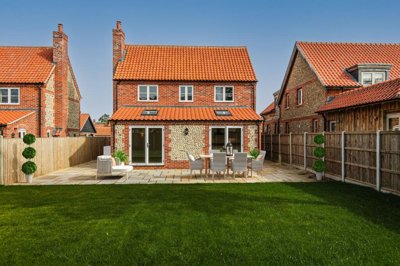
Browse 1 rental home to rent in Thornham, King's Lynn and West Norfolk from local letting agents.
£0/m
0
0
0
Source: home.co.uk
Thornham’s rental market works rather differently from a standard UK village, largely because of who owns and uses the homes here. Research suggests that over half of all dwellings in Thornham were not in permanent occupation as recently as 2011, which tells its own story about second homes and holiday lets on the coast. That pattern feeds straight into the lettings market. Homes tend to come up for rent when owners are between uses, or when they want longer-term tenants through the quieter months. Recent market data puts the overall average property value in the village at approximately 520,000 pounds, with detached homes averaging around 455,000 pounds and terraced properties at approximately 552,500 pounds.
Nearly half of Thornham’s homes are detached houses or bungalows, while semi-detached properties account for roughly a quarter of the stock. Terraced properties make up around 20 percent, and flats and apartments represent less than 1 percent of available accommodation. In practice, that leaves most renters looking at houses or cottages. New build activity nearby is kept deliberately modest too, because the village’s Neighbourhood Development Plan favours incremental, small-scale development over large-scale new housing to protect the sensitive coastal environment.
When homes do come up, rents tend to sit at the premium end, which is no surprise given the property values and the appeal of village life within the AONB. Thornham’s closeness to nature reserves, praised restaurants and an untouched stretch of coastline keeps demand well ahead of supply. Our advice is to stay close to local letting agents who know the village’s rhythm, because suitable homes can appear quickly and then disappear just as fast, often depending on the owner’s circumstances.

Set on the coast and backed by open countryside, Thornham has a strong community feel despite its small population. The village sits directly on the North Norfolk Heritage Coast, and the Norfolk Coast Area of Outstanding Natural Beauty covers almost the whole parish. Beneath it all lies a landscape shaped over thousands of years, with chalk bedrock laid down during the last ice age and then covered by glacial sands, gravels and silts. That geology gives the area its rolling ground and fertile soils, and those have supported farming here since prehistoric times. Even the name, from Old English for 'thorn tree homestead', points back to the agricultural past still visible around the village.
An ageing population profile sets Thornham apart from many English villages, and it has a noticeable effect on the feel of the place. Census data shows that approximately 75 percent of residents are over 45 years old, and projections indicate that over half of the population will be over 65 by 2036. That age profile helps explain the quiet, settled atmosphere, along with the high proportion of homes used as second properties. Even so, the village keeps more facilities than many places of its size, including three pubs and restaurants that have picked up regional recognition for their quality. Together with the nearby nature reserves and coastal paths, they create a way of life built around fresh air, local food and the Norfolk coast.
Tourism plays a major part in the North Norfolk economy. It supports over 54,000 jobs across the region and contributes approximately 2.8 billion pounds a year to the local economy. Thornham’s three dining spots serve both residents and visitors, with menus based on locally caught seafood, produce from nearby farms and Norfolk’s long agricultural tradition. For renters, that means evenings out, good food and a social life that would stand up well in a far larger town, all within walking distance of home.

Families looking to rent in Thornham need to think across the wider North Norfolk area, because schooling is spread out rather than concentrated in the village itself. Primary places are usually taken from surrounding communities, with Snettisham Primary School and nearby Church of England primary schools serving local families within reasonable driving distance. For secondary education, children generally travel to Hunstanton, King's Lynn or Fakenham, where a range of well-regarded schools and academies covers different ability levels. We would always check the current catchment boundaries and admission arrangements with Norfolk County Council before making any plans, because they can change school placement.
Because Thornham has an older population profile, education provision has grown around a wider catchment rather than a large local school roll. Independent schools across the surrounding area give families more choice, with several preparatory and senior schools within a comfortable drive. Further education is available in King's Lynn and Norwich, where colleges offer A-levels, vocational qualifications and apprenticeships. For families who place school access near the top of the list, temporary accommodation close to a preferred school during term time can be a practical stopgap while the search for a longer-term rental in Thornham continues.
Most school runs here still depend on a private car, simply because North Norfolk is rural and the distances are what they are. The A149 coast road is the main link to the villages and towns where schools are based. Morning and afternoon journeys can be slower in summer, when visitor traffic builds around beaches and nature reserves. Some families choose to live nearer their chosen school through the week and return to Thornham at weekends, which suits a place that draws so many people for short stays.

Road travel dominates in Thornham. The village sits approximately 5 miles east of Hunstanton and roughly 20 miles north of King's Lynn, with the A149 coast road acting as the main route out. That single-carriageway road can clog up in summer, so commuters heading to King's Lynn, Norwich or Cambridge need to allow for traffic. Journey times are usually around 40 minutes to King's Lynn, 90 minutes to Norwich and about two hours to Cambridge, though that can shift with the road conditions. For rail, King's Lynn is the nearest station, with Fen Line services to Cambridge and London King's Cross.
For tenants without a car, the bus network is there, but it is limited. Norfolk Green and other operators run services linking Thornham with nearby villages and towns, though they are aimed more at occasional trips than daily commuting. Cycling can work for local journeys, thanks to the flat Norfolk landscape and the signed routes. In reality, many renters still find a vehicle useful for supermarkets, medical appointments and work beyond the village. Parking is usually uncomplicated too, with traffic levels far below what we see in urban areas.
The nearest major railway station, King's Lynn, gives the most useful main line link, with direct trains to Cambridge and then on to London King's Cross, and journey times to the capital generally sit around 90 minutes to two hours depending on the service. That makes occasional London commuting possible for people with flexible hours or hybrid arrangements. Norwich station, reached via King's Lynn and a change or by road, adds further connections, including services to London Liverpool Street. For remote workers or anyone running a business from home, Thornham’s calm setting and dependable broadband go some way to balancing the rural transport limits.

We always suggest spending time in Thornham before committing to a rental. Visit in summer and then again in winter if you can, because the village feels very different at each end of the season. Summer brings heavy visitor traffic, while winter can be strikingly quiet. Getting a sense of that rhythm helps you judge whether the lifestyle really fits. Drop into the local pubs, walk the coastal paths and see how village events feel in practice.
Before any viewings, speak to local letting agents or mortgage brokers about a rental budget agreement in principle. It gives landlords a clearer picture of your financial standing and helps us work out what rent sits comfortably alongside your income and other commitments. Thornham is not a bargain market, so having your finances sorted before properties appear puts you in a much stronger position when the right home comes along.
Long-term rentals in Thornham are scarce, mainly because so many homes are second properties or holiday lets. That is why local letting agents who know the village so well can make a real difference, often hearing about homes before wider listings do. When something suitable appears, be ready to move quickly. In a sought-after coastal place like this, more than one applicant is common.
We would never view just one place here. Compare a few properties so you can judge condition, upkeep and whether the layout actually suits your needs. Flood risk deserves close attention, as does the age of the housing stock and any conservation area rules that could affect how the property is used or altered. Take photographs, make notes and ask about the home’s history, maintenance record and the landlord’s preferences while you are there.
Once a property is agreed, tenant referencing is the next step. That usually means checking identity, income, employment status and rental history. Depending on the circumstances, some landlords will also ask for a guarantor or a larger security deposit. We recommend getting payslips, bank statements and references from previous landlords together in advance, because that tends to keep the process moving.
Read the tenancy agreement properly before signing. Look at the term length, the rent amount and payment dates, the deposit sum and how it is protected, plus any special conditions attached to the property. You should receive copies of every relevant document, including the government-approved deposit protection certificate. Ask for a detailed check-in inventory with photographs as well, so the property’s condition is recorded clearly at the start of the tenancy and your deposit is better protected at the end.
Renting in Thornham means paying attention to issues that do not always crop up in ordinary urban lets. The village’s position on the North Norfolk coast brings a clear flood risk, and anyone looking at property here should take that seriously. Thornham sits within a designated Flood Warning Area stretching from Staithe Lane to the Titchwell Nature Reserve, where the risk of flooding from the North Sea exceeds 1 percent in any given year. No current flood warnings were in place as of early 2026, but the exposure is still real in lower-lying parts of the village. Landlords ought to be able to tell you about the property’s flood history and any protection measures already installed.
Thornham also has a strong conservation area status and plenty of listed buildings, which brings planning rules that matter to tenants as well as owners. Grade I, Grade II and Grade II* buildings are all protected for their historic importance, so external changes, alterations to historic interiors and even shifts in paint colours may need consent from the local planning authority. Conservation area controls can also limit permitted development rights, which may affect extensions, outbuildings or significant landscaping. Before you sign anything, it is sensible to check exactly which restrictions apply to the property and what they mean for day-to-day use.
Flint, either knapped or left in its natural form, has been used here since Roman times and appears on the outside of many of the village’s cottages. It is tough and long-lasting, though frost can damage it if the pointing has failed. Norfolk Reds are also common, and some homes use carstone, the orange-brown sandstone that is a familiar feature of western Norfolk vernacular buildings. Thatched roofs finished in Norfolk Reed remain part of the local scene too, although they need specialist care and will affect buildings insurance costs. Knowing those methods helps renters understand maintenance and any limits on the property.
Traditional construction brings a different set of maintenance issues. Homes built with flint, brick or clay lump often need more care than newer properties, and solid-walled buildings completed before cavity wall insulation became standard can suffer from damp if ventilation is poor, especially where there is no modern damp-proof course. Timber framed sections, which are common in buildings predating the late 17th century, may also need periodic attention to keep them sound. Before you move in, record the condition carefully and put any maintenance worries or repair queries to the landlord in writing.

Hard rental figures for Thornham itself are thin on the ground, simply because the village is small and long-term lets rarely appear. Even so, the numbers point to a premium market, with average property values in Thornham above 500,000 pounds and the wider North Norfolk area showing detached homes at around 402,000 pounds and semi-detached properties at 268,000 pounds. Rents for any home that does come up are likely to reflect that coastal setting and the village lifestyle within the AONB. The best current picture usually comes from local letting agents, who can tell us what is actually available and at what cost.
King's Lynn and West Norfolk Borough Council is the local authority for Thornham and sets the council tax rates. In the area, council tax bands run from A through to H depending on value, and most traditional cottages and period homes tend to sit in bands B through E. The council also charges a premium on second homes, which matters in a village where non-primary residences are so common. Before agreeing to rent, check the exact band of the property you are considering, because that will sit alongside the rent in your monthly costs. You can confirm it on the Valuation Office Agency website using the address.
No primary or secondary school sits in Thornham itself, so children usually travel to schools in nearby villages and towns. That means Snettisham Primary School and nearby Church of England primary schools for younger children, with secondary options in Hunstanton, King's Lynn and Fakenham. We would always look at current performance data, admission arrangements and transport choices before taking a tenancy in the village. Independent schools across North Norfolk add a further layer of choice. In Hunstanton, Smithdon High School is one option, while Fakenham Academy serves the broader catchment area.
Public transport from Thornham is sparse by urban standards, and the local bus is the main option. The 36 bus route links Thornham with Hunstanton and nearby villages, but it is not built around daily commuting. King's Lynn is the nearest railway station, with Fen Line services to Cambridge and London. For most residents, a private car is still the easiest way to get to work, shop or reach services not found in the village. Cycling can work well for short trips when the weather is kind, and the flat Norfolk landscape, together with the designated routes, makes that more realistic between villages.
This is a genuinely special environment for anyone looking for coastal village living inside an Area of Outstanding Natural Beauty. Neighbours know one another, and the local pubs and restaurants give the village a social life that is rare for somewhere this small. The compromise is fewer everyday services, a reliance on private transport and the fact that long-term rentals appear only occasionally because so many homes are second homes. For anyone whose work and lifestyle fit that pattern, renting here is a way to live in one of Norfolk’s most beautiful and unspoiled coastal villages without taking on the commitment of buying in a high-priced market.
Under the rules in England, standard deposits are capped at five weeks rent when annual rent exceeds 50,000 pounds. Tenants also usually pay a holding deposit to reserve a property while referencing checks are carried out, often equal to one week's rent. There can be further costs too, including tenant referencing fees, administration charges from letting agents and rent paid in advance. Before we view any home, we would want a rental budget agreement in principle, because it shows what can be afforded and gives landlords confidence. Ask for a full cost breakdown up front, and check exactly what the rent includes, such as council tax or utility bills.
Thornham does face a real flood risk from the North Sea because of where it sits on the coast, and the village is within a designated Flood Warning Area. The highest risk is in lower-lying spots near the coast or tidal channels, especially when severe weather and high spring tides hit. Before renting, we would check the flood history of the exact property, the mitigation measures in place and whether buildings and contents insurance covers flood damage. Doing that early gives a much clearer picture of what you are taking on. The Environment Agency website provides detailed flood risk information for specific postcodes in Thornham, including the PE36 area which covers the village centre.
Many rental homes in Thornham are traditional buildings built in flint, brick or clay lump, and they need a different kind of maintenance approach from modern stock. Flint walls are durable, but if the pointing fails they can suffer frost damage, and moisture may track through the material if repointing uses cement mortars rather than traditional lime putty. Where thatched roofs are present, specialist trades are needed and insurance costs will be affected. Solid walls without cavity insulation also mean ventilation matters a great deal if condensation and damp are to be avoided. Before renting, inspect the condition closely and talk through any concerns with the landlord so you know how traditional building care is handled.
Beyond the monthly rent, there are a few other costs to keep in mind when renting in Thornham. The deposit is capped at five weeks rent under the Tenant Fees Act 2019 and has to be protected in a government-approved scheme within 30 days of receipt. That protection is there so tenants can recover the money at the end of the tenancy, apart from any legitimate deductions for damage or unpaid rent. Before moving in, a thorough check-in report with photographs is well worth asking for, because it records the property’s starting condition and helps both sides if a dispute crops up later. This usually costs between 120 and 200 pounds depending on the size of the property, but it can save a great deal of argument.
Holding deposits, usually equal to one week's rent, are paid to reserve a property while referencing checks are carried out. They are generally set against the final deposit or the first month’s rent, although they should be returned if the tenancy does not go ahead. Tenant referencing fees differ from one agent to another, with some bundling them into administration charges and others charging applicants directly. Where administration fees are applied, they should be clearly itemised and must fit within the permitted fee categories under the Tenant Fees Act. We would always ask for a written cost breakdown before paying any holding deposit so there are no surprises.
Anyone budgeting for Thornham should allow for council tax by band, utility bills if they are not included, contents insurance to protect belongings and the cost of travelling to work or services outside the village. Insurance can be higher on conservation area or listed buildings because repairs often call for specialist materials and methods. Given the premium local market and the rarity of rental homes, it makes sense to get a rental budget agreement in principle before the search starts. That kind of financial pre-qualification shows landlords you are serious and sets out the monthly rent you can handle alongside income and existing commitments.
From 4.5%
We recommend getting a rental budget agreement in principle before you begin your property search
From £99
Full referencing checks for prospective tenants
From £85
Energy performance certificate for your rental property
From £120
Professional check-in and check-out reports
Properties to Rent In London

Properties to Rent In Plymouth

Properties to Rent In Liverpool

Properties to Rent In Glasgow

Properties to Rent In Sheffield

Properties to Rent In Edinburgh

Properties to Rent In Coventry

Properties to Rent In Bradford

Properties to Rent In Manchester

Properties to Rent In Birmingham

Properties to Rent In Bristol

Properties to Rent In Oxford

Properties to Rent In Leicester

Properties to Rent In Newcastle

Properties to Rent In Leeds

Properties to Rent In Southampton

Properties to Rent In Cardiff

Properties to Rent In Nottingham

Properties to Rent In Norwich

Properties to Rent In Brighton

Properties to Rent In Derby

Properties to Rent In Portsmouth

Properties to Rent In Northampton

Properties to Rent In Milton Keynes

Properties to Rent In Bournemouth

Properties to Rent In Bolton

Properties to Rent In Swansea

Properties to Rent In Swindon

Properties to Rent In Peterborough

Properties to Rent In Wolverhampton

Enter your details to see if this property is within your budget.
Loans, cards, car finance
Estimated property budget
Borrowing + deposit
You could borrow between
Typical borrowing
Monthly repayment
Est. at 4.5%
Loan-to-value
This is an estimate only. Your actual budget may vary depending on interest rates, credit history, and personal circumstances. For an accurate affordability assessment, speak to one of our free mortgage advisors.
This calculator provides estimates for illustrative purposes only and does not constitute financial advice. Your home may be repossessed if you do not keep up repayments on your mortgage. Estimates based on 4.5% interest rate, repayment mortgage. Actual rates depend on your circumstances.
Homemove is a trading name of HM Haus Group Ltd (Company No. 13873779, registered in England & Wales). Homemove Mortgages Ltd (Company No. 15947693) is an Appointed Representative of TMG Direct Limited, trading as TMG Mortgage Network, which is authorised and regulated by the Financial Conduct Authority (FRN 786245). Homemove Mortgages Ltd is entered on the FCA Register as an Appointed Representative (FRN 1022429). You can check registrations at NewRegister or by calling 0800 111 6768.

We use cookies to show you personalised content and improve your experience of our website. Find out more in our Privacy policy and Cookie policy.