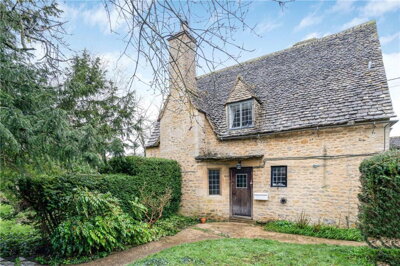
Browse 1 rental home to rent in Langford from local letting agents.
Three bedroom properties represent a significant portion of the Langford housing market, offering space for families with multiple reception rooms and gardens in many cases. Browse detached, semi-detached, and terraced options ranging from period character homes to contemporary developments.
Langford in West Oxfordshire sits within a market that mirrors the wider district, where semi-detached homes rose by 6.2% and flats by 1.8% in the year to December 2025. In the village core, creamy grey limestone is the rule, and the unusually high share of Listed Buildings from the 17th century gives the place a look that keeps rental values firm. We see terraced cottages, semi-detached houses and larger detached homes, many with stone slate roofs and casement windows under wooden lintels.
Langford’s Conservation Area status matters for renters, because it keeps the village’s character under watch and brings extra planning controls over scale, materials and design. At the north-western tip, and at 'The Elms', newer terraced and detached homes have been added, so the stock now spans several budget levels. West Oxfordshire’s private renting sector moved from 14.9% in 2011 to 17.9% in 2021, and that shift points to more demand as buying stays out of reach for some households. Add in the district’s employment base and the limited flow of new homes, and rental need in Langford looks set to continue.

Set low in a pastoral landscape, Langford lies among large fields drained by slow-moving streams, with the limestone wolds to the north and the Thames floodplain to the south. Most of the village is built in local creamy grey limestone, usually in uncoursed rubble form, with stone slate roofs and details such as lime render on infill panels, plus weatherboarding in elm, oak or chestnut. The older core still holds a strong group of 17th-century buildings. It feels steady, almost unchanged. With a parish population of 374, the place stays small enough for neighbours to know one another and for local events to matter.
A traditional pub gives residents a place for meals and a chat, while Witney and Oxford take care of the wider shopping, dining and evening options. West Oxfordshire’s average resident age reached 44 years in 2021, which says a lot about the district’s settled pace. Economic activity sits at 64.9%, and unemployment is lower than the national figure, so the local base is healthy enough to support village services. For renters, Langford allows village living without losing touch with Oxford’s jobs, culture and rail and road routes.

Families in Langford have a village school for primary education, right in the community. Across West Oxfordshire, there is a network of primary and secondary schools, with several holding outstanding Ofsted ratings, and that tends to pull in households who want a specific catchment. The average age of 44 years in 2021 sits alongside that pattern. Nearby grammar schools also give selective routes for able pupils, and many families place rental location near those commute times at the top of the list.
Secondary schooling is covered by comprehensive schools in Witney and the surrounding towns, and school transport helps make that workable for Langford residents. Sixth form provision is available in nearby towns and at colleges in Oxford, so there is a clear route on after GCSEs. West Oxfordshire’s projected population increase of 5.8% by 2041, driven mainly by growth in the 65 and over age group, may shift demand in different directions. Even so, families renting in Langford benefit from the district’s academic standing and the range of options for children of different ages and abilities.

From Langford, Oxford city centre is about 12 miles away, and Oxford Station links the village to the wider national rail network. Trains from Oxford to London Paddington usually take around one hour, which keeps the area workable for people employed in the capital who still want village living. The A40 trunk road runs through West Oxfordshire, giving road access towards Oxford and beyond, while the village’s position beside minor roads keeps car travel fairly straightforward. Bus services also run to surrounding villages and market towns, which matters for residents without a car.
For cyclists, the Oxfordshire countryside gives routes through villages and farmland, and National Cycle Network connections may help on longer trips. Oxford’s park and ride sites give drivers a way to leave the car outside the centre and avoid parking costs and congestion, especially at busy times. Langford’s flat setting between the limestone wolds and the Thames floodplain means the gradients are generally gentle, though some of the wider area undulates. For commuters to London, the appeal is practical enough, a few days at home, then the office when needed.

We would spend time in Langford at different points in the day, and on different days too, before fixing on a rental property. That gives a better feel for noise, pace and how the village actually works. Check local services, test the journey to work, and speak to people who already live there if you can. If children are part of the plan, school catchment lines need checking carefully, because that detail can change from one property to the next.
Our team would always suggest getting a rental budget agreement in principle before starting viewings. It shows landlords and letting agents that the figures are real, and it sets out the maximum monthly rent you can afford from your income. In West Oxfordshire, where some homes attract several applications, having the paperwork ready can put you ahead of less prepared renters.
Book viewings for homes that fit your brief, and make notes and photographs as you go so the details do not blur later. Look closely at the condition, maintenance standard, and any hint of damp or structural movement, then note how the landlord or letting agent responds to questions. Ask about tenancy terms, fixtures and fittings, and any limits on pets or lifestyle choices before you get too attached to the property.
Once a suitable property is found, complete the application form without delay and send every document asked for, including proof of identity, income verification and references from previous landlords and employers. In West Oxfordshire, letting agents and landlords usually want credit checks, employment references and right-to-rent verification before a tenancy is confirmed. Having tenant referencing organised in advance can save a great deal of time when things need to move quickly.
Before the keys are handed over, a detailed inventory check records the condition of the property and its contents, which protects both sides when the security deposit is dealt with at the end of the tenancy. Read the tenancy agreement closely, and note the deposit amount, rent payment schedule, break clause provisions and any conditions linked to the property or the local area. Once the paperwork is signed, arrange for gas, electricity and water to be put into your name, then register with local services.
Living in Langford’s Conservation Area means extra planning controls may affect what can be done with a rental property. Permitted Development Rights are restricted in Conservation Areas, so extensions, outbuildings or major alterations may need planning permission when they would not elsewhere. Before you commit, check whether the property is Listed, because any work affecting the character or appearance of a Listed Building needs Listed Building Consent, even for smaller changes. Those heritage protections keep Langford’s special character intact, but they also mean tenant cooperation with landlords is needed over maintenance and any proposed alterations.
Under Langford’s Oxford Clay geology, the soil can shrink and swell as moisture changes, so foundations may move over time. Cracks in walls or ceilings, especially around windows and doors, can be a sign of that movement, and they should be raised with the landlord before any tenancy is agreed. Older homes may still use solid wall construction and traditional lime mortars and renders, which need a different approach from modern materials. Where a property has a stone slate, Welsh slate or thatched roof, specialist maintenance may be needed, so renters should be clear about those costs and about the landlord’s responsibilities before signing.
Given Langford’s low-lying position between the limestone wolds and the Thames floodplain, flood risk checks are sensible. Surface water run-off from agricultural land, plus stream overflow, can affect the area, and some properties may also be subject to flood alerts. Contents insurance should be in place if a home sits in an affected area, and renters should confirm that cover at the start of the tenancy. The village’s limestone walls, lime render and timber weatherboarding also need proper care to keep damp out, so any existing issues should be recorded during the inventory.

Langford village does not have separate published rental price data, but the wider West Oxfordshire market has shown firm movement, with semi-detached properties up 6.2% in the year to December 2025 and flats up 1.8%. Average house prices in Langford came in at £524,633 overall in the last year, with detached properties at £589,542, semi-detached at £232,500 and terraced homes at £330,000. Rents will still depend on type, size, condition and position within the village, and period homes in the Conservation Area usually sit at a premium because of their character and heritage value.
In West Oxfordshire, which includes Langford, council tax bands run from Band A through to Band H, and most period cottages and village houses sit in Bands C to E. The exact band depends on the property’s assessed value, and it can be checked through the Valuation Office Agency website or by contacting West Oxfordshire District Council directly. Energy performance certificates and the age of the building also affect which bands are most common in a village with as many historic homes as Langford.
Langford has its own primary school for younger children, while Witney and Carterton provide further primary and secondary options nearby. Schools across West Oxfordshire regularly achieve good and outstanding Ofsted ratings, and some families move into the area to get the right catchment. Grammar schools in nearby towns give selective routes for academically strong pupils, and Oxford adds private schools and specialist colleges into the picture. The district’s education reputation remains one of its strengths, and the results at primary and secondary level are consistently solid.
Bus services link Langford with nearby towns and villages, so the village is not cut off from day-to-day travel or essential services. Oxford city centre is about 12 miles away and can be reached by bus or car, while Oxford Station offers rail services to London Paddington in around one hour. The A40 trunk road crosses West Oxfordshire and gives direct road access to Oxford and to the wider motorway network, including links to the M40. Anyone without a private vehicle should check bus frequency and timings against their own commute before settling on a rental property here.
Langford brings together village character, architectural heritage and practical reach into Oxford, a mix that suits renters who want countryside surroundings without losing the city. The Conservation Area status and 31 Listed structures point to a protected setting with strong character, and many renters are drawn to traditional English village surroundings. West Oxfordshire’s economic strength, higher than average activity rates and lower unemployment help support stable rental demand, while projected population growth of 5.8% by 2041 suggests that interest will remain. With only 374 residents, the village stays small and familiar, which works well for people who want calm and a more settled setting.
When renting in England, landlords usually ask for a security deposit equal to five weeks' rent, and where annual rent is less than £234,000 that cap applies as well. That deposit must go into a government-approved Tenancy Deposit Protection scheme within 30 days of receipt, and you should receive the prescribed information showing where it is held. There can still be other costs, such as holding deposits to reserve a property, referencing fees and inventory check charges, although the Tenant Fees Act 2019 limits what can lawfully be charged. First-time renters need to budget for moving costs, initial rent payments of £19,500 and any furnish requirements as well as the security deposit.
Langford sits in a low-lying stretch between the limestone wolds and the Thames floodplain, so fluvial flooding from streams and surface water build-up can happen during heavy rain. The village has seen flooding from surface water run-off from agricultural land and from the overtopping of Broadwell Brook, and flood alerts may apply when river levels rise. Any property in an affected area should have proper contents insurance, and renters ought to check the position before moving in. We would also look at the Environment Agency flood risk maps for the exact property and take the flood history into account before making a decision.
From 4.5%
Compare rental budget rates and find the best deal
From £30
Expert referencing support for rental applications
From £350
Professional survey for your new rental property
From £85
Energy performance certificate for your rental property
Budgeting for Langford means looking beyond the monthly rent, because deposits, fees and moving costs can add up quickly. The security deposit, capped at five weeks' rent under the Tenant Fees Act 2019, has to be protected in a government-approved scheme and returned at the end of the tenancy, subject to any justified deductions for damage or unpaid rent. Holding deposits, usually one week's rent at £19,500, reserve a property while references and checks are carried out, and they are deductible from the final security deposit or the first month's rent. Inventory check fees, which can range from £19,500 depending on property size, record the condition of the rental at the start and end of the tenancy, so both sides have a clear record when deposit returns are discussed.
In West Oxfordshire’s rental market, tenants should have funds ready so they can move quickly once the right property appears. Credit checking and referencing fees are restricted under the Tenant Fees Act, although some costs can still be passed on in certain situations. When planning a rental budget, set aside council tax, which usually sits between £1,400 and £2,000 a year for village properties depending on band, plus utility standing charges and deposits, and contents insurance is sensible for all renters. With Langford’s mix of period homes, it is also wise to allow for maintenance costs that a landlord may not cover, especially in older properties with traditional construction methods and specialist roofing materials.
Properties to Rent In London

Properties to Rent In Plymouth

Properties to Rent In Liverpool

Properties to Rent In Glasgow

Properties to Rent In Sheffield

Properties to Rent In Edinburgh

Properties to Rent In Coventry

Properties to Rent In Bradford

Properties to Rent In Manchester

Properties to Rent In Birmingham

Properties to Rent In Bristol

Properties to Rent In Oxford

Properties to Rent In Leicester

Properties to Rent In Newcastle

Properties to Rent In Leeds

Properties to Rent In Southampton

Properties to Rent In Cardiff

Properties to Rent In Nottingham

Properties to Rent In Norwich

Properties to Rent In Brighton

Properties to Rent In Derby

Properties to Rent In Portsmouth

Properties to Rent In Northampton

Properties to Rent In Milton Keynes

Properties to Rent In Bournemouth

Properties to Rent In Bolton

Properties to Rent In Swansea

Properties to Rent In Swindon

Properties to Rent In Peterborough

Properties to Rent In Wolverhampton

Enter your details to see if this property is within your budget.
Loans, cards, car finance
Estimated property budget
Borrowing + deposit
You could borrow between
Typical borrowing
Monthly repayment
Est. at 4.5%
Loan-to-value
This is an estimate only. Your actual budget may vary depending on interest rates, credit history, and personal circumstances. For an accurate affordability assessment, speak to one of our free mortgage advisors.
This calculator provides estimates for illustrative purposes only and does not constitute financial advice. Your home may be repossessed if you do not keep up repayments on your mortgage. Estimates based on 4.5% interest rate, repayment mortgage. Actual rates depend on your circumstances.
Homemove is a trading name of HM Haus Group Ltd (Company No. 13873779, registered in England & Wales). Homemove Mortgages Ltd (Company No. 15947693) is an Appointed Representative of TMG Direct Limited, trading as TMG Mortgage Network, which is authorised and regulated by the Financial Conduct Authority (FRN 786245). Homemove Mortgages Ltd is entered on the FCA Register as an Appointed Representative (FRN 1022429). You can check registrations at NewRegister or by calling 0800 111 6768.

We use cookies to show you personalised content and improve your experience of our website. Find out more in our Privacy policy and Cookie policy.