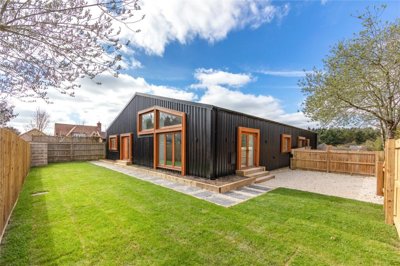
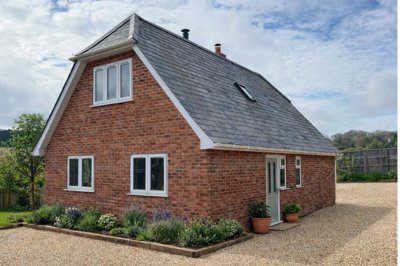
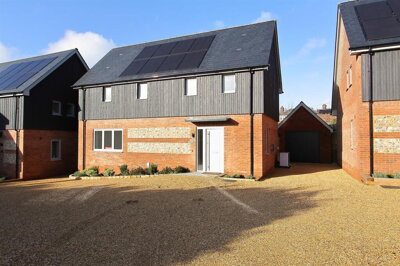
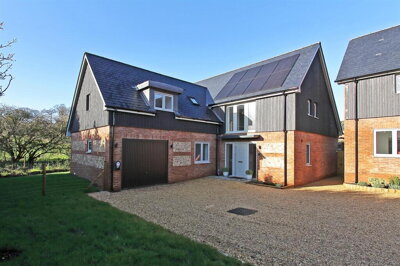
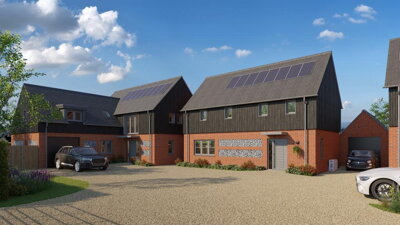
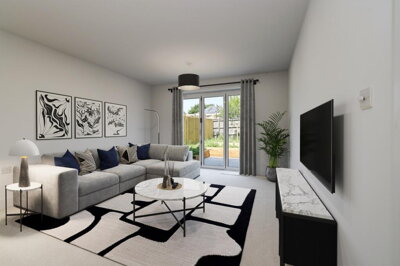
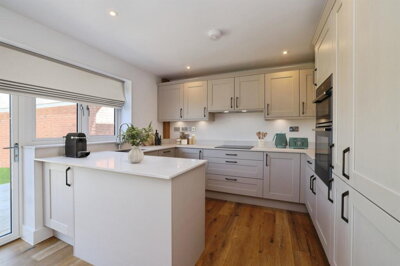
Browse 7 homes new builds in Winterslow, Wiltshire from local developer agents.
The Winterslow property market offers detached, semi-detached, and terraced houses spanning various price ranges and neighbourhoods. Each listing includes detailed property information, photographs, and direct contact with the marketing agent.
£695k
19
0
151
Source: home.co.uk
Showing 19 results for Houses new builds in Winterslow, Wiltshire. The median asking price is £695,000.
Source: home.co.uk
Detached
17 listings
Avg £931,706
Semi-Detached
2 listings
Avg £519,975
Source: home.co.uk
Source: home.co.uk
Winterslow’s property market covers a broad spread of prices and home types. Detached houses sit at the top of the range, averaging £605,312, which reflects how much buyers value larger gardens and private parking in a village location. Semi-detached homes come in at an average of £344,167, giving families a more attainable way into this popular area, while terraced properties average £294,667 and often bring appealing period detail with them. Recent sales data shows values have settled 9% below the 2020 peak of £547,302, but a 7.5% annual rise points to firmer confidence again. Over the last decade, 525 properties have changed hands here, which shows steady activity in this established residential village.
New homes are starting to add another layer to Winterslow. At The Barns in West Winterslow, two and three bedroom properties built to Gold specification are due for occupation in early 2026, with integrated kitchens, Quooker taps, and master bedroom en-suites included. On Witt Road, buyers can also find three and four bedroom detached houses priced from £575,000 to £785,000, with high-spec features such as electric vehicle charging points. That newer stock sits alongside a village that remains largely owner-occupied, and survey data shows 94.6% of residents own rather than rent, which helps give the place a settled feel.
Winterslow’s housing mix still reflects a long pattern of growth from medieval times to the present day. Three-bedroom homes make up the largest share at 42.8% of stock, according to household surveys. Four-bedroom properties account for 37.3%, while larger five-bedroom homes represent 11.9%. Two-bedroom homes are far less common at 7.1%, and one-bedroom properties make up only 1%. In simple terms, this is a village where family-sized houses with gardens have long been preferred over the smaller flats and starter homes more often seen in urban settings.

Day-to-day life in Winterslow is built around a strong local community and easy access to the countryside. Families have a primary school, pre-school facilities, and a doctors surgery in the village itself, which makes everyday routines more manageable. Central Stores includes the Post Office, so basic shopping does not always mean a trip into Salisbury, and The Lord Nelson public house remains a familiar spot for meeting up or eating out at the weekend. There are also five places of worship, while the village hall keeps the calendar busy with events through the year, from craft fairs to quiz nights.
The parish lies within the chalk hills of southern Wiltshire, in a landscape shaped over centuries by farming, rolling fields, and areas of ancient woodland. Winterslow Wood also carries a local story, having lent its name to the woodmen who once made hurdles, spars, sheep cribs, rakes, posts and stakes from the surrounding forest. South of the A30, part of the parish reaches the military ranges of Porton Down, which brings an unusual element to village life and work. Closer to home, the recreation ground and its multi-pitch sports field support football, cricket and informal play, while footpaths run across the surrounding countryside for walking and cycling.
There is more going on economically here than first appearances might suggest. The parish supports over seventy businesses in different locations, many of them home-based, so commercial activity is present without dominating the village scene. Jobs come from the primary school, the village shop, the public house, and the medical practice, and Porton Down adds specialist scientific work within a practical commute. Many residents also travel into Salisbury via the A30. Taken together, home working, local employment and manageable commuting have made Winterslow a good fit for professionals who want space and community without stepping back from their careers.

For families thinking about a move, schooling starts right in the village. Winterslow’s primary school takes children from reception to Year 6, which helps avoid longer daily runs into Salisbury. Pre-school provision is available too, so younger children can often be dropped off in the same place before the school day starts. Because the school serves the surrounding parish as well, local friendships often form early and carry on through secondary education and later life.
After Year 6, most secondary options are in and around Salisbury, reached via the A30 and the surrounding roads. Parents house-hunting here need to look closely at catchment areas and admissions rules, because those boundaries can affect where children are offered places. Families aiming for grammar school places in Wiltshire also need to factor in the eleven-plus, usually taken in Year 6. Salisbury adds further education choices as well, with colleges offering A-levels, vocational courses and apprenticeships. Local demographics show that almost a third of residents are aged 65 or over, which points to a settled population with long-established families alongside newer arrivals.
There are also independent schools in Salisbury and the wider surrounding area for families who want a different route through secondary education. In practical terms, school travel usually means a bus service or lifts by car, and journey times into Salisbury schools tend to fall between 20 and 35 minutes depending on traffic and the exact location. Before moving, we would always suggest confirming the latest transport arrangements, because these can change from year to year with shifts in demand and funding.

Winterslow manages to feel rural without being cut off. The A30 crosses the northern part of the parish and gives direct road access towards Salisbury, roughly 6 miles to the northeast, as well as towards Porton Down to the south. The A360 provides another route towards Salisbury and links on to the city’s rail station, where regular services run to London Waterloo, Southampton and Bristol. By car, the trip into Salisbury city centre is usually around 20 minutes, so evenings out or day-to-day errands in the cathedral city are perfectly workable.
Regular bus routes connect Winterslow with Salisbury, which matters for shopping, medical appointments and trips into the city for entertainment. Rail passengers use Salisbury for direct trains to London Waterloo, and journey times of about 90 minutes make commuting to the capital realistic for some people working in finance, government or other professional services. For longer road journeys, the A303 opens up routes west towards Exeter and east towards Southampton and the south coast motorway network. Cyclists can make good use of the rural lanes too, although the Wiltshire hills are not especially forgiving on longer rides.
For flights, Southampton Airport is about 45 minutes drive away and offers domestic and European routes. Bournemouth Airport is another option at around 50 minutes. For longer-haul travel, London Heathrow can be reached in approximately 90 minutes via the M3 and M25, which helps keep international business trips practical. So while Winterslow is very much a village, it still sits within a travel network that works well by road, rail, and air.

We suggest starting with property listings on Homemove, getting a feel for Winterslow price bands, and then spending time in the village at different points in the day before making any commitment. Traffic, background noise and the general mood can shift more than buyers expect. Walk around, call into the local shops, and chat to residents if you can, it is often the quickest way to work out which part of the village suits you best.
Before arranging too many viewings, it is sensible to have a mortgage agreement in principle in place through a lender or broker. That shows estate agents and sellers that you are in a position to proceed, which can matter in a village market where desirable homes may draw more than one buyer. It also makes the process much smoother once you find the right property.
Next, get in touch with local estate agents and line up viewings that match your brief. In a close-knit market like Winterslow, agents often know about off-market properties and homes likely to be launched soon. It is worth seeing a spread of options across Middle Winterslow, West Winterslow, and the outlying farms and developments, rather than focusing on just one pocket of the village.
After an offer is accepted, we would usually recommend instructing a RICS Level 2 Survey to check the condition of the property. Winterslow has plenty of older homes, including listed buildings and houses standing on variable geology, so defects are not always obvious at a viewing. Our team arranges surveys throughout the SP5 postcode area and we know the issues that commonly show up in village properties here.
At that stage, you will also need a conveyancing solicitor to deal with the legal side of the purchase, including searches, contract review and land registry transactions. A local conveyancer with experience of Wiltshire property can often move things along more efficiently. The legal work should include local authority searches covering planning history, highways, and environmental matters relevant to Winterslow and the surrounding parishes.
Once the legal work is complete and the finances are fully in place, contracts can be exchanged and a completion date agreed. Completion day is when the keys are handed over and life in Winterslow properly begins. We also advise arranging buildings insurance from exchange of contracts, so the property is protected against unexpected damage from that point onward.
There are a few points buyers need to look at closely in Winterslow, especially where older or protected buildings are involved. The village includes several conservation areas and a large number of listed properties. Grade II* listed buildings here include the 12th-century Church of All Saints, the 15th-century Kings Farm, and Roche Old Court from the late 17th century. Where a property is listed, alterations usually need written consent and the survey approach may need to be more specialist, which can limit renovation plans compared with a standard house. Construction details can vary widely too, from coursed flint to red brick with stone quoins and timber cruck frames, and each comes with its own maintenance demands.
Flooding is another issue that deserves proper attention in some parts of the village. Middle Winterslow is known for frequent surface water flooding, and 13 residential properties have experienced repeated flooding to front and back gardens during heavy rain. In affected spots, access and egress can be restricted when flooding occurs, which may have knock-on effects for insurance costs and mortgage lending. There is also groundwater flood risk linked to the chalk geology of southern Wiltshire. Before going ahead, buyers should ask sellers for the property’s flood history and check Environment Agency mapping, particularly for lower-lying locations.
The ground conditions around Winterslow can raise their own concerns. The village stands on chalk hills, with more localised areas of clay with flints. Clay soils can shrink and swell in drought and then rainfall, and that movement may lead to subsidence, foundation problems and structural cracking. Homes with large trees close to the building need especially careful scrutiny because root systems can intensify clay shrinkage by drawing out moisture. A detailed RICS Level 2 Survey carried out by someone who understands Wiltshire geology can highlight these risks before completion. Our inspectors regularly survey Winterslow properties and see how local soils and building methods combine to produce familiar defect patterns.
Older houses here also deserve a close look at their services. Electrical and plumbing systems can be behind modern standards, with some properties still carrying original wiring or lead pipework that may need replacement. Homes on Mill Lane and Glenfield Close, which were developed from the 1960s onwards, can bring a different maintenance profile from medieval cruck-framed buildings or 19th-century brick and flint houses. Knowing the age, build type and materials of any property helps us target the survey properly and helps buyers plan for likely upkeep.

Current pricing in Winterslow depends partly on which dataset you read. home.co.uk listing figures put the average house price at £458,324, while homedata.co.uk records a slightly higher figure of £495,000. By property type, detached homes average £605,312, semi-detached houses £344,167, and terraced properties £294,667. Values have risen by 7.5% over the year, although recent sales still sit 9% below the 2020 peak of £547,302, which may leave some room for value. Flats are unusual here, and most of the stock is made up of houses with two to five bedrooms.
For council tax, Winterslow falls within Wiltshire Council. Properties are banded from A to H according to value, and many family homes in the village tend to sit in bands C to E. Buyers should check the exact band for any address they are considering, either through Wiltshire Council or in the property details, and factor that into their ongoing budget alongside mortgage payments and utility costs. Those payments help fund services such as policing, bin collection, and local amenities.
Winterslow Primary School covers reception through Year 6 and gives the village its own local primary provision. For secondary schooling, most families look towards Salisbury, about 6 miles away. Catchment rules and admissions policies can change from one year to the next, so parents should verify the latest position before committing to a move. Wiltshire grammar school entry depends on passing the eleven-plus, and preparation is usually best started well before the end of primary school. The primary school itself has a close-knit feel, with staff who know local families well and strong community links from the earliest years.
Getting to Salisbury is straightforward enough for most day-to-day needs. Bus services link Winterslow with the city for shopping, healthcare and the rail station, where trains run to London Waterloo, Southampton and Bristol. By road, the A30 usually gets drivers into Salisbury in around 20 minutes. From there, rail journeys to London Waterloo take roughly 90 minutes, which keeps day commuting possible for some London-based workers. Even so, full flexibility in a rural village still tends to favour car ownership, although the bus network covers the basics for residents without one.
From an investment point of view, Winterslow has several qualities that tend to support demand. Annual growth of 7.5% suggests buyers still value a semi-rural setting within commuting reach of Salisbury. Owner-occupation is high at 94.6%, which often goes hand in hand with stable streets and well-kept homes. The Barns and Witt Road add modern options for buyers who would rather have contemporary layouts and specifications than period character. Add in the village setting, the local amenities and the wider sense of community, and it is easy to see why families continue to look here.
Stamp duty in Winterslow follows the standard rates used across England. The nil-rate threshold is £250,000, then 5% applies on the portion from £250,001 to £925,000, 10% from £925,001 to £1.5 million, and 12% above £1.5 million. First-time buyers get relief on the first £425,000, with 5% due on the slice between £425,001 and £625,000. On a purchase at £458,324, that works out at £10,416 in standard stamp duty, or nil for a first-time buyer within the relief threshold. These are the current rules in Wiltshire as elsewhere in England, now that the temporary higher thresholds have ended.
Flood maps show that Middle Winterslow has a recognised surface water issue. In this part of the village, 13 residential properties have persistent flooding to front and back gardens during heavy rainfall, and mapping indicates risk in a 1 in 30 year rainfall event based on historic records. Some homes are affected several times a year, with water levels getting close to the point where internal flooding becomes a real concern. Anyone considering a purchase there should review Environment Agency maps and ask the seller for the property’s flood history. Higher ground in West Winterslow and along the A30 corridor usually carries a lower surface water risk, although groundwater flooding can still occur across the chalk geology of southern Wiltshire.
Older homes in Winterslow can come with a predictable set of defects, though the exact mix depends on age, materials and position. We often look for damp linked to missing or ineffective damp-proof courses, roof wear affecting tiles, mortar and flashings, and possible subsidence where clay-with-flints deposits create shrink-swell movement. Houses built before current electrical standards may need rewiring, and original plumbing can still include lead pipes. Some of the village’s historic buildings date back to the 15th century, so repairs may need traditional materials and methods rather than modern quick fixes. A RICS Level 2 Survey helps identify issues before purchase and gives buyers the chance to renegotiate repairs or price. Listed buildings need extra specialist input, and any work will require consent from the Wiltshire Council planning department.
From 4.5% APRC
Expert mortgage advice tailored to your situation
From £499
Specialist solicitors for your property purchase
From £402
Professional property survey by local experts
From £85
Energy performance certificate for your new home
Buying in Winterslow means budgeting for more than the agreed purchase price. Stamp Duty Land Tax applies on residential purchases above £250,000 at the standard rates now back in place after the pre-pandemic thresholds ended. On a typical village property priced at £458,324, a standard buyer would pay about £10,416, while a first-time buyer may pay less or nothing at all thanks to relief on purchases up to £625,000. Then there are the other costs, legal fees of roughly £500 to £1,500 for conveyancing, survey fees for a RICS Level 2 Survey of around £400 to £600 depending on size, and removals, which vary with distance and volume.
Survey costs deserve a proper place in the budget here because Winterslow has a good number of older and more complex properties. As a guide, a three-bedroom house around £350,000 would usually cost about £437 for a Level 2 Survey. A larger four-bedroom home worth more than £600,000 might be £495 or higher. Pre-1900 properties, which are common in the village, often attract premium fees of 20-40% because their construction is more complicated and hidden defects are more likely. Listed buildings can push costs up further because they need specialist surveys covering both condition and historic significance. We usually suggest allowing 5-10% of the purchase price for the wider buying costs, so the extras do not come as a shock later.
Once the move is complete, the ongoing costs in Winterslow are the usual mix of council tax, utility bills, buildings insurance and routine maintenance. Under Wiltshire Council, many family homes fall into bands C to E for council tax. Properties with bigger gardens or period features can be more expensive to keep up than modern houses, simply because traditional materials and methods often call for specialist tradespeople. Keeping a reserve for future work, such as roof replacement, window restoration or general period feature maintenance, can make ownership much easier to manage over time.

Properties New Builds In London

Properties New Builds In Plymouth

Properties New Builds In Liverpool

Properties New Builds In Glasgow

Properties New Builds In Sheffield

Properties New Builds In Edinburgh

Properties New Builds In Coventry

Properties New Builds In Bradford

Properties New Builds In Manchester

Properties New Builds In Birmingham

Properties New Builds In Bristol

Properties New Builds In Oxford

Properties New Builds In Leicester

Properties New Builds In Newcastle

Properties New Builds In Leeds

Properties New Builds In Southampton

Properties New Builds In Cardiff

Properties New Builds In Nottingham

Properties New Builds In Norwich

Properties New Builds In Brighton

Properties New Builds In Derby

Properties New Builds In Portsmouth

Properties New Builds In Northampton

Properties New Builds In Milton Keynes

Properties New Builds In Bournemouth

Properties New Builds In Bolton

Properties New Builds In Swansea

Properties New Builds In Swindon

Properties New Builds In Peterborough

Properties New Builds In Wolverhampton

Enter your details to see if this property is within your budget.
Loans, cards, car finance
Estimated property budget
Borrowing + deposit
You could borrow between
Typical borrowing
Monthly repayment
Est. at 4.5%
Loan-to-value
This is an estimate only. Your actual budget may vary depending on interest rates, credit history, and personal circumstances. For an accurate affordability assessment, speak to one of our free mortgage advisors.
This calculator provides estimates for illustrative purposes only and does not constitute financial advice. Your home may be repossessed if you do not keep up repayments on your mortgage. Estimates based on 4.5% interest rate, repayment mortgage. Actual rates depend on your circumstances.
Homemove is a trading name of HM Haus Group Ltd (Company No. 13873779, registered in England & Wales). Homemove Mortgages Ltd (Company No. 15947693) is an Appointed Representative of TMG Direct Limited, trading as TMG Mortgage Network, which is authorised and regulated by the Financial Conduct Authority (FRN 786245). Homemove Mortgages Ltd is entered on the FCA Register as an Appointed Representative (FRN 1022429). You can check registrations at NewRegister or by calling 0800 111 6768.

We use cookies to show you personalised content and improve your experience of our website. Find out more in our Privacy policy and Cookie policy.