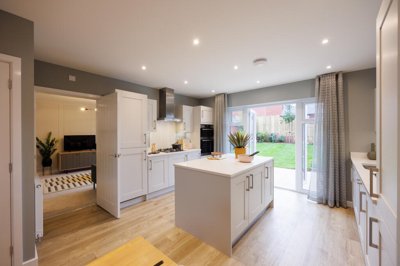
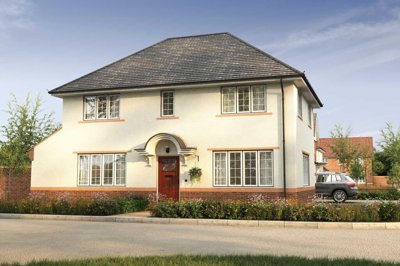
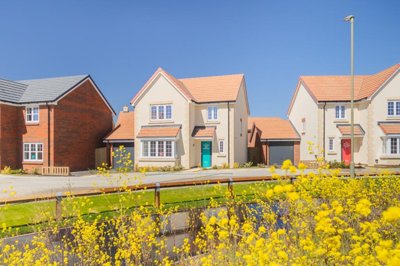
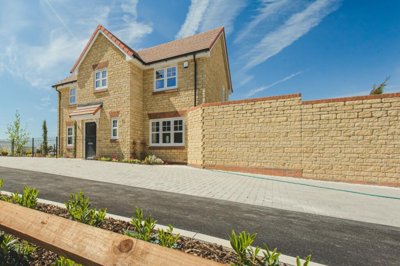
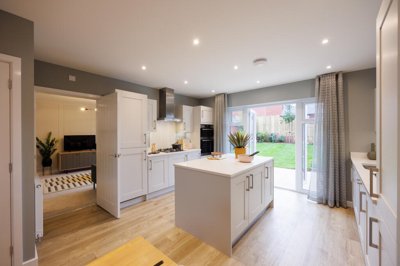
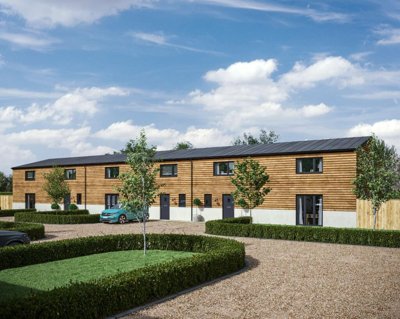
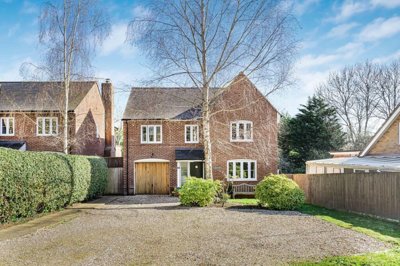
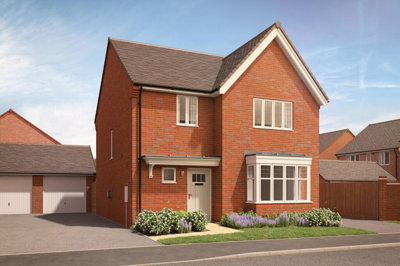
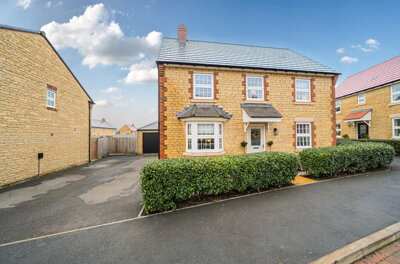
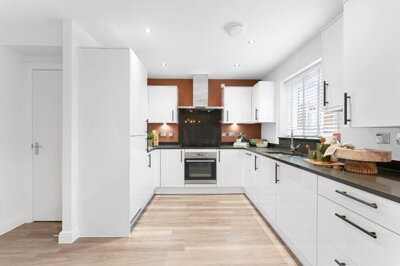
Browse 10 homes new builds in SN7 from local developer agents.
The larger property sector typically features multiple bathrooms, substantial reception space, and private gardens or off-street parking. Four bedroom houses in SN7 span detached, semi-detached, and occasionally terraced configurations, with styles ranging from period properties to modern executive homes.
£578k
34
3
90
Source: home.co.uk
Showing 34 results for 4 Bedroom Houses new builds in SN7. 3 new listings added this week. The median asking price is £577,500.
Source: home.co.uk
Detached
28 listings
Avg £610,893
Semi-Detached
4 listings
Avg £636,250
Terraced
2 listings
Avg £480,000
Source: home.co.uk
Source: home.co.uk
SN7 brings together period homes and newer developments in a way that feels distinct, and the numbers back that up. Detached properties command an average price of £723,596, reflecting the spacious plots and rural settings that characterise the area. Semi-detached homes average around £358,386, which makes them a practical route into this desirable postcode for families. Terraced properties in the region average £280,069, while flats remain the most accessible option at approximately £174,444, although they are less common in the mainly suburban and rural stock. With 245 property sales recorded in the past 12 months, the market shows healthy transaction volumes and steady buyer interest.
On the new build side, The Wickets in Stanford in the Vale (SN7 8NN) has David Wilson Homes offering 3, 4, and 5 bedroom homes from £399,995 to £689,995. Linden Homes’ The Grange in Faringdon (SN7 7FN) includes 2, 3, 4, and 5 bedroom options priced between £315,000 and £625,000. Bloor Homes’ Fernleigh Park sits in the same price bracket and offers similar home types, giving buyers modern energy-efficient homes as an alternative to the area’s older stock. The level of activity here says a lot about confidence in SN7.
For buyers drawn to older homes, the age profile is telling, around 70% of properties were built before 1980, and roughly 25% date from the pre-1919 era. In villages such as Uffington, Buckland, and Stanford in the Vale, many of those homes are built from traditional Cotswold stone, with historic buildings lining main streets and framing village greens. Exposed beams, original fireplaces, and thick stone walls are part of the appeal, though they often bring more upkeep than newer construction.

SN7 is still largely a detached-housing postcode. Detached homes account for 40.1% of properties, a reflection of the rural setting and the generous plot sizes available. Semi-detached properties make up 28.5% of the stock, terraced homes 19.2%, mostly in the older village centres and in Faringdon town. Flats and maisonettes represent 11.2%, offering more affordable choices in converted buildings or small purpose-built schemes. Around 19,000 residents across 7,800 households gives the area the close-knit feel people expect in South Oxfordshire.
Corallian Limestone and clay soils have shaped the landscape as much as the buildings, and many older properties use local Cotswold stone for that reason. Tributaries of the River Thames, including the River Ock and River Cole, cut through the area and create attractive routes for walking, cycling, and time on the Thames Path. The chalk downs around Uffington and the Vale of White Horse give the postcode its distinctive look, and the White Horse hill figure is visible for miles, a reminder that people have lived here since prehistoric times.
Much of Faringdon’s historic centre sits within a conservation area, so the town keeps its period street pattern and architectural character. Listed buildings are common across the postcode too, with historic houses, churches, and agricultural buildings in Faringdon, Stanford in the Vale, Uffington, and Buckland all adding to the area’s heritage. Weekly markets, The Swan, independent shops, and cafes keep everyday life rooted locally. Village fetes, the Faringdon Country Show, and events around the White Horse of Uffington bring in visitors across the year.

Families in SN7 are well served at primary level, with schools in most of the larger villages and in Faringdon itself. Oxfordshire County Council handles school admissions and catchment areas across the postcode. In general, primary schools in the area take children from Reception through to Year 6, and several schools in nearby places may also be an option depending on the exact address. Parents should check current catchment areas and admissions criteria with Oxfordshire County Council, because those details can affect where a child is placed.
Faringdon has its own primary options, while Stanford in the Vale, Watchfield, and Shrivenham each have schools serving their local communities. Families looking for faith-based education can look further afield to schools in Swindon and Oxford, although transport and admissions need to be thought through carefully. School quality can have a clear effect on values in particular streets and villages, and homes within sought-after catchment zones often command higher prices. Checking the latest Ofsted ratings, which are updated regularly, is a sensible step before deciding which village or street in SN7 best suits family life.
Secondary choices for SN7 include schools in Faringdon and nearby towns, with several rated Good or Outstanding by Ofsted. Grammar school routes are available in the wider area too, though competition is keen and admission depends on the 11-plus examination. Our team has helped many families move into SN7, and catchment areas nearly always rise to the top of the list when buyers have school-age children. Sixth form study is available at larger secondary schools, while Swindon and Oxford colleges offer both vocational and academic courses for older students.

Commuters from SN7 have access to several main routes, although the area still feels rural. The A420 gives direct access to Swindon, around 12 miles north, while the A417 links to the M4 motorway for Bristol, London, and the South West. The A419 heads south towards the M4 and M5 corridors, opening up routes to Reading and the south. For Oxford, the drive is usually 30-40 minutes depending on traffic and start point, while Didcot Parkway railway station provides fast services to London Paddington in from approximately 45 minutes.
Bus services in the rural SN7 area link Faringdon with Swindon, Oxford, and surrounding villages, though timetables are much thinner than in urban areas. Rail travel is usually accessed via Didcot Parkway, Swindon, or Oxford stations, all of which connect to major cities and the wider national network. Didcot Parkway is the most frequent route into London Paddington, with journey times of around 45 minutes, which suits daily commuters into the capital. Swindon gives access to Great Western Railway services towards the West Country and London, while Oxford links into Chiltern Railways and CrossCountry services.
For people working from home, or simply trying to keep travel down, SN7 generally has reliable superfast broadband across most areas, with Oxfordshire seeing ongoing digital infrastructure improvements. Cyclists have scenic options through the Cotswolds and along the Thames Path, although the hilly terrain means fitness levels matter. Parking is a bit more mixed, on-street parking is common in older settlements, while newer developments tend to have better provision. We have surveyed properties throughout SN7 and seen internet speeds vary quite sharply between Faringdon and the smaller villages, so buyers who work remotely should check broadband availability at the exact property.

Our inspectors often come across defects in SN7 properties that are worth understanding before a purchase goes ahead. Around Faringdon, the geology, especially Kimmeridge Clay and Gault Clay, creates a moderate to high shrink-swell risk that can affect foundations. As soil moisture changes, the ground expands and contracts, which can lead to subsidence or heave. Properties with shallow foundations near large trees are especially exposed, because tree roots draw moisture out of the soil and can worsen shrink-swell movement in dry spells.
Damp is another frequent issue in SN7, particularly in the older period homes that make up about 70% of the housing stock. Rising damp happens when moisture moves upwards through porous materials from the ground, while penetrating damp comes from defective rainwater goods, damaged brickwork, or poor pointing. In our surveys, condensation problems also crop up in properties with solid walls, common in pre-1919 stone construction, where cavity insulation and modern ventilation are absent. Poor maintenance or renovation that has disturbed the original ventilation set-up often makes these issues worse.
Timber defects, including woodworm and both wet and dry rot, also turn up often in SN7 properties, particularly where damp is present or the building has been vacant or neglected for a period. Age-related wear, together with the rural setting and higher moisture exposure than many urban homes, creates the sort of conditions where timber decay can begin and spread. Roof faults are common as well, with slipped or missing tiles, deteriorated leadwork around chimneys and valleys, and failed felt underlay all allowing water into roof spaces. Older properties with original lead plumbing may also show corrosion or signs of past leaks.
Properties near the River Thames tributaries, including the River Ock and River Cole, may carry river flooding risk, so buyers should check carefully before committing. Major flooding events are uncommon in SN7, but surface water flooding can still affect low-lying places during heavy rain when drainage is overloaded. The Environment Agency publishes detailed flood maps showing river flood zones and surface water flood risk for specific addresses, and we strongly recommend checking those for any home close to watercourses or in valley locations.
There may have been historical quarrying for Corallian limestone in some localised parts of SN7, which could affect ground stability in isolated locations, although that is less common than the clay-related issues that dominate the geological risk profile. If a property sits in a former quarry area or on unusual ground, a geotechnical investigation may be sensible in addition to the standard RICS Level 2 Survey. Chalk geology in the uplands creates different ground conditions from the clay-dominated valleys, and building methods vary accordingly between hilltop villages and those in the river valleys.
Before buying near a watercourse or in an area known to flood, we always advise checking Environment Agency flood risk data and local authority planning records. Homes within Faringdon’s extensive conservation area, or any listed building, bring extra considerations, including restrictions on alterations, higher maintenance costs for period details, and the need for specialist surveys beyond a standard assessment. Building materials matter too, as many older stone-built properties have solid walls without cavity insulation, which affects energy efficiency and heating bills compared with modern cavity-walled homes.
Start by getting to know the different villages within SN7, from Faringdon’s conservation area to smaller hamlets such as Uffington, Buckland, and Coleshill. Then look at property type, detached homes average £723,596, while flats begin around £174,444, and think through the choice between new build and period property based on character and how much maintenance you are prepared to take on. An agreement in principle before viewings puts you in a stronger position when offers are on the table, and in the competitive SN7 market, organised finances can make all the difference.
Browse all available SN7 listings on Homemove and compare asking prices with the market averages. It is also worth looking at new build schemes such as The Wickets (David Wilson Homes), The Grange (Linden Homes), and Fernleigh Park (Bloor Homes), alongside the many period stone properties across the area. Arrange viewings for homes that fit your brief, and note any leasehold arrangements, service charges, or listed building issues that may influence the decision. Conservation area properties and listed buildings bring extra legal and practical steps compared with standard freehold homes.
After finding the right home, submit an offer through the estate agent and negotiate on the basis of market conditions and the property’s condition. Instruct a solicitor for conveyancing and a mortgage broker for the finance side straight away, with conveyancing available from £499 through Homemove’s recommended providers. Because about 70% of SN7 homes were built before 1980, we recommend a RICS Level 2 Survey to pick up defects that are common locally before you move towards completion. Survey costs for SN7 properties usually sit between £400 to £700, depending on size and complexity.
A RICS Level 2 Survey will look at damp, roof condition, subsidence risk linked to local clay geology, and timber defects that are common in older houses. Our inspectors pay close attention to movement in homes near large trees, given the shrink-swell risk associated with Kimmeridge and Gault Clay. Your solicitor will carry out local authority searches, check planning restrictions, and verify title. For listed buildings or properties in conservation areas, specialist surveys may be needed beyond the standard assessment, and any alterations will need Listed Building Consent from the planning authority.
After surveys and legal checks are satisfactory, contracts are exchanged and the deposit is paid, typically 10% of the purchase price. A completion date is set, and on the day the mortgage funds are released and the property becomes yours. SDLT, Stamp Duty, still applies, for properties over £250,000 the rate starts at 5%, while first-time buyers pay zero SDLT on purchases up to £425,000. On a typical SN7 property at the average price of £460,886, a non-first-time buyer would pay approximately £10,544 in SDLT.
SN7’s average property price is currently £460,886. Detached homes average £723,596, semi-detached properties £358,386, terraced houses around £280,069, and flats approximately £174,444. Prices have risen by 1.9% over the past 12 months, which points to a steady market with growth. With 245 property sales recorded in the last year, the area continues to attract buyers who want South Oxfordshire countryside living and good links to major employment centres.
For council tax, homes in SN7 fall under Vale of White Horse District Council and Oxfordshire County Council. Bands run from A to H depending on assessed value, with most cottages and smaller homes in bands A to D, while larger detached properties in rural settings, such as those on the outskirts of Faringdon or Stanford in the Vale, may sit in higher bands. The exact band for any property can be checked through the Valuation Office Agency website or through your solicitor during conveyancing searches, which are part of the standard purchase process in SN7.
The SN7 postcode has good primary education options in Faringdon and nearby villages including Stanford in the Vale, and several schools are rated Good or Outstanding by Ofsted. Secondary education is available in Faringdon and surrounding towns, with grammar school choices in the wider area, including Swindon, for children who pass the 11-plus examination. School performance data changes each year, so parents should review current Ofsted ratings and admission arrangements through Oxfordshire County Council when looking at homes in specific catchment areas, because school placement can shape day-to-day family routines.
Public transport in rural SN7 depends mainly on bus services linking Faringdon to Swindon, Oxford, and surrounding villages, with frequencies lower than in towns and often running hourly or two-hourly rather than the quarter-hourly pattern seen in cities. The nearest major railway stations are Didcot Parkway, Swindon, and Oxford, all reachable by car or bus for commuters, with Didcot Parkway offering fast trains to London Paddington from approximately 45 minutes. For regular travel into London or other major cities, the distance from your exact village within SN7 to these stations should be considered carefully, because journey times vary significantly between the western and eastern parts of the postcode.
For investors, SN7 has several attractions, including proximity to employment centres such as Swindon and Oxford, the appeal of Oxfordshire living, and a local economy supported by agriculture, retail, and tourism, especially around the White Horse of Uffington. The presence of major housebuilders like David Wilson Homes, Linden Homes, and Bloor Homes shows confidence in the area’s future growth. That said, rural villages tend to have more localised rental demand than urban areas, and homes near good schools in Faringdon or Stanford in the Vale can command premium rents from family tenants after the countryside lifestyle.
In SN7, standard SDLT rates are 0% on the first £250,000 of the purchase price, 5% on the portion from £250,001 to £925,000, 10% from £925,001 to £1.5 million, and 12% above £1.5 million. First-time buyers get relief on the first £425,000 at 0%, with 5% applying between £425,001 and £625,000. On a typical SN7 property at £460,886, a first-time buyer would pay no SDLT, while a non-first-time buyer would pay approximately £10,544, calculated as 5% on the £210,886 portion above the threshold. Your solicitor will calculate and submit the SDLT return as part of the conveyancing process.
Because roughly 70% of SN7 homes were built before 1980, buyers should expect common issues such as damp, whether rising, penetrating, or condensation-related, roof defects like slipped tiles or failed leadwork, and timber problems including woodworm and wet or dry rot. Around Faringdon, the local geology, with Kimmeridge Clay and Gault Clay, creates a moderate to high shrink-swell risk that can lead to subsidence, especially in homes with shallow foundations close to large trees. A RICS Level 2 Survey from our team will pick up these defects and judge how serious they are, which gives you room to negotiate repairs or amend your offer before you commit.
Homes near the River Thames tributaries, including the River Ock, which flows through Faringdon, and the River Cole, may face river flooding risk, although major floods are uncommon in this postcode. Surface water flooding can still happen in low-lying areas during heavy rainfall when local drainage is overwhelmed. We recommend checking Environment Agency flood maps for any home you are considering, particularly if it sits in a valley location or near a watercourse. Higher parts of the postcode, such as the chalk downs near Uffington, generally have lower flood risk than valley bottoms.
From £400
A detailed inspection helps identify defects in SN7 properties, especially those affected by local clay geology and period construction.
From £600
We recommend a comprehensive building survey for older properties, listed buildings, and homes in conservation areas across SN7.
From £80
Energy performance certificate required for all property sales in England
From £499
Solicitor services for your property purchase including local authority searches
When buying in SN7, it is wise to budget beyond the asking price for stamp duty land tax (SDLT), solicitor fees, survey costs, and moving expenses. On a property at the current SN7 average price of £460,886, a non-first-time buyer would pay SDLT of approximately £10,544, worked out as 5% on £210,886, the amount above the £250,000 threshold. First-time buyers purchasing at this level would pay zero SDLT because of the higher £425,000 threshold for first-time relief. Properties above £625,000 do not qualify for first-time buyer relief on any portion of the price.
You should also factor in RICS Level 2 Survey fees of £400 to £700 for SN7 homes, with the larger detached properties generally costing more to inspect than smaller terraced houses. Conveyancing fees start from £499 upwards through Homemove’s recommended solicitors, with the final figure depending on whether the property is freehold or leasehold and whether there are listed building or conservation area issues. Local authority search fees and environmental searches usually cost £200-£400 as part of the conveyancing process, and they cover matters such as planning history, highways, and environmental conditions specific to SN7.
Removal costs vary with distance and the volume of belongings, and surveys on the older SN7 housing stock, around 70% built before 1980, may uncover defects that lead to negotiation with the seller or a budget for remedial work after completion. Our inspectors regularly find that a thorough RICS Level 2 Survey offers strong value for the age and character of much of the local housing stock, potentially saving buyers thousands in undiscovered defects or giving useful leverage in price talks. It also makes sense to budget an extra 1-2% of the property value for incidental costs, including mortgage arrangement fees, valuation fees if your lender requires them, and any specialist surveys recommended for period or listed properties.

Properties New Builds In London

Properties New Builds In Plymouth

Properties New Builds In Liverpool

Properties New Builds In Glasgow

Properties New Builds In Sheffield

Properties New Builds In Edinburgh

Properties New Builds In Coventry

Properties New Builds In Bradford

Properties New Builds In Manchester

Properties New Builds In Birmingham

Properties New Builds In Bristol

Properties New Builds In Oxford

Properties New Builds In Leicester

Properties New Builds In Newcastle

Properties New Builds In Leeds

Properties New Builds In Southampton

Properties New Builds In Cardiff

Properties New Builds In Nottingham

Properties New Builds In Norwich

Properties New Builds In Brighton

Properties New Builds In Derby

Properties New Builds In Portsmouth

Properties New Builds In Northampton

Properties New Builds In Milton Keynes

Properties New Builds In Bournemouth

Properties New Builds In Bolton

Properties New Builds In Swansea

Properties New Builds In Swindon

Properties New Builds In Peterborough

Properties New Builds In Wolverhampton

Enter your details to see if this property is within your budget.
Loans, cards, car finance
Estimated property budget
Borrowing + deposit
You could borrow between
Typical borrowing
Monthly repayment
Est. at 4.5%
Loan-to-value
This is an estimate only. Your actual budget may vary depending on interest rates, credit history, and personal circumstances. For an accurate affordability assessment, speak to one of our free mortgage advisors.
This calculator provides estimates for illustrative purposes only and does not constitute financial advice. Your home may be repossessed if you do not keep up repayments on your mortgage. Estimates based on 4.5% interest rate, repayment mortgage. Actual rates depend on your circumstances.
Homemove is a trading name of HM Haus Group Ltd (Company No. 13873779, registered in England & Wales). Homemove Mortgages Ltd (Company No. 15947693) is an Appointed Representative of TMG Direct Limited, trading as TMG Mortgage Network, which is authorised and regulated by the Financial Conduct Authority (FRN 786245). Homemove Mortgages Ltd is entered on the FCA Register as an Appointed Representative (FRN 1022429). You can check registrations at NewRegister or by calling 0800 111 6768.

We use cookies to show you personalised content and improve your experience of our website. Find out more in our Privacy policy and Cookie policy.