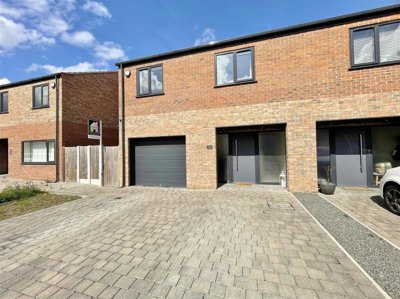
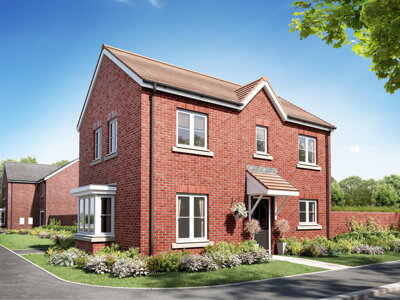
Browse 2 homes new builds in Selby, North Yorkshire from local developer agents.
The larger property sector typically features multiple bathrooms, substantial reception space, and private gardens or off-street parking. Four bedroom houses in Selby span detached, semi-detached, and occasionally terraced configurations, with styles ranging from period properties to modern executive homes.
£345k
12
0
108
Source: home.co.uk
Showing 12 results for 4 Bedroom Houses new builds in Selby, North Yorkshire. The median asking price is £345,000.
Source: home.co.uk
Detached
7 listings
Avg £425,714
Terraced
3 listings
Avg £213,333
Semi-Detached
2 listings
Avg £287,500
Source: home.co.uk
Source: home.co.uk
Selby has not raced away on price. homedata.co.uk records put the town close to £201,859 over the last year, although the figures look different once you break them down by property type. Terraces have averaged £165,200, semi-detached homes £215,557, and flats £130,000, which still leaves a more accessible first step than many better-known Yorkshire hotspots. Completions have been thinner too, with 223 residential sales and a 45.74% fall on the previous year, so organised buyers may have a bit more room in the negotiation. On the asking side, home.co.uk shows prices down by 1.8% over the past six months. For anyone balancing affordability against bargaining power, that gap between firm sold values and softer asking prices is useful.
New-builds widen the choice rather than replacing the older Selby market. Around Staynor Hall, home.co.uk listings include plots from roughly £215,000 to £232,500, while Teasel Green at nearby Eggborough runs up to £459,995 for a 4-bedroom detached home and £529,995 for a 5-bedroom detached. Clifton View in Osgodby adds another option, and Brayton has approval for 80 homes, including one to four-bedroom properties, three self-build plots, and affordable housing provision. Buyers moving out of a terrace, or leaving a local rental, often like the newer kitchens, insulation and lower day-to-day maintenance. The useful thing in Selby is the range, from flats through to family houses, so budget can lead the shortlist rather than one narrow style of home.

There is proper market-town weight to Selby, not just a commuter label. Its past as a port, then as a coalfield centre, still comes through in the way the town has grown around trade, movement and work. The setting matters as well. Selby sits on the Humberhead Levels, across flat, open ground that was once part of an inland sea estuary and later the glacial Lake Humber before it became farmland. Much of the district is only a little over 6m above sea level, so the wide sky, long views and river corridors are hard to miss. Selby Abbey gives the centre its landmark, and for many buyers that sense of place is part of the appeal.
Population and tenure figures add some context. Between the 2011 and 2021 censuses, the district grew by 10.2%, rising from over 83,400 to around 92,000, while the research data estimates 90,620 now and projects 98,696 by 2030. In 2021, 73.1% of households owned their home, 13.4% rented privately, and 12.3% were in socially rented housing, so there is a strong owner-occupier base with a real rental market alongside it. Employment sits at 73%, below England's 76% and North Yorkshire's 79%, which helps explain why Selby still acts as a commuter town as well as a town in its own right. It is that blend of history, price and practical links that draws buyers who have found York or Leeds too expensive.
For families, the school question often comes before the house question. North Yorkshire Council manages admissions, and catchments can mean that two similar homes only a few streets apart lead to different primary or secondary options. The research pack does not give confirmed Ofsted grades for named schools, so we would not make up ratings or repeat old ones that may have changed. Check the latest inspection report, admissions rules and door-to-school distance before you offer. That bit of homework matters even more if your children are nursery age now, or if you hope to stay through sixth form.
Selby gives parents a mix of town schools, nearby village options and post-16 provision. Selby College keeps further education local, while some families also look towards York if they want a wider choice of selective or independent schools and can make the journey work. A home in a sought-after catchment can stay attractive to both owner-occupiers and tenants, provided the school run, railway station and morning traffic all make sense together. The best fit is rarely just one school name. We would look at the journey, the transport options and the asking price as one decision, not three separate ones.

Selby suits people who need local life during the week but city access when work calls. Selby railway station keeps York and Leeds within practical reach, and that commuter pull helps steady demand when the wider market goes quiet. By road, the A19 runs through the area, with the M62 accessible via Junction 34 in the wider district. Having those choices is handy, because some days the train makes sense, other days the main road or a local route does the job better.
Developers know the transport links sell. Teasel Green in nearby Eggborough talks up the M62 and Selby railway station, while schemes around Staynor Hall and Clifton View lean on their convenience for the town centre. Buses cover shorter trips around the district, which can reduce the need to use a car for every errand. That matters for teenagers, retirees and part-time workers, but it also matters for household costs if you are trying to manage with one vehicle rather than two.
Do not leave parking until after you have fallen for a house. Near the abbey, the station and some of the older streets, on-street spaces can be tight, while newer estates are more likely to have a drive or garage. Selby's flat landscape makes cycling more realistic than in many towns, although we would still check safe routes into the centre and to the station before relying on a bike every day. For commuters, a morning visit tells you more than the listing ever will, particularly if the choice is between a driveway and a cheaper house on a busier street.
Flood risk is one of the big Selby checks. The town lies in the flood plain of the Ouse, Wharfe, Aire, and Derwent, with serious events recorded in 1794, 1866, 1947, 1982, and 2000. Areas around the old shipyards, Westfield, Holmes, and Barlby from Landing Lane to the A19 Bridge have all been flagged as places to treat carefully. There are flood defences, and further defence plans have been discussed, but river, surface water and groundwater risk remain part of the local picture. Here, a proper survey and sensible insurance checks are not nice-to-haves, they are part of buying properly.
The old coalfield is another reason not to rely on a basic mortgage valuation. Selby's mining history does not mean every house is affected, but past workings can still be relevant for ground movement, insurance and future resale confidence. Along river channels, deep alluvium can also point to clay shrink-swell in certain locations, particularly where extensions or heavy landscaping have altered the site. For older homes, altered properties, unusual construction, or any house already showing damp or movement, a RICS Level 3 Survey is a sensible call. If the seller mentions previous remedial work, ask for the paperwork before you get too attached.
Older and historic property needs a slower look. Selby Abbey and the older core point to possible listed buildings and conservation controls nearby, so exterior works may not be as straightforward as they would be on a modern estate. With leasehold flats, check service charges, reserve funds, ground rent and planned works, because they can change the real monthly cost. We would read the title, ask about any earlier flood claims and get the paperwork before moving from viewing to offer. In Selby, the right purchase is not just the right price, it is the home whose ongoing costs still make sense after completion.
Start by comparing the centre, the newer estates and the surrounding villages, then put flood history, parking and school catchments on the viewing list.
Talk to a lender before the search gets serious, so you know your borrowing position and can act quickly when the right Selby home appears.
At viewings, look closely at drainage, access, storage and the condition of any extensions or loft conversions, particularly in the older parts of town.
For older, altered or flood-sensitive properties, choose a RICS Level 3 Survey, and ask for extra checks where the house sits close to known risk areas.
Get the conveyancing started early, with searches covering flood and title points, and ask straight away for any leasehold or management paperwork.
Once the mortgage, survey and legal work are lined up, agree an exchange date, put insurance in place and start planning the move into Selby.
According to homedata.co.uk, the average sold price over the last year is £201,859. Terraces sit at £165,200, semis at £215,557, and flats at £130,000, giving buyers several clear budget levels to work with. home.co.uk shows asking prices down by 1.8% over the past six months, so there may still be negotiation in the market. Larger detached houses tend to sit above the average, especially on newer developments.
Council tax is property-specific, so size, type and valuation all matter. Even two homes on the same street can sit in different bands. North Yorkshire Council is the local authority, and the bill follows the individual property rather than the Selby name alone. Before offering, check the exact band on the listing or directly with the council, then build that figure into your monthly costs.
The research pack does not give live Ofsted grades for named schools, and we would not guess at them. Buyers usually compare town primaries, Selby College for post-16 study, and schools in nearby York where a wider choice is important. Catchments can change how a street is viewed, so admissions criteria should be checked before homes make the shortlist. In Selby, a good school move often comes down to the route and timing as much as the school building.
For a market town, Selby is well connected. Selby railway station links the area with York and Leeds, while the A19 and the M62 corridor via Junction 34 give strong road options across the wider district. Local buses help with shorter trips around town and into nearby villages. Parking is more constrained in parts of the centre, so the exact location matters if you commute every day.
Selby can suit investors, provided the local demand drivers are understood. The district population rose by 10.2% between the 2011 and 2021 censuses, and commuter links support tenant demand as well as owner-occupier interest. home.co.uk listings show both new-build and established homes, which gives investors more than one price point to consider. Flood exposure and maintenance still need careful checking, so the better buys are usually well located, properly surveyed and sensibly priced.
For most buyers in England, SDLT is 0% up to £250,000, 5% from £250,000 to £925,000, 10% from £925,000 to £1.5 million, and 12% above that. First-time buyers pay 0% up to £425,000, then 5% from £425,000 to £625,000, with no relief above £625,000. Using Selby's average sold price of £201,859, a first-time buyer would usually pay no stamp duty, and a mover at the average would also sit below the threshold. On a £300,000 purchase, the SDLT would be £2,500.
Yes, both checks matter locally. Selby sits low in the flood plain of major rivers, with a long flooding history in some parts of town, and the former coalfield makes mining legacy searches sensible too. That does not mean buyers should write the area off. It does mean survey, searches and insurance questions carry more weight than they would in a higher, drier location. A detailed survey and a careful solicitor can prevent costly surprises later.
From 4.5%
Compare mortgage rates and get an agreement in principle before you start viewing
From £499
Experienced solicitors to deal with searches, contracts and completion
From £629
Detailed structural checks for older homes, flood-sensitive plots and altered properties
Stamp Duty Land Tax in England is 0% up to £250,000, 5% from £250,000 to £925,000, 10% from £925,000 to £1.5 million, and 12% above that. First-time buyers pay 0% up to £425,000, then 5% from £425,000 to £625,000, with no relief above £625,000. At Selby's average sold price of £201,859, a first-time buyer would usually pay no stamp duty, and a mover buying at the average would also be below the tax threshold. That leaves more money for the survey, legal work and the actual move.
Buying at £300,000 as a home mover would mean a tax bill of £2,500, because the 5% rate applies only to the slice above £250,000. At £500,000, the SDLT due would be £12,500, so a higher bracket can change the cash needed quite sharply. We would work out the tax early, then add mortgage fees, conveyancing, searches and a survey. The price on the listing is only one part of the budget, and that matters when the right Selby home comes up.
Selby buyers should set aside money for flood checks and a detailed survey, especially where the property is older or close to the river corridors. Those upfront costs can look optional until they uncover something important. With an agreement in principle in place, you can compare homes against real borrowing power and move faster when a suitable property appears. That is where local advice earns its keep, because you are judging the full cost of living in Selby, not just the headline asking price.
Properties New Builds In London

Properties New Builds In Plymouth

Properties New Builds In Liverpool

Properties New Builds In Glasgow

Properties New Builds In Sheffield

Properties New Builds In Edinburgh

Properties New Builds In Coventry

Properties New Builds In Bradford

Properties New Builds In Manchester

Properties New Builds In Birmingham

Properties New Builds In Bristol

Properties New Builds In Oxford

Properties New Builds In Leicester

Properties New Builds In Newcastle

Properties New Builds In Leeds

Properties New Builds In Southampton

Properties New Builds In Cardiff

Properties New Builds In Nottingham

Properties New Builds In Norwich

Properties New Builds In Brighton

Properties New Builds In Derby

Properties New Builds In Portsmouth

Properties New Builds In Northampton

Properties New Builds In Milton Keynes

Properties New Builds In Bournemouth

Properties New Builds In Bolton

Properties New Builds In Swansea

Properties New Builds In Swindon

Properties New Builds In Peterborough

Properties New Builds In Wolverhampton

Enter your details to see if this property is within your budget.
Loans, cards, car finance
Estimated property budget
Borrowing + deposit
You could borrow between
Typical borrowing
Monthly repayment
Est. at 4.5%
Loan-to-value
This is an estimate only. Your actual budget may vary depending on interest rates, credit history, and personal circumstances. For an accurate affordability assessment, speak to one of our free mortgage advisors.
This calculator provides estimates for illustrative purposes only and does not constitute financial advice. Your home may be repossessed if you do not keep up repayments on your mortgage. Estimates based on 4.5% interest rate, repayment mortgage. Actual rates depend on your circumstances.
Homemove is a trading name of HM Haus Group Ltd (Company No. 13873779, registered in England & Wales). Homemove Mortgages Ltd (Company No. 15947693) is an Appointed Representative of TMG Direct Limited, trading as TMG Mortgage Network, which is authorised and regulated by the Financial Conduct Authority (FRN 786245). Homemove Mortgages Ltd is entered on the FCA Register as an Appointed Representative (FRN 1022429). You can check registrations at NewRegister or by calling 0800 111 6768.

We use cookies to show you personalised content and improve your experience of our website. Find out more in our Privacy policy and Cookie policy.