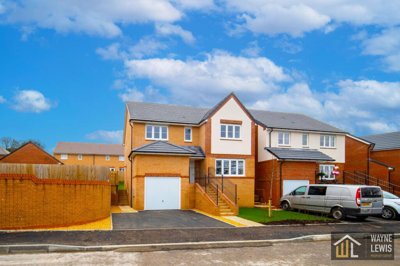
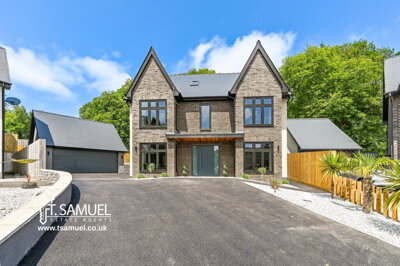
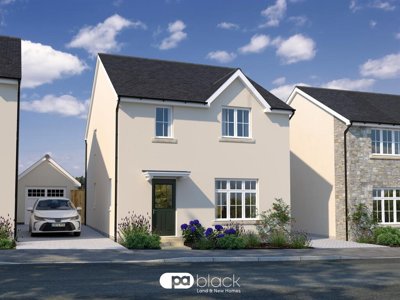
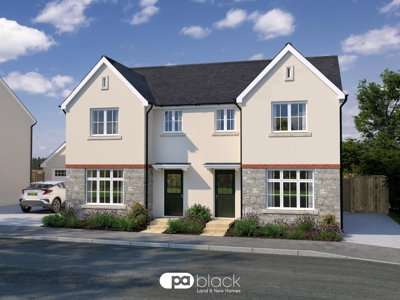
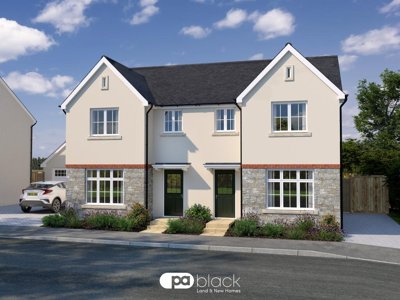
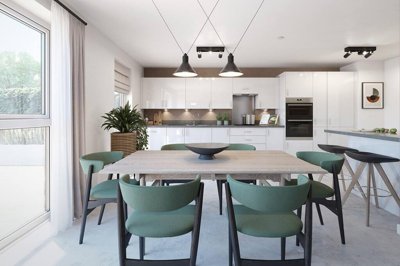
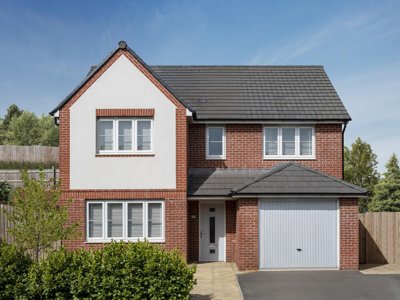
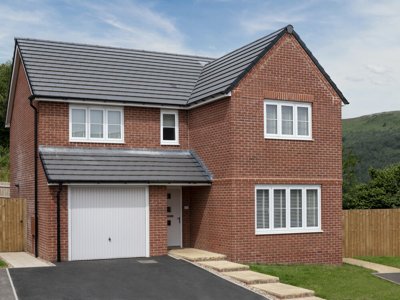
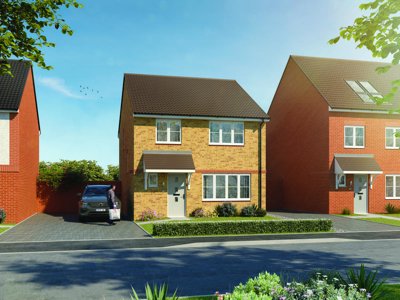
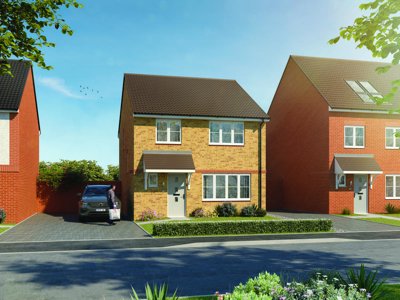
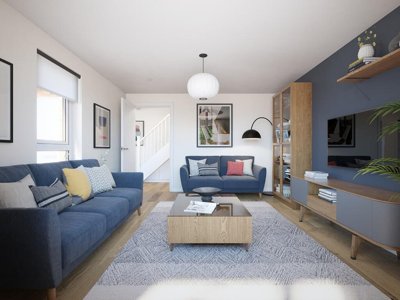
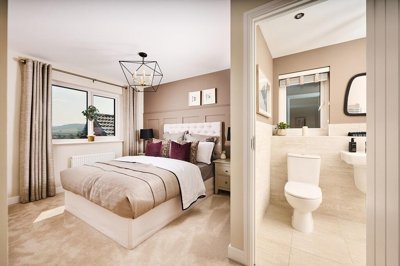
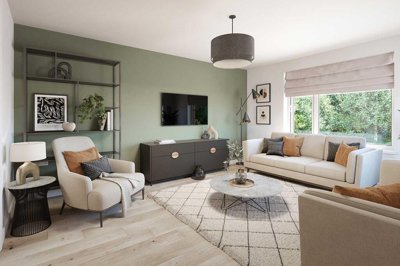
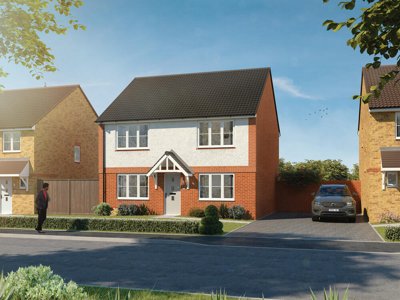
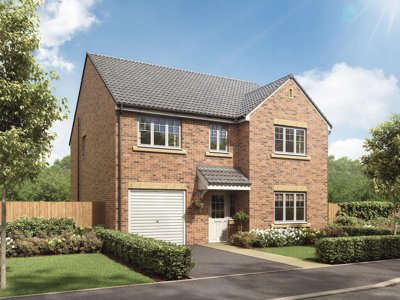
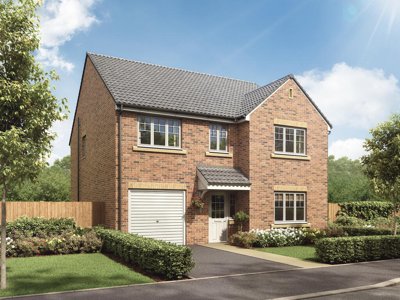
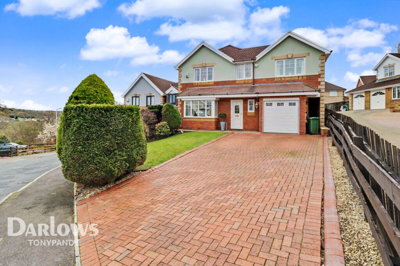
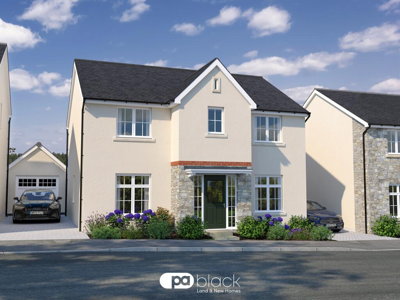
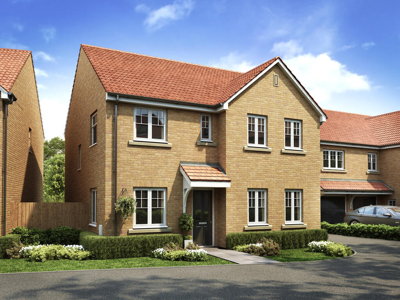
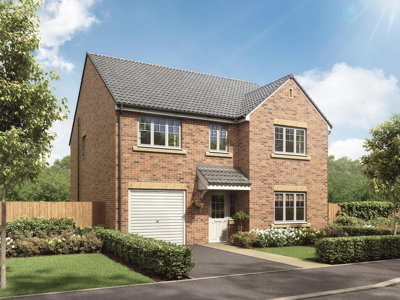
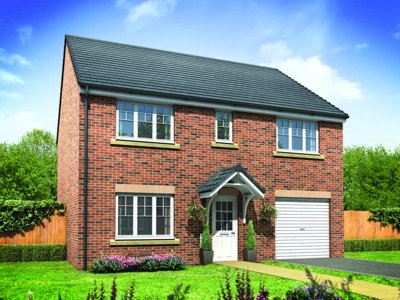
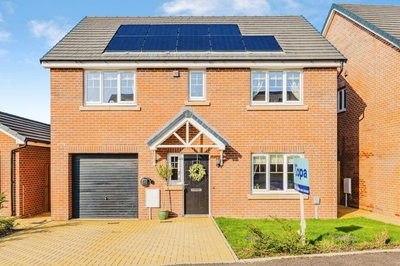
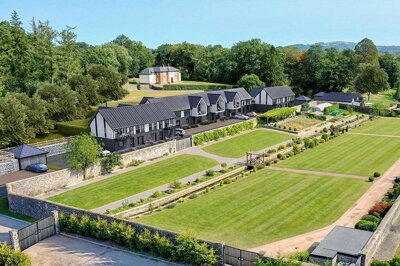
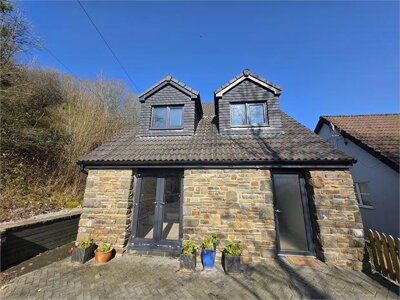
Browse 52 homes new builds in Rhondda Cynon Taf from local developer agents.
The Rhondda Cynon Taf property market offers detached, semi-detached, and terraced houses spanning various price ranges and neighbourhoods. Each listing includes detailed property information, photographs, and direct contact with the marketing agent.
Rhondda Cynon Taf remains one of the more affordable parts of the Welsh housing market. The latest provisional figures from December 2025 put the average house price at £163,000, while home.co.uk records £183,509 across the past year. Values have still edged up by 4.2% over the twelve-month period, although that sits just under the wider Wales average of 5.0%. It points to a steady market, with buyers able to get in without the fierce competition seen elsewhere.
Price points vary sharply by property type across the borough. Detached homes sit at £286,000, which reflects the premium for space and privacy, while semi-detached properties average £178,000. Terraced houses, the backbone of the local stock, come in at £142,000, so they remain well within reach for first-time buyers. Flats and maisonettes are the cheapest entry point at roughly £85,000. That spread gives buyers room to choose according to budget and household size.
homedata.co.uk shows an average sold price of £169,745 over the last twelve months, and home.co.uk puts the figure at £165,000 as of February 2026, a modest 0.8% rise on the previous year. The market has also bounced back well from earlier highs, sitting 5% above the 2023 average of £174,946. With 3,991 properties sold in 2022 and an estimated annual dwelling growth of 229 units through new build activity, Rhondda Cynon Taf continues to offer a busy but accessible market for buyers seeking value in South Wales.
Census 2021 data gives a clear picture of the housing mix. Terraced properties account for 47.35% of the 103,339 dwellings across the borough, semi-detached homes for 27.79%, and detached houses for 16.46%. Flats, maisonettes, and apartments make up 8.31% of the stock. That heavy tilt towards terraces reflects the borough's industrial past, when homes were built for mining communities in the valleys, while newer semi-detached and detached developments are aimed at families wanting more modern accommodation.

Rhondda Cynon Taf still wears its industrial past openly, from the rows of terraced streets to the strong sense of community that runs through them. Coal mining and manufacturing shaped the borough, and generations of families have put down roots in places such as the Rhondda Valleys, Cynon Valley, and Pontypridd. That history has influenced both the architecture and the local identity, which remain strong today. Many of the 103,339 dwellings across the borough were built before 1970, so neighbourhoods often feel settled and established, with mature trees, local pubs, and community centres.
With a population of around 237,700, expected to reach 242,844 by 2024, the borough shows signs of a stable and growing community. Census 2021 data says 58.74% of households are economically active, and most are owner-occupiers. The employment rate for people aged 16 to 64 years was 69.1% in the year ending December 2023, a little below the Wales average of 74.1%, while average weekly earnings for full-time workers reached £520.20. Those figures shape the local housing market, and the affordability ratio of 4.57 keeps homeownership within reach for many families.
Everyday life is well served here. We see shopping centres, supermarkets, local markets, and plenty of independent retailers. There are swimming pools, sports centres, and the rugby heritage that ties communities together across the valleys. Pontypridd acts as a major commercial hub, while Aberdare and Treorchy each have their own town centre amenities. Valleys Park in Pontypridd adds riverside walks and space for recreation, bringing residents closer to the landscape around them.
Green space is never far away in Rhondda Cynon Taf. The Brecon Beacons National Park borders the area, and parks and open spaces are scattered throughout the borough for day-to-day recreation. Cultural draws include the Rhondda Heritage Park, where visitors can explore the story of Welsh mining, along with museums that chart the area's role in Welsh industrial history. The annual Eisteddfod has come here on multiple occasions, which says plenty about its place in Welsh life. For anyone after a community-minded setting with strong local traditions and access to proper Welsh countryside, this is a convincing alternative to pricier urban areas.

Families are well served by education provision across Rhondda Cynon Taf, with primary and secondary schools spread throughout the borough. There are plenty of primary schools in local communities, and secondary options include comprehensive schools as well as schools with specialist status in different subjects. Parents should look at individual performance data and Ofsted inspection reports, because standards do vary from one school to another. Catchment area matters too, as many schools admit pupils based on how close they live to the school premises.
Several secondary schools also offer sixth form provision, so students can stay local before moving on to higher education or work. Colleges add vocational courses and apprenticeships for school-leavers and adults who want to retrain or gain fresh qualifications. Routes into construction trades, healthcare, and business administration all line up with local job opportunities. The percentage of working-age adults with no qualifications in Rhondda Cynon Taf was 10.4% in December 2021, compared with 8.2% across Wales, which shows there is still more to do on educational attainment.
Cardiff and Swansea universities are within reach, and decent transport links make commuting realistic for students who prefer to live at home while studying. That can cut the cost of higher education quite a bit, because students avoid university accommodation while still accessing strong degree programmes. Anyone buying in Rhondda Cynon Taf should still check school performance and admissions rules in the area they are considering. Schools can affect children’s outcomes, yes, but they can also shape long-term property values. Homes in strong catchments are often in higher demand and tend to hold their value well.

Transport links from Rhondda Cynon Taf have improved a great deal in recent years, and the borough is now well connected to major employment centres. The Valleys Lines railway network runs regular services linking Pontypridd, Aberdare, and Treorchy with Cardiff Central, and journey times to the capital are usually around 45-60 minutes depending on the departure point. That makes Cardiff commuting practical for many people while housing costs stay lower in the valleys. The Treherbert line, Aberdare line, and Rhondda Valley line all serve the borough, with trains running regularly through the day.
Bus services cover the borough and link smaller communities with larger towns and railway stations. They matter especially for reaching shops and jobs in the valley bottom towns, where many local businesses are based. To the south, the M4 gives road access to Newport, Bristol, and London via the Severn Bridge. The A465 Heads of the Valleys road provides an important east-west route through the southern part of the borough, improving connections to Merthyr Tydfil and the wider region. For Cardiff commuters, park-and-ride facilities at some valley railway stations offer a sensible option.
Cycling is becoming more practical in parts of the area. There are off-road cycle paths for leisure and shorter journeys, and the Taff Trail, a long-distance cycling and walking route, runs through sections of Rhondda Cynon Taf. It gives people another way to travel as well as a good route for days out, though the hills make daily cycling harder than in flatter places. Electric bikes are catching on for that reason. Parking also varies from town to town, but many places offer free or low-cost parking, which adds to the convenience for drivers.

Before starting a search, we always suggest getting a mortgage agreement in principle from a lender. It sets out how much you can borrow and shows estate agents and sellers that you are ready to move. With average prices around £163,000 in Rhondda Cynon Taf, buyers often find a wider choice than they expected, and terraced homes are especially good value for those taking their first step onto the ladder.
It pays to look across different neighbourhoods in Rhondda Cynon Taf, because each one has its own feel. Think about school catchments, commuting needs, local shops and services, and the character of the towns and villages throughout the borough. Pontypridd feels more urban and convenient, while the smaller valley communities have a tighter village atmosphere and a strong sense of local tradition.
Use Homemove to browse all available properties across Rhondda Cynon Taf. From there, shortlist the homes that fit your brief and book viewings so you can see them in person. We would always advise checking the condition of the property, the feel of the neighbourhood, and anything that might not show up in photographs or listings.
Older homes, especially the pre-1970s terraced stock that makes up much of the local market, really do call for a RICS Level 2 Survey. It can pick up structural problems, damp, roof issues, and other defects that are easy to miss on a standard viewing. Much of the housing stock was built before modern building regulations, so an independent survey gives buyers useful protection.
Once your offer is accepted, instruct a conveyancing solicitor to deal with the legal side of the purchase. They will run searches, check the contracts, and handle the transfer of ownership through the Land Registry. Your solicitor will also arrange local authority searches with Rhondda Cynon Taf County Borough Council, together with drainage and water searches.
After the searches come back satisfactorily and the finance is in place, contracts are exchanged and the deposit is paid. Completion usually follows within weeks, when the keys to your new Rhondda Cynon Taf home are handed over. The final stage is registering the ownership with the Land Registry and collecting the keys from the estate agent.
Because pre-1970s terraced housing dominates in Rhondda Cynon Taf, buyers need to look closely at the condition of older properties. Traditional valley terraces often have solid wall construction rather than cavity wall insulation, which can affect warmth and energy efficiency. Roofs deserve attention too, since older homes may still have original slate or tile coverings that need work. Damp penetration is common in older Welsh properties, especially where rainfall is high, so check walls and window frames for signs of moisture. Solid walls and single-glazed windows in some homes can also mean higher heating bills.
Flood risk is an issue in parts of Rhondda Cynon Taf, particularly in valley bottom locations near rivers and waterways. The Welsh Government's Development Plans Manual identifies material flood risk areas, and that means local planning authorities apply stricter thresholds for building in vulnerable spots. The River Rhondda, River Cynon, and River Taff all run through the borough, and while those valleys make for attractive places to live, they can also carry flood risk. Properties on higher ground usually face less flood risk, though access and parking may become more awkward.
The area’s mining history can also bring ground stability to mind. We did not find widespread subsidence issues in the available data, but homes on former mining land may still benefit from specialist surveys beyond a standard RICS Level 2 assessment. Coal extraction over many decades can leave legacy problems beneath communities. It is also worth checking whether a property is freehold or leasehold, because some flats and newer developments come with leasehold terms, service charges, and ground rent obligations. Knowing those costs early makes budgeting for homeownership much clearer.
Energy efficiency varies widely across the housing stock, and older terraced homes often perform less well than newer builds. An EPC rating affects monthly running costs as well as future resale prospects. Some older properties may gain from extra insulation or double glazing, both of which can improve performance. When you work out the budget, it makes sense to include possible improvement costs alongside the purchase price itself.

According to December 2025 data, the average house price in Rhondda Cynon Taf is about £163,000, while home.co.uk records a slightly higher £183,509 over the past year. Prices have climbed by around 4.2% over the last year, with terraced homes averaging £142,000, semi-detached properties at £178,000, and detached houses reaching roughly £286,000. Flats and maisonettes stay the cheapest route in at about £85,000. home.co.uk data also places prices 5% above the 2023 peak of £174,946, which shows the market is still recovering.
Rhondda Cynon Taf County Borough Council sets council tax bands for the area. Properties are banded from A to I according to value, so Band A homes carry the lowest charges and Band I homes the highest. The exact band depends on the individual property valuation. You can check any current council tax band through the Valuation Office Agency website. Because property values are relatively low compared with the UK average, many homes sit in Bands A through C, which helps keep annual council tax bills fairly affordable.
There is a broad spread of primary and secondary schools across Rhondda Cynon Taf. Performance does differ from one school to another, so parents should look at specific Ofsted reports and exam results for the schools in their chosen area. Several secondary schools have sixth forms for post-16 study, and further education colleges offer extra vocational routes. Catchment areas matter a great deal for families, because proximity to schools often decides who gets a place. We always recommend checking the latest performance data and visiting schools in person before going ahead with a purchase.
Rail connectivity is a real strength here. Through the Valleys Lines network, regular services run to Cardiff Central, usually taking approximately 45-60 minutes from major valley towns including Pontypridd, Aberdare, and Treorchy. Bus routes cover the borough too, linking communities and supporting both inter-valley travel and access to local amenities. The M4 motorway and A465 Heads of the Valleys road provide road links to Newport, Bristol, and the wider South Wales region. Several railway stations also have park-and-ride facilities, which works well for commuters heading to Cardiff and other employment centres.
For investors, Rhondda Cynon Taf has plenty going for it. Entry prices are low and property values have been growing steadily, which gives the area obvious appeal. An average price of £163,000 offers strong value compared with the UK average, and the market has shown consistent modest growth over recent years. The affordability ratio of 4.57 means homes are accessible against local incomes, and a median house price of £136,000 needs a household income of around £29,727 to buy and own. Rental demand is also present, since not every resident can move into ownership, so buy-to-let and capital growth both remain possible strategies. Ongoing new build activity, at roughly 229 new units annually, adds further momentum.
Stamp Duty Land Tax applies to property purchases in Wales. Under the current thresholds for 2024-25, no SDLT is due on homes up to £250,000. For a typical Rhondda Cynon Taf property at around £163,000, most buyers stay below that line and pay no SDLT at all. More expensive homes, such as detached properties averaging £286,000, do trigger 5% on the portion above £250,000, which comes to £1,800. First-time buyers in Wales get relief on homes up to £425,000, and pay 5% on amounts between £425,000 and £625,000. Current thresholds should always be checked with HM Revenue and Customs or a conveyancing solicitor, because they can change with each budget.
Terraced homes dominate the housing stock in Rhondda Cynon Taf, making up around 47-51% of all dwellings according to Census 2021 data and Local Housing Market Assessment figures. Semi-detached properties account for about 25-28%, while detached houses sit at roughly 14-16%. Flats and maisonettes make up around 8% of the stock. That mix gives buyers a wide choice, from traditional valley terraces to modern detached family homes, depending on budget and taste. The terraced housing itself ranges from compact two-bedroom miners cottages to larger Victorian terraces with original features.
Rhondda Cynon Taf’s economy has moved well beyond its mining and manufacturing roots and now includes retail, healthcare, education, and service sector work. Pontypridd acts as a commercial hub with shopping centres and local businesses, and Cardiff’s proximity opens up extra employment in the capital. The employment rate for people aged 16 to 64 years stood at 69.1% in December 2023, just under the Wales average of 74.1%. Healthcare and social care are major employers across the borough, alongside education providers ranging from primary schools to further education colleges.
Budgeting properly for a purchase in Rhondda Cynon Taf helps avoid unpleasant surprises later on. The main extra cost on top of the property price is Stamp Duty Land Tax, which applies to all purchases above £250,000 in Wales. For a typical Rhondda Cynon Taf home at around £163,000, most buyers stay below that threshold and pay no SDLT. On higher-value purchases, or where second homes are involved, extra surcharges can come into play. The SDLT threshold for standard purchases was raised in the Welsh Budget, so buyers should check the current figures.
First-time buyers in Wales can claim relief on properties up to £425,000, and pay 5% on amounts between £425,000 and £625,000. So a first-time buyer purchasing a semi-detached property at £178,000 would pay no SDLT, which keeps homeownership within reach in Rhondda Cynon Taf. Buyers at the top end of the market, such as those taking a detached property averaging £286,000, would pay 5% on the portion above £250,000, which works out at £1,800. Second home buyers and buy-to-let investors face higher rates, including an additional 3% surcharge on the whole property value.
There are a few more costs to allow for beyond SDLT. Solicitor conveyancing fees usually sit somewhere between £500 and £1,500 depending on complexity, and you may also need to budget for mortgage arrangement fees and survey costs. RICS Level 2 surveys average around £455, though they can range between £416 and £639 depending on property size and value. Searches for the area, including local authority searches with Rhondda Cynon Taf County Borough Council, drainage and water searches, and environmental searches, typically cost between £250 and £400. It is also wise to factor in any mortgage valuation fees, and to keep funds aside for snagging issues or quick repairs on older homes, which still make up much of the local stock.

Get competitive mortgage rates for your Rhondda Cynon Taf property
From 3.5%
Expert conveyancing services for your property purchase
From £499
Essential survey for older properties in the Valleys
From £455
Check energy efficiency before you buy
From £85
Properties New Builds In London

Properties New Builds In Plymouth

Properties New Builds In Liverpool

Properties New Builds In Glasgow

Properties New Builds In Sheffield

Properties New Builds In Edinburgh

Properties New Builds In Coventry

Properties New Builds In Bradford

Properties New Builds In Manchester

Properties New Builds In Birmingham

Properties New Builds In Bristol

Properties New Builds In Oxford

Properties New Builds In Leicester

Properties New Builds In Newcastle

Properties New Builds In Leeds

Properties New Builds In Southampton

Properties New Builds In Cardiff

Properties New Builds In Nottingham

Properties New Builds In Norwich

Properties New Builds In Brighton

Properties New Builds In Derby

Properties New Builds In Portsmouth

Properties New Builds In Northampton

Properties New Builds In Milton Keynes

Properties New Builds In Bournemouth

Properties New Builds In Bolton

Properties New Builds In Swansea

Properties New Builds In Swindon

Properties New Builds In Peterborough

Properties New Builds In Wolverhampton

Enter your details to see if this property is within your budget.
Loans, cards, car finance
Estimated property budget
Borrowing + deposit
You could borrow between
Typical borrowing
Monthly repayment
Est. at 4.5%
Loan-to-value
This is an estimate only. Your actual budget may vary depending on interest rates, credit history, and personal circumstances. For an accurate affordability assessment, speak to one of our free mortgage advisors.
This calculator provides estimates for illustrative purposes only and does not constitute financial advice. Your home may be repossessed if you do not keep up repayments on your mortgage. Estimates based on 4.5% interest rate, repayment mortgage. Actual rates depend on your circumstances.
Homemove is a trading name of HM Haus Group Ltd (Company No. 13873779, registered in England & Wales). Homemove Mortgages Ltd (Company No. 15947693) is an Appointed Representative of TMG Direct Limited, trading as TMG Mortgage Network, which is authorised and regulated by the Financial Conduct Authority (FRN 786245). Homemove Mortgages Ltd is entered on the FCA Register as an Appointed Representative (FRN 1022429). You can check registrations at NewRegister or by calling 0800 111 6768.

We use cookies to show you personalised content and improve your experience of our website. Find out more in our Privacy policy and Cookie policy.