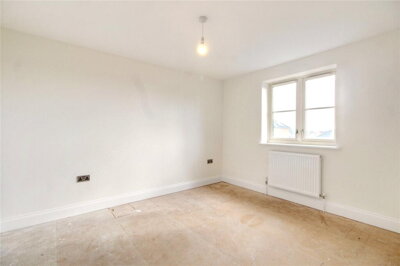
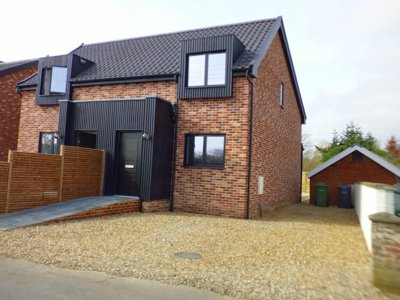
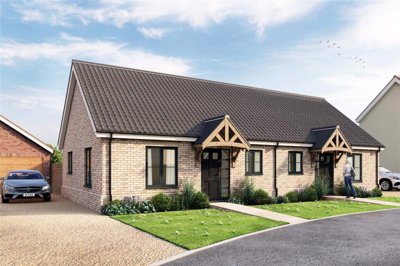
Browse 3 homes new builds in NR15 from local developer agents.
The 2 bed house market features detached, semi-detached, and terraced properties with two separate bedrooms plus living spaces. Properties in NR15 range across contemporary developments, with pricing varying across different neighbourhoods.
£215k
12
0
94
Source: home.co.uk
Showing 12 results for 2 Bedroom Houses new builds in NR15. The median asking price is £215,000.
Source: home.co.uk
Terraced
7 listings
Avg £213,643
Semi-Detached
3 listings
Avg £224,500
Detached
2 listings
Avg £455,000
Source: home.co.uk
Source: home.co.uk
NR15 property prices sit firmly at the premium end of South Norfolk, with detached homes averaging £663,840 and semi-detached properties at £273,871. Terraced homes in the area usually fetch around £198,550, while smaller properties are still relatively scarce at approximately £331,471, which reflects the largely house-led stock in these rural villages. Over the past 12 months, prices have risen by 1.2%, a steady showing for a commuter-friendly location, with detached homes up 1.1%, semi-detached at 1.2%, terraced at 1.3%, and cottages at 1.1%. Taken together, those figures point to a market that stays stable and continues to draw buyers looking beyond the busier urban centres of Norfolk.
Detached and semi-detached homes dominate the NR15 housing stock, with detached properties accounting for an estimated 40-50% of supply locally. Semi-detached homes make up roughly 30-40%, terraced houses around 10-15%, and flats less than 5% of the overall stock. That mix gives families room to find larger homes with gardens, while downsizers can still pick out manageable places in attractive village settings. The age profile is just as mixed, with plenty of pre-1919 character homes in village centres, alongside inter-war, post-war, and modern builds that suit different tastes and budgets.
Across NR15, the age split shows a sizeable number of homes built before 1919, especially in the village centres where period cottages and farmhouses still feature heavily. Properties from 1945 to 1980 form another important part of the stock, tied to the post-war growth of these villages. From the 1980s onwards, newer homes have been added, although major new-build activity in the core NR15 villages remains limited. Buyers who want new build options can look a little further out in the NR18 postcode around Wymondham, where Taylor Wimpey's Beckets Grove and Orbit Homes' Wymondham Place offer homes from around £265,000 to £275,000 for two and three-bedroom layouts.

South Norfolk's NR15 postcode sits in open countryside, with gentle rises and dips, farmland, and a string of villages that have been settled for centuries. The geology here is boulder clay over chalk bedrock, and that has helped create the fertile agricultural land that defines the area. Village centres often keep their historic cores intact, with period houses built from the red and gault brick common in East Anglia, plus rendered finishes and, in the oldest properties, notable flint work. Because the soils are clay-based, foundation depth and nearby trees deserve close attention when we are looking at period homes in the area.
Village life in NR15 offers far more than the rural setting might suggest. Mulbarton is a key local centre, with shops, schools, and leisure facilities, while other villages retain their own pubs, churches, and village halls. The NR15 postcode area is estimated to cover 15,000-20,000 residents across around 6,000-8,000 households, which helps create close communities where people tend to know their neighbours. Local employers include agricultural firms, village schools, and service businesses, although many residents travel into Norwich for work. The wider pull of Norwich Research Park also brings in professionals from science and research, adding to the area's mixed demographic profile.
Several villages in NR15 are conservation areas, including Mulbarton, Stoke Holy Cross, and Shotesham, which helps protect the architectural character of each settlement. There is no shortage of listed buildings either, from churches such as St Mary Magdalene in Mulbarton to old farmhouses and cottages tucked into village streets. Green spaces and public footpaths run through the countryside, giving residents plenty of options for walking and cycling across the agricultural landscape. It is that balance of rural calm and city access that keeps demand strong among families, professionals, and retirees looking for a quieter way of life.

For families, education in NR15 is broadly well served, with primary schools in several of the postcode's villages. Mulbarton Primary School is a major local institution and serves the surrounding villages, while other settlements have their own primaries or feed into nearby village schools. Having good primary provision within the postcode means younger families do not usually need to travel far for the daily school run, which adds to the area's appeal. School catchments and admissions rules still matter, though, so we always advise checking the details before settling on a property.
Secondary-aged pupils from NR15 generally head to schools in nearby towns such as Wymondham, or travel into Norwich for a broader choice that includes grammar schools. School quality has a noticeable effect on buyer interest and property values across the postcode, so access to education is often high on the list when families choose where to live. A number of schools across wider South Norfolk have strong Ofsted ratings, but the latest reports should always be checked for current information. Sixth form places are available at secondary schools in nearby towns, and Norwich colleges open up further options for older students.

One of NR15's biggest advantages is transport, with Norwich reached via the A11 and A47 trunk roads that link the villages to the city. The A11 offers a direct route to Norwich and then out towards the motorway network, while the A47 runs towards Great Yarmouth and King's Lynn. For people commuting into Norwich city centre, the drive usually takes 20-30 minutes, depending on the village and the traffic. That makes NR15 especially appealing to those who want a rural base without a punishing daily journey.
Bus routes do connect the villages with Norwich and neighbouring towns, although the frequency depends on the route and the village. Norwich and Attleborough are the nearest railway stations, both offering links to London Liverpool Street via Cambridge, with the capital usually around 2 hours away. Norwich Airport handles domestic flights and some European routes, and Cambridge Airport gives extra options for international travel. Cycling has become easier in recent years too, with quieter country lanes popular among cyclists, although some routes are hilly and do call for a fair level of fitness for regular bike commuting.
NR15's position also works for residents who commute beyond Norwich. The A47 gives eastward access to Great Yarmouth and the Norfolk coast, while westward routes link to King's Lynn and the Fenlands. Anyone working in Cambridge, or further afield, can use the A11, though the journey is longer than the Norwich run. Sitting between several employment centres gives NR15 real value for households where different family members travel in different directions for work.

Start by looking through the NR15 villages and identifying the one that suits your day-to-day routine. Before viewings begin, get a mortgage agreement in principle from a lender so you know the budget you are working with. Our data shows detached homes average £663,840 and terraced properties start around £198,550, which gives a useful guide for setting expectations. School catchment areas, the distance to pubs and shops, and local village activities all deserve a look before narrowing the search.
Homemove listings are the best place to see what is currently available across NR15. Once a few homes stand out, arrange viewings with estate agents and visit at different times of day to get a feel for the noise, traffic, and general character of the area. Keep notes and take photographs, they make comparing places much easier later on. Older homes need close attention too, because many of these villages have properties dating from before 1919 and some will need substantial maintenance.
After finding the right home, put your offer in writing through the selling agent. Price and terms may both be open to negotiation, especially on homes that have sat on the market for a while. Your mortgage broker can talk through how to position the offer. In a postcode where detached homes command significant premiums, the best village properties often attract lively competition.
A RICS Level 2 Survey should be commissioned before you go any further, particularly for properties over 50 years old, which make up a significant share of NR15 homes. For a 3-bedroom property, local survey costs typically sit between £450 and £650. This more detailed inspection can pick up common local issues such as subsidence on clay soils, roof defects, and damp in period properties. With the clay geology found across NR15, homes with large trees nearby merit especially thorough checking.
Appoint a conveyancing solicitor to handle the legal transfer of ownership. They will carry out searches, go through the contract papers, and deal with the mortgage lender. It helps if they have experience with rural properties and the sort of local issues that come with conservation area restrictions. Searches with South Norfolk District Council will show nearby planning applications and set out any conservation area constraints.
Once every condition is met and the surveys are complete, contracts are exchanged and the deposit is paid. Completion usually follows within weeks, after which the keys are handed over and the move into your new NR15 home can begin. Buildings insurance needs to be arranged well before that point, as mortgage lenders want it in place before completion. Let the utility providers know the moving date and think about meter readings for both the property you are leaving and the one you are entering.
NR15 properties deserve a careful eye because of the local geology and the age profile of the housing stock. The dominant clay ground brings a shrink-swell risk that can affect foundations, especially on older homes with shallow footings and nearby trees. A RICS Level 2 Survey is strongly recommended so foundation condition can be assessed and any sign of subsidence or heave movement can be identified. Cracking in walls, doors and windows that stick, and uneven floors are all clues that may point to structural movement and need further investigation or repair.
Building materials across NR15 vary with age. Older homes often have solid brick or flint walls, while more modern houses are built with cavity wall construction. Properties built before the 1930s usually have solid walls without cavity insulation, so heating costs tend to be higher than in newer homes. Many older properties also keep handmade clay roof tiles, which are full of character but need more regular maintenance than concrete tiles. On top of that, electrical and plumbing systems in pre-1980s homes often need updating to current standards, so rewiring or replumbing should be allowed for in the budget.
Flood risk in NR15 is mainly tied to surface water and local watercourses, including tributaries of the River Yare and River Tas. Low-lying plots, and homes close to rivers, should be checked for flood history and any mitigation in place. Conservation area status in villages such as Mulbarton, Stoke Holy Cross, and Shotesham means some external changes may need planning permission from South Norfolk District Council. Listed buildings bring extra controls on alterations and maintenance, so any buyer should confirm the listing status of a period property before going too far. Our surveyors are used to working with these designations and can talk through the practical implications for the purchase.
Older homes in NR15 often struggle on energy efficiency, and many period properties lack proper insulation, which pushes heating bills up. Where solid walls are present, standard cavity wall insulation is not an option, so more costly solid wall insulation solutions may be needed instead. Our RICS Level 2 Survey reports include a review of the property's energy performance and can highlight improvements that may qualify for government grants or schemes.
The clay soil across NR15 creates structural issues that our surveyors come across regularly in this postcode. Ground movement caused by clay shrink-swell is especially troublesome for older homes with shallow traditional foundations, particularly where large deciduous trees sit within the root zone. Our inspectors look for diagonal cracking from door and window openings, uneven floors, and gaps around skirting boards as signs of possible foundation movement. If a property has already been underpinned, we would ask for the paperwork so the quality of the remedial work can be checked.
Damp is common in NR15's older housing stock, and our surveys often uncover rising damp, penetrating damp, and condensation. Homes built before 1919 may not have an effective damp proof course, or the original one may have failed over time. Rendered properties can also trap moisture in the wall structure, which sometimes leads to hidden timber decay and deterioration in the brickwork behind the finish. To pick up damp that is not obvious on a viewing, our surveyors use moisture meters and thermal imaging equipment.
Roof defects crop up often in NR15 survey reports because so many properties are older. Slipped or broken tiles, failing lead flashing around chimneys and valleys, and rot in timber rafters and battens are all familiar findings. Homes with original handmade clay tiles may have come to the end of their usable life and need a full re-roof, which is a major cost. We also check roof-space ventilation, since poor airflow can lead to condensation and timber decay even where the structure seems sound.
In NR15, properties built before the 1980s frequently need electrical and plumbing upgrades to bring them up to modern standards and regulations. Original wiring may be cross-linked polyethylene or even fabric-covered cable, both of which can present safety issues and struggle with modern demand. Similarly, lead or galvanised steel plumbing found in older homes can corrode over time and may reduce water flow or leave water discoloured. A full RICS Level 2 Survey will pick up these issues and help you budget for the work before you complete the purchase.
Recent market data puts the overall average house price in NR15 at £443,309. Detached homes average £663,840, semi-detached properties £273,871, terraced homes £198,550, and cottages about £331,471. Prices have risen by 1.2% over the last 12 months across all property types, which suggests demand remains steady in this South Norfolk postcode. The premium on detached homes compared with terraced houses reflects the strong interest from families who want bigger homes with gardens in village settings.
South Norfolk District Council is the local authority for properties in NR15. Council tax bands run from A to H depending on value, although most family homes in the area sit in bands B through E. With the average property price at £443,309, homes usually fall into bands C or D, though the exact valuation depends on the Valuation Office Agency. The specific band can be checked through the Valuation Office Agency or on the council website using the property address. South Norfolk District Council's current band D charge is around £1,800-£1,900 per year.
Mulbarton Primary School is one of the key primary schools within or near NR15, serving surrounding villages including Stoke Holy Cross and Shotesham. For secondary education, children often go to schools in nearby towns such as Wymondham College or travel into Norwich for a wider choice, including the grammar school system. It is wise to research catchments and read the latest Ofsted reports before deciding which schools suit your family best. School quality has a real impact on property values in NR15, and homes in strong catchments often command a premium.
Bus routes are the main public transport option for NR15, linking villages with Norwich and nearby towns, although frequencies vary by location and day. Norwich and Attleborough are the nearest rail stations, both offering regular services to London Liverpool Street with journey times of around 2 hours. Road links are strong too, thanks to the A11 and A47, which connect to Norwich and the wider region, while the A11 also gives access to Cambridge and the M11 motorway for longer journeys.
NR15 makes a solid case as an investment because it is a sought-after commuter belt for Norwich. Annual price growth of around 1.2% has been consistent, and new-build supply within the postcode itself is limited. Demand from families, professionals, and retirees who want village life with city access helps underpin values over the long term. Flats are scarce, so terraced and semi-detached homes with good access to village amenities often do well for rental yields.
For 2024-25, Stamp Duty Land Tax is charged at 0% on the first £250,000, 5% on £250,001 to £925,000, 10% on £925,001 to £1.5 million, and 12% above £1.5 million. First-time buyers receive relief on the first £425,000, with 5% payable from £425,001 to £625,000. Because the NR15 average is £443,309, most homes sit in the lower bands. A first-time buyer at or near the average price would pay no stamp duty, while a standard buyer would pay about £9,665 on an average property.
Clay soil shrink-swell is one of the main risks, because it can affect foundations, especially on older properties with trees nearby. Surface water and river flooding can also be an issue in low-lying spots near tributaries of the River Tas. Conservation areas restrict certain external alterations, which can limit future plans for a property. Pre-1980s homes may come with old electrics, plumbing, and insulation that need serious upgrading. A thorough RICS Level 2 Survey is essential if you want to spot these issues before purchase and have room to negotiate repairs or a price change with the seller.
Within the core NR15 villages, large-scale new-build development remains limited, with most new homes concentrated in the nearby NR18 postcode around Wymondham. Beckets Grove by Taylor Wimpey and Wymondham Place by Orbit Homes both offer new-build choices, with prices starting from around £265,000 to £275,000. Buyers who are set on new construction within NR15 itself will find that opportunities are rarer, and the homes that do appear may attract a premium. Even on a new build, a RICS Level 2 Survey can still pick up snagging problems and wider construction concerns.
Understanding Stamp Duty Land Tax is a key part of buying in NR15, because the thresholds have a real effect on budgeting. For standard buyers, the first £250,000 of the purchase price attracts zero SDLT, with 5% applied to the portion from £250,001 to £925,000. Since the NR15 average property price of £443,309 sits below £925,000, many buyers will only pay the 5% rate on the amount above £250,000, which works out at about £9,665 on an average property. Homes above £925,000 move into the higher bands of 10% and 12%.
First-time buyers in NR15 can benefit from generous SDLT relief, with no tax on the first £425,000 and 5% on the portion between £425,001 and £625,000. That relief only applies where the buyer has never owned property anywhere in the world and plans to live in the home as their main residence. At or near the NR15 average price of £443,309, a first-time buyer would pay no stamp duty at all, which is a significant saving. The relief drops away entirely once the price goes above £625,000.
On top of stamp duty, buyers should allow for solicitor conveyancing costs, which usually start from £499 for standard transactions, as well as disbursements for searches, Land Registry fees, and mortgage arrangement fees. A RICS Level 2 Survey for a typical 3-bedroom home in NR15 costs between £450 and £650, rising to £550-800+ for larger detached properties. Removal costs, any repairs or renovation work highlighted by the survey, and the cost of life and buildings insurance required by the mortgage lender all need to be factored in. Getting a mortgage agreement in principle before you start looking gives you a stronger position when making offers on homes in this competitive postcode.

Properties New Builds In London

Properties New Builds In Plymouth

Properties New Builds In Liverpool

Properties New Builds In Glasgow

Properties New Builds In Sheffield

Properties New Builds In Edinburgh

Properties New Builds In Coventry

Properties New Builds In Bradford

Properties New Builds In Manchester

Properties New Builds In Birmingham

Properties New Builds In Bristol

Properties New Builds In Oxford

Properties New Builds In Leicester

Properties New Builds In Newcastle

Properties New Builds In Leeds

Properties New Builds In Southampton

Properties New Builds In Cardiff

Properties New Builds In Nottingham

Properties New Builds In Norwich

Properties New Builds In Brighton

Properties New Builds In Derby

Properties New Builds In Portsmouth

Properties New Builds In Northampton

Properties New Builds In Milton Keynes

Properties New Builds In Bournemouth

Properties New Builds In Bolton

Properties New Builds In Swansea

Properties New Builds In Swindon

Properties New Builds In Peterborough

Properties New Builds In Wolverhampton

Enter your details to see if this property is within your budget.
Loans, cards, car finance
Estimated property budget
Borrowing + deposit
You could borrow between
Typical borrowing
Monthly repayment
Est. at 4.5%
Loan-to-value
This is an estimate only. Your actual budget may vary depending on interest rates, credit history, and personal circumstances. For an accurate affordability assessment, speak to one of our free mortgage advisors.
This calculator provides estimates for illustrative purposes only and does not constitute financial advice. Your home may be repossessed if you do not keep up repayments on your mortgage. Estimates based on 4.5% interest rate, repayment mortgage. Actual rates depend on your circumstances.
Homemove is a trading name of HM Haus Group Ltd (Company No. 13873779, registered in England & Wales). Homemove Mortgages Ltd (Company No. 15947693) is an Appointed Representative of TMG Direct Limited, trading as TMG Mortgage Network, which is authorised and regulated by the Financial Conduct Authority (FRN 786245). Homemove Mortgages Ltd is entered on the FCA Register as an Appointed Representative (FRN 1022429). You can check registrations at NewRegister or by calling 0800 111 6768.

We use cookies to show you personalised content and improve your experience of our website. Find out more in our Privacy policy and Cookie policy.