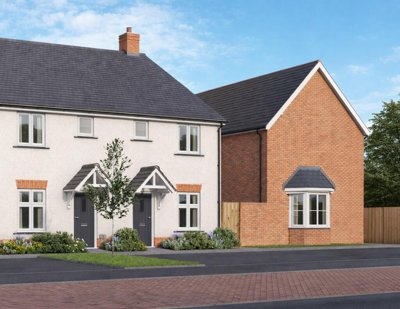
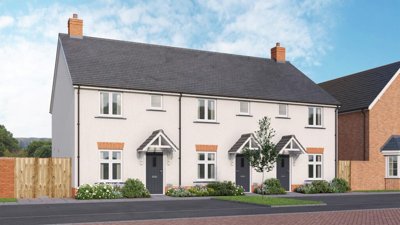
Browse 2 homes new builds in Moreton from local developer agents.
The 2 bed house market features detached, semi-detached, and terraced properties with two separate bedrooms plus living spaces. Properties in Moreton range across contemporary developments, with pricing varying across different neighbourhoods.
Moreton’s property market mirrors a small rural village that buyers want to get into and rarely leave. Detached homes sit at the top of the ladder, averaging £625,000, and suit families who want space, gardens, and a bit more breathing room. Semi-detached houses average £385,000, while terraced properties come in at £335,000 and often tempt buyers with period detail and renovation potential.
Over the last twelve months, prices have eased by 1.5% overall, which fits a quieter rural market adjusting to wider economic pressure. Detached homes have slipped by 1.6%, while semi-detached properties held up a little better at 1.3%. For buyers ready to move quickly, that softer patch can open a door, especially on homes that have lingered.
No new build developments sit within the DT2 7 postcode area, so purchasers here are buying character homes with established gardens rather than purpose-built stock. That shortage of fresh supply helps keep the village exclusive, though choice is naturally limited when something does come up. We suggest registering with several local estate agents and setting up alerts, because in a market like this, a delay can mean missing the right place.

With around 370 residents, Moreton feels like a true civil parish rather than a passing stop, and that scale gives the village its close-knit atmosphere. The Church of St Nicholas sits at its centre, a historic focal point that has anchored the community for centuries. Across the parish, cottages, farmhouses, and larger country houses, many within the designated Conservation Area, help preserve the setting for the long term.
Agriculture, tourism, and services tied to the wider Dorset area keep the local economy moving. Moreton House and its estate also support employment and village life, while the position in the Piddle Valley places residents in an area known for outstanding natural beauty. Walks thread through the countryside, neighbouring villages are close by, and the Jurassic Coast is within a short drive.
Architectural heritage is easy to spot here, thanks to the many listed buildings, including Moreton House, farmhouses, and traditional cottages. Portland and Purbeck stone appear throughout, alongside brick and render, and that mix gives rural Dorset its familiar look. Inside, buyers often find flagstone floors, inglenook fireplaces, and exposed timber beams, all of which add to the appeal of these older homes.
Traditional solid wall construction is the norm in Moreton, usually with local stone and handmade bricks tied together with lime mortar. That is very different from modern cavity wall building, so knowing the distinction matters when judging condition. We often see original lime mortar replaced with cement, and that can trap moisture in the wall and speed up stone decay.
Local geology around Moreton brings its own issues, with chalk, especially the Upper Chalk formation, and pockets of clay such as London Clay and Gault Clay. Homes on clay ground can move as the soil shrinks and swells in very wet or very dry spells, which may affect foundations. Our surveyors look closely at cracks, how doors and windows operate, and any signs of movement at ground level when assessing these conditions.
Older homes in Moreton often rely on timber, from roof structures to joists and window casements. Age and traditional materials mean timber defects crop up regularly in surveys. Woodworm, wet rot, and dry rot can all cause trouble, especially where moisture has built up through poor ventilation or a plumbing leak.
We regularly find a handful of recurring problems when inspecting homes in Moreton, and buyers should know about them before they commit. Rising damp affects many older stone and brick properties where damp-proof courses have failed or were never fitted. Left alone, it can spoil internal finishes, damage timber, and create unhealthy conditions inside the house.
Roofing is another frequent concern, and plenty of Moreton properties still have their original slate or stone tile coverings, now past or close to the end of their working life. Broken flashings, worn ridge tiles, and moss build-up can all let water into the roof structure. Our surveyors inspect roof spaces on every job, noting the state of the coverings, timbers, and insulation levels.
Many period homes still have outdated electrics, including fuse boards and wiring that were installed decades ago. Some properties also lack enough sockets for modern living, or have systems that fall short of current safety expectations. Plumbing can be just as dated, with galvanised steel or lead pipes often nearing the end of their useful life and sometimes needing full replacement.
Families moving to Moreton will find schooling in nearby villages and towns, with primary options within a reasonable distance. Because the village is small, younger children usually travel to schools in surrounding communities, and several primaries serve the wider area and take pupils from Moreton. Parents often value the small class sizes and the strong community feel that comes with rural schooling.
Dorchester, about six miles from Moreton, provides secondary education and a wider spread of GCSE and A-Level subjects, along with specialist facilities. For many families in the county town, those schools are the main option, and transport arrangements make the daily journey manageable for older pupils. Dorchester also brings further education colleges and vocational training, which is useful for young adults finishing school.
Several independent schools across Dorset give families private education choices, and some offer boarding for pupils coming from further afield. Catchment areas and admissions can vary a lot depending on the exact property location within the Moreton parish boundary, so it pays to check carefully. A visit to the school, plus a conversation with the headteacher, usually gives a clearer sense of ethos and academic standards than a prospectus ever can.
Moreton sits in a useful central Dorset position, with decent access to the county road network and still a calm village feel. The A35 trunk road runs nearby, linking the village to Dorchester to the west and Poole, Bournemouth, and the South Coast to the east. For commuters and visitors, it is the main route in and out, and under normal traffic conditions Dorchester is about fifteen minutes away by car.
Transport is limited, as you would expect in a rural village, with bus services to surrounding villages and towns running on a modest timetable. Most residents depend on private cars for day-to-day travel, though essential shops and services in nearby Puddletown or Dorchester are still within reach. Dorchester station offers trains to London Waterloo via Southampton, which gives hybrid commuters a workable route into the capital.
For people heading to Bournemouth or Poole for work, the drive usually takes around thirty to forty minutes outside peak hours, so both towns can be realistic daily targets. Cycling is becoming easier in the surrounding area too, with quiet lanes attracting recreational riders and commuters who are comfortable mixing modes. Parking in Moreton is usually straightforward, thanks to the low traffic volume, and that is a sharp contrast with busier towns and cities.
Before starting the search, we advise speaking to lenders or brokers and getting an agreement in principle in place. It shows sellers that funds are lined up and can shorten the process once a suitable Moreton home appears. A broker who understands rural property can also point out the lending criteria that matter for older houses.
Take time to look at available listings, study price trends in the DT2 7 area, and spend some time in Moreton itself. Open viewings and conversations with local estate agents can reveal how the market is moving and which homes fit your brief. That local knowledge helps buyers judge value properly and spot a real opportunity when it comes along.
Once a suitable property is found, the offer goes through the selling agent, ideally with proof of funds or an agreement in principle attached. In Moreton’s competitive market, quick decisions and sensible offers give buyers a better shot at success. Price negotiations may still follow, especially once survey findings or property condition come into play.
A RICS Level 2 Survey is the sensible next step, as it checks the overall condition and highlights structural issues or defects that may need attention. With Moreton’s older housing stock and Conservation Area restrictions, a detailed survey is particularly useful before any commitment to buy. For listed buildings, a more detailed RICS Level 3 Building Survey may be the better choice.
The legal side is handled by a conveyancing solicitor, who manages searches, contracts, and registration with HM Land Registry. They deal with the seller’s representative too, and oversee the transfer of funds through to completion. We also advise making sure the solicitor is comfortable with historic properties and Conservation Area rules.
Once the legal work is complete and both sides agree the terms, contracts are exchanged and a completion date is fixed. On completion day, the solicitor sends the balance and the keys to the new Moreton home are handed over. Buildings insurance should be arranged from exchange of contracts onwards.
Traditional construction and older materials are common in Moreton, so assessing condition takes a bit of specialist knowledge. Local stone, lime mortar, and solid walls mean modern building standards do not always apply, and buyers need to understand the upkeep that older homes require. A RICS Level 2 Survey gives a proper read on these features and points out anything needing immediate work or future spending.
Homes near the River Frome need close attention for flood risk, especially those in lower-lying parts of the village. Moreton itself is inland and has no coastal exposure, but fluvial flooding from the river and surface water during heavy rain can still affect some properties. As part of conveyancing, flood reports should be requested and insurance checked before completion.
Within the village boundary, Conservation Area status restricts alterations, extensions, and external changes to homes. Buyers should get to grips with those rules early, because Planning Permission may be needed for works that would not need consent elsewhere. Listed Building status covers numerous properties in Moreton, and any work affecting character or structure needs Listed Building Consent. These designations protect both values and the village’s look, but they do call for careful planning if changes are on the horizon.
Our surveyors know Moreton well and have plenty of experience with the construction methods and defect patterns found here. We always recommend a full survey before any purchase, especially given the age of much of the housing stock and the chance of hidden problems in traditional buildings.

Because Moreton has no new build properties and a large share of pre-1919 homes, a professional RICS survey is essential before buying. Our inspectors work with traditional Dorset properties all the time, so they understand the issues found in stone walls, lime mortar construction, and historic roof structures. A thorough survey can save thousands in repair bills later and often gives buyers useful leverage in negotiations.
Properties close to the River Frome can face fluvial flood risk, particularly in the lower-lying parts of the village. During every inspection, our surveyors look at flood indicators, including ground levels, nearby water features, and signs of past water ingress. Moreton is safely inland and not exposed to coastal erosion, but river proximity and local topography can still lead to surface water build-up in heavy rain.
Some parts of the Moreton area sit on clay soils with moderate to high shrink-swell potential, so foundations can be affected in long wet or dry spells. Large trees nearby add to the risk, as their roots draw moisture from the subsoil and can trigger movement. Our inspectors check visible foundation elements, crack patterns, and external signs at ground level to see whether shrink-swell movement has already taken place.
Local quarrying for building stone means certain areas have a history of disturbed ground, albeit on a localised scale. Deep mining is not a major issue in this part of Dorset, but the history of ground disturbance can still matter when assessing older properties. Appropriate searches should be included by the solicitor during conveyancing.
Buyers also need to budget beyond the purchase price, with Stamp Duty Land Tax, solicitor fees, survey costs, and moving expenses all adding up. On a home priced at the village average of £492,444, a standard buyer would pay £9,872 in SDLT, based on 0% on the first £250,000 and 5% on the remaining £242,444. First-time buyers who qualify would benefit from relief, cutting that tax bill sharply.
Conveyancing solicitor fees are usually somewhere between £500 and £1,500, depending on how involved the transaction is and whether the home is freehold or leasehold. A RICS Level 2 Survey for a standard family house in Moreton would normally come in around £500 to £700, with larger or more complicated properties costing more. Given the age of many homes here and the amount of traditional construction, that spend can save trouble later and help with negotiations.
There are other costs too, including Land Registry fees for registration, Dorset Council searches, and perhaps mortgage arrangement fees if borrowing is involved. Buildings insurance needs to be in place from exchange of contracts, and buyers should also allow for removals, new furnishings, and any immediate repairs picked up by the survey. We suggest holding back a contingency of 10% of the purchase price, which makes the route to completion far less stressful.

In Moreton (DT2 7), the average house price is £492,444, with detached properties at £625,000, semi-detached homes at £385,000, and terraced homes at £335,000. Those figures reflect the premium attached to rural Dorset and the village’s setting within an Area of Outstanding Natural Beauty. Prices have edged down by 1.5% over the past twelve months, which gives buyers a small opening in a market that is usually tightly held.
Moreton comes under Dorset Council, and council tax bands range from A through to H depending on the home’s value and type. Most smaller cottages and modest houses sit in bands A to C, while larger detached homes and period properties are often higher up the scale. Buyers should always check the band for a specific property, because council tax is part of the ongoing cost of ownership.
Because Moreton is small, it has limited schooling of its own, so primary education is found in surrounding villages and secondary education in nearby Dorchester. Local primary schools serve Moreton families and neighbouring communities, while Dorchester secondary schools offer GCSE and A-Level courses plus specialist subjects. Dorset also has a number of independent schools, giving families other routes if private education is their preference.
Transport mirrors the village’s rural setting, with only limited bus services to nearby towns and villages. Most residents use private cars for everyday travel, although access to the A35 road network is still fairly good from the village. Dorchester railway station, around six miles away, has direct trains to London Waterloo, which works well for occasional commuters on a hybrid pattern.
Buyers are often drawn to Moreton for the rural lifestyle, the historic feel, and the ease of reaching Dorset’s amenities and coast. Property values have been relatively steady, and the recent slight decline may give some entry points. Conservation Area status and very limited development help protect the village character, while the broader Dorset market still attracts buyers from London and the South East looking to step away from urban life. Rental demand across the wider area remains steady, although Moreton itself is small, so landlord opportunities are limited.
Properties in Moreton follow the standard Stamp Duty Land Tax bands, with 0% on the first £250,000 of the price, 5% on the part from £250,001 to £925,000, and 10% on the part from £925,001 to £1.5 million. First-time buyers get relief on the first £425,000, then pay 5% between £425,001 and £625,000. On a typical terraced home averaging £335,000, a standard buyer would pay £4,250 in stamp duty, while qualifying first-time buyers would pay nothing.
For anyone buying a listed building in Moreton, we usually point them towards a RICS Level 3 Building Survey rather than a standard Level 2 assessment. Listed homes often have complex building histories, original features that need specialist judgement, and materials that do not respond in the same way as modern construction. A Level 3 survey gives deeper analysis and more specific guidance on maintenance and repair for historic buildings.
Because Moreton’s housing stock is mainly older traditional buildings, the usual defects include rising damp from failed or missing damp-proof courses, worn roof coverings, timber issues such as woodworm and rot, and ageing electrical and plumbing systems. The local clay soils can also lead to foundation movement in vulnerable properties. A proper RICS Level 2 Survey picks up these concerns and sets out sensible next steps for repair.
From £500
A detailed condition inspection for standard homes in Moreton, suited to the village setting. It covers construction, damp, roofing, electrics, plumbing, and more.
From £800
A fuller building survey for larger homes, period properties, and listed buildings. It gives detailed defect analysis and guidance on likely repair costs.
From £85
An Energy Performance Certificate is needed for every property sale. It shows the energy efficiency rating and sets out recommendations for improvement.
From £499
Legal support for your property purchase, covering local searches, contracts, and registration. We are experienced with Conservation Area and listed building requirements.
Properties New Builds In London

Properties New Builds In Plymouth

Properties New Builds In Liverpool

Properties New Builds In Glasgow

Properties New Builds In Sheffield

Properties New Builds In Edinburgh

Properties New Builds In Coventry

Properties New Builds In Bradford

Properties New Builds In Manchester

Properties New Builds In Birmingham

Properties New Builds In Bristol

Properties New Builds In Oxford

Properties New Builds In Leicester

Properties New Builds In Newcastle

Properties New Builds In Leeds

Properties New Builds In Southampton

Properties New Builds In Cardiff

Properties New Builds In Nottingham

Properties New Builds In Norwich

Properties New Builds In Brighton

Properties New Builds In Derby

Properties New Builds In Portsmouth

Properties New Builds In Northampton

Properties New Builds In Milton Keynes

Properties New Builds In Bournemouth

Properties New Builds In Bolton

Properties New Builds In Swansea

Properties New Builds In Swindon

Properties New Builds In Peterborough

Properties New Builds In Wolverhampton

Enter your details to see if this property is within your budget.
Loans, cards, car finance
Estimated property budget
Borrowing + deposit
You could borrow between
Typical borrowing
Monthly repayment
Est. at 4.5%
Loan-to-value
This is an estimate only. Your actual budget may vary depending on interest rates, credit history, and personal circumstances. For an accurate affordability assessment, speak to one of our free mortgage advisors.
This calculator provides estimates for illustrative purposes only and does not constitute financial advice. Your home may be repossessed if you do not keep up repayments on your mortgage. Estimates based on 4.5% interest rate, repayment mortgage. Actual rates depend on your circumstances.
Homemove is a trading name of HM Haus Group Ltd (Company No. 13873779, registered in England & Wales). Homemove Mortgages Ltd (Company No. 15947693) is an Appointed Representative of TMG Direct Limited, trading as TMG Mortgage Network, which is authorised and regulated by the Financial Conduct Authority (FRN 786245). Homemove Mortgages Ltd is entered on the FCA Register as an Appointed Representative (FRN 1022429). You can check registrations at NewRegister or by calling 0800 111 6768.

We use cookies to show you personalised content and improve your experience of our website. Find out more in our Privacy policy and Cookie policy.