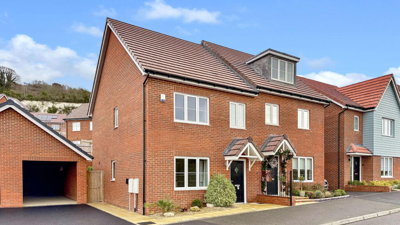
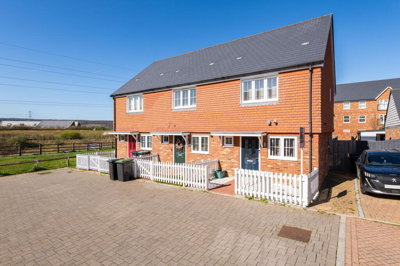
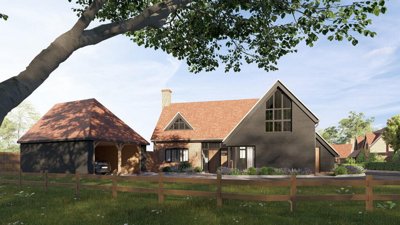
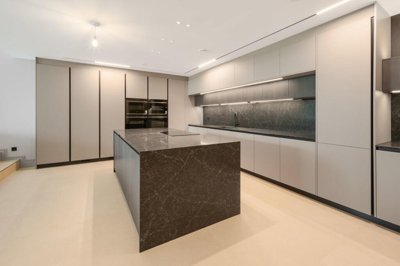
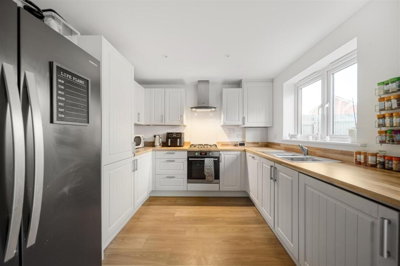
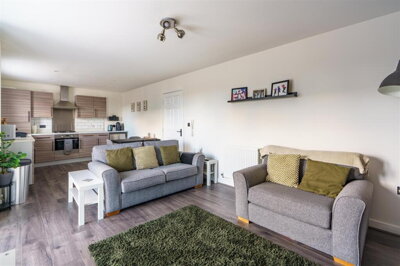
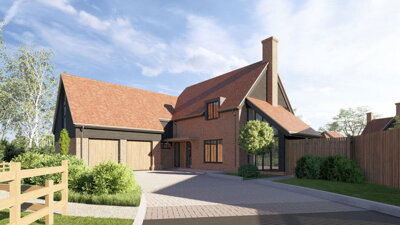
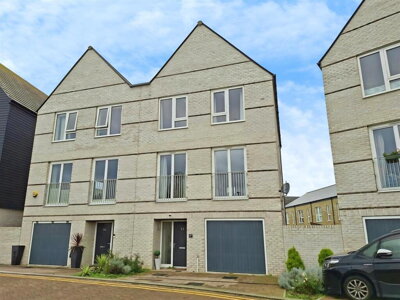
Browse 12 homes new builds in ME2 from local developer agents.
The ME2 property market offers detached, semi-detached, and terraced houses spanning various price ranges and neighbourhoods. Each listing includes detailed property information, photographs, and direct contact with the marketing agent.
£340k
123
11
67
Source: home.co.uk
Showing 123 results for Houses new builds in ME2. 11 new listings added this week. The median asking price is £340,000.
Source: home.co.uk
Terraced
53 listings
Avg £274,886
Semi-Detached
40 listings
Avg £380,275
Detached
30 listings
Avg £766,150
Source: home.co.uk
Source: home.co.uk
ME2’s property market still offers plenty to think about, with approximately 416 homes currently listed for sale. Detached family houses sit at the top of the range, usually £640,000 to £650,000, and the generous gardens and off-street parking go down well with growing families. Semi-detached homes make up around 35-40% of the local housing stock, and they stay in demand at £370,000 to £385,000, giving buyers moving on from terraces a sensible balance of space and price. A good share of the area was built in the inter-war and post-war years, so many of those semis come with the roomy layouts and solid construction modern buyers still ask for.
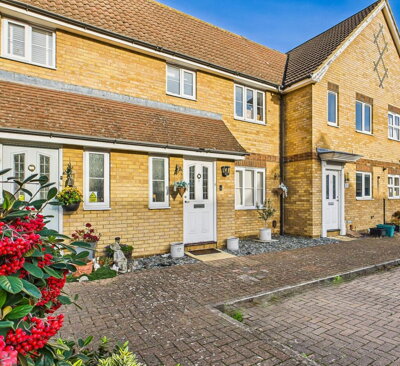
Tighter budget? Terraced houses in ME2 start at roughly £275,000 to £290,000 and offer real value. We see many of them in the older parts of Strood, where Victorian and Edwardian streets bring character, original features, and everyday convenience together. The pre-1919 stock, which makes up around 15-20% of local housing, often has solid 9-inch brick walls and timber floor joists, so damp and movement need a proper check. Flats are the lowest-cost way into the market, usually £170,000 to £185,000, and they suit first-time buyers, investors, or anyone after a lower-maintenance home.
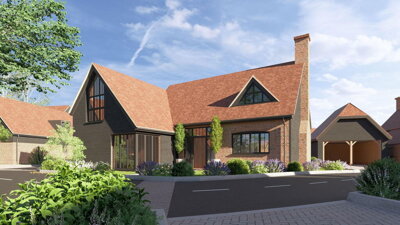
New-build choice is still growing in ME2. Medway Gate on Wainscott Road, by Bellway Homes, offers contemporary 2, 3, and 4-bedroom houses from £320,000. Buyers get modern specifications and energy efficiency with that route, although plenty still prefer the character and settled feel of the existing streets. From Victorian terraces to inter-war semis and brand-new schemes, the mix across ME2 means there is something for most budgets and most tastes.

ME2 covers a varied set of communities, each with its own feel. Strood is the main town centre, with supermarkets, independent shops, restaurants, and the well-used Strood Centre shopping development. Historic buildings line Strood High Street too, and several properties sit within designated Conservation Areas that help protect the riverside character of the town. We inspect homes in those streets regularly, and buyers should keep in mind that listed status or conservation controls can narrow permitted development rights and make future changes less straightforward.
Frindsbury, just north of Strood, feels more semi-rural, with village character, local pubs, and St Mary’s Church, which dates from the 12th century. Across roughly 14,000 to 16,000 households, the population sits at approximately 35,000 to 40,000 residents, so the area has a settled community feel without tipping fully urban. Our surveyors often find that plots here are larger than similar homes in central Strood, though the quieter setting can mean more exposure to the London Clay geology that affects much of ME2.
The Hoo Peninsula brings a different pace altogether. Semi-rural views, marshland, and scattered villages such as Hoo St Werburgh give the ME2 postcode a wider range of settings than many buyers expect. Development pressure has increased in recent years, yet village pubs, local shops, and community facilities still matter a great deal to residents. Being close to the River Medway and the Medway Estuary means appealing waterfront scenery, but low-lying coastal spots do carry tidal flood risk, and weathering on exposed finishes can be harder to avoid.

Families in ME2 are reasonably well served on education across all age groups. Primary and secondary schools cover Strood, Frindsbury, and the Hoo Peninsula, although parents still need to check performance and Ofsted ratings school by school because they can shift property values in certain catchments. Homes near popular Strood primaries can command £10,000 to £20,000 more than similar properties outside the boundary, so location really does matter.
Secondary schooling comes through the wider Medway area, with grammar places available for pupils who pass the Medway Test. Families ought to check current allocations and any proposed catchment changes before buying, as school places influence both daily life and resale value. The test is taken in Year 6 and opens the door to the selective grammar schools across the Medway towns, including Chatham Grammar School for Girls and The Howard School, both accessible to ME2 residents.
For older students, the wider Medway area gives strong sixth form and further education options. The Universities at Medway campus in Chatham (ME4) brings together provision from the University of Kent, University of Greenwich, and Canterbury Christ Church University, with undergraduate and postgraduate courses across several subjects. That means ME2 residents can go on to higher education without needing to head to Canterbury or London. It also feeds local employment and supports the rental market, since students and university staff need accommodation throughout ME2.

Commuters tend to find ME2 appealing because the transport links are so practical. Strood railway station runs regular services to London St Pancras International, and journey times sit at around one hour to ninety minutes depending on the train. From there, there are also links to Gravesend, the Medway towns, and the Kent coast. Frindsbury has a smaller station too, serving the local community and the wider rail network, though trains are less frequent than from Strood main station.
Drivers have the A2 trunk road close by, which gives direct access to the M2 motorway and then the M25 motorway network and Greater London. The Port of Dover and Eurotunnel are still within reasonable driving distance for anyone needing continental links. Local logistics and distribution firms benefit from that road access, which creates jobs for ME2 residents in transport and warehousing. Medway Maritime Hospital in nearby ME4 is another major employer, and healthcare workers often choose ME2 because the roads to work are so straightforward.
Bus services in ME2, run by different operators, tie the communities together and connect to Chatham, Gillingham, and Rochester. Stagecoach covers the main residential areas and town centres, though frequencies vary by route and time of day. Cyclists can make use of some dedicated paths and quieter rural lanes, especially on the Hoo Peninsula, while Strood’s urban streets need more care. Parking is mixed, terraced streets in older areas can be tight on space, newer developments usually provide allocated bays, and morning parking near Strood station can be competitive.

Knowing the main construction types in ME2 helps buyers read the houses properly and spot likely maintenance issues. Roughly 15-20% of properties date from the Victorian and Edwardian periods, and those homes usually have solid brick walls about 9 inches thick, timber floor joists, and slate or clay tile roofs. Many still retain fireplaces, decorative cornices, and timber panelled doors, which add character but often call for regular upkeep and modern service upgrades.
The biggest share of ME2 housing comes from the inter-war and post-war years, 1919-1945 and 1945-1980, and that group makes up around 50-60% of the stock. Inter-war semis and terraces usually have cavity brick walls built with Fletton brick or similar mass-produced materials, plus concrete tile roofs and timber framed windows. Post-war homes often follow the same pattern, but some still have original single-glazed windows and early electrical systems that need bringing up to current standards. Our surveyors often pick up old wiring in properties from these periods, where installations may not satisfy current Part P building regulations.
Modern housing accounts for roughly 20-25% of ME2, and it includes schemes such as Medway Gate, with contemporary cavity brick and block construction, timber frame systems with a brick outer leaf, and a range of cladding materials. These homes usually need less day-to-day maintenance, though they bring other inspection points, including finish quality, snagging, and how well insulation and ventilation are performing. We still recommend a full inspection for all ME2 properties, whatever their age, because even new-build homes can have defects that affect value or need sorting.

Take time to compare the different neighbourhoods within ME2, from Strood town centre to the quieter villages on the Hoo Peninsula. School catchments, commute times, local amenities, and flood risk can all vary by postcode, and those details matter. Our property listings at Homemove give the sort of information that helps bring the search into focus.
Before you book viewings, speak to a lender and get an Agreement in Principle. It shows estate agents and sellers that the figures stack up, which gives offers more weight in a competitive market. In ME2, homes run from £156,000 flats to £650,000 detached houses, so knowing the borrowing limit before you start is vital.
It pays to view a spread of properties across different price points and parts of ME2. Look closely at build quality, because many homes come from periods when particular materials were standard. The London Clay geology means some properties may show movement or need specific foundation treatment, so signs of cracking or past repairs deserve attention.
After an offer is accepted, we would usually advise arranging a RICS Level 2 HomeBuyer Report before exchange of contracts. For ME2 homes, a typical 3-bedroom semi-detached survey usually costs £450-£650. That report can pick out defects common locally, including damp, roof issues, and any sign of subsidence.
Your solicitor will deal with legal searches, raise title queries, and stay in contact with the mortgage lender. In ME2, transactions usually complete within 8-12 weeks, although chain length and lender requirements can stretch that. It is one of those markets where the paperwork can move quickly, until it does not.
Once searches come back clear and the mortgage is approved, contracts are exchanged and the deposit is paid. Completion often follows within days or weeks, and then the keys to the new ME2 home are handed over. Simple enough in theory, though the last stretch still depends on the chain.
ME2 buyers need to think about a few area-specific issues that can influence both the purchase and the long-term cost of ownership. The London Clay geology beneath much of the postcode creates a moderate to high shrink-swell risk for homes with shallow foundations. That is why cracking, movement, and evidence of old subsidence repairs deserve close inspection, especially where there are large trees nearby or signs of underpinning. We regularly identify subsidence-related defects in ME2 surveys, particularly in older homes with original strip foundations that were never ideal for the soil conditions.
Older parts of Strood can include solid brick walls without cavity insulation, and that affects both comfort and energy efficiency. Rising damp often turns up in solid-wall homes where the original damp-proof course has failed or was never installed to modern standards. We also come across penetrating damp where roof coverings, flashings, or rainwater goods have deteriorated and let water into the building fabric. Condensation can show up where replacement windows or heavy loft insulation have reduced ventilation without enough background airflow.
Flood risk needs careful thought, depending on the exact spot within ME2. Homes next to the River Medway or in low-lying parts of the Hoo Peninsula face higher river and tidal flood risk from the Medway Estuary, while surface water flooding can affect different parts of the postcode in heavy rain. A solicitor should carry out proper drainage and flooding searches for any ME2 purchase. Several parts of ME2 are also in Conservation Areas, especially sections of Strood High Street and villages on the Hoo Peninsula, which can restrict alterations, extensions, or listed building works. Those planning rules can shape what a buyer can do later.
Electrical and plumbing systems in ME2 homes deserve a close look, especially in properties over 50 years old where the original installations may not meet current safety standards. Our team often finds outdated consumer units, poor earthing, and worn wiring in inter-war and post-war houses. Asbestos-containing materials may also be present in properties built before 2000, often in soffits, pipe insulation, and textured wall coatings. A thorough RICS Level 2 Survey will flag these points and give buyers scope to negotiate or ask for repairs before completion.

homedata.co.uk shows the average house price in ME2 sitting around £320,000 to £345,000 over the past twelve months. Detached homes average £640,000-£650,000, semi-detached properties £370,000-£385,000, terraced houses £275,000-£290,000, and flats £170,000-£185,000. Prices have risen by approximately 1-2% in the same period, which points to a steady, modest market and keeps ME2 accessible for first-time buyers and growing families. There are about 416 properties currently listed, so the market still has healthy turnover.
ME2 falls within Medway Council’s area, and council tax bands run from A through H depending on property value. Most terraces and smaller flats sit in bands A to C, while larger semi-detached and detached family homes tend to fall into bands D to F. The exact band for any property can be checked through the Valuation Office Agency website or through a solicitor during conveyancing. Council tax can make a noticeable difference to monthly outgoings, so it needs to sit in the budget alongside the mortgage and maintenance.
Primary schools across ME2 serve the local communities, and parents should check individual Ofsted ratings on the government website before fixing on a home. Secondary education includes both comprehensive and grammar schools in the wider Medway area, with grammar places decided through the Medway Test. Higher education is also within reach, as the University of Kent and University of Greenwich both have campuses at the Universities at Medway site in Chatham, giving ME2 residents local routes into university without moving to Canterbury or London.
Strood railway station gives regular trains to London St Pancras in around 60-90 minutes, so ME2 works well for commuters heading into the capital or nearby towns. Southeastern services also connect the station to Gravesend and the wider Kent coast. Local bus routes, run by Stagecoach and other providers, link ME2 with Chatham, Gillingham, and Rochester, though frequencies change from one route to another. The A2 road leads straight to the M2 motorway for car travel towards London, Canterbury, and the Channel ports.
For investors, ME2 has a few clear angles depending on the plan. The commuter link to London, paired with lower entry prices than the capital, keeps the area attractive to buy-to-let landlords targeting tenants who work in London but cannot stretch to city rents. Approximately 70-80% of ME2 properties are over 50 years old, so maintenance needs should be built into the numbers as well as rental yield. The University of Kent campus and Medway Maritime Hospital both help to sustain rental demand from students and healthcare workers looking for accommodation in ME2.
For standard purchases, stamp duty is charged at 0% on the first £250,000, 5% on £250,001 to £925,000, and 10% on £925,001 to £1.5 million. First-time buyers get relief on properties up to £625,000, paying 0% on the first £425,000 and 5% on the balance up to that threshold. On a typical £378,000 semi-detached home in ME2, a first-time buyer pays no stamp duty, while a home-mover pays £6,400, which is 5% of £128,000 above the threshold. We would also budget for solicitor fees, survey costs, and mortgage arrangement fees.
Because approximately 70-80% of ME2 housing stock dates from before 1980, the usual defects show up again and again, rising damp in solid-wall Victorian and Edwardian houses, subsidence linked to the London Clay geology, and tired roof coverings on inter-war and post-war homes. Our surveyors frequently find old electrical installations in properties from the 1920s to 1970s, where the wiring may need full replacement. Timber issues such as wet rot, dry rot, and woodworm can affect structural timbers and floorboards, especially where damp has been allowed to linger or ventilation is poor. Some ME2 properties also have asphalt or felt flat roofs that are near the end of their life and need renewal.
Flood risk changes quite a bit across the ME2 postcode, depending on how close a property sits to watercourses and low-lying ground. Homes next to the River Medway and those in lower coastal parts of the Hoo Peninsula face higher river and tidal flood risk from the Medway Estuary. Surface water flooding can also affect different parts of ME2 in heavy rainfall because of impermeable surfaces and local drainage limits. A proper flood risk assessment should sit inside the conveyancing searches, along with the right insurance arrangements for higher-risk homes.
Getting the full cost picture right is one of the best ways to avoid surprises when buying in ME2. Beyond the purchase price, there is stamp duty (SDLT), solicitor fees, survey costs, mortgage arrangement fees, and smaller charges that can add several thousand pounds overall. On a typical £378,000 semi-detached property in ME2, a first-time buyer pays zero stamp duty under the current thresholds, while a home-mover without first-time buyer status pays approximately £6,400. Properties above £925,000 move into higher SDLT rates of 10% on the portion above that threshold.
Survey fees for ME2 properties usually sit at £450 to £650 for a standard three-bedroom semi-detached home, while larger detached homes can come in at £600 to £800 or more. With approximately 70-80% of ME2 housing stock dating from before 1980, a RICS Level 2 Survey is particularly useful for spotting defects common in older construction, such as damp, subsidence movement, or outdated electrics. Our surveyors know the area well and understand the defect patterns tied to local construction types and the difficult London Clay geology.
Conveyancing fees generally start from £499 for standard transactions, and they rise for leasehold homes, new builds, or matters with extra complications such as boundary disputes or planning issues. First-time buyers should also leave room for Land Registry registration fees and, depending on the lender, mortgage booking fees. Getting a mortgage Agreement in Principle before viewings strengthens a buyer’s position and shows clear intent to sellers in the ME2 market. We work with recommended conveyancers who handle ME2 transactions regularly and understand local points such as Conservation Area restrictions and flood risk matters.
Properties New Builds In London

Properties New Builds In Plymouth

Properties New Builds In Liverpool

Properties New Builds In Glasgow

Properties New Builds In Sheffield

Properties New Builds In Edinburgh

Properties New Builds In Coventry

Properties New Builds In Bradford

Properties New Builds In Manchester

Properties New Builds In Birmingham

Properties New Builds In Bristol

Properties New Builds In Oxford

Properties New Builds In Leicester

Properties New Builds In Newcastle

Properties New Builds In Leeds

Properties New Builds In Southampton

Properties New Builds In Cardiff

Properties New Builds In Nottingham

Properties New Builds In Norwich

Properties New Builds In Brighton

Properties New Builds In Derby

Properties New Builds In Portsmouth

Properties New Builds In Northampton

Properties New Builds In Milton Keynes

Properties New Builds In Bournemouth

Properties New Builds In Bolton

Properties New Builds In Swansea

Properties New Builds In Swindon

Properties New Builds In Peterborough

Properties New Builds In Wolverhampton

Enter your details to see if this property is within your budget.
Loans, cards, car finance
Estimated property budget
Borrowing + deposit
You could borrow between
Typical borrowing
Monthly repayment
Est. at 4.5%
Loan-to-value
This is an estimate only. Your actual budget may vary depending on interest rates, credit history, and personal circumstances. For an accurate affordability assessment, speak to one of our free mortgage advisors.
This calculator provides estimates for illustrative purposes only and does not constitute financial advice. Your home may be repossessed if you do not keep up repayments on your mortgage. Estimates based on 4.5% interest rate, repayment mortgage. Actual rates depend on your circumstances.
Homemove is a trading name of HM Haus Group Ltd (Company No. 13873779, registered in England & Wales). Homemove Mortgages Ltd (Company No. 15947693) is an Appointed Representative of TMG Direct Limited, trading as TMG Mortgage Network, which is authorised and regulated by the Financial Conduct Authority (FRN 786245). Homemove Mortgages Ltd is entered on the FCA Register as an Appointed Representative (FRN 1022429). You can check registrations at NewRegister or by calling 0800 111 6768.

We use cookies to show you personalised content and improve your experience of our website. Find out more in our Privacy policy and Cookie policy.