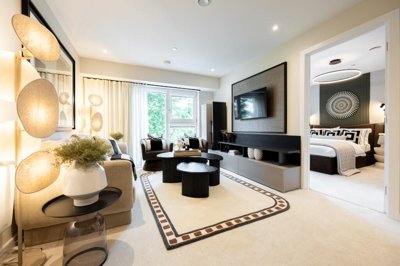
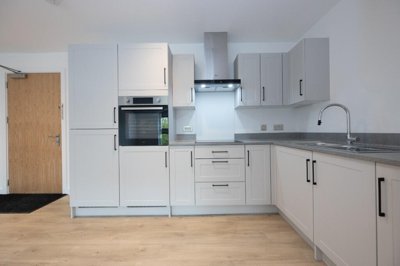
Browse 2 homes new builds in M14 from local developer agents.
The 2 bed house market features detached, semi-detached, and terraced properties with two separate bedrooms plus living spaces. Properties in M14 range across contemporary developments, with pricing varying across different neighbourhoods.
£203k
16
2
77
Source: home.co.uk
Showing 16 results for 2 Bedroom Houses new builds in M14. 2 new listings added this week. The median asking price is £202,500.
Source: home.co.uk
Terraced
16 listings
Avg £211,250
Source: home.co.uk
Source: home.co.uk
£304,635
Average House Price
125+
Properties for Sale
-2%
12-Month Price Change
125+
Annual Sales
M14 has a broad property market, with 125 property sales recorded over the past twelve months and pricing that reflects the area's wide appeal. Detached homes sit at the top end, averaging £412,358, while semi-detached houses usually change hands at around £382,500. Across most property types, prices have edged down by 2% over the past year, which may open up opportunities for buyers ready to move in a market where vendors can be more open to negotiation. That slight softening mirrors wider national trends, but M14 still stands up as a stable and sought-after part of Greater Manchester. ---NEXT---
Terraced homes are the mainstay of M14, making up around 38.2% of all properties and averaging £265,401. Much of this stock comes from the Victorian and Edwardian periods, and these terraces often offer better value than similar homes in more central Manchester postcodes. Flats and apartments also make up a sizeable share of the market at about 24.7% of stock, with average prices from £158,332 for flats to £259,105 for apartments, which keeps them firmly on the radar for first-time buyers and investors focused on the student rental market. M14 also has several active new build schemes, including The Oaks in Fallowfield where three-bedroom semi
There is more to look at in M14 than Victoria Point alone. In Rusholme, Park View by Northern Group brings one, two, and three-bedroom apartments starting from £175,000, giving budget-conscious buyers another way onto the property ladder. In Fallowfield, The Depot from Property Alliance Group offers one and two-bedroom apartments from £180,000, close to local shops and transport links. These newer schemes usually mean modern construction standards, energy-efficient systems, and developer warranties, although buyers will often pay a premium compared with older properties in the same postcode.
Fallowfield, Rusholme, and Victoria Park each give M14 a different feel. Fallowfield is probably the best known, with tree-lined avenues, generous Victorian and Edwardian houses, and Platt Fields Park, complete with historic Platt Hall, a lake, and sports facilities. Rusholme has a strong identity of its own, centred in part on the well-known curry houses along Wilmslow Road and supported by a diverse, established community. Victoria Park is quieter in tone, with grand period homes and easy access to Whitworth Park and the university campuses.
According to the 2021 Census, 29,970 people live across roughly 9,970 households in M14. It is a densely settled urban area, though it still manages to keep a sense of neighbourhood that many residents value. The nearby university campuses bring in a large student population, which helps shape a lively local scene of cafes, bars, and restaurants geared towards students and young professionals. Families are drawn here as well, thanks to strong schools, good park space, and the feeling of safety and community found in these established Manchester suburbs.
Amenities in M14 are strong across the board. Wilmslow Road is the main route through the area and carries a mix of shops, supermarkets, pharmacies, and independent retailers. Residents also have access to several GP surgeries, dental practices, and hospital care through the nearby Manchester Royal Infirmary. On the cultural side, Whitworth Hall on the University of Manchester campus hosts exhibitions and events, and Manchester city centre is close enough for easy access to major museums, theatres, and restaurants. Employment is another draw, with Manchester University NHS Foundation Trust, operator of Manchester Royal Infirmary, providing a major source of local jobs.

For buyers trying to narrow the field, M14's housing mix tells an important story. Terraced houses lead at 38.2%, which speaks directly to the Victorian and Edwardian growth that shaped places such as Fallowfield and Victoria Park. Semi-detached homes account for 25.1% of the stock and tend to suit families wanting extra room and often larger gardens than terraces can offer. Detached houses make up 12% of properties, and those close to parks or within conservation areas usually command the highest prices.
Flats, maisonettes, and apartments make up 24.7% of the housing stock in M14. That is a sizeable section of the market, running from period conversions within Victorian terraces through to purpose-built modern blocks and fresh new developments. Demand is supported by the student population, especially for homes near the university campuses, so these properties appeal both to first-time buyers after a more affordable route in and to investors seeking reliable rental yields. Many older flats in M14 were formed by splitting larger Victorian houses, which can mean plenty of character, but also shared maintenance responsibilities between leaseholders.
The age of the housing in M14 matters, both for character and for upkeep. Around 40% of properties in the postcode were built before 1919, mainly during the Victorian and Edwardian periods that gave Fallowfield and Victoria Park their recognisable terraced streets. Buyers will often find traditional red brick construction, slate or clay tile roofs, and timber suspended floors. Many homes still hold onto original details, including fireplaces, cornicing, and sash windows, all of which add character and can add value too.
Another 20% of the housing stock dates from 1919 to 1945, the interwar years when semi-detached homes became far more common. A further 25% of M14 properties were built between 1945 and 1980, bringing post-war housing into the mix and broadening the area's architectural range. Construction methods changed over those years as well, with cavity wall construction becoming standard after the 1920s instead of the solid wall construction seen in earlier homes. The final 15% was built post-1980 and includes modern apartments, new build developments, and more contemporary housing for buyers who want lower-maintenance homes with modern insulation and heating systems.
Schooling is one of the reasons families look closely at M14. The postcode is within reach of several well-regarded primary schools, including St Mary's Catholic Primary School, known locally for a strong academic record and good pastoral care. At secondary level, families can consider both comprehensive and selective routes, with grammar schools in neighbouring postcodes reached through the usual catchment area system. Catchment boundaries can make a real difference to school allocation, so we always suggest checking the exact position for any M14 property.
Life in M14 is heavily shaped by the University of Manchester and Manchester Metropolitan University. Both institutions have international standing, draw students from around the world, and make a major contribution to the local economy and cultural life. For families with older children, nearby schools and further education colleges offer sixth form and next-step options without much upheaval. The campuses also bring sports facilities, libraries, and cultural events that local residents can use, which adds something valuable beyond formal schooling. Whitworth Hall and Manchester Museum, both on the University of Manchester campus, are part of that, giving local families accessible cultural activities throughout the year.

Getting around is one of M14's stronger points. The Metrolink tram network serves the area through several stops, with quick and dependable connections into Manchester city centre, MediaCityUK, and the wider Greater Manchester tram system. Reaching Manchester Piccadilly station usually takes under twenty minutes by tram, which helps explain the area's appeal to city centre commuters and people who need to travel further for work. Those same nearby Metrolink stops also make it easy to reach the university campuses, Whitworth Park, and the shopping stretches along Wilmslow Road.
Wilmslow Road carries frequent bus services that link M14 with Manchester Airport, the Trafford Centre, and surrounding suburbs. With multiple routes running at high frequency throughout the day, many residents find they can manage without a car. Drivers, though, are well placed for the M60 orbital motorway, which links onwards to the M6, M62, and M1 for regional journeys. Parking depends on the neighbourhood, and some residential streets near the university campuses operate permit schemes. Cycling has become more practical too, thanks to dedicated lanes on key routes and links into Manchester's growing cycle network.
Manchester Airport sits about thirty minutes away by car or direct train from M14. For residents who travel abroad for work, or families with overseas connections, that level of access is a genuine draw. It also supports local employment, with many people in M14 working in aviation, logistics, and hospitality tied to the airport's operation.

Before making offers in M14, we recommend getting a mortgage agreement in principle from a lender. It puts buyers in a stronger position and shows estate agents and sellers that finances are in place and the purchase is being taken seriously. It is also worth comparing rates across high street banks and specialist mortgage brokers who know the Manchester property market well.
Fallowfield, Rusholme, and Victoria Park can feel quite different on the ground, so it pays to spend time in each part of M14 before deciding where to focus. Budget matters, but so do the basics of daily life, such as distance to schools, transport links, parks, and shops. We always suggest visiting at different times of day and on different days of the week. Noise, traffic, and the overall community atmosphere can shift a lot.
We book viewings through Homemove, giving buyers access to our listings from local estate agents across M14. Seeing several properties side by side makes it easier to judge condition, character, and value properly. Notes help. Photographs do too. We also think it is sensible to bring a friend or family member for a second opinion, and there is no harm in arranging a second viewing before putting in an offer.
After an offer is accepted, we strongly advise arranging a RICS Level 2 Survey before moving towards completion. In M14, that matters even more because so much of the housing stock is Victorian and Edwardian, and defects such as damp, roof deterioration, and outdated electrics are common. For a three-bedroom property, survey costs usually fall between £450 and £650. Flats generally start at around £350-£550.
Buyers will also need a solicitor or licensed conveyancer to deal with the legal side of the purchase. That work covers searches, contract checks, and contact with the seller's legal representatives. We suggest choosing someone who knows Manchester property well and is familiar with local authority requirements, including Manchester City Council searches, plus any issues that can arise around conservation areas or listed buildings in M14.
The final stages are usually handled through the solicitor, who will organise the last checks and arrange contract signing. Once exchange has taken place, the deposit is non-refundable. Completion often follows one to two weeks later, at which point the keys to the new M14 home are released. Mortgage funds need to be ready in time, and buildings insurance should start from exchange so the property is protected.
Because around 40% of M14 properties were built pre-1919, age is a serious factor during viewings and surveys. Much of the area is built in traditional red brick with slate or tiled roofs, and while that construction has lasted well, older homes often need regular maintenance and updating. Damp is one of the defects we see most often in Victorian and Edwardian buildings, especially to ground floor walls and basements where original damp-proof courses may have failed or were never installed at all. Our inspectors also regularly find penetrating damp linked to worn external pointing or damaged gutters.
Ground conditions in M14 bring a few specific points to watch. The area lies on glacial till (boulder clay) above Triassic sandstones, and clay soils here have a moderate to high shrink-swell risk in periods of extreme weather. Foundations can be affected, especially where mature trees stand close to the building. Cracks in walls, or doors and windows that no longer shut properly, should never be brushed aside, as they may point to subsidence or other structural movement. We always recommend checking the property's history for any underpinning or structural works before going ahead.
Some parts of M14 sit within the Fallowfield Conservation Area, including properties around Platt Fields Park and along Wilmslow Road. Buyers looking in that area need to know that planning restrictions can affect external alterations, extensions, and even certain internal works if they alter the building's character. Listed buildings in M14, including Platt Hall and several churches, face tighter rules still and usually need Listed Building Consent for most alterations. Renovation budgets should reflect that, and planning timescales may need extra allowance. For period homes in conservation areas, we often find that a RICS Level 3 Building Survey is a better fit than a standard Level 2 survey.
Our surveyors see a familiar run of defects in M14 properties. Roofs are a common issue, with ageing slate or tile coverings and defective leadwork around chimneys and valleys turning up regularly. Many older homes also still have outdated electrical systems that fall short of current safety standards and may need partial or full rewiring. Timber problems, including woodworm and wet or dry rot, can affect floor joists, roof timbers, and other structural elements, especially where damp is present. We also often report poor insulation in the lofts and walls of older homes, which affects comfort as well as energy efficiency. A proper RICS Level 2 Survey helps identify these points and can give buyers leverage when negotiating repair costs with sellers.

Recent sales data puts the overall average house price in M14 at £304,635. Values differ quite sharply by property type, with detached houses averaging £537,500, semi-detached homes around £382,500, terraced houses approximately £275,000, and flats at about £175,000. Over the past twelve months, prices have dipped by roughly 2%, which may create buying opportunities in this south Manchester postcode. At the newer end of the market, apartments at developments such as Victoria Point start from around £160,000, while three-bedroom semi-detached houses at The Oaks in Fallowfield are available from approximately £299,995.
Council tax in M14 runs from Band A for lower-value properties up to Band H for the most expensive homes. Manchester City Council handles billing in the area, and the current rates reflect a 2.99% increase for 2024-25. The exact band for any address can be checked through the Valuation Office Agency website. In practice, many terraced houses and smaller flats in M14 sit in Bands A to C, while larger Victorian semis and period homes can fall into higher bands.
Families considering M14 will find a good spread of schools nearby. St Mary's Catholic Primary School remains one of the better-known local choices, and the postcode also falls within catchment areas for several secondary schools. For pupils aiming at selective education, grammar schools in neighbouring postcodes are accessible. The presence of the University of Manchester and Manchester Metropolitan University also strengthens the educational profile of the area more broadly. We always advise checking catchments, Ofsted ratings, and admission criteria carefully, as school allocation can affect both day-to-day practicality and resale value. Recent figures show several primary schools in the surrounding area recording above-average results in Key Stage 2 assessments.
Public transport is one of the reasons M14 remains so accessible within Manchester. The Metrolink tram network gives fast connections into the city centre, with journeys to Piccadilly station taking under twenty minutes. Wilmslow Road is served by multiple bus routes as well, with links to the airport, the city centre, and surrounding districts, including direct services to the Trafford Centre. Drivers are close to the M60 orbital motorway, and Manchester Airport is roughly thirty minutes away by car or direct train. For commuters heading into the centre, or anyone travelling regionally for business, that combination works well.
From an investment angle, M14 has quite a lot going for it. Two major universities help keep rental demand high, especially for Houses in Multiple Occupation (HMOs) and apartments close to campus. In Fallowfield and the University areas, average rental yields have historically outperformed many other Manchester postcodes, with typical returns in the 5% to 7% range depending on property type and exact location. Rusholme's ongoing gentrification, along with continued spending on transport infrastructure, supports the case for capital growth. Investors do still need to run the numbers carefully, taking account of tighter private rented sector regulation, EPC requirements, voids, maintenance, and possible management fees.
For 2024-25, Stamp Duty Land Tax (SDLT) rates are set at 0% on purchases up to £250,000, 5% on the portion from £250,001 to £925,000, 10% on the portion from £925,001 to £1.5 million, and 12% on any amount above £1.5 million. First-time buyers get relief on the first £425,000 at 0%, with 5% applying from £425,001 to £625,000. Given the average M14 property price of £304,635, most standard residential purchases by first-time buyers would sit fully within the 0% band. Additional rate purchasers, by contrast, would pay 5% on approximately £54,635 above the £250,000 threshold.
Flooding is not usually a dominant issue in M14, but it still needs checking. Surface water risk is generally low to medium, with some localised spots at higher risk, especially around main roads and places where drainage is more limited. Flooding from rivers or the sea is classed as very low because M14 is inland. Heavy rainfall can still cause surface water problems for basements and ground floors, so lower-lying homes or properties with basement accommodation deserve a closer look. We recommend checking the Environment Agency flood risk maps for the exact address and making sure suitable buildings insurance is in place. A RICS Level 2 Survey can also pick up visible signs of past flooding or water damage.
M14 is not widely regarded as a coal mining area, and it does not have the kind of historic mining activity that creates a broad risk across current housing. Compared with some Greater Manchester postcodes that do have established mining histories, M14 generally benefits from solid geological conditions for construction. Even so, we still recommend a mining search during conveyancing as a matter of due diligence, because unexpected historic features can occasionally come to light. In this postcode, the bigger geotechnical concerns are usually the shrink-swell behaviour of clay soils and the effect of mature trees near foundations, rather than mining-related problems.
From £450
We carry out a detailed inspection of property condition, which is especially important for M14's older Victorian and Edwardian housing stock where defects are commonly found. Our reporting includes damp assessment, roof condition, and structural recommendations.
From £499
We also arrange legal services for the purchase itself, including local authority searches with Manchester City Council and a review of title documents.
From 4.5% APR
For M14 purchases, we can help buyers access competitive mortgage rates, with specialist advice available for first-time buyers and investors.
From £80
An Energy Performance Certificate is required for all property sales, and it shows the home's energy efficiency rating on the A to G scale.
The purchase price is only part of the budget in M14. Buyers also need to allow for Stamp Duty Land Tax (SDLT), which works on a tiered basis, with 0% charged on properties up to £250,000 and 5% on the portion from £250,001 to £925,000. On a typical terraced house in M14 averaging £275,000, that means SDLT of about £1,250 for a standard buyer. First-time buyers purchasing at up to £425,000 would pay no SDLT on the first £425,000, which can make a meaningful difference to upfront costs.
Survey fees should be part of the plan from the start, particularly in M14 where so much of the stock is older. A RICS Level 2 Survey will usually cost £450 to £650 for a standard three-bedroom property, while flats often start around £350-£550. Larger detached homes can come in at £600-£800 or more. In a postcode with so many Victorian and Edwardian properties, where damp, roof deterioration, and outdated electrics are regularly found, that spend is often money well used. Legal costs matter too, and conveyancing solicitor fees for a standard M14 purchase commonly start from about £499 for straightforward work, though leasehold transactions or properties affected by conservation area restrictions may cost more.
Other buying costs can quickly add up. Land Registry fees currently range from £300-£1,050 depending on property value, Manchester City Council search fees are typically £200-£300, and mortgage arrangement fees are often 0-1% of the loan amount. Removal costs need factoring in as well. Buildings insurance should be ready from exchange, and buyers may also need funds set aside for repairs or renovation highlighted by the survey. In the Fallowfield Conservation Area, there can be extra expense around planning applications and specialist heritage surveys. As a rule, allowing an extra 3-5% of the purchase price for these associated costs is a sensible way to budget for buying in M14.

Properties New Builds In London

Properties New Builds In Plymouth

Properties New Builds In Liverpool

Properties New Builds In Glasgow

Properties New Builds In Sheffield

Properties New Builds In Edinburgh

Properties New Builds In Coventry

Properties New Builds In Bradford

Properties New Builds In Manchester

Properties New Builds In Birmingham

Properties New Builds In Bristol

Properties New Builds In Oxford

Properties New Builds In Leicester

Properties New Builds In Newcastle

Properties New Builds In Leeds

Properties New Builds In Southampton

Properties New Builds In Cardiff

Properties New Builds In Nottingham

Properties New Builds In Norwich

Properties New Builds In Brighton

Properties New Builds In Derby

Properties New Builds In Portsmouth

Properties New Builds In Northampton

Properties New Builds In Milton Keynes

Properties New Builds In Bournemouth

Properties New Builds In Bolton

Properties New Builds In Swansea

Properties New Builds In Swindon

Properties New Builds In Peterborough

Properties New Builds In Wolverhampton

Enter your details to see if this property is within your budget.
Loans, cards, car finance
Estimated property budget
Borrowing + deposit
You could borrow between
Typical borrowing
Monthly repayment
Est. at 4.5%
Loan-to-value
This is an estimate only. Your actual budget may vary depending on interest rates, credit history, and personal circumstances. For an accurate affordability assessment, speak to one of our free mortgage advisors.
This calculator provides estimates for illustrative purposes only and does not constitute financial advice. Your home may be repossessed if you do not keep up repayments on your mortgage. Estimates based on 4.5% interest rate, repayment mortgage. Actual rates depend on your circumstances.
Homemove is a trading name of HM Haus Group Ltd (Company No. 13873779, registered in England & Wales). Homemove Mortgages Ltd (Company No. 15947693) is an Appointed Representative of TMG Direct Limited, trading as TMG Mortgage Network, which is authorised and regulated by the Financial Conduct Authority (FRN 786245). Homemove Mortgages Ltd is entered on the FCA Register as an Appointed Representative (FRN 1022429). You can check registrations at NewRegister or by calling 0800 111 6768.

We use cookies to show you personalised content and improve your experience of our website. Find out more in our Privacy policy and Cookie policy.