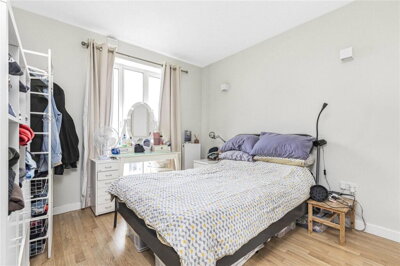
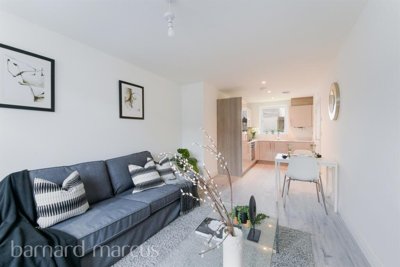
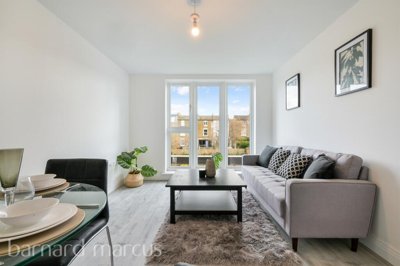
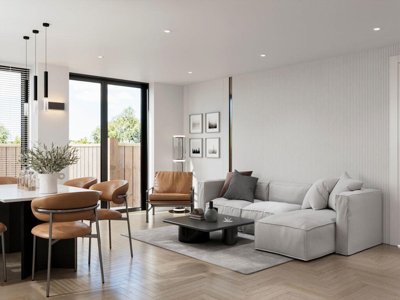
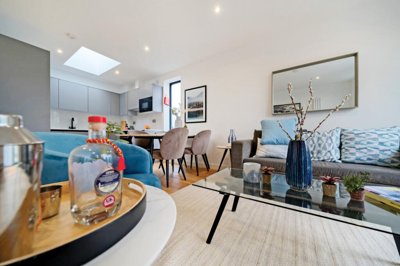
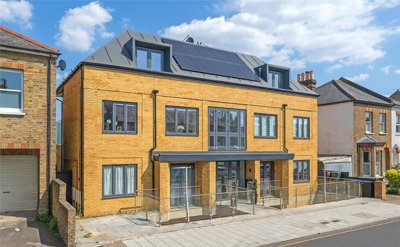
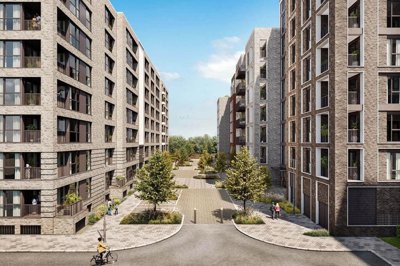
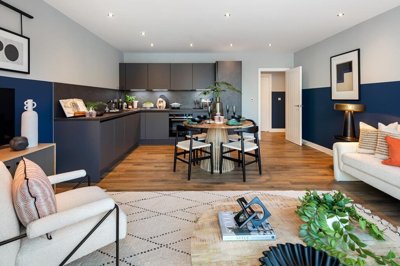
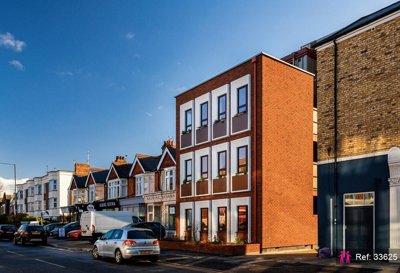
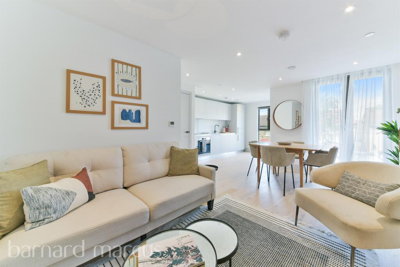
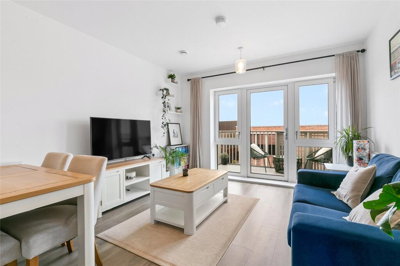
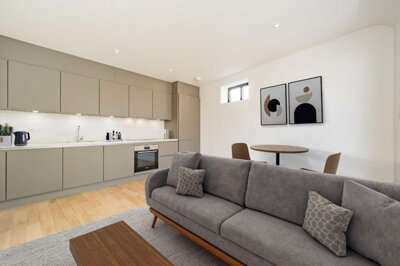
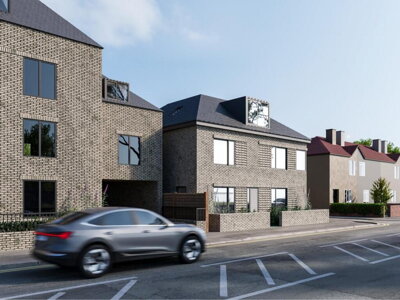
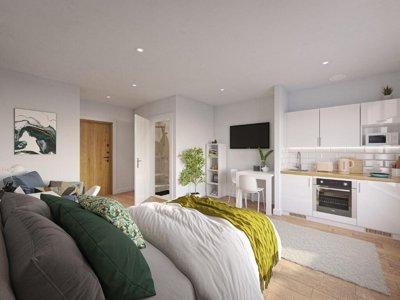
Browse 36 homes new builds in London Borough of Merton from local developer agents.
One bed apartments provide a separate bedroom alongside distinct living space, bathroom, and kitchen areas. Properties in London Borough Of Merton are available in various building types including new apartment complexes and contemporary developments.
Merton’s housing market has held up well against wider national swings. Recent figures put the overall average house price at about £621,670 in early 2026, according to the London Property Guide. ONS data shows a modest 2.1% drop in average prices between December 2024 and December 2025, although that picture shifts quite a bit by property type. Terraced homes, which make up much of Merton’s stock, have been notably steady, while flats have cooled more sharply at around 4.3% below the previous year. For buyers chasing longer-term value, that steadiness is part of the appeal.
Merton’s property market has stayed resilient even with wider national ups and downs. The London Property Guide puts the overall average house price at roughly £759,793 as of early 2026. ONS figures still show a fairly modest 2.1% fall in average prices between December 2024 and December 2025, though the story changes by property type. Terraced properties, the backbone of housing in the borough, have remained relatively flat over the year, whereas flats have softened more noticeably, down around 4.3% on the year. That kind of price steadiness keeps terraced homes on many buyers’ lists.
What you buy in Merton makes a big difference to the price. Detached homes sit at the top end, averaging around £2,804,470 because they are scarce and tend to offer generous space. Semi-detached houses come in at about £1,192,965, which gives families a useful middle ground between a terrace and a detached property. Terraced homes usually sell for around £758,917, depending on the source and the part of the borough, while flats and maisonettes generally sit in the £459,257 to £448,070 range. Housemetric records about 1,794 sales over the twelve months to February 2026, so the market has stayed active despite the pressures.
Bellway London’s “The Harness” is one of the new build schemes in Merton, with chain-free homes arranged over three floors and open-plan living suited to modern routines. Across the borough, there are other new homes on offer too, although pinning down live developments with verified addresses usually means checking with local estate agents or planning authority records. New builds tend to cost more than older comparable homes, but the trade-off is clear enough, fresh fittings, better energy efficiency, and less immediate maintenance to worry about.

Merton is made up of neighbourhoods with very different feels, and that variety is one of the borough’s strengths. Wimbledon is the best-known name, not least because of the tennis championships, and its tree-lined streets are full of independent shops, cafes, and restaurants. In the town centre, period houses sit alongside modern flats and the regenerated Centre Court shopping centre, which gives the area a busy, lived-in feel. Prices in Wimbledon reflect its premium position, and the transport links into central London keep it especially popular with commuters and anyone working in the city.
Elsewhere, places such as Morden, Mitcham, Raynes Park, and Colliers Wood offer a mix of character and value. Mitcham has seen real regeneration in recent years, with new schemes bringing in amenities while the area still keeps its historic centre around Mitcham Market and the green edges of Mitcham Common. Raynes Park has a more village-like atmosphere, decent schools, and straightforward links to Putney and Kingston upon Thames. Colliers Wood sits by the River Wandle, so residents get riverside walks and the Wandle Trail, plus better value than in some of the neighbouring districts.
Open space is a major part of Merton’s identity. The borough has more than 600 acres of public open space, including Wimbledon Common, Morden Hall Park under the National Trust, and the quieter setting of Cannizaro Park. The River Wandle runs through the area too, with a history tied to Merton’s abbey mills and a present-day role as the backdrop for attractive riverside walks. Cultural spots include the Wimbledon Museum and Tennis Tour experience, the Bond Road Film Museum, and a scattering of independent galleries and arts venues that add to the local creative scene.
The housing stock tells the story of Merton’s development. Victorian and Edwardian homes dominate in places such as Wimbledon Village, Morden, and around Merton Abbey, while 1930s semi-detached houses are common in Lower Morden and on roads linked with the popular “Blay” estates. Traditional brickwork is the main building material across the borough, with solid walls typical in pre-1919 properties and cavity wall construction appearing in later post-war homes. Age and construction matter here, because older solid-walled houses often need a different approach to maintenance and usually fall short of modern insulation standards.

Families looking at Merton usually find plenty to like on the education front. The borough has a strong spread of primary schools, many rated good or outstanding by Ofsted. Wimbledon Chase Primary School, Wimbledon Village Primary School, and Merton Abbey Primary School all serve their local communities and have built strong reputations through solid results and supportive environments. Catchment areas matter a great deal, since primary admissions in Merton are based on proximity within set zones, so where a property sits can be crucial for parents with younger children.
Secondary schooling is another strong point, with schools such as Wimbledon High School, Ursuline High School, and Ricards Lodge High School posting consistently strong results. Merton also has a selective grammar school system, with Wallington County Grammar School and Wimbledon High School, although selective by exam, taking pupils who pass the entrance assessments. St Mark’s Academy in Mitcham has also earned a strong reputation for progress and pupil development. Places can be tight, so families need to study catchment areas and admission rules closely, especially where popular schools have long waiting lists.
Older students are well served too, with Wimbledon College, Wimbledon High School sixth form, and South Thames College in Merton offering academic and vocational routes. Because the borough sits within reach of major universities in central London and across the south-east, it works well for students commuting to higher education. Independent schooling is another draw, and King’s College School, Wimbledon, remains one of the country’s best-known names, which is part of why Merton appeals to families looking at private education at different stages.
School quality has a direct effect on prices in Merton. Homes close to highly rated primary and secondary schools usually command a premium, and that pattern shows up in Wimbledon Village, around strong-performing schools in Raynes Park, and within the catchments of popular schools in Morden. For landlords, that matters too. Good school access supports rental demand from families who want local education without buying, so properties in these areas tend to attract steady interest from tenants with children.

Transport is one of Merton’s biggest strengths. Wimbledon station acts as the main hub, with National Rail services to London Waterloo via Putney and Clapham Junction, plus Underground links on the District line and the new Crossrail Elizabeth line. From Wimbledon, it takes about 17 minutes to reach London Waterloo, around 25 minutes to Victoria, and roughly 35 minutes to the City financial district, depending on connections. That kind of access keeps the borough appealing to professionals based in the capital’s main employment centres.
South Wimbledon, Colliers Wood, and Morden add further Underground links through the Northern line, giving direct routes into Bank, Leicester Square, and King’s Cross St Pancras. Morden is the line’s southern terminus, so trains from there run straight into central London without a change. TfL buses fill in the gaps as well, covering areas not served by rail and linking the borough with Croydon, Kingston upon Thames, and Sutton.
Drivers are well placed too, with the A3 close by and providing access to the M25 network as well as routes towards Guildford and Portsmouth. Journeys into the City, Canary Wharf, and the West End are fairly straightforward from Merton, although congestion charging and parking controls in central London do nudge many people towards public transport. Cycling is becoming more practical as Santander Cycles docking stations spread across the borough and routes along the Wandle Trail grow in popularity. That trail gives cyclists and walkers a scenic, traffic-free path beside the River Wandle, running from Wandsworth through Colliers Wood and Merton Abbey towards Wimbledon and beyond.
Future transport upgrades and ongoing schemes should make Merton even better connected. The Elizabeth line has already improved access from Wimbledon to places such as Canary Wharf and Heathrow Airport, while bus improvements and better cycling infrastructure keep cutting the need for car use on local trips. Buyers ought to think about transport access when choosing a property, because homes within easy walking distance of stations or on direct bus routes to key destinations usually fetch higher prices and tend to draw stronger rental interest.

It pays to spend time in a few different parts of Merton before deciding where to buy. Wimbledon Village, Mitcham town centre, and the surrounding streets all have their own character, local facilities, and typical price points. School catchments, transport options, and the feel of the community are all worth weighing up, because the right area is often the one that suits day-to-day life rather than the one that simply looks best on paper.
Before viewing properties, speak to lenders or use Homemove’s mortgage comparison service to get an agreement in principle. Having finance lined up shows sellers and estate agents that you mean business, and it also gives a clear picture of how much you can borrow in the current market.
Once you have a shortlist, book viewings across the areas in Merton that suit you. Make notes on the condition of each property, look out for damp or structural warning signs, and ask about lease lengths for flats or service charges for apartments. Seeing several homes side by side makes it easier to compare them before you put in an offer.
After agreeing a price, our advice is to arrange a RICS Level 2 Survey, especially with so many older Victorian, Edwardian, and 1930s homes in Merton. It can pick up damp, roof problems, or possible subsidence linked to London Clay, which may give you room to negotiate or warn you about costly repairs ahead.
Choose a conveyancing solicitor from Homemove’s recommended providers to deal with the legal side of the purchase. They will carry out local authority searches with Merton Council, check the title, and manage the transfer of ownership while keeping in step with your mortgage lender.
Once the searches come back clean and the mortgage offer is in place, contracts are exchanged and the deposit is paid. Completion usually follows within days or weeks, when the rest of the money is transferred and the keys to your new Merton home are handed over.
Buying in the London Borough of Merton comes with a few specific points that deserve attention before you commit. Victorian, Edwardian, and 1930s homes are common across the borough, and older properties often have solid walls without cavity insulation, original single-glazed windows, and outdated electrics that may need serious work to meet modern standards. A thorough RICS Level 2 Survey can flag these issues, and it is wise to budget for heating, insulation, and wiring upgrades when buying period homes in places like Wimbledon Village, Morden, or around Merton Abbey.
London Clay sits underneath much of the borough, and that geology brings its own risks. The clay shrinks and swells depending on moisture levels, which can lead to subsidence or heave in properties with shallow foundations. Cracks in walls, sticking doors or windows, and uneven floors can all point to movement. For homes in areas like Colliers Wood or near the River Wandle, a specialist structural survey alongside the standard survey is sensible, since ground conditions there can be more complex. Flood risk zones also need careful checking, along with resilience measures and insurance implications.
Wimbledon and nearby areas contain a number of conservation areas and listed buildings, and those designations affect what owners can change. If you buy a period property in one of these protected locations, most external alterations will need planning permission from Merton Council, while work on listed buildings needs Listed Building Consent. The restrictions can limit extensions and alterations, but they also help preserve the character and value of the neighbourhood. Always check conservation area status and any planning controls before buying, because they can affect future plans and the cost of work.
Our surveyors regularly come across familiar defects in Merton’s older houses. Rising damp from missing or failed damp-proof courses, roof coverings that have slipped or lost their felt, and timber decay such as wet rot or woodworm affecting joists and other structural timber all show up frequently. In many pre-1960s homes, the electrics need a full rewire to meet current regulations, and cast iron drainage systems often show decades of wear. That is why we usually recommend a RICS Level 2 Survey for any property over 50 years old in Merton.

Long-term price data paints a slightly softer picture. home.co.uk says sold prices in Merton are currently around 5% below the 2022 peak of £751,962, which may suit buyers who missed the market high. Their year-on-year figures show a 2.9% fall over the twelve months to February 2026, although the second half of 2025 was fairly steady. First-time buyer activity is still strong in the borough, and ONS data puts first-time buyer prices at about 2.4% lower in December 2025 than the year before, so entry-level homes are a touch easier to reach than they were twelve months earlier.
Properties in the London Borough of Merton fall into council tax bands A through H, with the band set by the Valuation Office Agency according to the property’s assessed value. Merton Council updates the council tax rates each year, and the specific band for any home can be checked on the Gov.uk website or by contacting Merton Council directly. The banding is based on 1991 values, so flats and smaller terraced houses often sit in bands A through D, while larger detached homes in places like Wimbledon may reach the higher bands E through H.
Merton has strong schooling at every stage, with Wimbledon Chase Primary School and Merton Abbey Primary School standing out among the primaries because of their strong Ofsted ratings. At secondary level, Wimbledon High School, Ursuline High School, and Ricards Lodge High School are all well regarded. For younger children, the borough uses a catchment system, so the address you choose has a big effect on school eligibility. Parents aiming for grammar school places should also remember that Wallington County Grammar School takes students from Merton who pass the entrance exam.
Public transport in Merton is another clear advantage. Wimbledon station offers National Rail services to London Waterloo, together with Underground access on the District and Elizabeth lines. South Wimbledon, Colliers Wood, and Morden are served by the Northern line, which gives direct routes into central London. TfL buses cover the borough well. From Wimbledon, London Waterloo is about 17 minutes away and Victoria roughly 25 minutes, which keeps the borough attractive to people working in central London.
Merton still appeals to property investors because it combines solid transport links with better value than many central London boroughs. Rental demand stays healthy thanks to commuters, families chasing school places, and young professionals. Flats and terraced properties are the most reachable starting points for investors, although yields change by location and property type. Regeneration in places like Mitcham and Colliers Wood continues to improve local facilities and may support values over time. Even so, recent price trends point to modest falls of around 2%, so that needs to sit within any investment plan.
The average house price in Merton can sit anywhere between about £546,003 and £759,793, depending on the source and the period being measured. The London Property Guide puts the current average at around £759,793 as of February 2026, while home.co.uk reports slightly higher figures at approximately £759,793. ONS data shows prices down by around 2.1% over the twelve months to December 2025, although the movement differs by property type, with terraced homes holding fairly steady and flats softening more clearly.
The River Wandle runs through Merton, especially around Colliers Wood and Merton Abbey Mills, where river flooding is the main risk to watch. Heavy rain can also trigger surface water flooding elsewhere in the borough when drainage systems are overwhelmed. Our surveyors suggest checking the Environment Agency flood risk maps for any property and thinking carefully about flood resilience measures and the right insurance cover. Homes near the River Wandle or in known flood zones should be checked closely for signs of earlier flooding and present-day damp.
With so many Victorian, Edwardian, and 1930s properties in Merton, our surveyors often find rising, penetrating, and condensation-related damp, roof defects such as slipped tiles or failed felt, and subsidence linked to the London Clay below. Older electrics frequently need a full rewire to meet present standards, and cast iron drainage can corrode after decades in service. Wet rot and woodworm are also common in timber floor structures. A RICS Level 2 Survey will identify these matters and show how serious they are, so buyers can judge the real cost of ownership before they complete.
From 4.5% APR
Compare mortgage rates from leading lenders to find the best deal for your Merton property purchase
From £499
Property solicitors handling your legal work, including local authority searches with Merton Council
From £350
A detailed inspection suited to most homes, picking up defects common in Merton’s Victorian, Edwardian, and 1930s stock
From £600
A full building survey for older or more complex properties, including those with possible subsidence risks from London Clay
From February 2026, Stamp Duty Land Tax in England starts at 0% on the first £250,000 of property value, rises to 5% on the slice between £250,001 and £925,000, then 10% on the next part up to £1.5 million, and 12% on anything above £1.5 million. First-time buyers have higher thresholds, paying 0% on the first £425,000 and 5% between £425,001 and £625,000. As an example, a first-time buyer taking a typical Merton flat at £459,257 would pay no stamp duty, while a £758,917 terraced property would attract about £16,946 in SDLT.
Working out the full cost of buying in the London Borough of Merton goes well beyond the asking price, and getting the numbers right helps avoid financial strain during a process that can be intricate. Stamp Duty Land Tax is one of the main upfront costs, with standard rates of 0% on the first £250,000, 5% on the portion from £250,001 to £925,000, 10% on the next £575,000, and 12% on any amount above £1.5 million. For a typical terraced home in Merton at £758,917, that means around £22,946 in stamp duty under standard rules, though the exact bill depends on your buyer status and whether you already own other property.
First-time buyers in England get relief on the first £425,000 of a purchase, with 5% applying between £425,001 and £625,000. That makes a sizeable difference for anyone buying flats or entry-level terraced homes, and can save thousands compared with home-movers paying standard rates. Relief is not available once the price goes above £625,000, and anyone who has owned property before may face the higher rate if they own an additional property at the time of purchase. The 3% additional dwelling supplement applies if you own another property anywhere in the world at the time of purchase.

Properties New Builds In London

Properties New Builds In Plymouth

Properties New Builds In Liverpool

Properties New Builds In Glasgow

Properties New Builds In Sheffield

Properties New Builds In Edinburgh

Properties New Builds In Coventry

Properties New Builds In Bradford

Properties New Builds In Manchester

Properties New Builds In Birmingham

Properties New Builds In Bristol

Properties New Builds In Oxford

Properties New Builds In Leicester

Properties New Builds In Newcastle

Properties New Builds In Leeds

Properties New Builds In Southampton

Properties New Builds In Cardiff

Properties New Builds In Nottingham

Properties New Builds In Norwich

Properties New Builds In Brighton

Properties New Builds In Derby

Properties New Builds In Portsmouth

Properties New Builds In Northampton

Properties New Builds In Milton Keynes

Properties New Builds In Bournemouth

Properties New Builds In Bolton

Properties New Builds In Swansea

Properties New Builds In Swindon

Properties New Builds In Peterborough

Properties New Builds In Wolverhampton

Enter your details to see if this property is within your budget.
Loans, cards, car finance
Estimated property budget
Borrowing + deposit
You could borrow between
Typical borrowing
Monthly repayment
Est. at 4.5%
Loan-to-value
This is an estimate only. Your actual budget may vary depending on interest rates, credit history, and personal circumstances. For an accurate affordability assessment, speak to one of our free mortgage advisors.
This calculator provides estimates for illustrative purposes only and does not constitute financial advice. Your home may be repossessed if you do not keep up repayments on your mortgage. Estimates based on 4.5% interest rate, repayment mortgage. Actual rates depend on your circumstances.
Homemove is a trading name of HM Haus Group Ltd (Company No. 13873779, registered in England & Wales). Homemove Mortgages Ltd (Company No. 15947693) is an Appointed Representative of TMG Direct Limited, trading as TMG Mortgage Network, which is authorised and regulated by the Financial Conduct Authority (FRN 786245). Homemove Mortgages Ltd is entered on the FCA Register as an Appointed Representative (FRN 1022429). You can check registrations at NewRegister or by calling 0800 111 6768.

We use cookies to show you personalised content and improve your experience of our website. Find out more in our Privacy policy and Cookie policy.