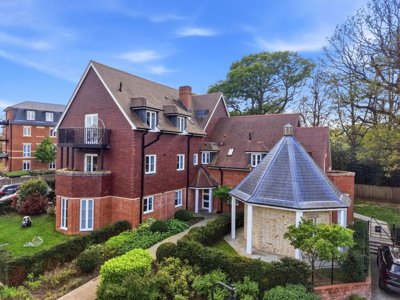
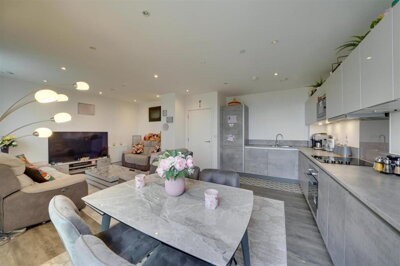
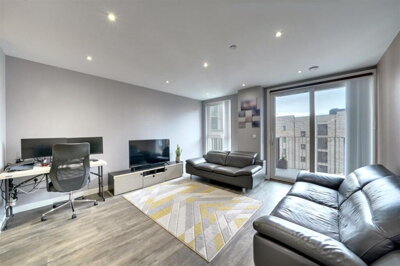
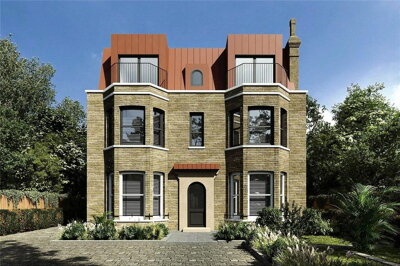
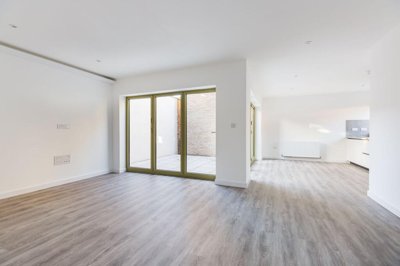
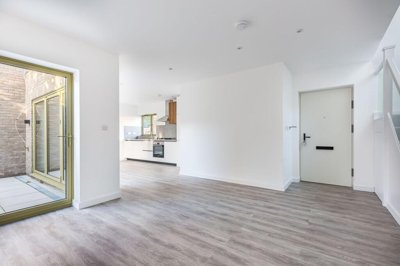
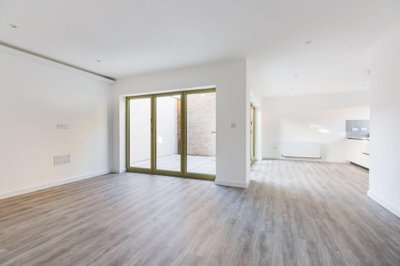
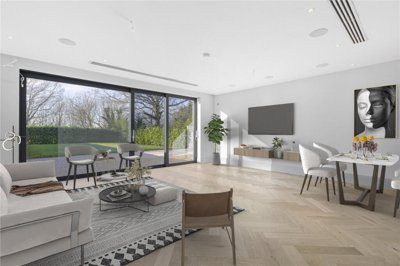
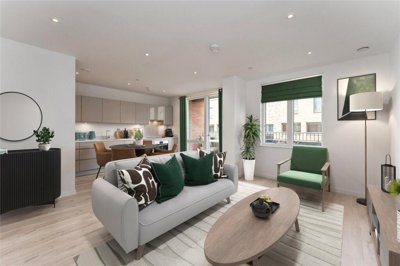
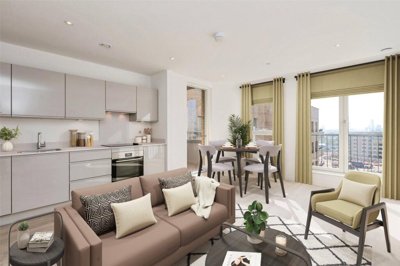
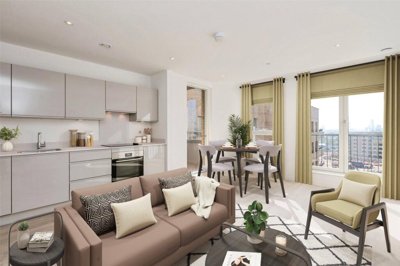
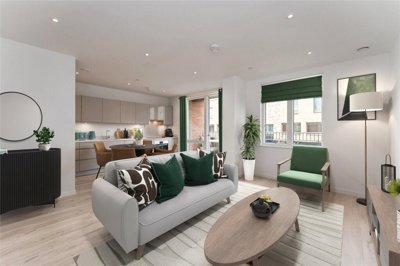
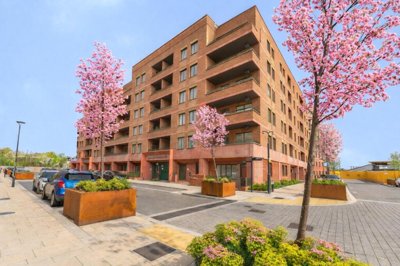
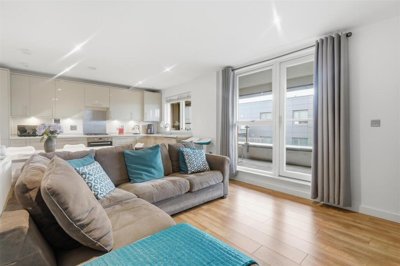
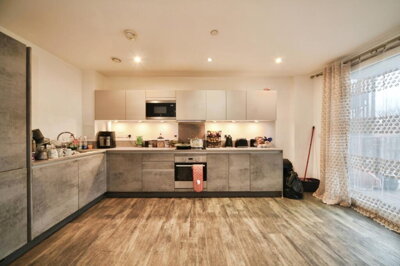
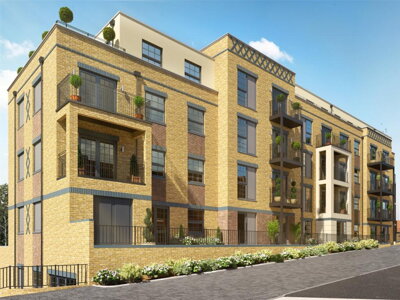
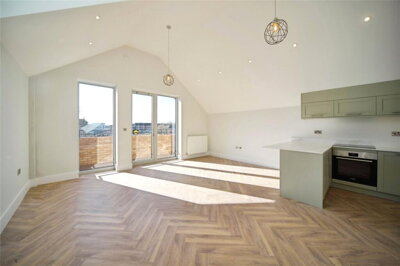
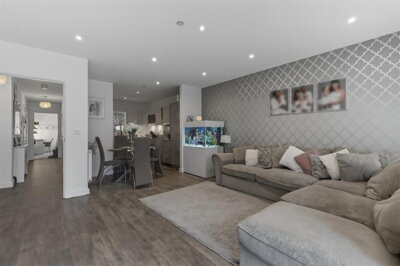
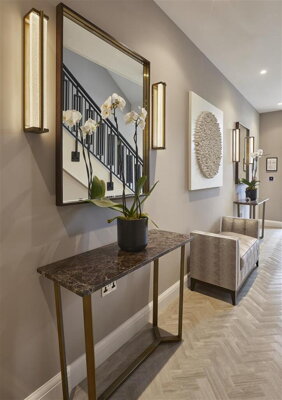
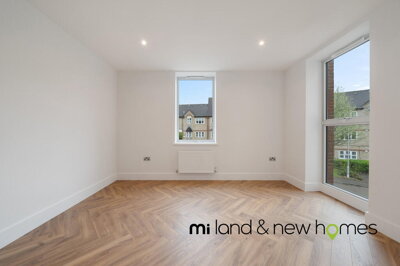
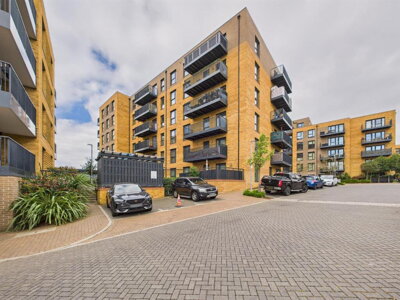
Browse 22 homes new builds in London Borough of Enfield from local developer agents.
The 2 bed flat sector typically includes two separate bedrooms, dedicated living areas, and bathroom facilities. Properties in London Borough Of Enfield span purpose-built blocks, converted period houses, and modern apartment complexes on various floors.
Enfield's property market has stayed notably steady over the past year, with the overall average house price sitting at around £467,692 as of December 2025. That is only a 0.8% rise on the previous year, which points to a market that has largely sidestepped the sharper swings seen in some other London boroughs. For buyers, that can make longer-term decisions feel more grounded, without the same pressure from fast-rising values. Across the postcode area, around 2,937 property sales were recorded over the last twelve months, although transaction levels were down by about 11% year on year.
Prices in Enfield vary widely by property type, size, and exactly where you buy. Terraced homes are the most frequently sold across the borough and average £565,340, with values up 2.5% over the past year. Semi-detached houses come in at roughly £831,451 and tend to appeal to households wanting more bedrooms and garden space. Detached homes are far less common and average more than £1.6 million, especially in Cockfosters and the western parts of the borough, where larger plots push valuations higher.
The most affordable route into buying in Enfield is still usually a flat, with average prices at £318,056 and a slight fall over the past twelve months. That dip has opened up opportunities for first-time buyers and investors, particularly in Enfield Town and Gordon Hill, where extra supply from new schemes has had an effect. New build prices stretch from about £251,647 for one-bedroom apartments to £1,664,904 for higher-end detached homes. The biggest scheme in the borough is the Meridian Water regeneration project, which is due to bring forward more than 10,000 homes by 2035. Other active sites include Old Royal Chace on The Ridgeway by Bellway Homes, with one and two-bedroom apartments as well as two and three-bedroom houses, and Meridian One by Countryside Homes in Enfield Town, which offers one, two, and three-bedroom homes within the Meridian Water scheme.

According to ONS mid-2024 estimates, the London Borough of Enfield has a population of about 330,000, placing it among the larger outer London boroughs. The average household size is 2.7 persons, a little above London's 2.5, and that says quite a lot about the area's pull for families and multi-generational households. Population growth has been steady, helped by buyers and movers looking for more space, more manageable pricing, and solid transport links, while still keeping commutes to London's main employment centres within sensible reach.
Enfield's economy generates £7.9 billion in gross value added each year, supported by more than 14,000 businesses, based on 2022 figures. Enfield Town remains the commercial centre, with familiar high street names, independent retailers, and weekly markets that have long been part of local life. There is more to the borough than shopping, though. The cultural offer includes theatres, cinema complexes, and historic sites such as Forty Hall, the Grade I Listed Jacobean Manor House set within parkland used by residents throughout the year. Heritage is spread well beyond one landmark, with Chase Ward containing 68 Grade II listed buildings, Cockfosters Ward 34, and Town Ward 57.
Much of Enfield's character comes from its green space. Trent Country Park alone gives the western side of the borough more than 320 acres of parkland and woodland, and the Lee Valley adds recreation that stretches beyond Enfield's boundaries. Enfield Council has also converted 80 hectares into woodland, alongside 50 rural ponds and sustainable drainage systems (SuDS), partly to reduce flood pressure downstream in places such as Edmonton. The Enfield Loop of the London Outer Orbital Path runs through the borough too, giving residents miles of walking and cycling routes. Day to day, there is a good spread of leisure centres, libraries, community facilities, pubs, restaurants, and cafes.

Families looking at Enfield usually find a broad education offer, from nursery places right through to further education. Across the borough there is a mix of community schools, academy converters, and faith schools, and many primary schools serving local catchment areas hold Good or Outstanding Ofsted ratings. At secondary level, several schools post consistently strong exam results, which helps keep Enfield high on the list for buyers who put schooling near the top of their priorities. In Cockfosters, Southgate, and parts of Enfield Town, demand linked to school catchments often feeds directly into higher property values.
For older students, there are further education colleges and sixth form centres in the borough, offering both vocational and academic routes. Being close to north London's well-known grammar schools in neighbouring boroughs also widens the choice for families prepared to deal with selective admissions. Many moves into Enfield are driven by primary school catchments in particular, because admissions at that stage depend on catchment areas and faith criteria rather than academic selection. Secondary admissions can be more involved, with faith-based oversubscription for religious schools and distance-based allocation for community schools. Before going ahead with a purchase, we always suggest checking the latest Ofsted ratings and admissions arrangements directly on the Ofsted website and Enfield Council's education admissions pages.
Independent schools in and around Enfield give families another option alongside the state sector, especially where a different teaching approach is wanted. The borough's libraries and community learning centres also support adult education and skills programmes, which reflects a wider commitment to learning across all age groups. For buyers with children, school catchments and admissions rules can have a real bearing on daily life as well as future resale values. Homes within walking distance of popular primary schools in areas such as Cockfosters and Southgate often carry a premium, so we strongly recommend checking that an address sits inside the relevant priority admission area before you buy.

Getting into central London from Enfield is generally straightforward by rail. Enfield Town station runs to Liverpool Street via Northumberland Park and Tottenham Hale, while Enfield Chase and Gordon Hill give residents other ways into the city. In the east of the borough, Lee Valley Overground services link local communities to Stratford, which is useful for the Olympic Park and Underground interchanges. Travel times to Liverpool Street are usually between 25 and 40 minutes, depending on the station and the exact service used, which keeps the financial district within realistic commuting range.
The Underground reaches Enfield through the Piccadilly line, with stations at Cockfosters, Oakwood, Southgate, and Arnos Grove. Those stops give direct access to central London and the West End, and from Cockfosters Heathrow Airport is roughly 90 minutes away, which helps explain the area's appeal for frequent flyers and international business travellers. TfL bus services fill in the rest, covering the borough thoroughly and linking neighbourhoods without stations to town centres and transport hubs. That matters particularly in places such as Edmonton, Ponders End, and Brimsdown, where direct rail access is limited.
Drivers are well placed here. The North Circular Road, or A406, provides orbital access around London and links to the M25 at various points, while the A10 cuts through the borough towards the City in one direction and Cambridge in the other. Enfield has also put money into cycling infrastructure, including segregated lanes on key routes and links into the London Cycling Network. Most rail hubs have cycle parking, and the borough's relatively flat topography across many areas makes everyday cycling more practical than some buyers expect. Taken together, the rail network, Underground access, and road links make Enfield a workable base for central London commuters, often at a lower cost than inner London alternatives.

Before settling on a purchase, it is worth spending proper time in different parts of Enfield. One area might suit you far better than another, from the Victorian terraces around Enfield Town to the newer homes near Meridian Water and the larger family houses in Cockfosters. Commute times, school catchments, local shops, and the general feel of the neighbourhood all matter. We make it easier to compare listings across the borough and spot how values shift between postcodes. EN1 and EN2, for instance, can look quite different on price, with EN2 generally achieving slightly higher figures for similar homes.
Getting an Agreement in Principle before you start viewing seriously can put you in a much stronger position. A lender or broker will use your finances and credit score to indicate how much they may be prepared to lend, and that early confirmation can make offers on Enfield properties more credible to sellers. It shows that funding has been considered rather than left until the last minute. With average prices around £467,692, many buyers in the borough will be looking at mortgage amounts where competitive London lending rates can make a meaningful difference.
Once you have a shortlist, contact estate agents to book viewings for the properties that fit what you need. We show homes from multiple estate agents across Enfield, which helps when you want to compare what is available side by side. During a viewing, pay attention to condition, natural light, room proportions, and storage. With flats, it is also sensible to look into building maintenance and the effect of service charges. Make notes, take photographs, and for leasehold homes read the terms closely, especially ground rent and service charge clauses.
Before you exchange, we strongly advise arranging a RICS Level 2 Survey, or Homebuyer Report. In Enfield, that matters even more because of the borough's clay-rich geology and the linked subsidence risk from shrink-swell clay soils. A survey can pick up structural movement, damp, timber defects, and other issues that are easy to miss during a short viewing. Where a property is older or obvious cracking is already visible, a RICS Level 3 Structural Survey may be the better route. With Enfield ranked 20th out of 413 UK districts for subsidence risk, paying for proper professional advice is usually money well spent.
After an offer has been accepted, the next step is to instruct a solicitor or licensed conveyancer. They handle the legal side, from title investigation and contract negotiations to dealing with your mortgage lender and ordering searches from Enfield Council. Those council searches can reveal planning permissions, conservation areas, flood risk, and local charges tied to the property. There is a lot of paperwork involved, and this is the point where a good conveyancer really earns their fee, while you get on with preparing for the move.
The last stretch covers signing contracts, paying the deposit, usually 10% of the purchase price, and agreeing a completion date with the seller. On the day of completion, the balance is transferred and the keys are released for your new Enfield home. Our conveyancing partners can support buyers through each stage, from the accepted offer right through to key collection, so the process keeps moving as smoothly as possible.
Enfield's geology is one of the local issues buyers should take seriously. Much of the borough sits on clay-rich ground with high shrink-swell potential, so the soil expands and contracts as moisture levels change through the year. That puts Enfield at 2.3 times the UK average risk for domestic subsidence claims, ranking it 20th out of 413 districts across the country. During viewings, watch for cracking to walls, doors or windows that stick or fail to close properly, and floors that feel uneven. Large trees close to a house can increase the risk because roots draw moisture from the soil, and that can be more pronounced around older homes with shallower foundations.
Flooding is another factor in parts of the borough, especially surface water flooding during heavy rain. Enfield contains several Critical Drainage Areas, and the Salmons Brook catchment in north Enfield has a long history of flood events. Risk was reduced for more than 2,500 homes after the Salmons Brook Flood Alleviation Scheme was completed in 2016, and the Salmons Brook Natural Flood Management project is intended to build on that by slowing and storing water in rural sections of the catchment. If you are buying in one of the affected areas, check what flood resilience measures are in place and think about insurance implications as well. We would also look closely at the Environment Agency's long-term flood risk maps and Enfield Council's local flood risk records as part of due diligence.
Heritage constraints can shape what you are allowed to do with a property in Enfield. The borough has many listed buildings, along with homes inside or beside conservation areas, including around Forty Hall and in a number of established residential districts. Grade I, Grade II*, and Grade II listed buildings need Listed Building Consent for most works, and unauthorised alterations amount to a criminal offence. The distribution is notable, with 68 Grade II listed structures in Chase Ward, 34 in Cockfosters Ward, and 57 in Town Ward. There is another point buyers sometimes miss, buildings or structures within the grounds of a listed building that pre-date July 1948 are treated as "curtilage listed" too. With period homes, we always suggest checking listing status and any Article 4 Directions before proceeding.
Damp and timber problems are not unusual in older Enfield housing stock, especially where ventilation is poor or insulation is lacking. Rising damp and penetrating damp can damage walls, joinery, and finishes, and mould growth may follow. In more serious cases, moisture can lead to timber decay, including dry rot fungus, which can be costly to remove. Homes built before 1950 may also have clay pipes that are more prone to cracking as shrink-swell ground movement affects them. Add leaking roofs or faulty rainwater goods and the risk of rain penetration damp increases again. For any Enfield property more than 50 years old, we would want a thorough survey by a RICS-qualified inspector before completion.

The latest ONS figures for December 2025 put the average house price in the London Borough of Enfield at about £467,692. That is a relatively modest annual rise of 0.8%, which supports the view that prices have remained fairly stable during a period that has been difficult for many UK markets. Values differ sharply by property type. Terraced homes average £565,340, semi-detached houses about £831,451, and detached homes go beyond £1.6 million, particularly in Cockfosters where bigger plots attract premium prices. Flats remain the lower-cost entry point at around £318,056. At postcode level, EN1 and EN2 also show different averages, with EN2 slightly higher for like-for-like housing, at roughly £585,159 for end of terrace homes compared with EN1's £565,340 for terraced homes.
Council tax in Enfield runs from Band A at the lower end to Band H for the highest-value homes, based on the property's valuation as at April 1991. Most terraced houses in the borough sit somewhere between Bands B and D, while larger detached homes in locations such as Cockfosters can fall into Bands E to G. Flats are often in the lower bands because their values tend to be lower overall. Before you commit, you can check the exact band through Enfield Council's online council tax records, and during conveyancing your solicitor should confirm it as part of the usual enquiries.
Schooling is one of the main reasons many buyers focus on particular parts of Enfield. The borough has a wide spread of primary and secondary schools, with many judged Good or Outstanding by Ofsted inspectors. Primary admissions depend on catchment and faith criteria rather than academic selection, so buyers should make sure a target address is actually within a school's priority admission area before exchanging contracts. At secondary level, there is a mix of community schools and faith schools, each with its own admissions rules, including faith-based oversubscription for religious schools and distance-based allocation for community schools. Cockfosters, Southgate, and parts of Enfield Town are especially well regarded for education, and homes in those catchments often come at a premium. For the latest position, check the Ofsted website and Enfield Council's education admissions pages before purchasing.
Public transport is one of Enfield's strong points. National Rail services from Enfield Town, Enfield Chase, and Gordon Hill reach Liverpool Street in around 25 to 40 minutes, depending on the station and the service. In the east of the borough, Lee Valley Overground trains connect local areas to Stratford, which is helpful for the Olympic Park and for changing onto the Underground. The Piccadilly line serves Cockfosters, Oakwood, Southgate, and Arnos Grove, giving direct routes into central London and the West End, as well as Heathrow Airport in about 90 minutes from Cockfosters. TfL bus routes cover the borough widely, including Edmonton, Ponders End, and Brimsdown, where there is no direct rail service.
There are several reasons investors keep an eye on Enfield. Average values remain below the wider London average, which may leave more room for capital growth than in costlier boroughs. Meridian Water is a major part of that story, with plans for more than 10,000 homes and 6,000 jobs by 2035, and that scale of regeneration could lift surrounding values over time. Enfield Council is aiming to deliver 3,500 new homes borough-wide and has already completed 370 in the last three years, including 276 affordable homes. Strong commuter links into central London add to the appeal. Buyers do still need to weigh local risks, though, including clay-soil subsidence ranked 20th nationally, the fact that conditions vary a lot between neighbourhoods, and higher deprivation in some eastern areas that can affect rental demand.
From April 2025, Stamp Duty Land Tax on residential purchases is charged at 0% on the first £250,000, 5% on the portion from £250,001 to £925,000, 10% on the portion from £925,001 to £1.5 million, and 12% on any amount above £1.5 million. First-time buyers who qualify for relief pay 0% on the first £425,000 and 5% on the portion from £425,001 to £625,000, with no relief once the price goes above £625,000. To put that into context, a first-time buyer purchasing a typical Enfield terraced property at £497,000 would face a stamp duty bill of £3,600 after relief. A non-first-time buyer purchasing that same property would pay £12,350. At the top end of the market, including detached homes in Cockfosters averaging more than £1.6 million, the tax bill rises sharply and needs to be calculated carefully across each slice of the price.
From £350
A detailed inspection that identifies defects is especially important in Enfield, where clay soil subsidence risks can affect property condition.
From £500
A comprehensive structural survey recommended for older properties or those with visible cracks.
From £80
Energy Performance Certificate required for all property sales.
From £499
Legal services including Enfield Council searches and property registration.
From 4.5% APR
Competitive rates available for Enfield property purchases.
Buying in Enfield involves more than just agreeing the purchase price. You also need to allow for stamp duty, solicitor fees, survey charges, and the cost of moving. On homes priced between £565,000 and £831,000, which is typical for much of Enfield's terraced and semi-detached market, stamp duty for non-first-time buyers is usually about £15,750 to £21,550, depending on the final price. First-time buyer relief can make a substantial difference, cutting the bill by as much as £14,250 on qualifying purchases, with the relief worked out against the whole purchase price rather than only the amount above the relevant threshold.
Legal costs need factoring in early. In Enfield, conveyancing fees often begin at around £500 to £1,000 for a straightforward freehold purchase, but can rise to £1,500 or more where the property is leasehold or comes with complications such as listed building status. On top of that, disbursements for items such as local authority searches with Enfield Council, drainage and water searches, and Land Registry fees can add several hundred pounds. Those Enfield Council searches are useful because they can reveal planning permissions, conservation area status, flood risk, and local charges or obligations tied to the property. Leasehold buyers should also budget for notice fees and any dealings with the freeholder's solicitor.
A RICS Level 2 Survey is a sensible step on almost any Enfield purchase, and prices commonly start at around £350 for smaller homes, rising to £600 or more for larger properties. Because the borough has an elevated subsidence risk linked to clay soils, that report can be particularly useful for checking walls, foundations, and signs of movement. If concerns are flagged, or if the property shows problems often found in older homes such as damp, timber decay, or faulty central heating systems, a fuller RICS Level 3 Structural Survey may then be needed. Removal costs, furniture, and possible renovation works also need to be part of the budget. We recommend getting quotes from several providers before committing, so you can compare rates across all of those costs.

Properties New Builds In London

Properties New Builds In Plymouth

Properties New Builds In Liverpool

Properties New Builds In Glasgow

Properties New Builds In Sheffield

Properties New Builds In Edinburgh

Properties New Builds In Coventry

Properties New Builds In Bradford

Properties New Builds In Manchester

Properties New Builds In Birmingham

Properties New Builds In Bristol

Properties New Builds In Oxford

Properties New Builds In Leicester

Properties New Builds In Newcastle

Properties New Builds In Leeds

Properties New Builds In Southampton

Properties New Builds In Cardiff

Properties New Builds In Nottingham

Properties New Builds In Norwich

Properties New Builds In Brighton

Properties New Builds In Derby

Properties New Builds In Portsmouth

Properties New Builds In Northampton

Properties New Builds In Milton Keynes

Properties New Builds In Bournemouth

Properties New Builds In Bolton

Properties New Builds In Swansea

Properties New Builds In Swindon

Properties New Builds In Peterborough

Properties New Builds In Wolverhampton

Enter your details to see if this property is within your budget.
Loans, cards, car finance
Estimated property budget
Borrowing + deposit
You could borrow between
Typical borrowing
Monthly repayment
Est. at 4.5%
Loan-to-value
This is an estimate only. Your actual budget may vary depending on interest rates, credit history, and personal circumstances. For an accurate affordability assessment, speak to one of our free mortgage advisors.
This calculator provides estimates for illustrative purposes only and does not constitute financial advice. Your home may be repossessed if you do not keep up repayments on your mortgage. Estimates based on 4.5% interest rate, repayment mortgage. Actual rates depend on your circumstances.
Homemove is a trading name of HM Haus Group Ltd (Company No. 13873779, registered in England & Wales). Homemove Mortgages Ltd (Company No. 15947693) is an Appointed Representative of TMG Direct Limited, trading as TMG Mortgage Network, which is authorised and regulated by the Financial Conduct Authority (FRN 786245). Homemove Mortgages Ltd is entered on the FCA Register as an Appointed Representative (FRN 1022429). You can check registrations at NewRegister or by calling 0800 111 6768.

We use cookies to show you personalised content and improve your experience of our website. Find out more in our Privacy policy and Cookie policy.