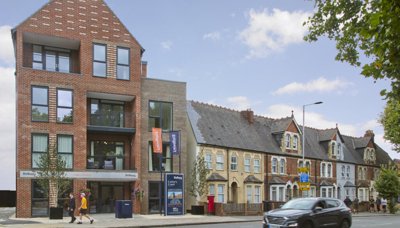
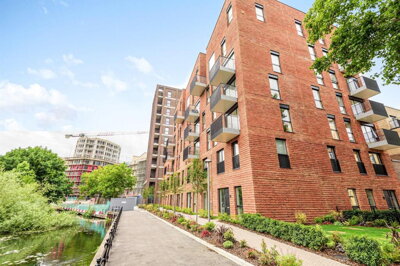
Browse 2 homes new builds in Eye and Dunsden from local developer agents.
The 2 bed flat sector typically includes two separate bedrooms, dedicated living areas, and bathroom facilities. Properties in Eye And Dunsden span purpose-built blocks, converted period houses, and modern apartment complexes on various floors.
Eye and Dunsden has kept its footing well, with house prices rising by 4% over the past twelve months, according to the latest market data. Buyers keep coming for the village setting, yet they still want quick access to urban amenities, and that balance is holding demand up. Detached homes sit at the top of the market at an average of £910,000, a clear sign that roomy family houses with sizeable gardens remain the local prize. Families and professionals who value space and privacy are still willing to pay the premium.
Semi-detached homes in Eye and Dunsden average £560,000, which gives buyers a more reachable way into village life. Many of these properties have the red brick look common across the Thames Valley, along with original fireplaces and period details that give them real appeal. Terraced houses come in at £420,000, and that makes them a practical first step into this postcode for first-time buyers or investors looking for a place in South Oxfordshire’s market.
Activity remains steady, with homes appearing across the different price bands, although the limited stock you expect in rural villages means buyers need to move quickly once the right property appears. Eye and Dunsden recorded about 25 property transactions over the past year, yet demand still runs ahead of supply in this popular parish. Flats are less common in a largely residential area, but they start at around £290,000, so there is still an entry point for lower-maintenance living or buy-to-let interest.
Seen in context, nearby Dunsden Green has had a more uneven run, with prices 14% down on the 2022 peak of £730,222. Even so, the wider 4% yearly rise points to a market that is regaining confidence, helped by commuter demand and the lasting appeal of village life in South Oxfordshire.

Eye and Dunsden offers the kind of English village setting people picture when they think of the Thames Valley. The parish covers 1040 hectares of mainly agricultural land and former gravel pits, so there is no shortage of countryside walking and open-air space. The River Thames marks part of the boundary, while Sonning Eye sits beside it and draws walkers to the riverbank, especially dog owners and families looking for a lazy weekend outing. There is still a clear village identity here, despite only 421 residents, and that is helped by parish council work and local events through the year.
The area has a strong architectural story too. Sonning Eye has been a Conservation Area since March 2002 and includes 13 Listed Buildings, each one underlining the history of the settlements. Much of the housing is traditional brick, often in the red brick style associated with the Thames Valley, and clay plain tile roofs complete the familiar village look. Dunsden Green is made up largely of historic and nineteenth-century buildings around the green, kept in good order by careful planning controls. Bishopsland Farmhouse, Dunsden Farmhouse with its timber-framed cross-wing, and Mill House are among the best-known examples, all built in the local red brick tradition.
The Neighbourhood Plan, adopted in October 2019, sets the tone for development across the parish, keeping the area’s character and landscape firmly in view. Dunsden Green is also being considered for its own Conservation Area designation, which would add another layer of protection to the historic built environment. The population of 421 marks a 15% rise from the 2011 Census figure of 368, so the parish has clearly been attracting more interest. Some of that growth goes back to development in Playhatch during the 1930s, which sits alongside the older housing found in Dunsden Green and Sonning Eye.
Day-to-day life is helped by nearby Reading and Henley-on-Thames, both of which provide shopping, dining and leisure choices that go well beyond what the parish itself can offer. Within Eye and Dunsden, local pubs and community spaces give residents places to meet, while the surrounding countryside opens up plenty of walking and cycling routes linking the settlements. It is a small area, but it does not feel cut off.

Families looking at Eye and Dunsden will find a fair range of schooling options in the parish and across South Oxfordshire. Primary provision comes from schools in surrounding villages and towns, with catchment areas carefully set by Oxfordshire County Council to match the local population. As more family households have moved in, school places have become a greater issue in planning discussions, as the community tries to keep development and education provision in step.
For secondary education, the wider area includes well-regarded comprehensives and grammar schools that are within reach of Eye and Dunsden residents. Exact catchment areas and admissions rules should be checked carefully, because they can differ depending on which part of the parish a home sits in. Reading gives access to a number of respected schools, including Reading School, the historic grammar that regularly posts excellent academic results. Henley-on-Thames also has secondary options for local families, and the journey from Eye and Dunsden is manageable for the daily commute.
Independent schooling is also within commuting distance, with established schools in Reading and Henley-on-Thames giving families several routes to consider. Queen Anne’s School in Caversham, St Andrew’s School, and The Oratory School are among the options that widen the choice for private education. That helps Eye and Dunsden appeal to families wanting a fuller schooling plan while still living in a village.
Families should always check current catchment arrangements and admission policies directly with Oxfordshire County Council, since these can shift and may change which schools serve a particular property. Development pressures in the area, including proposals for new housing, mean school place numbers are reviewed regularly, and future catchment boundaries could be affected.

Transport is one of Eye and Dunsden’s real strengths, with strong rail and road links giving residents access to employment centres across the Thames Valley and beyond. Reading station is close by and offers regular services to London Paddington, with journey times of about 25-30 minutes, which makes commuting to the capital workable for many professionals. There are also rail links to Oxford, Basingstoke, and the south coast, so residents have several ways of getting to work across the region.
Road connections are equally good. The M4 is a short drive away and links Eye and Dunsden to Swindon, Bristol and London via the M25. The A4 and A4074 run direct to Reading and Oxford, while the A415 connects to nearby Oxfordshire villages. Bus services do reach the parish for those who prefer public transport, although they are not as frequent as urban routes. Cycling provision has improved as well, with dedicated routes now serving commuters heading into Reading and other nearby employment hubs.
Reading remains the main economic centre for many residents, with jobs across technology, finance, retail and healthcare. Plenty of people from Eye and Dunsden travel there every day, keeping the commute short while still enjoying village living at home. Henley-on-Thames adds more opportunities too, particularly in tourism, professional services and creative industries, so the local job market is broader than the parish might first suggest.

We always suggest spending time in Eye and Dunsden at different times of day and on different days of the week, so you can get a proper feel for the community, traffic and noise. Visit the local amenities, test the commute to your workplace, and talk to residents if you can, because that gives a far truer picture of village life. A parish council meeting or local event can also be useful, just to see how the neighbourhood works before you commit to buying.
Before you start viewing, get a mortgage agreement in principle from a lender. It puts you in a stronger position when you make an offer and shows sellers that you are serious and ready to proceed. With average prices in Eye and Dunsden at £723,000, proper mortgage planning is important for most buyers.
Arrange viewings for homes that match what you need, and take time to look at condition, garden size, parking and how the space would work for your day-to-day life. Seeing more than one property makes comparison much easier. Older homes deserve extra attention, as many in Eye and Dunsden date from before 1919 and may need modernisation or ongoing maintenance.
For homes over 50 years old, which make up a large share of Eye and Dunsden’s housing stock, we would usually recommend a RICS Level 2 Survey before you go any further. It can flag structural issues, damp or repairs that might otherwise be missed. That matters here, because the stock is mixed and includes listed buildings. Our inspectors know South Oxfordshire well and understand the construction methods and common defects seen in local properties.
We would also advise appointing a solicitor with Oxfordshire property experience to deal with the legal side of the purchase, from searches and contracts through to registration of ownership at the Land Registry. Conveyancing in Eye and Dunsden can bring extra points to check, especially where conservation areas, listed buildings and flood risk assessments are involved, so specialist knowledge is useful.
Once the searches are clear and the mortgage offer is in place, contracts can be exchanged with a fixed completion date. On completion day, your solicitor transfers the balance and the keys to your new home in Eye and Dunsden are released. Buildings insurance should be in place from the date of exchange, so the property is covered as soon as the contract becomes binding.
Buying in Eye and Dunsden means paying close attention to a few local issues that come with a Thames Valley parish. Flood risk is one of the main ones, especially for homes in Sonning Eye and places close to the River Thames. Large sections of the parish sit within Flood Zones 2 and 3, and surface water flooding has become more frequent over recent decades. A full survey should look at flood resilience measures and any known flooding history in the property or the immediate area. The Environment Agency now requires a 20% addition to flood levels for new developments in the area, which reflects the greater climate change risk.
The geology here also matters for buyers. Eye and Dunsden sits on chalk bedrock with superficial deposits of alluvium and river terrace deposits, so some properties may stand on clay-rich ground with a moderate to high shrink-swell risk. That is important for foundations, particularly during long dry spells or where large trees are nearby. Listed buildings need extra care too, because alterations and repairs need Listed Building Consent, and a more detailed RICS Level 3 Survey may be a sensible step for historic buildings with more complex construction. Our team has surveyed many homes across South Oxfordshire and understands what the local geology can mean for foundations.
Defects in Eye and Dunsden properties tend to reflect the age range of the housing. Older homes, including those from the seventeenth century and the inter-war period, often show damp problems, whether rising, penetrating or condensation-related, along with roof issues such as slipped tiles or damaged flashing. Timber decay, including rot and woodworm, is also fairly common, as are outdated electrical and plumbing systems. Properties on river terrace deposits can be vulnerable to settlement if foundations are not adequate or groundwater levels move. Our inspectors know how to spot these problems and set out sensible repair advice.
Sonning Eye’s conservation area status, along with the number of listed buildings across the parish, brings planning controls that limit what owners can change. Buyers should look at the Eye and Dunsden Neighbourhood Plan so they know what development limits apply. If you are buying a leasehold property, usually a flat, it is important to check the lease length, ground rent and service charge arrangements before proceeding. Dunsden Green, with its historic buildings around the village green, is also being considered for its own Conservation Area designation, which could influence future planning permission there.

Recent market data puts the average property price in Eye and Dunsden at £723,000. Detached homes average £910,000, semi-detached homes £560,000, terraced homes £420,000 and flats about £290,000. Over the last twelve months, prices have risen by 4%, which shows steady growth in this South Oxfordshire parish. Historical figures show Dunsden Green reached £730,222 in 2022, and current values are a little below that peak, although underlying demand remains strong.
Properties in Eye and Dunsden sit within South Oxfordshire District Council’s area. Council tax bands run from A to H depending on the assessed value, and most village homes usually fall within bands C to E. With an average value of £723,000, plenty of homes in the parish will sit towards the higher end of the scale. Buyers should check the exact band on the Valuation Office Agency website or the local authority portal for any individual property.
Primary schooling for Eye and Dunsden comes from nearby villages and towns, with the right catchment school depending on the exact location of the home. In the wider South Oxfordshire area, secondary options include several respected comprehensives and grammar schools, with Reading School standing out as a grammar school that residents can reach. Independent choices are available in Reading and Henley-on-Thames too, including Queen Anne’s School and St Andrew’s School. Before buying, families should check catchment areas and admissions policies with Oxfordshire County Council, as these can vary by settlement.
Connectivity is one of the reasons Eye and Dunsden remains attractive, even with its village feel. Reading offers mainline rail services to London Paddington in about 25-30 minutes, and there are also routes to Oxford, Basingstoke and the south coast. Local buses link the parish with surrounding towns, although the timetable is not as frequent as it would be in a city. The M4 and A4 give road links towards Reading and Swindon, while the A4074 runs directly to Oxford. For commuters into the capital or the wider Thames Valley corridor, the station at Reading is a major draw.
Eye and Dunsden makes a strong case for buyers and investors alike because it combines rural character, good transport and easy access to major employment centres such as Reading and Henley-on-Thames. The 4% annual rise in prices points to steady demand, and the limited supply typical of rural parishes helps to support values. Planning activity in the area, including Gladman’s proposal for 245 houses adjoining Emmer Green, could add to housing supply, but the pull of South Oxfordshire village living is likely to keep the market underpinned. Population growth of 15% between 2011 and 2021 also shows how much more attention the area is drawing.
For a standard purchase, stamp duty is charged at 0% on the first £250,000, 5% on £250,001 to £925,000, 10% on £925,001 to £1.5 million, and 12% above £1.5 million. First-time buyers receive relief on the first £425,000, with 0% up to £425,000 and 5% on £425,001 to £625,000, although that relief disappears above £625,000. With Eye and Dunsden’s average price at £723,000, a first-time buyer would pay around £14,900 in stamp duty after relief, while a standard buyer would pay £23,650.
Flood risk is a major issue in Eye and Dunsden because of the River Thames. Large parts of the parish, including all of Sonning Eye village, sit within Flood Zones 2 and 3. Surface water flooding is also a concern, particularly in Playhatch and Sonning Eye, and flood events have become more frequent over recent decades. The Environment Agency now requires a 20% addition to flood levels for new developments because of climate change, which shows how serious the issue has become. For any lower-lying property, a survey should check flood resilience and local history, and buyers should also look at Environment Agency flood maps and the parish Flood Risk Assessment.
Eye and Dunsden has a rich heritage, and that is visible in the many listed buildings across the parish. Sonning Eye has been a Conservation Area since March 2002 and includes 13 Listed Buildings, while Dunsden Green has clusters of listed buildings and is being considered for its own Conservation Area status. Historic farmhouses, mill houses and village cottages from the seventeenth century sit alongside one another, with Bishopsland Farmhouse, Dunsden Farmhouse and Mill House among the best-known. Listed buildings need extra care, because most work that affects character or structure will need Listed Building Consent.
There are several planning applications under discussion in Eye and Dunsden parish. One is for two new dwellings at Ivy Cottages, Dunsden Green, RG4 9QJ, together with extensions and alterations to the existing semi-detached cottages. A larger scheme from Gladman Developments for at least 245 houses on land adjoining Emmer Green has been opposed by the Parish Council because of school places and infrastructure. South Oxfordshire District Council is also looking at land between Playhatch and Caversham Park Village for a possible large-scale housing scheme. Buyers should read the Eye and Dunsden Neighbourhood Plan and the current planning portal so they know what pressures exist locally.
Working out the real cost of buying in Eye and Dunsden means looking beyond the headline price. Stamp Duty Land Tax, or SDLT, is the biggest extra cost, with standard rates of 0% on the first £250,000, 5% between £250,001 and £925,000, 10% between £925,001 and £1.5 million, and 12% above £1.5 million. On a typical Eye and Dunsden home priced at £723,000, a standard buyer would pay £23,650 in stamp duty.
First-time buyers benefit from higher thresholds under the current relief rules, paying 0% on the first £425,000 and 5% on amounts between £425,001 and £625,000, which could bring SDLT down to about £14,900 on a £723,000 property. Even so, first-time buyer relief is not available above £625,000, so many homes in this sought-after village would not qualify. There are also extra costs to think about, including solicitor fees of about £800 to £2,000 for conveyancing, search fees of around £300 to £500, and lender arrangement fees if they apply, usually 0.5% to 1.5% of the mortgage amount.
Property surveys are another expense worth planning for. In the Eye and Dunsden area, a RICS Level 2 Survey usually costs between £586 and £1,000, depending on the value and size of the property. Because so many homes in the parish are older, a survey is especially useful for spotting structural issues, damp or repairs before completion. For listed buildings or more complicated historic homes, a RICS Level 3 Survey may be the better choice, with a higher fee but a fuller view of the property’s condition. Removal costs, redecoration and any new furnishings should also go into the budget when working out the true cost of moving to your new Eye and Dunsden home.

Properties New Builds In London

Properties New Builds In Plymouth

Properties New Builds In Liverpool

Properties New Builds In Glasgow

Properties New Builds In Sheffield

Properties New Builds In Edinburgh

Properties New Builds In Coventry

Properties New Builds In Bradford

Properties New Builds In Manchester

Properties New Builds In Birmingham

Properties New Builds In Bristol

Properties New Builds In Oxford

Properties New Builds In Leicester

Properties New Builds In Newcastle

Properties New Builds In Leeds

Properties New Builds In Southampton

Properties New Builds In Cardiff

Properties New Builds In Nottingham

Properties New Builds In Norwich

Properties New Builds In Brighton

Properties New Builds In Derby

Properties New Builds In Portsmouth

Properties New Builds In Northampton

Properties New Builds In Milton Keynes

Properties New Builds In Bournemouth

Properties New Builds In Bolton

Properties New Builds In Swansea

Properties New Builds In Swindon

Properties New Builds In Peterborough

Properties New Builds In Wolverhampton

Enter your details to see if this property is within your budget.
Loans, cards, car finance
Estimated property budget
Borrowing + deposit
You could borrow between
Typical borrowing
Monthly repayment
Est. at 4.5%
Loan-to-value
This is an estimate only. Your actual budget may vary depending on interest rates, credit history, and personal circumstances. For an accurate affordability assessment, speak to one of our free mortgage advisors.
This calculator provides estimates for illustrative purposes only and does not constitute financial advice. Your home may be repossessed if you do not keep up repayments on your mortgage. Estimates based on 4.5% interest rate, repayment mortgage. Actual rates depend on your circumstances.
Homemove is a trading name of HM Haus Group Ltd (Company No. 13873779, registered in England & Wales). Homemove Mortgages Ltd (Company No. 15947693) is an Appointed Representative of TMG Direct Limited, trading as TMG Mortgage Network, which is authorised and regulated by the Financial Conduct Authority (FRN 786245). Homemove Mortgages Ltd is entered on the FCA Register as an Appointed Representative (FRN 1022429). You can check registrations at NewRegister or by calling 0800 111 6768.

We use cookies to show you personalised content and improve your experience of our website. Find out more in our Privacy policy and Cookie policy.