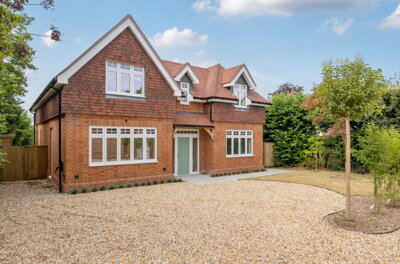
Browse 1 home new builds in Crawley from local developer agents.
The Crawley property market offers detached, semi-detached, and terraced houses spanning various price ranges and neighbourhoods. Each listing includes detailed property information, photographs, and direct contact with the marketing agent.
**PASSAGE 1:** Crawley’s housing market has held up better than many expected, with 891 sales completed across the borough in the last 12 months. Recent sold-price data should be read carefully because the sources do not line up perfectly, with homedata.co.uk putting the average at £1,450,000 and home.co.uk showing £1,662,500 for the past year. Some measures point to a 2.7% annual rise, while asking-price figures have softened by -2.3% over the past six months. It leaves a slightly uneven picture, with buyers still active but more sensitive to wider economic pressure. **PASSAGE 2:** Crawley has a broad mix of homes, and the price gaps between property types are noticeable. Detached family houses sit at the top of the market, averaging £1,850,000 in the latest homedata.co.uk figures, while semi-detached homes are around £1,100,000 and have risen 8.1% annually. Terraced houses average £1,450,000, often appealing to buyers trying to get established locally. Flats are listed at about £1,662,500, despite a 4.2% rise over the past year. The housing stock still shows Crawley’s New Town background, with terraced homes at around 46%, semi-detached 21%, detached 15%, and flats 18%. **PASSAGE 3:** New housing is still coming through. The Grove at Riverbrook Place in Forge Wood has Bellway Homes selling 1, 2, 3, and 4-bedroom properties, while Thakeham is building 3 and 5-bedroom homes at Woodgate in nearby Pease Pottage, starting from £1,662,500. In October 2025, planning permission was approved for 138 new homes on land east of Tinsley Lane. Our team can check current availability and pricing for these schemes, and for other new build options serving the Crawley area. **PASSAGE 4:** We book viewings on homes that match the brief, from Victorian terraces in conservation areas to newer estates around Forge Wood. Prices range from flats around £1,450,000 to detached houses above £1,850,000. On viewings in Crawley, we look closely for damp, tired roofs, and cracking that may point to movement, especially where properties are built on Weald Clay. **PASSAGE 5:** After an offer is accepted, we would usually arrange a RICS Level 2 HomeBuyer Report. In Crawley, the typical cost is between £395 and £1,250, depending on size and value, with Reallymoving data giving an average of £498.95. The survey checks the issues we see locally, including damp, roof wear, and possible subsidence in clay soil areas. It is especially useful for homes built before 1980, where original damp proof courses, dated electrics, and ageing roofs are common concerns. **PASSAGE 6:** Crawley’s average house price is about £1,662,500 in recent market figures as of May 2024, although the number shifts by property type and source. homedata.co.uk reports £1,450,000, while home.co.uk shows £1,662,500. Detached homes average around £1,850,000 according to homedata.co.uk, with semi-detached properties at £1,100,000, terraced houses at £1,350,000, and flats at roughly £1,300,000. The market is not moving in one neat direction, as semi-detached prices are up 8.1% annually while some asking-price segments have softened over the past six months. **PASSAGE 7:** From April 2025, Stamp Duty Land Tax is charged at 0% on the first £250,000 of a residential purchase, 5% from £250,001 to £925,000, 10% from £925,001 to £1.5 million, and 12% above £1.5 million. First-time buyer relief gives 0% on the first £425,000 and 5% from £425,001 to £625,000 on homes up to £625,000, provided the buyer has never owned property anywhere in the world. For a typical Crawley home at £1,662,500, a first-time buyer would pay no stamp duty, while a non-first-time buyer would pay £5,000. Use the government’s stamp duty calculator for the exact liability on your purchase price and buyer status. **PASSAGE 8:** Current and nearby new build schemes include The Grove at Riverbrook Place in Forge Wood, where Bellway Homes is offering 1-4 bedroom properties, Woodgate in Pease Pottage, where Thakeham has 3 and 5-bedroom homes from £1,662,500, and Aston Meadows in Crawley Down. Felbridge also has Millers Grove from David Wilson Homes, coming soon, and Kingfisher Park from Barratt Homes, with 3-bedroom homes from £1,662,500 to £1,662,500. Planning permission for 138 new homes on land east of Tinsley Lane was approved in October 2025. New builds bring modern standards, energy efficiency, and warranties, but service charges and running costs still need comparing with older Crawley homes. **PASSAGE 9:** Buying costs in Crawley need to be worked through before offers go in. Stamp Duty Land Tax depends on price and first-time buyer status, with standard rates of 0% on the first £250,000, 5% between £250,001 and £925,000, 10% between £925,001 and £1.5 million, and 12% above £1.5 million. First-time buyers get a higher nil-rate threshold of £425,000, then pay 5% between £425,001 and £625,000 on properties up to £625,000. That relief can remove several thousand pounds from the upfront cost. **PASSAGE 10:** Stamp duty is only part of the budget. Conveyancing solicitor fees usually sit between £500 and £1,500, while surveys cost £395 to £1,250 depending on size and value, with Crawley averaging £498.95 in Reallymoving data. Survey pricing rises with value, with homes above £1,500,000 averaging £586 and those over £1,662,500 potentially reaching £930. Bigger homes cost more too, with 5-bedroom properties averaging £559 against £402 for 1-bedroom homes. Mortgage arrangement fees are commonly 0% to 2% of the loan, although fee-free products may carry a slightly higher interest rate. **PASSAGE 11:** Local authority, water and drainage, and environmental searches usually cost £300 to £500. The solicitor checks mains connections, drainage, flood exposure, contamination risks, and any land-use history relevant to Crawley’s geology. For a typical Crawley home at £1,662,500, buying costs outside the mortgage normally fall between £8,000 and £15,000, including stamp duty for non-first-time buyers, solicitor fees, survey costs, search fees, and registration fees. Our related services above can help source quotes for mortgages, conveyancing, and surveys for Crawley properties.
Crawley’s housing stock covers a wide spread of budgets and styles. Detached family homes are the most expensive, averaging £671,000 in recent homedata.co.uk figures, while semi-detached properties sit around £429,000 and have risen 8.1% annually. Terraced homes average £345,000, which keeps them popular with buyers trying to get onto the ladder locally. Flats remain the lowest-cost route in at about £216,000, although that is still a 4.2% increase over the past year. The mix reflects the town’s New Town planning, with terraced homes making up around 46% of properties, semi-detached 21%, detached 15%, and flats 18%.
New build activity is still visible across the Crawley area. Bellway Homes is selling 1, 2, 3, and 4-bedroom homes at The Grove at Riverbrook Place in Forge Wood, while Thakeham is building 3 and 5-bedroom homes at Woodgate in Pease Pottage, with prices starting from £900,000. Planning permission was approved in October 2025 for 138 new homes on land east of Tinsley Lane. Our team can check live availability, incentives, and pricing across these schemes and other developments serving Crawley.

Crawley sits on the western edge of the High Weald, and the ground below it changes more than buyers sometimes expect. The town centre and eastern neighbourhoods are mainly on sandstone from the Hastings Beds, while western areas are underlain by Weald Clay. Around Tilgate, an east to west geological fault has pushed an area of Weald Clay into the Hastings Beds, which means ground conditions can alter over short distances. Clay soil, combined with dense urban development, reduces permeability and increases surface water runoff, so it is worth factoring drainage and flood exposure into any purchase.
The New Town designation came in 1947, but Crawley was not built from a blank sheet. It grew around older settlements including Ifield, West Green, Northgate, Pound Hill, and Worth. Ifield Village still has a conservation area centred on a traditional green, with buildings from the 13th to 19th centuries. Worth is known for the Saxon parish church of St Nicholas, a Grade I listed building and one of England’s finest early medieval churches. The High Street conservation area reaches back to Norman times, holding onto the market-town roots beneath the modern borough.
Crawley’s population is about 118,500 in the 2021 Census, up 11.2% from 2011. The median resident age is 37, which fits the town’s pull for young families as well as longer-established households. Day-to-day facilities are strong, with Harvester retail park and County Mall shopping centre in and around the town centre, plus local centres in Gossops Green and Southgate. For leisure and culture, residents use the Hawth Theatre, Goffs Park with its historic engine shed, and the traditional High Street conservation area dating back to Norman times.
There are 13 conservation areas in Crawley and more than 100 listed buildings, including three Grade I structures, all places of worship, 12 Grade II* listed buildings, and 87 Grade II listed buildings. Listed buildings are particularly clustered in Pound Hill, with 28 structures, Ifield with 24, Northgate with 18, and Langley Green with 15. The Beehive, the original Gatwick Airport terminal, and Ifield Water Mill show how varied the town’s heritage is, from rural Sussex to aviation history. Goffs Park adds 29 acres of green space, including the restored Victorian engine shed housing the Southern Railway exhibit, while the Hawth Theatre remains the main performing arts venue.

Crawley’s economy performs strongly among UK towns, helped by high patent registrations and a 78.5% employment rate, well above the national average. Job density has also increased, moving from 85,000 positions in 2015 to 91,000 in 2023. That depth of employment supports confidence in the local housing market. Aviation is important, of course, but the local economy also includes aerospace, health and life sciences, and advanced manufacturing, giving buyers more than one employment story to rely on.
London Gatwick Airport is still the anchor employer, with more than 22,000 local jobs and a £5.5 billion annual contribution to the UK economy. Its presence supports British Airways, TUI Travel with 800+ staff, and a wide range of ground handling firms. Away from the runway, major employers include Thales in defence electronics with over 2,300 people, Tesco with over 1,000 employees across stores and distribution, Virgin Holidays with over 1,100, Nestle with over 800, and Royal Mail with over 600 at Gatwick Mail Centre. Manor Royal Business District is the main commercial hub outside the airport, accommodating over 400 businesses across 140 hectares.
Affordability is a real pressure point. Lower quartile house prices are 10.7 times local earnings, leaving many lower-paid workers, including people in airport services, healthcare, and retail, dependent on renting or support schemes if they want to move towards ownership. For investors, that can mean steady tenant demand from workers priced out of buying. It is not a simple green light, though. Service charges, management costs, airport-area noise insulation requirements, and the right location all matter.

Families have a decent spread of education options across Crawley, from primary schools in established neighbourhoods such as Pound Hill and Ifield to secondary schools with wider catchments. The town’s appeal to family buyers is helped by that provision, although performance and admissions rules vary by school. Crawley College also plays an important role, offering vocational courses and apprenticeships linked to local sectors such as aviation, healthcare, and business. For some young people, that creates a direct route into the local job market without a university path.
School choice needs checking property by property. Parents should read Ofsted reports and look carefully at catchment boundaries, as living close to a school does not always secure a place. Primary options include Holy Trinity CofE Primary School in the town centre, Our Lady of Lourdes Catholic Primary School for Catholic families, and Southgate Primary School in Southgate. Secondary schools include Hazelwick School in Three Bridges, Oriel High School in Maidenbower, and St Francis College, a Catholic secondary school, in Southgate. Some catchments stretch across several neighbourhoods.
Crawley College provides further education through vocational courses and apprenticeships in aviation, healthcare, and business, which match several of the area’s larger employers. Sixth form study is available through secondary schools with sixth forms and through dedicated sixth form colleges serving the wider area. Brighton is within commuting distance, giving access to University of Brighton undergraduate and postgraduate programmes. Gatwick Airport has also encouraged specialist training routes in aviation and travel, including cabin crew training, air traffic control, and airport operations qualifications.
Education was part of Crawley’s New Town planning from the start, with facilities spread across the borough rather than bolted on later. The median resident age of 37 helps explain why family homes in popular catchments can be competitive. Before buying, it is sensible to check current admissions policies and how catchment lines apply to the exact address. Our team can share school performance data and neighbourhood profiles so families can compare areas against their education priorities.

Transport is one of Crawley’s clearest advantages. London Gatwick Airport is a major international hub, employing over 22,000 people locally and contributing £5.5 billion a year to the UK economy. Rail options include Three Bridges, Ifield, and Crawley stations, with connections to London, the South Coast, and cross-country routes. Gatwick Airport station has direct trains to London Victoria in around 30 minutes and services to London Bridge, while Three Bridges adds routes towards Brighton and the south coast, with parking for rail commuters.
Metrobus and other operators connect Crawley’s neighbourhoods with the town centre, Gatwick Airport, East Grinstead, Horsham, and nearby communities. Fastway is particularly useful for shift workers, with 24-hour services linking Gatwick Airport, Crawley town centre, and surrounding neighbourhoods. Cycling provision includes shared-use paths and local routes, although clay geology and urban density can affect surface conditions and permeability. National Cycle Route 21 also passes through Crawley, linking the town to wider regional cycling networks.
Road access is strong, with the M23 close by for the M25 and the wider motorway network. The M23 gives a direct route towards London, approximately 40 miles away, and the M25 opens up routes to the Midlands, Kent, and the South West. Parking varies sharply by area. Town centre flats can be tight on spaces, while suburban streets may offer permit parking or on-street options. Pound Hill and Maidenbower generally have more generous parking than denser town centre developments.

We usually start by comparing Crawley neighbourhoods against the way a buyer actually lives. Gatwick Airport proximity matters for aviation workers, school catchments matter for families, and flood risk near the River Mole tributaries needs checking before anyone gets too attached to a house. Ifield and Worth bring conservation area character, Maidenbower has a strong stock of post-war family housing, and Forge Wood offers newer development.
A mortgage agreement in principle should be in place before viewings become serious. It shows sellers that finance is lined up and can make an offer feel more credible. Crawley’s 78.5% employment rate helps many buyers present a solid case to lenders. In high-demand family areas such as Maidenbower and Furnace Green, having paperwork ready can make a difference when several buyers are competing.
We book viewings on homes that fit the brief, from Victorian terraces in conservation areas to modern new builds. Crawley covers a wide price range, from flats around £216,000 to detached homes above £600,000. During viewings, we look for damp, roof condition, and cracking that could suggest movement. That last point matters in areas where homes sit on Weald Clay.
Once an offer is accepted, a RICS Level 2 HomeBuyer Report is usually the next sensible step. In Crawley, costs are typically between £395 and £1,250, depending on the property’s size and value, with Reallymoving data showing an average of £498.95. The survey will check common local problems such as damp, roof deterioration, and signs of subsidence in clay soil areas. For homes built before 1980, it can also pick up original damp proof courses, older electrical systems, and roofs nearing the end of their useful life.
A conveyancing solicitor handles the legal side of the purchase. They will order local authority, drainage, and environmental searches, which are particularly relevant in Crawley because of flood risk areas and variable ground conditions. Our recommended solicitors are used to Crawley transactions and understand issues such as conservation area restrictions, flood risk assessments, and planning conditions that may affect a property.
After searches are clear and finance is confirmed, contracts are exchanged and the deposit is paid. Completion usually follows within a few weeks, at which point the keys are released and ownership transfers. The solicitor then deals with the final administration, including registering the property with the official register and telling Crawley Borough Council about the change of ownership for council tax.
Crawley buyers need to take local flood risk seriously. The town is classed as a Flood Risk Area by the Environment Agency and DEFRA, with 9,000 residential and business properties at risk from surface water flooding. Maidenbower, Furnace Green, and Ifield Green were badly affected in June 2012, with other notable flood events in 1968 and 2000. Homes near the River Mole, Gatwick Stream, or low-lying parts of Langley Green, Three Bridges, and Forge Wood need particular scrutiny. A good survey should look for drainage problems, previous flood damage, and any remediation work.
Weald Clay brings a known shrink-swell subsidence risk, especially for older houses with shallow foundations and mature trees nearby. The British Geological Survey identifies shrink-swell risk across much of western Crawley, where Weald Clay is dominant. Tilgate can be more complicated because a geological fault has created a ridge of limestone jutting into the clay. Our surveyors look carefully at crack patterns, sticking doors and windows, and other signs of movement when inspecting Crawley homes.
Homes in conservation areas such as Ifield Village, Worth, and the historic High Street may come with tighter planning controls on alterations and extensions. Crawley has 13 conservation areas and 102 listed buildings, so buyers need to know exactly what designation applies before committing. Some work that would normally fall under permitted development may need planning permission, and listed buildings may require consent for external or structural changes. New Town homes from the 1950s onwards are usually standard brick and tile construction, but roof mortar on 1960s and 1970s properties may now be near the end of its life.
Our surveyors often find damp in Crawley properties, particularly rising damp in solid-walled Victorian and Edwardian terraces in conservation areas where original damp proof courses have failed. Roof condition is another regular issue, with clay tile roofs from the 1960s and 1970s showing mortar breakdown and tile slippage. Homes built before the 1980s can also have electrical systems that need updating, especially where older fuse boxes or fabric wiring remain. In some neighbourhoods, loft conversions and extensions have been carried out without building regulations approval, which should be checked before exchange.

The average house price in Crawley is approximately £350,635 in recent homedata.co.uk market data as of May 2024, although the figure varies by property type and source. homedata.co.uk reports £349,927, while home.co.uk shows £355,094. Detached homes average around £671,000 according to homedata.co.uk, with semi-detached properties at £429,000, terraced homes at £345,000, and flats at about £216,000. Recent performance is mixed, with semi-detached prices up 8.1% annually while some parts of the market have seen asking prices soften over the past six months.
Crawley properties sit within Crawley Borough Council’s area, with council tax bands running from A to H depending on value. Bands are set by the Valuation Office Agency using property characteristics as of April 1991. Buyers should check the current band and charge for the exact address, as alterations, renovations, or successful appeals can change the position. The government’s online valuation service can be used to look up the council tax band for any Crawley property.
Crawley has solid education provision at primary and secondary level, although individual school performance changes over time. Ofsted-rated Good and Outstanding primary schools include Holy Trinity CofE Primary School, Southgate Primary, and Maidenbower Primary. Well-known secondary options include Hazelwick School and Oriel High School. Parents should read the latest Ofsted reports and check catchment boundaries, as these can have a major impact on admissions. Crawley College offers vocational courses and apprenticeships, and Brighton is close enough for commuting to University of Brighton courses.
Rail links are a major selling point, with stations at Three Bridges, Crawley, and Ifield offering direct trains to London Victoria in around 30 minutes and London Bridge in approximately 35 minutes. Gatwick Airport station adds international access and services including the Gatwick Express to Victoria. Metrobus and Fastway run local buses across the town 24 hours a day, serving Gatwick Airport, Crawley town centre, and surrounding towns. By road, the M23 links to the M25 and the national motorway network, with London approximately 40 miles away and Brighton around 25 miles south.
Crawley’s housing market is supported by a 78.5% employment rate, above the national average, the pull of Gatwick Airport, and 91,000 jobs in the local economy. Semi-detached homes have risen 8.1% annually, which points to continuing demand. Buyers still need to account for flood risk in parts of Langley Green, Three Bridges, Forge Wood, Maidenbower, and Ifield Green, as well as affordability pressures for lower-paid workers. Rental demand is helped by airport workers and other employees unable to buy, which can make buy-to-let attractive in the right spot, provided management costs and void periods are allowed for.
From April 2025, Stamp Duty Land Tax rates are 0% on the first £250,000 of a residential property, 5% from £250,001 to £925,000, 10% from £925,001 to £1.5 million, and 12% above £1.5 million. First-time buyer relief gives 0% on the first £425,000 and 5% from £425,001 to £625,000 for homes up to £625,000, as long as the buyer has never owned property anywhere in the world. On a typical Crawley home at £350,000, a first-time buyer would pay no stamp duty, while a non-first-time buyer would pay £5,000. The government’s stamp duty calculator will give the exact figure for your price and buyer status.
Crawley is designated a Flood Risk Area, with 9,000 residential and business properties at risk from surface water flooding, the highest risk category in West Sussex. Properties close to the River Mole and tributaries such as Gatwick Stream, Crawter’s Brook, Tilgate Brook, and Stanford Brook face the greatest fluvial risk. Langley Green, Three Bridges, Forge Wood, Maidenbower, Furnace Green, and Ifield Green have all seen flooding, with severe flooding in June 2012 causing widespread property damage. Clay soil and urban density make surface water flooding worse by reducing permeability and increasing runoff. Groundwater flooding risk is generally negligible, except around Gatwick Airport, Three Bridges, and Forge Wood.
Several new build developments are active in and around Crawley. The Grove at Riverbrook Place in Forge Wood has Bellway Homes offering 1-4 bedroom properties, while Woodgate in Pease Pottage has Thakeham building 3 and 5-bedroom homes from £900,000. Aston Meadows in Crawley Down is another nearby option. In Felbridge, Millers Grove from David Wilson Homes is coming soon, and Kingfisher Park from Barratt Homes has 3-bedroom homes from £340,000 to £392,500. Planning permission was approved in October 2025 for 138 new homes on land east of Tinsley Lane. New builds offer modern construction standards, energy efficiency, and warranties, but running costs and service charges should be compared with older homes.
The full cost of buying in Crawley is more than the agreed purchase price. Stamp Duty Land Tax depends on both the price and whether first-time buyer relief applies. Standard rates are 0% on the first £250,000, 5% between £250,001 and £925,000, 10% between £925,001 and £1.5 million, and 12% on anything above £1.5 million. First-time buyers get a nil-rate threshold of £425,000, with 5% payable between £425,001 and £625,000 for properties up to that price. That relief can cut several thousand pounds from the amount due at completion.
Beyond stamp duty, allow for conveyancing fees of around £500 to £1,500, plus survey costs of £395 to £1,250 depending on size and value. Reallymoving data puts the average Crawley survey at £498.95. Costs rise with property value, with homes above £500,000 averaging £586 and those over £600,000 potentially reaching £930. Size also matters, as 5-bedroom properties average £559 compared with £402 for 1-bedroom homes. Mortgage arrangement fees commonly range from 0% to 2% of the loan, although some lenders offer fee-free deals with slightly higher interest rates.
Searches for local authority matters, water and drainage, and environmental issues usually cost £300 to £500. The solicitor will check mains connections and look for flooding or contamination risks linked to Crawley’s geology. Environmental searches can also flag former land uses that may affect the property. For a typical Crawley home at £350,000, total buying costs excluding mortgage payments are usually between £8,000 and £15,000, including stamp duty for non-first-time buyers, solicitor fees, survey costs, search fees, and registration fees. Our related services above can help compare quotes for mortgages, conveyancing, and surveys on Crawley properties.
From £395
A mid-level survey for conventional homes, focused on visible defects and condition.
From £500
A detailed building survey for older, altered, or more complicated properties.
From 4.5%
Competitive mortgage rates from trusted lenders
From £499
Expert legal support for your property purchase
Properties New Builds In London

Properties New Builds In Plymouth

Properties New Builds In Liverpool

Properties New Builds In Glasgow

Properties New Builds In Sheffield

Properties New Builds In Edinburgh

Properties New Builds In Coventry

Properties New Builds In Bradford

Properties New Builds In Manchester

Properties New Builds In Birmingham

Properties New Builds In Bristol

Properties New Builds In Oxford

Properties New Builds In Leicester

Properties New Builds In Newcastle

Properties New Builds In Leeds

Properties New Builds In Southampton

Properties New Builds In Cardiff

Properties New Builds In Nottingham

Properties New Builds In Norwich

Properties New Builds In Brighton

Properties New Builds In Derby

Properties New Builds In Portsmouth

Properties New Builds In Northampton

Properties New Builds In Milton Keynes

Properties New Builds In Bournemouth

Properties New Builds In Bolton

Properties New Builds In Swansea

Properties New Builds In Swindon

Properties New Builds In Peterborough

Properties New Builds In Wolverhampton

Enter your details to see if this property is within your budget.
Loans, cards, car finance
Estimated property budget
Borrowing + deposit
You could borrow between
Typical borrowing
Monthly repayment
Est. at 4.5%
Loan-to-value
This is an estimate only. Your actual budget may vary depending on interest rates, credit history, and personal circumstances. For an accurate affordability assessment, speak to one of our free mortgage advisors.
This calculator provides estimates for illustrative purposes only and does not constitute financial advice. Your home may be repossessed if you do not keep up repayments on your mortgage. Estimates based on 4.5% interest rate, repayment mortgage. Actual rates depend on your circumstances.
Homemove is a trading name of HM Haus Group Ltd (Company No. 13873779, registered in England & Wales). Homemove Mortgages Ltd (Company No. 15947693) is an Appointed Representative of TMG Direct Limited, trading as TMG Mortgage Network, which is authorised and regulated by the Financial Conduct Authority (FRN 786245). Homemove Mortgages Ltd is entered on the FCA Register as an Appointed Representative (FRN 1022429). You can check registrations at NewRegister or by calling 0800 111 6768.

We use cookies to show you personalised content and improve your experience of our website. Find out more in our Privacy policy and Cookie policy.