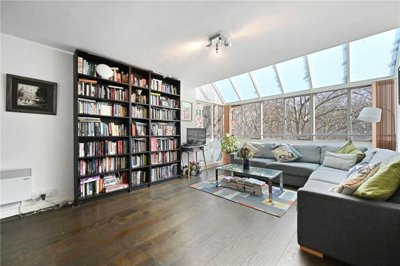
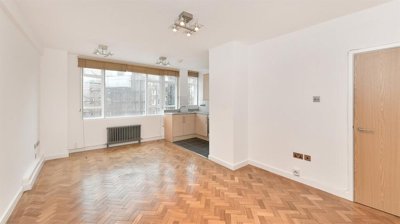
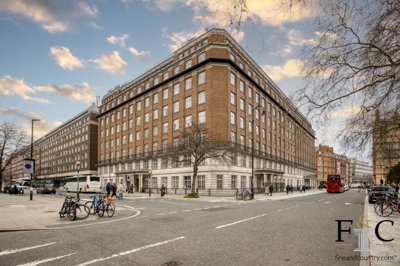
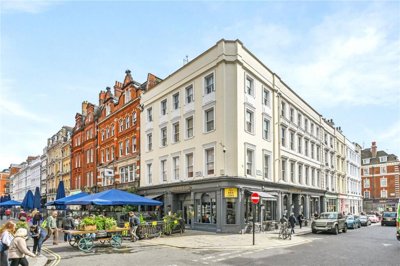
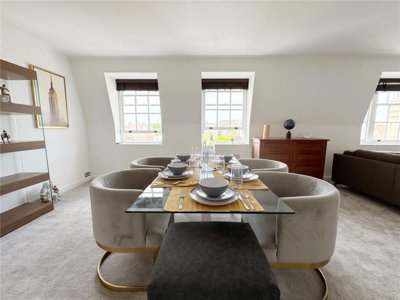
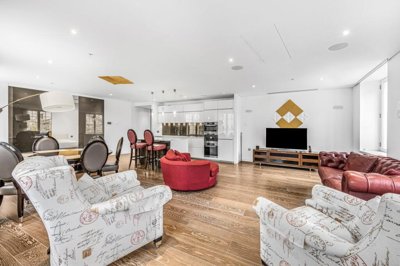
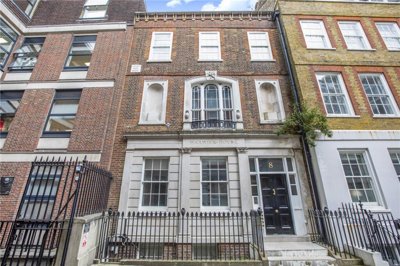
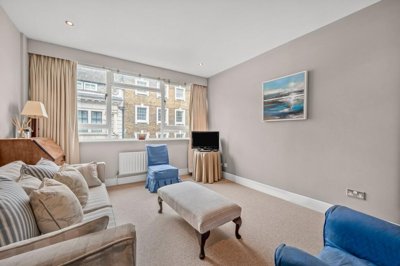
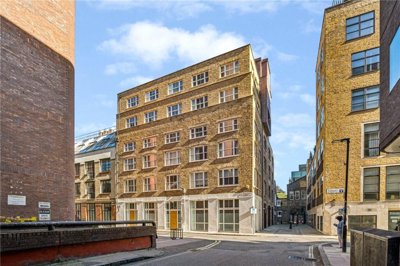
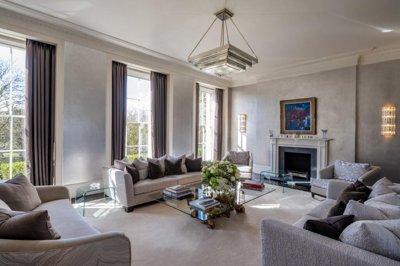
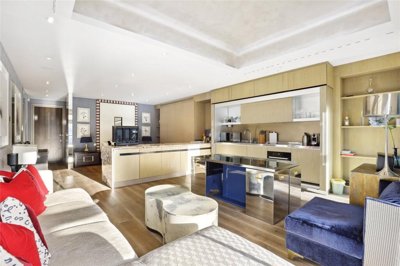
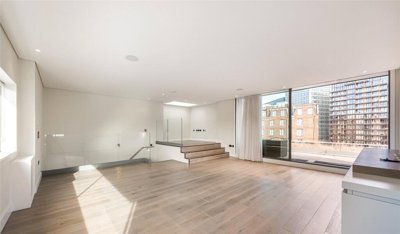
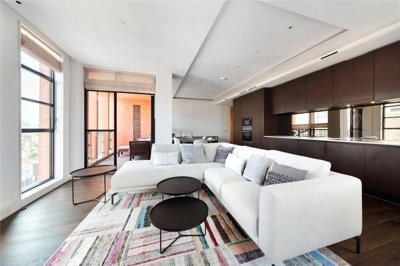
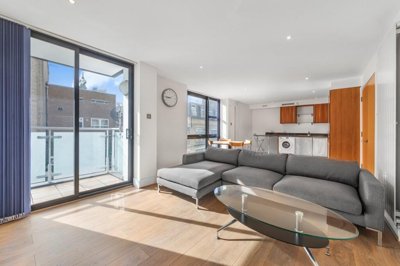
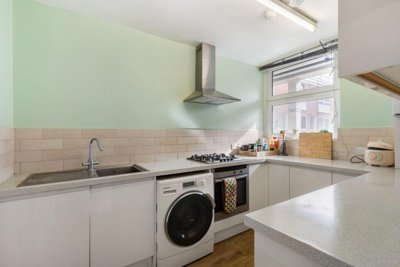
Browse 1,476 homes for sale in W1F from local estate agents.
Studio apartments feature open-plan living spaces without separate bedrooms, incorporating sleeping, living, kitchen, and bathroom facilities. The W1F studio market includes properties in modern apartment complexes, converted Victorian and Georgian buildings, and purpose-built developments.
£2.50M
7
0
263
Source: home.co.uk
Showing 7 results for Studio Flats for sale in W1F. The median asking price is £2,500,000.
Source: home.co.uk
Flat
7 listings
Avg £2.20M
Source: home.co.uk
Source: home.co.uk
The W1F market gives a sharp view of central London at full tilt. Flats make up most of what is on offer, and the average price for that type sits at around £1,878,333, which leaves them as a realistic way into one of the capital’s most sought-after postcodes. Terraced homes sit much higher, with average prices of approximately £3,500,000, a reflection of both their rarity and the Georgian and Victorian façades they so often come with.
Prices in W1F have eased by approximately 8% over the last year, compared with the previous twelve months. After a strong run-up, that has opened a window for buyers who were waiting for calmer conditions. The bigger picture in Soho still looks firm, though, with tight supply, healthy rental yields, and steady demand from professionals who want a central London base.
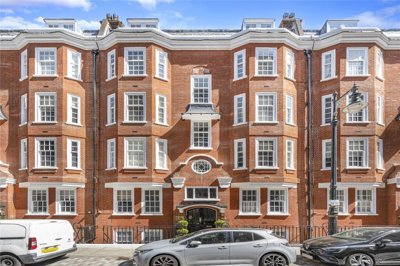
Almost all of the housing stock in W1F is flats and apartments, which fits the area’s dense urban character. Terraced houses do appear, usually as converted townhouses, while detached and semi-detached homes are very scarce. New-build activity is limited, so most of what buyers see dates from the Victorian and Edwardian periods, with period detail and traditional construction very much the norm.

Soho life has a rhythm all of its own. This compact patch squeezes an astonishing amount into narrow streets and old squares. The West End theatre district sits close by, along with world-class cinemas and the famous music venues that helped shape British rock. Carnaby Street, once the centre of Swinging London, still pulls in fashion-minded residents with its blend of independent shops and international names. Around Dean Street and Wardour Street, the creative energy is obvious, with media agencies and design studios long making Soho their home.
Few parts of W1F can match the food scene. From the scent-filled streets of London’s Chinatown, where family-run restaurants and traditional bakeries sit side by side, to the buzzy spots on Berwick Street and Broadwick Street, there is plenty to choose from. Recent years have brought plenty of gentrification, with old industrial units turned into bars, galleries, and creative workspaces. That change has brought in a new wave of residents, but the bohemian feel that defines Soho is still intact. Rupert Street and Lexington Street remain favourites for nightlife, while Meard Street and St. Anne’s Gardens give the postcode a few quieter corners.
Green space is limited here, but what there is matters. Golden Square gives residents a calm break in the middle of the neighbourhood, and the buildings around it date back to the 1720s. Leicester Square and St. James’s Park are also within easy walking distance if a larger open space is needed. With no major roads slicing through the area, the atmosphere feels more intimate than many parts of central London, and the pedestrian-friendly streets invite wandering. Soho’s population leans towards young professionals, creatives, and people who prize walkability and cultural access above almost everything else.

Families looking at W1F will find some well-regarded primary schools within reach. Soho Parish Primary School is a strong local name, known for a supportive setting and steady academic progress. Nearby alternatives include St Mary’s Bryanston Square CofE Primary School and St Eugene’s Catholic Primary School, both serving communities across Marylebone and Bayswater. The Ark Primary at the Miningscove offers another option for families wanting state education in Westminster.
Secondary schooling nearby is just as notable. The highly selective Royal Grammar School for Girls and the French Lycée in South Kensington draw pupils from across central London. Within Westminster, state secondary options include Westminster School, an independent school with roots going back to 1179, and Paddington Academy, which has posted strong examination results in recent years. For grammar school access, Buckingham and Citizens School in Westminster is another route worth looking into. We often advise buyers with school-age children to prioritise homes within walking distance of their chosen school, because parking and traffic in W1F can make the school run awkward.
There is no shortage of further and higher education nearby either. The University of London has several campuses within easy reach, as does the London School of Economics and Political Science in Holborn, a university that remains consistently ranked among the world’s best. Westminster Kingsway College adds further education options right in the centre of the city. For academics, media staff, and people in creative industries, being close to these institutions is part of the appeal and adds to the pull of the W1F postcode.

Transport in W1F is a real strength, with the rest of London, and further afield, within easy reach. Several Underground stations serve the area, each with its own set of route options. Tottenham Court Road Station links to the Northern and Central lines, while Leicester Square Station gives access to the Piccadilly and Northern lines. Oxford Circus, Piccadilly Circus, and Bond Street are all comfortably walkable, giving residents an unusual range of routes into the City, Canary Wharf, and the West End. The Elizabeth line at Bond Street has improved links to places including Reading, Heathrow, and Abbey Wood.
Mainline rail is close too, for those who travel beyond London. Euston, King’s Cross St Pancras, and Paddington are all nearby, with direct services to Birmingham, Manchester, Edinburgh, and the West Country via the HS2 network at Euston. From Paddington, the Heathrow Express gives the fastest airport link and gets to the terminals in approximately fifteen minutes. Gatwick and Luton are also reachable through combined rail and tube journeys. We recommend thinking carefully about the commute you expect to make, because walking time to stations can vary quite a bit depending on the exact part of W1F you are looking at.
Cycling has become more practical here in recent years. Santander Cycles docking stations are spread across the neighbourhood, and dedicated bike lanes run along key roads such as Charing Cross Road and Shaftesbury Avenue. Parts of W1F sit inside the congestion charge zone, which nudges many residents towards public transport instead of cars. Parking is tight, as it is in most central London districts, so anyone who needs a vehicle should budget accordingly. The area is so walkable that many residents simply do without one. Bus routes serving W1F include the 14, 19, 24, and 38, with direct links to places such as Warren Street, Victoria, and Clapham.

Before committing to a purchase in W1F, we would spend time in the area at different times of day and on different days of the week. Noise from bars and restaurants, especially around Brewer Street and Old Compton Street at weekends, is a real factor. Soho’s night-time economy is vibrant, which will suit some lifestyles and jar with others. Walking the streets at 8am on a Tuesday and then again at 10pm on a Friday gives a much better feel for what living here would actually be like.
Local estate agents should be your first stop for viewings that match the brief. W1F homes sit at a premium, so when the right property appears, speed matters. Take a notebook and camera, make a proper record of each place, and do not be shy about going back for a second viewing before making up your mind. Our platform brings together listings from multiple agents, which makes it easier to compare the postcode without having to visit each office in turn.
An Agreement in Principle from a lender, sorted before viewings begin, shows you are a serious buyer and gives a clear sense of budget. W1F homes carry significant price tags, so a broker who knows the central London market can be useful when weighing up mortgage options. Fixed-rate deals stay popular with W1F buyers, although tracker mortgages can suit those expecting rates to fall.
Because Soho’s housing stock is so old, a proper survey is essential. Our RICS Level 2 Survey for W1F properties usually starts from £350 and commonly picks up damp in solid-walled Victorian buildings, subsidence risk linked to London Clay, and outdated electrics in homes built before modern wiring standards were introduced. Our inspectors know the Soho stock well and understand the particular issues that come with the area’s period buildings.
Your solicitor will deal with the legal side of the purchase, from searches and contracts through to registration with the title register. In central London, conveyancing can be more involved because W1F has so many listed buildings and conservation area rules. We suggest choosing a solicitor with Westminster experience, and ideally someone familiar with buying in conservation areas.
Once the surveys, searches, and legal work are all wrapped up, contracts are exchanged and the deposit is paid, usually 10% of the purchase price. Completion then tends to follow within weeks, when the keys are handed over and a new life in Soho can begin. Our team can point you towards conveyancing solicitors who have handled previous W1F transactions and know the quirks of this market.
W1F brings a few buyer considerations that sit well beyond the usual checklist. The geology of central London, Soho included, is dominated by London Clay, and its shrink-swell behaviour can increase subsidence risk. Homes with shallow foundations, mature trees nearby, or a history of cracking need careful attention. Our inspectors often find movement in W1F properties, from minor crack repairs to more serious structural problems that need a structural engineer’s view.
Because so many Soho buildings are listed, W1F homes often come with tight planning controls and consent requirements. If a property is listed, any alterations, extensions, or even interior changes may need Listed Building Consent as well as normal planning permission. That can limit future renovation plans, so it is worth thinking through before going ahead. We recommend asking for a copy of the listing description from Historic England before proceeding with any purchase of a listed property in W1F.
Soho’s conservation area status adds another layer of restriction, affecting permitted development rights, external changes, and even the replacement of windows. Westminster Council’s planning department oversees these controls, and buyers should seek a pre-application planning enquiry if they are uncertain about what work might be allowed. The age of the housing stock also means many homes still have dated wiring and plumbing that may need upgrading, which can push the renovation budget up well beyond the purchase price. Our RICS Level 2 Survey will flag any outdated systems that do not meet current electrical safety standards.
Surface water flooding is worth bearing in mind in a place like Soho, where drainage can struggle during very heavy rain. Fluvial flood risk from major rivers is low, given the distance from the Thames, but buyers should still check the Environment Agency’s flood risk maps and look into whether a property has flooded before. Buildings insurance can be more expensive where flood risk has been identified, so getting a quote before completion makes sense. Homes in lower-lying parts of W1F near Shaftesbury Avenue may be more exposed to surface water pooling in severe storms.

Recent market data from home.co.uk puts the average property price in W1F at approximately £1,897,209. Flats come in at around £1,878,333 on average, while terraced homes are much higher at approximately £3,500,000. Prices have softened by around 8% over the past year, which may create an opening for buyers who have been waiting for better conditions before moving into this central London postcode. Our platform follows these movements so you can judge the best time to enter the market.
Westminster City Council covers properties in W1F, and council tax bands run from A through H according to property value. With Soho’s high prices, most residential homes here sit in the upper bands, typically D through H. Band H properties in Westminster currently pay around £3,000 or more per year, though it is always sensible to confirm the exact band with Westminster City Council using the property address before setting a budget. Flats in W1F usually fall into bands C through E, while larger converted townhouses may sit in band F or above.
Several respected schools serve the area, including Soho Parish Primary School for younger pupils and Westminster School and Royal Grammar School for Girls at secondary level. Families in W1F also benefit from being close to the University of London and the London School of Economics. The French Lycée in South Kensington gives another route for those seeking a European education. Because school admissions in Westminster are competitive, buyers with children should check catchment areas and admission rules carefully before committing to a property.
W1F has excellent transport links, with Tottenham Court Road, Leicester Square, Oxford Circus, Piccadilly Circus, and Bond Street all within walking distance. Those stations connect to the Northern, Central, Piccadilly, Bakerloo, Jubilee, and Victoria lines, so getting across London is straightforward. Mainline stations at Euston, King’s Cross St Pancras, and Paddington are all reachable in approximately fifteen minutes by tube or bus, with direct rail services across the UK and onward airport connections.
Soho still ranks among London’s most desirable addresses, thanks to central location, cultural attractions, and the professional make-up of its residents. Rental yields tend to be strong, especially for well-presented one and two-bedroom flats, which keeps W1F attractive to buy-to-let investors. Conservation area status and listed building rules limit new development, helping support values by keeping supply tight. The 8% price correction over the past year may unsettle some investors, yet the long-term case for the area remains compelling.
Stamp Duty Land Tax applies to a W1F purchase according to the price and the buyer’s status. For a typical £1,897,209 property bought by a standard buyer, the calculation would be 0% on the first £250,000, 5% on the next £675,000, from £250,001 to £925,000, and 10% on the remaining amount up to £1,897,209, which takes the total SDLT to approximately £66,970. First-time buyers may qualify for relief on properties up to £625,000, which reduces the tax burden on eligible purchases. An additional 3% surcharge applies to second homes and buy-to-let properties.
The main risks are subsidence linked to London Clay, which has shrink-swell qualities that can affect older foundations. Damp in solid-walled Victorian and Edwardian buildings is another common issue that needs attention. Outdated electrical wiring and plumbing are likely in older stock and may need modernising. Listed building and conservation area rules limit the alterations that can be made. Our RICS Level 2 Survey is vital for spotting these matters before purchase, and renovation costs should be built into the true price of the investment.
A RICS Level 2 Survey matters particularly in W1F because most properties were built before 1919 using traditional construction methods that differ sharply from modern homes. Our inspectors regularly come across penetrating damp in solid-walled properties, slipped slate tiles on pitched roofs, and outdated electrical installations that no longer meet current safety standards. Since many W1F homes are listed or sit within conservation areas, finding defects before exchange is important for both budgeting and negotiating if significant problems appear.
Buying in W1F brings a number of costs beyond the purchase price, and they need to be included in the budget from the start. The Stamp Duty Land Tax (SDLT) rates for 2024-25 require 0% on the first £250,000 of the purchase price, 5% on the portion between £250,001 and £925,000, 10% on the portion between £925,001 and £1,500,000, and 12% on any amount over £1,500,000. For a typical W1F property priced at £1,897,209, that results in SDLT of approximately £66,970 on top of the purchase price. Our calculator can help estimate the total SDLT liability for your own circumstances.
First-time buyers in England and Northern Ireland can benefit from relief that lifts the zero-rate threshold to £425,000, with 5% applying between £425,001 and £625,000. There is no relief on purchases above £625,000, so most W1F properties will not qualify for first-time buyer relief given the postcode’s high prices. Anyone considering W1F as a first purchase should think carefully about whether the location justifies the full SDLT bill before moving ahead. Our team can advise on whether a purchase qualifies for any exemptions or reliefs.
There are other costs to allow for as well. Solicitor fees for conveyancing usually range from £500 to £2,500, depending on how complex the deal is. With so many listed buildings and conservation area restrictions in W1F, transactions can take longer than average and may bring extra legal charges. A RICS Level 2 Survey in W1F starts from approximately £350, although homes with particular concerns may need a more detailed Level 3 Building Survey at a higher cost. Mortgage arrangement fees can run from £0 to £2,000 depending on lender and product. Buildings insurance should be budgeted at approximately £200-500 per year for a central London flat, though premiums may be higher for properties in flood-risk areas or with listed status. Local council tax in Westminster will depend on the band, with Band D properties paying around £1,700 annually and higher bands proportionately more.

Properties for Sale In London

Properties for Sale In Plymouth

Properties for Sale In Liverpool

Properties for Sale In Glasgow

Properties for Sale In Sheffield

Properties for Sale In Edinburgh

Properties for Sale In Coventry

Properties for Sale In Bradford

Properties for Sale In Manchester

Properties for Sale In Birmingham

Properties for Sale In Bristol

Properties for Sale In Oxford

Properties for Sale In Leicester

Properties for Sale In Newcastle

Properties for Sale In Leeds

Properties for Sale In Southampton

Properties for Sale In Cardiff

Properties for Sale In Nottingham

Properties for Sale In Norwich

Properties for Sale In Brighton

Properties for Sale In Derby

Properties for Sale In Portsmouth

Properties for Sale In Northampton

Properties for Sale In Milton Keynes

Properties for Sale In Bournemouth

Properties for Sale In Bolton

Properties for Sale In Swansea

Properties for Sale In Swindon

Properties for Sale In Peterborough

Properties for Sale In Wolverhampton

Enter your details to see if this property is within your budget.
Loans, cards, car finance
Estimated property budget
Borrowing + deposit
You could borrow between
Typical borrowing
Monthly repayment
Est. at 4.5%
Loan-to-value
This is an estimate only. Your actual budget may vary depending on interest rates, credit history, and personal circumstances. For an accurate affordability assessment, speak to one of our free mortgage advisors.
This calculator provides estimates for illustrative purposes only and does not constitute financial advice. Your home may be repossessed if you do not keep up repayments on your mortgage. Estimates based on 4.5% interest rate, repayment mortgage. Actual rates depend on your circumstances.
Homemove is a trading name of HM Haus Group Ltd (Company No. 13873779, registered in England & Wales). Homemove Mortgages Ltd (Company No. 15947693) is an Appointed Representative of TMG Direct Limited, trading as TMG Mortgage Network, which is authorised and regulated by the Financial Conduct Authority (FRN 786245). Homemove Mortgages Ltd is entered on the FCA Register as an Appointed Representative (FRN 1022429). You can check registrations at NewRegister or by calling 0800 111 6768.

We use cookies to show you personalised content and improve your experience of our website. Find out more in our Privacy policy and Cookie policy.