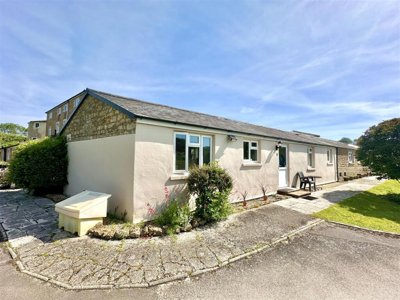
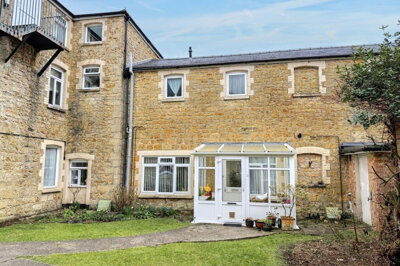
Browse 2 homes for sale in Stoke Abbott from local estate agents.
One bed apartments provide a separate bedroom alongside distinct living space, bathroom, and kitchen areas. Properties in Stoke Abbott are available in various building types including mansion blocks, contemporary developments, and house conversions.
Stoke Abbott’s market is small, and rather jumpy, which is exactly what we expect from a Dorset village with only a handful of sales each year. Detached homes sit at the top of the local ladder, averaging £570,650 from sales recorded since 2018. Semi-detached properties average £355,667, terraced homes come in at around £337,667, and flats have averaged approximately £170,150. Those flat figures relate to the wider DT8 parish area, not the village alone. With annual sales typically ranging from one to five properties in recent times, the figures can move quickly from one transaction to the next.
Recent activity underlines why buyers keep looking at Stoke Abbott for authentic Dorset character. In 2021, three properties sold, including two detached homes at an average price of £513,333, while 2020 saw five sales, led by detached properties averaging £471,000. The lower end of the market has included flats and terraced homes, giving some buyers a more accessible way into this sought-after postcode. Church House on DT8 3JR sold in May 2024, and 1 Brooklyn Cottages on DT8 3JR changed hands in August 2023. There are no active new-build developments within the village itself, so anyone after newer construction needs to look to nearby Beaminster or Broadwindsor. That limited supply helps preserve the traditional feel that makes Stoke Abbott so appealing, with most homes dating from well before modern building regulations.

Buying in Stoke Abbott calls for a bit of extra care, because the village’s rural setting and housing stock bring their own complications. Listed buildings are scattered through the area, so any alteration or renovation may need planning approval and Listed Building Consent from Dorset Council. We always suggest checking the listed status of a property before proceeding, as it affects maintenance duties and permitted development rights. Conservation areas, where they apply, can bring further controls over external changes and improvements. Sorting out these designations before purchase avoids expensive surprises later and gives a clearer picture of what can, and cannot, be changed.
Thatched roofs, like the one on the Grade II listed thatched cottage recently marketed in the village, need specialist knowledge and regular upkeep, so they deserve close scrutiny. Older brick and stone houses may also have solid walls without cavity insulation, original timber frames, and period details that need to be understood rather than simply updated. Our inspectors often come across solid wall construction in Dorset properties, where breathable materials and proper ventilation do the work that cavity barriers cannot. A RICS Level 2 Survey is especially useful for homes of this age, because it picks up damp penetration, timber defects, roof condition, and the state of older electrical and plumbing systems. If defects are uncovered, the survey can give buyers negotiating leverage and a better handle on future maintenance costs.
Rising damp is one of the issues we regularly see in Stoke Abbott, especially on ground-floor walls in period homes where damp-proof courses may be absent or no longer effective. Penetrating damp is another common one, often linked to aging roof coverings, tired mortar joints in stonework, or damaged flashing around chimneys. Our inspectors pay close attention to those areas when looking over traditional Dorset construction, because early signs are easier to deal with than a problem that has been left to spread.
Timber defects are another concern in village properties, where original structural timbers and joinery may be decades old. Wet rot, dry rot, and woodworm can all affect visible timbers as well as hidden sections in wall cavities or beneath floorboards. We check accessible timber elements during every survey, looking for the moisture penetration that creates the right conditions for fungal decay. Thatch-related problems need specialist judgment too, since traditional thatch roofs have finite lifespans and can show deterioration even when they still look sound from the ground. Homes with thatch should be assessed by surveyors who know the roofing materials used across the Dorset countryside.
Older homes can also move a little, for reasons ranging from natural ground settlement to tree roots near foundations, or shrink-swell clay soils in the area. Minor cracking is common in period properties and often reflects age rather than failure, but our surveyors judge each case on its own facts and flag anything that needs a structural engineer’s input. Electrical systems fitted decades ago often fall short of current regulations and may need a partial or complete rewire. We note the age and condition of consumer units, wiring, and socket outlets in every survey, and where there are concerns we recommend a qualified electrician takes a closer look. That helps buyers budget for essential work and put in offers that match the real condition of the house.

Set among the rolling hills and valleys of the West Dorset countryside, Stoke Abbott offers the sort of English village setting many buyers are after. It forms part of the civil parish of Stoke Abbott and sits approximately two miles from Beaminster. Day-to-day life is supported by traditional pubs, village shops, and community facilities that give the place a real sense of belonging. Beyond the houses, the landscape is mainly agricultural, with farms and smallholdings shaping both the scenery and the local economy. For anyone looking to step away from urban pressure without losing access to essential services, the setting works very well.
Agriculture remains central to Stoke Abbott and the surrounding area, and farming continues to use a large share of the land in the Dorset countryside. Tourism matters too, with walkers and visitors drawn by the scenery, the footpaths, and the historic feel of places like Stoke Abbott. The village community also keeps a lively social calendar, with events and gatherings bringing people together across all ages. Property here reflects that heritage, with brick, stone, and thatched buildings standing out in particular. A recently listed charming thatched cottage with Grade II listed status shows the sort of architecture that defines the area. Living here means joining a community that values its history while still carrying on with modern life.

Families looking at Stoke Abbott will find school choices within a sensible distance for children of all ages. For younger pupils, primary education is available in nearby Beaminster, which covers reception and Key Stage 1 and 2. St Mary’s First School and St Mary’s Church of England First School in Beaminster serve the local area, with bus services running from Stoke Abbott for the journey. Secondary options are available in Beaminster and the surrounding towns, and several schools serve the wider DT8 postcode area. Catchment areas and admission policies can make a big difference to school placement, so those details are worth checking early. Dorset’s local education authority publishes information on school performance, Ofsted ratings, and enrolment procedures across the state sector.
Independent education is available in the wider Dorset area too, with schools that suit different educational philosophies and family needs. Colton Prep School near Yeovil and Perrott Hill School are both within a reasonable drive and provide independent primary and secondary education. Sixth form and further education options can be found in Bridport, Yeovil, and Dorchester, which opens up a useful spread of choices for older students. Because Stoke Abbott is rural, many families factor school travel into their plans from the start. Private school transport services run from Stoke Abbott to a number of institutions across Dorset, which adds flexibility for those choosing the independent route. We always suggest looking at school performance data, travel times, and admission criteria early on, so children can move with as little disruption as possible.

Transport-wise, Stoke Abbott has a decent position within West Dorset, with access to the main road network while keeping its rural character intact. The village lies approximately three miles from the A356, which links Dorset with Somerset and Devon. Dorchester is around 40 minutes away, and Exeter is roughly 50 minutes by road. Yeovil gives further connections and services, and can be reached within 30 minutes by car. For commuters heading towards larger employment centres, the roads do the job, although checking journey times during peak hours is sensible.
Bus links from Stoke Abbott are limited, which is only to be expected in a rural village. The 31 and X31 routes run by First Bus connect Beaminster with surrounding villages, although weekend frequencies can be thin. For rail travel, the nearest stations are Crewkerne and Dorchester, both of which link into larger cities including London and Bristol. Crewkerne offers direct services to Exeter, Bristol, and London Waterloo, with the trip to the capital taking around two and a half hours. In practice, car ownership still feels essential for everyday life, even though the village itself is walkable for local amenities. Cycling is mostly a matter of rural lanes and country paths, which appeal to recreational riders but need care because road conditions vary. Parking is modest, with limited public spaces but generally enough room for residents’ vehicles.

A quick look at current listings gives buyers a feel for what is available in Stoke Abbott, from asking prices to the kinds of homes on offer. Stock is limited, so checking new instructions regularly makes sense. Our data shows that only one to five properties sell in the village each year, which means opportunities come up infrequently and quick decisions often matter.
Once a property catches the eye, viewings should be arranged through the listed estate agent. Seeing Stoke Abbott at different times of day helps us gauge the community atmosphere, local traffic patterns, and how close the nearest amenities really are. We recommend going along on weekday evenings as well as at weekends, so noise levels, parking, and the general feel of the neighbourhood can be assessed properly.
Securing a mortgage agreement in principle early on gives buyers a firmer grip on the budget and helps show sellers that they are serious. In the DT8 postcode area, where prices range from around £170,000 for flats to over £570,000 for detached homes, knowing the borrowing limit up front keeps the search focused. That makes the process a lot easier to manage.
Because many homes in Stoke Abbott are old, we strongly recommend a RICS Level 2 Survey to pick up structural issues, thatch condition, damp problems, and other defects common in traditional Dorset construction. Our inspectors have extensive experience with period properties throughout West Dorset and know the construction methods used in local buildings.
A solicitor with rural property experience should be brought in to deal with the legal side of the purchase, from local searches and title checks to liaison with the mortgage lender. Rural homes can throw up extra points, including rights of way, agricultural drainage, and common land registrations, all of which call for specialist knowledge.
Once everything checks out, the solicitor can move the purchase to exchange of contracts and then final completion, when ownership of the new Stoke Abbott home is transferred. On completion day, buyers collect the keys and can start life in this charming Dorset village.
The full cost picture matters, so it is worth setting out the purchase tax before making an offer in Stoke Abbott. Stamp duty Land Tax applies to all purchases above £250,000, with rates stepping up through the bands to 12% for properties above £1.5 million. First-time buyers purchasing homes up to £625,000 get relief, paying nothing on the first £425,000 and 5% between £425,001 and £625,000. Most Stoke Abbott homes sit in the £250,000 to £600,000 range, so standard buyers usually pay 5% on the amount above £250,000, while qualifying first-time buyers may pay no stamp duty at all.
On top of stamp duty, buyers need to allow for solicitor fees, usually between £500 and £1,500 for conveyancing, search fees of around £250 to £400, and mortgage arrangement fees that vary by lender. A RICS Level 2 Survey starts from £350 depending on property size, while an Energy Performance Certificate runs from £75 to £150. Survey costs matter in Stoke Abbott because age and traditional construction can hide defects that are far cheaper to spot before exchange than after completion. Removal costs, temporary storage, and a contingency fund of at least 10% of the budget should also be part of the plan for the unexpected things that often crop up in rural purchases.

Average prices in Stoke Abbott shift quite a bit by property type. Detached homes average around £570,650, semi-detached properties about £355,667, terraced houses around £337,667, and flats roughly £170,150. With only one to five sales recorded each year in recent times, averages can move sharply with the next transaction. In 2025, a single flat sold for £197,500, while 2021 produced three sales with an average of £513,333, including two detached homes. In a market this tight, a local estate agent usually has the clearest read on current values.
Council tax in Stoke Abbott falls under Dorset Council’s system. Banding depends on valuation and property type, so a traditional cottage and a newer home may sit in different bands even within the same lane. The band for any particular property can be checked through the Valuation Office Agency website, or requested during conveyancing. For band D homes in Dorset Council, council tax currently comes in at around £1,800 to £2,000 a year, although the amount changes with the band.
There are no schools inside the village boundary itself. Primary education is available in nearby Beaminster, where St Mary’s First School serves younger children in the local area. Secondary schools can be found in Beaminster and the surrounding towns, and parents are wise to check catchment areas because those decide placement. Families wanting more choice can also look at independent schools elsewhere in Dorset, including Colton Prep near Yeovil and Perrott Hill School.
Bus services from Stoke Abbott are limited, which reflects the village’s rural setting. Routes 31 and X31 link the village with Beaminster, though the service is much thinner than anything found in an urban area. The nearest rail stations are Crewkerne and Dorchester, both of which connect to regional and national networks, and direct trains from Crewkerne to London Waterloo take around two and a half hours. Most residents still view car ownership as essential for daily routines, although the village itself is easy enough to walk for local errands.
For lifestyle buyers, Stoke Abbott has strong appeal, but anyone looking at it as an investment needs to look carefully at the numbers. Low transaction volume makes price forecasting difficult, while the lack of new-build development helps support existing values. Rural villages with heritage character, decent transport links to market towns, and access to good schools tend to hold their place. In the DT8 area, prices have ranged from £197,500 to £570,650 depending on property type and year of sale, which points to a market that can perform well in the right homes but still calls for selective buying.
From April 2025, Stamp duty Land Tax is 0% on the first £250,000 of purchase price, 5% on £250,001 to £925,000, 10% on £925,001 to £1.5 million, and 12% above £1.5 million. First-time buyers get relief on the first £425,000, with 5% charged between £425,001 and £625,000. Given average Stoke Abbott prices, most purchases sit within the lower bands, although larger detached houses and luxury cottages can attract higher rates. A detached home at the average price of £570,650 would attract approximately £16,033 in stamp duty for a standard buyer.
From £350
A detailed survey for conventional properties helps identify defects early
From £500
Comprehensive survey for older or complex properties
From £75
Energy performance certificate for your property
From £499
Legal services for your property purchase
From 4.5%
Find competitive mortgage rates
Properties for Sale In London

Properties for Sale In Plymouth

Properties for Sale In Liverpool

Properties for Sale In Glasgow

Properties for Sale In Sheffield

Properties for Sale In Edinburgh

Properties for Sale In Coventry

Properties for Sale In Bradford

Properties for Sale In Manchester

Properties for Sale In Birmingham

Properties for Sale In Bristol

Properties for Sale In Oxford

Properties for Sale In Leicester

Properties for Sale In Newcastle

Properties for Sale In Leeds

Properties for Sale In Southampton

Properties for Sale In Cardiff

Properties for Sale In Nottingham

Properties for Sale In Norwich

Properties for Sale In Brighton

Properties for Sale In Derby

Properties for Sale In Portsmouth

Properties for Sale In Northampton

Properties for Sale In Milton Keynes

Properties for Sale In Bournemouth

Properties for Sale In Bolton

Properties for Sale In Swansea

Properties for Sale In Swindon

Properties for Sale In Peterborough

Properties for Sale In Wolverhampton

Enter your details to see if this property is within your budget.
Loans, cards, car finance
Estimated property budget
Borrowing + deposit
You could borrow between
Typical borrowing
Monthly repayment
Est. at 4.5%
Loan-to-value
This is an estimate only. Your actual budget may vary depending on interest rates, credit history, and personal circumstances. For an accurate affordability assessment, speak to one of our free mortgage advisors.
This calculator provides estimates for illustrative purposes only and does not constitute financial advice. Your home may be repossessed if you do not keep up repayments on your mortgage. Estimates based on 4.5% interest rate, repayment mortgage. Actual rates depend on your circumstances.
Homemove is a trading name of HM Haus Group Ltd (Company No. 13873779, registered in England & Wales). Homemove Mortgages Ltd (Company No. 15947693) is an Appointed Representative of TMG Direct Limited, trading as TMG Mortgage Network, which is authorised and regulated by the Financial Conduct Authority (FRN 786245). Homemove Mortgages Ltd is entered on the FCA Register as an Appointed Representative (FRN 1022429). You can check registrations at NewRegister or by calling 0800 111 6768.

We use cookies to show you personalised content and improve your experience of our website. Find out more in our Privacy policy and Cookie policy.