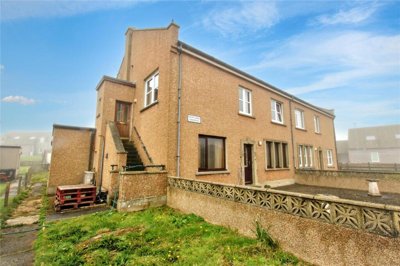
Browse 1 home for sale in Orkney Islands from local estate agents.
Studio apartments feature open-plan living spaces without separate bedrooms, incorporating sleeping, living, kitchen, and bathroom facilities. The Orkney Islands studio market includes properties in modern apartment complexes, converted Victorian and Georgian buildings, and purpose-built developments.
The Orkney Islands property market has proved remarkably resilient, with house prices climbing 13.5% in the twelve months to December 2025. That comfortably beat the Scottish average of 4.9% over the same period, a clear sign of steady demand across the archipelago. Our data shows 4,082 properties have been sold through ESPC in Orkney in recent years, including 3,462 transactions in the last decade alone. Agriculture, fishing, tourism, and the expanding renewable energy sector all help to underpin housing demand, while wind and marine energy schemes have brought fresh investment and skilled jobs that feed buyer confidence.
Property types in Orkney suit a wide spread of budgets and priorities. Detached homes average £310,789 and account for most sales in recent years. Semi-detached properties sit around £191,071, with terraced homes at £182,000. Flats and maisonettes offer a lower entry point at about £127,222. First-time buyers have been active too, paying an average of £200,921, while cash buyers average £240,000. The 13.5% rise for terraced and semi-detached homes points to stronger family interest in character homes at more accessible prices. Our listings range from traditional cottages suited to holiday lets, to family homes close to good schools, to substantial houses for those moving over from the mainland for good.
Average prices vary a little depending on the source, which is not unusual for a spread-out island market. homedata.co.uk records an overall average of £200,921 over the last year, up 1% on the previous year, while homedata.co.uk reports an average sold price of £211,000 as of February 2026. The gap comes down to the different transaction types and property mixes each platform captures. We pull together figures from several sources so we can give a fuller read on conditions across Orkney.

Life in the Orkney Islands has a pull that often brings visitors back as residents. The archipelago has around 70 islands, with approximately 20 inhabited, and each one has its own feel and community rhythm. Kirkwall, the capital, is the main commercial centre, with its medieval cathedral, historic buildings, and busy harbour. Stromness, a UNESCO World Heritage Site, is known for narrow lanes, traditional architecture, and an artistic streak. Add in moorland, dramatic coastline, and plenty of wildlife, and the result is a place that suits walkers, birdwatchers, and anyone who likes the coast on the doorstep.
The Orkney Islands economy mixes older industries with a noticeable push towards new work. Agriculture and fishing still matter a great deal to local communities, while tourism brings people to Skara Brae, the Ring of Brodgar, and the Italian Chapel. Renewable energy has grown sharply, with wind and marine projects opening up jobs that attract professionals to the islands. Public sector employment also brings stability through healthcare, education, and local government. That range of work supports a property market where homes keep their appeal to buyers looking for a long-term base in a distinctive part of Scotland.
Community life here often revolves around local events, sport, and the long-established habits that shape island culture. The Pickaquoy Centre in Kirkwall has a swimming pool, cinema, and sports halls, while village halls across the islands host everything from agricultural shows to musical performances. There is a real sense of familiarity in Orkney, neighbours tend to know each other, and newcomers are usually brought in quickly. For buyers worried about isolation, we suggest a winter visit to a likely neighbourhood, so the shorter daylight hours and ferry-related travel issues are felt before any commitment is made.

Education across the Orkney Islands has to work around a geography that is split across multiple islands, and the schools are set up accordingly. Stromness Academy and Kirkwall Grammar School serve as the mainland secondary schools, offering education from S1 through S6. Pupil attainment has been moving in the right direction, and the local authority remains committed to high standards despite the challenges of remote island living. Primary education is spread well, with schools in Dounby, Firth, and St. Margaret's Hope among those serving their own communities. Smaller rolls mean class sizes are usually lower than on the mainland, which gives teachers more room to focus on individual pupils.
For families planning a move, the island sixth forms mean young people can stay local for higher secondary education instead of heading to the mainland. Orkney College UHI adds further and higher education options too, with courses ranging from vocational qualifications to degree programmes in marine science, renewable energy, and arts. The college also supports adult learning and professional development, so parents can study while children are at school. Dedicated catchments cover the islands, and homes in Papdale, St. Andrews, and Deerness are especially popular with families who want strong school access alongside Orkney living.
The school run can look very different depending on the island and the house. Mainland Orkney families usually rely on regular buses that take pupils to secondary schools in Kirkwall and Stromness, while outer island families have ferry timings woven into daily life. On islands such as Rousay, Egilsay, and Wyre, some families choose boarding in Kirkwall during the week and a return home at weekends. We talk buyers through how school transport works in their specific area before they buy, so the practical side matches family expectations.

Transport shapes daily life in Orkney Islands, with ferries and flights linking the communities across the archipelago. Loganair runs services from Kirkwall Airport to Aberdeen, Edinburgh, Glasgow, and Inverness, and the journey to the main Scottish cities takes about one hour. Fares rise and fall through the year, with summer tickets usually higher because of tourist demand. Stromness ferry terminal links to Scrabster near Thurso on the mainland, with the crossing taking around 90 minutes. That service matters for freight, visitors, and residents who travel back and forth for work or personal reasons. Advance booking is vital in peak summer when demand for crossings is high.
Within Orkney, the Orcadian bus service operated by Stagecoach links most mainland communities, with routes serving Stromness, Kirkwall, and northern settlements including Dounby, Evie, and Birsay. Outer island services to Rousay, Westray, Shapinsay, and Graemsay are tied to scheduled ferry crossings, so travel times depend on both the timetable and the road journey. Cycling is popular when the weather behaves, although the hills and frequent rain mean sensible clothing and equipment are a must. Most households need a private car for real day-to-day convenience, and off-street parking or a garage is especially prized in Kirkwall and Stromness where space is tight.
Owning a car in Orkney does come with extra planning, because the vehicle has to come over on the ferry and that adds both cost and logistics to a move. Return crossings for a standard vehicle begin from around £100, and peak season booking is essential. Some people buy locally after they arrive, making use of the used car market in Kirkwall. For mainland commuting, the road network is generally sound, although some rural stretches are single-track with passing places. Homes on routes such as the A965 between Kirkwall and Stromness, or the A961 through the north of mainland Orkney, give easy access to amenities without endless travel.

Our listings are a good starting point if you want to compare property types, prices, and locations across the islands. Some buyers want the easier access of mainland Orkney, others are drawn to outer island places like Rousay, Westray, and Shapinsay. Ferry schedules and journey times matter a great deal if you are looking beyond the mainland, since day-to-day life will revolve around crossings. We can talk through individual neighbourhoods, recent sales in target areas, and the realities of living in different parts of the archipelago.
It is sensible to speak to lenders or a mortgage broker and get an Agreement in Principle before you start viewing. With average prices at £200,921, many buyers will find mortgage products available, and several high-street lenders offer Orkney mortgages. Having the finance in place shows sellers you are serious and can move matters along more quickly. Scottish property law also means solicitors must check the source of funds, so bank statements and any gift letters should be ready in advance. Local Orkney solicitors can point you towards brokers who know island purchases well.
Seeing a range of properties in different parts of Orkney is the best way to get a feel for what island living actually means. Watch the condition closely, because older stone-built homes often need maintenance, and flagstone or slate roofs usually call for specialist repair work. A local estate agent who knows how weather exposure varies from one part of the islands to another can be a real help. We can arrange viewings across all ESPC and local agency listings, so the full market stays open to us whichever agent is marketing the property.
Because Orkney has so much traditional building stock, a RICS Level 2 Survey is a must for properties over 50 years old. It will pick up issues common to stone-built homes, including damp, roof condition, and timber defects. Our inspectors know traditional Orkney construction well, along with the challenges created by salt exposure, coastal weather, and older foundations. Listed buildings, and homes in conservation areas, may need extra specialist assessments. Survey costs in Orkney usually sit between £400 and £1,000 depending on size.
Use a solicitor who is familiar with Scottish property transactions to handle the legal work, from title checks and property reports to the LBTT return. Local Orkney solicitors understand the extra points that can crop up in island sales, including rights of way across common grazings or access arrangements for outer island properties. The Scottish conveyancing process is different from England and Wales, and generally more streamlined, although island transactions can still take a little longer because of searches and paperwork.
Once the legal side is moving, finalise the mortgage with your lender, pay Land and Buildings Transaction Tax to Revenue Scotland, and sort the move to Orkney. Ferry bookings and removals need careful planning, because island logistics reward early organisation. We usually suggest removal firms with island-move experience, as they know ferry loading procedures and how to work around sailing times. Temporary accommodation may be needed if completion does not line up neatly with ferry availability, especially in winter when the weather can interrupt services.
Traditional Orkney building methods come with their own set of checks for buyers. Many homes are made from local stone, especially flagstone, which was used for walls and roofing in properties that may date back to the 1800s. Traditional harl render helps protect masonry from the islands' harsh weather, but it can also hide problems if it has been applied over deteriorating stonework. It is important to understand the condition of stone walls, pointing, and any damp penetration when viewing older houses. If a property has a slate or flagstone roof, we look closely at wear, repair history, and the sarking and timbers underneath.
Coastal homes face another layer of pressure, because salt-laden winds can wear down external finishes and fixings more quickly than inland conditions. Timber elements are particularly exposed, with window frames, doors, and structural timbers often showing decay sooner where salt is present. Our inspectors check for timber defects, including rot and woodworm, which are common in older Orkney properties with prolonged damp exposure. The local geology, mainly Old Red Sandstone with some clay deposits in certain areas, can contribute to ground movement in severe conditions, although serious subsidence is rare compared with places that have a history of mining.
Flood risk should stay on the checklist when buying in Orkney, as coastal settings and low-lying ground can face flooding during severe weather and high tides. SEPA flood maps give detailed information on coastal and surface water flood risk across the islands, and we would always advise checking them for any property under consideration. Surface water flooding can affect homes in areas where drainage struggles, especially after heavy rainfall. Conservation areas in Kirkwall, Stromness, and around archaeological sites bring planning restrictions on alterations and extensions, while listed buildings, of which Orkney has many, need listed building consent for most works and often specialist materials and techniques for repairs.
Coastal erosion is another issue worth checking, especially on exposed parts of the western coastline of mainland Orkney and on islands such as Hoy. Big erosion events are relatively rare, but buyers should still look into any history of erosion or coastal protection works near the property. Our surveyors will examine boundary walls, coastal defences, and any sign of ground instability that might point to longer-term erosion risk. Properties with large gardens or land should be looked at carefully too, so the usable area is not slowly being reduced by coastal processes.

The average house price in Orkney Islands stands at £200,921 as of December 2025, according to our property data. Detached properties average £310,789, semi-detached homes around £191,071, and terraced properties approximately £182,000. Flats and maisonettes are more affordable at around £127,222. The market has grown strongly, with prices rising 13.5% over the past year and beating the Scottish average of 4.9% by a clear margin. That reflects rising interest in island living and the relative value compared with mainland Scotland. Different platforms still show slight variation, with homedata.co.uk showing £200,921 and homedata.co.uk recording £211,000 for recent sales, but our wider data gives the clearest picture of the Orkney market.
Orkney Islands Council in Kirkwall administers council tax across the islands. Property bands follow the Scottish Council Tax system, with homes placed in bands A through H according to their Assessor valuation as of April 1991. Most Orkney properties fall into bands A through D, which reflects the lower values seen compared with Scottish cities. A detached house valued at £310,789 would probably sit in band D or E, while flats at around £127,222 often fall into bands A or B. For any specific home, buyers should ask Orkney Islands Council to confirm the band, since it affects both running costs and how lenders view value.
Orkney has solid education provision at every stage, with Kirkwall Grammar School serving around 600 students from across the islands and Stromness Academy covering secondary education for the western mainland. Primary schools are spread through the communities too, including Papdale Primary and St. Andrews Primary in Kirkwall, along with schools in Dounby, Firth, and St. Margaret's Hope. Orkney College UHI brings further and higher education close to home, with degree programmes in subjects tied to the local economy such as marine science and renewable energy. Small class sizes and committed teachers give schools a very personal feel, which suits families that value individual attention and real community integration.
Getting to mainland Scotland is straightforward enough, despite the distance, thanks to Loganair flights from Kirkwall Airport to Aberdeen, Edinburgh, Glasgow, and Inverness, each taking about one hour. Services run several times a day, although the number drops in the evenings and at weekends. The Scrabster to Stromness ferry takes vehicles and passengers to the mainland in around 90 minutes, with up to four sailings daily depending on the season. Inside Orkney, Stagecoach buses cover the mainland, while ferries connect Rousay, Westray, Shapinsay, and Graemsay at frequencies that range from multiple daily crossings to one or two per day. The islands feel remote, but the links are reliable and well used by residents who plan around timetables.
Property investment in Orkney Islands can offer decent returns as well as a very distinctive lifestyle. Price growth of 13.5% over the past year shows demand is strong, while rental yields in Orkney compare well with mainland Scotland for similar property types. Renewable energy is also bringing new money and employment into the islands, with major schemes creating skilled jobs that support both the local economy and property values. Holiday lets can perform well too, helped by visitor numbers to world heritage sites, wildlife-focused breaks, and events such as the St. Magnus Festival. Buyers should always check planning permissions and any short-term let restrictions in the area, because Orkney Islands Council has its own rules for holiday accommodation in residential streets.
Because Orkney is in Scotland, buyers pay Land and Buildings Transaction Tax rather than UK Stamp Duty. LBTT starts at 0% for properties up to £145,000, rises to 2% on the portion from £145,001 to £250,000, and moves to 5% on amounts between £250,001 and £325,000. On a typical Orkney property at the average price of £200,921, the LBTT bill would be £1,118 after the nil-rate band. Properties above £325,000 face higher rates, with 10% on the slice between £325,001 and £750,000 and 12% on amounts above £750,000. First-time buyers in Scotland get extra relief on the portion up to £175,000, so there is no tax to pay on purchases below that threshold. Your solicitor will deal with the calculations and the return to Revenue Scotland during conveyancing.
Much of Orkney's housing stock is made up of traditional stone-built homes from the 1800s and early 1900s, and many of them need some degree of renovation. In conservation areas such as Stromness and parts of Kirkwall, maintenance often has to be sympathetic, keeping traditional features while dealing with damp, old electrics, and tired heating systems. The Scottish Governments Home Energy Efficiency standards for private rented properties may also affect plans for buy-to-let work. We list homes at every stage, from move-in-ready places to properties needing full refurbishment, so buyers can match the project to both experience and budget.
From 3.8%
Mortgage advice for Orkney property purchases
From £499
Scottish solicitors with Orkney transaction experience
From £400
Survey advice for Orkney's stone-built homes
From £500
Structural surveys for older properties and visible defects
Scotland has its own land and property tax rules, so buyers in Orkney Islands pay Land and Buildings Transaction Tax rather than UK Stamp Duty. The residential LBTT bands begin at 0% for properties up to £145,000. From £145,001 to £250,000 the rate is 2%, and from £250,001 to £325,000 it is 5%. On a typical Orkney property at the average price of £200,921, a buyer would pay £1,118 in LBTT. Homes above £325,000 move into higher bands, with 10% on the portion between £325,001 and £750,000 and 12% on amounts above £750,000. These rates apply to all residential purchases in Scotland, Orkney included.
First-time buyers in Scotland receive stronger LBTT relief, with the nil-rate threshold extending to £175,000. In practice, that means no tax is due on purchases up to that amount, which gives a helpful saving for anyone starting out in the Orkney market. The relief is open to people who have not owned property anywhere in the world before, so it can make Orkney a realistic entry point for younger buyers priced out of mainland markets. An Additional Dwelling Supplement of 4% is charged on additional residential properties, including second homes and holiday lets, and that sits on top of the standard LBTT rates.
Other costs are worth planning for as well. Solicitor fees for conveyancing usually run from £500 to £1,500, depending on complexity and whether the property is leasehold or freehold. Mortgage arrangement fees, where they apply, tend to sit between £0 and £1,500 depending on the lender and product. Survey fees are usually £400 to £1,000, with larger traditional homes needing more detailed inspection. For island moves, ferry transport for belongings can cost £200 to £500 depending on volume, and temporary accommodation may also be needed while settling into your new Orkney home. Orkney Islands Council tax bills are generally lower than mainland equivalents, with band A properties paying around £1,000 annually.

Properties for Sale In London

Properties for Sale In Plymouth

Properties for Sale In Liverpool

Properties for Sale In Glasgow

Properties for Sale In Sheffield

Properties for Sale In Edinburgh

Properties for Sale In Coventry

Properties for Sale In Bradford

Properties for Sale In Manchester

Properties for Sale In Birmingham

Properties for Sale In Bristol

Properties for Sale In Oxford

Properties for Sale In Leicester

Properties for Sale In Newcastle

Properties for Sale In Leeds

Properties for Sale In Southampton

Properties for Sale In Cardiff

Properties for Sale In Nottingham

Properties for Sale In Norwich

Properties for Sale In Brighton

Properties for Sale In Derby

Properties for Sale In Portsmouth

Properties for Sale In Northampton

Properties for Sale In Milton Keynes

Properties for Sale In Bournemouth

Properties for Sale In Bolton

Properties for Sale In Swansea

Properties for Sale In Swindon

Properties for Sale In Peterborough

Properties for Sale In Wolverhampton

Enter your details to see if this property is within your budget.
Loans, cards, car finance
Estimated property budget
Borrowing + deposit
You could borrow between
Typical borrowing
Monthly repayment
Est. at 4.5%
Loan-to-value
This is an estimate only. Your actual budget may vary depending on interest rates, credit history, and personal circumstances. For an accurate affordability assessment, speak to one of our free mortgage advisors.
This calculator provides estimates for illustrative purposes only and does not constitute financial advice. Your home may be repossessed if you do not keep up repayments on your mortgage. Estimates based on 4.5% interest rate, repayment mortgage. Actual rates depend on your circumstances.
Homemove is a trading name of HM Haus Group Ltd (Company No. 13873779, registered in England & Wales). Homemove Mortgages Ltd (Company No. 15947693) is an Appointed Representative of TMG Direct Limited, trading as TMG Mortgage Network, which is authorised and regulated by the Financial Conduct Authority (FRN 786245). Homemove Mortgages Ltd is entered on the FCA Register as an Appointed Representative (FRN 1022429). You can check registrations at NewRegister or by calling 0800 111 6768.

We use cookies to show you personalised content and improve your experience of our website. Find out more in our Privacy policy and Cookie policy.